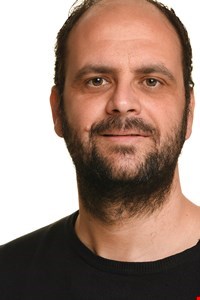
Dr. Rui Dai is an Associate Professor in the Department of Computer Science at the University of Cincinnati's College of Engineering and Applied Science. Her research focuses on wireless sensor networks, multimedia communications, and video analytics for healthcare and surveillance applications. She directs multiple NSF and NIST-funded projects on perceptual-quality-aware video systems. Research interests include quality-of-experience optimization for video analytics, compressed domain feature extraction, and edge computing frameworks for intelligent surveillance. Recent work develops deep feature compression techniques, multi-camera fall detection systems, and quality-aware video distribution strategies for 5G networks. Publications demonstrate consistent innovation in video processing for resource-constrained environments, with applications spanning healthcare monitoring, public safety networks, and embedded vision systems. Current projects investigate metaverse communication challenges for 6G networks and PHP vulnerability detection through hybrid static-fuzzing analysis.
Professor George Ghinea is a distinguished academic in the Department of Computer Science at Brunel University London's College of Engineering, Design and Physical Sciences. With over 350 publications and 33 successfully supervised PhD students, he leads cutting-edge research at the intersection of computer science, media studies, and psychology. His educational background includes a PhD from the University of Reading (1999) where he pioneered the Quality of Perception (QoP) metric - a precursor to today's widely adopted Quality of Experience (QoE) concept. He holds multiple degrees with distinction from the University of the Witwatersrand in South Africa, including BSc, BSc (Hons), and MSc in Computer Science. Professor Ghinea's research focuses on perceptual multimedia quality and human-centered e-systems, with particular emphasis on mulsemedia (multiple sensorial media) - his own conceptual framework extending multimedia to engage non-traditional senses. His work spans eye-tracking applications, telemedicine, multi-modal interaction, and ubiquitous computing. Current research explores mulsemedia integration in autonomous vehicles, security-enhanced systems, and accessibility solutions. His publications reveal strong trends in multisensory computing (42% of recent works), telemedicine applications (28%), accessibility research (18%), and network optimization (12%). The work consistently bridges theoretical frameworks with practical implementations, often incorporating physiological data and user perception metrics. Distinguished Visiting Fellow of the Royal Academy of Engineering (2018) SPARC DUO-India 2020 Fellowship Programme recipient Principal Investigator for multiple EU Horizon 2020 projects Research featured in major media including BBC, Forbes, and Daily Telegraph Professor Ghinea has secured substantial research funding through projects like the EU H2020 NEWTON initiative, Royal Academy of Engineering partnerships, and multiple Newton Fund collaborations. His supervision portfolio includes 33 PhD completions with diverse research spanning security behavior in Ghana, physiological QoE in VR, smart city adoption in Oman, and sustainable digital transformation in Qatar. He leads the IMUSY research group focusing on mulsemedia systems and human perception. His laboratory work centers on the IMUSY research group where they develop mulsemedia applications integrating thermal, wind, and olfactory devices for enhanced user experiences. Current team projects include mulsemedia in autonomous vehicles (MulsEAV), physiological data for QoE assessment, and smart city adoption studies.
Dietrich Kammer serves as Professor of Technical Visualization at Dresden University of Applied Sciences' Faculty of Computer Science/Mathematics, holding Germany's first dedicated professorship in this field established to address growing demands for innovative visualization methods in human-computer interaction. His teaching emphasizes project-based learning grounded in solid theoretical foundations, focusing on virtual/augmented reality technologies and comprehensible user interfaces across programs including Media Informatics and Geomatics. His research centers on transforming abstract data into interactive visual representations through technical visualization, employing creative techniques like metaphor production and morphological analysis. Key focus areas include tangible user interfaces, elastic displays, and multimodal interaction systems designed to enhance user experience with complex datasets. He explores how customized graphical interfaces can make otherwise unmanageable data volumes visually interpretable and actionable. Analysis of his 2021-2025 publications reveals dominant research themes in elastic display technology, tangible interaction, and information visualization. Notable trends include adaptive visual assistance systems for smart factories (AVISAR), dynamic vibrotactile feedback mechanisms, and AI applications in metadata acquisition and learning analytics. His work consistently bridges theoretical frameworks with practical industrial and educational implementations. No specific details regarding student advising or research grants appear in available materials, though he advocates for student-led project development in his pedagogical approach. He directs the Technical Visualistics Working Group, which functions as an interdisciplinary platform for developing innovative interaction and visualization solutions through collaborative research and development initiatives.
Gebremariam Assres is an Associate Professor at Kristiania University College's School of Economics, Innovation and Technology, specializing in software engineering, human-computer interaction, intelligent systems, and cybersecurity. His research spans IoT, machine learning, mulsemedia, and secure computing applications in healthcare and education. B.Sc. and M.Sc. in Computer Science from Addis Ababa University Ph.D. in Information Technology (Software Engineering) from Addis Ababa University 20+ years of teaching and research experience His work focuses on software development frameworks, telemedicine, and multisensory media. Recent publications address AI-enabled vulnerability detection, ML software engineering challenges, and telemedicine architecture reviews. Dr. Assres supervises bachelor's and master's students, teaches cybersecurity and software architecture courses, and contributes to open-source educational materials via public repositories. Labs/Teams: Mobile Technology Lab at Kristiania University College
Vlad Popescu is an Associate Professor at the Department of Electronics and Computers, Faculty of Electrical Engineering and Computer Science, Technical University of Brasov. His research focuses on telecommunications, IoT, cognitive radio systems, and multimedia applications. He has authored numerous publications in top journals and conferences, including work on 6G-enabled smart cities, edge-cloud orchestration, and QoE-driven smart home systems. His research explores cutting-edge topics such as immersive multi-sensory experiences, real-time object detection, and energy-efficient architectures for Android TV integration. Popescu has contributed to open-source satellite simulators and pioneered studies on blockchain-based TV advertising systems. His work bridges theoretical advancements with practical implementations in smart home environments, IoT gateways, and next-generation wireless networks. Award-winning research includes innovations in SDR-based satellite gateways and hardware-software partitioning for embedded systems. His collaborative projects address challenges in distributed video applications, D2D communications, and social IoT frameworks for smart tourism management.
Georg Freitag is a Professor at HTW Dresden within the Faculty of Computer Science/Mathematics , specifically affiliated with the Department of Mathematics . He leads the Multimodal Immersion and Interaction (mimig) research group, focusing on immersive environments and novel human-technology interfaces. His work bridges technical, aesthetic, sociological, and psychological aspects of human-computer interaction. Teaching Activities: I361 - Development tools for MM systems (Summer semester 2025) I366 - Design and implementation of interactive applications (Summer semester 2025) I268 - Programming of user interfaces (Winter semester 2025/26) I561 - Development Tools for Rich Internet Applications (Winter semester 2025/26) I561 - Design of haptic user interfaces (Winter semester 2025/26) Research Interests: Georg Freitag's research emphasizes the conceptualization and development of human-computer interfaces, extending from current graphical interfaces to future multimodal interactions. Key areas include immersive environments, vibrotactile feedback systems, and sustainable haptic design practices. Research Group: The mimig research group specializes in creating immersive environments for advanced human-technology interactions, with applications in safety systems, educational simulations, and collaborative prototyping. Publication Trends: Recent articles highlight advancements in vibrotactile pattern taxonomy (VibTacX), collaborative haptic design tools (TactJam, CollabJam), and multimodal interfaces for specialized contexts like firefighter support and cycling navigation. These works integrate sensory illusions, elastic display interactions, and sustainability principles in haptic design.
Céline Jost is an Assistant Professor in Computer Science and Human-Technology Interaction at Université Paris 8 within the Engineering, Cognition, Disability department. She leads research at the CHArt - EA 4004 laboratory and is affiliated with the THIM team. Research Focus: Her work spans Multisensory Interaction (including Mulsemedia ), Natural Interaction , Individualized Interaction , Interaction Paradigms , Evaluation Methods , Cognitive Ergonomics , and Disability-Focused Education . She has contributed to Artificial Companion systems and Serious Games for cognitive stimulation. Academic Contributions: Jost has authored 94 publications, with 9 in 2024 alone. Her 2024 ICCHP paper on Scenagrams and her 2024 TeMaCo rehabilitation system demonstrate her focus on accessible interaction design. She received the Best Paper Award at Conference Handicap 2024 and the RJS/KROS Distinguished Interdisciplinary Research Award (2014). Pedagogical Tools: Flipped classroom, projects, mentoring Collaborations: With institutions like Pompeu Fabra University, INSHEA, and Carnot Cognition Institute Technical Expertise: Human-Robot Interaction, Multisensory Interfaces, No-Code Development
Debora Christina Muchaluat Saade is a Full Professor at the Institute of Computing, Fluminense Federal University (UFF). She holds a PhD in Computer Science from PUC-Rio (2003) and has been affiliated with UFF since 2009. Her roles include membership in the Brazilian Computer Society (SBC) Board, the Brazilian Digital Terrestrial TV System Forum (SBTVD), and leadership positions in SBC committees. She co-founded the MídiaCom Lab (2003) for multimedia and network research and the e-Health Lab for digital healthcare innovation. Education: Bachelor's in Computer Engineering (1992) Master's in Computer Science (1996) PhD in Computer Science (2003) - Pontifical Catholic University of Rio de Janeiro Awards and Fellowships: CNPq Level 1D DT Productivity Fellowship FAPERJ CNE and JCNE Fellowships Research Focus: Multimedia systems, IoT, smart grids, interactive TV, and healthcare technologies. She contributed to NCL standards for Brazilian Digital TV and ITU-T recommendations. Grants: Completed research grants include 'Technologies and solutions for enabling the cloud of things paradigm' (AP.TEM). Labs/Teams: MídiaCom Lab: Multimedia & Network Research e-Health Lab: Healthcare Innovation
Alexandra Covaci is an Associate Professor in the Department of Computer Science at the University of Bedfordshire, specializing in virtual reality, human-computer interaction, and mulsemedia (multisensory media) systems. With a consistent publication record spanning over a decade, her research focuses on enhancing user experiences through multisensory integration in virtual environments, with particular applications in healthcare, accessibility, and social interaction. Her research interests center on virtual reality systems, human-computer interaction paradigms, mulsemedia technologies, accessibility applications, and dementia care interventions. Dr. Covaci's work bridges technical innovation with practical human-centered applications, particularly exploring how multisensory feedback can enhance presence and usability in virtual environments. She has made significant contributions to understanding cross-modal correspondences in multimedia experiences and developing practical applications for vulnerable populations. Analysis of her recent publications reveals a strong trend toward healthcare applications of VR technology, particularly for dementia care and accessibility solutions. Her work increasingly integrates physiological measurements and user-centered design principles to create more effective and engaging virtual experiences. The interdisciplinary nature of her research connects computer science with psychology, healthcare, and social sciences. Multiple publications in IEEE Transactions on Visualization and Computer Graphics Regular contributions to ACM CHI and DIS conferences Editorial work for Multimedia Tools and Applications journal Dr. Covaci actively collaborates with an international network of researchers across Europe and beyond, with frequent co-authorship with Gheorghita Ghinea, Chee Siang Ang, and Sophia Ppali. Her research has been supported by multiple grants focused on VR applications for social good, though specific funding details aren't visible in the publication record. She appears to supervise PhD students working at the intersection of VR, accessibility, and healthcare applications. Her laboratory work focuses on developing and evaluating mulsemedia systems, with particular emphasis on creating standardized testing methodologies for multisensory experiences. Current projects appear to be exploring the integration of VR technologies in dementia care settings and developing more accessible interfaces for people with various disabilities.
Dr. Fotios Spyridonis is a Senior Lecturer in Computer Science at Brunel University London, affiliated with the College of Engineering, Design and Physical Sciences. He contributes to the Interactive Multimedia Systems Research Group, Human Computer Interaction Research Group, and the Institute of Digital Futures. Research focus: Human-Centred Systems with real-world applications Primary affiliation: Brunel University London (since 2011) Teaching: Digital design methodologies and project supervision Research Interests span multiple domains within technology and human interaction: Serious Games for training and awareness Digital Accessibility standards Extended Reality (XR) applications Multisensory experience design Digital health solutions Publication Trends show sustained contributions to Human-Computer Interaction and XR technologies , with recent focus on: Accessibility barriers in digital systems Cybersecurity for virtual environments Multisensory authentication methods Public VR therapy applications Quality of Experience (QoE) frameworks Scientific Recognition includes: Fellow of the Higher Education Academy (FHEA) Review board memberships for top-tier journals and conferences Teaching Responsibilities include: CS5604 Digital Design Methodologies (Module Leader) CS2001 Year 2 Group Project CS2555 Work Placement CS3072/3605 Final-Year Project supervision CS3001/3606 Advanced Topics in Computer Science PhD Supervision covers: Nick Droutsas: Linguistic resources for accessibility Yuliya Chystaya: XR accessibility design Traecy Elezi: Mulsemedia in autonomous vehicles Laboratory Affiliations include: Interactive Multimedia Systems Research Group Human Computer Interaction Research Group Institute of Digital Futures Serious Games for Life, Health and Accessibility
Dr. Alexandra Covaci is a Senior Lecturer in Digital Arts and Technology at the University of Kent, where she also serves as Deputy Head of School. Her office is located in the Jennison Building on the Canterbury campus. She teaches the undergraduate module Introduction to Virtual Reality (EL681) , focusing on VR principles and hands-on development using mobile/desktop headsets. Her research intersects virtual reality, multisensory media, human-computer interaction, and psychology. Key interests include: Leveraging VR for transformative applications (e.g., skills training for cognitive disabilities) Designing systematic multisensory experiences (visual, auditory, haptic, olfactory) Perceptual media quality and collaborative VR environments for data visualization Her publications (2019–2025) reveal strong emphases on: Healthcare VR : Dementia care, wheelchair training, and autism support Multisensory QoE : Cross-modal perception, olfactory/haptic feedback, and AV synchronization Imaging & Interaction : Light-field reconstruction, passive haptics, and conversational agents She actively supervises students in VR social scenarios, AR interaction, and complex data visualization. No awards or grants are mentioned in the source material.