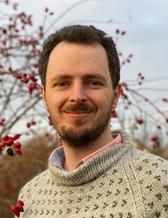
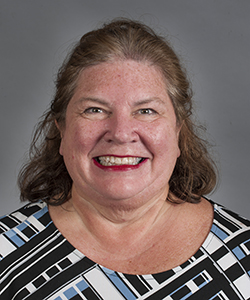
Graham Leigh is a Professor at the University of Gothenburg's Department of Philosophy and Logic. His primary research focuses on mathematical logic, proof theory, and modal logic, with significant contributions to cyclic proofs, theories of truth, and realisability semantics. He has collaborated extensively with researchers like Bahareh Afshari and Daichi Hayashi on foundational topics in logic and formal systems. Recent work emphasizes advancing proof systems for modal µ-calculus, exploring non-wellfounded proof structures, and analyzing truth theories within intuitionistic frameworks. His publications often bridge theoretical logic with applications in computer science, particularly in automated reasoning and program verification. Leigh's research also investigates the interplay between syntax and semantics in paradoxical contexts, contributing to the understanding of self-referential systems and their foundational limitations. He maintains an active publication record in top-tier journals and conferences such as the Journal of Symbolic Logic and Advances in Modal Logic .
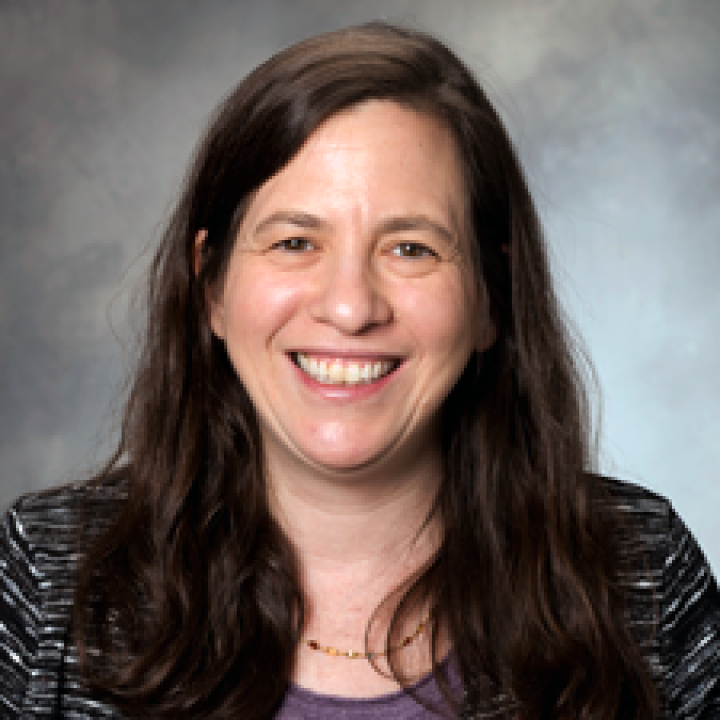
Lisa Fastenberg is an Associate Professor and Department Chairperson in the Department of Mathematics at Dyson College of Arts and Sciences, Pace University, Pleasantville campus. She holds a PhD from Yale University and a BA from the University of Pennsylvania. Her academic work bridges pure mathematics and applied social choice theory. BA, University of Pennsylvania PhD, Yale University Her primary research interests lie in Number Theory , Elliptic Surfaces , and the Mathematics of Voting and Social Choice . Her work explores deep structural properties of elliptic curves and their rational points, particularly in families and extensions, contributing to the broader understanding of Diophantine problems and arithmetic geometry. The publication trends reflect a sustained focus on the arithmetic of elliptic surfaces, especially concerning Mordell-Weil groups and integral points over function fields and cyclic extensions. These works are published in respected mathematical journals such as the Journal of Number Theory and the Proceedings of the American Mathematical Society , indicating strong theoretical contributions to algebraic and arithmetic geometry. Lisa Fastenberg is actively engaged in university service, notably as a Faculty Representative on the Pace University Board of Trustees. She is a member of professional organizations including the American Mathematical Society, Kappa Mu Epsilon, and Alpha Lambda Delta. There are no public mentions of scientific awards or student advisement in the provided text. She teaches a wide range of undergraduate mathematics courses, from foundational algebra and statistics to advanced topics such as discrete mathematics, linear algebra, calculus, and abstract algebra, reflecting her commitment to comprehensive mathematics education.
Alejandro Mus Mejías is an Assistant Professor at the University of the Balearic Islands, affiliated with the Department of Computer Science and Artificial Intelligence. He teaches courses such as Calculus, Linear Algebra Methods, and Geometry and Topology of Manifolds across degrees in Building Construction, Biology, Computer Engineering, and Mathematics. His research is linked to the Soft Computing, Image Processing and Aggregation (SCOPIA) group, focusing on interdisciplinary applications of mathematical methods in computer science and AI. Contact: Office 179, Anselm Turmeda Building, Phone: 971 173467
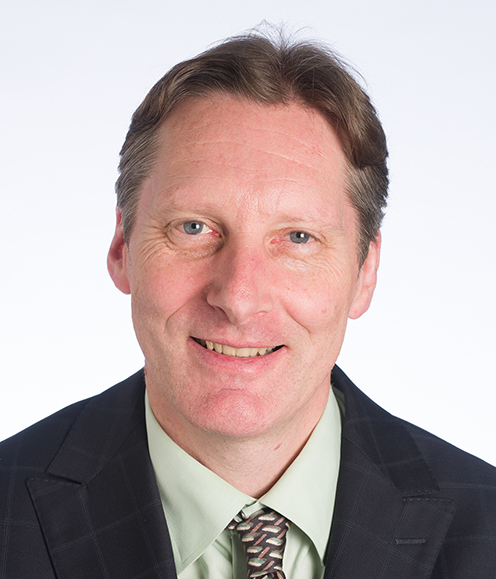
Jan Friso Groote is a Full Professor and Chair of the Formal System Analysis group in the Department of Mathematics and Computer Science at Eindhoven University of Technology (TU/e). He also holds professorial roles in the EAISI Foundational and EAISI High Tech Systems institutes. Since 2016, he has been working part-time at ASML, contributing his expertise in formal verification to industrial applications. Education: Born in 1965, studied Computer Science at Twente University of Technology (now University of Twente), 1983–1988. PhD in 1991 from the University of Amsterdam with thesis 'Process algebra and structured operational semantics', based on research at CWI (Centrum Wiskunde en Informatica). Jan Friso Groote is a leading researcher in formal methods and software verification. His work focuses on enabling the development of flawless software through rigorous formal analysis. Key research areas include structural operational semantics, model checking, branching bisimulation, protocol verification, and the development of the mCRL2 toolset. His current goal is to integrate formal techniques into complete software system design, improving both development speed and quality. His research has demonstrated that formal methods can reduce development time by a factor of three and increase quality tenfold, with potential for zero-defect software. His recent publications demonstrate sustained contributions in formal verification, including work on mutual exclusion algorithms, industrial control system modeling, probabilistic systems, and efficient bisimulation algorithms. The articles span topics such as tunnel control systems, simulation lower bounds, and formal methods for critical systems, reflecting both theoretical depth and practical application. Scientific Awards: Best Paper Award FACS 2018 FMICS-AVoCS Best Paper Award (2017) Jan Friso Groote has held significant leadership roles in education, including Director of Education for Computer Science (2000–2010) and for multiple bachelor’s and master’s programs. He has advised numerous researchers and supervised a large body of research output (over 320 publications). He leads the Formal System Analysis group and has been involved in projects such as 'Composable Embedded Systems for Healthcare'. His work bridges academia and industry, particularly through collaborations with ASML and Rijkswaterstaat, and he has been a visiting researcher at institutions across Europe and China. He is a key contributor to the mCRL2 toolset, which supports modeling and verification of software behavior with data, time, and probabilities. His research fingerprints highlight strong expertise in model checking, transition systems, software design, and process algebra. He teaches courses such as System Validation, Embedded Software, and Capita Selecta in Formal System Analysis.
Lutz Schröder is a Professor and head of the Chair of Computer Science 8 (Theoretical Computer Science) at the Department of Computer Science, Friedrich-Alexander-Universität Erlangen-Nürnberg (FAU). He is actively involved in research and leadership within formal methods and logic in computer science. His research interests include Formal Methods , Logic in Computer Science , Knowledge Representation , and Coalgebraic Logic . His work emphasizes theoretical foundations of programming semantics, modal and fixpoint logics, and automated reasoning, often employing category-theoretic and coalgebraic frameworks. His recent publications span top conferences such as LICS, POPL, CSL, and CONCUR, focusing on graded semantics, behavioral metrics, nominal automata, and generic model checking. These works exhibit a strong trend toward unifying logical systems and developing modular, coalgebraic tools for verification. EATCS Best Paper Award at ETAPS 2006 Best Theory Paper at FM 2019 He advises several researchers, including Paul Wild, Jonas Forster, and Daniel Hausmann, many of whom are frequent co-authors. He leads DFG projects such as CoMoC (Coalgebraic Model Checking), SpeQT (Spectra of Behavioural Distances), and is a principal investigator in the DFG Research Training Group 2475 on Cybercrime and Forensic Computing. He has been a PC member or co-chair for major conferences including LICS, IJCAI, FoSSaCS, and STACS, and co-chaired IFIP WG 1.3 from 2016–2022. He is also involved in the development of reasoning tools like COOL and COOL-MC.
Marcin Jurdzinski is a Professor at the Department of Computer Science, University of Warwick, with a focus on algorithms, games, automata, and logic. His career spans institutions like the University of Aarhus, University of Paris 7, and UC Berkeley. Research interests include Parity games Stochastic games Timed automata Formal verification Game theory . Recent articles highlight work on parity games, stochastic systems, and timed automata, published in venues like SIAM Journal on Computing, LICS, and CAV. Keywords span Computer Science , Game Theory , and Formal Methods . PhD students mentored include Thejaswini K. S., Michail Fasoulakis, and Ashutosh Trivedi. Funded projects such as Solving Parity Games in Theory and Practice (2017-2021) reflect his research priorities.
Adrian Pearce is a Professor in the School of Computing and Information Systems at The University of Melbourne . He conducts foundational research in automated planning and scheduling, reasoning about actions, and optimization for autonomous systems. His work impacts applications in cognitive robotics, multi-agent systems, and sustainable supply chain logistics. Education : BSc (1st class honors) and PhD in Computer Science from The University of Melbourne and Curtin University, respectively. His research focuses on: Reasoning about action and change (situation calculus, classical planning, reinforcement learning) Strategy synthesis for game structures (linear temporal logic, mu calculus) Introspective reasoning (theory of mind, epistemic logic) Contextual reasoning and ontology adaptation Discrete and continuous optimization (MIP, SAT) Scientific awards include the Erasmus Mundus Academic Scholar Award (2014) and a best paper award at ICAPS 2015. He has supervised numerous PhD students whose work spans reinforcement learning, multi-agent reasoning, and quantum computing applications.
Ken-etsu Fujita is a Faculty Member at Tokyo Denki University and an Associate Professor at Gunma University's Department of Computer Science. His research focuses on theoretical computer science, particularly lambda calculus, type theory, and formal systems. With 62 publications that have received 2,052 reads and 238 citations, Fujita has established himself as a significant contributor to the foundations of computation and programming language theory. His research expertise spans Theoretical Computer Science, Abstract Algebra, Calculus, Semantics, and Lambda Calculus. Fujita's work consistently bridges mathematical logic with computational theory, exploring deep connections between proof systems and computation. His investigations into confluence properties, reduction systems, and type theories demonstrate sustained focus on foundational computational questions. Analysis of Fujita's publication timeline reveals consistent contributions from the 1990s through 2024, with recent work addressing undecidability in second-order propositional intuitionistic logic and properties of shuffling calculus. His research shows progression from foundational lambda calculus studies to more complex systems incorporating classical logic, existential types, and advanced reduction strategies, maintaining theoretical rigor while addressing increasingly sophisticated computational problems. Fujita has received recognition through citations of his work (238 citations), indicating his contributions are valued by the theoretical computer science community. His dual institutional affiliation provides a rich academic environment for research and collaboration, though specific awards aren't detailed in the available information. As a supervisor, Fujita appears to focus on theoretical computer science topics with emphasis on formal methods. His research group likely engages with fundamental questions about computation, programming language semantics, and logical foundations. Prospective students interested in these areas would find a supervisor with deep expertise and a strong publication record in core theoretical topics, offering opportunities to contribute to foundational research with potential implications for programming language design and formal verification.
Olivier Serre is a CNRS Research Director working at the Institute for Research in Fundamental Computer Science (IRIF), a joint research unit of CNRS and University of Paris. Since September 2021, he serves as Deputy Scientific Director at the Institute for Information Sciences and Technologies (INS2I) at CNRS. His research focuses on theoretical computer science with particular emphasis on automata theory and formal verification frameworks. Dr. Serre completed his education at ENS Cachan (1999-2003) and earned his PhD in Computer Science from Paris-Diderot University (now University of Paris) in 2004. Following a postdoctoral position at RWTH Aachen, he joined LIAFA (now IRIF) as a research fellow in 2005 and became a CNRS Research Director in 2016. His academic journey reflects deep engagement with foundational theoretical problems and their practical verification applications. His research centers on automata theory and formal languages, with particular expertise in games and logic, infinite structures, and verification of higher-order functional programs. Dr. Serre has made significant contributions to collapsible pushdown systems, recursion schemes, and parity games, bridging theoretical foundations with practical applications in program verification. His work demonstrates exceptional depth in developing decision procedures for complex verification problems previously considered intractable. Dr. Serre's extensive publication record in premier theoretical venues shows consistent contribution to advancing the state of the art. His research trajectory reveals a clear evolution from foundational automata theory toward increasingly sophisticated systems involving higher-order computation and imperfect information, with notable breakthroughs in establishing decidability results for complex verification problems.
Luigi Santocanale is a Full Professor in Computer Science at Aix-Marseille University, affiliated with the Laboratoire d'Informatique et Systèmes (LIS), UMR CNRS 7020, and member of the LSC research group. He is responsible for the 3rd year of the Licence Informatique, parcours Informatique Mathématique at Aix-Marseille University. His academic career includes previous affiliations with LIRICA@LIS, MOVE@LIF, LABRI, CPSC@UCalgary, BRICS, and UQAM. Professor Santocanale's research spans three interconnected domains: Order Theory, Category Theory and Universal Algebra (including Lattice theory, Topos Theory, and Enriched Category Theory); Combinatorics (focusing on Ordered sets, species theory, and game theory); and Logic in Computer Science (covering Intuitionistic logic, mu-calculus, decision problems for free algebraic objects, semantics of programming languages, and algebraic structures of distributed computing). His current research directions include lattice theory applications to databases, logics with fixed points, ordered sets in combinatorics, and circular proofs in mu-bicomplete categories. He has served as project coordinator for the ANR SOAPDC (Order Structures and Applications to Distributed, Parallel and Concurrent Computing) project and has been involved in numerous other research initiatives including LAMBDACOMB, RECIPROG, TICAMORE, MFL, TRECOLOCOCO, CHOCO, and TAGADA. Professor Santocanale is actively engaged with the academic community as a Program Committee member for major conferences including RAMiCS 2024 and TACL 2024. His significant contributions include: Decidability of the equational theory of relational lattices with applications to database query optimization Characterization of closure ordinals in modal mu-calculus Work on equational theories of permutation lattices (Permutohedra) and associahedra Development of circular proof systems for mu-bicomplete categories Professor Santocanale has organized and participated in the Marseille Lattice Working Group and has collaborated extensively with researchers including Fred Wehrung, M. J. Gouveia, and Nathalie Caspard. His work bridges theoretical computer science, mathematical logic, and algebraic structures, with implications for programming language semantics and distributed computing.
Amanda Smithers serves as a Lecturer in Mathematics at Millsaps College, teaching foundational courses including college algebra, trigonometry, pre-calculus, and calculus with a focus on supporting freshmen through their academic transition. She also advises the Epsilon chapter of Phi Mu sorority and coaches volleyball at Infinity Volleyball Academy. Education: Earned B.A. in Applied Mathematics with minors in Chemistry and Religious Studies from Millsaps College (2010), followed by Master's in Education and Master's in Mathematics, both completed in Jackson. Teaching Philosophy: Integrates mathematics education expertise to develop student college readiness skills alongside core mathematical concepts, emphasizing practical application in entry-level courses. Her dual Master's degrees inform a holistic approach to undergraduate instruction. Additional Roles: Actively engages campus life through sorority advising and athletic coaching while leveraging dual U.S./U.K. citizenship for international perspectives in student mentorship.
Amanda Smithers serves as a Lecturer in the Department of Mathematics at Millsaps College, specializing in foundational mathematics instruction for undergraduate students with a focus on freshman transition support. She additionally advises the Epsilon chapter of Phi Mu and coaches travel volleyball at Infinity Volleyball Academy. Her academic credentials include: Bachelor of Science in Applied Mathematics from Millsaps College (2010) with minors in Chemistry and Religious Studies Master of Education earned in Jackson Master of Mathematics earned in Jackson Ms. Smithers' pedagogical expertise centers on introductory mathematics sequences including college algebra, trigonometry, pre-calculus, and calculus, with particular emphasis on developing college readiness skills among first-year students. Her teaching philosophy integrates content mastery with academic transition strategies for new undergraduates. No scientific awards were documented in the source material. She provides academic guidance as chapter adviser for Phi Mu's Epsilon chapter while extending mentorship through volleyball coaching at Infinity Volleyball Academy, demonstrating commitment to holistic student development beyond the classroom. Her personal background includes dual citizenship in the United States and United Kingdom, with international travel as a primary leisure pursuit.
Dr. Keith E. Howard serves as Vice Provost at Mercer University since 2021, providing faculty insight and managing special projects in policy development and data review. As primary advisor to the Provost, he leads academic policy, faculty handbooks, catalogs, market data analysis, and academic resource allocation while chairing the University Graduate Council for graduate curriculum oversight. His educational background includes: B.S. from Morehouse College B.ChE. from Georgia Institute of Technology M.S. and Ph.D. from Vanderbilt University Dr. Howard's research centers on Mathematics with expertise in Applied Mathematics, Algebra, Calculus, Statistics, and Mathematical Modeling. His scholarly work bridges theoretical foundations and practical applications across quantitative disciplines. His scholarly recognition includes: Phi Beta Kappa Sigma Xi Scientific Society Golden Key Honor Society Pi Mu Epsilon Mathematics Honor Society Administratively, he significantly shaped graduate education as chair of the University Graduate Council and former dean of graduate studies (2016), with prior service as interim dean of the College of Liberal Arts (2015) and mathematics department chair. His leadership extends to academic assessment, student grievance resolution, and non-credit continuing education programs.
Joni Ghannadian serves as a Lecturer I in the Department of Information and Technology Management at The University of Tampa, specializing in quantitative instruction and statistical analysis. Her educational credentials include: B.S. from University of Tennessee (1980) M.S. from Mercer University (2002) Her research and teaching expertise centers on mathematical methodologies with business applications, evidenced by courses taught in Statistics, Calculus, Trigonometry, and Algebra. She maintains active engagement with statistical modeling frameworks and quantitative problem-solving techniques relevant to technology management disciplines. Professional affiliations demonstrate interdisciplinary reach: Society of International Business Fellows (SIBF) American Nuclear Society (ANS) Mu Alpha Theta (National Mathematics Honor Society) Multicultural Club Relay for Life (American Cancer Society) Ghannadian has received institutional recognition for exceptional student mentorship in both collaborative group settings and individualized academic support scenarios, reflecting her commitment to pedagogical excellence.