- Exoplanets
- Star Formation
- Protoplanetary Disks
- +۴ مورد دیگر
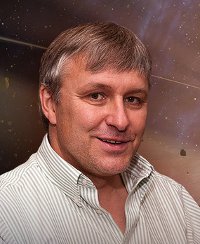
Karl Stapelfeldt is a Senior Research Scientist in the Astrophysics and Space Sciences Section at NASA's Jet Propulsion Laboratory (JPL), managed by the California Institute of Technology. He concurrently serves as Chief Scientist for the NASA Exoplanet Exploration Program since 2016, directing strategic development of exoplanet characterization missions. His 30-year career at JPL includes progressive leadership roles from Postdoctoral Fellow to Principal Scientist. His academic credentials include: PhD in Astrophysics with minor in Planetary Sciences, Caltech (1991) B.S.E. in Mechanical & Aerospace Engineering and Engineering Physics, Princeton University (1984) Dr. Stapelfeldt's research centers on observational studies of protoplanetary and debris disks as windows into planetary system formation. He pioneers coronagraphic techniques for direct exoplanet imaging and combines multiwavelength data (optical to mm-wave) with advanced modeling of circumstellar environments. His work bridges theoretical astrophysics and space mission design, with emphasis on instrumentation for future telescopes like HabEx and LUVOIR. Analysis of his 15 most recent publications reveals consistent focus on disk morphology and exoplanet detection. Early work characterized debris systems around stars like Fomalhaut using Hubble and Spitzer, while recent studies leverage ALMA for millimeter-wave disk imaging. His 2021 review established frameworks for next-generation exoplanet missions, demonstrating evolution from observational analysis to mission leadership. Key recognitions include: AAAS Newcomb Cleveland Award (2009) for optical imaging of exoplanets Muhlmann Award from Astronomical Society of the Pacific (2010) for Spitzer contributions As Chief Scientist, Dr. Stapelfeldt manages NASA's exoplanet technology portfolio, including grants for coronagraph development and starlight suppression. His mentorship occurs through JPL-Caltech collaborations, where he guides postdocs in mission studies and data analysis. Current projects emphasize technology maturation for direct imaging of Earth-like exoplanets. He leads the NASA Exoplanet Exploration Program team and contributes to international initiatives like the LBTI Exozodi Key Science Team. This collaborative environment integrates astrophysicists, optical engineers, and mission planners to advance instrumentation for characterizing exoplanetary systems.