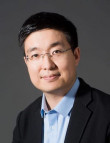
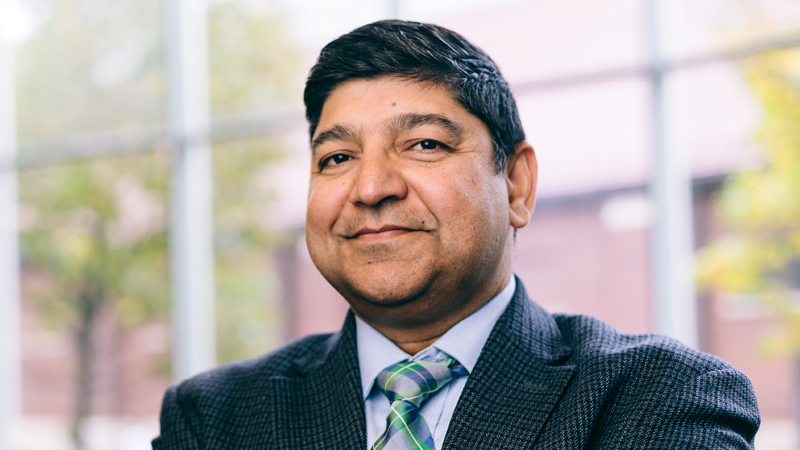
Xiaohui Yu is a Professor and Graduate Program Director in the School of Information Technology at York University. He holds a BSc from Nanjing University, an MPhil from the Chinese University of Hong Kong, and a PhD from the University of Toronto. His research focuses on the intersection of data management and machine learning, including ML-based database systems, large-scale machine learning, and spatio-temporal data analysis in contexts like intelligent transportation systems and social networks. Supported by grants from NSERC and industry partners, his work has been published in top venues such as SIGMOD, VLDB, and TKDE. He serves as an Associate Editor for journals like IEEE TKDE and ACM TKDD, and actively participates in conference program committees. Education: BSc (Nanjing University), MPhil (Chinese University of Hong Kong), PhD (University of Toronto). Research Interests: Big data management, database systems, machine learning, spatio-temporal data analytics, and video query processing. Recent articles emphasize ML-driven database components, efficient video query optimization, and scalable algorithms for large-scale data. His work addresses challenges in query processing, indexing, and real-time systems. Service: Serves on editorial boards (e.g., Information Systems), and chairs/workshops (e.g., Symposium on Data Markets). Active in program committees for SIGMOD, ICDE, and other leading conferences. Advising & Grants: Directs graduate programs and leads research groups. Collaborates with industry on data marketplaces and AI model integration. No specific student names listed, but actively recruits PhD/Master’s candidates.
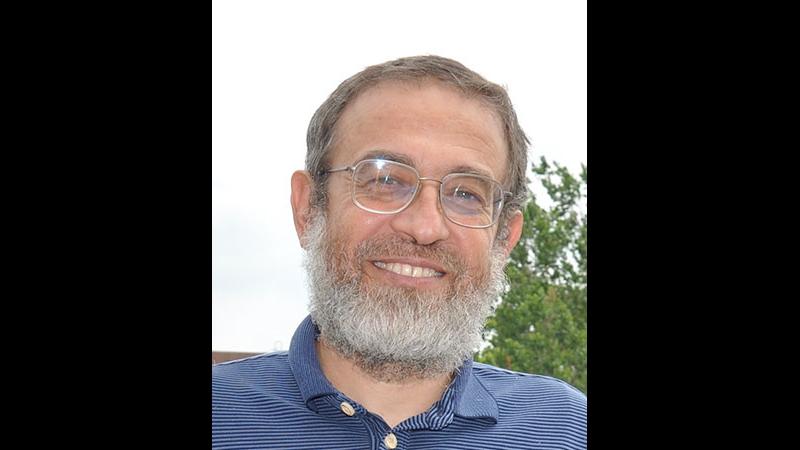
Walid G. Aref is a Professor of Computer Science at Purdue University since Fall 1999. His research focuses on database systems, spatial and spatio-temporal data management, query processing, and indexing. He has led projects funded by NSF, NIH, and industry partners. Aref is a Fellow of the IEEE and has received awards including the NSF CAREER Award (2001) and VLDB’s Ten-Year Best Paper Award (2016). He serves as Editor-in-Chief of ACM Transactions on Spatial Algorithms and Systems and has authored numerous influential papers. Education: BSc/MSc from Alexandria University (Egypt), PhD from University of Maryland (1993). Research Interests: Extending database functionality for emerging applications like spatial, graph, and sensor databases. Notable contributions include the Chameleon project, AQWA system for big spatial data, and privacy-preserving Casper framework. Selected Projects: NSF-funded work on multi-predicate spatial queries, in-memory graph relational systems, and adaptive spatio-textual processing. Systems like Tornado (spatio-textual streams) and LocationSpark (distributed spatial data) exemplify his contributions. Awards: Multiple best paper awards, IEEE Fellow, and leadership roles in ACM SIGSPATIAL.
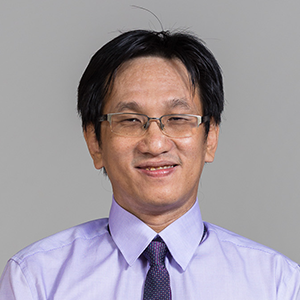
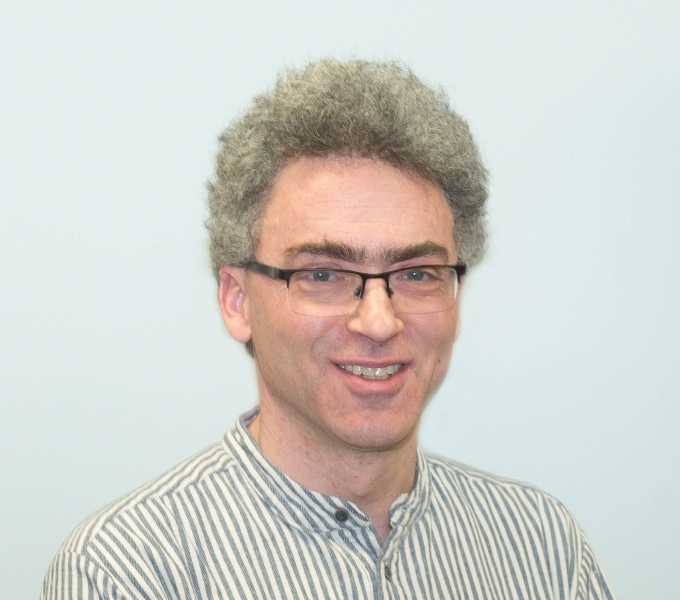
Anthony TUNG Kum Hoe is a Professor in the Department of Computer Science at the National University of Singapore (NUS), where he has established himself as a leading researcher in database systems and data mining. He is also affiliated with the NUS Graduate School for Integrative Sciences and Engineering and serves as a SINGA supervisor. His educational background includes a Ph.D. in Computer Science from Simon Fraser University (2001), an M.Sc. in Information Systems & Computer Science from NUS (1998), and a B.Sc. with 2nd Class Upper Honours in Information Systems & Computer Science from NUS (1997). Professor Tung's research spans several interconnected areas within database systems and data mining. His primary focus is on developing efficient methods for indexing and searching complex data structures including time series, trajectories, trees, graphs, and high-dimensional objects. He has pioneered work in visual query processing, keyword search, and ranking systems. His GENIE (Generic Inverted Index) and LAMP (semi-Lazy Mining Paradigm) projects represent significant contributions to big data analytics, particularly in handling the 'variety' aspect of big data by providing unified frameworks for processing diverse data structures while preserving semantic meaning. His research bridges theoretical database concepts with practical applications in visual data mining, collaborative analytics, and just-in-time model construction. His recent publications reveal a clear evolution from traditional database research toward more complex analytics on diverse data types. While maintaining his core expertise in database indexing and query processing, his work has expanded to incorporate machine learning techniques, particularly in areas like nearest neighbor search, anomaly detection, and predictive analytics. There's a noticeable trend toward interdisciplinary applications, with publications spanning computer vision, natural language processing, transportation systems, and social computing. His research group consistently publishes in top-tier venues including SIGMOD, VLDB, ICDE, and KDD, demonstrating both theoretical rigor and practical relevance. 2005 Best Paper Award for 'Indexing DNA Sequences Using q-grams' 2007 Invited panel speaker on 'Advice for a successful database researcher career in Asia' at SIGMOD 2010 Guest Lecturer for VLDB Database School 2012 VLDB 2012 Research PC Co-chairs 2015 10 Years Best Paper Award, DASFAA 2015 Invited to SIGMOD 2008 and SIGKDD 2008 Program Committees Professor Tung has supervised numerous PhD students and research associates throughout his career, including notable researchers like Zhang Zhenjie (recipient of the 2007 President Graduate Fellowship) and Wang Nan (published in SIGMOD'08). His research group has been consistently productive, with students publishing in top conferences including SIGMOD, ICDE, and VLDB. His professional service is extensive, having served as PC Chair for COMAD'06, Research PC Co-chair for VLDB 2012, and on program committees for virtually all major database and data mining conferences over the past two decades. His research has been supported by various grants that have enabled significant contributions to database technology. His GENIE and LAMP projects represent a cohesive research direction focused on developing systematic approaches to big data analytics. GENIE provides a unified platform for storage and retrieval of big data with various structures, while LAMP introduces a novel paradigm for predictive analytics that combines the strengths of lazy and eager learning approaches. These projects have evolved to incorporate GPU acceleration and parallel processing capabilities, reflecting his commitment to addressing real-world scalability challenges in data-intensive applications.
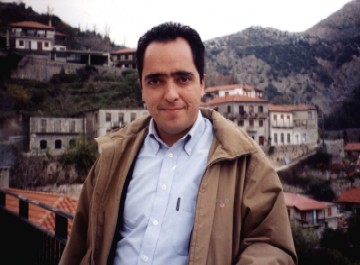
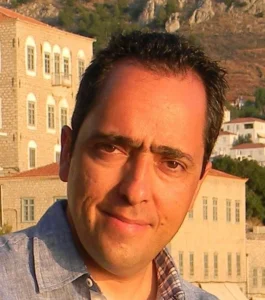
Yannis Theodoridis is a Professor at the Department of Informatics, University of Piraeus, leading the Information Systems Laboratory (InfoLab). He specializes in spatiotemporal databases, mobility analytics, and maritime data science. His research focuses on trajectory analysis, location-based services, and big data frameworks for transportation and maritime surveillance. Key projects include the MOD (Moving Objects Databases) initiative, the ARGOS framework for real-time trajectory prediction, and contributions to the HERMES trajectory database engine. He has advised 7 PhD students and co-authored numerous papers in IEEE and ACM venues. His work addresses challenges like vessel collision risk assessment, urban mobility optimization, and maritime event detection. He serves on the editorial board of the International Journal of Data Warehousing and Mining and contributes to conferences like PCI and ECML PKDD. His labs emphasize interdisciplinary approaches to mobility data science, integrating machine learning with domain-specific analytics.
Sunil K. Prabhakar is a Professor of Computer Science at Purdue University, currently serving as the Vice Provost for Faculty Affairs and former Department Head. He holds a PhD from the University of California, Santa Barbara, and a BTech from the Indian Institute of Technology, Delhi. Education: PhD, Computer Science, University of California, Santa Barbara, 1998 MS, Computer Science, University of California, Santa Barbara, 1998 BTech, Electrical Engineering, Indian Institute of Technology Delhi, 1990 Research Interests: Focuses on database systems, uncertain data management, cloud database integrity, sensor databases, and digital rights management. His work emphasizes developing systems for probabilistic data, ensuring authenticity in outsourced databases, and scalable solutions for multimedia and sensor applications. Grants & Projects: NSF Grant IIS-1017990: Ensuring Integrity of Outsourced Databases NSF Grant IIS-09168724: Uncertain Data Management Students & Advising: Advised over 15 PhD and MS students, including Ryan Rossi (Palo Alto Research Center), Rohit Jain (Google), and Reynold Cheng (University of Hong Kong). Labs & Teams: Involved in projects like the ORION uncertain data management system, the C4E4 environmental cyberinfrastructure initiative, and collaborations with industry (e.g., Naval Surface Warfare Center).
Djuddah Arthur Joost Leijen is an Associate Professor of English Language at the University of Tartu's Faculty of Arts and Humanities, Institute of Foreign Languages and Cultures since May 2022, and an Affiliated Researcher at Malmö University since November 2023. With a Doctoral Degree in Estonian and General Linguistics from the University of Tartu (2016), his career spans over 15 years of dedicated work in academic writing research, rhetoric and composition, and language education across Baltic and Nordic contexts. His educational background includes: Doctoral Degree in Estonian and General Linguistics, University of Tartu (2010-2016) Annual Dartmouth Summer Seminar for Composition Research (2013) MSc in Education Training and Systems Design, University of Twente, The Netherlands (2003-2004) Leijen's research focuses on academic writing traditions across cultures, metadiscourse analysis, peer review processes, and the application of AI in writing instruction. His cross-linguistic studies examine rhetorical structures and metadiscourse patterns in Estonian, Latvian, and Lithuanian academic texts, revealing both disciplinary similarities and language-specific features. Recent work increasingly addresses AI competence in higher education, exploring how generative AI tools impact academic writing practices while developing systematic approaches for integrating these technologies responsibly into writing instruction. His publication record demonstrates a clear progression from foundational work on peer review and second language writing to sophisticated cross-linguistic analyses and cutting-edge research on AI in academic communication. Recent publications like 'Decoding Metadiscourse Markers in Estonian Academic Texts' (2025) and 'AI Competence Frameworks and Policies in Higher Education' (2025) showcase his dual expertise in linguistic analysis and educational technology. Leijen has received recognition through significant editorial appointments including: European Editor for editorial teams (2024-present) Member of Kalbotyra Editorial Board (2023-present) Member of Journal of Academic Writing Editorial Board (2022-present) Chair of the European Association of Teaching Academic Writing (2017-present) Chair and founder of NB!Write (The Nordic and Baltic Network for Writing in Higher Education) (2016-present) As a supervisor and grant leader, Leijen has secured substantial funding including the €424,110 Estonian Research Council grant for 'Academic Writing in the Baltic States' (2020-2024) and currently leads the 'STARS: Self-Regulated Learning Tool for Academic Success' project (2024-2026, €62,941). His supervision portfolio includes doctoral candidates researching metadiscursive perspectives of Estonian academic text and master's students examining tabletop games in EFL instruction. Leijen co-founded Keelekord OÜ, a University of Tartu spin-off company, and hosts the 'Communicating Science Podcast,' which engages practitioners, students, and experts in dialogue about science communication in the Estonian context. Through these initiatives, he has developed comprehensive learning experiences that extend beyond traditional classroom boundaries to serve the entire university community and beyond.
Nikolaos Pelekis is a Professor at the Department of Statistics and Actuarial Science, School of Finance and Statistics, University of Piraeus, where he teaches courses in Data Science, Data Management, Information Systems, and Computer Programming. He has been actively involved in both undergraduate and postgraduate education, offering specialized courses such as "Statistical Data Mining Methods" in the Applied Statistics Master's program and "Big Data Management" in the Cybersecurity and Data Science postgraduate program. Born in 1975, Professor Pelekis earned his Bachelor's degree in Computer Science from the University of Crete (1998), followed by an MSc in Information Systems Engineering (1999) and a PhD in Moving Object Databases (2002) from UMIST University in the United Kingdom. His educational background laid the foundation for his distinguished career in data science and database management. Professor Pelekis' research spans multiple domains within data science and database management, with particular emphasis on mobility data analytics. His work focuses on data mining, big data management and analytics, with special attention to location and motion data including trajectories of moving objects. He has made significant contributions to spatial and spatiotemporal database management, moving object database systems, privacy-preserving data mining, and OLAP analysis. His research bridges theoretical foundations with practical applications, particularly in maritime and transportation domains. An analysis of Professor Pelekis' recent publications reveals a strong trend toward maritime data analytics and vessel traffic prediction. His work increasingly focuses on applying machine learning techniques to maritime trajectory data, developing systems for collision risk assessment, vessel location forecasting, and maritime route prediction. The research demonstrates a progression from foundational database management techniques to sophisticated analytics for time-critical mobility forecasting, with applications in aviation and maritime domains. Five best research paper awards 1st & 3rd place in the SemEval-2017 competition 3rd place in the ACM SIGSPATIAL Cup 2016 competition Best paper award at ACM SIGSPATIAL'14 (Path-based Queries on Trajectory Data) Best paper award at ER'13 (Baquara: A Holistic Ontological Framework for Movement Analysis with Linked Data) Best application paper award at ICDM'09 (Clustering Trajectories of Moving Objects in an Uncertain World) Ralf H. Güting best research paper award at SSTD'21 (A Novel Indexing Method for Spatial-Keyword Range Queries) Best Demo Paper award at SSTD'21 (MaSEC: Discovering Anchorages and Co-movement Patterns on Streaming Vessel Trajectories) Professor Pelekis has been actively involved in advising and research funding acquisition. He has participated in over 10 European and National Research and Development projects as principal investigator or key researcher. His leadership extends to directing research laboratories and coordinating large-scale collaborative projects. As co-founder of the Data Science Lab - DataStories at the University of Piraeus, he has mentored numerous researchers and students. His research has been supported by prestigious funding programs including Horizon Europe, Horizon 2020, and national research initiatives. Professor Pelekis co-founded and leads the Data Science Lab - DataStories at the University of Piraeus, which comprises 9 faculty members from 4 different Departments along with experienced and young researchers. He previously served as Head of Research for the Information Management Lab (InfoLab) at the Department of Informatics, University of Piraeus (2005-2014). His current research team is actively engaged in multiple European projects including "DAT.AI – Energy-efficient AI-ready Data Spaces" and "EMERALDS – Extreme-scale Urban Mobility Data Analytics as a Service," focusing on cutting-edge applications of data science in maritime and urban mobility contexts.
Ouri Wolfson is the Richard and Loan Hill Professor of Computer Science at the University of Illinois at Chicago (UIC), with a joint appointment at the University of Illinois at Urbana-Champaign (UIUC). He earned his Ph.D. in Computer Science from NYU's Courant Institute in 1984 and has previously held faculty positions at Columbia University and Technion. His research focuses on database systems, distributed systems, mobile/pervasive computing, and computational transportation science. His work bridges theoretical foundations with practical applications in intelligent transportation, urban computing, and mobile data management. Wolfson has authored over 200 publications spanning databases, transportation systems, and computational neuroscience. His recent work demonstrates strong focus on: Spatio-temporal algorithms for transportation networks Intelligent urban mobility solutions Computational neuroscience applications Resource management in distributed environments Honors include: ACM Fellow AAAS Fellow IEEE Fellow University of Illinois Scholar (2009) ACM Distinguished Lecturer (2001-2003) He founded two technology companies (Mobitrac, Pirouette Software) and has secured significant research funding from NSF, DARPA, NASA, and others, including a $3.1M NSF grant establishing a Ph.D. program in Computational Transportation Science.
Thomas Devogele is a Professor at the University of Tours, France, where he serves as Head of the Computer Science Department within the Faculty of Sciences and Technology. He is also Head of the Master 2 in IT and apprenticeships program and deputy director of LIFAT (Tours Fundamental and Applied Computer Science Laboratory). His academic career spans more than two decades, having previously served as an Assistant Professor at the French Naval Academy from 1998 to 2010. His primary research focuses on Geographic Information Systems (GIS), spatio-temporal data mining, and moving object analysis. Dr. Devogele's work specializes in trajectory data-mining, similarity measures between lines or trajectories using Fréchet distance, classification and outlier detection of trajectories, and spatio-temporal database integration. He currently leads research projects DOPAN and PERSONAE. His recent publications (2021-2025) demonstrate an expansion of his research into cycling infrastructure analysis, blockchain applications for business processes, personalized web service recommendations, and health data narratives (particularly tuberculosis in Gabon), while maintaining his core expertise in trajectory analysis and spatial data. His work bridges theoretical computer science with practical applications in transportation, public health, and urban planning. Dr. Devogele has supervised numerous PhD students who have gone on to successful academic and industry careers, including Fournier Sébastien (Assistant Professor at Université de Provence), Noyon Valérie (Leader of GIS department at the city of Niort), and Etienne Laurent (Assistant Professor at Tours University). His teaching responsibilities include Software Engineering, Object-Oriented Programming (Java), Geographic Information Systems, Artificial Intelligence, and Database courses for Computer Science students at the Blois campus. He has made significant contributions to the field through his extensive publication record spanning from 1996 to the present.
Arthur Kosowsky is a Professor in the Department of Physics & Astronomy at the University of Pittsburgh, affiliated with the Dietrich School. His research focuses on cosmology, particularly the cosmic microwave background (CMB) radiation, dark matter/dark energy, inflationary universe models, and gravitational waves. He is a key member of the Simons Observatory collaboration, leading efforts to observe the CMB using advanced telescopes in Chile's Atacama Desert. His work addresses fundamental questions about cosmic structure formation, dark energy's nature, and potential deviations from general relativity. Research interests include CMB polarization analysis, detecting primordial gravitational waves, and probing cosmic topology. Notable contributions involve analyzing anomalies in CMB asymmetry and large-scale correlations, simulating gravitational wave backgrounds from early-universe turbulence, and developing methods to study galaxy cluster dynamics. He has mentored numerous graduate students whose thesis topics span CMB lensing, cosmic birefringence, and transient phenomena. Scientific awards include the 2024 Fulbright US Scholar to Chile, APS Fellow (2014), and Cottrell Scholar (2000). His collaborations with the Simons Observatory aim to measure the B-mode polarization signal, neutrino masses, and cosmic magnetic fields through upcoming observations (2024-2025). He also leads efforts to detect transient millimeter-wave sources and study cosmic topology using machine learning techniques. Key projects include analyzing Atacama Cosmology Telescope (ACT) data for cosmological parameters and exploring the moving lens effect. His research bridges theoretical models with observational data, emphasizing precision cosmology and fundamental physics tests. Active in fostering interdisciplinary methods, he advocates for leveraging advanced instrumentation and computational tools to unravel cosmic mysteries.
Professor Theodoridis Ioannis is a distinguished faculty member in the Department of Informatics at the University of Piraeus, where he serves as Director of the Data Science Laboratory within the School of Information and Communication Technologies. With a career spanning over two decades, he has established himself as a leading expert in data management and analysis. His research interests focus on Data Science, particularly in databases, big data management, data mining, and geoinformatics. Professor Theodoridis has made significant contributions to spatial database systems, time series analysis, and distributed data processing. His work bridges theoretical foundations with practical applications in areas such as smart cities, mobility analytics, and scientific data management. His publication record demonstrates consistent research productivity with over 100 peer-reviewed articles in top-tier venues, accumulating more than 10,000 citations. His research output shows a clear evolution from foundational database techniques toward contemporary challenges in big data analytics, machine learning integration, and privacy-preserving methods. Member of editorial board of ACM Computing Surveys (since 2016) Reviewer for numerous international journals and conferences Active participant in data management conference committees Professor Theodoridis has secured significant research funding through Horizon 2020 projects, serving as project coordinator and research team leader since 2001. His work demonstrates strong industry and academic collaboration, with applications spanning multiple domains. He has also co-authored three influential monographs in his field. He leads the Data Science Laboratory, which serves as a hub for interdisciplinary research at the intersection of database systems, machine learning, and domain-specific applications. The laboratory fosters collaboration between computer scientists, domain experts, and industry partners to address real-world data challenges.
Goce Trajcevski is an Adjunct Associate Professor at Northwestern University's McCormick School of Engineering, Department of Electrical and Computer Engineering, and holds the Kingland Associate Professor title at Iowa State University's Department of Electrical and Computer Engineering. His research focuses on mobile data management, sensor networks, and reactive behavior in distributed systems. He earned his Ph.D. in Computer Science from the University of Illinois at Chicago. Education: Ph.D. Computer Science (UIC, 2002), M.S. Computer Science (UIC, 1995), B.S. Informatics and Automatics (University of Sts. Kiril and Metodij, 1989). Research interests include software systems, spatial-temporal data analysis, and machine learning applications. His work spans trajectory analysis, human mobility modeling, and cybersecurity. Recent publications explore graph neural networks for geolocation, adversarial learning in mobility, and heterogeneous data integration for vehicular networks. Key contributions include trajectory-based social circle inference, deep learning for user identity linkage, and privacy-preserving environmental sensing. He collaborates on projects involving autonomous systems, smart transportation, and academic impact analysis.
Michalis Vazirgiannis is a Professor in the Department of Informatics at the Athens University of Economics and Business (AUEB), specializing in data mining and machine learning with applications in web and social network analysis. His work bridges theoretical algorithms and real-world scalability challenges. Education: Bachelor Degree in Informatics, National and Kapodistrian University of Athens, 1986 Master (M.Sc.) in Robotics, National and Kapodistrian University of Athens, 1988 Master (M.Sc.) in Knowledge Based Systems, Heriot Watt University, Edinburgh, 1989 Ph.D. in Informatics, National and Kapodistrian University of Athens, 1994 Research Focus: Professor Vazirgiannis pioneers clustering algorithms with subjective/objective validation, distributed feature selection for evolving graphs, and temporal link analysis for dynamic page ranking. His research addresses critical gaps in semi-supervised learning for large-scale web and social networks, emphasizing dimensionality reduction and ranking predictability in temporal contexts. Publication Trends: His 2007-dominated publications reveal a strategic shift toward graph-based web mining, with recurring themes of distributed processing (P2P similarity search), clustering validity frameworks, and semantic web personalization. The work consistently targets scalability bottlenecks in real-world network data. Scientific Recognition: ERCIM Post-doctoral Scholarship (2001) Marie Curie European Scholarship (2006) Leadership & Collaboration: As ERASMUS coordinator for AUEB's Informatics Department and editorial board member of Intelligent Data Analysis journal, he bridges academia and industry. His EU project leadership (FP6 SQO-OSS, Marie Curie NGWeMiS) and program committee roles (IEEE/ICDM 2008, ECML/PKDD 2008) highlight his influence in data mining standardization. International collaborations span INRIA, Fraunhofer, Max Planck, and IBM Research. Technical Innovation: His patent contributions and invited lectures at ECML/PKDD 2006/SIAM/SDM 2006 demonstrate applied impact, particularly in web personalization engines (SEWeP) and evolving graph analytics.
Dr. Conny Junghans is a researcher in computer science with expertise in data mining, spatio-temporal analysis, and information security. She completed her diploma at Ilmenau University of Technology (2005) and earned her PhD at the University of California, Davis (2009). From 2009-2011, she worked at Ruprecht-Karls-University of Heidelberg in the Database Systems Research group under Prof. Dr. Michael Gertz. Education: Diploma in Computer Science, Ilmenau University of Technology (2005) PhD in Computer Science, University of California at Davis (2009) Her research focuses on data stream mining with adaptive resource management, spatial/sensor network anomaly detection, and data quality assurance. She has contributed to multilingual document similarity models and burst detection in stream engines. Recent publications highlight trends in quality-aware systems, obstacle handling in sensor networks, and adaptive spatio-temporal prediction. She has served on program committees for SSDBM and CIKM conferences and acted as an external reviewer for multiple journals and conferences.
Asif Baba is a Clinical Associate Professor in the Department of Computer Science and Engineering at the University of North Texas. His research focuses on cybersecurity, Internet of Things (IoT), and blockchain technology, with a particular emphasis on secure data transmission, phishing detection, and industrial networking. Research Keywords: Computer Science, Cybersecurity, IoT, Blockchain, Wireless Sensor Networks Email: Asif.Baba@unt.edu Dr. Baba’s recent publications highlight advancements in IoT security, including secure medical data transmission frameworks and fuzzy logic-based phishing detection systems. He has also contributed to blockchain applications in access control, accounting, and education records verification, alongside innovations in industrial IoT networking and RFID data cleansing. His work spans fog computing, drone simulation, and sensor localization, reflecting a multidisciplinary approach to solving real-world challenges through technology.