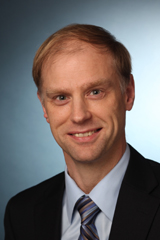
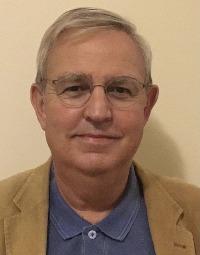
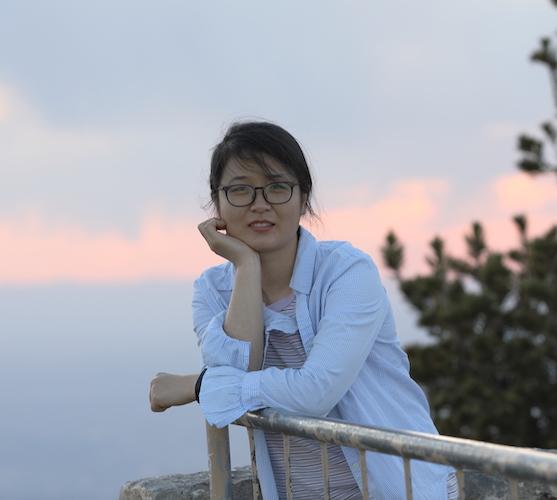
Dr. Wakana Iwakami is an Associate Professor at Waseda University's School of Advanced Science and Engineering, specializing in core-collapse supernovae simulations and neutrino radiation hydrodynamics. With 28 publications and over 1050 citations, her work focuses on multi-dimensional modeling of supernova mechanisms, particularly neutrino-driven explosions and standing accretion shock instability (SASI). Education: Tohoku University (2000-2009): BSc and MSc in Mechanical/Aerospace Engineering Her research interests span fluid dynamics , supernova physics , neutrino transport , and numerical simulation techniques . Recent projects include 3D Boltzmann neutrino transport simulations and gravitational wave analysis from supernovae. She has received the 2005 Japan Society of Mechanical Engineers Miura Award. Notable trends in publications include: Advancing 3D supernova simulations with full neutrino radiation Investigating neutrino oscillations in extreme supernova environments Developing high-accuracy numerical methods like volume penalization Studying rotational effects on explosion mechanisms Scientific awards: 2005 Japan Society of Mechanical Engineers Miura Award Grants & Research Projects: Continuously funded by Japan Society for the Promotion of Science (2010-2015, 2024-2026) and other institutions for supernova mechanism studies and numerical method development.
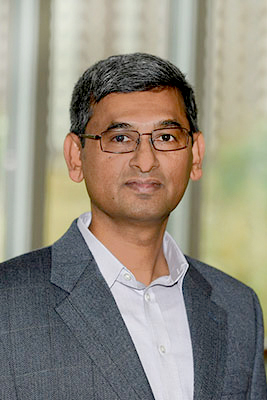
Alison Ramage is a Reader in Applied and Industrial Mathematics at the University of Strathclyde's Department of Mathematics and Statistics. Her research focuses on numerical linear algebra, preconditioning techniques for partial differential equations, and applications in liquid crystal modeling, geotechnical engineering, and data assimilation. She holds prestigious fellowships from the Leverhulme Trust and EPSRC, and has led numerous grants and collaborations with industry partners like Hewlett-Packard and Oasys Ltd. Education: PhD in Preconditioned Conjugate Gradient Methods from the University of Bristol (1991), BSc from the University of St Andrews (1987). Research Interests : Numerical Linear Algebra, Scientific Computing, Preconditioning, Liquid Crystals, Data Assimilation, Computational Fluid Dynamics. Her work bridges theoretical mathematics with practical industrial applications, emphasizing efficient algorithms and iterative solvers. Grants and Awards : Multiple EPSRC grants, including a £43K Leverhulme Fellowship (2017) for data assimilation research. Active in editorial roles for SIAM journals and professional societies like SIAM and EMS. Academic Service : Long-standing roles in SIAM, including Board of Trustees and editorial boards. Organized international conferences and workshops on numerical analysis and applied mathematics. Labs/Teams : Co-developed the IFISS software package for incompressible flow simulations, collaborating with global researchers in numerical methods and data science.
Professor Ralf Deiterding is a leading expert in Numerical Methods for Fluid Dynamics at the School of Engineering, University of Southampton . He also holds an Adjunct Associate Professor position at the Department of Mathematics, University of Tennessee - Knoxville . His work focuses on high-resolution computational methods for fluid-structure interaction, detonation waves, hypersonic flows, and adaptive mesh refinement. Education: PhD in Technical University Cottbus (2003), Diploma in Technical University Clausthal (1998) Research Interests span innovative numerical algorithms for compressible flows, rotating detonation engines , transpiration cooling , and magnetohydrodynamic solvers . He develops AMROC and Virtual Test Facility software frameworks for large-scale simulations. Scientific Contributions include parallel adaptive mesh refinement techniques for detonation physics, lattice Boltzmann methods for aerodynamics, and multi-physics simulations of hypersonic boundary layers. His publications emphasize detonation propulsion , shock-turbulence interaction , and parallel computing . Awards: ParCFD 2015 Best Paper Award Collaborations involve EPSRC-funded projects on hypersonic aerothermodynamics and atmospheric dispersion , with teams at Oak Ridge National Lab and DLR Göttingen. He supervises PhD students in computational fluid dynamics and contributes to space weather forecasting via MHD solvers.
Dr. Jens Keim is a Research Fellow at the Institute of Applied Analysis and Numerical Simulation at the University of Stuttgart. His research focuses on advanced computational methods for fluid dynamics, particularly entropy-stable schemes and high-order discontinuous Galerkin methods for compressible turbulent flows. His expertise spans multiphase flow simulation, shock capturing techniques, and dynamic mesh adaptation. Recent work integrates machine learning approaches with traditional CFD methodologies, including reinforcement learning for slope limiting and neural networks for particle dynamics modeling. Dr. Keim's publications demonstrate consistent innovation in high-performance computing applications for fluid dynamics, with emphasis on parallel algorithms and accelerator-based systems. His research advances numerical stability in complex flow simulations through novel relaxation models and adaptive methods. Current projects focus on turbulence modeling, multiphase flows, and computational efficiency improvements for large-scale simulations using modern data structures and GPU architectures.
Andreas Karageorghis is a Professor in the Department of Mathematics and Statistics at the University of Cyprus, affiliated with the School of Natural and Applied Sciences. His research focuses on numerical analysis, scientific computations, and boundary element methods, particularly employing the Method of Fundamental Solutions (MFS). He holds a DPhil from Oxford University, preceded by a BA and MA. His work emphasizes solving complex elliptic boundary value problems, inverse scattering, and geometric reconstruction. Notable contributions include advancements in MFS algorithms for biharmonic equations, axisymmetric systems, and polyharmonic problems. He has also explored hybrid meshless methods and RBF neural networks for nonlinear problems. Key applications span fluid mechanics (e.g., Brinkman equations), elasticity, and acoustic scattering. His research addresses challenges like void detection, shape identification, and steady-state heat conduction. Karageorghis has published extensively in top journals like SIAM and IMA Numerical Analysis, with over 40 years of continuous academic contribution. His methodological innovations include matrix decomposition algorithms, efficient Kansa-type MFS formulations, and non-iterative approaches for inverse problems. Ongoing work includes optimal parameter selection for RBF methods and extending MFS to higher-order PDE systems.
Anthony Wachs is an Associate Member of the Department of Mathematics at the University of British Columbia (UBC), affiliated with the Faculty of Science. His research focuses on computational fluid dynamics (CFD), particulate flows, and multiphase systems, with emphasis on numerical methods like DEM-CFD coupling and high-fidelity simulations of complex fluid-particle interactions. He develops scalable solvers for non-spherical rigid bodies and fluid-structure interactions, contributing to fields such as granular media, viscoplastic fluids, and biological capsule dynamics. His work bridges computational approaches with real-world applications in energy, biomedical engineering, and environmental systems. Research interests include particle-resolved direct numerical simulations (DNS), fluidized beds, and the development of tools like Grains3D and PeliGRIFF for particle dynamics. His studies address challenges in flow past irregular geometries, hydrodynamic force modeling, and machine learning-enhanced fluid dynamics. Wachs collaborates across disciplines, integrating advanced numerical techniques with experimental validation to advance understanding of multiphase flow phenomena.
Bertram Düring is Professor of Mathematics at the University of Warwick, serving as Director of Graduate Studies and Director of the Mathematics Centre for Doctoral Training. His research focuses on applied and computational partial differential equations. Key applications include financial mathematics (option pricing models, stochastic volatility) and socio-economic systems (kinetic opinion formation, wealth distribution). Recent work develops high-order numerical schemes for financial PDEs and agent-based models for social dynamics. He contributes to interdisciplinary projects on pandemic modeling, fingerprint pattern formation, and optimal taxation policies. Current grants support research on kinetic opinion models and novel discretizations for higher-order PDEs. Royal Society International Exchanges grant on kinetic opinion formation (2022-2024) Leverhulme Trust Research Project Grant on nonlinear PDE discretizations
Daniel Matthes is a Professor of Dynamical Systems at the Technical University of Munich (TUM), affiliated with the TUM School of Computation, Information and Technology and the Department of Mathematics. His research focuses on the qualitative theory of partial differential equation solutions, with particular expertise in gradient flow systems and kinetic equations. Matthes received his education at TU Berlin, where he completed his Diplom in Mathematics in 1999 and his PhD in 2003 with a thesis on Discrete Surfaces and Coordinate Systems: Approximation Theorems and Computation . He conducted postdoctoral research at the University of Mainz, the University of Pavia in Italy, and TU Vienna, before completing his Habilitation at TU Wien in 2010 with work on On the equilibration in certain kinetic and diffusion equations . Professor Matthes' research interests span the mathematical analysis of partial differential equations, particularly focusing on gradient flow structures, kinetic models, and their applications. His work bridges theoretical mathematics with practical applications in areas such as mathematical physics and economic modeling. He has made significant contributions to understanding the qualitative behavior of solutions to nonlinear PDEs, with particular emphasis on convergence properties, equilibrium states, and numerical approximation methods. His methodology often combines rigorous analytical techniques with computational approaches to extract meaningful insights from complex mathematical structures. His extensive publication record demonstrates a consistent focus on gradient flow systems, with recent work exploring discretization methods, convergence analysis, and applications to physical and economic models. Matthes has developed innovative numerical schemes for solving complex PDEs while maintaining important structural properties of the continuous equations, contributing significantly to both theoretical understanding and practical computational methods in the field. As part of the Dynamical Systems group at TUM, Professor Matthes contributes to the department's research in mathematical analysis and its applications. His work intersects with several research areas within the Department of Mathematics, including numerical analysis, mathematical physics, and applied analysis. The group maintains active collaborations with researchers across Europe and participates in various interdisciplinary projects that apply advanced mathematical techniques to real-world problems.
William Bettini is a Teacher-Researcher at CESI Aix-en-Provence Campus, affiliated with the Engineering and Digital Tools Research team and LINEACT (Laboratoire d'Innovation Numérique pour les Entreprises et les Apprentissages au service de la Compétitivité des Territoires). He serves as an educator across multiple engineering disciplines at the Integrated Preparatory Cycle and engineering cycles, with previous experience as Educational Manager for the Integrated Preparatory Class (2020-2021). His educational background includes: PhD in Mechanical Engineering and Civil Engineering from Université de Montpellier (2014-2018) with thesis on "Solutions innovantes pour des structures spatiales déployables" Master's in Mechanical Physics and Engineering, Aeronautics and Space specialization from Aix-Marseille Université (2011-2012) Bachelor's in Mathematics and Computer Science from Aix Marseille Université (2009-2010) Bettini's research centers on innovative structural solutions for aerospace applications, particularly focusing on deployable space structures that utilize stored elastic energy in flexible joints for automatic deployment. His work bridges theoretical modeling with practical engineering applications, emphasizing lightweight, compact configurations suitable for space missions. His expertise spans structural mechanics, materials science, finite element modeling, and vibration analysis, with particular emphasis on space antenna systems and deployable structures. His recent publications demonstrate a consistent focus on developing novel deployable antenna concepts, moving from scissor-based mechanisms to more efficient polygonal ring structures with integrated cable domes. This research trajectory shows increasing sophistication in creating self-deployable systems with fewer mechanical connections, better tension distribution, and improved compactness for space applications. Bettini actively contributes to the academic community as a reviewer for international conferences and journals including "Materials science and mechanical engineering" (IWMSME 2020), "Nonlinear dynamics," and "Aerospace Science and Technology." His teaching portfolio is extensive, covering Mechanics, Civil Engineering, Mathematics, and Computer Science across various engineering cycles. He has developed innovative teaching methodologies in Mechanics and Civil Engineering, particularly in Resistance of Materials (RDM), and has taught courses ranging from fundamental mathematics to advanced structural analysis and computational methods. Bettini's research is conducted within collaborative frameworks, particularly with the LMGC (Laboratoire de Mécanique et Génie Civil) at Université de Montpellier and in partnership with space agencies like CNES. His work on deployable structures represents a significant contribution to the field of lightweight, self-deploying aerospace structures that can be applied to satellite antennas, solar sails, and deorbiting systems.
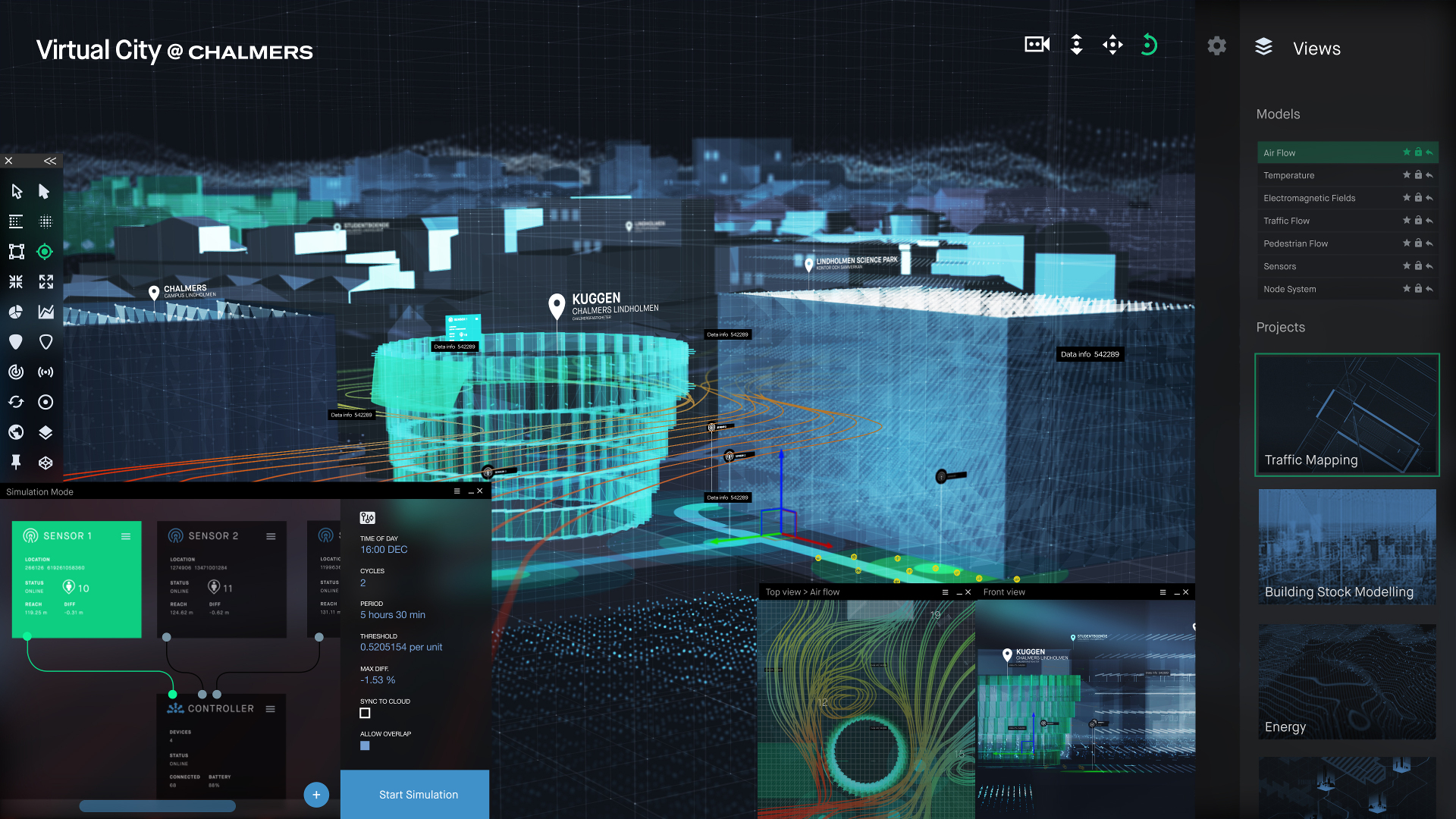
Anders Logg is a Professor of Computational Mathematics at Chalmers University of Technology , Sweden. He serves as Director of the Digital Twin Cities Centre and leads the interdisciplinary VirtualCity@Chalmers project, aiming to build digital twins of urban environments for simulating traffic, wind flow, pollution dispersion, and flooding. Expertise in finite element methods and FEniCS software development Pioneer in mesh generation with tools like mshr Active in scientific computing and domain-specific languages His research team includes experts in mathematical modeling, Unreal Engine development, and building information modeling . Recent work focuses on integrating IoT with digital twins for energy management and developing scalable simulation frameworks for urban planning. Key research trends across publications include: Digital twin technologies for urban environments Mesh generation in complex geometries Multiphysics simulations (fluid dynamics, heat transfer) Automated computing through domain-specific languages Machine learning integration with urban modeling
Marco Francesco Funari is a Lecturer in Civil and Environmental Engineering at the University of Surrey, affiliated with the School of Sustainability, Civil and Environmental Engineering within the Faculty of Engineering and Physical Sciences. He holds a MSc in Architectural Engineering (2015) and PhD in Structural Engineering (2019) from the University of Calabria, Italy, with postdoctoral research at the University of Minho (2020–2022) focusing on heritage masonry structures. His research integrates computational methods, structural analysis, and cultural heritage preservation. Education: MSc in Architectural Engineering, University of Calabria (2015) PhD in Structural Engineering, University of Calabria (2019) Postgraduate Certificate in Learning and Teaching in Higher Education, University of Surrey (2024) Research Interests Funari’s work centers on structural integrity of existing and heritage structures, computational optimization, and crack propagation in layered materials. He develops analytical/numerical methods for seismic assessment of masonry buildings and low-carbon concrete technologies. Key topics include masonry pattern generation, digital twins for heritage conservation, and stochastic earthquake modeling. Publications Overview Recent work focuses on pushover analysis of historic masonry, generative modeling of temples, and seismic resilience of monumental structures. His methods combine limit analysis, discrete element modeling, and machine learning to address challenges in heritage preservation and sustainable materials. Grants & Collaborations Contributed to EU projects OPHERA and ERC Stand4Heritage, developing frameworks for masonry assessment. Collaborations include University of Minho, University of Dundee, and international heritage institutions. Labs & Teams Leads research on masonry structural analysis and low-carbon materials at the University of Surrey. Engages with interdisciplinary teams in computational modeling and heritage engineering.
James Percival is a Senior Teaching Fellow in the Department of Earth Science & Engineering at Imperial College London, part of the Faculty of Engineering. His research focuses on computational methods for fluid dynamics, environmental engineering, and porous media flow. He is affiliated with the Applied Modelling and Computation Group and the Novel Reservoir Modelling and Simulation (NORMS) initiative. His work emphasizes numerical simulations using advanced techniques like discontinuous Galerkin methods and adaptive unstructured meshes. Key research areas include hydro-morphodynamics, multiphase flow modeling, and reservoir engineering. His publications highlight contributions to fluid dynamics, atmospheric modeling (e.g., ATHAM-Fluidity), and environmental applications such as pipeline scour analysis. Percival’s methodologies prioritize high-resolution simulations and mesh optimization for complex geophysical and industrial challenges. His articles reflect a trend toward integrating computational efficiency with accuracy in modeling phenomena like viscous fingering, interfacial flows, and extreme weather events. Despite significant contributions, no awards or grants are explicitly noted in the provided texts.
Prof. Axel Klar is a Professor in the Department of Technomathematics at the Rheinland-Palatinate University of Applied Sciences (RPTU) Kaiserslautern-Landau. His research focuses on mathematical modeling of complex systems, with a strong emphasis on kinetic theory, fluid dynamics, and applied analysis. Key areas of expertise include traffic flow dynamics, fiber dynamics in industrial processes, pedestrian movement patterns, and biological systems such as cell motion and tumor growth. He develops and analyzes numerical methods for partial differential equations and stochastic systems, often addressing challenges in technical textile production, non-equilibrium thermodynamics, and multi-physics simulations. His work bridges microscopic particle-based models with macroscopic continuum descriptions, emphasizing asymptotic methods and domain decomposition techniques. Notable contributions include stochastic fiber lay-down models for nonwoven manufacturing, mesh-free particle methods for granular and rarefied gas flows, and kinetic-based traffic models with applications to autonomous vehicles and crowd control. Current research explores data-driven approaches for coupled systems in socio-economic and biomedical contexts. Prof. Klar’s interdisciplinary projects involve collaborations with industry partners (e.g., in textile engineering) and academic institutions globally. His team develops open-source numerical toolkits for applications ranging from radiation therapy optimization to climate-resilient infrastructure design. Recent efforts focus on AI-driven parameter estimation for high-dimensional PDE systems and uncertainty quantification in multi-scale modeling.
Shuang Liu is an Assistant Professor in the Department of Mathematics at the University of North Texas. Previously, she held positions as a SEW Assistant Professor at UC San Diego and Postdoc Research Associate at Los Alamos National Laboratory. She earned her PhD in Mathematics from the University of South Carolina and holds MS/BSc degrees from Henan Normal University. Her research focuses on numerical methods for free boundary problems with applications in ecology, plasma physics, and computational biology. Key areas include population dynamics modeling, cell movement simulation, and plasma equilibrium computations. Her publications demonstrate consistent focus on developing robust numerical algorithms for complex biological and physical systems, particularly advancing techniques for moving boundary problems and high-performance computing implementations. Awards: AMS Simons Travel Grant (2021-2023) NSF Graduate Internship at LANL (2019) George W. Johnson Fellowship (2019) Multiple travel awards from AMS/SIAM and USC She has supervised graduate students including Zunding Huang and received research funding from UCSD and AMS. Her work involves collaborations with research groups in computational mathematics and plasma physics.
Roy Koomullil is an Associate Professor in the Department of Mechanical Engineering at the University of Alabama at Birmingham (UAB). He specializes in Computational Fluid Dynamics (CFD), High Performance Computing, and Fluid Mechanics. His research integrates aerodynamics, biomedical flow simulation, and machine learning for fluid dynamics challenges. Education: Ph.D. in Aerospace Engineering from Mississippi State University (1997). Prior to UAB, he served as an Assistant Research Professor at the NSF ERC at MSU and a Research Associate at the Naval Research Laboratory. Research Focus: Computational Fluid Dynamics (CFD) with applications in aerospace and biomedical systems Machine Learning integration for wind field prediction and vehicle aerodynamics Morphing structures for autonomous vehicle stability under crosswind conditions Biomedical flow modeling, including tumor microenvironment and MRI phantoms Administrative Roles: Undergraduate Program Director Graduate Program Director Mechanical Engineering Honors Program Director Funding & Grants: Secured research projects from NASA, DoD, NIH, and industry partners. Published in leading journals and reviewed for AIAA Journal. Served as Editor for the Electronic Journal of Differential Equations.