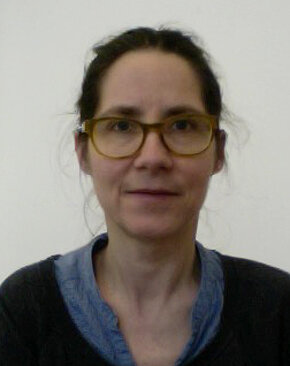
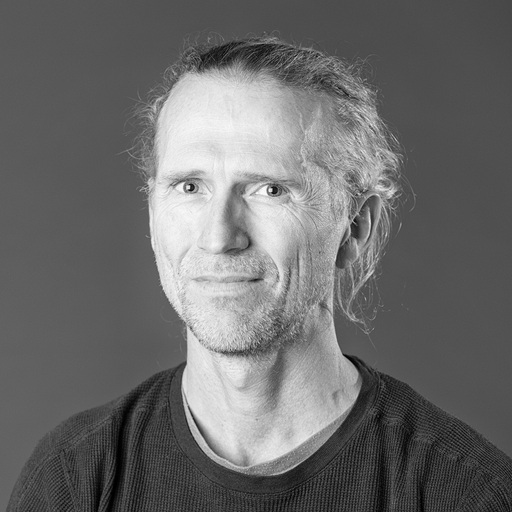
Flora Watzal is a visual artist and filmmaker affiliated with the Music and Arts Private University of the City of Vienna since September 2021. She teaches at the Institute for Artistic Teacher Training (Academy of Fine Arts Vienna) and the Institute for Site-Specific Art (University of Applied Arts Vienna). Education : Academy of Fine Arts Vienna Her artistic practice focuses on visual arts, video art, and experimental film , often exploring spatial dynamics, human behavior, and digital aesthetics. Her works have been exhibited internationally and screened at film festivals. Article trends reveal a consistent emphasis on multimedia storytelling and environmental interaction , evolving from physical installations to algorithmic and interactive projects. Scientific Awards : 2021 Project Funding Federal Chancellery/Film and MA7/Film 2014 Outstanding Artist Award - Video and Media Art 2006 State Scholarship for Fine Arts Grants and funding have supported her work in film and new media art since 1999.
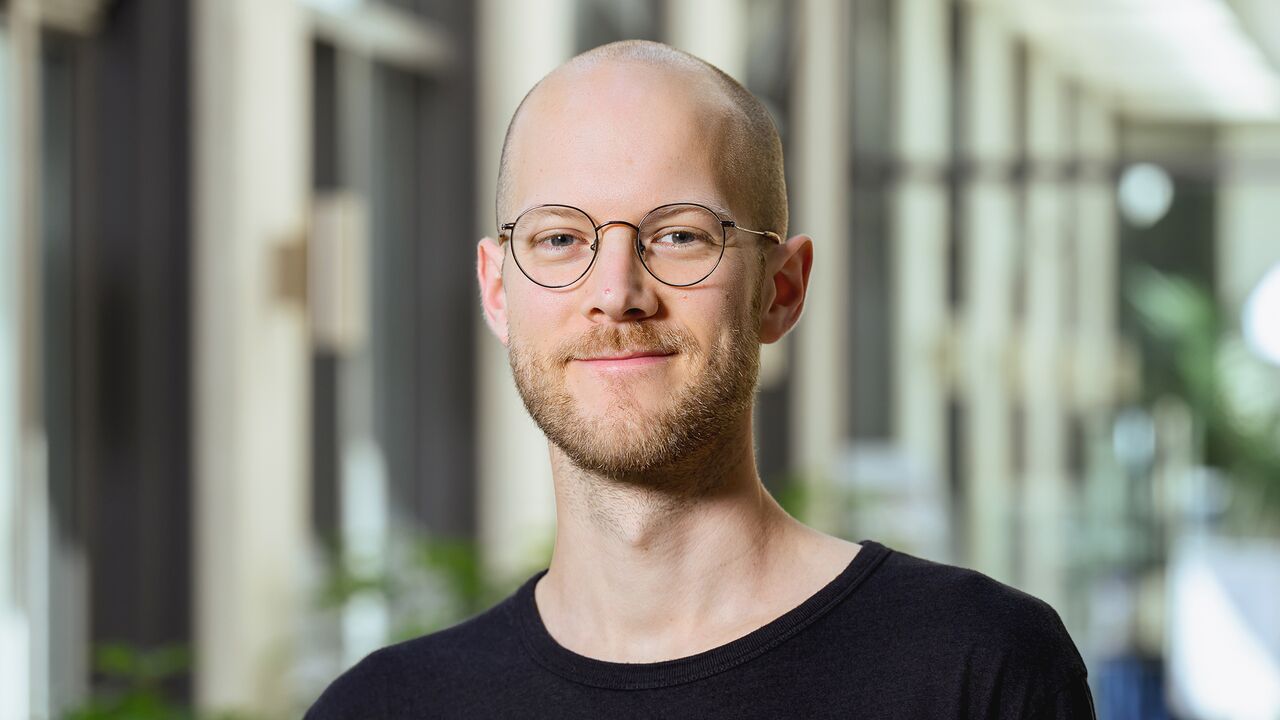
Tornike Metreveli is an Associate Professor (Docent) in Sociology of Religions and Associate Senior Lecturer in European Studies at Lund University, Sweden. He holds affiliations with the Centre for Theology and Religious Studies and the Centre for Languages and Literature under the Joint Faculties of Humanities and Theology. His work bridges nationalism studies, religious sociology, and post-Soviet political dynamics. PhD in Sociology (magna cum laude), University of Bern (2017) Research Fellow in Ukrainian Studies, Harvard University MSc in Nationalism Studies, University of Edinburgh Research interests focus on the intersection of Orthodox Christianity, nationalism, and political transitions in the former Soviet Union and Yugoslavia, with particular attention to church-state relations, religious practices during crises, and geopolitical narratives. His fieldwork includes extensive ethnographic and survey-based studies in Ukraine, Georgia, and Serbia. Recent projects include Coronavirus: A New Test(ament) of Orthodox Christianity (2021-2022), which produced the edited volume Orthodox Christianity and the COVID-19 Pandemic (2023), and the Religion and the Wars of the 21st Century project (2022-2023) mapping religious narratives in Georgia, Ukraine, and Karabakh. He also created the geospatial database toc.ge for the Georgian Orthodox Church, earning the EU Prize for Journalism (2023) . As a Principal Investigator , Metreveli led international collaborations with St. Gallen University and the London School of Economics, producing open-access datasets like ReWars21 . His teaching spans religion and ethnic politics, social movements, and sociology of sport at undergraduate and MA levels, with experience at Bern and St. Gallen Universities.
Daniela Rodriguez Romero is a Lecturer at the College of Dance and Movement Culture within the German Sport University Cologne . She specializes in urban dance pedagogy, focusing on school and non-formal education contexts. Her work emphasizes constructivist didactics and methodological diversity in dance education. Teaching since 2016 as Lehrkraft für besondere Aufgaben Developed urban dance curriculum for schools (2009-present) Founder of Ladies Dance - women for women (2006) Research Interests : Urban dance methodology in formal and informal settings, gender dynamics in dance cultures, dance pedagogy with constructivist approaches. Her work bridges academic theory with practical dance education. Publication Trends : Collaborative research outputs focus on urban dance integration in academic institutions, curriculum development, and community engagement projects. Key themes include pedagogical innovation and gender-specific dance initiatives. Awards : DSHS Teaching Award for practice courses (2015)
Virginie Magnat is a full Professor in the Faculty of Creative and Critical Studies at the University of British Columbia Okanagan . She additionally serves as the IGS Theme Coordinator for Community Engagement, Social Change, Equity and is a graduate student supervisor. Education Ph.D. in Drama and Theatre, University of California, 2003 D.E.A., English Department, Sorbonne/Paris III, France, 1993 Master’s in English and Theatre Studies, Sorbonne/Paris III, France, 1990 Foundation Year Program, University of King’s College, Halifax, Canada, 1985 International Baccalaureate, Lester B. Pearson United World College, 1984 Research Interests Her scholarly and creative work centres on Performance Studies , qualitative research methodologies , and Indigenous epistemologies . She explores arts-based inquiry , voice-body integration , and collaborative eco-cultural practices for collective healing and renewal . A committed activist for Occitan language revitalization , she interweaves post-qualitative, Indigenous, and posthumanist frameworks to advance decolonizing research and pedagogy. Research & Creative Trajectory Across her recent publications (2020–2024), Magnat traces a sustained engagement with the performative power of vocality , the Stanislavsky–Grotowski lineage , and Indigenous ethico-onto-epistemologies . Her work bridges critical theory, embodied practice, and intercultural performance, culminating in collaborative projects that position performance as a catalyst for environmental justice and Indigenous resurgence. Awards & Distinctions American Theatre and Drama Society Book Award – Honorable Mention (2020) Canadian Association for Theatre Research Book Award – Honorable Mention (2014) International Federation for Theatre Research New Scholar’s Prize (2001) Grants & Graduate Supervision She currently co-leads the SSHRC-funded “Radical Collaborations: Transformative Eco-Cultural Practices for Collective Healing and Renewal” (2024-27). Additional SSHRC grants include Insight, Connection, and Research/Creation awards spanning 2008-2018. Magnat has supervised numerous SSHRC-funded graduate students in interdisciplinary performance and Indigenous studies, including recent graduates Claire Fogal (PhD) and Mariel Belanger (MFA). Labs, Networks & Editorial Roles She is an Associate Editor of Theatre, Dance and Performance Training Journal , a Steering Committee member of the Institute for Performance Studies (SFU), and a founding member of the Indigenous Inquiries Circle linked to the International Congress of Qualitative Inquiry. Her research website virginiemagnat.space hosts further information on her projects and collaborations.
Steve Bradley is a Professor and holds the T. Stevens Chair of Free Enterprise at Baylor University. He also serves as a Faculty Advisor for the Student Life Center/Campus Rec, operating from the Foster Business and Innovation building. His academic role involves advancing research in entrepreneurship and organizational dynamics. Bradley's research explores entrepreneurship through multidisciplinary lenses, including psychological, sociological, and policy-oriented perspectives. Key themes include social capital's impact on start-up resilience, faith-driven entrepreneurial persistence, innovation in developing economies, and the intersection of well-being with self-employment. His work frequently addresses systemic challenges like gender gaps in entrepreneurship and the role of institutional policies in fostering innovation. His publications demonstrate a consistent focus on entrepreneurial ecosystems over the past decade, with recent work emphasizing multi-level analysis of organizational survival, diversity in academic hiring, and sustainable methodologies in materials science. The research often incorporates empirical evidence from global contexts, particularly developing economies. Awards and Honors: T. Stevens Chair of Free Enterprise (endowed position recognizing scholarly contributions)
Prof. Dr. Florian Spissinger has been Professor of Social Work – Theories and Methods at the Baden-Württemberg Cooperative State University (DHBW) Villingen-Schwenningen since 2025. He teaches and researches within the Faculty of Social Work, concentrating on qualitative social research, homelessness, right-wing populism, and socio-ecological transformation. Education & Career Path 2023: Doctorate (Dr. rer. pol., summa cum laude) in Political Science, University of Leipzig 2018–2021: BMBF doctoral scholarship, Rosa Luxemburg Foundation 2009–2012: Dual Bachelor’s in Social Work (Care & Rehabilitation), DHBW Stuttgart Research Focus Spissinger’s work combines ethnographic fieldwork with affect theory to interrogate the emotional architectures of contemporary right-wing movements. He analyses how the AfD constructs an “emotional community” that offers feelings of belonging, moral vindication, and even pleasure to its adherents. Parallel strands of his research connect social-work practice with anti-climate politics, homelessness, and disability inclusion. Scientific Awards & Fellowships 2024: Finalist, German Study Award (Social Sciences), Körber Foundation 2023: Dissertation Prize, Barbara Budrich Publishing House 2018–2021: BMBF Doctoral Scholarship, Rosa Luxemburg Foundation 2012: Award for Outstanding Achievements in the Bachelor’s Programme, DHBW Stuttgart Research Grants & Networks He is Co-speaker (since 2024) of the DVPW working group “Ethnographic Methods in Political Science” and an active member of the DGSA specialist group on “Climate Justice and Socio-Ecological Transformation in Social Work.” His earlier BMBF-funded PoliLab project investigated the malleability of national narratives through political laboratories. Laboratories & Teams At DHBW Villingen-Schwenningen he leads seminars on qualitative research, outreach emergency housing, and human-rights-based social work. He collaborates with the state-level Team meX programme (Baden-Württemberg State Office for Political Education) and maintains an active schedule of public-engagement talks, podcasts, and policy-oriented workshops.
Dr. Cathy Wilcock is a Research Fellow in the School of Geography and Planning at the University of Sheffield, where she conducts interdisciplinary research at the intersection of political sociology, geography, and cultural studies. Her methodological approaches draw from anthropology and musicology, with a regional focus on the Horn of Africa and the UK. Her educational qualifications include: PhD in Development Studies Master's in International Development Bachelor's degree in English Literature Dr. Wilcock's research interests encompass Migration and Displacement, Transnational Political Communities, Belonging, Citizenship and Political Identities, Horn of Africa Politics (particularly Sudan, South Sudan, and Somalia), UK Immigration Policy, and Music and Politics. She investigates how diaspora communities navigate political identities and engage in activism across transnational spaces, with a focus on Sudanese and Somali communities in the UK. Her scholarly output from 2015 to 2023 includes seven peer-reviewed articles that explore diaspora formation, resistance to peacebuilding, and the epistemological and ethical dimensions of ethnographic research with musician revolutionaries. These works employ qualitative methodologies and contribute significantly to debates in migration studies, political sociology, and cultural studies. Based on the available information, Dr. Wilcock has not listed any scientific awards or fellowships. She is open to supervising postgraduate taught and research students in her areas of expertise, though specific current students and grant-funded projects are not detailed in the provided profile.
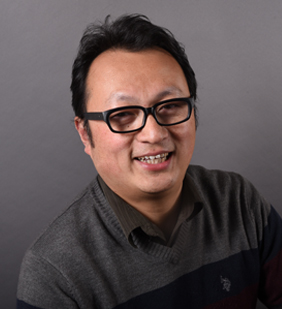
Wenhua Shi serves as Associate Professor in the Art Department at the University of Massachusetts Boston, where he teaches courses including Intro to Video, Sight and Sound, Time and Motion, and Digital Studio. His practice spans film, video, animation, sound art, and interactive installations, with works exhibited internationally at venues including the International Film Festival Rotterdam, European Media Art Festival, Venice Biennale, and Shenzhen-Hong Kong Bi-City Biennale. His educational background includes an MFA from the University of California, Berkeley (2009) and dual BFA/BA degrees from the University of Colorado, Boulder. His research focuses on poetic approaches to moving image making and conceptual depth in time-based media, exploring themes of temporal perception, sensory experience, and cultural memory through experimental techniques in video, sound, and interactive technologies. Shi's creative output reveals consistent exploration of time perception and sensory embodiment across diverse media formats. His work demonstrates technical mastery in video mapping, generative algorithms, and site-specific installations, often incorporating audience participation and cultural symbolism. The recurring themes of fragmentation, cyclical time, and environmental interaction reflect his conceptual depth in contemporary art practice. Scientific Awards: Mass Cultural Council (2024) New York Foundation for the Arts (2015) New York State Council on the Arts LEF Foundation (2021) Juror’s Award from the Black Maria Film and Video Festival Shi has secured significant research funding including grants from Mass Cultural Council (2024), New York Foundation for the Arts (2015), New York State Council on the Arts, and LEF Foundation (2021). He serves as jury member for prestigious events including the Ann Arbor Film Festival (2024) and National Endowment for the Arts (2017-2021). As founder and curator of RPM Festival (2013-Present), he leads collaborative projects including Revolution Per Minutes: Sound Art China and co-curated exhibitions with artists like Zoe Strauss and Sergio De La Torre. His studio practice integrates teaching, curation, and experimental production across moving image, sound, and interactive media.
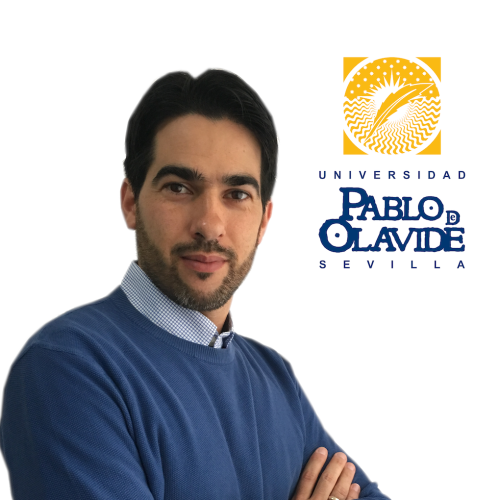
Francisco Javier Brazo Sayavera is an Associate Professor at Pablo de Olavide University in the Department of Sports and Information Technology. He leads research at the Center for Research in Physical and Sports Performance (CIRFD) and collaborates with the AFSD Physical Activity, Health and Sport research group. His work focuses on physical activity surveillance, health promotion in youth, and sports performance analysis. Education: PhD in Exercise Physiology from the University of Extremadura (2011) His research spans physical activity patterns in children/adolescents, Mediterranean diet correlations with fitness, and movement behavior analysis during global health crises like the COVID-19 pandemic. Recent projects include the ACTIBESE intervention for schoolchildren, AEROBICOVID for post-pandemic recovery, and contributions to the Global Matrix 4.0 initiative. Current affiliations include: Pablo de Olavide University, Sevilla, Spain (2020–present) Active Healthy Kids Spanish Network (founding member) Global Observatory for Physical Activity (GoPA!) His methodological expertise includes systematic reviews, Delphi consensus models, and observational studies on physical activity determinants. Email: jbsayavera@upo.es
Per Roar Thorsnes serves as Professor and Head of the Master's Programme in Choreography at the Academy of Dance, Oslo National Academy of the Arts. With a Doctorate in Arts (Dance) and interdisciplinary training spanning history, social sciences, and performance studies, he bridges artistic practice and academic research through choreographic fieldwork and somatic inquiry. His educational trajectory includes: BA in Choreography from the Academy of Dance (KHIO) MA in Performance Studies from New York University Doctorate in Arts (Dance) from the University of the Arts Helsinki Background in History and Social Sciences (Cand. Mag) from the University of Oslo Graduate studies at Corvinus University (Budapest) and Oxford University Thorsnes' research centers on performative memory work, investigating how dance can excavate traumatic histories and construct counter-narratives. His choreographic practice—exemplified by works like LIFE & DEATH (2006) and IF THIS IS MY BODY (2010-2013)—merges socio-political critique with somatic awareness, particularly examining queer temporality and marginalized voices. Recent projects focus on archival reactivation through collective initiatives like Seminarium (2012-2016) and the Skeiv Bevegelse magazine documenting Norwegian queer dance history. Analysis of his 2023-2024 publications reveals a cohesive exploration of memory as active resistance: works consistently engage with trauma recovery, archival ethics, and queer historiography through embodied methodologies. The outputs span academic lectures, scientific articles, and critical reviews, demonstrating interdisciplinary engagement with memory studies while prioritizing marginalized perspectives—particularly through the lens of "skeiv" (queer) experience. His recognition includes: US-Fulbright scholarship (1998-1999) Norwegian Government fellowship for artists (2000-2003) Norwegian Government’s Guarantee Income for Artists (2013-2029) As programme head, Thorsnes supervises MA choreography students while leading curriculum development that integrates artistic research with social engagement. His collaborative projects—including BY CARTE BLANCHE (2016) and Danseinformasjonen initiatives—create platforms for experimental research-creation. Significant funding through national artist fellowships supports his decade-long investigation into traumatic grieving and memory politics. Thorsnes maintains active international collaborations through collective artistic research teams, notably co-developing the Skeiv Bevegelse project that circulates queer dance histories via publications, performances, and community workshops at venues like Oslo's Black Box Theatre.
Dr. Leigh Potvin (she/her) is an Associate Professor and Director at the School of Outdoor Recreation, Parks and Tourism, Lakehead University. Her work bridges education, social justice, and environmental concerns through community-based research. Education: PhD (Socio/Cultural and Political Contexts of Education, Lakehead University, 2017); M.Ed. (2011); B.Ed. (2005); B.A. (Political Science and African Studies, McGill University, 2003). Leigh's research focuses on equity and LGBTQ2S+ youth advocacy in educational settings, including food justice in Cape Breton and body politics in outdoor recreation. Her recent publications explore intersections of queer pedagogy, fat studies, and community resilience, emphasizing allyship and systemic reform. She has received SSHRC funding for community-based food justice research and advocates for inclusive policies in education and outdoor spaces, particularly addressing fat-inclusion and active transportation. Dr. Potvin mentors students and collaborates with teams on projects integrating social justice, environmental studies, and educational reform.
Professor Juana María Rodríguez is a faculty member in the Department of Ethnic Studies at the University of California, Berkeley, with core affiliations in Performance Studies. Her work bridges queer of color theory, affect studies, and critical race theory. Ph.D. in Ethnic Studies, UC Berkeley (1998) M.A. in English and Comparative Literature, Columbia University (1991) B.A. in Liberal Studies, San Francisco State University (1988) Her research explores racialized gender and sexuality; queer Caribbean and Latinx cultural production; affective and aesthetic practices; and the intersections of law, media, and critical race theory. She is the author of three acclaimed books, including Puta Life: Seeing Latinas, Working Sex (2023), Sexual Futures, Queer Gestures, and Other Latina Longings (2014), and Queer Latinidad: Identity Practices, Discursive Spaces (2003). Her work has been recognized with awards like the Alan Bray Memorial Book Prize and Lambda Literary Finalist distinction. Recent publications focus on queer archives, affective methodologies, and Latinx media practices. She has also contributed to LGBTQ+ anthologies and academic journals internationally. Scientific Awards & Honors Kessler Prize, CLAGS Center for Lesbian and Gay Studies (2022) John P. Birkelund Fellow in the Humanities, American Academy in Berlin (2021) Alan Bray Memorial Book Prize, Modern Language Association (2015) Lambda Literary Finalist for LGBT Studies (2015) Distinguished Teaching Award, UC Berkeley (2013) Distinguished Faculty Mentor Award, UC Berkeley (2013) Chancellor’s Public Fellow, UC Berkeley (2010) Professor Rodríguez serves as affiliated faculty with multiple Berkeley centers, including the Center for New Media, Center for Latin American Studies, and Center for the Study of Sexual Cultures.
Cristine Agresta, PT, MPT, PhD, serves as Associate Professor in the Department of Rehabilitation Medicine at the University of Washington School of Medicine. Her academic appointment bridges clinical practice and translational research in sports biomechanics, with affiliations in both the Doctor of Physical Therapy program and Orthopaedic Residency training. Her educational background includes: BS in Movement Science, University of Michigan (2002) Masters of Physical Therapy, Youngstown State University (2006) PhD in Movement Science, Temple University (2015) Postdoctoral Fellowship in Kinesiology, University of Michigan (2017) Dr. Agresta's research focuses on enhancing physical resilience and performance in athletes through advanced biomechanical assessment. She specializes in clinical movement analysis, wearable sensor applications, footwear biomechanics, and athlete readiness monitoring. Her work bridges laboratory findings with real-world sports applications through collaborations with athletic organizations, equipment manufacturers, and clinical teams. Current projects examine baseball pitching mechanics, basketball practice demands, and running injury prevention strategies. Her recent publications demonstrate strong translational focus across sports medicine domains, particularly in baseball workload monitoring (2023-2025), running biomechanics (2022-2024), and basketball movement analysis (2024). Key trends include sensor-based workload quantification, footwear-athlete interaction dynamics, and evidence-based practice development for clinicians. Dr. Agresta actively supervises research within the University of Washington Performance Research Lab, mentoring students in biomechanics methodology and clinical translation. Her teaching responsibilities span the musculoskeletal track of the DPT program and Orthopaedic Residency curriculum. Her laboratory work emphasizes field-deployable assessment methods, particularly inertial measurement units for monitoring athlete performance and injury risk in natural settings. Current projects integrate biomechanical analysis with clinical decision-making protocols for sports medicine practitioners.
Ann Werner is a Professor of Musicology at Uppsala University , with a primary focus on gender studies, popular music, and media analysis . She also holds an Associate Professor position in Gender Studies at Södertörn University , where she explores gender equality and equity in the music industry . Dr. Werner serves as Director of Studies for the undergraduate program in musicology and teaches courses on popular music, music ethnology, and gender theory . Research Interests : Feminism in music, digital streaming platforms, gender equality in creative industries, and algorithmic culture. Projects : Led studies on organizational work environments in artistic professions , gender in European conservatory education , and music streaming culture . Publications : 15+ peer-reviewed articles analyzing gender in music education , algorithmic mediation , and cultural resistance in music , with recent work on #MeToo’s impact on performing arts and neoliberal marketing in conservatories . Networks : Active in Nordic gender equality research networks and collaborative projects across Sweden, Russia, and Lithuania .
Scott A. Shaffer is a Professor in the Department of Biological Sciences at San José State University , specializing in the physiological ecology of vertebrate animals with particular emphasis on birds and mammals. His research integrates advanced biologging technologies with traditional ecological methods to understand animal behavior and energy dynamics in marine environments. PhD in Biology (2000), University of California, Santa Cruz MSc in Marine Sciences (1996), University of California, Santa Cruz BSc in Biology (1993), San Diego State University Shaffer's work focuses on bioenergetics and movement ecology of marine vertebrates, utilizing the doubly labeled water technique to measure field metabolic rates and water flux. He has pioneered the application of microprocessor-based data logging tags to track animal behavior and physiology in remote environments, contributing to understanding how species like albatrosses and seals interact with their marine habitats. His publication record (1997-2009) demonstrates expertise in: Seabird migration patterns (2006: shearwaters across Pacific) Physiological constraints on foraging (2008: albatross energy budgets) Endocrine regulation of behavior (2007: corticosterone in seabirds) Tracking technology validation (2005: geolocation methods) Comparative movement analysis (2003: albatross foraging strategies) Flight and diving mechanics (2000: albatross wind utilization) Shaffer has been instrumental in developing standardized approaches for marine mammal behavior studies (2006) and investigating physiological tradeoffs in long-lived species like the wandering albatross (2006: hormonal aging studies). His work bridges physiological measurements with broader ecological questions about resource use and conservation in marine systems.