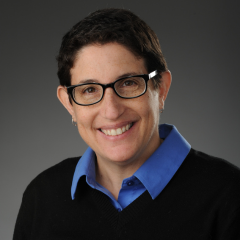
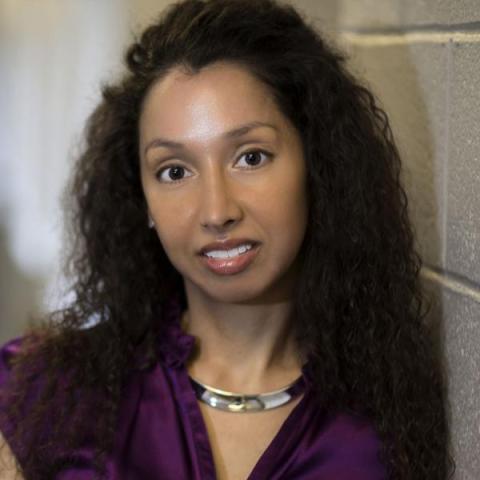
Andy Hargreaves is an internationally recognized scholar and advisor in education, holding dual roles as Adjunct Professor at Boston College and Visiting Professor at the University of Ottawa. He advises governments including Ontario, Scotland, and New Brunswick on educational policy and system reform. His work focuses on leadership, well-being, student engagement, and systemic educational change. Hargreaves co-leads the ARC Education Project and founded CHENINE, a Canadian research initiative advancing pedagogical innovation. Research Interests: Leadership from the Middle Teacher Well-Being and Professional Capital Identity Development in Schools Play-Based Learning Crisis Management in Education Awards: 2023 Canadian EdTech Awards Educator of the Year 2023 RHSU Edu-Scholar #16 2022 National Academy of Education Member 2015 Grawemeyer Award Key Projects: ARC Education Project (7 nations collaboration) CHENINE (Canadian educational innovation hub) Canadian Playful Schools Network Labs/Teams: Directs CHENINE, collaborates through ARC networks, and leads research on global educational transformation.
Raquel E. Aldana is the Martin Luther King Jr. Professor of Law at UC Davis School of Law, where she rejoined as a full-time faculty member in 2020 after serving as Associate Vice Chancellor for Academic Diversity (2017–2020). She holds a J.D. from Harvard Law School and B.A. degrees in English and Spanish from Arizona State University (summa cum laude). Her academic career includes prior roles at the McGeorge School of Law and the University of Nevada, Las Vegas, as well as a Fulbright Scholarship in Guatemala (2006–2007). Her research focuses on transitional justice, criminal justice reform, sustainable development in Latin America, and immigrant rights. Aldana has authored or edited five books and over thirty law review articles, earning recognition through grants such as the UC Davis Academic Senate Interdisciplinary Grant for the project Building Bridges: Narrowing the Legal-Scientific Divide in Immigration Forensic Assessments . She teaches courses on immigration law, asylum, comparative forced displacement, and critical race theory. Aldana leads the Aoki Center for Critical Race and Nation Studies, co-directing its mission to advance interdisciplinary scholarship on race, ethnicity, and law. She co-founded the Critical Race Theory Book Series with UC Press, aiming to globalize and diversify critical race discourse. Her awards include the ABA’s Margaret Brent Women Lawyers of Achievement Award and the UC Davis Chancellor’s Achievement Award for Diversity. Her service includes roles on the American Law Institute, American Bar Foundation, and the Council on Foreign Relations. She chairs the ABA’s Latin America and Caribbean Council and co-chaired the UC Davis taskforce to achieve Hispanic Serving Institution (HSI) status, realized in 2024. Her work integrates legal education, policy reform, and grassroots advocacy to address systemic inequities in migration, criminal justice, and global development.
Professor Susan Goodwin is a leading academic at the University of Sydney, specializing in social policy, gender studies, and social justice. She holds a BA(Hons) from ANU and a PhD from the University of Sydney. Her work focuses on collaborative research projects with government and civil society organizations, emphasizing participatory methodologies to address poverty and inequality. Educations: PhD, University of Sydney BA(Hons), Australian National University Her research interests span social structures, gender relations, and community development, with a focus on policy analysis methodologies. Notable projects include participatory approaches to community revitalization in Australia and Hong Kong, and interrogating constructions of motherhood in Australia. Professor Goodwin is affiliated with the Sydney Policy Lab, Sydney Southeast Asia Centre, and the Charles Perkins Centre. Her awards include the 2016 Vice-Chancellor’s Award for Outstanding Research Supervision and a 2014 residency at Hong Kong Baptist University. Key Grants & Projects: ARC Linkage Project on participatory community development in public housing neighborhoods NSW Refugee Youth Policy Initiative Research on gender, social policy, and adolescent girls' sexuality in Indonesia She actively contributes to policy networks like the Social Policy Research Network and co-convenes the Sydney Social Justice Network. Her work bridges academic research with practical policy impact, emphasizing grassroots engagement and equity.
Pamela Y. Collins is a Bloomberg Centennial Professor and Chair of the Department of Mental Health at the Johns Hopkins Bloomberg School of Public Health. She holds an affiliate professorship at the University of Washington's Department of Psychiatry and Behavioral Sciences. Her work bridges global mental health, HIV care, and stigma reduction. She leads initiatives in low-resource settings, including integrating mental health into HIV programs and developing scalable interventions like the WHO-UNICEF EQUIP initiative. Her research focuses on marginalized populations, including adolescents in urban environments and communities affected by conflict. Education: MD from Cornell University Medical College (1991), MPH from Columbia University (1997), BA from Purdue University (1986). She has held leadership roles at the National Institute of Mental Health (NIMH) and global health organizations like I-TECH. She chairs the American Psychiatric Association’s Council on International Psychiatry and co-chairs the Connecting Climate Minds initiative. Research Interests: Global mental health systems, HIV/mental health integration, stigma reduction, adolescent mental health in urban contexts, and culturally adapted interventions. She pioneered studies on mHealth in Ghana’s prayer camps and co-led the MindKind study on youth data governance. Awards: Over 20 honors including the NIH Merit Award, NIMH Director’s Awards, and the Jeanne Spurlock Minority Fellowship. Her work emphasizes equity and capacity-building in global health. Grants/Advising: Principal investigator on NIH-funded projects like the Kenya adolescent HIV-mental health trial and co-investigator on Ghana’s mHealth/nurse intervention. She advises on climate change and mental health linkages through her role with the Lancet Commission on Adolescent Health. Labs/Teams: Leads the Johns Hopkins Mental Health Department’s global initiatives, collaborating with WHO, UNICEF, and institutions in Kenya, Ghana, and India. Her teams include interdisciplinary experts in implementation science and digital health.
Heather Ferguson is an Associate Professor of History at Claremont McKenna College, specializing in Ottoman and Middle Eastern History. Her research focuses on early modern empires, archival practices, and legal/urban transformations in the Mediterranean. She holds a Ph.D. from UC Berkeley and an M.A. from UT Austin. Notable works include *The Proper Order of Things* (2018) and her current project on Ottoman-Habsburg archival dynamics. Education: Ph.D. in History, University of California, Berkeley M.A. in Middle Eastern Studies, University of Texas at Austin Awards: American Council of Learned Societies Fellow (2014–2015) National Endowment for the Humanities Grant (2019) ACLS Burkhardt Fellowship (2020) Her research integrates comparative imperial studies, exploring how archives and legal frameworks shaped governance in Ottoman and Habsburg contexts. She emphasizes interdisciplinary approaches, linking ethics, power dynamics, and urban development. Ferguson serves as Editor for the *Review of Middle East Studies* and Associate Editor for the *International Journal of Islamic Architecture*. Her publications trace themes of archival mobility, legal discourses, and Mediterranean identities. Current projects investigate 'last acts' in imperial courts and the interplay between statecraft and documentary practices. Grants and Fellowships: Extensive support from ACLS, NEH, Ford Foundation, and FLAS programs. Service: Claremont Faculty Leadership Program member and academic editor roles. Ferguson’s work bridges historical analysis with contemporary scholarly debates, advocating for multi-perspectival research in Middle Eastern and Islamic studies.
Dr. Zhiying Ma is an Assistant Professor at the University of Chicago Crown Family School of Social Work, Policy, and Practice , with faculty affiliations at the Center for East Asian Studies, Center for the Study of Gender and Sexuality, and Global Studies Program. She holds a joint PhD in Comparative Human Development and Anthropology from the University of Chicago and bachelor's degrees in Psychology and Philosophy from Peking University. Research Focus: Examines biopolitical paternalism in China's mental health governance Develops peer support systems for persons with serious mental illnesses Investigates intersections of disability rights, care ethics, and welfare systems Conducts ethnographic fieldwork in psychiatric hospitals and community teams Key Projects: Led a CBPR pilot project (2019-2021) to create peer support manuals in Guangzhou, and currently scales services in Guangzhou/Yunnan with Cyrus Tang Foundation support. Collaborated with the WHO on community mental health models. Scientific Recognition: 2021 Ford Global Fellow Published in SSM-Mental Health , Cultural Anthropology , and Disability Studies Quarterly Advocacy & Impact: Combines scholarship and activism , consulting for NGOs on disability livelihoods and gender equality. Collaborates with China's community mental health teams to improve service fidelity and client satisfaction.
William O'Donohue, Ph.D., is a Professor in the Department of Psychology at the University of Nevada, Reno (UNR), within the College of Science. He holds advanced degrees in both clinical psychology (Ph.D., SUNY Stony Brook) and philosophy (M.A., Indiana University). His research focuses on forensic psychology, sexual assault, evidence-based practice, and the philosophy of psychology. He has directed a NIJ-funded clinic for 27 years, providing free services to victims of sexual abuse, and secured over $3 million in grants. He has authored 90 books and 300+ publications, serving on key committees like the APA's DSM revision panel. Education: Ph.D. in Psychology, SUNY Stony Brook (1986) M.S. in Psychology, SUNY Stony Brook (1982) B.S. in Psychology, University of Illinois (1979) M.A. in Philosophy, Indiana University (1988) Research Themes: His work critically examines forensic interviewing protocols, ideological bias in psychology, and the scientific validity of therapeutic practices. He advocates for procedural justice in psychological practice and challenges social justice movements' methodological rigor. Grants & Clinical Work: His clinic's NIJ grant supports free services for sexual abuse victims. He has consulted for the U.S. military and legal professionals on evidence-based practices. Labs/Teams: Operates a long-term clinical research program focused on forensic assessment and victim support through his UNR clinic infrastructure.
Stacey Garrett (she/her/hers) is an Associate Professor in the Counseling, Family Therapy, and Higher Education Department at Appalachian State University’s Reich College of Education. Her research focuses on diversifying higher education through qualitative exploration of faculty, staff, and students of color’s experiences. She advises graduate students across certificate, master’s, and doctoral programs delivered both online and in-person. Member of the Reich College of Education Mentoring Guild Advocate for faculty professional and personal growth Emphasizes institutional leadership strategies for recruitment/retention of diverse faculty Her work highlights challenges like pandemic-era community disruption and burnout prevention through mentorship. Key research themes include Black women faculty navigation, culturally responsive teaching, and systemic barriers faced by marginalized groups in academia.
Brad Hayes is an Associate Professor of Computer Science at the University of Colorado Boulder within the College of Engineering and Applied Science, where he directs the Collaborative AI and Robotics (CAIRO) Laboratory. He also serves as Chief Technology Officer at Circadence, leading efforts in developing AI-enabled products for cybersecurity training and assessment. Undergraduate degree from Boston College PhD in Computer Science from Yale University Postdoctoral Associate at MIT Professor Hayes' research focuses on developing techniques that enable autonomous agents and robots to learn from and collaborate with humans safely, reliably, and productively. His work occurs at the intersection of pervasive and personalized artificial intelligence, human-robot teaming, and decision support. He has made significant contributions to collaborative robotics, dependable explainable AI, and imitation learning, with applications spanning manufacturing, healthcare, disaster response, autonomous vehicles, and space exploration. His recent publications reveal a strong emphasis on human-robot interaction, with particular focus on improving predictability in collaborative tasks, developing explainable AI systems that build trust, leveraging augmented and virtual reality for enhanced collaboration, and creating more efficient learning algorithms from human demonstrations. His work increasingly integrates large language models and advanced neural network architectures while maintaining a strong human-centered design approach. Sustainability Recognition (2025) for computational efficiency in motion planning Best Student Paper Runner-up at AAMAS 2022 Nominated for Best Technical Paper at HRI 2024 Best Technical Paper Runner-up at HRI 2019 Hayes has successfully mentored numerous graduate students through the CAIRO Lab, including multiple PhD graduates in 2024 alone. His lab receives funding from various organizations supporting research in human-robot interaction and collaborative AI. He frequently collaborates with industry partners and has established connections with major technology companies through his research and speaking engagements. The CAIRO Lab, under Hayes' direction, is a vibrant research environment focused on turning theoretical concepts into practical applications through hands-on work with real robots and human participants. The lab's research spans multiple domains including manufacturing, disaster response, autonomous vehicles, and space exploration, with a consistent emphasis on safe and effective human-machine teaming.
Tony N. Brown is a Distinguished Professor of Sociology at Rice University, directing the Racism and Racial Experiences Workgroup (RARE) and the STaRT@Rice Program. He holds a Ph.D. from the University of Michigan (1998), with prior tenure at Vanderbilt University. His research focuses on critical race theory, examining mechanisms of racism's impact on mental health, racial identity, and societal structures. Key themes include anti-Blackness, racial trauma, and systemic inequities. Brown has secured federal funding for his work and contributed to over 100 peer-reviewed publications. He was a finalist for Rice University’s 2023 George R. Brown Award for Teaching Excellence. Education: Ph.D. in Sociology, University of Michigan - Ann Arbor (1998) M.A. in Sociology, University of Michigan - Ann Arbor (1993) B.S. in Sociology, University of Maryland - Eastern Shore (1991) Research interests span racial socialization, health disparities, and quantitative methods. His work combines community-based surveys with policy analysis, addressing contemporary issues like racial apathy among white populations and the mental health implications of racial discrimination. Notable projects include studying the psychological effects of Barack Obama’s presidential elections on Black communities and analyzing racialized stress in military veterans. His recent articles emphasize the intersection of race, politics, and mental health, with studies on Black nationalist tendencies and viral racism during the pandemic. Awards include recognition for teaching excellence and contributions to sociological scholarship. Brown actively collaborates across disciplines, holding roles in Rice’s sociology department and interdisciplinary programs.
Thomas Banchoff is Director of the Berkley Center for Religion, Peace, and World Affairs and serves as Vice President for Global Engagement at Georgetown University, where he holds a professorship in both the Department of Government and the Walsh School of Foreign Service. His leadership combines academic scholarship with practical global engagement initiatives that address critical contemporary challenges. Georgetown University: Professor, Department of Government and Walsh School of Foreign Service Berkley Center: Director University Administration: Vice President for Global Engagement Banchoff earned his B.A. from Yale University (1986), M.A. from the University of Bonn (1988), and Ph.D. in Politics from Princeton University (1993). His scholarly development was enriched by prestigious fellowships including Harvard's James Bryant Conant Post-Doctoral Fellowship (1997-1998) and a Humboldt Fellowship at the University of Bonn (2000-2001). His research focuses on ethical and religious dimensions of global politics, with particular expertise in Catholic Social Teaching's application to contemporary challenges. Banchoff's scholarly trajectory evolved from European politics (evidenced by early works like The German Problem Transformed ) to contemporary analyses of religion's role in global governance. His current work emphasizes Pope Francis's "culture of encounter" concept across international relations, education, and interfaith dialogue. Recent scholarship increasingly addresses democratic erosion, AI ethics from religious perspectives, and Jesuit higher education's contribution to global citizenship. Analysis of his publication history reveals thematic progression toward practical applications of religious perspectives to global challenges. His recent work demonstrates engagement with urgent issues including democratic backsliding (as seen in his moderation of the 2025 IAJU Assembly panel on Nicaragua and Lebanon), AI ethics, and interfaith collaboration in conflict zones. DAAD Prize for Distinguished Scholarship in German studies (2003) Banchoff directs the IAJU Global Citizenship Fellows Program, which engages over 2,000 students across 60+ institutions in 20+ countries. His leadership extends to significant initiatives including Catholic Social Teaching and the Global Future of Development, Faith and the Global Agenda, and Religious Pluralism in World Affairs. Upcoming engagements include "Nostra Aetate at 60" (September 2025) and "Pope Francis: A Legacy of Human Fraternity" (August 2025), reflecting the continued relevance of his work at the intersection of religion, politics, and global challenges.
Laura Wernick is an Associate Professor at Fordham University's Graduate School of Social Service. Her academic background includes a PhD and MA from the University of Michigan, an MSW and MPA from Columbia University, and a BA from UC Berkeley. Dr. Wernick specializes in transformative community organizing models addressing intersectional power dynamics, with a focus on LGBTQ+ youth, domestic worker movements, and disability justice. She employs participatory action research methods to co-create solutions with marginalized communities. Her research explores how organizing models combat ableism, white supremacy in academia, and systemic oppression. Notable areas include youth-led advocacy, wealth mobilization for social justice, and employer-employee dynamics among domestic workers. Dr. Wernick's work bridges theory and practice through youth-adult partnerships and institutional reform initiatives. She maintains an active blog and public scholarship presence at www.laurawernick.com . Recent scholarship highlights include dismantling ableism in social work education and analyzing pandemic-related stigma. Her 2024 publications emphasize disability justice pedagogy and intersectional approaches to youth organizing. Methodologically, she advocates for participatory action research that disrupts traditional academic hierarchies. Leveraging over 20 years of practice experience, Dr. Wernick collaborates with community organizations to design interventions that foster healing and systemic change. Her current projects address racial disparities in school discipline and the mental health benefits of youth activism. She teaches courses on community organizing, social justice pedagogy, and marginalized populations.
Rebecca Herman is an Associate Professor in the History Department at the University of California, Berkeley. As a historian of the Americas, her research spans environmental politics, US military basing in Latin America during World War II, and transnational environmental organizing in decolonizing contexts. Current research: Antarctic governance and sovereignty in international borderless zones Secondary research: Latin American engagement with sustainable development and global environmentalism in the 1980s-90s Her work examines tensions between national sovereignty and global governance, particularly through case studies involving Argentina, Chile, and Panama. She is writing a book analyzing competing visions for Antarctica's future resource management in the context of decolonization. 50% of her recent publications focus on Latin American environmental politics, including a 2024 Environmental History article on Greenpeace's Buenos Aires office and a 2024 chapter exploring colonial legacies in Antarctic governance. Other works analyze US-Latin America relations during World War II and Cold War-era global governance frameworks. National Endowment for the Humanities Fellowship American Society for Environmental History Fellowship Hellman Fellows Program Fellowship Society for Historians of American Foreign Relations Bernath Scholarly Article Prize Honorable Mention Benenson Award in the Arts Lewis Hine Documentary Fellowship She received her PhD in History (2014) and MA in History (2010) from UC Berkeley, following a BA in Literature & History and Spanish from Duke University (2008). Prior to academia, she worked in Argentina, Bolivia, Brazil, and Boston on documentary and translation projects. Her research has been supported by fellowships from Social Science Research Council, Smithsonian Institution, and Council on Library and Information Resources.
Cesla Amarelle serves as Full Professor and Chairholder of Public Law and Migration Law at the University of Neuchâtel's Faculty of Law. Her academic leadership extends to co-directing the Swiss Center for Migration Law (CDM) and contributing to national research initiatives including the National Center of Competence in Research (NCCR) 'On the Move'. She concurrently holds significant public appointments as Chair of the Institute of European Law at the University of Fribourg and Federal Commissioner for Women's Issues, with recent expert designation to the Federal Round Table on signature collection integrity for 2024. Her academic foundation includes a law degree from the University of Lausanne (1996), LL.M. in European and International Economic Law from the University of Fribourg, and doctoral thesis from the University of Lausanne (2004). Her career progression at the University of Neuchâtel spans assistant professor (2009-2014), extraordinary professor (2015-2016), and full professor positions since 2016, complemented by earlier research roles at Swiss National Science Foundation and University of Fribourg. Professor Amarelle's research centers on migration law frameworks, human rights protections in asylum systems, and constitutional dimensions of European integration. Her work critically examines the intersection of migration governance with digital technologies, climate change impacts, and gender equality. Current projects analyze temporary protection regimes, non-refoulement principles in technological contexts, and the evolving relationship between Swiss migration law and European legal frameworks. Her scholarship consistently bridges theoretical legal analysis with practical policy implementation challenges. Her extensive publication record demonstrates evolving focus from foundational migration law codification toward contemporary challenges including digital discrimination, child rights in emergency contexts, and sustainable finance frameworks. Recent scholarship reflects increasing engagement with technological impacts on migration governance and the humanitarian dimensions of temporary protection systems, while maintaining rigorous analysis of constitutional and European law interfaces. Professor Amarelle actively contributes to academic and public discourse through leadership in the Swiss Center for Migration Law and participation in the NCCR 'On the Move' consortium. Her public service includes significant political roles as Vaud State Councilor for Education (2017-2022) and National Councilor (2011-2017), where she chaired key committees on political institutions and finance while representing Swiss higher education interests nationally. She maintains active engagement with professional associations including the Swiss Conference of Higher Education Institutions and Conference of Directors of Public Education.
Noelle Hurd is a Professor of Psychology at the University of Virginia and co-Director of Diversity, Equity, and Inclusion Initiatives (co-DDEI). She leads the Promoting Healthy Adolescent Development (PHAD) Lab, focusing on marginalized youth development through intergenerational relationships and systemic oppression disruption. Her research integrates clinical and community psychology to address adolescent development, racial discrimination, and mental health disparities. Key interests include natural mentoring as protective factor, anti-racist frameworks, and leveraging community strengths to counteract systemic barriers for Black and Latinx youth. Her work emphasizes youth agency in social justice movements and resilience through familial and community support networks. Recent publications (2023-2025) reveal concentrated exploration of natural mentoring dynamics across marginalized populations, with methodological diversity spanning qualitative analyses of immigrant youth experiences and longitudinal studies of college adjustment. Recurring themes include anti-immigration policy impacts, youth-led anti-racism initiatives, and the intersection of discrimination with mental health outcomes. Dr. Hurd's scientific contributions have earned significant recognition: William T. Grant Scholar and Spencer/National Academy of Education Postdoctoral Fellow Rising Star Award (Association for Psychological Science, 2015) Outstanding Professor Award (UVA Psychology, 2017) Faculty Excellence in Diversity, Inclusion, and Equity Award (2021) Fellowships in American Psychological Association and Society for Community Research and Action As PHAD Lab director, she mentors emerging researchers in community-engaged scholarship funded by NIH, NSF, William T. Grant Foundation, and Institute of Education Sciences. Her team examines mentoring relationships, discrimination mechanisms, and intervention development for youth thriving in oppressive contexts. The PHAD Lab operates as an interdisciplinary research collective developing evidence-based approaches to dismantle systemic barriers through youth-adult partnerships and natural mentoring frameworks.