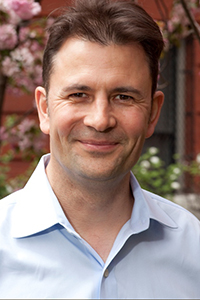
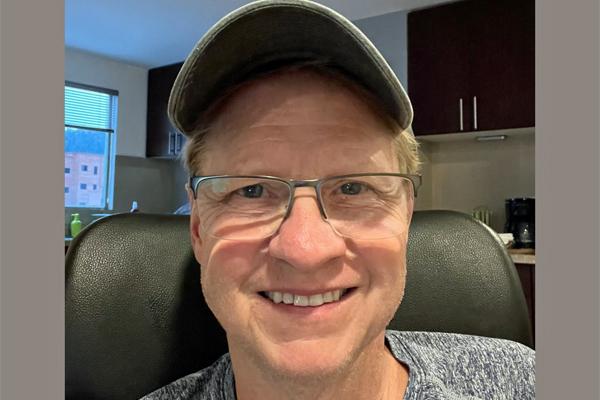
Darryl Jones is Professor at Griffith University's Centre for Planetary Health and Food Security, specializing in behavioral ecology and human-wildlife interactions. His research examines urban ecosystems, wildlife conflict resolution, and conservation strategies, with particular emphasis on bird ecology and road infrastructure impacts. Professor Jones has authored influential books including 'Feeding the Birds at Your Table' and 'A Clouded Leopard in the Middle of the Road' that bridge scientific research and public engagement. His work explores: Wildlife responses to urbanization Bird feeding practices and consequences Road ecology and mitigation design Human dimensions of conservation Koala-vehicle collision patterns Recent publications document COVID-19's impact on global bird feeding behaviors, analyze 20-year trends in koala road mortality, and evaluate LED streetlight effects on urban wildlife. He leads research on dingo population viability in Fraser Island and develops innovative wildlife monitoring technologies like the open-source WildWID RFID system. Professor Jones collaborates extensively with government agencies on conservation policy and has secured funding for projects examining wildlife crossing infrastructure effectiveness. His research informs evidence-based approaches to human-wildlife coexistence in rapidly changing landscapes.
Steven Jackson is a Professor of Information Science and Science and Technology Studies at Cornell University's Bowers College of Computing and Information Science, with additional graduate field appointments in Communication and Public Affairs. Since July 2023, he has served as Vice-Provost for Academic Innovation at Cornell, and previously held leadership positions as Chair of Information Science and Dean of William Keeton House. His work bridges academic research with significant institutional leadership in higher education innovation. Dr. Jackson's research focuses on critical intersections of technology, society, and the environment, with three primary strands: technology ethics, law and policy; maintenance, repair and sustainability; and technology, inequality and global development. His work draws from American pragmatism, political economy, and science and technology studies, integrating methods from sociology, anthropology, philosophy, and media studies. He is particularly interested in how computing practices meet social and material worlds, with implications for infrastructure, collaboration, sustainability, and cultural practice. His recent publications reveal a strong emphasis on repair as both theoretical concept and practical methodology, exploring 'ordinary hope' as a framework for technological engagement and examining unmaking as a necessary counterpart to design. The research spans diverse geographical contexts from the global North to South, addressing caste dynamics in computing, digital authoritarianism, and infrastructure challenges in developing contexts. Dr. Jackson has received significant recognition including an NSF CAREER award and more than twenty paper awards at leading computing and information science venues. His research has been supported by major organizations including the U.S. National Science Foundation, Social Science Research Council, Ford Foundation, Sloan Foundation, World Bank, Intel Research, Atkinson Center for Sustainability, and the Canadian Social Science and Humanities Research Council. As an advisor, Dr. Jackson has mentored numerous graduate students who have gone on to prominent positions at institutions worldwide. He currently advises Jen Liu, Amy Cheatle, Daniel Mwesigwa, Johan Michalove, and Ritik Batra, while his former students include Palashi Vaghela (Assistant Professor at Simon Fraser University), Samir Passi (Responsible AI Researcher at Microsoft), Maggie Jack (Assistant Professor at NYU), and Ranjit Singh (Senior Researcher at Data and Society). Dr. Jackson convenes the Computing On Earth Lab, an experimental collaboration bringing together social scientists, humanists, artists, and engineers to rethink the material and planetary foundations of computing. The lab reflects his commitment to interdisciplinary approaches that address computing's environmental impacts and sustainability challenges.
Christopher G. Atkeson is a Professor at the Robotics Institute at Carnegie Mellon University (CMU), where he has been since 2000 after previously holding positions at MIT and Georgia Institute of Technology. His research focuses on fulfilling the science fiction vision of machines achieving human levels of competence in perception, cognition, and action, with particular emphasis on understanding how to get machines to generate and perceive human behavior. Atkeson's work spans two complementary approaches: humanoid robotics and human aware environments. His research interests include nonparametric learning, memory-based learning, reinforcement learning, learning from demonstration, and modeling human behavior. He is particularly known for his work on robot learning of challenging dynamic tasks such as juggling, trajectory-based optimization, and soft robotics (including his contributions to the Baymax character in Disney's Big Hero 6). His recent publications demonstrate a strong focus on tactile sensing (FingerVision), human-in-the-loop optimization for exoskeletons, deep learning for locomotion control, and trajectory-based optimization methods. His work consistently bridges theoretical foundations in machine learning with practical implementations on physical robots. Among his scientific recognitions are an NSF Presidential Young Investigator Award, a Sloan Research Fellowship, and a Teaching Award from the MIT Graduate Student Council. Atkeson has advised numerous students who have gone on to successful careers in academia and industry, including notable researchers like Andrew Moore and Stefan Schaal. His teaching includes courses on dynamic optimization, humanoids, kinematics, dynamics, and control.
K. Michael Hays is the Eliot Noyes Professor of Architectural Theory at Harvard University's Graduate School of Design (GSD) and Co-Director of the Master in Design Studies program. He has been a faculty member since 1988, specializing in architectural history and theory. His research focuses on European modernism, critical theory, and contemporary architectural practice, with notable contributions to the field through writings on figures like Mies van der Rohe and Peter Eisenman. Education: He holds a Bachelor of Architecture (1976) from Georgia Institute of Technology, a Master of Architecture in Advanced Studies (1979) from MIT, and a PhD in History, Theory, and Criticism of Architecture and Art (1990) from MIT. Research Interests: Hays is renowned for founding the journal Assemblage , a pivotal forum for architectural theory. His work bridges historical analysis and contemporary practice, emphasizing theoretical frameworks for understanding modernism and its evolution. He has curated exhibitions at institutions like the Whitney Museum of American Art (as its first Adjunct Curator from 2000–2009). Publications: His authored and edited works include Architecture's Desire , Inscriptions: Architecture Before Speech , and critical studies on architects such as Buckminster Fuller and Diller + Scofidio. These publications explore themes of representation, modernist aesthetics, and interdisciplinary design. Awards and Roles: While no specific awards are listed, his academic leadership roles include Chair of the GSD PhD Committee (1995–2005) and Director of Advanced Independent Study Programs. He has also served on editorial boards for journals like Assemblage and Thresholds . Labs and Collaborations: Hays collaborates with academic and institutional partners, notably through curatorial projects and his role in shaping the GSD's theoretical curriculum. His influence extends to both pedagogical innovation and scholarly discourse in architectural education.
Dr. Mo Rastgaar is a Professor at Purdue Polytechnic Institute, Purdue University. He holds a PhD in Mechanical Engineering from Virginia Tech (2008) and completed a postdoctoral fellowship at MIT's Newman Laboratory for Biomechanics and Human Rehabilitation. He leads the Human-Interactive Robotics Lab (HIRoLab), focused on assistive and rehabilitation robots for enhanced mobility, particularly lower-extremity devices. His research emphasizes understanding agile gait dynamics through human experiments and modeling. Research interests include assistive robotics, cyber-physical systems, dynamics, and control systems. Notable awards include the 2014 NSF CAREER Award. He has secured grants such as the 2019 NRI Collaborative Grant on robotic ankle prosthetics and 2020 grants for undersea infrastructure. Dr. Rastgaar's work bridges biomechanics, robotics, and clinical applications, advancing prosthetic designs and human-robot interaction. Key contributions include developing steerable powered ankle-foot prostheses and exploring multi-robot systems for underwater exploration. His labs integrate interdisciplinary approaches to solve complex mobility challenges, emphasizing both technical innovation and real-world clinical impact.
Andreas Bulling is a Professor at the Institute for Visualisation and Interactive Systems , University of Stuttgart, Germany. His research focuses on Human-Computer Interaction , Eye Tracking , and Computer Vision , with applications in Machine Learning , Virtual Reality , and Information Visualization . 2025 Publications: HOIGaze (Extended Reality), ChartQC (Data Visualization), HAIFAI (Human-AI Interaction), SummAct (Behavioral Summarization), Chartist (Chart Reading). 2024 Contributions: HumanEYEze (Multimodal AI), HOIMotion (3D Object Detection), MultiMediate'24 (Engagement Estimation), Unified Model of Saliency (Scanpath Prediction). His recent work explores gaze estimation , interactive behavior modeling , and privacy-preserving eye-tracking systems . Key subfields include Extended Reality , Neural Networks , and Behavioral Biometrics . While no explicit scientific awards are mentioned, his research has been widely cited (8,003 total citations) and downloaded (132,740 times). Andreas leads projects in Interactive Systems and collaborates with institutions such as Aalto University , KU Leuven , and National University of Singapore . His lab focuses on eye movement analysis , human motion forecasting , and task-driven input modeling .
Daniel Cooney is an Assistant Professor in the Department of Mathematics at the University of Illinois Urbana-Champaign. He holds additional affiliations as an Affiliate at the Carl R. Woese Institute for Genomic Biology. His research focuses on applying partial differential equations (PDEs), dynamical systems, and stochastic processes to study evolutionary dynamics, particularly in biological and social systems. Key themes include multilevel selection, evolutionary game theory, and the emergence of cooperative behavior. Cooney earned his PhD in Applied and Computational Mathematics from Princeton University, advised by Simon Levin, and completed a postdoc as a Simons Fellow in Mathematical Biology at the University of Pennsylvania. His work bridges theoretical mathematics with applications in ecology, epidemiology, and social sciences. Recent publications explore topics like altruistic punishment in cultural systems, classroom-turnover dynamics, and protocell evolution. He actively participates in academic outreach, co-organizing conferences such as the AMS Special Session on Mathematics of Infectious Disease and the SIAM Minisymposium on Social-Ecological Systems. His research has been published in high-impact journals including *Proceedings of the National Academy of Sciences* and *Bulletin of Mathematical Biology*.
Renate Sachse is a Researcher at the Chair of Structural Analysis, Technical University of Munich (TUM), where she has worked since May 2024. Previously, she held postdoctoral positions at Harvard University's Bertoldi Lab (2024) and TUM's Chair of Computational Mechanics (2021-2024), following academic staff roles at the University of Stuttgart (2015-2020). Her interdisciplinary work bridges civil engineering, biomechanics, and computational modeling. Her educational foundation includes a Master's in Civil Engineering from the University of Stuttgart (2014; thesis: 'Isogeometric contact analysis of thin-walled structures') and a Bachelor's from the same institution (2011; thesis: 'A Primary School Pavilion for Magagula in South Africa - Structural Analysis'). She also completed ERASMUS studies at ESTP Paris and internships at Foster + Partners and Werner Sobek AG. Dr. Sachse's research centers on biomechanics and biomimetics, with pioneering work on plant-inspired structures. She investigates snapping mechanisms in carnivorous plants (Venus flytrap, waterwheel plant) to develop bio-inspired adaptive systems, soft robotics, and metamaterials. Her expertise spans motion design for large-deformation structures, isogeometric analysis, and hygroscopic actuation in 4D-printed materials, emphasizing computational modeling of contact mechanics and structural stability. Analysis of her 15 most recent publications reveals a dominant focus on biomechanics (60% of articles), particularly plant movement mechanics translated into engineering solutions. Her work consistently integrates computational structural analysis with biological principles, showing increasing emphasis on motion design (25% of recent output) and additive manufacturing applications (15%). Key trends include translating snap-buckling phenomena into robotics and developing material design spaces for responsive structures. Her distinguished awards include the Bertha Benz Prize (2022), Klaus Tschira Boost Fund Fellowship (2022-2024), and University of Stuttgart Publication Award (2022). Additional recognition comprises GAMM Juniors Fellowship (2020-2022), AVK Innovation Award (2017), and Emil Mörsch Study Prize (2014). She has secured independent funding through the Klaus Tschira Boost Fund for high-risk interdisciplinary projects and participates in collaborative initiatives including CoDA, MistralWind, WINSENT, and FlexWing. While teaching advanced courses at TUM (Advanced Finite Element Methods, Theory of Plates), her mentorship focuses on computational mechanics and biomimetic design principles. Currently based at TUM's Chair of Structural Analysis under Prof. Bletzinger, she maintains active collaboration with Harvard University's Bertoldi Lab in developing next-generation adaptive structures.
Prof. Olga Sorkine Hornung is a Full Professor of Computer Science at ETH Zürich, leading the Interactive Geometry Lab. She holds a BSc and PhD from Tel Aviv University (2000 and 2006) and conducted postdoctoral research at Technical University Berlin. Her research focuses on computer graphics, geometric modeling, and geometry processing, with applications in shape editing, digital fabrication, and animation. She has received numerous accolades, including the ACM Fellowship (2020), ERC Consolidator Grant (2020), and the Golden Owl Teaching Award (2021). Her work bridges theoretical foundations and practical algorithms, addressing challenges in parameterization, surface compression, and interactive design tools. Her research interests span: Computer Graphics & Visualization Geometric Modeling & Processing 3D Content Creation & Digital Fabrication Garment Design & Simulation Human Motion Analysis & Animation Awards and grants include: 2024: Best Paper Honorable Mention (EUROGRAPHICS) 2023: Member of Swiss Academy of Engineering Sciences (SATW) 2020: ERC Consolidator Grant 2017: Rössler Prize (ETH Zurich) Her lab focuses on developing novel methods for interactive geometry processing, with recent advancements in garment modeling (e.g., AIpparel, Rags2Riches) and motion retargeting systems like WalkTheDog. She actively collaborates on interdisciplinary projects, including biomedical applications and sustainable fashion technology.
Professor Siân Bayne is a leading academic in digital education at the University of Edinburgh , where she serves as Assistant Principal for Education Futures and directs the Centre for Research in Digital Education . Her work bridges critical theory and practical innovation in higher education. Interdisciplinary research on digital education and futures studies Leadership in the Edinburgh Futures Institute and Moray House School of Education and Sport Global impact through UNESCO collaborations and UKRI GCRF projects Bayne’s research explores higher education futures , utopian theory , and digital enhancement , with a focus on: AI’s role in teaching and learning Ethical implications of educational technologies Anonymous social media in academic spaces Speculative scenarios for educational systems Global South digital education models Augmented reality applications in assessment Her 15 most recent publications span 2017-2025 , covering critical perspectives on: Generative AI and educational innovation Utopian design in universities Data governance in learning analytics Augmented reality pedagogy Digital cultural heritage Scientific recognition includes: IASH Sabbatical Fellowship (2023) Bayne leads Higher Education Futures initiatives and partners with institutions worldwide, including: UNESCO Global Education and Technology Report World Bank collaborations European university leadership programs She also drives major research centers like: Centre for Research in Digital Education UKRI GCRF Urban Disaster Risk Hub
Christopher Turbill is an Associate Professor in Animal Science at Western Sydney University's School of Science, where he maintains an active research program focused on animal physiological ecology. He is affiliated with the Hawkesbury Institute for the Environment and serves as a Principal Investigator on multiple research projects while accepting HDR candidates for supervision. PhD from University of New England (2006) Thesis: Thermoregulatory Ecology of Tree-roosting Bats Supervised by Prof. Fritz Geiser Postdoctoral fellowships from Austrian Science Fund and Australian Research Council (DECRA) Former ecologist with NSW Government Professor Turbill's research integrates thermal and metabolic physiology with behavioral ecology to understand animal-environment interactions. His work has revealed significant ecological consequences of controlled body temperature variation in mammals and birds, linking these processes with metabolic energy expenditure, activity patterns, and life-history strategies. He specializes in bat biology and investigates conflicts between human environmental change and animal conservation requirements. His research keywords include ecophysiology, thermoregulation, energy expenditure, life-history ecology, body temperature, torpor, hibernation, and wildlife conservation. Analysis of Turbill's recent publications reveals a strong focus on thermal biology and conservation physiology, particularly regarding bats and birds. His work examines how animals manage energy through torpor, respond to climate change through thermal regulation, and adapt to anthropogenic disturbances. The research spans field studies of flying-foxes, microbats, and passerine birds across Australian ecosystems, with increasing emphasis on conservation applications related to white-nose syndrome, fire impacts, and wind energy development. Turbill leads significant research projects including the Ecology of the eastern horseshoe bat and its sensitivity to fire impacts (2024-2027), Vulnerability of Australian bats to white-nose syndrome (2021-2026), and Torpor use and burrowing behaviour in an arid zone passerine (2024). His work attracts funding from diverse sources including the Australian Research Council, Department of Planning and Environment, and various conservation organizations. Professor Turbill directs the BatsLab research group, which maintains a virtual hub for bat research at Western Sydney University. His team employs advanced methodologies including thermal imaging, GPS tracking, and physiological monitoring to study animal responses to environmental challenges. Current work focuses on developing conservation interventions for heat-stressed flying-foxes and assessing vulnerabilities of Australian bat species to emerging diseases.
Mark Lewis is the Kennedy Chair in Mathematical Biology at the University of Victoria, holding joint appointments in the Departments of Mathematics and Statistics and Biology. His research focuses on spatial ecology and mathematical modeling, addressing ecological challenges such as animal movement, invasive species, and disease dynamics. Lewis earned his D.Phil. in Mathematical Biology from the University of Oxford and has been elected a Fellow of the Royal Society UK. His work integrates mathematical analysis, field studies, and interdisciplinary approaches to solve ecological problems. Current projects include modeling polar bear populations, cyanobacteria dynamics, and the impact of climate change on wildlife. Lewis supervises students across both UVic and his former University of Alberta lab. Education: D.Phil. in Mathematics (Mathematical Biology), University of Oxford Awards: Royal Society Fellowship, CRM-Fields-PIMS Prize, and Okubo Prize Key Research Areas: Animal movement modeling, aquatic ecology, wildlife disease, and invasive species management Publications highlight his contributions to understanding disease spread, parasite dynamics, and ecological responses to environmental changes. Lewis collaborates widely, applying mathematical tools to real-world conservation and health challenges.
Professor Tamsin Bradley is a leading academic in International Development Studies at the University of Portsmouth, affiliated with the School of Area Studies, Sociology, History, Politics and Literature. Her research focuses on ending violence against women and girls, social inclusion, and harmful cultural practices. She holds a PhD from SOAS, University of London, and has held roles at institutions like the University of East Anglia and London Metropolitan University before joining Portsmouth in 2011. She was promoted to Professor in 2017. Her work is supported by grants from the British Academy, ESRC, and AHRC. Bradley is also a Fellow of the Royal Anthropological Institute. She currently supervises two PhD students on ESRC-funded projects and collaborates with organizations like Plan International and Stop Domestic Abuse. Her research integrates applied social anthropology with policy-relevant outcomes, addressing issues such as FGM, breast ironing, and gender-based violence in South Asia and Africa. Education: Bachelor's in Politics and Study of Religion (SOAS, 1996) MA in Social Anthropology of Development (SOAS, 1997) PGCE (University of Cambridge) PhD (SOAS, 2006) Research Focus: Ending violence against women and girls, harmful cultural practices, gender and social inclusion in South Asia/Africa, humanitarianism in conflict zones. Key Grants: £300k from British Academy (2018) for the 'Art Heritage, Resilience and Humanitarianism in South Sudan' project. External Roles: Council member of British Association of South Asian Studies (2014–2016), Editorial Board member of African Identities . Media Availability: Actively engages with media on gender-based violence and development topics. Bradley’s work bridges academic research and practical solutions, emphasizing community-led approaches. Her recent publications highlight intersections between culture, conflict, and gendered violence, with a focus on marginalized communities in South Sudan, Sudan, and South Asia.
Paul R Moorcroft is a Professor of Organismic and Evolutionary Biology at Harvard University and an Affiliate in the School of Engineering and Applied Sciences (SEAS). His research focuses on ecological dynamics of terrestrial plant communities, biosphere-atmosphere interactions, and mechanistic models of animal movement. He collaborates with institutions like NASA JPL on projects such as the ECOSTRESS mission, which investigates environmental processes using satellite data. His lab, the Moorcroft Lab, emphasizes fieldwork and interdisciplinary approaches, as seen in recent collaborations in Italy and Southeast Asia. Key research areas include tropical forest ecology, carbon cycling in peatlands, and the application of remote sensing technologies to environmental monitoring. His work bridges theoretical models with empirical data, addressing global challenges like climate change and biodiversity loss. Recent publications highlight contributions to quantifying carbon emissions from peatland drainage and improving satellite-based mapping of forest functional traits. His advising activities include mentoring graduate students like Rhemi Toth. Collaborations with NASA and academic partners underscore his role in advancing Earth systems science through interdisciplinary research.
Brad D. Jokisch is a Professor and Undergraduate Chair in the Department of Geography at Ohio University’s College of Arts and Sciences. He is affiliated with International Studies and Latin American Studies, and his research focuses on population, environment, and development, particularly in Latin America. His work explores transnational migration, land-use change, and livelihoods in the Ecuadoran Andes. Education: Ph.D., Clark University, 1998 B.A., Augustana College, 1989 His research interests lie at the intersection of cultural/political ecology, population dynamics, agriculture, and development. He investigates how migration influences environmental change and how development shapes population movements, with a regional focus on Latin America. His fieldwork in the Ecuadoran Andes examines the impact of remittances and emigration on landscapes and rural communities. Recent publications highlight trends in transnational migration, land-use change, and development policy. His work spans interdisciplinary journals in geography, anthropology, and development studies, reflecting a strong emphasis on human-environment systems and migration. Key themes include remittances, land cover change, indigenous urbanization, and migration policy in South America. Scientific Awards: Fulbright Scholarship (2023–2024) for research on family emigration in southern Ecuador Dr. Jokisch advises undergraduate students as chair and teaches core courses such as Population Geography, Geography of Latin America, and Agricultural Ecosystems. While specific grant details and advisees are not listed, his sustained research output and leadership in the department suggest active mentorship and scholarly engagement. He is currently conducting research in Ecuador under a Fulbright award, indicating ongoing international collaboration and field-based inquiry. He is a key contributor to human-environment geography and migration studies, with a long-standing commitment to theoretical and empirical research in Latin America.