Sune Darkner is a Professor at the Department of Computer Science (DIKU) at the University of Copenhagen, specializing in the Image Analysis, Computational Modelling, and Geometry research section. His work focuses on medical image processing with particular emphasis on neuro-imaging data including MRI and PET scans. His primary research interests include Image Registration, Segmentation and Classification of Medical Image Data , with a specific focus on estimation of image similarity as his main research interest. Darkner strongly believes that the implementation of image processing algorithms should be thoroughly tested and reflect the theoretical properties as accurately as possible. His work primarily centers on neuro-imaging data such as MRI and PET. His recent publications (2024-2025) reveal a strong focus on medical image analysis, with particular emphasis on tumor volume delineation, deformable image registration with physics constraints, and applications of deep learning in medical imaging. His work spans both theoretical foundations of image processing and practical clinical applications. Darkner previously held a Post Doc position at the Technical University of Denmark from February 2009 to January 2010, demonstrating his longstanding engagement with image analysis research in the Danish academic community.
Fiona Catherine Chambers is a Full Professor of Education at University College Cork (UCC), Ireland, with over 30 years of transformative experience in the field. She is an internationally recognized leader at the intersection of sport, education, and innovation. Her leadership roles include President of AIESEP, Vice-President of CEREPS, UNESCO CIGEPS Observer, and Expert Advisor for UNESCO's Global Observatory for Gender Equality in Sport. In March 2025, she was awarded the status of Honorary Network Member of Network 18 Research in Sport Pedagogy by the European Educational Research Association Council. Professor Chambers' research spans three key areas: sport, innovation, and education, with a particular focus on research for social impact. Her work encompasses sport pedagogy, physical education, design thinking, digital wellbeing, motor competence, and physical literacy. She has pioneered numerous initiatives including StrategicDesign@UCC (founded in 2020), the Master of Arts and Postgraduate Diploma in Innovation through Design Thinking, the Global Design Challenge for Sport and Physical Activity, AIESEPConnect, Made2Move, and All Island All Active. Her publications reveal a consistent focus on wellbeing, physical activity, and innovative pedagogical approaches in education. Her research portfolio demonstrates a strong emphasis on addressing complex societal challenges through transdisciplinary methodologies, particularly human-centered design thinking. Professor Chambers has secured millions in funding for her projects from various sources including the Higher Education Authority, ERASMUS, and Horizon Europe. Her work bridges theory and practice, empowering individuals across sectors to tackle societal challenges through innovative thinking and collaborative action. Honorary Network Member of Network 18 Research in Sport Pedagogy (awarded March 2025) 2023 inaugural Women in Business in Sport award Consistently recognized among the 50 most influential women in Irish sport Professor Chambers has secured substantial research funding for numerous projects, including the PGDip Innovation Through Design Thinking (€1,440,000 from HEA), Spring 3.0 (€75,000 from ERASMUS), and Icehearts Europe (€252,807 from Horizon Europe). As a two-time TEDx speaker, she has demonstrated the powerful impact of combining strategic leadership with passionate advocacy. Her expertise is sought globally, reflected in Visiting Professor appointments across four international institutions and ongoing consultancy work with universities, sporting organizations, and global businesses. Through StrategicDesign@UCC and initiatives like Made2Move and the Global Design Challenge, Professor Chambers has created platforms that bring together academics, practitioners, and students to address complex challenges in sport, physical activity, and education. Her transdisciplinary approach has fostered collaborations across multiple sectors and institutions, both nationally and internationally, creating a vibrant ecosystem for innovation and research in education and sport.
Dr. Wesley O'Brien is a Senior Lecturer in Physical Education and Coaching Science at University College Cork (UCC), serving as Programme Director for the B.Ed. in Physical Education, Sports Studies and Arts Degree within the School of Education. With over fourteen years of teaching experience, he has lectured at institutions including The University of Bolton, Dublin City University and Munster Technological University before joining UCC in 2014. His educational background includes: PhD in youth physical activity promotion from Dublin City University (2013) Bachelor of Education in Sports Studies and Physical Education (First Class Honors) from UCC (2010) Dr. O'Brien's research focuses on physical literacy, physical education, wellbeing, motor competence, and physical activity among children, adolescents and adults. His work explores evidence-based approaches for youth physical activity promotion through physical education environments, whole school physical literacy initiatives, motor competence development, intervention implementation, measurement techniques, sedentary behavior, and wellbeing promotion across educational settings. His research has been presented at numerous international conferences and published in leading journals including Sports Medicine, Physical Education and Sport Pedagogy, and the British Journal of Sports Medicine. His recent publications demonstrate a strong focus on physical literacy assessment and intervention, with particular attention to the FLAME (Fundamental and Functional Literacy for Activity and Movement Efficiency) program, Y-PATH interventions, and the measurement of motor competence. His work spans multiple contexts including school settings, community sports programs, and cross-border collaborations across Ireland. Much of his research employs mixed-methods approaches to understand both the quantitative and qualitative aspects of physical activity promotion. Dr. O'Brien has received numerous scientific awards including the FIEP Europe Thulin Award (2021), the Ellen Griffin Scholar at UNC Greensboro (2017), and multiple College Scholar awards from UCC. His 2024 awards include recognition as a Deakin University Catalyst Visiting Scholar and Auckland University of Technology Catalyst Visiting Scholar. As a Principal Investigator, Dr. O'Brien leads several significant research projects including Project FLAME, Gaelic for Girls, Gaelic4Mothers&Others, and State of Mind Ireland. He has secured substantial research funding from diverse sources including ERASMUS, the Irish Research Council, and various institutional funds. His research portfolio demonstrates strong collaboration across institutions including Dublin City University and the Irish Heart Foundation on the Y-PATH PE4Me programme. Outside his academic work, Dr. O'Brien is actively involved in UCC GAA club, having served as conditioning and skills coach for various teams. Notably, he coached the UCC senior hurling team to win the Fitzgibbon Cup All-Ireland Championship in 2019 and the Cork Minor hurling team to win the All-Ireland Championship in 2021. He has also coached the Cork Senior Camogie team to multiple All-Ireland Senior Camogie Championships.
Barbara Mones is a Teaching Professor in the Paul G. Allen School of Computer Science & Engineering at the University of Washington. She serves as Director of the Reality Studio, part of the Reality Lab, and leads the Facial Expression Research Group (FERG) and the Octopus Research Group (ORG). Education: Undergraduate degree from University of Michigan, Ann Arbor Post graduate certification in Animation from Sheridan College, Oakville, Canada MFA from Rhode Island School of Design Professor Mones specializes in Human-Centered Computing and Interaction with the Physical World, with expertise in Augmented, Virtual & Mixed Reality; Computer Graphics & Animation; and Computing Education Research. Her research focuses on the intersection of animation, storytelling, and immersive technologies, exploring how these can be effectively integrated into educational contexts and creative production pipelines. She has developed specialized curriculum for facial expression in animated characters and immersive storytelling environments. Professor Mones has directed and produced more than twenty animated shorts throughout her career at the University of Washington. Her recent works demonstrate expertise in character animation, facial expression, and digital storytelling, often incorporating innovative techniques in virtual and augmented reality. These films showcase her commitment to advancing both the artistic and technical aspects of computer animation. Scientific Awards: SIGGRAPH 2021 Distinguished Teaching Award NASA Group Achievement Award Professor Mones has been instrumental in developing animation curriculum that has influenced programs worldwide. She serves on the ACM SIGGRAPH Executive Committee and the Education Committee, where she continues to shape computer graphics education globally. Her teaching approach emphasizes hands-on, project-based learning through the complete animation production pipeline. She leads the Reality Studio, which focuses on research and development in immersive storytelling technologies, and oversees the Facial Expression Research Group which investigates the technical and artistic aspects of creating expressive digital characters for animation and virtual environments.
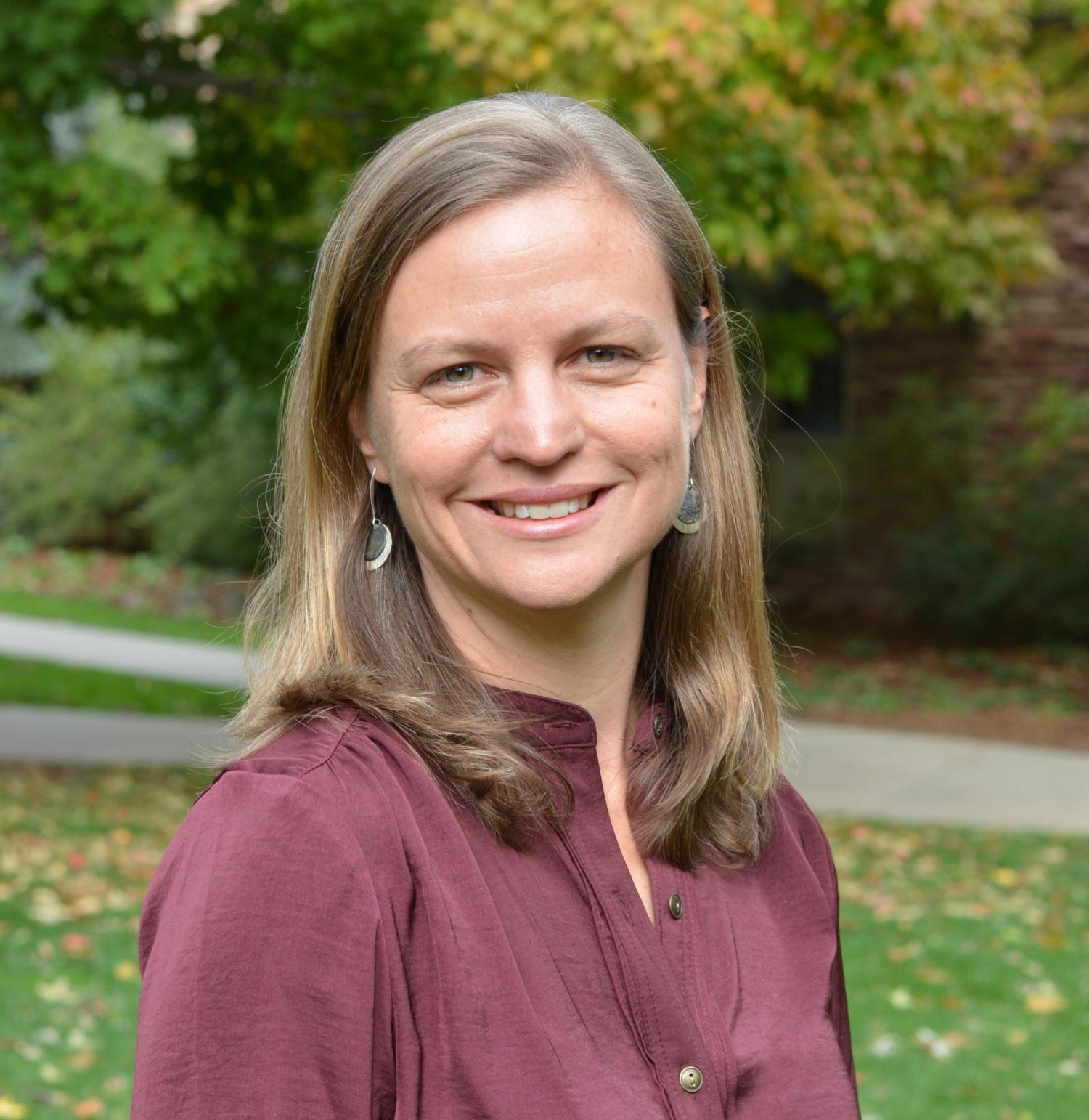
Andrea Dyrness is an Associate Professor in the Educational Foundations, Policy & Practice department at the University of Colorado Boulder, affiliated with Anthropology and Ethnic Studies. Her research focuses on transnational Latinx and Caribbean communities, citizenship formation, and social justice education. She has conducted fieldwork in the U.S., El Salvador, Spain, and Denmark, emphasizing participatory methods. PhD in Social and Cultural Studies in Education (University of California, Berkeley) MA and B.A. in Anthropology/Educational Studies (UC Berkeley and Brown University) Her work explores how marginalized youth navigate citizenship across borders, with a focus on critical consciousness and activism. Recent projects include the Cultural Mentoring Program at CU, fostering critical consciousness among Latinx students. She co-authored Border Thinking: Latinx Youth Decolonizing Citizenship , recognized with the 2020 Outstanding Book Award. Teaching includes qualitative methods, anthropology of education, and transnational education policies. She serves as Faculty Director of CU’s Cultural Mentoring Program and is a NEPC Fellow. Key Awards: 2020 Outstanding Book Award (AAA’s Council on Anthropology & Education) Her advocacy extends through service roles like Board Member of the Strachan Foundation (since 2001), supporting Central American education initiatives.
Syed Ali Raza is a researcher affiliated with the University of Technology, Sydney (PhD 2018), with a former affiliation at the Institute of Business Administration, Karachi. His work focuses on reinforcement learning, robotics, and human-robot interaction. Key contributions include studies on social robots' question-answering services, human feedback integration in AI systems, and optimization of robotic movements in multi-agent scenarios. He has collaborated extensively with researchers like Mary-Anne Williams and Sajjad Haider. His research spans theoretical advancements in machine learning algorithms and practical applications in robotics competitions (e.g., RoboCup). Research interests emphasize computational reinforcement learning, reward shaping techniques, and ethical design of autonomous systems. Notable projects include privacy-first approaches for social robots and hybrid methods for humanoid robot locomotion. His work bridges theoretical AI advancements with real-world robotic implementations.
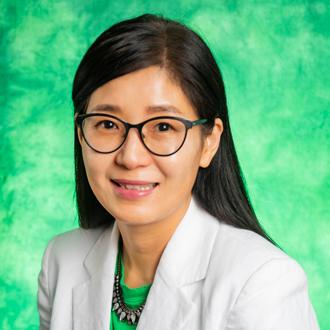
Hae Jin Gam is a Professor and Coordinator of the Undergraduate Program for Fashion Design at the University of North Texas (UNT), part of the Michael W. Faircloth Fashion Design Program. She holds a Ph.D. in human environmental sciences from Oklahoma State University, an M.S. in clothing and textiles from Chung-Ang University, and a B.S. in computer sciences from Seoul Women's University. Her research focuses on sustainability in the apparel industry, consumer behavior related to eco-friendly purchasing, creative product development, and teaching methodologies. Dr. Gam has over five years of professional experience as a fashion designer in South Korea and has taught for 11 years at Illinois State University before joining UNT in 2018. She is an associate editor for the Family and Consumer Sciences Journal and serves on the editorial board of the Clothing and Textile Research Journal . She is also affiliated with the International Textile and Apparel Associations, Costume Society of America, and the American Association of Family and Consumer Sciences. Her work emphasizes interdisciplinary approaches, such as integrating virtual reality into design education and promoting sustainable entrepreneurship via micro-factory models. Her research highlights the alignment of educational practices with industry needs and consumer trends in sustainable fashion. Dr. Gam’s contributions span scholarly publications, editorial roles, and professional engagement, reflecting her commitment to advancing both academic and practical dimensions of fashion design and sustainability.
Dr. Kamran Safi is a Group Leader at the Max Planck Institute of Animal Behavior (Konstanz, Germany), holding a permanent position as a Senior Researcher (Principal Investigator) with the Computational Ecology Lab. He is also affiliated with the International Max Planck Research School (IMPRS) for Organismal Biology as a faculty member. Education: PhD in Biology (2007), University of Zürich: Thesis on social sexual segregation in bats MSc in Biology (2001), University of Zürich: Thesis on olfactory communication in Bechstein’s bats Bachelor’s in Biology (2000), University of Zürich Research Interests: Focus on movement ecology, macro-ecology, and macro-evolution. Key areas include analyzing animal-environment interactions using remote sensing and sensor data, modeling energy landscapes, and understanding biodiversity patterns. Methodological expertise includes computational ecology, probabilistic analysis, and interdisciplinary data fusion. Articles Summary: Recent work spans animal flight mechanics (e.g., golden eagles using gravity waves), conservation applications (e.g., vulture nesting habitat loss), and software development (e.g., move2 R package). Themes include climate impacts on movement, remote sensing for ecology, and energy efficiency in flight. Achievements: Pioneered MoveApps, an open analysis platform for tracking data. Authored over 40 peer-reviewed articles, with contributions to conservation protocols like the EDGE2 framework. Grants & Labs: Leads the Animal-Environment Interactions Lab and collaborates globally. Projects include studying vultures in drylands, eagle flight in the Alps, and developing tools like the SOS framework for Earth observation integration.
James Maurelle is an Assistant Professor of Studio Art at Clark University, with affiliations in the Visual and Performing Arts department. He holds an MFA from the University of Pennsylvania and a BFA from the San Francisco Art Institute. His practice bridges sculpture, video, and sound art, emphasizing labor-creativity correlations and jazz-influenced composition processes. Key research interests include material transformation, interdisciplinary methods, and cultural narratives through industrial materials. Educational Background: M.F.A., University of Pennsylvania (Weitzman School of Design), 2015 B.F.A., San Francisco Art Institute (Film & Design), 2013 Postgraduate Apprenticeship, The Fabric Workshop (Philadelphia), 2015– Research Interests: Explores labor's intersection with creativity, using tools and materials as instruments. Jazz structures underpin his work ethic, with materials (wood, metal, blood) serving as 'staff paper' for compositions. Recent projects investigate industrial progress, cultural heritage, and material symbolism through installations and performances. Recent Exhibitions/Trends: Focused on durational performances (e.g., 24-hour installations) and site-specific works. Recent shows include POSSIBLE FUTURES (2024) and MOVEMENT at Clark University, emphasizing sound and spatial interventions. Material choices increasingly incorporate organic elements like blood, soil, and vegetation, reflecting ecological and bodily themes. Awards: 2022 Pew Fellowship 2024–2023 Higgins School Major Grants Skowhegan Fellowship (2015) Teaching & Grants: Currently teaches Studio Art at Clark University and has held lectures at Penn State and Rutgers. Recent grants fund experimental material projects and community-based installations. Active residencies include Vermont Studio Center (2024) and Windgate ITE (2022). Labs/Teams: Collaborates with institutions like the Center for Art in Wood and the Fabric Workshop. Leads interdisciplinary projects blending sculpture, sound, and performance.
Prof Mario Novelli is a Professor in the Political Economy of Education at the University of Sussex, affiliated with the School of Education and Social Work. He leads the PEER Network (Political Economy of Education Research), a global initiative fostering knowledge exchange on education systems in conflict-affected contexts. Previously, he worked at the University of Amsterdam and University of Bristol, focusing on interdisciplinary research across Education, International Development, Geography, and Politics. His research explores education’s role in peacebuilding, globalization impacts on education, and knowledge production in social movements. Notable projects include a multi-country study on education and peacebuilding with UNICEF and an ESRC-funded study on social movement learning in conflict zones. He co-edits the Globalisation, Societies and Education journal and holds roles such as former Director of the Centre for International Education (CIE) and BAICE President (2021–2022). Recent work emphasizes geopolitical shifts in education governance and the SDGs, critiquing Western-centric approaches. His publications span critical analyses of education in conflict, social movement pedagogy, and decolonizing knowledge systems. Awards include the Georg Arnhold Senior Fellowship and recognition for advancing international education studies. Prof Novelli teaches courses on global education governance, conflict, and international development at Sussex, contributing to MAIED programs. His grants include the GCRF PEER Network (2019–2024) and ESRC studies on social movement learning.
Tamara Steger is an Associate Professor and Director of the Culture, Politics and Society BA Program at Central European University (CEU). She holds a Ph.D. from Syracuse University and has extensive experience in environmental and social justice research. Her affiliations include the CEU Democracy Institute, Institute for Advanced Studies (IAS), and European Consortium for Political Research (ECPR). She has supervised numerous master's and doctoral theses, focusing on environmental movements and social justice issues. Education: Ph.D. (with distinction), Syracuse University, 2004 Master of Marine Studies, University of Washington, 1995 Bachelor of Science (cum laude), State University of New York, 1992 Research Interests: Environmental and social justice, climate litigation, urban sustainability, and marginalized communities' environmental exclusion. Her work explores movements addressing colonialism, segregation, and exploitation, with projects like the Horizon 2020 UrbanA initiative. Key Contributions: Her research on the Vjosa River protection campaign in Albania and Roma communities' environmental exclusion in Slovakia highlights strategic activism in flawed democracies. She received the CEU Distinguished Teaching Award (2018). Affiliations & Activities: Member of CEU's Ethical Research Committee and GenderHUB. Active in grants and projects, including de- and re-democratization studies. Regularly collaborates with international networks like the ECPR. Labs & Teams: Leads research groups on environment and democracy at CEU's Democracy Institute, focusing on transboundary environmental governance and policy advocacy.
Tara Johnson, M.D., is an Assistant Professor in Pediatric Neurology at the University of Arkansas for Medical Sciences College of Medicine. She serves as Founding Director of the Arkansas Children’s Biomedical Innovations Program. Her research focuses on early identification of neurodevelopmental disabilities in infants, particularly cerebral palsy prediction using movement assessment tools. She specializes in translating diagnostic methods like the General Movement Assessment into clinical practice. Publications (2013-2025) concentrate on: Movement analysis and cerebral palsy prediction in high-risk infants Innovative diagnostic tools including AI-based movement quantification Neurodevelopmental outcomes in congenital heart disease patients Assistive technologies for motor impairments Clinical management of Tourette syndrome She leads implementation of novel clinical protocols for early diagnosis at Arkansas Children's Hospital. Mentors include Alan Tackett, Ph.D. and Kenneth Knecht, M.D.
Professor Gascia Ouzounian is an Associate Professor of Music at the University of Oxford and a Fellow and Tutor in Music at Lady Margaret Hall. Her work bridges sound studies, architecture, urbanism, and science/technology studies. She holds a doctorate in critical studies from UC San Diego and degrees in music technology and violin from McGill University. Research focuses on vibrational urbanism, sonic memory (e.g., Armenian Genocide), and experimental sound practices. Notable projects include the ERC-funded SONCITIES initiative exploring urban soundscapes and the Scoring the City workshop series. She edited volumes on sonic architecture and authored Stereophonica (MIT Press 2021), examining spatial sound from the 19th century to today. Her articles address topics like counterlistening, binaural technologies, and sonic resistance, appearing in Computer Music Journal , Architectural Review , and Journal of Sonic Studies . As a violinist, she performs experimental works including Music for Sleeping & Waking Minds , which translates brainwaves into sound. Teaching includes courses on acoustic cities, sound art, and experimental music history. Collaborations span institutions like DAAD, Sursock Museum, and Theatrum Mundi, emphasizing interdisciplinary approaches to sound's role in urban and cultural contexts.
Danielle Rivera is an Assistant Professor in the Department of Landscape Architecture & Environmental Planning at the University of California Berkeley. Her work focuses on environmental justice, climate justice, and community design, particularly in low-income communities across South Texas, the Bay Area, and Puerto Rico. She directs the Just Environments Lab, which prioritizes social justice in environmental discussions. Education PhD in Urban Planning, University of Michigan Master of Architecture, University of Pennsylvania Bachelor of Architecture, Pennsylvania State University Research Interests Rivera's research examines environmental planning, urban design, and community development through the lens of climate equity and structural violence. She employs community-based methods to address injustices in disaster recovery, green infrastructure, and extractivist practices, with a focus on colonias and marginalized populations. Publications & Trends Her recent articles explore themes like climate colonialism, procedural vulnerability, and municipal undergreening. These works analyze the intersection of policy, design, and equity, emphasizing systemic barriers and community-led solutions in post-disaster contexts and informal settlements. Labs & Teams The Just Environments Lab, led by Rivera, bridges social justice with environmental planning. It engages in participatory research and design activism, particularly in South Texas colonias and other underserved regions.
Professor David Etherington is a leading academic at the University of Staffordshire specializing in socio-economic policy, labour market inclusion, and welfare systems. His career spans over four decades with extensive research into austerity impacts, devolution initiatives, and the Danish welfare model. He has collaborated with institutions like UCL, Sheffield Hallam, and the London Borough of Islington on projects addressing work-based harms, unionization, and economic regeneration in former industrial areas. Education includes a PhD from the Open University (2004), MBA from Sheffield Polytechnic (1990), and earlier qualifications in town planning and Scandinavian studies. His research often bridges academic inquiry with policy engagement, evidenced by CAPE-funded work and submissions to parliamentary inquiries. Key focus areas include analyzing precarious work conditions, evaluating devolution outcomes for disadvantaged groups, and exploring 'just transition' frameworks for coalfield regions. Recent projects highlight Islington's employment challenges and Stoke-on-Trent's post-austerity poverty. He is a Fellow of the Royal Society of Arts and contributes to the Social Security Consortium. Awards & Recognition Whatuni Student Choice Awards (2023) Research Excellence Framework 2021: 'World Leading' research ratings Times/Sunday Times Guide: Outstanding research impact Grants & Collaborations CAPE-funded Islington Employment Study (2024) EU-funded Danish welfare policy comparisons Multi-university coalfield austerity assessment (ongoing) His book Austerity, Welfare and Work (2020) remains a seminal text in socio-economic policy studies.