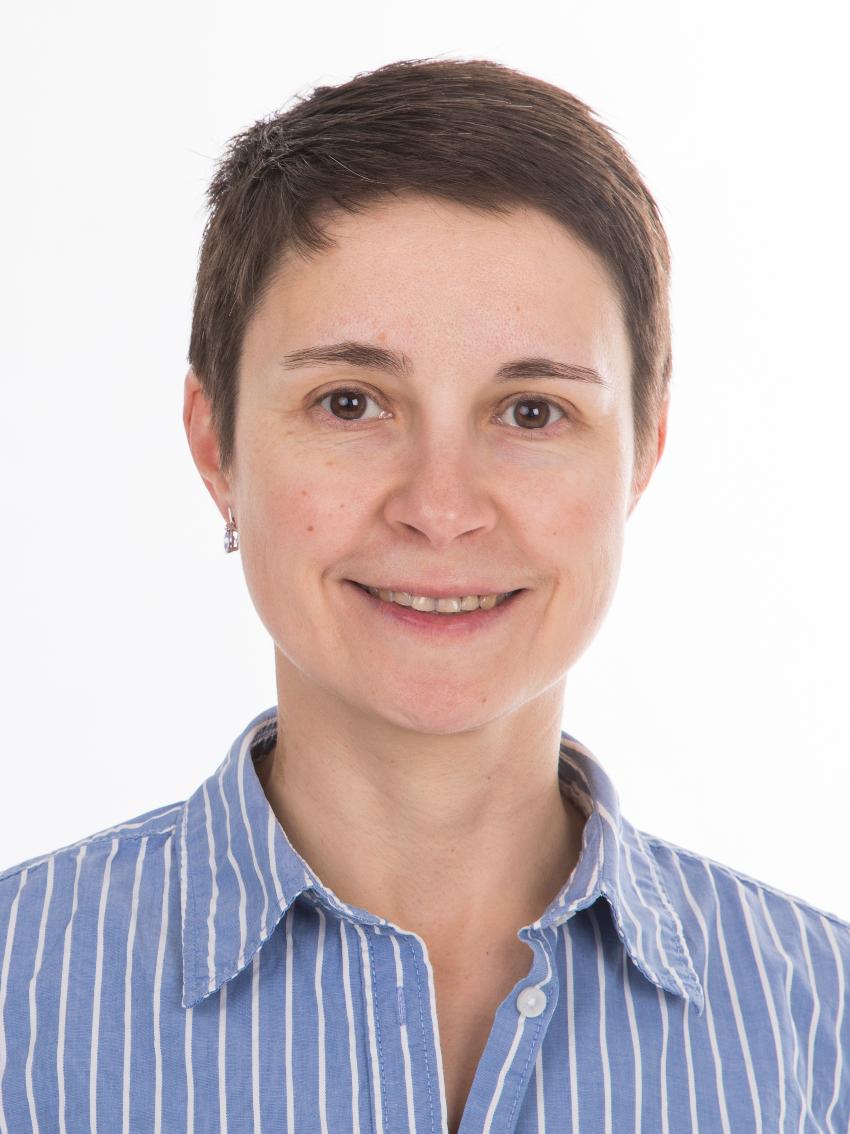
Prof. Dr. Virginia Ruiz-Villanueva is a Professor and leader of the Geomorphology Unit at the Institute of Geography, University of Bern. Her research focuses on river processes, particularly large wood dynamics, flood hazards, and sediment transport in mountainous regions. She holds a prominent role in international collaborations, addressing climate change impacts and river management challenges. Key areas of expertise include geomorphology, environmental hazards, and interdisciplinary approaches to understanding river systems. Her work integrates field observations, numerical modeling, and remote sensing to study processes such as large wood accumulation in rivers, flood risk assessment, and the influence of human activities on hydrological systems. She has contributed to projects across Europe, South America, and the Western United States, emphasizing practical applications for disaster risk reduction and sustainable river management. Recent research highlights include exploring historical changes in mountain river hydrodynamics, quantifying large wood supply in Swiss catchments, and analyzing cascading hazards in Chilean river systems. Her publications frequently appear in high-impact journals such as Earth Surface Processes and Landforms and Science of the Total Environment .
Jacques Gautier is an Assistant Professor in Geovisualization at LASTIG, part of the French National Geographic Institute (IGN France) since September 2020. He is a member of the GEOVIS research team focusing on advanced geovisualization techniques for spatio-temporal data analysis. Prior to his current position, he served as a Postdoctoral Researcher at LASTIG working on the Urclim European project, developing geovisualization methods for climate data in urban environments. His educational background includes a PhD in Geography from Université Grenoble Alpes (2015-2018), where his dissertation focused on "GrAPHiST: An exploratory analysis approach for identifying the dynamics of spatio-temporal phenomena," and an Engineering degree in Geographical Information Science from ENSG (2009-2012). Dr. Gautier's research focuses on innovative approaches to visualize complex spatio-temporal data across multiple domains. His expertise spans meteorological data visualization, epidemiological data visualization, 2D/3D geovisualization techniques, and exploratory data analysis of spatio-temporal phenomena. He has developed specialized methods for identifying cyclic patterns in time-series data, visualizing uncertainty in ensemble forecasting systems, and creating interactive visualization environments for domain experts in urban planning, public health, and emergency response. Analysis of Dr. Gautier's publication record reveals a consistent focus on developing visualization techniques that bridge theoretical advances with practical applications. His work spans urban climate analysis, pandemic response (particularly during COVID-19), and mountain rescue operations. A distinctive aspect of his research is the integration of harmonic analysis with visual exploration to identify cyclic patterns in spatio-temporal data, as demonstrated in his GrAPHiST framework. Dr. Gautier has been actively involved in several significant research projects including ORACLES (focusing on ensemble forecasts of marine submersion), Urclim (aiming to develop integrated Urban Climate Services), and Choucas (an interdisciplinary project to assist mountain rescue operations). These projects highlight his ability to translate visualization research into practical decision-support tools for critical situations. As a member of the GEOVIS research team, Dr. Gautier contributes to advancing geovisualization methodologies through both theoretical development and practical implementation. His work on mixed temporal diagrams, helical time representations, and uncertainty visualization has provided new approaches for exploring complex spatio-temporal datasets across multiple disciplines.
Steve Margulis is a Professor in the Department of Civil and Environmental Engineering at the University of California, Los Angeles (UCLA). His research focuses on surface hydrology and hydrometeorology, particularly in snow-dominated mountainous regions. University: University of California, Los Angeles Department: Civil and Environmental Engineering Research Interests: His work aims to improve characterization of hydrologic states and fluxes through remote sensing and modeling, with applications to water resource management and environmental hazard mitigation. Key areas include: Land surface and atmospheric boundary layer modeling Remote sensing of snow and soil moisture Data assimilation techniques Hydroclimatology and climate change impacts Publications Trends show consistent focus on snow hydrology, remote sensing applications, and data assimilation frameworks across diverse mountain regions including the Sierra Nevada, Andes, and High Mountain Asia. Recent work emphasizes model improvements through spatially distributed precipitation bias correction and satellite data integration. Students: Mentoring includes Ph.D. candidates Yiwen Fang, Yufei Liu, Jacob Schaperow, and Manon von Kaenel. Group alumni include notable researchers at institutions like NASA, Ohio State University, and University of Colorado. Research Projects are funded by NSF, NASA, and DOE/CERC-WET. Key initiatives include: Snow reanalysis frameworks for Sierra Nevada and Andes Investigations into land-atmosphere interactions Global frameworks for SWOT data products
Prof. Dr. Ralf Merz serves as Head of the Department of Catchment Hydrology at the Helmholtz Centre for Environmental Research (UFZ) and holds a Full Professorship in Catchment Hydrology at Martin-Luther University Halle-Wittenberg since 2011. His career bridges hydrological modeling, flood risk assessment, and water quality analysis across diverse climates from Central Asia to Europe. MSc in Civil Engineering (Technical University of Karlsruhe, 1997) PhD in Hydrology (Vienna University of Technology, 2002) Habilitation in Hydrology (Vienna University of Technology, 2009) Research Interests span comparative hydrology, flood generation mechanisms, climate change impacts on water resources, and nitrate dynamics in river systems. His work emphasizes process-based understanding of runoff events and regional flood modeling through innovative approaches like the PHEV distribution framework. Scientific Contributions include over 100 publications (2003-2025) on: Flood frequency analysis in changing climates Groundwater recharge in arid regions Hydrochemical response to droughts Remote sensing applications for groundwater studies Multi-response calibration of hydrological models Key projects involve MOSES observatory development, TRACER research school, and Pamir Mountains glaciological studies. Recognitions : APART research grant (Austrian Academy of Sciences, 2006) Leadership extends to directing the Catchment Hydrology department and participating in European hydrological networks like the Bode Hydrological Observatory and TERENO infrastructure. His methodological advancements include flood time-scale analysis and event runoff coefficient regionalization.
John Rowan is a Professor of Physical Geography and Director of the UNESCO Centre for Water Law, Policy & Science at the University of Dundee. His roles include advancing sustainable development, particularly SDG6 (water and sanitation), and leading interdisciplinary initiatives. Previously, he served as Vice Principal for Research and inaugural Dean of the School of Social Sciences. His research focuses on environmental change, climate impacts on water resources, and policy-driven solutions, with global collaborations in Bangladesh, India, and Kenya. He has held advisory roles in Scottish Government’s Centres of Expertise and chairs UNESCO’s UK International Hydrological Committee. Research Interests: Environmental change, climate-water-food nexus, river basin management, sediment dynamics, and policy integration. His work bridges academic and applied domains, emphasizing governance and sustainable practices. Key projects include enhancing water security under climate uncertainty, developing risk frameworks for drinking water, and addressing the water-food-energy nexus. Publications: Over 111 articles, focusing on climate adaptation, water resource vulnerabilities, and ecohydrological modeling. Recent highlights include studies on the Karakoram Anomaly’s hydrological tipping points and frameworks for climate-resilient water safety plans. Awards: Gold Engage Watermark Award (2020), United Nations Risk Award (2019). Projects span international collaborations and policy advisory roles. He has supervised 12 students and led over 33 research projects, including the Hydro Nation Scholars Programme. Labs/Teams: UNESCO Centre for Water Law, Policy & Science; Centre for Environmental Change and Human Resilience (CECHR), collaborating with the James Hutton Institute. Active in global forums like the UNFCCC Climate Assembly and World Water Forum.
Dr. Jonathan T. Overpeck is the Samuel A. Graham Dean of the School for Environment and Sustainability (SEAS) at the University of Michigan, where he also holds the William B. Stapp Collegiate Professorship of Environmental Education. He is a Professor of both Climate and Space Sciences and Engineering, and Earth and Environmental Sciences, with a career spanning climate-vegetation interactions, abrupt climate change, monsoon dynamics, drought hydroclimate, sea level rise research, and interdisciplinary climate assessment. Overpeck has published over 230 works cited 60,000+ times, emphasizing public education, university-community partnerships for climate solutions, and environmental justice initiatives. PhD in Geological Sciences, Brown University MSc in Geological Sciences, Brown University BA in Geology (Honors), Hamilton College His research spans climate-biosphere interactions , climate variability and abrupt change , monsoon dynamics , drought and hydroclimate , sea level rise , climate law , and climate adaptation . Overpeck pioneered studies on megadrought terminology, temperature-driven drought intensification, and the aridification of North America. His work with the NOAA Paleoclimate Program and World Data Center for Paleoclimatology established foundational understanding of climate dynamics through annually-laminated sediment analysis in the Cariaco Basin. Overpeck's 2020-2024 research includes climate aridification , hydroclimate scaling mismatches , and temperature-precipitation interactions , with recent focus on Antarctic heatwaves, Mississippi River Basin changes, and corporate climate accountability. His article trends show concentration in climate attribution , hydrological extremes , paleoclimate modeling , and climate policy analysis . Scientific Honors: 2024 U.S. National Academy of Sciences 2015 American Geophysical Union Fellow 2009 AAAS Fellow 2007 Nobel Peace Prize contributor (IPCC) 2005 Guggenheim Fellowship Multiple U.S. Department of Commerce awards Overpeck has led or participated in significant climate adaptation projects , including NSF grants totaling $5.1M+ for Southwest Hydroclimatic Extremes (2017-2020), Amazon Drought Impacts (2014-2018), and Quantifying Drought Risk (2013-2018). He serves on the Colorado River Research Group (2014-present) and advises Climate Communication (2011-present). Current initiatives include Great Lakes University positioning, Michigan's climate resilience planning, and the Audacious Water podcast series examining Mississippi River Basin transformations. Overpeck actively contributes to climate policy discourse , advocating for science-informed decision-making and stakeholder collaboration across government, military, and corporate sectors.
Dr. Steven G. Wesnousky is the Foundation Professor and Director of the Center for Neotectonic Studies at the University of Nevada, Reno (UNR). He holds a Ph.D. in Seismology from Columbia University (1982) and a B.A. in Geology from the University of California, Santa Barbara (1975). His academic career spans over three decades at UNR, where he combines geology and seismology to study earthquake mechanics, seismic hazard quantification, and crustal deformation. Research focuses on neotectonics, active fault systems, and the Himalayan seismic hazard. Key areas include fault slip rates, paleoearthquake reconstruction, and integrating geological data into seismic risk models. He teaches advanced courses on photogeology, neotectonics, and seismic hazard analysis. Publications emphasize Quaternary fault mapping, Himalayan tectonics, and rupture mechanics. Notable works include studies on the Walker Lane deformation zone and the 2015 Gorkha earthquake in Nepal. Awards include the Foundation Professorship (2008), F. Donald Tibbetts Teaching Award (2008), and a Fulbright Scholarship (2005). Professional roles include presidency of the Seismological Society of America (1995–1997), board memberships, and international collaborations at institutions like King Abdul University and the Institute of Nuclear and Geological Sciences, New Zealand. His work bridges field geology, geochronology, and computational modeling to advance understanding of continental deformation and earthquake processes.
Brian Stemper is a Professor in the Joint Department of Biomedical Engineering at Marquette University and Medical College of Wisconsin, and Professor in the MCW Department of Neurosurgery. He serves as Director of the Neuroscience and Biomechanics Research Laboratories at the Zablocki VA Medical Center in Milwaukee, where his research bridges engineering principles with clinical applications in trauma biomechanics. Dr. Stemper holds a PhD in Biomedical Engineering from Marquette University (2004) and a BS from Milwaukee School of Engineering (1998). His career progression includes positions as Assistant Professor (2004-2008), Associate Professor (2008-2017), and Professor (2019-present) across both institutions, with tenure awarded in 2023. His research focuses on biomechanics of traumatic brain injury, spine injury mechanisms, and automotive safety. Stemper's work examines how mechanical forces translate to biological damage in neural and spinal tissues, with particular interest in repetitive head impacts in sports, military aviation injuries, and automotive collision biomechanics. His laboratory develops experimental models to characterize injury thresholds and mechanisms. Analysis of his 15 most recent publications reveals consistent focus on spinal biomechanics (60%), traumatic brain injury (30%), and military/aerospace applications (10%). His work increasingly integrates computational modeling with experimental validation, particularly in personalized injury prediction and the effects of repetitive impacts. 2004 Best Paper by a Young Researcher, International Research Council on the Biomechanics of Impact 2006-2008 Listed in Who's Who in Science and Engineering 2007-2010 Listed in Who's Who in America 2008 Listed in Who's Who in the World 2009 Best Student Paper, Rocky Mountain Bioengineering Symposium 2010 NASS Best Poster Presentation, North American Spine Society Dr. Stemper has secured significant grant funding from NIH, Department of Veterans Affairs, Department of Defense, and Air Force Research Laboratory. His current research examines head impact exposure in athletes, neck and back pain in high-performance aircrew, and factors influencing addiction outcomes following brain injury. He has mentored numerous graduate students and serves on the Institutional Animal Care and Use Committee at the Zablocki VA Medical Center.
Maria Sydnes serves as an Associate Professor in the Department of Technology and Security at UiT The Arctic University of Norway, Tromsø. Her academic work focuses on emergency management and organizational resilience within high-risk Arctic environments, with particular emphasis on maritime safety and cross-border crisis coordination between Norway and Russia. Her research interests span interorganizational coordination during emergencies, organizational learning for resilience building, and practical applications of lean production principles in crisis contexts. She investigates Arctic-specific challenges including avalanche response in Longyearbyen, oil spill management in polar waters, and integration of unorganized volunteers into formal emergency systems, consistently addressing the intersection of climate change impacts and security vulnerabilities. Analysis of her publication record reveals a strong trend toward interdisciplinary solutions for Arctic safety, with recurring themes of Norwegian-Russian cooperation, maritime risk assessment, and adaptive governance structures. Her work bridges theoretical frameworks with real-world case studies—from Svalbard waters to the Barents Sea—demonstrating practical approaches to disaster risk reduction in extreme environments. Dr. Sydnes actively participates in multiple research initiatives including the Climate Change Adaptation and Secure Societies groups. Her current projects encompass Co-producing knowledge about risk and safety of maritime activities around Svalbard SPRICE (spray icing modelling for maritime decision support) GLOBSEC (North-South security partnerships) NoCoU (civil security for Norwegian communities) Beredt! (risk-based governance for climate-driven natural hazards) highlighting her commitment to scalable, community-focused security solutions in vulnerable Arctic regions.
Diego Riveros-Iregui is a Professor in the Department of Geography at the University of North Carolina at Chapel Hill, recognized for pioneering research in ecohydrology and biogeochemistry. His work focuses on water-carbon-nitrogen interactions in tropical ecosystems, urban-rural gradients, and climate-impacted watersheds, employing high-frequency monitoring and advanced modeling techniques to address critical environmental challenges. His research interests center on tropical ecohydrology, particularly in Andean páramos and Galápagos Islands, examining carbon cycling in peatlands, nitrogen dynamics across land-use gradients, and stormwater impacts on urban streams. He integrates stable isotope analysis, machine learning, and field observations to study how geomorphology and climate variability regulate biogeochemical fluxes, with emphasis on vulnerable ecosystems facing anthropogenic pressures. Analysis of his 15 most recent publications (2021-2025) reveals dominant trends in high-resolution watershed monitoring, tropical carbon emissions, and urban hydrology. Key methodological innovations include machine learning for water use estimation, isotope-based tempestology, and bias correction in contaminant plume mapping, demonstrating interdisciplinary approaches spanning environmental engineering, climatology, and ecosystem science. Professor Riveros-Iregui has received the following scientific awards: Presidential Early Career Award for Scientists and Engineers (PECASE), the U.S. government's highest honor for early-career scientists, nominated by the National Science Foundation As a PECASE awardee, he leads NSF-funded research programs examining watershed processes across tropical and temperate regions. His collaborative work includes contributions to the EU-funded WELL CARE consortium on water security, though specific grant details and student mentorship records aren't documented in the source material. Current research priorities involve scaling point observations to watershed-level fluxes and assessing climate change impacts on island hydrology. While no dedicated laboratory is specified, his field studies leverage international partnerships in Ecuador's páramos and the Galápagos archipelago, focusing on microclimate-soil microbiome interactions and sustainable water resource management in high-elevation ecosystems.
Jane Frankenberger is a Professor in the Department of Agricultural & Biological Engineering at Purdue University, specializing in environmental and natural resources engineering. She holds a B.A. in Physics from St. Olaf College, an M.S. in Agricultural Engineering from the University of Minnesota, and a Ph.D. from Cornell University. Her career includes eight years working in Africa (DRC and Senegal) and roles at the U.S. EPA and USDA. Currently, she serves as the Extension Water Quality Coordinator, leading projects on watershed management, drinking water protection, and TMDL compliance. Her research focuses on agricultural drainage, water quality, and climate change adaptation in drained landscapes. She teaches a graduate course on GIS applications and has contributed to over 100 peer-reviewed articles, emphasizing nutrient reduction strategies and drainage management. Education: B.A. Physics, St. Olaf College M.S. Agricultural Engineering, University of Minnesota Ph.D. Agricultural & Biological Engineering, Cornell University Key Roles: Extension Water Quality Coordinator Lead of water quality projects in Indiana Author of extension publications on watershed management Research Interests: Her work addresses watershed management, conservation drainage practices, and climate resilience in agricultural systems. She develops models to assess the effectiveness of conservation practices and integrates geospatial tools for decision-making. Recent studies focus on nitrate dynamics in tile-drained systems and climate change impacts on crop yields. Publications highlight trends in drainage water management, nutrient load reduction, and interdisciplinary approaches to sustainable agriculture. Her work bridges engineering, ecology, and policy to improve water resource management at local and global scales. Grants and collaborations include USDA-NIFA projects on transforming drainage research and international initiatives in Peru and Colombia. She emphasizes stakeholder engagement through workshops and outreach programs to enhance community-driven water management solutions.
Peter Molnar is a Professor at ETH Zürich's Department of Civil, Environmental and Geomatic Engineering, where he leads research in hydrology, geomorphology, and environmental engineering. His work spans river basin dynamics, sediment transport, precipitation modeling, and climate-water interactions, with field sites focused on Alpine systems. His research interests center on river basin water and sediment dynamics , precipitation analysis and stochastic modeling , fluvial systems including river networks and riparian zones , and geomorphic processes in mountain streams . Key projects include the Maggia River Experimental Site, basin sediment cascade modeling, and hydroclimatic analysis of rainfall intensity-temperature relationships. His publication record shows consistent high-impact work in journals including Nature , Nature Climate Change , and Water Resources Research , with recent focus on climate change impacts, sensor development, and sustainable agriculture. Golden Owl Award for best teaching (2011) Organizer of international workshops on geomorphology complexity and urban precipitation Patron of CometX initiative Molnar actively mentors PhD students including current candidates working on droughts in Ethiopia, Alpine Rhine sediment budgets, and mountain ecohydrology. His research is supported by Swiss National Science Foundation grants, ETH funding, and international collaborations. He leads experimental work at the Maggia River site and develops warning systems for rainfall-triggered landslides.
Howard S. Neufeld is a Professor in the Department of Biology at Appalachian State University, with expertise in plant physiological ecology and air pollution impacts. His research focuses on ozone effects on native flora in the Great Smoky Mountains National Park, water relations in plants, and invasive species ecology. Education Ph.D. from University of Georgia (1984) Neufeld's research examines plant responses to environmental stressors, particularly tropospheric ozone and water stress. His work on cutleaf coneflower, tall milkweed, and Galax urceolata has revealed critical insights into foliar injury mechanisms, antioxidant defenses, and seasonal adaptation strategies. He investigates how invasive species like Microstegium vimineum exploit light gaps and how hydraulic conductance affects plant drought tolerance. His publication record shows consistent focus on ozone impacts in southern Appalachian ecosystems, with recent work emphasizing seasonal variation in plant responses, stomatal behavior, and biochemical defense mechanisms. Key trends include the development of non-destructive monitoring techniques and spatial analysis of pollution effects across landscapes. Advising & Grants Directed 20 Master's theses on plant ecophysiology, invasive species, and pollution impacts Currently mentoring 7 graduate students on lichen nitrogen responses, heavy metal effects, and ozone physiology Funded by National Park Service, U.S. EPA, National Geographic Society, and Friends of the Smokies Collaborates with researchers from Auburn University, USDA, Oak Ridge, and international institutions Neufeld maintains active field research in the Great Smoky Mountains National Park and operates laboratory facilities for gas exchange and plant stress analysis, with ongoing projects examining nitrogen deposition effects on lichens and nickel pollution impacts on pines.
Mark Jansen is an Assistant Professor of Finance in the Department of Finance at the David Eccles School of Business, University of Utah, where he holds a tenure-track position. His research and teaching focus on private equity, entrepreneurial finance, and household finance. Prior to joining the University of Utah, he served as Managing Director at Holland Park Capital and was a member of the Young President’s Organization, with earlier career experience in management consulting and the chemical industry. Education: Ph.D. in Finance, University of Texas at Austin, 2016 M.S. in Finance, University of Texas at Austin, 2013 MBA, London Business School, 2001 B.S. in Management Science, Massachusetts Institute of Technology, 1993 B.S. in Mechanical Engineering, Massachusetts Institute of Technology, 1992 Dr. Jansen's research examines capital allocation in private markets, startup financing dynamics, and household investment behavior. His work bridges theoretical frameworks with practical applications in venture capital and entrepreneurial mergers and acquisitions. He investigates how institutional and individual investors navigate risk in illiquid asset classes, with implications for portfolio construction and financial decision-making in resource-constrained environments. Dr. Jansen teaches Corporate Finance, Entrepreneurial Finance, Entrepreneurial M&A, and Investments. An avid outdoor enthusiast, he actively engages with Utah's natural landscape through mountain biking, skiing, hiking, and windsurfing while balancing family life with his spouse, two children, and their dog Cookie.
Janet S. Dufek, Ph.D., is a Professor at the University of Nevada, Las Vegas (UNLV) in the Department of Kinesiology and Nutrition Sciences . She also serves as Vice Provost for Faculty Affairs and holds adjunct appointments at the University of Nebraska at Omaha and Rocky Mountain University of Health Professions . Her career spans leadership roles including Associate Dean of the School of Integrated Health Sciences and Director of the Interdisciplinary Health Sciences Ph.D. Program . Education: Ph.D. in Biomechanics (University of Oregon, 1988) M.S. in Scientific Foundations of Kinesiology (Illinois State, 1982) B.S. (Summa Cum Laude) in Physical Education (University of Wisconsin-Superior, 1981) Research Interests focus on biomechanical mechanisms of locomotion , injury prevention , and clinical gait assessment . She specializes in jump-landing dynamics , movement variability , and performance enhancement for clinical populations , advocating for interdisciplinary approaches to solve complex health science problems. Her 15 most recent publications (2019-2024) reflect trends in concussion biomechanics , autism spectrum disorder gait analysis , machine learning applications in diabetes progression , and advanced sensor technology for movement studies . Articles explore topics from head acceleration effects on lower extremity function to weighted vest interventions in autism therapy . Scientific Awards include: Fellow, American College of Sports Medicine UW-Superior Hall of Fame (Scholar-Athlete, 2007) Membership in Phi Kappa Phi and Sigma Xi honor societies As a dedicated mentor , she supervises graduate research projects and advises on interdisciplinary health sciences . Her lab ( REBEL Research Group ) pioneers work in biomechanical injury prevention and gait variability assessment , utilizing pressure-measuring insoles and wearable inertial sensors.