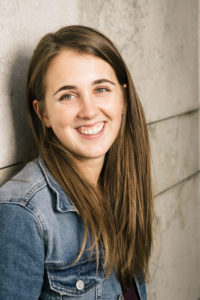
Sébastien Couillard-Després is a Professor and Head of the University Institute for Experimental Neuroregeneration at Paracelsus Medical Private University, Salzburg. His research focuses on neuroregeneration, neuroinflammation, and translational therapies for neurological disorders, particularly spinal cord injury and traumatic brain injury. He combines stem cell biology, nanomaterials, and computational approaches to develop novel treatments. Key areas of expertise include: Stem cell-based therapies for nervous system repair Molecular mechanisms of neuroprotection Biomaterials for tissue engineering AI-driven predictive modeling in oncology and osteoporosis He has led over 20 projects and published 239+ peer-reviewed articles. Recent work emphasizes combinatorial neuroprotection strategies and integrating radiomics with clinical data for fracture risk prediction. Active in academic leadership, he serves on the university senate and organizes international workshops.
Dr. Monika Angerer is a Senior Scientist in the Department of Psychology at the University of Salzburg, affiliated with the Laboratory for Sleep, Cognition & Consciousness Research within the Faculty of Natural Sciences. She holds a PhD in Natural Sciences (Dr. rer. nat.) and is concurrently completing clinical psychology training at the Austrian Academy for Psychology. Since March 2024, she has also served as a Psychologist at the Hospital 'Barmherzige Brüder' in Salzburg, integrating clinical and research expertise. Her educational background includes a Master’s in Psychology (cognitive neuroscience), a Bachelor’s in Educational Science, and dual Bachelor’s degrees in Psychology and Nursery Education. She has been continuously involved in research at the University of Salzburg since 2016, progressing from Research Assistant to Senior Scientist. Dr. Angerer’s research focuses on disorders of consciousness, chronobiology, circadian rhythms in brain-injured patients, prenatal and postnatal influences on infant development, early dyadic interactions, and attachment . Her work combines neurophysiological measurements (e.g., actigraphy, HRV) with behavioral and developmental assessments. She has led and co-led significant research projects, including an FWF-funded study on prenatal programming and cognitive development. Her 15 most recent publications reveal a strong trajectory in sleep science, neurorehabilitation, infant development, and pandemic-related mental health . Key themes include circadian rhythm entrainment through daylight exposure, neural speech tracking in newborns, maternal mental health, and parent-infant interaction. Her work spans high-impact journals such as Sleep , BMC Medicine , and European Journal of Neurology . Dissertation Prize for Natural Sciences 2023 (University of Salzburg) Wilhelm Strubreither Prize 2022 (Austrian Association for Neuropsychology) Christian-Doppler-Award 2021 (Land Salzburg) Multiple merit scholarships and presentation awards Dr. Angerer has been actively involved in academic service, including serving as Early Career Researcher Representative for the Austrian Association for Psychology (2020–2023). She regularly presents at international conferences such as ESRS, SLTBR, and ASSC. While no formal advisees are listed, she collaborates extensively with researchers and students in the Sleep Lab. She is a member of several professional societies and serves as a reviewer for journals including Clocks & Sleep , Clinical Neurophysiology , and Sleep .
Dr. Peter Gangl is a Senior Research Scientist at the Johann Radon Institute for Computational and Applied Mathematics (RICAM), Austrian Academy of Sciences, where he leads research in optimization and computational mathematics. He holds a Ph.D. (2017) and M.Sc. (2012) from Johannes Kepler University Linz. His research focuses on topology/shape optimization, topological derivatives, and multiphysics simulation of electric machines. Research Interests: Gangl specializes in developing mathematical methods for PDE-constrained optimization, with emphasis on computational electromagnetics, automated sensitivity analysis, and multi-objective design. His work bridges applied mathematics and industrial applications, particularly in electric motor optimization. Research Projects: Principal Investigator for SFB F90 'CREATOR' (2022–2026) on topology optimization under electro-thermal coupling Led FWF project 'Multiphysical Shape Optimization of Electrical Machines' (2020–2024) Awards & Honors: Richard C. DiPrima Prize (SIAM, 2018) Erwin Wenzl Preis (2018) Anile Prize (ECMI, 2018) Promotio sub auspiciis (Austria's highest academic honor, 2017) Students & Collaboration: Supervises PhD candidates (Nepomuk Krenn, Michael Winkler) and collaborates with institutions including TU Graz, TU Darmstadt, and international partners. Organizes workshops/seminars on optimization and computational mathematics.
Jonas Ries is a Professor at the University of Vienna, affiliated with the Department of Structural Biology and Computational Biology. His research focuses on super-resolution microscopy, cryo-electron microscopy, and structural analysis of cellular components. Department: Structural Biology and Computational Biology Specialization: Nuclear pore complex architecture, MINFLUX nanoscopy, fluorescent labeling. His recent work includes 2025 projects on mitochondrial fission during apoptosis via SMLM and MINFLUX, and developing a cost-effective MINFLUX microscope. He collaborates internationally, with a focus on nuclear pore complexes and artificial intelligence applications in microscopy. 2024 contributions highlight advancements in 3D MINFLUX excitation, dynamic structural biology, and synaptonemal complex analysis in C. elegans. His projects often involve computational modeling and high-throughput imaging. Research Trends Recent publications emphasize super-resolution techniques (MINFLUX, SMLM), PSF inverse modeling for microscope calibration, and nuclear pore complex dynamics. Subfields include apoptosis mechanisms, clathrin coat bending, and AI-driven image analysis. Academic Engagement He participated in the Dies Academicus event at the University of Vienna in 2024, indicating active involvement in academic community activities.