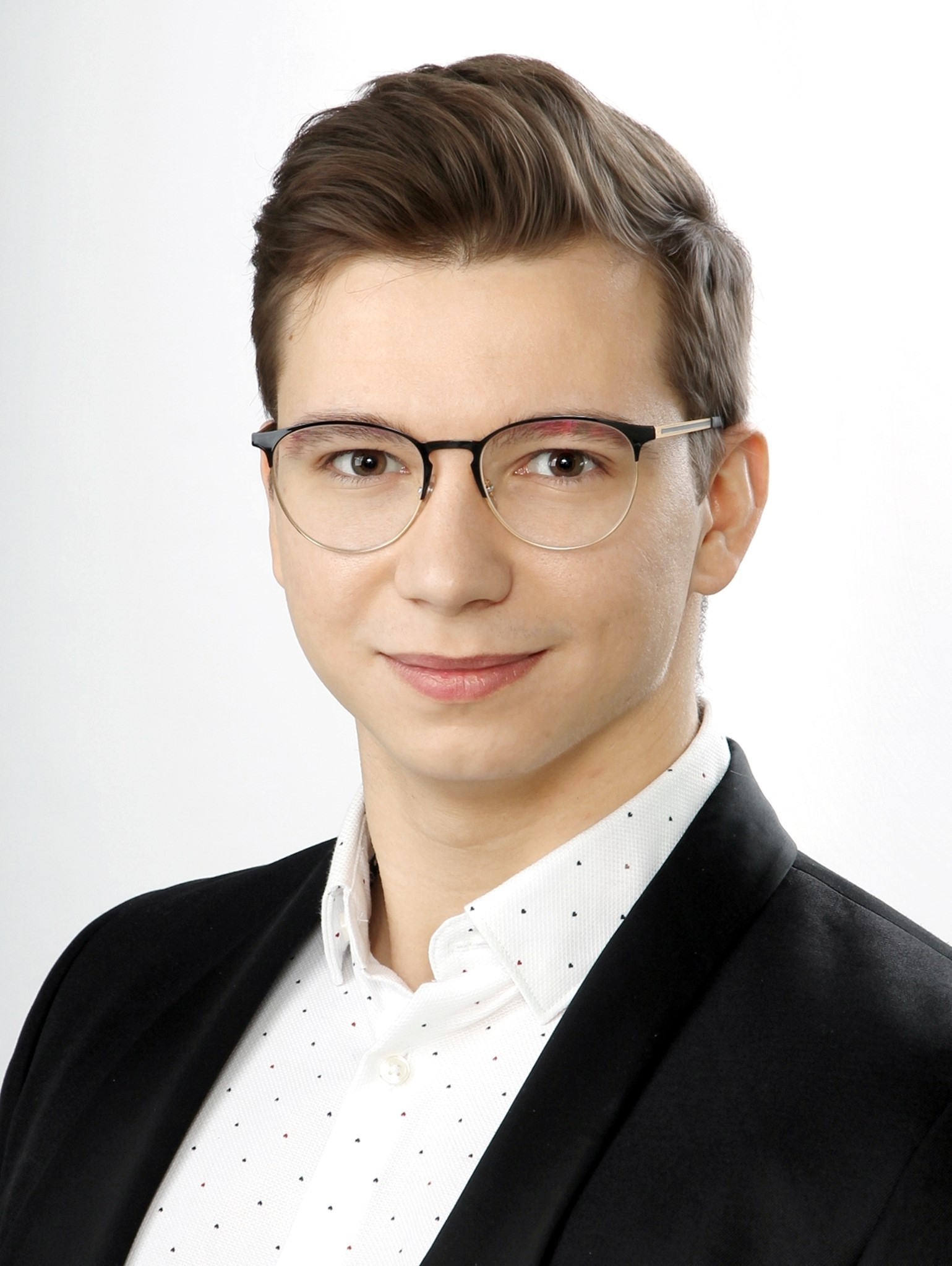
Dr. Ivana Kovacevic is a Lecturer at the Department of Information Technology and Electrical Engineering at ETH Zürich. Her research focuses on power electronics, semiconductor device modeling, and electromagnetic analysis of wide bandgap devices. ETH Zürich, Department of Information Technology and Electrical Engineering Contact: kovacevic@aps.ee.ethz.ch Her research explores SiC power MOSFETs, emphasizing their dynamic performance, reliability, and optimization through advanced modeling techniques like the Partial Element Equivalent Circuit (PEEC) method. She investigates parasitic extraction, thermal behavior, and stability issues in power modules, contributing to design improvements for high-efficiency systems. Her publications highlight trends in electromagnetic modeling, device-circuit interactions, and reliability analysis under extreme conditions. Key subfields include gate resistance dynamics, frequency-dependent capacitances, and multi-chip module design. Current projects involve virtual prototyping for power electronics and mission profile-based optimization of wearable power systems.
Nadia Figueroa is the Shalini and Rajeev Misra Presidential Assistant Professor in the Mechanical Engineering and Applied Mechanics (MEAM) Department at the University of Pennsylvania . She holds secondary appointments in Computer and Information Science (CIS) and Electrical and Systems Engineering (ESE) , and is a core faculty member at the General Robotics, Automation, Sensing & Perception (GRASP) Laboratory . Before joining Penn, she was a Postdoctoral Associate at MIT's CSAIL under Prof. Julie A. Shah and earned her Ph.D. at EPFL with Prof. Aude Billard. Her academic journey includes research roles at DLR and NYU Abu Dhabi , along with degrees from Monterrey Tech (B.Sc.) and TU Dortmund (M.Sc.) . Education: Ph.D. in Robotics, Control and Intelligent Systems, EPFL (2019) M.Sc. in Automation and Robotics, TU Dortmund B.Sc. in Mechatronics, Monterrey Tech Her research focuses on adaptive intelligence for robots to learn from and interact with humans, emphasizing fluid collaboration in safety-critical applications. Key areas include reactive control algorithms , human-robot co-manipulation , and real-time navigation . Techniques integrate machine learning , control theory , and perception to ensure stability, safety, and robustness in dynamic environments. Recent work trends highlight reactive motion policies for imitation learning, dynamical systems modulation with non-convex obstacles, and EEG-based intent detection for assistive robotics. She also explores soft robotics with MORF systems and SE(3) control for end-effector precision. Her publications reflect interdisciplinary approaches at the intersection of robotics, AI, and human biomechanics . She has taught MEAM-520 Introduction to Robotics at Penn and served as Head Teaching Assistant at EPFL for courses like MICRO-401 Machine Learning Programming . Her Figueroa (Human-Centered) Robotics Lab , established in 2022, collaborates with institutions like MIT and EPFL to advance fluid human-robot autonomy.
Michał Adamczyk is a researcher at Wrocław University of Science and Technology, affiliated with the Faculty of Electrical Engineering and the Department of Electrical Machines, Drives and Measurements. His work focuses on advanced control techniques for electric drives and fault-tolerant systems. Research areas include current sensor fault detection, Luenberger observers, and parameter estimation Participated in the OPUS 21 project on sensor fault compensation under Prof. Teresa Orłowska-Kowalska Email: michal.adamczyk@pwr.edu.pl Recent research trends in his publications (2022-2024) emphasize fault-tolerant control strategies for induction motor drives using modified Luenberger observers, extended Kalman filters, and neural network-based approaches. His work addresses sensor fault compensation through virtual sensor implementations and resistance estimation techniques. His publications demonstrate expertise in industrial electronics applications, particularly in improving control systems' robustness against sensor failures while maintaining performance in safety-critical and industrial automation contexts.
Walid Hubbi is Associate Professor in Electrical and Computer Engineering at NJIT. He holds a PhD from Queen's University Belfast and degrees from the University of London and Aleppo University. His research focuses on power system analysis and control, particularly optimization techniques for reactive power compensation, load flow methodologies, and stability enhancement. Key contributions include fuzzy logic controllers for static VAR compensators, neural network applications for load modeling, and optimal placement strategies for grid control devices. His publications consistently address practical challenges in transmission efficiency, voltage stability, and measurement accuracy using computational intelligence and optimization frameworks.
Yue Guo is a Professor of Battery Systems at Coventry University, affiliated with the Institute of Future Transport and Cities and the Centre for E-Mobility and Clean Growth. He holds a BEng in Electrical Engineering and Automation from Harbin Institute of Technology (China), an MSc in Management of Information Technology from the University of Nottingham, a PhD in Model-Based Design for Automotive Electronic Systems from the University of Warwick, and an MBA in Global Energy Industry from Warwick Business School. His research focuses on energy storage systems, battery thermal management, and automotive electronics. He has collaborated extensively with the automotive industry on projects involving system-of-systems modeling, Li-ion battery testing, and low-carbon transport technologies. Notable roles include former Project Manager and Deputy Head of the Energy Innovation Centre at WMG, University of Warwick, and current Chair of Battery Systems at C-ALPS. Professional memberships include Chartered Engineer, IEEE Senior Member, and SAE International Battery Thermal Management Committee. Key research trends in his publications include predictive battery diagnostics, thermal runaway prevention, and LCA analysis of battery production. His work emphasizes real-time monitoring technologies and sustainable energy storage solutions. Projects address challenges in battery aging, environmental impacts, and integration into low-carbon vehicle systems. Awards and recognitions include his academic appointments and industry collaborations, though no specific scientific awards are listed. He has advised on numerous research initiatives and contributed to advancing battery technologies through innovative thermal management systems and model-based testing frameworks. Labs and teams: Active in the Centre for E-Mobility and Clean Growth, leading interdisciplinary projects at Coventry University's Institute of Future Transport and Cities. Collaborations span academic and industrial partners globally, focusing on next-generation energy storage solutions.
Ian Brown is a Professor of Electrical and Computer Engineering at Illinois Institute of Technology, part of the Armour College of Engineering. He holds a Ph.D. (2009), M.S. (2003), and B.S. (1999) in Electrical and Computer Engineering from the University of Wisconsin-Madison and Swarthmore College. His research focuses on energy conversion, electric machines, and renewable energy systems, with emphasis on sensorless control, machine design optimization, and traction motor development for electric vehicles. He has extensive industry experience as a principal engineer at A.O. Smith, contributing to electric machine and drive technologies. Research interests include adjustable speed drives, high-power density motors, and applications in sustainable energy. He has advised multiple graduate students and published over 50 peer-reviewed articles in IEEE Transactions and conferences. His recent work explores superconducting circuit breakers, thermal management systems, and advanced winding designs to minimize harmonic distortions. Brown's contributions bridge academic research with industrial applications, particularly in improving energy efficiency and reliability in power conversion systems. He is affiliated with the IEEE and has contributed to journal editorials on electric machines in renewable energy. His lab focuses on experimental prototyping and simulation-driven optimization of electric drives. Current projects include developing brushless capacitive excitation systems for traction motors and analyzing driving cycle-based machine design optimization strategies. Teaching responsibilities include graduate courses on electric machines and power electronics. He maintains active collaborations with industry partners like A.O. Smith and Siemens, emphasizing translational research with commercialization potential.
Miguel Ortiz is a Lecturer at Queen's University Belfast's School of Arts, English and Languages. His research focuses on digital instrument design, technology-mediated composition, and the intersection of music technology with physiological sensors and communities of practice. He actively supervises PhD students in these areas. Ortiz's work explores iterative instrument design processes, ecological frameworks for instrument evaluation, and the impact of timbre on musical learning. His publications span acoustic modeling, biosignal-driven art, and Latin American perspectives in new musical interfaces (NIME). Recent research highlights include studies on spring reverb tank mechanics, real-time bowing parameter sensing, and the establishment of Latin American NIME networks. He collaborates internationally and organizes workshops like the International Synth Design Hackathon. Ortiz has contributed datasets for expressive musical gesture analysis and participated in peer review for cultural funding initiatives. His research bridges technical innovation with human-centered design principles.
Lale Ergene is a Professor in the Department of Electrical Engineering at Istanbul Technical University (ITU), College of Engineering. Her research focuses on advanced electric machine design and control systems for industrial and automotive applications. She is actively involved in motor drive innovation, particularly in permanent magnet and reluctance motor technologies. Research Interests: Dr. Ergene specializes in electric machines, with emphasis on Permanent Magnet Synchronous Motors (PMSM), Interior Permanent Magnet (IPM) motors, and Permanent Magnet Assisted Synchronous Reluctance Motors (PMaSynRM). Her work spans sensorless control, field weakening techniques, finite element analysis, and motor optimization for electric vehicles and home appliances. She applies intelligent control methods such as neuro-fuzzy systems and real-time diagnostics. Recent Research Trends: Her recent publications (2023–2024) show a strong focus on improving motor efficiency and control robustness, especially in EV traction systems and white goods. Key themes include voltage distortion reduction, flux weakening enhancement, real-time parameter estimation using FFT, and lean sensorless control at zero/low speeds. Her work bridges theoretical modeling with industrial applications. Scientific Awards: Best Poster Paper AWARD (2016) Graduation Design and Project Competition 2nd Prize (2015) ITU 2014 Best Doctoral Thesis Award (2015) Advising and Grants: Dr. Ergene has supervised or is currently supervising 25 theses, indicating a strong mentoring role. She has led multiple funded projects, including TÜBİTAK and ITU BAP grants, focusing on FPGA-based neural network control, three-level inverter design, real-time model diagnostics, and sensorless control for washing machines and EVs. Her projects demonstrate sustained research funding and applied engineering impact. Labs and Research Teams: While specific lab names are not mentioned, her projects imply leadership in a motor control and electric machines research group at ITU, likely involving FPGA, real-time simulation, and embedded control systems. Her collaborations with researchers like A.F. Ergenc, M. Yilmaz, and A. Tap suggest an active, multidisciplinary team focused on next-generation motor drives.
Shuai Zhao is an Assistant Professor at the AAU Energy Department, Faculty of Engineering and Science, Aalborg University. His research focuses on applying machine learning and artificial intelligence techniques to enhance reliability and condition monitoring in power electronic systems, with specific interests in lifetime estimation, fault diagnosis, and health management of critical components like capacitors and semiconductor devices. Institution: Aalborg University School: Faculty of Engineering and Science Department: AAU Energy Email: szh@energy.aau.dk His research spans multiple domains including: Physics-informed machine learning for power converter systems Remaining useful life prediction with hybrid Bayesian deep learning Thermal transient analysis and stress emulation methods IoT-enabled monitoring schemes for semiconductor devices Neural network applications in lithium-ion battery prognostics Recent publications show a strong trend toward integrating domain-specific physics with machine learning frameworks to address real-world challenges in: Power electronics reliability under operational stress Anomaly detection in multivariate time-series data Robust fault diagnosis for railway traction systems Temperature estimation in electric vehicle motors Imbalanced data handling in diagnostic systems Capacitance degradation modeling under environmental factors Current projects demonstrate collaboration with leading institutions on: AI-assisted long-term maintenance strategies Physics-informed neural network architectures Smart agricultural monitoring systems via IoT platforms Advanced particle filter methods for life prediction
Warren M. Grill is the James B. Duke Distinguished Professor and Bass Fellow at Duke University, holding appointments in Neurobiology, Neurosurgery, and Biomedical Engineering. He serves as Core Faculty in Innovation & Entrepreneurship, a Faculty Network Member of the Duke Institute for Brain Sciences, and an Associate of the Duke Initiative for Science & Society. His research employs engineering approaches to understand and control neural function, with a focus on electrical stimulation of the nervous system to restore function in neurological disorders. Ph.D., Case Western Reserve University (1995) M.S., Case Western Reserve University (1992) B.S., Boston University (1989) Dr. Grill's research spans multiple areas of neural engineering and neuromodulation. His work focuses on developing engineering approaches to understand and control neural function, particularly through electrical stimulation of the nervous system. Current projects include deep brain stimulation for movement disorders, peripheral nerve stimulation for bladder function restoration, spinal cord stimulation for chronic pain, transcranial magnetic stimulation, and novel electrode and waveform design. His research integrates computational modeling with experimental approaches to advance bioelectronic medicine. Dr. Grill's recent publications (2023-2025) demonstrate a strong focus on computational modeling of neural stimulation, with particular emphasis on deep brain stimulation, vagus nerve stimulation, and transcranial magnetic stimulation. His work increasingly integrates advanced computational methods with experimental validation across multiple species. There's a clear trend toward developing more selective and efficient stimulation paradigms, understanding cross-species translation of stimulation parameters, and identifying novel therapeutic targets for neurological disorders. Fellow, National Academy of Inventors (2022) Capers & Marion McDonald Award for Excellence in Teaching and Research, Pratt School of Engineering (2018) Javits Neuroscience Investigator Award, NIH-NINDS (2015) Scholar / Teacher of the Year Award, Duke University (2014) Outstanding Postdoc Mentor, Duke University (2013) Fellow, Biomedical Engineering Society (2011) Fellow, American Institute for Medical and Biological Engineering (2007) Dr. Grill has mentored numerous students and postdocs, many of whom have gone on to successful careers in academia and industry. His lab has been consistently supported by major NIH grants, including the Javits Neuroscience Investigator Award from NIH-NINDS. He has also secured funding from various foundations and industry partners to advance his research in neural engineering and bioelectronic medicine. Dr. Grill is known for his collaborative approach, working with clinicians, engineers, and basic scientists across multiple institutions. Dr. Grill leads a vibrant research laboratory at Duke University that combines expertise in neural engineering, computational neuroscience, and experimental neurophysiology. His team includes graduate students, postdoctoral fellows, and research staff working on various aspects of neural stimulation. He is actively involved in the Duke Institute for Brain Sciences and collaborates with members of the Deep Brain Stimulation Think Tank. His lab has developed several innovative computational models and experimental approaches that have significantly advanced the field of neuromodulation.
Prof. Giuseppe Vannozzi is a Full Professor at the University of Rome Foro Italico, based in the Department of Human Motor Sciences and Health. His research focuses on biomechanics, wearable sensor technology, and gait analysis in neurological and运动 disorders. He has contributed to studies on stroke recovery, Parkinson’s disease, multiple sclerosis, and pediatric conditions like cerebral palsy. His work integrates machine learning with clinical assessment, emphasizing wearable sensors for real-world applications. Research interests include motor control, neurorehabilitation strategies, and the application of inertial measurement units (IMUs) in movement analysis. Key areas include gait variability, postural stability, and upper limb recovery. Recent studies explore the use of auditory cues in Parkinson’s gait improvement and sensor-based interventions for stroke survivors. His publications span over a decade, with recent focus on advanced metrics for gait quality, instrumented clinical tests (e.g., iTUG), and the role of biomechanical parameters in aging populations. He has pioneered sensor fusion algorithms for yoga and sports performance evaluation, and his work on Golden Ratio-based auditory cues highlights interdisciplinary创新. He contributes to academic governance as a member of the University Quality Assurance Committee and has collaborated on EU-funded projects. Teaching responsibilities include courses on research methodology, movement therapy, and motor function assessment in health sciences.
Steven B. Leeb is a Professor of Electrical Engineering and Computer Science (EECS) and Mechanical Engineering at MIT. He holds the Carl Richard Soderberg Chair in Power Engineering and is a MacVicar Fellow, recognizing his excellence in teaching and research. His work focuses on power electronics, energy conversion systems, motor drives, and nonintrusive power monitoring. Leeb has contributed to advancements in smart grid technologies, building energy management, and fault detection systems. He leads interdisciplinary research integrating control systems with renewable energy applications. Education: B.Sc., M.Sc., M.Eng., and Ph.D. in Electrical Engineering from MIT (1987–1993). His career at MIT spans over three decades, progressing from Assistant Professor (1993) to Full Professor (2005). He has advised numerous projects in collaboration with industries and military applications, including naval propulsion systems and unmanned aerial vehicle (UAV) energy buffering. Research Interests: Power Electronics and Motor Drives Nonintrusive Load Monitoring (NILM) Building Energy Management Smart Grid Technologies Sensors and Sensor Networks Electromagnetic Systems Awards: Over 15 major awards, including the National Science Foundation CAREER Award (1996), IEEE Fellow (2007), and multiple R&D 100 Awards. His work has led to patents in nonintrusive monitoring systems, smart lighting, and energy-efficient technologies. Teaching: Courses include Mechanical Engineering Tools (2.670) , Power Electronics Laboratory (6.131) , and Microcomputer Project Laboratory (6.115) . He emphasizes hands-on learning through labs like his DC motor experiments, which are featured in freshman orientation programs. Labs/Teams: Active in MIT’s Energy Initiative, collaborating with industry partners on projects such as naval propulsion systems and UAV energy systems. His group develops prototypes for commercial applications in smart buildings and renewable energy integration.
Ruggero Carli is an Associate Professor at the Department of Information Engineering, University of Padova. His research focuses on control systems, robotics, and optimization, with emphasis on model-based reinforcement learning, distributed optimization algorithms, and energy systems. His work bridges theoretical advancements with real-world applications, including autonomous robotics, smart grids, and nonlinear control. Key contributions include physics-informed machine learning frameworks, ADMM-based distributed optimization methods, and MPC-driven control solutions for underactuated systems. Research interests include: Model-Based Reinforcement Learning for Robotics Nonlinear Model Predictive Control (NMPC) Distributed Optimization and ADMM Variants Energy Networks and Smart Grids Robot Dynamics and System Identification Recent publications emphasize: Continual learning for driver behavior analysis Physics-informed control for underactuated systems Robust optimization in unreliable networks Autonomous robotic manipulation with large language models His research integrates control theory with modern machine learning techniques, addressing challenges in edge computing, distributed systems, and real-time implementation.
Jun Allard is a Professor at the University of California, Irvine, with joint appointments in the Department of Mathematics and Department of Physics and Astronomy. He is affiliated with the Center for Complex Biological Systems and the NSF-Simons Center for Multiscale Cell Fate Research. Education includes: Ph.D. Applied Mathematics, University of British Columbia (2011) M.Sc. Physics, Dalhousie University (2007) B.Sc. Mathematical Physics, Queen's University (2005) His research specializes in mathematical and computational modeling of cellular and biomolecular mechanics. Key interests include how cells utilize force, space, and time to solve problems, with applications in immune cell signaling, cytoskeletal dynamics, and intracellular transport. His work combines theoretical models with experimental collaborations to uncover fundamental biological mechanisms. Recent publications (2021-2025) predominantly focus on computational approaches to cellular processes, including molecular transport mechanisms, immune receptor dynamics, and cytoskeletal organization. These studies employ advanced stochastic modeling, biophysical simulations, and quantitative experimental methods to reveal principles governing cellular behavior. Scientific awards include: UCI Chancellor's Award for Distinguished Fostering of Undergraduate Research (2015) Emerging Diversity Scholar, National Center for Institutional Diversity (2016) Honorable Mention, NSF Graduate Research Fellowship (2012) He has advised over 12 doctoral students and leads the Allard Lab, which develops computational models for cell mechanics. Major grants include NSF awards for research on molecular-tether reactions (DMS-2052668), nanoparticle adhesion (CBET-1929565), and multiscale cell fate (DMS-1763272). The lab collaborates internationally with experimental groups and participates in interdisciplinary initiatives including the Chemical and Materials Physics program.
David S. Wack is an Associate Professor at the University at Buffalo's Jacobs School of Medicine & Biomedical Sciences, Department of Radiology. His research focuses on medical image analysis and neuroimaging, particularly in auditory processing and parameter estimation from PET, MRI, and CT images. He has held academic positions since 1992, progressing from instructor roles to his current rank. His work includes NIH-funded projects on imaging technologies and collaborations with institutions like Canon Medical Systems and UBNS. Education: PhD in Communicative Disorders and Sciences (SUNY Buffalo, 2010) MA in Applied Mathematics (SUNY Buffalo, 1992) BA in Applied Mathematics and Music Performance (SUNY Buffalo, 1989) Research Interests: Development of parametric maps from medical images Machine learning applications in neuroimaging Neuroimaging of auditory and language processing Dynamic image noise reduction and segmentation algorithms Neural markers of top-down compensation in speech processing Recent Projects: NIH-funded self-collimating SPECT breast tomography system 4D flow MRI for intracranial atherosclerotic disease assessment Machine learning for neuroimage classification Grants & Service: Member of Jacobs School faculty council and UB Faculty Student Association board Editorial roles at Frontiers in Neuroscience (Brain Imaging Methods, Decision Neuroscience) Labs & Teams: Buffalo Neuroimaging Analysis Center Collaborations with UBNS, Canon Medical, and VA Western New York Health Care System