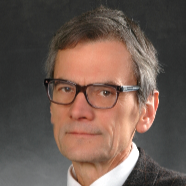
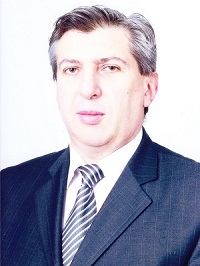
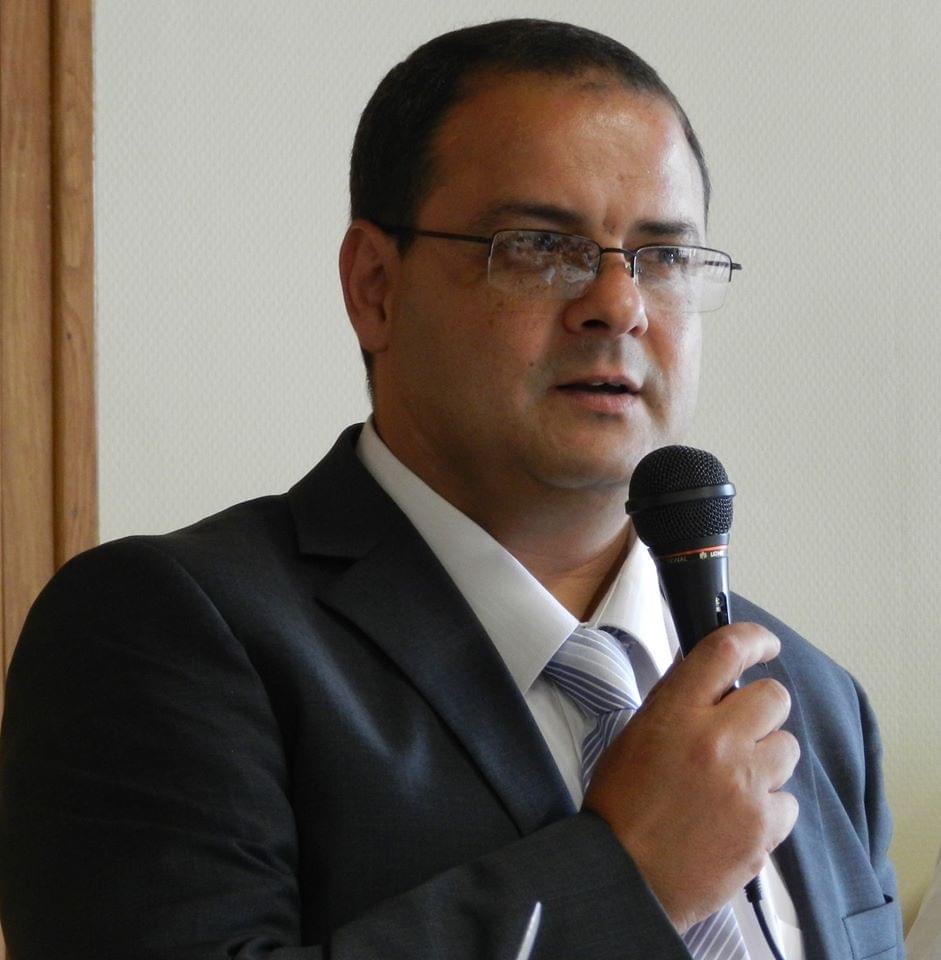
Bart Blockmans is a Research Fellow at KU Leuven, affiliated with the Mecha(tro)nic System Dynamics (LMSD) research unit. His work focuses on system identification, digital twins, and nonlinear dynamics in mechanical systems. Co-promoter in projects like SAFOS_sbo (smart fiber optic sensors) and wind turbine gearbox analysis Expertise in drivetrain modeling, vibro-acoustic behavior, and condition monitoring Collaborates with iSi Health, KU Leuven's Institute for Physics-based Modeling for In Silico Health
Amad Zafar is a Research Professor at Sejong University's Department of Artificial Intelligence and Robotics. He holds a PhD in Intelligent Control & Automation from Pusan National University (2019) and has previously held academic positions at the University of Wah and University of Lahore Islamabad Campus. Education: B.Sc., University of Wah, Pakistan (2009) MS., University of Wah, Pakistan (2013) Ph.D., Pusan National University, South Korea (2019) His research focuses on Brain-Computer Interfaces , Brain Imaging , Machine Learning , Intelligent Systems , and Battery Technology . His notable achievements include developing a Fast fNIRS-based BCI , Battery SOC/RUL Prediction , and Hotspot Detection in Solar Panels . Recent publications highlight trends in medical imaging analysis (diabetic retinopathy, skin lesions, breast cancer), deep learning frameworks for healthcare, reinforcement learning for traffic optimization, and hybrid neural networks for brain signal processing. All works emphasize optimization techniques and intelligent system design. Professional experience spans from Lab Engineer (2010-2013) to Research Professor (2022-Present) . Collaborations with institutions in South Korea, Pakistan, and international researchers are evident through co-authorships. Research outputs (87 total) demonstrate sustained contributions across biomedical engineering, energy systems, and AI since 2016.
Prof. Piotr Chrzan is a full-time Professor at Gdańsk University of Technology's Faculty of Electrical and Control Engineering, where he leads research in the Department of Power Electronics and Electrical Machines. His office is located in Building A, Room EM-211, and he can be contacted via phone (+48583471719) or email. His research encompasses: Advanced power electronics converter design using GaN transistors EMI mitigation through shielding and quasi-resonant techniques Wideband modeling of DC-DC converters Control systems for electrical drives Renewable energy integration with photovoltaic nano-installations Educational engineering tools including remote laboratories Publication analysis reveals three dominant themes in his recent work: GaN semiconductor applications (2020-2025): 60% of publications focus on GaN-based converter optimization, EMI reduction, and 3D packaging techniques Modeling methodologies : 25% cover wideband converter modeling, parasitic parameter extraction, and simulation validation Educational systems : 15% develop teaching tools for power electronics and renewable energy
Dr. Piotr Kołodziejek is an Assistant Professor at Gdańsk University of Technology's Department of Electric Drive Automation and Energy Conversion, Faculty of Electrical and Control Engineering. His laboratory, the Electric Drive Automation Laboratory, focuses on experimental research in energy conversion systems. Research interests include: Sensorless control algorithms for induction motors Diagnostics of electric drive systems MPPT optimization for renewable energy Hybrid energy harvesting (solar/wave) Microgrid energy management His recent publications (2021-2025) demonstrate strong focus on: Efficiency optimization in electric motor drives Renewable energy subsystem design Real-time fault diagnosis techniques High-speed motor control innovations He teaches 89 courses including Control Systems in Renewable Energy, Programming Networking, and project-based CDIO courses in Energy Technologies.
Susan C. Schwerin is a Research Assistant Professor in the Department of Anatomy, Physiology and Genetics at the Uniformed Services University of the Health Sciences School of Medicine in Bethesda, Maryland. With over a decade of experience at the institution, she has established herself as a specialist in traumatic brain injury research using gyrencephalic animal models. Her educational background includes: PhD in Neuroscience from Northwestern University Institute for Neuroscience (2005) Postdoctoral Fellowship in Neuroscience at the University of Florida (2006-2009) Postdoctoral Fellowship in Neuroscience at Uniformed Services University (2009-2013) BS in Biological Sciences from Michigan Technological University (1995) Dr. Schwerin's research primarily focuses on traumatic brain injury and neuroplasticity, with particular expertise in developing and utilizing ferret models for studying brain trauma. Her work bridges experimental neuroscience with clinical applications, investigating how brain injuries affect neural pathways and behavioral outcomes. She has made significant contributions to understanding the progression of histopathological and behavioral abnormalities following mild traumatic brain injury. Her publication record shows a consistent trajectory of high-impact research in neuroimaging techniques, particularly diffusion MRI and DTI, for detecting brain alterations following injury. Her work spans from basic methodology development (creating population-based MRI templates for ferret brains) to clinical applications (studying sleep disruption and motor recovery patterns). The research demonstrates a strong emphasis on translational neuroscience, with findings that have implications for human traumatic brain injury diagnosis and treatment. Dr. Schwerin's collaborative approach is evident in her extensive publication record, working with researchers across various disciplines including neuroimaging, neurophysiology, and rehabilitation science. Her work on ferret models has established this species as a valuable gyrencephalic model for studying traumatic brain injury, filling an important gap between rodent models and human studies.
Доброслав Данайлов Данков е професор и ръководител на катедра в Технически университет - Габрово, Факултет по Електротехника и Електроника, Катедра Електроника. Той работи в университета от поне 1994 г. и е активен изследовател с над 100 публикации и 20 завършени проекта. Катедрата му се намира в кабинети 2305 и 2315, а контактните му данни включват телефон (066 827)+305,340 и имейли dankov@tugab.bg и dankov@abv.bg. Основните области на научен интерес на проф. Данков включват силова електроника, индукционни системи за нагряване, технологии за електромобили, широколентови полупроводникови елементи (SiC, GaN), безжичен трансфер на енергия и надеждност на електронни системи. Неговите изследвания са фокусирани върху подобряване на ефективността, надеждността и енергийната ефективност на преобразувателни устройства и системи. Той е автор на 9 учебника и учебни помагала, включващи 'Автомобилни електронни системи и диагностика' (2022) и 'Електронно-технологични и индустриални преобразователни устройства и системи' (2021). Анализът на неговите 15 най-нови статии показва ясна тенденция към приложението на нови полупроводникови технологии (GaN и SiC транзистори) в различни електронни системи, специално в индукционни нагреватели и системи за безжичен трансфер на енергия. Има съществен фокус върху надеждността на електронните компоненти и системи, както и върху приложението на тези технологии в електромобилите. Данков активно изследва методи за подобряване на точността при оценка на състоянието на заряда (SOC) и състоянието на здравето (SOH) на батериите за електромобили. Проф. Данков е ръководил четирима докторанта, двама от които са завършили успешно. Той е работил по 20 проекта през периода 1994-2022 г., включващи както вътрешни изследователски проекти в ТУ-Габрово, така и проекти с външно финансиране чрез Националния научен фонд и Оперативната програма 'Наука и образование за интелигентен растеж'. През 2021-2022 г. той е участвал в проекти за разработка на електромобил и модернизация на висшите училища. Той преподава дисциплината 'Автоматизация на проектирането в електрониката' и е написал рецензия за дипломна работа на инж. Камелия Цонева Колева. Данков активно участва в международни конференции като UNITECH и IEEE CIEES, където представя новите си изследвания в областта на силовата електроника и индустриалните преобразувателни системи.
Professor Abdelhamid Rabhi is a Full Professor at Université de Picardie Jules Verne (UPJV) in France, where he leads research in the SYSCOM (Systems and Control) domain. His work focuses on the application of advanced control techniques to renewable energy systems, electric vehicles, and power electronics, with strong emphasis on experimental validation of theoretical approaches. Professor Rabhi's research spans multiple interconnected areas: Advanced control strategies including fuzzy logic, robust control (H-infinity), and predictive control Renewable energy integration and optimization (photovoltaic, wind) Electric vehicle power management and control, including battery/supercapacitor systems Microgrid operation, protection, and fault diagnosis Power electronics for energy conversion systems His recent publications (2024-2025) reveal a strong focus on practical implementation challenges, with particular attention to thermal effects, component aging, and real-world validation. Professor Rabhi's work consistently bridges theoretical control concepts with practical engineering solutions for sustainable energy challenges, as evidenced by frequent mentions of experimental verification in his publications. Notable achievements include: Exceptionally productive research output with 14+ papers in 2025 alone Active international collaborations, particularly with Tunisian and Mexican institutions Editorial contributions to major conference proceedings on electronic engineering and renewable energy Publications in high-impact journals including Energy, IEEE Access, and Scientific Reports Professor Rabhi maintains an active research program addressing critical challenges in sustainable energy systems. His lab provides students with opportunities to work on cutting-edge problems combining theoretical development with practical implementation, preparing them for careers at the forefront of energy system innovation.
Dr. Xiaoyan Li is an Assistant Professor in the Department of Neurology at the Medical College of Wisconsin. She maintains affiliations with the Wisconsin Institute of NeuroScience (WINS) and specializes in neurophysiological research with a focus on clinical applications in neurological rehabilitation. Her research examines neuromuscular function through: Electromyography (EMG) signal processing and decomposition techniques Motor unit number estimation methodologies Compound muscle action potential (CMAP) scan analysis Quantitative assessment of neuromuscular disorders Neuroplasticity following spinal cord injury and stroke Recent publications demonstrate a strong focus on developing novel analytical approaches for CMAP scans, including staircase function fitting for motor unit estimation and F-wave analysis. Her work consistently addresses neuromuscular alterations in clinical populations, with frequent examination of spinal cord injury and stroke recovery mechanisms. Research trends show increasing sophistication in signal processing techniques and simulation-based validation of neurophysiological methods.
Dr. Joran Jongerling is an Assistant Professor in the Department of Methodology and Statistics at Tilburg University's Tilburg School of Social and Behavioral Sciences. His academic work focuses on developing and applying advanced statistical methods for analyzing longitudinal and intensive longitudinal data, with particular expertise in multilevel AR(1) models and Bayesian statistics. Dr. Jongerling's research interests span several interconnected areas within quantitative methodology. He specializes in Bayesian Statistics , Multilevel Analysis , Dynamic Modeling , and the analysis of Longitudinal Data collected through Experience Sampling and diary methods. His methodological work addresses critical challenges in modeling individual differences in dynamic processes, measurement invariance across time, and appropriate statistical techniques for intensive longitudinal datasets. Analysis of his publication trends shows a significant increase in research output in recent years, with 11 publications in 2025 alone. His work spans both methodological development and substantive applications across psychology, education, and health sciences. His methodological contributions often focus on refining techniques for analyzing intensive longitudinal data, while his applied work demonstrates these methods in contexts ranging from multicultural personality assessment to motor development in children with Down syndrome. Dr. Jongerling actively contributes to advancing methodological standards in psychological research through his work on measurement invariance, simulation studies evaluating statistical techniques, and development of models that appropriately handle the complexities of real-world longitudinal data. His research has practical implications for researchers designing and analyzing intensive longitudinal studies across multiple domains of psychological science.
Alexander Ilyich Khizhik serves as a Junior Research Fellow at the Institute of Artificial Intelligence and Digital Sciences within the Faculty of Computer Science at the National Research University Higher School of Economics (HSE University), and also holds a position as Visiting Lecturer in the Department of Big Data and Information Retrieval. He joined HSE University in 2025. His educational background includes: 2022: Master's degree in Applied Mathematics and Computer Science from National Research University Higher School of Economics Khizhik's research focuses on cutting-edge areas of artificial intelligence and machine learning. His work spans deep learning architectures, AI agent development, anomaly detection systems, and practical machine learning applications. His research combines theoretical foundations with real-world implementations across various domains including electrical engineering and astrophysics. An analysis of his publications reveals expertise in applying neural network techniques to solve complex problems in both engineering systems and solar physics. His work demonstrates strong capabilities in developing hybrid approaches that integrate traditional methods with modern AI solutions, with particular attention to uncertainty quantification and practical implementation. He teaches "Generative Models in Machine Learning (Advanced Course)" for Bachelor's degree students across both the Faculty of Economic Sciences and the Faculty of Computer Science during the 2024/2025 academic year. Khizhik conducts his research work through the Research and Educational Laboratory of Big Data Analysis Methods, where he prepares materials for publication and collaborates with his supervisor Derkach D. A.
Sandrine Moreau is an Associate Professor in Automatic Control and Systems at the National Higher School of Engineers of Poitiers (ENSIP), part of the University of Poitiers. She is affiliated with the LIAS (Laboratory of Informatics and Systems of Angers) laboratory, with offices at both ENSIP in Poitiers and ISAE-ENSMA in Chasseneuil. Dr. Moreau's research spans multiple areas within electrical engineering and control systems, with particular focus on electric machine diagnosis, fault detection and tolerant control, wind energy conversion systems, and permanent magnet synchronous motors. Her work demonstrates expertise in parameter estimation techniques, haptic interfaces, and power electronics applications. She has developed sophisticated control algorithms for various electromechanical systems, with emphasis on sensorless operation and robust performance under fault conditions. Analysis of her recent publications shows a strong trend toward practical implementations of control systems for renewable energy applications, particularly wind turbines, alongside continued work on fault diagnosis in electric machines. Her research combines theoretical developments with experimental validation, as evidenced by numerous papers describing hardware implementations and test bed validations. The interdisciplinary nature of her work bridges electrical engineering, control theory, and power systems. Dr. Moreau maintains active collaborations with researchers across France and internationally, as indicated by her extensive publication record with co-authors from various institutions. Her work appears in high-impact journals including IEEE Transactions on Industrial Electronics, Control Engineering Practice, and Sensors, demonstrating the relevance and quality of her research contributions to the field.
Slim TNANI is an Associate Professor with HDR (Habilitation à Diriger des Recherches) in Automatic Control and Systems at the University of Poitiers' Institute of Technology (IUT). He maintains dual affiliations with the Laboratory of Engineering Applications of Dynamics and Systems (LIAS) at both the ENSIP (École Nationale Supérieure d'Ingénieurs de Poitiers) and ISAE-ENSMA (Institut Supérieur de l'Aéronautique et de l'Espace) campuses in France. His research spans electrical engineering with particular focus on control systems, power electronics, and renewable energy integration. Key interests include fault diagnosis in electrical machines, synchronous generator control, energy storage systems, and power network stability. His work demonstrates strong theoretical foundations combined with practical industrial applications, particularly in wind energy systems and hybrid power generation. Analysis of his publication record shows consistent research trajectory with increasing focus on renewable energy integration since 2015. His work bridges traditional power systems engineering with modern control theory, showing particular expertise in parameter estimation techniques for fault detection and advanced control strategies for energy storage integration. Recent publications emphasize optimization of hybrid renewable systems and stability analysis for power networks with high renewable penetration. As an HDR-qualified researcher, TNANI supervises doctoral candidates and leads research projects within the LIAS laboratory. His work has resulted in significant industrial collaborations, particularly in power electronics applications for renewable energy systems. The laboratory environment supports both theoretical research and practical implementation through specialized teams in automatic control, data engineering, and real-time systems. His research group maintains strong connections with international partners, evidenced by collaborations with Tunisian researchers on grid interconnection studies and renewable energy projects. The LIAS laboratory provides infrastructure for experimental validation of control systems in power electronics and renewable energy applications.