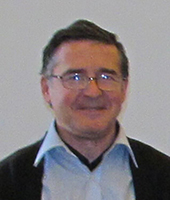
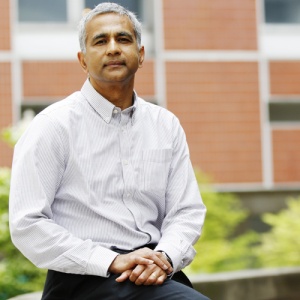
Professor Andrew Howes is a faculty member in the Department of Computer Science at the University of Exeter , part of the College of Engineering, Mathematics and Physical Sciences. His research focuses on computational models of the mind and Artificial Intelligence interaction with humans. Former affiliations include the University of Birmingham, University of Michigan, Aalto University, Manchester Business School, Cardiff University, MRC Applied Psychology Unit, Carnegie Mellon University, and NASA Ames Research Centre. Major funding bodies: ONR, ARL, AFRL, EPSRC, EU, NASA, Marshall M. Weinberg, and FCAI. His work spans human-centered computing , machine learning , and cognitive psychology . Recent publications explore topics like probabilistic inference , preference modeling , and multi-task learning in AI systems. Current research includes the application of reinforcement learning to human-computer interaction and the development of computationally rational models for social dilemmas.
Adrian Dănilă serves as a Lecturer in the Department of Automation and Information Technology at the Faculty of Electrical Engineering and Computer Science, Transilvania University of Brașov, Romania. His office is located in Building V, Room VIII13 at Mihai Viteazu 5, Brașov, with contact via phone (+40 268 418836) or email adrian.danila@unitbv.ro . His research focuses on three core areas: System Identification : Advanced methodologies for modeling dynamic systems using computational tools System Theory : Theoretical frameworks for control systems and stability analysis Electrical Drives : Optimization and diagnostic techniques for motor systems Recent publications (2020-2023) reveal a strong shift toward data-driven approaches in electrical engineering, particularly applying Principal Component Analysis and Artificial Intelligence to thermal modeling of induction motors and real-time parameter estimation. Earlier works (2013, 2022) emphasize educational frameworks for system identification using Python-based computational environments. Scientific Awards No scientific awards, fellowships, or medals are documented in the available information. Advising and Grants Public records contain no details regarding graduate student supervision, research grants, or funded projects. Labs and Teams While affiliation with the Department of Automation and Information Technology is confirmed, specific laboratory assignments or research team memberships are not specified in current documentation.
Prof. Dr. Branko Koprivica is a Full Professor at the Department of General Electrical Engineering and Electronics, Faculty of Technical Sciences in Čačak, University of Kragujevac, Serbia. He holds a PhD in Theoretical and General Electrical Engineering, focusing on hysteresis modeling and transient magnetization processes of ferromagnetic materials. His research spans Electromagnetics, Soft Magnetic Materials, and Virtual Instrumentation , with significant contributions to measurement systems, power loss analysis, and numerical methods in electrical engineering. Department: General Electrical Engineering and Electronics Academic Rank: Full Professor University: University of Kragujevac His research interests include electromagnetic characterization of electrical steel, hysteresis and power loss modeling , and virtual instrumentation applications in metrology. He has co-authored textbooks and monographs, and contributed to standards in energy efficiency for electric drives. Branko Koprivica’s recent publications focus on dynamic hysteresis modeling , magnetic anisotropy , and time-domain simulations of nonlinear circuits. He actively participates in international conferences and projects like TEMPUS, emphasizing education and technological innovation. His scientific work is supported by projects such as "Investigation, Development and Application of Energy Efficiency Policies in Electrical Drives" (TR33016, 2011–2016) and collaborations with institutions in Austria, Bulgaria, Italy, and Romania. He has also contributed to patents and remote laboratory systems in electrical engineering education.
Sanja Antic is an Associate Professor at the Department of General Electrical Engineering and Electronics within the Faculty of Technical Sciences at the University of Kragujevac, Serbia. She teaches courses including Automatic Control (since 2009), Digital Control Systems (since 2014), and Control of Electromotor Drives (since 2009), having previously taught Fundamentals of Electrical Engineering, Electrical Measurements 1, and Electric Drives. Dr. Antic completed her primary and secondary education in Čačak with the prestigious Vuk Karadžić diploma for academic excellence. She earned her undergraduate degree in Electrical Engineering with Industrial Power Engineering specialization from the Faculty of Technical Sciences in Čačak in 2000 with an outstanding grade average of 9.60, receiving recognition as the top graduate of her academic year. She continued to excel in her postgraduate studies, earning a Master of Technical Sciences degree in 2009 with a perfect 10.00 grade average. Her doctoral dissertation, defended in 2016 at the University of Belgrade, focused on application of model-based fault detection methods in electromechanical systems. Her research expertise spans control systems engineering with particular focus on fault detection and isolation in DC motor systems, electromotor drive control, and educational applications of control theory. Dr. Antic has made significant contributions to the field of fault detection methodologies for electromechanical systems, developing expert systems using structured residuals design techniques and FPGA implementations. Her work extends to practical applications in tank-level control systems, aquifer modeling, and energy efficiency of electric motors. She has been instrumental in developing remote laboratory experiments for engineering education, creating educational tools that bridge theoretical concepts with practical implementation. Analysis of her recent publications reveals a strong research trajectory focused on fault detection and isolation techniques for DC motor systems, with increasing sophistication in diagnostic approaches. Her work has evolved from basic fault detection methods to comprehensive identification and isolation systems, incorporating advanced techniques like parameter estimation, structured residuals, and FPGA implementations. She has also expanded her research into educational applications of control theory, developing laboratory setups and remote experiments that enhance engineering education. Dr. Antic has led and participated in several research projects, including the modernization of teaching for three mandatory subjects in Electrical and Computer Engineering (EMPA) from 2020-2021, and has contributed to building a network of remote labs to strengthen university-secondary vocational school collaboration through a TEMPUS project. Her work on energy efficiency of electromotor drives has been supported by the Ministry of Education, Science and Technological Development of Serbia. She has been actively involved in developing educational resources including textbooks, workbooks, and laboratory catalogs. Notably, she co-authored 'Regulation of Electromotor Drives' (2010) and 'Introduction to Automatic Control Systems - Theory and Examples' (2021), along with practical resources like 'Collection of Solved Problems in Electromotor Drives' and catalogs of remote laboratory experiments. Her commitment to innovative teaching approaches is evident in her development of remote experiments for demonstrating current and voltage control of DC motors.
Kouhei Noda is a Researcher at Tokyo Institute of Technology , specializing in Optical Fiber Sensors , Brillouin Scattering , and Distributed Sensing . His work focuses on advancing Brillouin optical correlation-domain reflectometry (BOCDR) for high-resolution, real-time tactile and temperature sensing applications. Education: Doctor (Engineering), Tokyo Institute of Technology (2023). Research Interests: Noda's research explores Brillouin scattering for distributed strain/temperature sensing, tactile sensors using polymer optical fibers, and polarization-sensitive reflectometry to enhance measurement accuracy. He investigates low-coherence light sources and cost-effective fiber amplifier configurations to improve system performance. Recent Article Trends: His 15 most recent publications (2020-2025) emphasize high-speed distributed sensing , real-time touch/tactile detection , and systematic error compensation in BOCDR systems. Key subfields include noise floor distortion compensation , low-coherence Brillouin sensors , and polymer fiber Bragg grating applications . Technical Contributions: Noda has co-authored patents related to wheelchair motorization devices and multimode FBG temperature stabilization . His collaborations with researchers like Yosuke Mizuno and Kentaro Nakamura span experimental validation, simulation analysis, and hardware optimization for optical sensing systems.
Lisa Maurer is a Research Associate and Junior Research Group Leader at the Justus Liebig University Giessen , affiliated with the Faculty of Psychology and Sports Science and the Department of Training Science. Her research explores complex motor learning processes , focusing on the role of internal forward models , predictive error processing , and metacognitive representations in motor tasks, utilizing kinematic analysis and EEG techniques. Education: 2001–2002: Study of Sports Science (STAPS) at Marc-Bloch University, Strasbourg 2002–2007: Diploma in Sports Science at University of Saarland, Saarbrücken 2003–2008: 1st State Examination in German Studies at Saarland University 2008–2012: Doctoral studies in Sports Science at Justus Liebig University Giessen (PhD in 2012) Research Interests center on neural correlates of motor error processing , predictive modeling in motor tasks , and metacognition in movement control . Her work bridges neuroscience and sports psychology , with applications to conditions like Parkinson's disease and schizophrenia . She investigates how attentional focus and sensorimotor feedback influence learning outcomes. Publications highlight trends in predictive error processing , gaze behavior in sports , and neural indicators of motor learning . Recent papers examine eye movement patterns in basketball, sensorimotor insoles for Parkinson's patients , and metacognitive sharpening through motor outcomes. Scientific Awards: Scholarship holder of the German Academic Scholarship Foundation (during doctoral studies) Grants include funding for projects like Predictive Error Perception in Complex Natural Environments (Project B6) , focusing on expertise development in sports and clinical applications. She collaborates with Prof. Dr. Mathias Hegele and Prof. Dr. Hermann Müller . Labs & Teams include the Junior Research Group Neuroprocessing in Movement and Training at Justus Liebig University Giessen and the German Association for Sports Science (dvs) center for Mind, Brain, and Behavior (CMBB) .
Hua-Liang Wei is a Senior Lecturer at the University of Sheffield 's School of Electrical and Electronic Engineering. He leads two innovative research labs: the Dynamical Modelling, Data Mining and Decision Making (3DM) and the Digital Medicine & Computational Neuroscience (DMCN) Research Groups. Specializes in system identification for nonlinear dynamics Develops interpretable AI for healthcare applications Active in space weather and environmental forecasting His methodological expertise spans NARMAX modeling, wavelet neural networks, and multiresolution analysis. Collaborations include Sheffield Teaching Hospitals NHS Trust, multiple University of Sheffield departments (Chemistry, Oncology, Psychology), and international institutions like Beihang University. Scientific Awards include STFC and NERC grants for radiation belt modeling and environmental systems research, EU Horizon 2020 funding, EPSRC Platform grants, Royal Society support, and medical charity partnerships. Recent publications focus on hybrid wavelet-LSTM for wind power forecasting EEG analysis in epilepsy and Alzheimer's domain adaptation for fault diagnosis interpretable models for medical data covering applications from renewable energy to clinical diagnostics.
Mehmet Onur Gülbahçe is an Associate Professor in the Department of Electrical Engineering at Istanbul Technical University . He holds a Ph.D. in Electrical Engineering from Istanbul Technical University (2013) and has been actively contributing to research in electrical machines, energy conversion, and power electronics for over a decade. Current position: Associate Professor (2024), Vice Dean (2023), Deputy Director of the Institute (2022) Past roles: Department Head at Fatih Sultan Mehmet Foundation University (2020-2021) Research Focus: Specializes in Hyperloop propulsion systems , electric vehicle battery optimization , LLC converter design , and wind turbine generator architectures . His work emphasizes multi-objective optimization and sustainable power electronics. Scientific Recognition: First Place in Electrical and Electronics Engineering, Istanbul University (2010) Most Applicable Graduation Project Award, Chamber of Electrical Engineers (2010) Projects: Principal Investigator (PI) for 12+ research projects since 2017, including TÜBİTAK-funded initiatives on battery management systems and microgrid wind turbine optimization.
Associate Professor Ahmet Onat at Istanbul Technical University 's Department of Control and Automation Engineering specializes in dynamic systems, reinforcement learning, and embedded systems. Holding a PhD from Kyoto University, he bridges robotics, renewable energy, and human-computer interaction. Educational Background: PhD (1995-1999) and MS (1993-1995) from Kyoto University under Japanese government scholarship; BS from Istanbul Technical University (1987-1991). His research spans reinforcement learning for wind turbine optimization, linear motor applications in elevators, and Bayesian trajectory control for robotic manipulators. He pioneered multi-modal medical visualization systems and autonomous underwater vehicle communication frameworks. Recent publications highlight trends in: 2023 : Neural control policies for wind energy optimization 2022 : Contactless sensor design and hybrid communication systems 2019-2017 : Real-world robotics control implementations Scientific recognitions include: Best Paper Award (ICME 2023, 2015) FP6 Project Grant (TUBITAK 2004) Monbusho Scholarship (1993-1999) Actively advising students in control engineering and open-source industrial design, he leads projects integrating edge intelligence and reliable wireless communication systems.
Yujing Liu is a Full Professor at Chalmers University of Technology's Department of Electrical Engineering, specifically in the Electric Power Engineering unit. With 17 years of prior industrial experience at ABB Corporate Research as a Senior Principal Scientist, he transitioned to academia in 2013. His research focuses on electrical machines, power electronics, and sustainable electrical systems, particularly for renewable energy conversion and transportation electrification. Current projects include high-sustainability electrical machines (up to 400 kW), SiC inverters (up to 500 kW), motor emulator development, heavy-duty vehicle electrification, and 500 kW inductive power transfer systems. Professor Liu serves as Head of Unit for Electrical Machines and Power Electronics since 2018 and leads Chalmers' contributions to 4 EU Horizon2020 and 2 Marie-Curie projects. He mentors 4 postdocs, 5 PhD students, and a dozen master's students, while teaching annual courses on electrical machine design and wide-bandgap power converters. His 88 publications (2013-2025) investigate advanced motor control algorithms, thermal management in traction systems, high-frequency excitation methods, and hybrid energy storage solutions. Research keywords include Electrical Engineering, Sustainable Energy, Transportation Electrification, and Industrial Electronics, with subfields addressing SiC inverters, electric vehicle drivetrains, and inductive charging systems. Key projects funded by Swedish Energy Agency and European Commission cover applications in marine propulsion, heavy-duty vehicles, and renewable energy integration, emphasizing high-efficiency powertrain development and reliability improvements in traction motor insulation systems.
Sarah D. Olson is the William Steur Professor and Department Head of Mathematical Sciences at Worcester Polytechnic Institute (WPI). She holds joint appointments in Bioinformatics and Computational Biology and Biomedical Engineering. Her research focuses on Mathematical Biology, Computational Fluid Dynamics, Scientific Computing, and Tissue Engineering. She teaches applied mathematics, scientific computing, and modeling courses at WPI. Education: B.A., Providence College, 2003 M.S., University of Rhode Island, 2005 Ph.D., North Carolina State University, 2008 Research Interests: Mathematical modeling of biological systems Fluid-structure interactions in biofluids Agent-based models for cell dynamics Cartilage regeneration and tissue engineering Swimming dynamics of microorganisms Parameter estimation in biological systems Her work combines mathematical modeling, numerical simulations, and experimental data to understand complex biological processes such as cell movement, mitosis, and tissue repair. Professional Highlights: Interim Head of Mathematical Sciences at WPI (2021) Recipient of a grant to develop computational models for cell division Promoted to Full Professor and Department Head Current Projects: Micro-swimmer models in biofluids Centrosome movement mechanisms during mitosis Agent-based models in heterogeneous environments Parameter estimation frameworks in biological systems Labs/Teams: Leads a research group focused on computational biology and biofluid dynamics, collaborating with experimentalists to bridge theory and application in biological systems.
Sanja Antić, PhD , is an Associate Professor in the Department of Electrical Engineering at the Faculty of Technical Sciences Čačak , University of Kragujevac , Serbia. She has been a faculty member since 2001, teaching a broad range of control-systems and electrical-engineering courses. Education PhD in Electrical Engineering, Faculty of Electrical Engineering, University of Belgrade (2016) Dissertation: “Application of Model-Based Failure Detection Methods in Electro-Mechanical Systems” MSc in System Control, Faculty of Technical Sciences Čačak (2009) Thesis: “Simulation and Realization of Voltage-Current Control of a DC Micro Motor” Dipl. Ing. in Industrial Power Engineering, Faculty of Technical Sciences Čačak (2000) Thesis: “Application of Fuzzy Logic in Estimating the Dynamic Model of a DC Motor” Research Interests Her research centres on model-based fault detection and isolation (FDI) for electromechanical systems, with particular emphasis on permanent-magnet DC motors and their associated power-electronic amplifiers. She develops structured and directional residual techniques combined with parameter-estimation algorithms to detect actuator, sensor and multiplicative faults. Additional interests include energy-efficient electric drives , digital control systems , torque-ripple reduction in induction motor drives , and the creation of remote and virtual laboratories for engineering education. Scientific Awards & Recognition “Vuk Karadžić” diploma for exceptional academic performance (primary & secondary school) Top graduate of the 1999/2000 academic year, Faculty of Technical Sciences Čačak Projects & Funding Principal Investigator, Serbian Ministry of Education project “Modernisation of three compulsory courses in Electrical Machines 2, Automatic Control and Electric Drives” (2020-2021) Team member, TEMPUS project “Building Network of Remote Labs for strengthening university-secondary vocational schools collaboration” (2013-2016) Participated in national technological-development projects on energy efficiency of electric motor drives (2011-2014) and prototype development of a 4-axis CNC welding machine (2011-2012) Teaching & Educational Contributions Dr Antić has designed and delivered courses in Automatic Control , Digital Control Systems , Control of Electromotive Drives , Fundamentals of Electrical Engineering and Electric Drives . She co-authored three textbooks and numerous workbooks and practicums that integrate remote-experiment platforms, thereby fostering hands-on learning aligned with Industry 4.0 concepts.
Elahe Arani is an Assistant Professor in the Department of Mathematics and Computer Science at Eindhoven University of Technology. She also holds external positions as Head of AI Research at Wayve (since October 2023) and previously served as Senior AI Manager and Senior Research Scientist at Wayve from September 2020 to September 2023. Her research interests are centered around Continual Learning, Self-Supervised Learning, and Learning under Noisy Labels. She focuses on developing algorithms for efficient, reliable, and adaptable AI models, particularly in the context of Scene Understanding and Multi-Task Learning. Her work also explores the application of AI in Autonomous Vehicles and integrates insights from Neuroscience to design more biologically plausible AI systems. Key areas include improving generalization in neural networks, mitigating catastrophic forgetting, and leveraging shape-awareness for robust model training. Elahe Arani's recent publications highlight advancements in Continual Learning and Self-Supervised Learning techniques, with a focus on improving model efficiency and adaptability. Her work also delves into applications for Autonomous Vehicles, such as vision-language alignment in SimLingo and generative world models in Gaia-2. She has contributed to frameworks addressing catastrophic forgetting and neural network optimization, often combining biological plausibility with computational methods. No scientific awards are explicitly mentioned in the provided text. No supervised students or specific grant information is listed. Her research emphasizes practical applications and theoretical contributions to AI, with a notable focus on reducing data dependency and environmental impact through efficient model designs. While no specific lab or team names are mentioned, her research involves collaborations in AI-driven systems, including work on road maintenance inspection and autonomous driving technologies. These collaborations aim to bridge academic and industry applications of AI.
Stacey Acker is an Associate Professor in the Department of Kinesiology at the University of Waterloo's Faculty of Applied Health Sciences. Her research focuses on biomechanical analysis of knee joint mechanics, particularly in high flexion postures such as squatting and kneeling. Specializing in musculoskeletal health and occupational ergonomics, her work addresses knee osteoarthritis risk factors and biomechanical adaptations in diverse populations. She leads the Biomechanics of Human Mobility Lab, investigating ergonomic interventions and workplace safety through advanced kinematic and kinetic analysis. Education background: Not explicitly listed in provided texts but inferred through her academic role and research focus. Research interests include quantifying joint loading during occupational activities, developing predictive models for musculoskeletal injury risks, and optimizing postural biomechanics through footwear and ergonomic design. Her recent studies examine thigh-calf contact mechanics, muscle activation patterns, and the impact of safety footwear on knee mechanics. Key findings from her work suggest that high flexion postures significantly influence knee joint loading, with implications for cultural practices and occupational safety. She has contributed to understanding how biomechanical parameters like knee adduction moments correlate with cartilage morphology in osteoarthritis patients. Lab/Team: Director of the Biomechanics of Human Mobility Lab, collaborating on interdisciplinary projects involving biomechanical modeling and clinical applications.
Sunil Agrawal is a Professor of Mechanical Engineering and Rehabilitation and Regenerative Medicine at Columbia University. He directs the Robotics and Rehabilitation (ROAR) Laboratory and Robotic Systems Engineering Laboratory (ROSE). His work focuses on intelligent machine design, robotic systems for rehabilitation, and neural impairment recovery. Dr. Agrawal holds a PhD in Mechanical Engineering from Stanford University (1990). His research spans robotics, dynamics, and control systems, with emphasis on rehabilitation exoskeletons, gait training, and pediatric mobility solutions. He has pioneered methods for under-actuated dynamic systems and authored the monograph Differentially Flat Systems . His NIH- and NSF-funded projects include robotic exoskeletons for stroke survivors and infants with special needs, flapping-wing micro air vehicles, and cable-driven robotic platforms. Dr. Agrawal has received prestigious awards including the NSF Presidential Faculty Fellowship (1994), Bessel Prize (2002), and ASME Fellow distinction (2004). He has supervised 20 PhD and 30 MS students, authored ~350 papers, and holds 8 US patents. He serves on ASME committees and editorial boards for robotics and rehabilitation journals. Lab Affiliations: ROAR Lab, ROSE Lab Key Projects: RobUST postural trainer, mTPAD gait device, cervical traction exoskeletons Grants: NIH (rehabilitation robotics), NSF (space robots, flapping-wing MAVs) His work bridges robotics, biomechanics, and clinical rehabilitation, addressing mobility challenges for individuals with spinal cord injuries, stroke, and neuromuscular disorders.