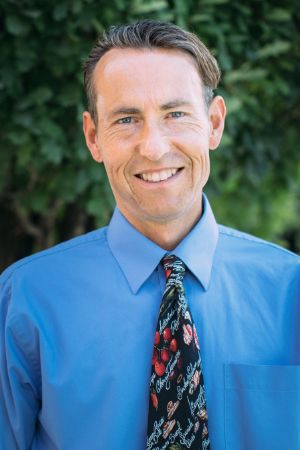
Richard B. Sowers is a Professor at the University of Illinois at Urbana-Champaign, holding joint appointments in the Department of Industrial and Enterprise Systems Engineering, Mathematics, and Statistics (courtesy). He has held faculty positions since 1996, starting as an Assistant Professor in Mathematics and advancing to Professor across multiple departments. His research spans stochastic processes, financial engineering, and data analytics. He also serves as a Research Principal at the Office of Financial Research since 2012. Education: B.S. in Electrical Engineering (Drexel University, 1986), M.S. and Ph.D. in Applied Mathematics (University of Maryland, 1988 and 1991). Research Interests: Financial networks, stochastic systems, and applications in decision-making and control. His work bridges theoretical probability with practical domains like finance and healthcare. Recent articles focus on machine learning applications in gait analysis for neurological disorders and stochastic modeling in financial systems. Professional Contributions: Taught courses in stochastic calculus, deep learning, and financial mathematics. His research often involves interdisciplinary collaboration, including projects on credit risk, algorithmic trading, and wearable technology for health monitoring. Labs/Teams: Active in the Institute for Predictive and Computational Science, focusing on data-driven solutions for complex systems.
Zsofia Zavecz is a Research Associate at the University of Cambridge Department of Psychology. Her work focuses on the neurophysiological mechanisms underlying sleep and memory consolidation, with particular emphasis on electrophysiological correlates of lucid dreaming and sleep-dependent learning. Research highlights include: Investigation of EEG functional connectivity during statistical learning Study of transcranial stimulation effects on probabilistic learning Analysis of sleep restriction impacts on hormonal regulation Exploration of cognitive reserve mechanisms in sleep disorders Her neuroscientific investigations span procedural memory systems, neural oscillations, and cross-population studies in both healthy individuals and pediatric sleep-disordered breathing patients.
Dr. João F. Henriques is a Research Fellow at the Royal Academy of Engineering and a core member of the Visual Geometry Group (VGG) at the University of Oxford. His work spans the intersection of machine learning , deep learning , and computer vision , with notable contributions to visual tracking , 3D reconstruction , and robotics . He actively mentors DPhil students and collaborates across disciplines including AI safety , NeRFs , and optimisation . Current Students: Marian Longa, Tim Franzmeyer, Dominik Kloepfer, Yash Bhalgat, Shivani Mall, Lorenza Prospero, Mark Eid Graduated Students: Xu Ji, Mandela Patrick, Shu Ishida, Andreea Oncescu Research Trends from his recent work include advances in 3D scene reconstruction (e.g., Flash3D, GST), robotic adaptation (Rapid Motor Adaptation), and multimodal learning (Text2Loc, SCENES). His publications frequently address theoretical guarantees in unsupervised detection and reinforcement learning for POMDP environments. Scientific Recognition includes: Research Fellow, Royal Academy of Engineering CVPR Best Paper Finalist (2012) for Kernelized Correlation Filters (KCF) SIGBOVIK 2020 Most Timely Paper Award for Deep Industrial Espionage He also develops open-source tools like OverBoard , a Python dashboard for deep learning experiment monitoring, and advocates for preregistration workshops to improve machine learning research transparency.
Dr. Todd D. Murphey is a Professor of Mechanical Engineering at Northwestern University's Robert R. McCormick School of Engineering and Applied Science. He serves as Director of Transformative Research and Director of the Master of Science in Robotics Program at Northwestern, leading initiatives in computational dynamics, control systems, and robotics. His work bridges engineering, neuroscience, and biomedical applications, with a focus on developing systems that interact effectively with humans and their environments. Dr. Murphey received his Ph.D. in Control and Dynamical Systems from the California Institute of Technology in 2002, with a thesis titled "Control of Multiple Model Systems." Prior to that, he earned a B.S. in Mathematics, summa cum laude, from the University of Arizona in 1997. Dr. Murphey's research centers on computational methods in dynamics and control, with applications spanning neuroscience, health science, robotics, and automation. His work in the Interactive & Emergent Autonomy Lab focuses on computational models of embedded control, biomechanical simulation, dynamic exploration, and hybrid control. The group develops mathematical approaches that lead to orders of magnitude improvement in computational efficiency for real-time implementation. Key application areas include assistive exoskeleton control, stabilization of energy networks, bio-inspired active sensing, entertainment robots, robotic exploration, and software-enabled stroke rehabilitation. Analysis of Dr. Murphey's recent publications reveals a strong emphasis on human-swarm interaction, algorithmic matter, and control of cyber-physical systems in uncertain environments. His work increasingly integrates information theory with physical systems, exploring how both autonomous and biological systems interact with environments to learn and improve behaviors. Recent trends show growing applications in rehabilitation technology, with particular focus on human-machine interaction in biomedical devices and embodied intelligence. Dr. Murphey has received numerous honors and awards for his contributions to robotics and engineering: Named Director of Transformative Research at Northwestern University (2025) Appointed IEEE Robotics and Automation Society Vice President of Publication Activities (2022) Co-recipient of Best Paper Award for IEEE Transactions on Robotics (2020) Appointed to Air Force Scientific Advisory Board (2019) Recipient of ABB Best Student Paper Award for CPL-SLAM research (2019) Cole-Higgins Award from Northwestern Engineering (2015) Dr. Murphey has supervised numerous graduate students including Taosha Fan, Giorgos Mamakoukas, and Ian Abraham, with research spanning robotic exploration using electrosense and mechanical contact, human-in-the-loop control, and shared control for rehabilitation devices. His lab has secured significant funding from the National Science Foundation, DARPA, and industry partners including Siemens and Ekso Bionics, supporting research in algorithmic matter, emergent behavior, and human-swarm collaboration. The Interactive & Emergent Autonomy Lab, led by Dr. Murphey, investigates how both autonomous systems and biological systems interact with their environments to learn and improve behaviors. Current projects include active learning and data-driven control, active perception in human-swarm collaboration, algorithmic matter and emergent computation, control for nonlinear and hybrid systems, cyber physical systems in uncertain environments, harmonious navigation in human crowds, information maximizing clinical diagnostics, reactive learning in underwater exploration, robot-assisted rehabilitation, and software-enabled biomedical devices. The lab collaborates with researchers across Northwestern and institutions including Georgia Tech, MIT, and industry partners.
Sunil K. Agrawal is a Professor of Mechanical Engineering and Professor of Rehabilitation and Regenerative Medicine at Columbia University, where he directs a highly interdisciplinary rehabilitation robotics program bridging the School of Engineering and Applied Sciences and the College of Physicians and Surgeons. His research focuses on developing robotic systems to restore and enhance human mobility for individuals with neurological disorders, pediatric conditions, and age-related decline. Education: PhD in Mechanical Engineering, Stanford University, 1990 MS in Mechanical Engineering, Ohio State University, 1986 BS in Mechanical Engineering, Indian Institute of Technology (IIT) Kanpur, 1984 Research Focus: Dr. Agrawal’s work centers on rehabilitation robotics , where he integrates dynamic systems, control theory, and optimization to create robotic devices that assist in gait training, balance improvement, and functional movement restoration. His studies span stroke, Parkinson’s disease, cerebral palsy, vestibular disorders, and spinal cord injury, using devices like the Tethered Pelvic Assist Device (TPAD) and robotic exoskeletons. Scientific Honors: Machine Design Award, ASME (2016) Robotics and Mechanisms Award, ASME (2016) Fellow, American Institute of Medical and Biological Engineering (AIMBE) (2016) Fellow, American Society of Mechanical Engineers (ASME) (2004) Alexander von Humboldt Foundation U.S. Senior Scientist Award (2007) Friedrich Wilhelm Bessel Research Award (2002) Presidential Faculty Fellow Award, The White House (1994) Research Collaborations & Funding: Dr. Agrawal collaborates with faculty across Neurology, Rehabilitation Medicine, Pediatric Orthopedics, Otolaryngology, Geriatrics, and Psychiatry. His work is supported by the National Science Foundation, National Institutes of Health, and the Spinal Cord Injury Research Board. Laboratory & Outreach: He leads an active research group focused on translational robotic systems, with ongoing clinical trials for stroke, Parkinson’s, cerebral palsy, and elderly fall prevention. His lab develops novel robotic braces, exoskeletons, and VR-integrated training platforms.
Gianmarco Pinton is an Associate Professor in the Department of Biomedical Engineering at the University of North Carolina at Chapel Hill. His research focuses on nonlinear ultrasound and mechanical wave propagation, with applications to medical imaging and therapy. He specializes in traumatic brain injury, shear shock waves, and ultrasound therapy. Ph.D., M.S., and B.S.E. in Biomedical Engineering/Physics from Duke University His lab develops physics and simulation tools for nonlinear wave propagation, aiming to create advanced diagnostic ultrasound methods. Key areas include traumatic brain injury, transcranial imaging, and therapeutic ultrasound. His recent work explores super-resolution imaging, brain motor circuits, and Alzheimer's disease vascular mapping using ultrasound. Article trends highlight innovations in transcranial ultrasound, super-resolution techniques, lung imaging, and neuromodulation. His publications address image degradation, contrast agents, and shear wave dynamics in neurological contexts.
Jacob Young, MD, is an Assistant Professor in the Department of Neurological Surgery at the University of California, San Francisco (UCSF) School of Medicine and a Principal Investigator in the UCSF Brain Tumor Center. His clinical practice focuses on neurosurgical management of adult brain tumors including gliomas, metastatic tumors, and meningiomas, utilizing advanced brain mapping techniques to preserve critical motor, language, and sensory functions during resection. Dr. Young's educational background includes a BS in Neuroscience from Duke University (2012), an MD from the University of Chicago Pritzker School of Medicine where he was elected to Alpha Omega Alpha Honor Medical Society (2017), and a neurosurgery residency at UCSF (2017-2024). His research program integrates laboratory investigations with clinical trials to address fundamental challenges in brain tumor treatment. His primary research interests center on understanding glioblastoma immune microenvironment dynamics and developing innovative therapeutic strategies. Key focus areas include: First-in-human clinical trials of novel immunotherapies Focused ultrasound-mediated blood-brain barrier disruption to enhance drug delivery Longitudinal molecular profiling of tumor evolution during treatment AI-driven tools for patient care navigation and clinical trial assessment Prospective outcomes research through the RANO resect group and NeuroPoint Alliance His work bridges fundamental tumor biology with translational applications to overcome treatment resistance. Analysis of Dr. Young's 15 most recent publications (2023-2025) reveals a strong emphasis on surgical innovation, tumor immunology, and molecular characterization. Key trends include: development of prognostic classification systems for resection extent, investigation of glioma-neuronal circuit interactions driving immunosuppression, and optimization of drug delivery strategies. His collaborative work within the RANO consortium establishes evidence-based surgical guidelines while his lab's focus on microenvironmental factors informs next-generation immunotherapies. Dr. Young has received significant recognition including: Chan-Zuckerberg Physician Scientist Fellowship (2021-2022) ASCO Young Investigator Award (2022-2023) Andrew J. Lockhart Focused Ultrasound Fellowship (2023) Multiple Harold Rosegay Teaching Awards from UCSF Howard Naffziger Award for Clinical Excellence His research is supported by NIH, NCI, Focused Ultrasound Foundation, and AANS grants. As lab director, Dr. Young mentors a diverse team including PhD candidates like Edward Valenzuela (DSCB program) and specialists in immunology and neuro-oncology. His lab participates in the RANO resect group, ENCRAM research program, and NeuroPoint Alliance to advance clinical protocols. Current projects include developing intraoperative focused ultrasound prototypes, single-cell analysis of tumor evolution, and AI tools for patient navigation through care pathways. Future work focuses on translating microenvironment discoveries into combination therapies targeting treatment resistance mechanisms.
Professor Tim Denison FREng holds a joint appointment in the Department of Engineering Science and Nuffield Department of Clinical Neurosciences at the University of Oxford, where he serves as the Royal Academy of Engineering Chair in Emerging Technologies and an MRC Investigator. His research focuses on the fundamentals of physiologic closed-loop systems and developing next-generation neural interface technologies for treating chronic neurological diseases. Professor Denison received his A.B. in Physics from The University of Chicago, followed by M.S. and Ph.D. degrees in Electrical Engineering from MIT. He later completed an MBA at The University of Chicago, where he was named a Wallman Scholar. His research spans neural engineering, closed-loop neuromodulation systems, and computational neuroscience, with particular emphasis on deep brain stimulation, neural oscillations, and adaptive neurostimulation techniques. His work integrates engineering principles with clinical neuroscience to develop innovative treatments for neurological disorders. Professor Denison's approach combines computational modeling with experimental validation to optimize brain stimulation parameters for individual patients. Professor Denison has received numerous prestigious awards, including membership in the Bakken Society (2012, Medtronic's highest technical honor), the Wallin leadership award (2014), election to the College of Fellows for the American Institute of Medical and Biological Engineering (2015), and recognition as a Fellow of the Royal Academy of Engineering (FREng). As a former Technical Fellow at Medtronic PLC and Vice President of Research & Core Technology for the Restorative Therapies Group, Professor Denison brings significant industry experience to his academic work. His research group focuses on developing advanced neurostimulation technologies that incorporate chronobiology principles and adaptive algorithms to improve treatment outcomes for neurological conditions.
Dr. Gary Glover is a Professor of Radiology (Radiological Sciences Lab) at Stanford University , with courtesy appointments in Psychology and Electrical Engineering. His work focuses on the physics and mathematics of MRI, particularly rapid scanning methods using spiral k-space trajectories for functional brain imaging and multimodal neuroimaging (fMRI/EEG/fPET/fNIRS) combined with neuromodulation techniques like TMS and transcranial ultrasound. Academic Appointments: Radiology, Psychology, Electrical Engineering Professional Affiliations: Bio-X, Stanford Cancer Institute, Wu Tsai Neurosciences Institute Research Interests include: Development of blood oxygen level-dependent (BOLD) and viscoelastic contrast in MRI Functional MR Elastography for brain activation mapping Optimization of MR-ARFI for transcranial ultrasound guidance Automated spinal cord segmentation (EPISeg) using machine learning Scientific Awards : National Academy of Engineering (2013) Gold Medal, ISMRM (2000) Steinmetz Award, General Electric (1985) Lauterbur Lecture, ISMRM (2018) Recent Publications analyze: Fast fMRI sampling and spurious signal correction Dissociated patterns in default mode network anti-correlations Neural correlates of collaborative behavior in triadic fMRI Salience network contributions to depression pathophysiology
Dr. Andrew Erwin is an Assistant Professor in Mechanical Engineering at the University of Cincinnati, focusing on robotics, human-robot interaction, and rehabilitation engineering. He holds a PhD and MS from Rice University (2018, 2014) and a BS from the University of Massachusetts Amherst (2012). Prior to UC, he was a postdoc at the University of Southern California and the Jet Propulsion Laboratory. His research explores how forces and movements are executed in healthy individuals, and how robotic devices can assist or restore function post-injury. Key areas include rehabilitation robotics, bio-inspired systems, haptic interfaces, and motor learning. He has received prestigious awards such as the NASA Postdoctoral Program Fellowship (2018) and the IEEE/ASME Transactions on Mechatronics Best Paper Award (2017). Dr. Erwin’s work integrates biomechanics, control systems, and neurophysiology. His lab develops devices like the SE-AssessWrist for wrist assessment and explores planetary seismometers for space missions. He maintains an active Google Scholar profile with over 25 publications. Education: PhD, Mechanical Engineering, Rice University, 2018 MS, Mechanical Engineering, Rice University, 2014 BS, Mechanical Engineering, University of Massachusetts Amherst, 2012 His current research emphasizes curriculum design for robotics learning, human-robot collaboration, and adaptive control systems. He offers a PhD position for Fall 2025 focusing on these areas.
Prof. Oliver Faude is a Professor and Researcher at the Department of Motor Performance & Biomechanics within the University of Basel's Department of Sport, Exercise and Health (DSBG). His research focuses on exercise physiology, sports medicine, and the application of physical activity in managing chronic conditions like type 2 diabetes. He supervises doctoral students, including Vivien Hohberg, whose work on telephone-based health coaching for diabetes patients was published in the Journal of Science and Medicine in Sport. Faude collaborates on projects such as the dbcoach intervention, funded by Innosuisse and health insurers, demonstrating how personalized coaching increases physical activity in diabetic populations. His work also extends to musculoskeletal imaging innovations, such as the UMUD web application for ultrasonography data access, and the PrepAir study addressing chemotherapy-induced sensory dysfunction in children. Faude's interdisciplinary approach integrates clinical research, biomechanics, and public health, with a particular emphasis on aging populations and pediatric oncology. He contributes to injury prevention strategies in sports like badminton and soccer, while advancing methodologies for muscle volume assessment via 3D ultrasound and MRI comparisons. Key Projects: dbcoach program, PrepAir study, musculoskeletal imaging tools, agility training for frailty prevention. Grants: Innosuisse, SwissLife Foundation, Voluntary Academic Society of Basel. Students: Vivien Hohberg (PhD). Labs/Teams: Motor Performance & Biomechanics lab, collaborations with Prof. Bart Roelands (Vrije Universiteit Brussel) on overtraining syndrome research.
Cathryn Crowle serves as a Clinical Senior Lecturer at the School of Health Sciences within the Faculty of Medicine and Health at The University of Sydney. Her clinical specialty is Paediatrics, with active roles spanning teaching, research, and clinical practice focused on infant and child health across the lifespan. Her research centers on Paediatrics and Child Health with specific emphases in Growth & Development, Infant care, and Translational Research. Key investigations include cerebral palsy early detection using General Movements Assessment and Motor Optimality Score-Revised (MOS-R), neurodevelopmental outcomes in neonatal surgical populations, and interventions for infants in Neonatal Intensive Care Units (NICU). Her work bridges clinical practice and research through knowledge translation initiatives. Analysis of her 14 publications (2015-2025) reveals consistent focus on predictive tools for neurodevelopmental disorders, particularly cerebral palsy in high-risk Australian infant cohorts. Her methodology combines longitudinal assessment (HINE, Bayley scales), clinical translation, and multidisciplinary collaboration to address gaps in early diagnosis and intervention. Dr. Crowle currently supervises Victoria Norris on music therapy applications in NICU settings. Her research involves extensive collaboration with cerebral palsy experts including Iona Novak, Nadia Badawi, and Catherine Morgan across institutions, with projects like the Knowledge Translation of Early Cerebral Palsy (KiTE CP) study demonstrating implementation science approaches. She contributes to teams focused on neonatal neurodevelopment through the Cerebral Palsy Alliance Research Institute, participating in prospective cohort studies examining autism risk in NICU graduates and neurodevelopmental outcomes in ECMO survivors. Her clinical work integrates assessment protocols for infants with congenital anomalies requiring surgery.
Eadric Bressel is a Professor and Head of the Department of Kinesiology and Health Science at Utah State University (USU). He holds a PhD in biomechanics from the University of Northern Colorado and earned his B.S. and M.S. in kinesiology from California State University, Fresno. Prior to joining USU in 2000, he was a postdoctoral fellow at the Auckland University of Technology's health and rehabilitation center. Education: PhD in Kinesiology (Biomechanics), University of Northern Colorado, 1999 MA in Kinesiology (Exercise Science), California State University, Fresno, 1995 BS in Kinesiology (Exercise Science), California State University, Fresno, 1994 Research Interests: Dr. Bressel focuses on biomechanical adaptations to therapeutic exercise in healthy and clinical populations. His work emphasizes spine stabilization exercises, determinants of balance, and aquatic rehabilitation strategies for conditions like osteoarthritis. Recent studies explore the efficacy of aquatic environments for improving motor learning, cognitive performance, and functional outcomes in older adults. Key Research Trends: His publications highlight the biomechanical benefits of aquatic training, including its impact on muscle function, postural control, and injury prevention. Cross-disciplinary studies integrate biomechanics with gerontology and sports medicine, addressing aging populations and athletic performance optimization. Awards: Excellence in Aquatic Physical Therapy Research Award (APTA Aquatic Section, 2016) Researcher of the Year (HPER Department, 2012) Employee of the Year (Kinesiology & Health Science Department, 2017) Top Professor Award (Mortar Board Senior Honor Society, 2004) Advising & Grants: Dr. Bressel has mentored over 40 graduate students, many of whom have contributed to studies on aquatic exercise, balance rehabilitation, and sports biomechanics. He has secured grants to investigate aquatic treadmill training for osteoarthritis, cognitive-aquatic interaction effects, and eccentric resistance protocols. Labs/Teams: His lab focuses on translational research integrating biomechanical analysis with clinical applications. Collaborations with institutions like the Auckland University of Technology and the American Physical Therapy Association highlight his commitment to bridging research and practice in aquatic therapy and sports science.
Michael N. Economo, PhD, is an Assistant Professor in the Department of Biomedical Engineering at Boston University. His research focuses on neural circuits controlling movement, leveraging cutting-edge optical, electrophysiological, and genetic tools. He holds affiliations with Neuroscience & Neuroengineering and Photonics & Optical Systems programs. Education: PhD in Biomedical Engineering from Boston University, B.S. Biomedical Engineering and B.A. Mathematics from Duke University. Research Interests: Systems neuroscience, motor control, long-range neural circuits, computational neuroscience, neurotechnology. His lab investigates how neural circuits across brain regions coordinate movement using advanced techniques like optogenetics, in vivo imaging, and transcriptomics. Key Projects: Orofacial motor control, voltage imaging with TICO microscopy, neural circuit dissection. Technologies: Neuropixels probes, fluorescent voltage indicators, single-cell RNA sequencing. Notable Awards: NSF CAREER (2023), Scialog Fellow (2023), Whitehall Foundation Young Investigator Award (2021). Advising & Grants: Supervises graduate students (e.g., Munib Hasnain, Jackie Birnbaum) and postdocs (e.g., Vicky Moya, Yujin Han). Lab members focus on motor planning, neuromodulation, and neural dynamics. Labs/Teams: The Economo Lab collaborates on neurotechnology development and integrates interdisciplinary approaches from engineering and biology. Affiliated with BU’s Graduate Program in Neuroscience.
Chris Freeman is a Professor of Robotics and Control at the University of Southampton's Electronics and Computer Science (ECS) school. His research focuses on iterative learning control theory, biomedical engineering, and robotics with applications in industrial automation and healthcare. As Deputy Head of School (Equity, Diversity and Inclusion) and Chair of the ECS Belonging, Inclusion, Diversity and Equity (BIDE) Committee, he drives initiatives promoting inclusive academic environments. Freeman leads multidisciplinary research projects such as "Towards intelligent, pervasive, high performance control system architectures" "Elder Athletes: building incidental interaction at home" "Low-cost personalised instrumented clothing with integrated FES electrodes" . His work combines robotics, functional electrical stimulation (FES), and wearable technologies to develop rehabilitation systems for stroke patients and industrial automation solutions. His recent publications demonstrate expertise in iterative learning control (ILC), model predictive control, and biomedical applications. Research groups include: Digital Health and Biomedical Engineering Institute for Life Sciences Centre for Health Technologies Centre for Robotics