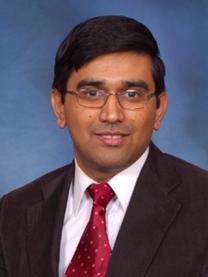
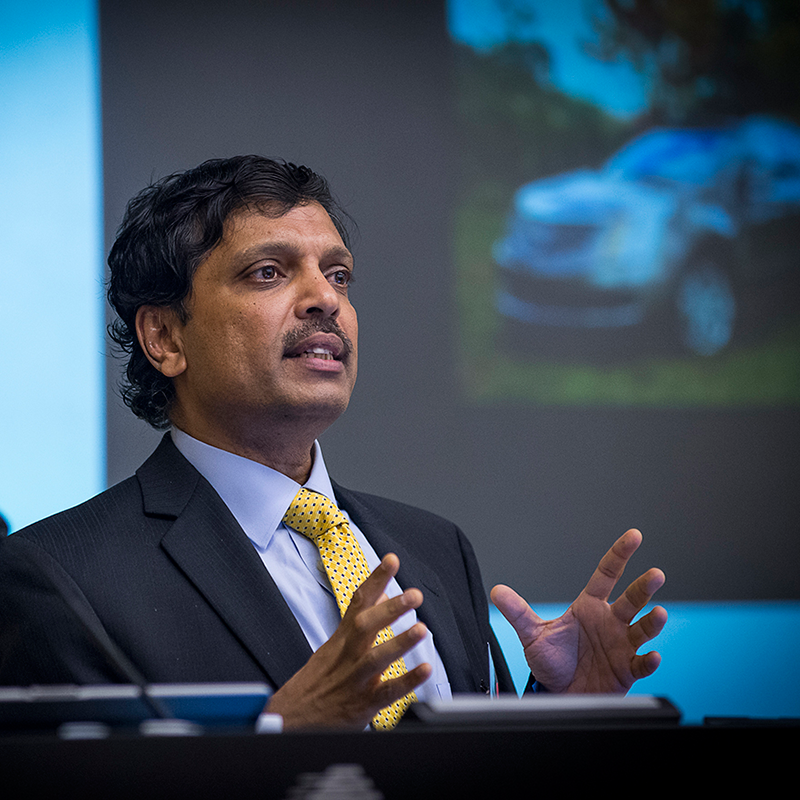
Dr. Manish Kumar is a Professor in the Department of Mechanical Engineering at the University of Cincinnati, leading the Cooperative Distributed Systems (CDS) Laboratory and the UAV MASTER Lab. He specializes in robotics, unmanned aerial systems (UAVs), and swarm systems, with a focus on decision-making, control in complex systems, and multi-sensor data fusion. His research has been supported by grants from the National Science Foundation, Department of Defense, and industry partners. Education: Ph.D. in Mechanical Engineering, Duke University (2004) M.S. in Mechanical Engineering, Duke University (2002) Research Interests: Dr. Kumar's work addresses challenges in autonomous systems, including UAV coordination, swarm robotics, and emergency response technologies. He integrates machine learning, control theory, and optimization to develop robust systems for applications such as wildfire management, telehealth, and industrial automation. Grants & Labs: Directed projects funded by federal agencies (NSF, DoD) and industry, totaling over $5M. Co-directs the Collaboratory for Medical Innovation and Implementation and the UAV MASTER Lab. Key Contributions: Pioneered algorithms for UAV path planning and swarm coordination. Developed PDE-based models for epidemic spread prediction and control.
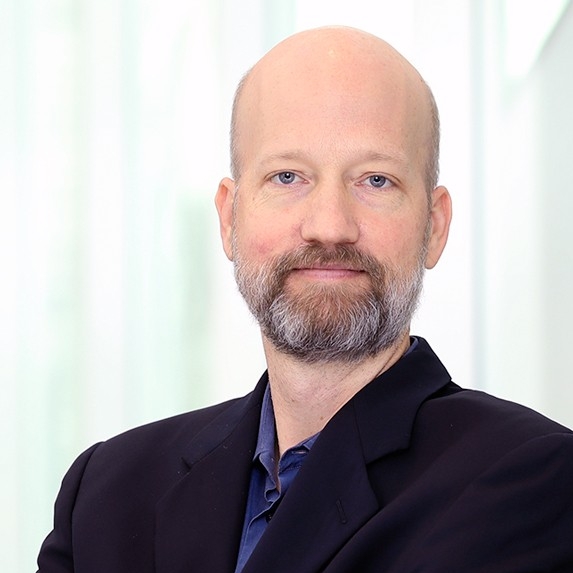
David Melcher is Professor of Psychology and Program Head in Psychology at New York University Abu Dhabi (NYUAD), where he also serves as a Global Network Professor. He is affiliated with the Division of Science and leads the Perception and Active Cognition Lab, focusing on the integration of perception, attention, memory, and action within a cognitive neuroscience framework. PhD in Psychology and Cognitive Science, Rutgers University (2001) Former researcher and professor in Italy and the UK Current leadership: Program Head, Psychology, NYUAD David Melcher's research centers on cognitive neuroscience , particularly how perception, attention, working memory, eye movements, and self-motion interact to shape cognition and behavior. His lab emphasizes active cognition —the idea that perception is not passive but dynamically shaped by action, context, and goals. He investigates how temporal dynamics in neural processing organize perceptual experiences and guide decision-making. His work spans both healthy and clinical populations, exploring individual differences in spatial and temporal processing across the lifespan. The 15 most recent publications reflect a consistent focus on temporal organization in cognition , perception-action coupling , and neural mechanisms of attention and memory . Keywords across these works include cognitive neuroscience, perception, and neuroimaging, with subfields ranging from eye movement research and neural synchrony to computational modeling and clinical neuropsychology. Collectively, they demonstrate a trajectory toward integrative models of brain function that bridge behavioral, neuroimaging, and computational approaches. Among his notable recognitions is the Distinguished Scientific Award for Early Career Contribution to Psychology from the American Psychological Association (2011), highlighting the early impact of his work in cognitive neuroscience. Distinguished Scientific Award for Early Career Contribution to Psychology, APA (2011) David Melcher has advised numerous students through capstone projects in psychology and computer science, fostering interdisciplinary research at the intersection of cognitive science and technology. His research has been generously supported by major funding agencies including the European Research Council , the US National Institutes of Health , the Italian Ministry of Research and Education , and the Chinese Ministry of Foreign Expert Affairs . He also contributes to the academic community as a member of the editorial boards of Journal of Vision , Psychonomic Bulletin & Review , Perception , and iPerception . He leads the Perception and Active Cognition Lab at NYUAD, which employs a multidisciplinary approach combining behavioral experiments, neuroimaging (fMRI, EEG, MEG), eye-tracking, computational modeling, and clinical assessments. The lab’s research aims to understand how the brain constructs stable percepts from dynamic sensory input, particularly during active engagement with the environment.
Ying Lu is an Associate Professor at the Department of Applied Statistics, Social Science, and Humanities within the Steinhardt School of Culture, Education, and Human Development at New York University. She holds dual PhDs in Public Policy and Demography from Princeton University (2005) and in Statistics from the University of North Carolina at Chapel Hill (2009). Before joining NYU, she was an Assistant Professor at the University of Colorado Boulder, affiliated with the Institute of Behavioral Science. Her research focuses on quantitative methodology in social and behavioral sciences, including applications in demography, health, and political behavior, as well as statistical methods like model selection and hypothesis testing for high-dimensional data. Her interdisciplinary work bridges statistical rigor with real-world societal challenges. Recent articles highlight her contributions to areas such as employee outcomes in HRM, gut microbiota-cardiometabolic disease links, and innovative clinical trial designs. She has also explored topics in food science, environmental catalysis, and sustainable development policy. Ying Lu’s academic journey reflects a commitment to advancing statistical methodologies while addressing pressing issues in health, policy, and environmental science. She has advised numerous projects but no specific students are listed in the provided texts.
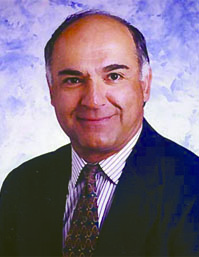
Mehrdad Ehsani is a Robert M. Kennedy Endowed Professor of Electrical Engineering at Texas A&M University, leading the Power Electronics and Motor Drives Laboratory. He holds a Ph.D. from the University of Wisconsin-Madison and has over four decades of expertise in power electronics, electric/hybrid vehicles, and energy systems. His research focuses on sustainable energy, advanced power conversion, and vehicle electrification. Educational Background: Ph.D., Electrical Engineering, University of Wisconsin-Madison (1981) M.S., Electrical Engineering, University of Texas at Austin (1974) B.S., Electrical Engineering, University of Texas at Austin (1973) Research Interests: Sustainable power systems, electric/hybrid vehicles, energy storage, power electronics, and aerospace power systems. His work emphasizes practical applications, such as transmotor technology for energy efficiency and grid-interactive buildings. Awards & Recognition: Life Fellow of IEEE SAE Fellow (2005) IEEE Vehicular Technology Society Avant Garde Award (2001) Recipient of multiple Prize Paper Awards (IEEE-IAS) Advising & Grants: Director of Advanced Vehicle Systems Research Program. His lab collaborates with industry on patents, including over 30 granted/pending patents, and advises on sustainable transportation technologies. He has consulted for over 60 companies and government agencies. Labs & Teams: Founder and director of the Power Electronics & Motor Drives Lab, focusing on electric vehicle propulsion, renewable energy integration, and advanced control systems.
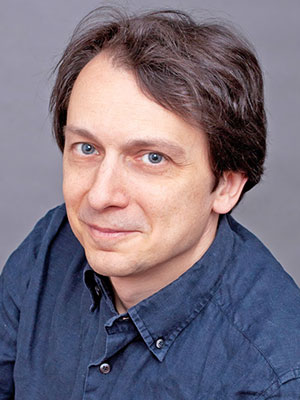
Stefano Fusi is an Associate Professor of Neuroscience at Columbia University's Vagelos College of Physicians and Surgeons, with joint affiliations at the Mortimer B. Zuckerman Mind Brain Behavior Institute and Kavli Institute. His laboratory focuses on computational modeling of neural circuits and neuromorphic engineering. Education PhD in Physics, Hebrew University of Jerusalem (1999) BS in Physics, Sapienza University of Rome (1992) Research Focus Fusi investigates how biological complexity supports neural computation through three primary domains: theoretical analysis of neural circuit dynamics, representational geometry in learning systems, and hardware implementations of brain-inspired algorithms. His work bridges machine learning, neurophysiology, and theoretical physics, emphasizing high-dimensional representations and memory optimization. Recent publications demonstrate consistent focus on neural coding principles across hippocampus, prefrontal cortex, and sensory systems, with innovations in modeling working memory, stress responses, and cross-species computational paradigms. Collaborations & Labs Leads an interdisciplinary laboratory collaborating with Columbia experimental neuroscientists, MIT engineers, and Stanford computational researchers to validate theoretical models. Current projects include neuromorphic hardware development and neural decoding of emotional states.
Vijay Laxmi is a Professor in the Department of Computer Science and Engineering at Malaviya National Institute of Technology (MNIT) Jaipur, India. With over a decade of active research publication from 2014-2024, Dr. Laxmi has established themselves as a prominent researcher in network security, Android security systems, and Network-on-Chip architectures. Their work demonstrates consistent collaboration with Manoj Singh Gaur and numerous doctoral students at MNIT Jaipur. Dr. Laxmi's research interests span Network Security, Android Security, Malware Analysis, Network-on-Chip Architectures, Routing Protocols, Side-Channel Attacks, Wireless Networks, and Mobile Security. Their work bridges theoretical security frameworks with practical implementations, particularly in mobile and embedded systems. Recent publications indicate a growing focus on AI-based security approaches including GAN applications for fuzzing and deep learning for image dehazing. The research trajectory shows increasing sophistication in security analysis techniques, evolving from basic malware detection to advanced side-channel attack analysis and sophisticated network security protocols. Recent publications demonstrate expertise in both theoretical frameworks and practical implementations with applications in real-world security challenges. Dr. Laxmi has mentored numerous graduate students including Vineeta Jain, Anugrah Jain, Sonal Yadav, Mohit Singh, and Gaurav Singal, who appear as co-authors across multiple publications. Their collaborative network extends to researchers at international institutions, indicating strong academic connections beyond their home institution.
George T.-C. Chiu is a Professor in the School of Mechanical Engineering at Purdue University, with courtesy appointments in Electrical and Computer Engineering and Psychological Sciences. He holds a 50% appointment as Assistant Dean for Global Engineering Programs and Partnerships. Previously, he served as a Program Director at the NSF, managing the Control Systems Program and National Robotics Initiative. His research focuses on mechatronics, dynamical systems, and control, with applications in printing, robotics, and human-machine interaction. Education: PhD (1994), University of California, Berkeley MS (1990), University of California, Berkeley BS (1985), National Taiwan University Research Interests: Functional printing technologies for biomedical and environmental sensors Robotics and human-robot interaction Control systems for manufacturing and dynamic systems Energy-efficient sensor design His work bridges mechanical engineering, materials science, and control theory, addressing challenges in precision manufacturing and sustainable technology. Awards: Fellow, ASME (2021) Fellow, Society for Imaging Science and Technology Grants & Projects: USDA-funded projects on food safety sensors and sustainable agriculture NSF initiatives in robotics and additive manufacturing Collaborative research with industry partners like HP and the Army Labs & Outreach: Founded the Purdue FIRST Programs, mentoring K-12 students in robotics. Co-developed experiential courses for student mentors, fostering leadership and project management skills.
Marc Erich Latoschik is a Professor in the Department of Human-Computer Interaction at the University of Würzburg, Germany. He previously held roles at Bayreuth University, Bielefeld University, and FHTW Berlin. His research focuses on virtual and augmented reality, embodiment, human-computer interaction, and applications in health, education, and social systems. Education: Completed his PhD in 2001 at Bielefeld University with a thesis on multimodal interaction in virtual reality. Research Interests: Embodied interaction, virtual embodiment, presence and plausibility in VR/AR, avatar design, social virtual reality, health applications (e.g., VR therapy for body image issues), and XR security/privacy. Active in developing frameworks like Reality Stack I/O and MAIL for VR/AR research. Key Projects: ViTraS study on body image exercises in VR, avatars for mass use via smartphone reconstruction, and motion-based biometrics in XR. Collaborates with medical teams on cybersickness detection and emergency training simulations. Labs/Teams: Leads research groups on immersive technologies and social VR applications. Involved in interdisciplinary projects combining HCI, AI, and healthcare.
Daniel Wolpert is a Professor of Neuroscience at Columbia University , where he is also Vice-Chair of the Department of Neuroscience and a key member of the Zuckerman Mind Brain and Behavior Institute . Additionally, he holds a part-time position as Director of Research at the Department of Engineering, University of Cambridge, and is a Fellow of the Royal Society and the Academy of Medical Sciences . Education: Medical Doctor (1989), D.Phil. in Physiology from the University of Oxford (1992) Previous Positions: Lecturer at Sobell Department of Motor Neuroscience (Institute of Neurology), Professor of Engineering at University of Cambridge (2005–2018) Wolpert is a world leader in sensorimotor control , combining computational neuroscience , Bayesian inference , and robotic/virtual reality technologies to reverse-engineer how the brain generates movements. His work emphasizes the brain's role in reducing sensorimotor uncertainty through predictive modeling and has implications for understanding disorders like autism and Parkinson’s disease. His awards include: Royal Society Ferrier Medal (2020) Minerva Foundation Golden Brain Award (2010) Royal Society Francis Crick Prize Lecture (2005) Daniel Wolpert actively contributes to public science communication, including a 2011 TED Talk on the computational role of the brain in movement, and leads the Wolpert Lab at Columbia, which investigates the neural basis of decision-making , motor learning , and reinforcement learning in both healthy and clinical populations.
Suresh Krishna is an Associate Professor in the Department of Physiology at McGill University's Faculty of Medicine. His research focuses on the neurophysiological and computational basis of sensory processing, attention, and eye movements, with applications to brain-machine interfaces and human health. He works with human subjects, non-human primates, and open datasets using in-vivo electrophysiology, eye-tracking, and computational modeling. Research interests include visual attention mechanisms, saccadic eye movement control, neural coding of motion perception, and the interplay between attention and decision-making. His work bridges basic neuroscience with translational applications such as improving neural prosthetics and understanding perceptual disorders. Recent work highlights how neural remapping processes during saccades underlie spatial perception, and how attention modulates neural activity patterns in visual cortex. The lab's publications reveal critical insights into the temporal dynamics of attentional shifts and their neural substrates, particularly in areas MT and MST. Dr. Krishna's team also investigates auditory temporal processing in the inferior colliculus, exploring correlations between neuronal responses to sound modulation. Their findings contribute to understanding how sensory systems encode temporal information across modalities. Research is conducted in the M2B3 Lab (http://m2b3.lab.mcgill.ca), which integrates experimental and computational approaches to study brain mechanisms underlying perception and action. No specific awards are listed, but ongoing work involves major contributions to primate neurophysiology and translational neuroscience.
Professor Julie Harris is a faculty member at the University of St Andrews, holding the position of Professor of Psychology within the School of Psychology and Neuroscience since 2005. She previously held academic posts at Newcastle University and the University of Edinburgh, and conducted postdoctoral research at the Smith-Kettlewell Eye Research Institute in California. Her research focuses on human visual processing, including vision and camouflage, depth perception, binocular stereopsis, and eye movements in natural environments. She earned a BSc in Physics from Imperial College London and a DPhil from Oxford University. Research interests include exploring how visual systems process environmental cues for depth and motion, with applications in camouflage design and stereo display technologies. Her lab employs psychophysical, behavioral, and computational methods. Notable projects address countershading camouflage effectiveness, motion-in-depth perception, and visual-motor interactions in driving scenarios. Selected grants include funding from BBSRC, Leverhulme Trust, and Medical Research Scotland. Collaborations span evolutionary biology, neuroscience, and applied vision science. She supervises PhD students Federico De Filippi and Rebecca Maguire. Awards include the Davida Teller Award Nomination and Fellowship in the Society of Biology. Labs/Teams: Julie Harris Lab (St Andrews), St Andrews Vision Labs, and the Institute of Behavioural and Neural Sciences. Current projects investigate warning signal design, visual perception in virtual environments, and the impact of visual processing on driving ability.
Milos Popovic is a Professor and Director at the Institute of Biomedical Engineering, University of Toronto, and serves as Senior Scientist and Director of Research at the Toronto Rehabilitation Institute (KITE), University Health Network. He holds the Toronto Rehab Chair in Spinal Cord Injury Research and Neural Engineering and co-leads the Centre for Research in Advanced Neural Implant Applications (CRANIA). His leadership spans academic, clinical, and translational research domains in neuroengineering and rehabilitation. His research focuses on neurorehabilitation, neuroprosthetics, functional electrical stimulation (FES), brain-machine interfaces, and assistive technologies . He develops physiological control systems and therapeutic robotics to restore motor function after spinal cord injury and stroke. His work integrates biomechanics, signal processing, and human-machine interfaces to innovate rehabilitative solutions. Dr. Popovic's recent publications emphasize electrical neuromodulation, FES therapy for motor recovery, deep brain stimulation for cognitive deficits, and wearable/implantable technologies . The articles reflect a strong trend toward closed-loop systems, translational research, and interdisciplinary innovation in neuroengineering and rehabilitation. Swiss National Science Foundation Technology Transfer Award - 1st place (1997) Engineering Medal for Research and Development, Professional Engineers of Ontario (2008) Elected to the College of Fellows, American Institute of Medical and Biological Engineering (2011) 1st Prize and Best Intellectual Property Award, TiEQuest Business Venture Competition (2012) Morris (Mickey) Milner Award for Assistive Technologies (2013) University of Toronto Inventor of the Year Award (2013) University Health Network’s Inventor of the Year Award (2015) Dr. Popovic has secured significant research funding and leads the Neural Engineering and Therapeutics team at KITE. He co-founded MyndTec Inc. and the Canadian National Spinal Cord Injury Conference, demonstrating strong mentorship, innovation, and national impact. He advises graduate students and postdoctoral fellows in biomedical engineering and rehabilitation sciences. He leads the Rehabilitation Engineering Laboratory and the Neural Engineering and Therapeutics Team at KITE, fostering collaboration across engineering, neuroscience, and clinical rehabilitation. His lab develops advanced neurotechnologies with a focus on clinical translation and commercialization.
Andres F. Arrieta is an Associate Professor of Mechanical Engineering at Purdue University's School of Mechanical Engineering in West Lafayette, Indiana. He leads the Programmable Structures Lab and holds affiliations with multiple research areas including dynamics, advanced materials, and robotics. His research focuses on adaptive structures, mechanical metamaterials, and programmable systems. Education: Mechanical Engineer, Universidad de los Andes, Bogotá, 2006 Ph.D., University of Bristol, United Kingdom, 2010 Postdoctoral Research Fellow, ETH Zurich, 2012 Research Interests: His work emphasizes multistable structures, structural nonlinearity, and elastic instabilities. He explores applications in energy harvesting, morphing wings, and mechanical metamaterials. Recent trends include bio-inspired designs and smart materials for adaptive systems. Awards: 2019 ASME Best Paper Award (Bioinspired Materials) 2018 Gary Anderson Early Achievement Award 2017 Journal Cover Feature (Chiral Metastructure) 2012 ETH Postdoctoral Fellowship Labs/Teams: Leads the Programmable Structures Lab, focusing on innovative metastructures and adaptive robotics systems.
Raj Rajkumar is the George Westinghouse Professor of Electrical and Computer Engineering at Carnegie Mellon University (CMU), with a courtesy appointment in the Robotics Institute. He holds leadership roles as Director of the USDOT Mobility21 and Safety21 National University Transportation Centers, and Director of the Metro21: Smart Cities Institute. His work focuses on cyber-physical systems, autonomous driving, and vehicular networking. Education: Ph.D. in Electrical and Computer Engineering from CMU (1989). Research interests include connected/autonomous vehicles, cyber-physical systems, embedded systems, and vehicular networking. Key projects include the General Motors-CMU Collaborative Research Lab and the development of autonomous vehicle protocols like Ballroom Intersection Protocol. Notable awards include the 2016 National Academy of Inventors Fellowship and the 2017 Pittsburgh Business Times Innovation Award. His publications span real-time systems, sensor networks, and automotive cyber-physical frameworks. Rajkumar advises on autonomous vehicle safety, energy efficiency, and societal impacts, with frequent media engagements on self-driving technologies.
Michael J. Frank is the Edgar L. Marston Professor of Psychology and Professor of Brain Science at Brown University's School of Cognitive, Linguistic, and Psychological Sciences. He holds academic affiliations with the Carney Institute for Brain Science and specializes in cognitive neuroscience, computational neuroscience, and decision-making processes. Frank earned his Ph.D. in Neuroscience & Psychology from the University of Colorado at Boulder in 2004, and joined Brown University in 2011 after serving as a Professor at the University of Arizona. His research integrates computational modeling and experimental methods to explore neural mechanisms underlying reinforcement learning, decision-making, and cognitive control, with a focus on prefrontal cortex-basal ganglia interactions and dopamine modulation. Frank's honors include the Troland Research Award (2021), Kavli Fellowship (2016), and the Cognitive Neuroscience Society Young Investigator Award (2011). He is an editor for eLife, Behavioral Neuroscience, and the Journal of Neuroscience. His lab, based at http://ski.clps.brown.edu, investigates topics such as neural circuit models of cognitive control, neuropsychological testing, and translational applications of computational models in psychiatry. Frank's research emphasizes interdisciplinary approaches, combining behavioral experiments, neuroimaging (fMRI, EEG), and pharmacological studies to dissect brain-behavior relationships. Key findings include insights into dopamine's role in motivation, decision-making deficits in schizophrenia, and computational phenotyping of mental disorders. His work bridges basic science and clinical applications, aiming to inform therapeutic strategies for neurological and psychiatric conditions.