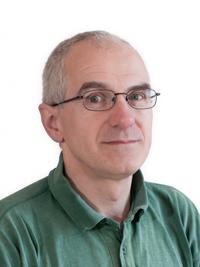
Professor Anthony Paul Doulgeris at the UiT The Arctic University of Norway leads research in Earth Observation within the Department of Physics and Technology . His work focuses on Interpreting satellite radar images for Arctic sea ice studies Developing automated algorithms for large-scale environmental data Advancing SAR (Synthetic Aperture Radar) methodologies His research interests span Remote Sensing , Sea Ice Dynamics , Machine Learning Applications , and Algorithm Optimization for polar environments. Current projects include Boosting Space Business and membership in the Earth Observation research group. Recent publications analyze High-resolution sea ice concentration using Sentinel-1 deep learning models Icberg detection via multiscale CFAR algorithms in L-band SAR Multidecadal SAR sea ice type analysis in the Atlantic Arctic Incidence angle compensation techniques for cross-platform consistency with keywords spanning Arctic Climate , Microwave Remote Sensing , Operational Ice Monitoring , and Data Processing Frameworks . Collaborations include international teams from Norway, China, and Canada, with fieldwork integration in expeditions like MOSAiC and N-ICE2015. His work bridges Satellite Data and Environmental Modeling to improve Arctic navigation and climate predictions.
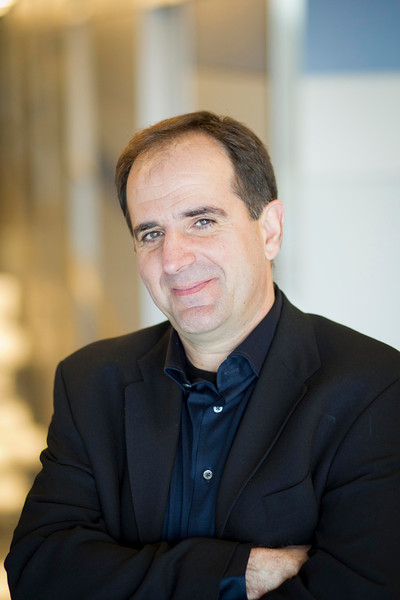
Dr. Grigorios Chrysos is a faculty member in the Department of Electrical & Computer Engineering at the University of Wisconsin-Madison. His research focuses on reliable machine learning, emphasizing robustness to noise, out-of-distribution generalization, and theoretical understanding of neural/polynomial networks. Education: PhD in Machine Learning, Imperial College London (2020) M.Eng. in Electrical Engineering, National Technical University of Athens (2014) Key research interests include robustness in deep networks , inductive bias analysis , and polynomial network design for high-order input interactions. His work explores adversarial robustness, fair model generalization, and extrapolation properties in generative frameworks. Recent awards include the prestigious DAAD AInet Fellowship (2023), Best Reviewer Awards at NeurIPS (2022), ICLR (2022), and IMCL (2021), alongside Amazon Cloud Credits and Nvidia GPU donations (2019). Scientific Contributions: Advancing tensor methods in machine learning Developing polynomial networks for robustness Designing efficient EEG seizure analysis algorithms
Dimitris A. Pados is a Professor and I-SENSE Fellow at Florida Atlantic University, holding the prestigious Charles E. Schmidt Eminent Scholar in Engineering position. He serves as Director of both the Center for Connected Autonomy and Artificial Intelligence and the ExtremeComms Laboratory within the Department of Electrical Engineering and Computer Science in the College of Engineering. Prior to joining FAU in 2017, he spent 20 years at the University at Buffalo, where he held positions ranging from Assistant Professor to Clifford C. Furnas Chair Professor. Professor Pados' research spans two primary domains: Communications Theory and Systems, and Machine Learning and Adaptive Signal Processing. His work in communications includes Cognitive Software-defined Radios and Networks, Interference Avoiding Networking, Secure Wireless Communications, Underwater Cognitive Hi-rate/Long-distance Acoustic Communications, and Autonomous/Unmanned System Communications. In signal processing, he specializes in L1-norm Principal-component Analysis (L1-PCA), Robust Feature Extraction from Faulty Data Sets, Digital Data Embedding/Hiding, and Compressed-sensed Imaging and Video. His research has resulted in numerous high-impact publications and several best paper awards. His recent publications demonstrate a strong focus on robust signal processing techniques, particularly L1-PCA methods, and applications in wireless communications, video processing, and secure transmissions. The research shows consistent contributions to both theoretical foundations and practical implementations, with increasing emphasis on cognitive radio networks, underwater communications, and autonomous systems. 2013 ISWCS Best Paper Award in Physical Layer Communications and Signal Processing 2003 IEEE Transactions on Neural Networks Outstanding Paper Award IEEE ICT 2001 Best Paper Award 2010 IEEE ICC Best Paper Award in Signal Processing for Communications I-SENSE Fellow Charles E. Schmidt Eminent Scholar in Engineering Professor Pados has secured significant research funding through sponsored projects, particularly in wireless communications, signal processing, and autonomous systems. His work on software-defined radio platforms, underwater acoustic networks, and cognitive networking demonstrates strong industry and government interest. He has successfully translated theoretical research into practical implementations, as evidenced by his team's win in the Internet of H2O competition. As Director of the ExtremeComms Laboratory, Professor Pados leads a research group focused on communication systems for challenging environments. The laboratory provides opportunities for graduate students to work on cutting-edge projects in cognitive radio, underwater communications, and autonomous systems. His leadership of the Center for Connected Autonomy and Artificial Intelligence further expands research opportunities across multiple disciplines at Florida Atlantic University.
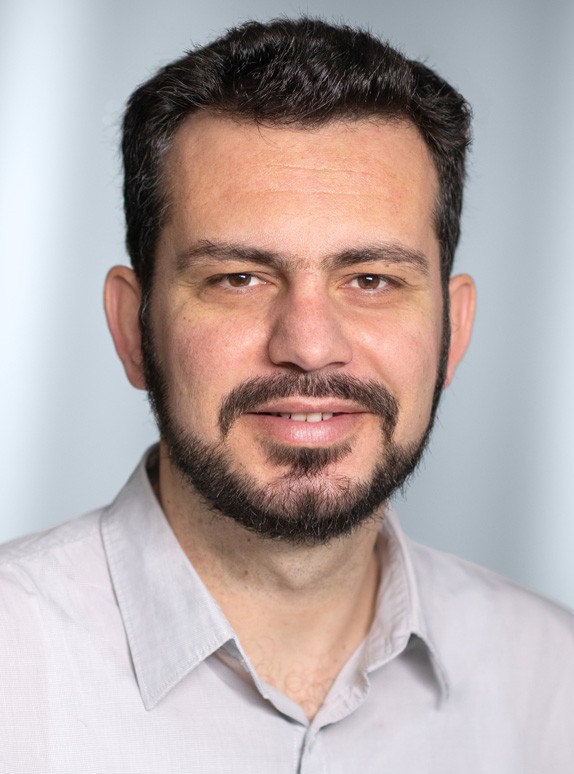
Mehdi Neshat is a Visiting Scholar at the Data Science Institute within the Faculty of Engineering and Information Technology at the University of Technology Sydney (UTS). He holds a PhD in Engineering from the University of Adelaide (2016-2020) and has extensive experience as a research data scientist specializing in computational optimization methods applied to complex engineering and healthcare problems. His educational background includes: PhD in Engineering, University of Adelaide (2016-2020) Neshat's research focuses on developing and applying advanced computational methods to solve real-world challenges. He specializes in evolutionary algorithms, swarm intelligence, and machine learning techniques for optimizing renewable energy systems, particularly wave and wind energy converters. His work extends to healthcare applications including genomic analysis and medical diagnostics, as well as structural engineering optimization and smart building energy management. His interdisciplinary approach bridges theoretical algorithm development with practical implementation across multiple domains, demonstrating exceptional versatility in computational problem-solving. Analysis of his recent publications reveals a strong trend toward sophisticated ensemble methods and hybrid optimization approaches that combine multiple algorithms to overcome limitations of single-method approaches. His research shows increasing sophistication in handling multi-objective optimization problems, particularly in renewable energy systems where trade-offs between power output, system stability, and cost must be balanced. The geographical focus of his energy research centers on Australian coastal regions, with practical applications for wave and wind farm deployment. Neshat has received significant recognition for his research contributions: Back-to-back Best Paper Prizes at the GECCO conference (2019 and 2020), a CORE A-ranked international optimization and machine learning conference His collaborative research spans multiple institutions and disciplines. Previously, he served as a Postdoctoral Research Associate with the Genomic analysis team at the Australian Centre for Precision Health, Cancer Research Institute, University of South Australia, and as a Senior Research Fellow at the Center for Artificial Intelligence Research and Optimization, Torrens University Australia. His work demonstrates consistent engagement with multidisciplinary teams across engineering, computer science, and healthcare domains, with a strong emphasis on practical implementation of theoretical methods. At UTS, Neshat contributes to the Data Science Institute's research agenda, focusing on applying advanced computational methods to complex real-world problems where traditional analytical approaches fall short. His current work continues to expand the boundaries of optimization techniques for renewable energy systems while exploring new applications in healthcare analytics and structural engineering.
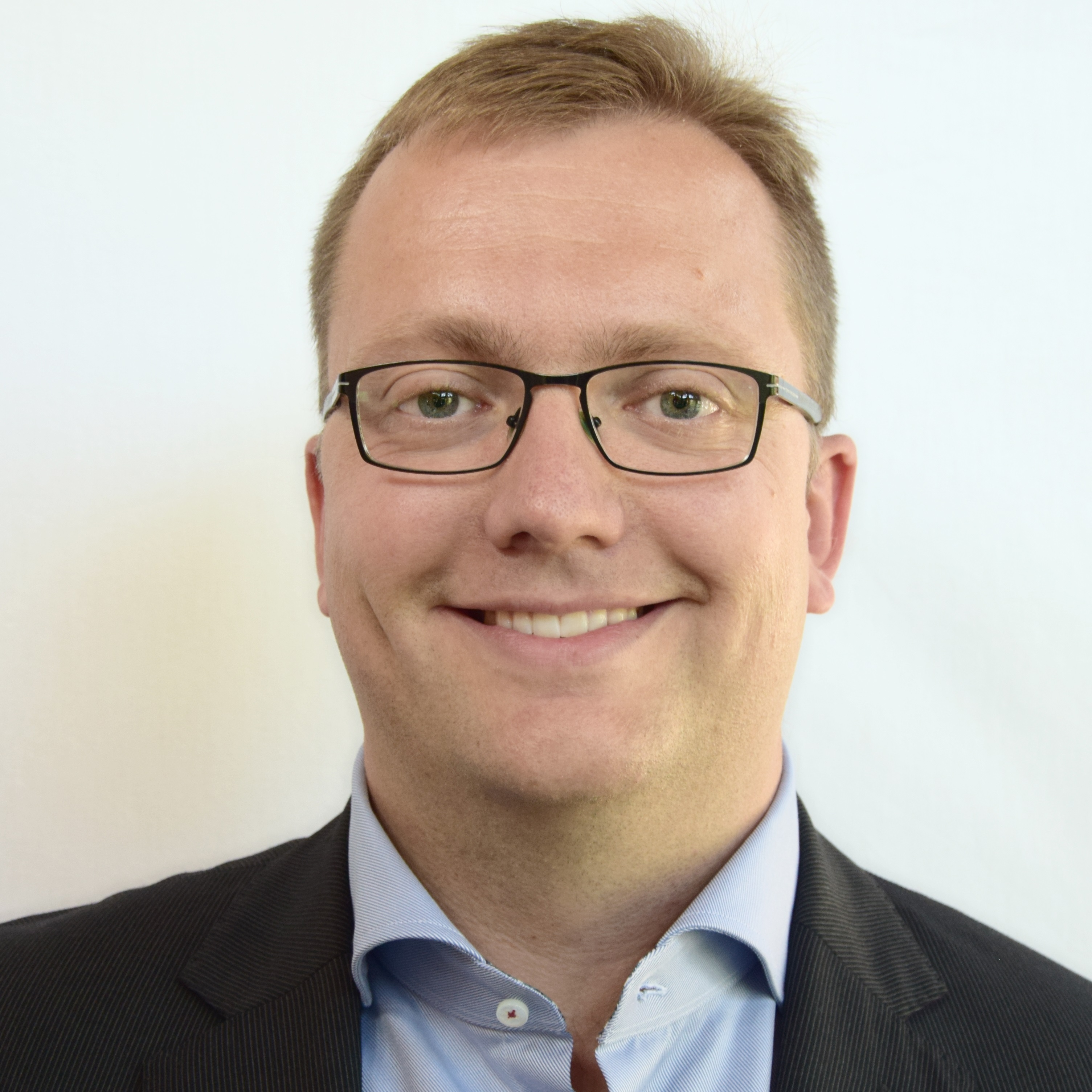
Stefan Wirtensohn is a Researcher at the Institute of System Dynamics, Konstanz University of Applied Sciences, where he has served as a research associate since 2012. His work bridges theoretical control engineering with practical marine robotics applications, focusing on autonomous surface vehicle development and advanced control systems. His academic credentials include: Bachelor of Engineering in Mechanical Engineering, HTWG Konstanz (2010) Master of Engineering in Mechatronics, HTWG Konstanz (2012) Wirtensohn's research centers on Control Engineering, Mechatronic Modeling, and Nonlinear Control systems for marine environments. He specializes in parameter identification, motion estimation, and trajectory optimization for autonomous vessels, with significant contributions to docking control, wave filtering, and extended object tracking. His methodology integrates unscented Kalman filters, model predictive control, and sensor fusion techniques to address real-world navigation challenges. Analysis of his 15 most recent publications (2013-2022) reveals consistent focus on marine robotics control systems. Key trends include the application of random matrices for lidar-based target tracking, model predictive path integral control for vessel stabilization, and advanced disturbance estimation techniques. His work demonstrates strong emphasis on experimental validation using autonomous surface vehicles across diverse maritime scenarios. He actively contributes to teaching through Control Engineering 1 exercises and laboratory supervision, emphasizing hands-on implementation of control algorithms. Current projects under his involvement include: Integrated autonomous measuring system for maritime surveying tasks Automated parking systems for truck trailers Collision prevention procedures for inland waterway vessels Wirtensohn operates within the Institute of System Dynamics research team specializing in signal processing, control engineering, and robotics, maintaining close collaboration with Johannes Reuter and other institute members on marine automation challenges.
Fabrice Lamarche serves as an Associate Professor at Université de Rennes 1 within the ESIR School of Engineering, while maintaining dual affiliation with the MimeTIC research team at IRISA / INRIA Rennes. His academic career spans uninterrupted service since 2004, evolving from Assistant Professor roles at IFSIC (2003-2009) to current positions at ESIR. As co-founder of Golaem (2009), he bridges academic research with commercial application in crowd simulation technology. His institutional journey includes sequential membership in SIAMES (2004-2006), Bunraku (2007-2011), and MimeTIC (2011-present) research teams at INRIA. Lamarche earned his PhD in Computer Sciences from Université de Rennes 1 in 2003 with thesis work on virtual human autonomy. His educational foundation includes a Master of Computer Sciences specializing in Computer Graphics and AI (1999-2000), a Master of Engineering from INSA de Rennes (1997-2000), and a Technical degree from IUT de Limoges (1995-1997). His research program centers on virtual human behavior modeling with emphasis on decision-making systems, path planning under environmental constraints, and crowd simulation architectures. Key innovations include TopoPlan for human-scale navigation and frameworks integrating high-level task scheduling with low-level motion planning. This work addresses fundamental challenges in creating autonomous virtual characters capable of navigating complex 3D environments while exhibiting realistic behaviors, with applications spanning virtual reality, gaming, and simulation-based training systems. Publication analysis reveals consistent output from 2001-2014, evolving from foundational behavioral animation (2001-2004) to sophisticated crowd simulation systems (2013-2014). A notable trajectory shows increasing integration of cognitive modeling with motion planning, alongside exploration of Brain-Computer Interfaces for virtual navigation. Recent work demonstrates particular strength in semantic decomposition of urban environments and time-space constrained task scheduling. His scientific contributions have earned significant recognition: Rennes city medal (2009) for research excellence Second prize at Deutsch Telekom Awards (FMX 2008) for TopoPlan/MKM integration As an active researcher and educator, Lamarche advises students through Université de Rennes 1 while leveraging INRIA resources and Golaem industry partnerships. His publication record indicates sustained grant funding, particularly through INRIA channels, with collaborative projects extending to neuroscience applications via Brain-Computer Interface research. The MimeTIC team affiliation provides infrastructure for multimodal interaction research in complex virtual environments. Lamarche's laboratory work through MimeTIC focuses on developing practical implementations of virtual human autonomy systems. His research group maintains strong industry connections via Golaem, which commercializes crowd simulation technology. Current efforts emphasize semantic understanding of virtual urban spaces and robust path planning under dynamic constraints, building on foundational work in topological navigation and behavioral decision systems.
Daniel W. C. HO is a Chair Professor of Applied Mathematics and Associate Dean (Undergraduate Education) at the College of Science, City University of Hong Kong. He has been with City University of Hong Kong since 1989, having previously served as a Research Fellow at the University of Strathclyde, Glasgow, UK from 1985 to 1988. Prof. Ho received first class honours in BSc, MSc, and PhD degrees in mathematics from the University of Salford, Greater Manchester, UK in 1980, 1982, and 1986, respectively. His academic journey began with foundational work in control theory and has evolved into a distinguished career spanning over three decades. Prof. Ho's research interests span multiple domains in control theory and systems engineering. His primary focus areas include Control Theory , Estimation and filtering theory , Complex dynamical distributed networks , Multi-agent networks , Nonlinear singular systems , and Stochastic systems . His work bridges theoretical advances with practical applications, particularly in networked control systems, cybersecurity for cyber-physical systems, and distributed optimization. Prof. Ho has made significant contributions to the understanding of synchronization phenomena in complex networks, resilient control under cyber attacks, and quantized control systems with communication constraints. His research has evolved from classical control theory to address contemporary challenges in networked and distributed systems, reflecting the changing landscape of control engineering. Prof. Ho's publication record shows a strong emphasis on secure control systems under cyber attacks, distributed optimization with communication constraints, event-triggered control schemes, quantized control systems, and synchronization of complex networks. His work demonstrates a consistent progression from theoretical foundations to addressing practical implementation challenges in cyber-physical systems, with increasing focus on security aspects in recent years. Prof. Ho has received numerous prestigious awards and honors throughout his career. He was named a Fellow of the Institute of Electrical and Electronics Engineers (IEEE) in 2017 and elevated to IEEE Life Fellow status in 2024. He was awarded the Chang Jiang Chair Professorship by the Ministry of Education, China in 2012. Prof. Ho has been recognized as a Highly Cited Researcher for eleven consecutive years from 2014 to 2024, and is among the Top 2% of most highly cited scientists globally from 2020 to 2024. He received the Best Paper Award from The 8th Asian Control Conference in 2011 and the Teaching Excellence Award from City University of Hong Kong in 2020 for his innovative teaching approaches. Prof. Ho has held significant editorial responsibilities, serving as Subject Editor of the Journal of Franklin Institute, Co-Editor in Chief of Franklin Open, Associate Editor of IEEE Transactions on Neural Networks and Learning Systems, Asian Journal of Control, and Action Editor of Neural Networks. He has also served on the editorial boards of several other prestigious journals, contributing to the advancement of his field through scholarly communication. His leadership extends beyond research and teaching as Associate Dean (Undergraduate Education) of the College of Science at City University of Hong Kong, where he plays a key role in shaping the educational experience for science students.
Dr. Anastasios Kouvelas is a Lecturer at ETH Zurich, where he serves as head of the Road Traffic Engineering research group at the Institute of Transport Planning and Systems (IVT), Department of Civil, Environmental and Geomatic Engineering. He has held this position since August 2018, succeeding Dr. Monica Menendez who moved to New York University in Abu Dhabi. Prior to joining ETH Zurich, he was a research associate at the Urban Transport Systems Laboratory (LUTS) at EPFL (2014-2018) and a postdoctoral fellow at Partners for Advanced Transportation Technology (PATH) at the University of California, Berkeley (2012-2014). Dr. Kouvelas' research focuses on modeling, simulation, optimization and traffic flow control. His work aims to develop real-time solutions based on control theory and operations research methods. The Road Traffic Engineering group develops algorithmic solutions that are components of intelligent transportation systems used in traffic control centers. Recent technological advances in autonomous vehicles have expanded their research topics as the industry seeks efficient operational solutions for autonomous mobility. They are particularly interested in extending their work to the design of advanced management strategies for urban networks that utilize connected vehicles to improve traffic operations and develop network-wide control strategies that minimize environmental impacts. His recent publications (2023-2025) demonstrate strong focus on traffic prediction using deep learning techniques, bike lane allocation impacts on urban networks, transit network resilience against disruptions, vehicle trajectory extraction from aerial recordings, and traffic control for mixed traffic systems with connected and autonomous vehicles. His work bridges theoretical developments in control theory with practical traffic engineering challenges. Scientific Awards No specific scientific awards were mentioned in the provided information. Advising and Grants Dr. Kouvelas supervises PhD and Master's students in traffic engineering and intelligent transportation systems. His research is supported by various grants including a grant from the Hong Kong Research Grant Council (Grant No. GRF 11216323) for research on traffic speed prediction. Laboratories and Teams Dr. Kouvelas leads the multidisciplinary Road Traffic Engineering research group at IVT, which consists of researchers with backgrounds in civil engineering, electrical engineering, mechanical engineering, computer science, control, and operations research. The group's work spans multiple areas including traffic flow theory, traffic operations, connected and automated vehicles, and intelligent transportation systems.