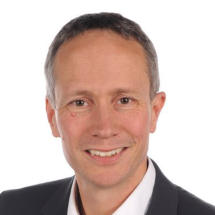
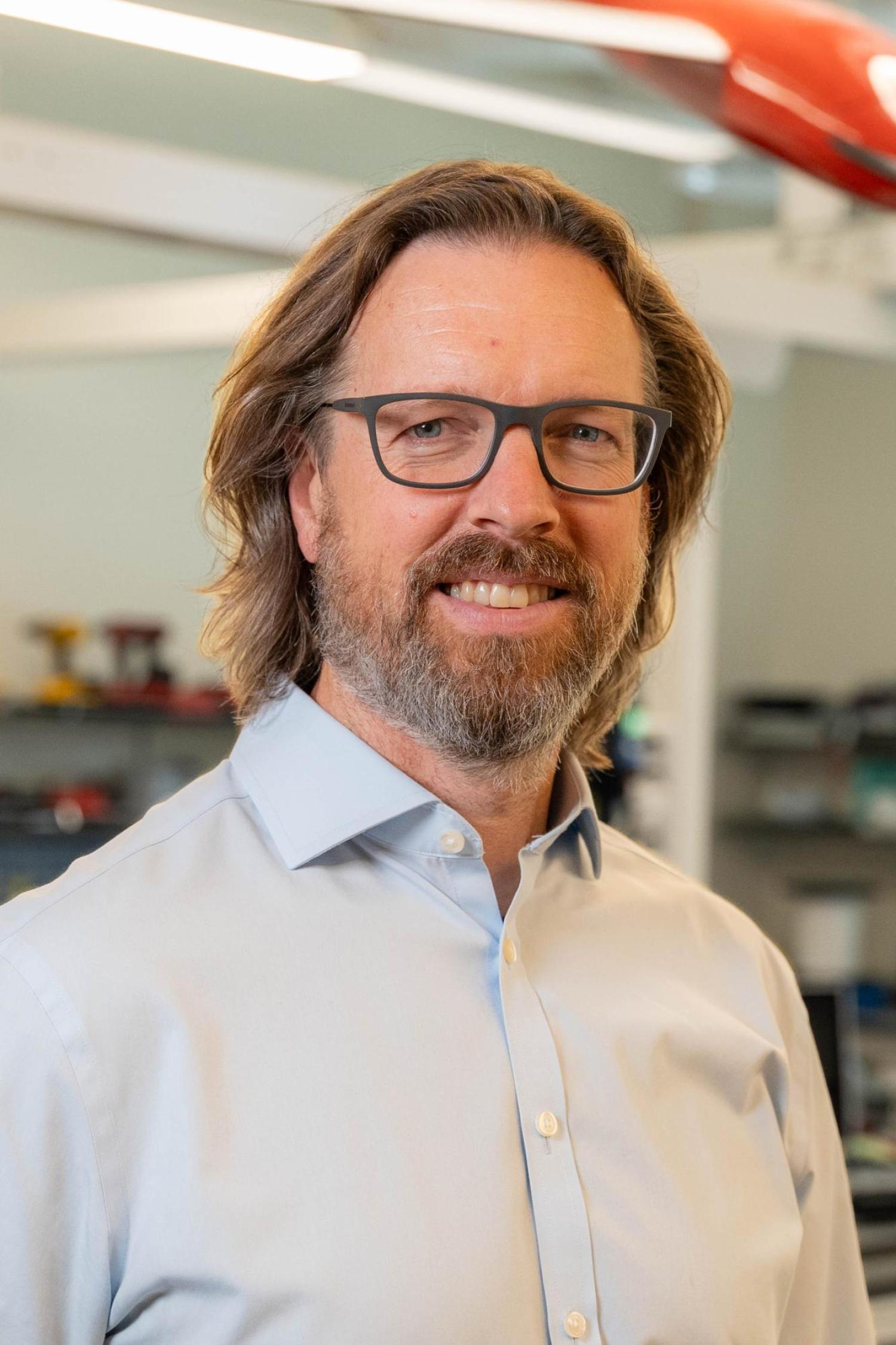
Kevin Chetty is a Professor of Wireless Sensing at University College London (UCL), leading the Urban Wireless Sensing Lab within the Department of Security and Crime Science. His work bridges radar technology, machine learning, and healthcare applications, with a focus on passive sensing systems. Education: PhD in Medical Ultrasound Physics (Imperial College London, 2004-2007), MRes in Image and X-Ray Physics (King's College London, 2003), BSc in Physics (King's College London, 1999) Research spans radar micro-Doppler signature analysis for human behavior classification, software-defined radar development, and integrated communication-sensing systems, with applications in security, healthcare, and smart environments. Recent work emphasizes privacy-preserving technologies and edge processing for real-time operations. Scientific awards include the 2022 IET Radar Systems Best Paper Runner-Up, 2022 IEEE Radar Conference 2nd Place, and 2015 National Instruments Engineering Impact Award. He has received funding from government and industry sectors in telecommunications, IoT, security, and healthcare. Teaching roles: Programme Convener for MSc Crime Science and IEP Minor in Crime and Security Engineering; Module Convener for Security Technologies and Crime Mapping & Spatial Analysis Consultancy: Huawei Technologies (2020-2022), Metropolitan Police Service (2019)
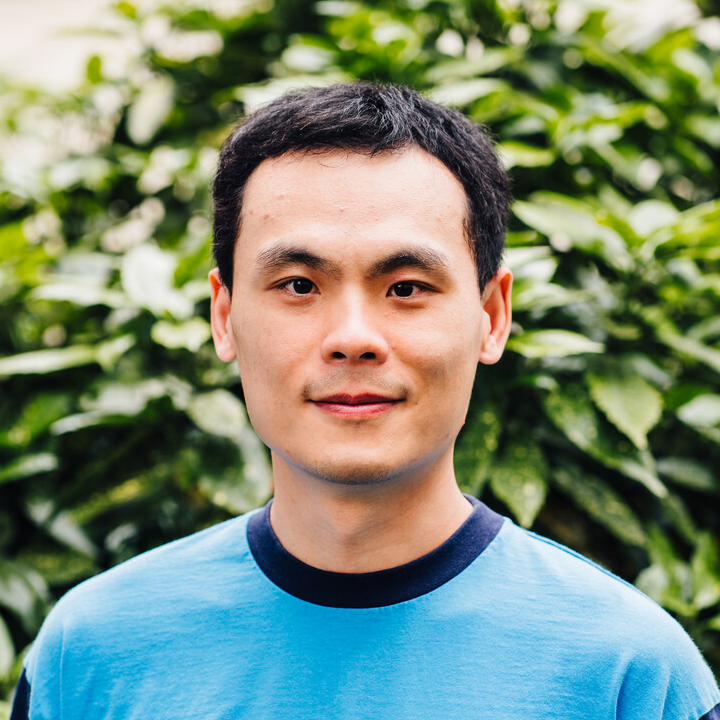
Scott A. Huettel is a Professor in the Department of Psychology and Neuroscience at Duke University, where he also serves as Senior Associate Dean for Research in Trinity College of Arts & Sciences. He holds additional appointments as Professor of Neurobiology and Professor in Psychiatry and Behavioral Sciences. As a Bass Fellow, Huettel leads research in decision neuroscience and neuroeconomics, with affiliations spanning multiple Duke research centers including the Center for Brain Imaging and Analysis, Duke Institute for Brain Sciences, and Center for Cognitive Neuroscience. Huettel's research focuses on the brain mechanisms underlying economic and social decision making. His laboratory uses fMRI to probe brain function, behavioral assays to characterize individual differences, and various physiological methods including eye tracking, pharmacological manipulation, and genetics to link brain and behavior. His work has advanced new analysis methods for fMRI data, including functional connectivity analyses, pattern classification, and combinatoric multivariate approaches. His research spans applications in behavioral economics, consumer decision making, and neuroethics. Huettel's recent publications demonstrate a strong focus on social decision making, risk assessment, and the neural mechanisms of economic choices. His work increasingly integrates computational approaches with traditional neuroimaging to better understand how people process information during decision making. His research has significant implications for understanding financial behavior, health decisions, and social interactions across the lifespan. Education in Neuroimaging Award from the Organization for Human Brain Mapping (2021) 2014 Innovation Award from the Social and Affective Neuroscience Society (2013) Bass Fellow for Excellence in Research and Teaching (2012) Jerry G. and Patricia Crawford Hubbard Professorship at Duke University (2012) Top 5% undergraduate instructor in Arts & Sciences at Duke (2010) Dean's Award for Excellence in Mentoring from Duke University Graduate School (2010) Huettel actively mentors students and has trained numerous postdoctoral and graduate researchers who now lead their own laboratories. He is lead author of the textbook Functional Magnetic Resonance Imaging (3rd edition, 2014) and teaches courses including Fundamentals of Decision Science, Decision Neuroscience, and Neuroethics. His research is supported by multiple grants from NIH and other funding agencies, focusing on mechanisms of social behavior, aging, and neuroimaging technology development. Huettel directs a productive research laboratory that integrates multiple methodologies to investigate decision processes. His team combines fMRI, eye tracking, behavioral testing, and computational modeling to examine how people make economic and social choices. The lab has made significant contributions to understanding how attention, risk, and social context influence decision making across different populations including adolescents, older adults, and clinical populations.
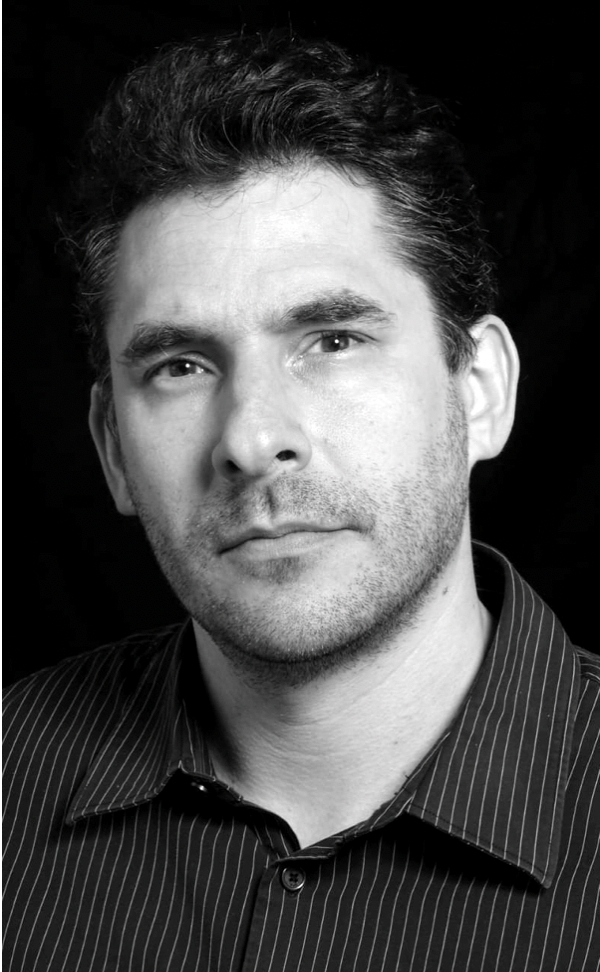
Cornelius Faber is a University Professor in the Department of Radiology at the University of Münster, Germany, where he leads the Experimental Nuclear Magnetic Resonance research group. His work focuses on developing and implementing novel MRI techniques that extend the boundaries of magnetic resonance imaging in terms of spatial and temporal resolution, sensitivity, and specificity for physiological, structural, and molecular changes. He actively participates in the "Cells in Motion" interdisciplinary research initiative at the university. Professor Faber's research spans multiple critical areas in medical imaging and biomedical science. His primary expertise lies in MRI cell tracking , enabling visualization of cellular dynamics in vivo. He has made significant contributions to infection imaging , developing methods to detect and characterize microbial infections using MRI. His work on MR methodology development has advanced quantitative imaging techniques, while his research on multimodal integration in MR and MRI contrast mechanisms has provided deeper insights into molecular and cellular processes. His research bridges physics, engineering, and biomedical applications, with particular relevance to inflammation, cancer, neurological disorders, and cardiovascular disease. Analysis of Professor Faber's extensive publication record reveals a clear evolution from fundamental MRI technique development toward increasingly sophisticated applications in disease models. His recent work demonstrates a strong trend toward multimodal imaging approaches that combine MRI with complementary techniques such as mass spectrometry, optical imaging, and PET. This integration creates comprehensive diagnostic platforms that provide both anatomical and molecular information. A notable pattern is the focus on cellular dynamics, particularly immune cell behavior in inflammatory conditions and tumor microenvironments, with applications spanning neuroscience, oncology, and cardiology. Professor Faber leads a multidisciplinary research team of approximately 15 members, including scientists, doctoral students, technicians, and medical students. His laboratory is deeply integrated with the University of Münster's research infrastructure, particularly the Multiscale Imaging Centre. The group's work contributes significantly to advancing preclinical MRI methodologies while maintaining strong clinical relevance, with numerous publications in high-impact journals across medical imaging, neuroscience, and biomedical engineering disciplines.
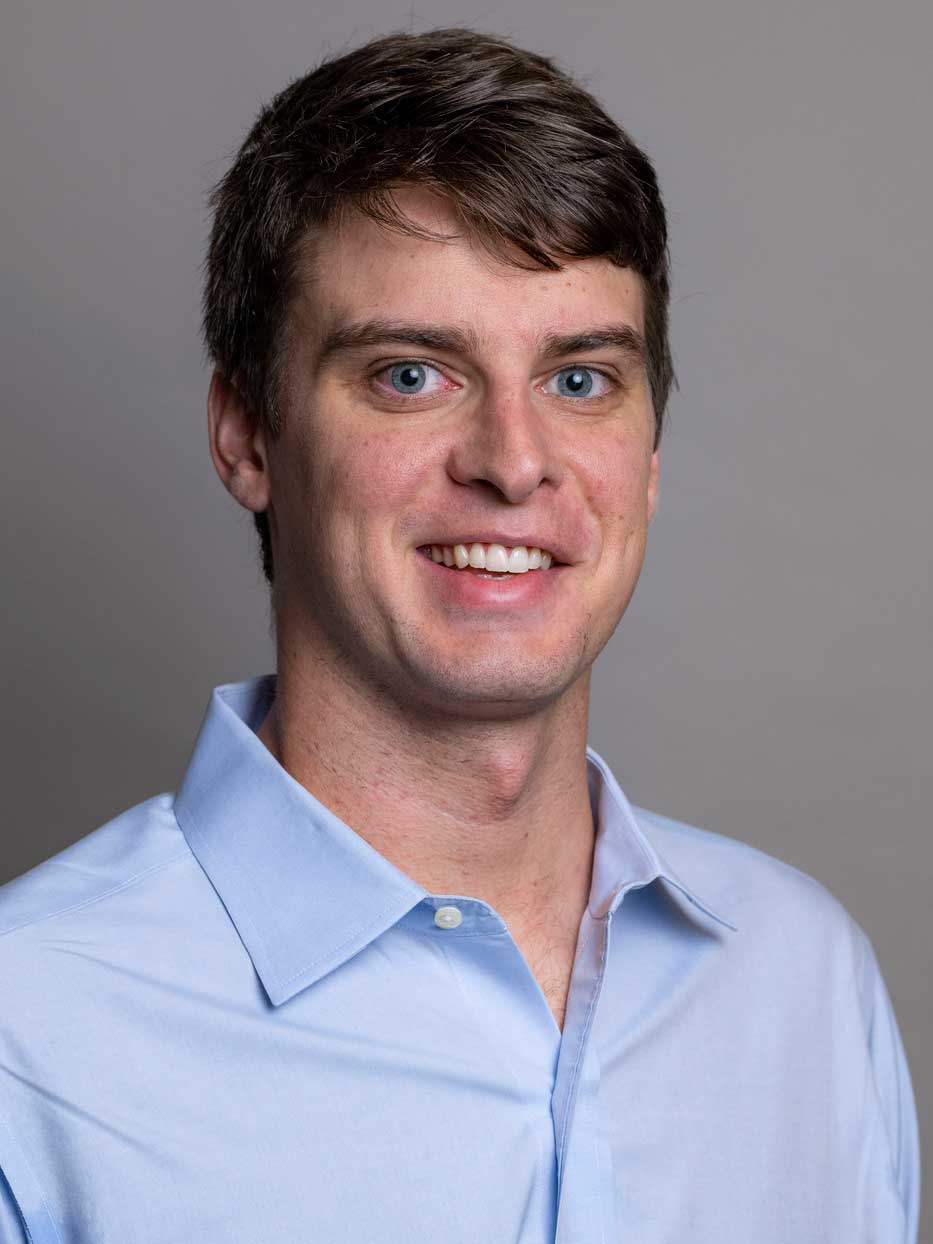
Dr. Vineet Bharti is a Senior Research Associate at the School of Physics, University of Bristol, with a focus on quantum engineering and ultrafast dynamics. He holds a BSc, MSc, and PhD, and is affiliated with the Quantum Engineering Technologies research group. Education: BSc, MSc, PhD Current Role: Senior Research Associate Research Focus: Quantum physics, ultrafast atomic interactions His work explores Rydberg atoms, electromagnetically induced transparency (EIT), coherent population trapping (CPT), and quantum many-body systems. Recent research includes ultrafast dynamics in optical lattices and polarization-dependent spectroscopy. Dr. Bharti’s publications highlight advancements in quantum optics and atomic physics. For detailed information on his projects, grants, and future research, refer to his full description below. He can be contacted via vineet.bharti@bristol.ac.uk or viewed on ORCID .
Saleh Javadi is a Senior Lecturer at the Department of Mathematics and Natural Sciences at Blekinge Institute of Technology (BTH) in Karlskrona, Sweden. He is actively engaged in research and teaching within the field of systems engineering. His educational background includes: B.Sc. in Electrical-Control Engineering from Amirkabir University of Technology (2009) M.Sc. in Electrical, Electronic and Systems Engineering from The National University of Malaysia (2013) Ph.D. in Systems Engineering from Blekinge Institute of Technology (BTH) (2021) Saleh Javadi's research focuses on signal processing, machine learning, and computer vision , with applications spanning remote sensing, intelligent transportation systems, and AI-driven industrial optimization. His work bridges theoretical advancements with practical implementations, particularly in SAR imagery analysis, drone-based agricultural monitoring, and traffic surveillance systems. His recent publications demonstrate a strong focus on remote sensing technologies, particularly Synthetic Aperture Radar (SAR) image processing and analysis. There's a clear trend toward applying machine learning techniques to solve complex problems in aerial and satellite imagery, traffic monitoring, and agricultural applications. His research shows interdisciplinary connections between computer vision, signal processing, and practical engineering applications. Saleh Javadi has received significant recognition for his innovative work: Innovator of the Year award (SKAPA – Innovation Prize in Memory of Alfred Nobel) in Blekinge for innovative efforts in optimizing and reducing energy consumption in industries by using artificial intelligence ÅForsk Entrepreneur's prize at the Swedish Innovation Council Day – Swedish Incubators & Science Park's annual conference in May 2019 Dr. Javadi is involved in practical applications of his research through projects such as "Artificiell intelligens AI kan reducera ogräsfrön i utsäde" (ongoing) and "Bekämpa Renkavle med hjälp av drönare och Artificiell Intelligens (AI)" (completed). His work demonstrates a strong commitment to translating academic research into real-world solutions that address industrial and environmental challenges. His research appears to be conducted within a collaborative framework, working with colleagues on drone technology, SAR image analysis, and AI applications across multiple domains including agriculture, maritime monitoring, and transportation systems.
Hongkai Wen is a Professor (Chair in Machine Learning Systems) in the Department of Computer Science at the University of Warwick, UK. He holds dual appointments as a Fellow of the Alan Turing Institute (serving as Independent Scientific Advisor for BridgeAI and member of Turing Research Ethics team) and previously worked as Senior Research Scientist at Samsung AI Centre Cambridge and postdoctoral researcher at Oxford University. Education: Computer Science, Keble College, University of Oxford Research Focus: Develops intelligent multi-modal perception systems for real-world deployment with extreme computational efficiency. Core expertise spans ML systems optimization, neural architecture search, and cross-disciplinary applications in robotics, urban mobility, and wearable/IoT security. Pioneered event-based vision techniques and training-free NAS frameworks. Publication Trends: Recent work (2023-2025) demonstrates accelerating innovation in diffusion model efficiency, on-device AI deployment, and sensor fusion techniques. Dominant themes include computational resource optimization for edge devices, multi-modal temporal modeling, and privacy-preserving spatial analytics, with significant contributions to NeurIPS, ICML, and CVPR venues. Scientific Recognition: Best Paper Award, AutoML Conf 2023 (T-CET) Best Paper Runner-up, SenSys 2024 (AdaFlow) Best Paper Awards: IPSN 2014 & EWSN 2013 1st/2nd Place, Zero Cost NAS Competition (AutoML'22) Mentorship & Funding: Actively supervises PhD candidates through thesis committees at Warwick, Ulster, and Queensland universities. Secured National AI Strategy Fund for Macro Neural Architecture Search research. Recruits annually for PhD positions with scholarships from UKRI, Turing Institute, and industry partnerships. Research Leadership: Heads the AI/ML Systems (AMS) Division at Warwick, directing a 15+ member team developing deployable ML frameworks for mobile/robotic platforms. Maintains active collaborations with Samsung AI Centre and Turing Institute's BridgeAI programme on ethical AI deployment.
Allon Guez is a Professor in the Department of Electrical and Computer Engineering at Drexel University. His research focuses on control systems, robotics, artificial intelligence, medical robotics, and automated decision making. He actively bridges academia and industry through high-tech entrepreneurship. Education PhD in Electrical Engineering, University of Florida MS in Electrical Engineering, University of Florida MBA in Finance, Drexel University BS in Electrical Engineering, Technion - Israel Institute of Technology His research portfolio spans medical robotics, automated decision making systems, and advanced control algorithms. Key areas include wearable safety devices, radiation control in imaging systems, and closed-loop brain stimulation technologies. Notable contributions include founding ControlRad (radiation reduction systems) and GraceFall (fall detection technology). His work demonstrates a strong emphasis on translating academic research into commercial medical devices. Recent publications highlight innovations in: Fetal brainwave monitoring Postural disturbance detection Seizure prediction algorithms Magnetic microrobotics Dynamic CT collimation Cardiac tissue modeling
Prof. Florian Zaussinger is a faculty member at the Faculty of Applied Computer and Life Sciences at Mittweida University of Applied Sciences. His research focuses on thermal convection, fluid dynamics, and numerical simulations in both geophysical and astrophysical contexts. He has contributed extensively to studies on microgravity experiments, including the GeoFlow and AtmoFlow projects conducted on the International Space Station (ISS). University: Mittweida University of Applied Sciences Faculty: Applied Computer and Life Sciences Department: Mathematics Contact: +49 3727 58-1381 | florian.zaussinger@hs-mittweida.de | Building 6, Room 6-131 His research involves advanced numerical modeling of complex fluid systems, including spherical convection, dielectric heating, and double-diffusive processes. He has developed and applied computational tools like the ANTARES code to simulate convection in DA white dwarfs, planetary atmospheres, and Earth's mantle. His work bridges theoretical fluid mechanics with experimental validation in space-based microgravity environments. Recent publications highlight his expertise in thermo-electrohydrodynamic convection, planetary fluid flow analysis, and microgravity-induced instabilities. While the scraped data does not list scientific awards or students directly, his academic profile emphasizes interdisciplinary collaboration with engineering and life sciences, particularly in applied mathematics for fluid dynamics and experimental data processing.
Michael Everett is an Assistant Professor at Northeastern University with a joint appointment in the Department of Electrical & Computer Engineering and the Khoury College of Computer Sciences. He directs the Autonomy & Intelligence Laboratory, focusing on certifiable learning machines at the intersection of robotics, deep learning, and control theory. His research emphasizes safety, reliability, and efficiency in robotics applications like off-road navigation and social environments. Education: PhD in Mechanical Engineering, Massachusetts Institute of Technology (2020) SM in Mechanical Engineering, MIT (2017) SB in Mechanical Engineering, MIT (2015) Research Interests: Robotics and motion planning Control theory and neural network verification Reinforcement learning applications Certifiable safety guarantees for autonomous systems Navigation in dynamic/human environments Awards: Runner-Up: Best Paper Award (ICML 2022) Winner: Best Student Paper (IROS 2017/2023) Editors’ Top 5 Published Articles (IEEE Access 2021) Lab & Contributions: The Autonomy & Intelligence Lab develops algorithms for high-speed off-road autonomy, socially aware navigation, and neural feedback verification. His work includes the RAMP planning pipeline and Evora traversability learning framework. He collaborates with Google’s PAIR team on trustworthy AI.
Eric Frew is a Professor in the Department of Aerospace Engineering Sciences at the University of Colorado Boulder. He holds leadership roles including Director of the Autonomous Systems Interdisciplinary Research Theme (ASIRT) and former Director of the Research and Engineering Center for Unmanned Vehicles (RECUV). His research focuses on autonomous systems, heterogeneous unmanned aircraft systems, and optimal distributed sensing. He earned his PhD from Stanford University in 2003, and has been a faculty member at CU Boulder since 2004. Education: PhD, Aeronautics and Astronautics, Stanford University, 2003 MS, Aeronautics and Astronautics, Stanford University, 1996 BS, Mechanical Engineering, Cornell University, 1995 Research Interests: Networked unmanned systems Optimal distributed sensing Controlled mobility in sensor networks Miniature self-deploying systems Guidance and control of unmanned aircraft in complex atmospheric phenomena Notable Awards: Outstanding Mentor Award (2023) AIAA Associate Fellow (2013) NSF CAREER Award (2009) Grants and Labs: Leads the Center for Autonomous Air Mobility and Sensing (CAAMS), and has conducted field campaigns such as TORUS (Targeted Observation by Radars and UAS of Supercells). His work integrates theoretical research with practical deployment of autonomous systems for environmental monitoring and severe weather studies. Labs/Teams: Active in CAAMS and RECUV, collaborating with industry/government on pre-competitive research in autonomous air mobility and sensing.
Gustav Henter is an Assistant Professor in Intelligent Systems at KTH Royal Institute of Technology, specializing in Machine Learning. He is affiliated with the Division of Speech, Music and Hearing (TMH) within the School of Electrical Engineering and Computer Science. His research focuses on deep generative models for applications like speech synthesis, 3D character animation, and human-computer interaction. He holds a Docent degree from KTH and has held post-doctoral positions at the University of Edinburgh and the National Institute of Informatics in Tokyo. Education: PhD in Electrical Engineering (KTH, 2013), MSc in Engineering Physics (KTH, 2007). He supervises doctoral students in areas like gesture synthesis and multimodal interaction. His work is supported by grants from the Wallenberg AI, Autonomous Systems, and Software Program (WASP) and South Korea's MOTIE. He co-founded Motorica AB to commercialize motion synthesis research. Awards include Best Paper Awards at ICMI 2020 and IVA 2020, and recognition for student theses. His research spans generative AI, perceptual evaluation, and robust statistical models. He organizes the GENEA Challenge and Workshop series for gesture generation benchmarking.
Nathan Sturtevant is a Professor at the University of Alberta's Department of Computing Science, an Amii Fellow, and Canada CIFAR Chair. His research spans heuristic and combinatorial search problems, with applications in game AI and pathfinding algorithms. He collaborates with the games industry to implement his research in commercial products. Dr. Sturtevant's research explores search algorithms for single and multiple agents, covering areas such as bidirectional search, meta-learning for game theory, procedural content generation, and multi-agent pathfinding. His work integrates machine learning techniques with classical search algorithms to solve complex problems in game environments. Recent publications demonstrate innovations in search optimization, including novel frameworks for suboptimal bidirectional search, new puzzle difficulty metrics, and applications of transformer models to card game planning. His FarmQuest player telemetry dataset provides resources for studying player behavior in farming simulations.
Dr. Randa Herzallah is an Associate Professor at the University of Warwick with interdisciplinary expertise spanning control systems, quantum engineering, and machine learning. Her research develops probabilistic frameworks for complex systems control. Research interests focus on probabilistic control methods applied to energy grids, quantum systems, and biomedical applications. Recent work integrates machine learning with control theory for smart grid optimization and quantum system management. Publication analysis shows consistent focus on probabilistic control frameworks, with recent expansion into quantum applications and deep learning for industrial applications. Research funding includes EPSRC and Leverhulme Trust grants supporting quantum control and energy systems projects. Leads research in probabilistic control methodologies with industrial applications.
Rynson W.H. Lau is a Professor of Computer Science at City University of Hong Kong (CityU), leading research in Computer Graphics, Computer Vision, and Deep Learning. He holds an Honorary Professorship at Swansea University. Previously, he served on faculties at Durham University and The Hong Kong Polytechnic University. His work focuses on advancing graphics and vision techniques, including deep learning applications for graphics/vision problems, with publications in top venues like SIGGRAPH, CVPR, and NeurIPS. He has received the Adobe Research Gift (2023) and the Springer Nature Editorial Contribution Award (2025) for his editorial contributions to the International Journal of Computer Vision . Education: B.Sc. (First-class Honors) in Computer Systems Engineering from University of Kent Ph.D. in Computer Science from University of Cambridge Research Interests: Computer Graphics: Focused on 3D reconstruction, rendering, and real-time performance capture. Computer Vision: Specializing in saliency detection, object recognition, and low-light scene enhancement. Deep Learning: Developing generative models and diffusion-based frameworks for graphics and vision tasks. Editorial Roles: Editorial Board Member, International Journal of Computer Vision and IET Computer Vision . Guest Editor for special issues in journals like ACM Transactions on Internet Technology and IEEE Transactions on Multimedia. Teaching: 2024/25 Academic Year: CS4185: Multimedia Technologies and Applications CS4188/CS5188: Virtual Reality Technologies and Applications Research Team: Advises over 20+ students and collaborates internationally. Recent projects include AI-driven VR systems for healthcare and advanced 3D content generation using diffusion models.
Eileen Martin is an Associate Professor in the Department of Geophysics and Applied Math and Statistics at the Colorado School of Mines. Her research focuses on near-surface geophysics, environmental monitoring, and the application of distributed acoustic sensing (DAS) technology. She leads projects involving fiber-optic sensing for permafrost degradation, urban seismic monitoring, and mining safety. Martin has developed open-source tools like DASCore and contributes to scalable computational methods for geophysical data analysis. Education: PhD (2018) in Computational and Mathematical Engineering from Stanford University; MS (2017) in Geophysics from Stanford; BS (2012) in Mathematics and Physics from UT Austin. Research interests include fiber-optic sensing systems, seismic imaging, data-intensive computing, and applications in environmental science. Her work bridges geophysics with computational methods, emphasizing real-world deployment in challenging environments like arctic permafrost sites and underground mines. Her recent work explores DAS for glacier monitoring, mine seismicity detection, and urban infrastructure assessment. Collaborative projects include Arctic permafrost monitoring and developing public datasets for geoscience research (PubDAS repository). Grants and lab activities include NSF CAREER funding for scalable computational seismology and partnerships with industry on fiber-optic monitoring solutions.