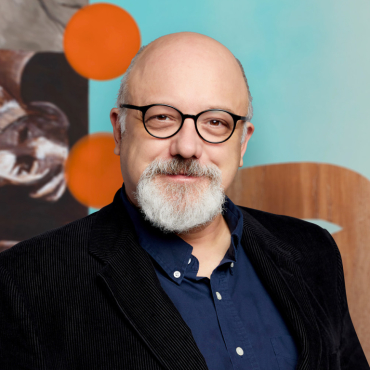
Praveen Gupta serves as Adjunct Faculty at San José State University's Lucas College and Graduate School of Business, teaching innovation courses. Founder of the Center for Innovation Science and Applications at Illinois Institute of Technology, he brings industry experience from Motorola, AT&T Bell Labs, and Prysm. Research spans innovation science, business applications, and technology development, with editorial leadership of the International Journal of Innovation Science. Authored works include Global Innovation Science Handbook and The Innovation Solution . Courses focus on innovation management frameworks and business transformation strategies. Recent publications address advanced cancer models and sustainable manufacturing.
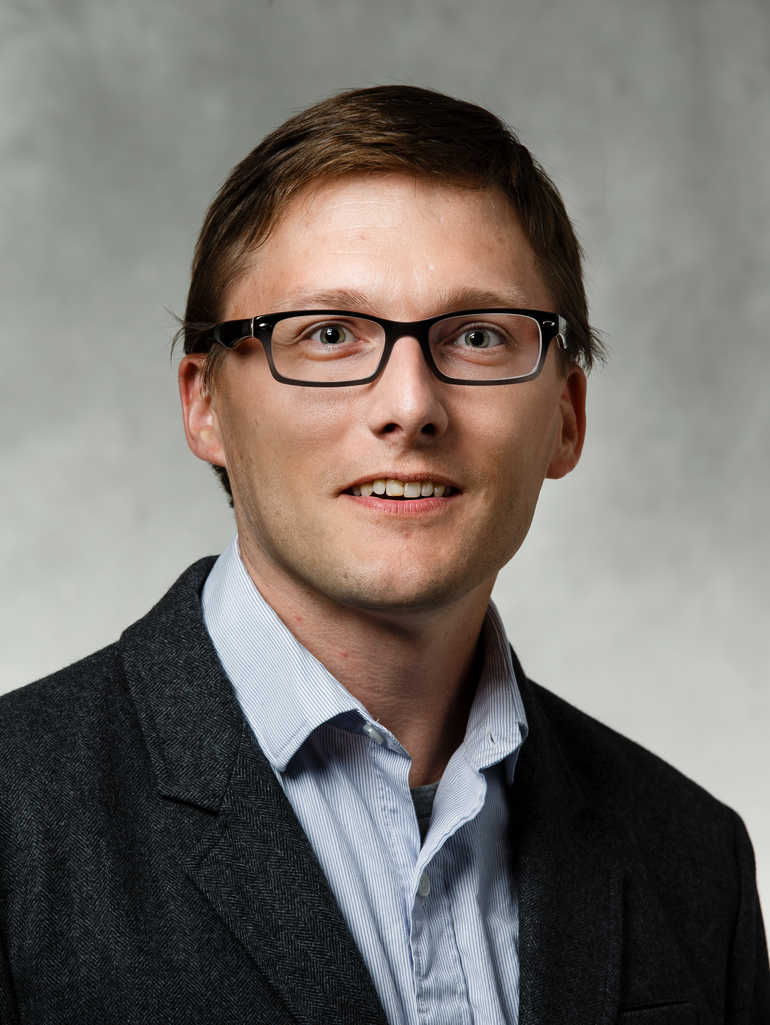
James Crossley is a Professor of Animation at Savannah College of Art and Design (SCAD) since 2013. His career spans over two decades in animation, with key roles at Sony Pictures Imageworks and Disney. He has supervised major animated films such as Hotel Transylvania , The Smurfs , and Alice in Wonderland , focusing on 3D character animation, rigging, and animation tools development. He holds a Post Graduate Certificate in Computer Animation (Sheridan College, 1995) and a Diploma in Animation–Classical (Sheridan College, 1994). Research Interests: Crossley specializes in integrating technical and creative aspects of animation, including character performance development, animation pipeline optimization, and collaboration between animators and technical teams. His work emphasizes storytelling through visual effects and dynamic character movements in feature films and video games. Awards: Visual Effects Society (VES) Nomination for Outstanding Animation in an Animated Feature Motion Picture ( Hotel Transylvania ) VES Nomination for Outstanding Animated Character in an Animated Motion Picture ( Surf’s Up ) Advising/Grants: No formal advisees or grants mentioned in the provided materials. His contributions are primarily through industry projects and publications. Labs/Teams: Led animation teams at Imageworks and Disney, overseeing crews of up to 97 animators. Key projects include Cloudy with a Chance of Meatballs , Prince Caspian , and Brother Bear .
John Cummins is an Academic Professor of Foundation Studies at Savannah College of Art and Design (SCAD) since August 2021. He holds an M.F.A. in Motion Arts from Southwest University of Visual Arts and a B.A. in Graphic Communications from Point Loma Nazarene University. His career spans over two decades in education and the visual effects industry. **Education:** M.F.A., Motion Arts, Southwest University of Visual Arts B.A., Graphic Communications, Point Loma Nazarene University **Research Interests:** Cummins specializes in animation, digital arts, and visual effects education. His teaching focuses on Adobe software (After Effects, Photoshop), animation principles, digital compositing, and industry practices. He emphasizes practical skills and creative problem-solving, as evidenced by his curriculum development and student achievements, including regional and national ADDY awards. **Professional Contributions:** He has presented “Working in the Entertainment Industry” at Point Loma Nazarene University in 2000. His professional work includes visual effects for major film and TV projects such as Minority Report and Power Rangers series. He has also participated in faculty exhibitions at Southwest University of Visual Arts. **Advising and Mentorship:** Mentored students in animation and digital arts, leading to student success in competitions. Developed curricula to meet accreditation standards and industry needs. **Industry Experience:** Cummins has worked as a lead animator, voiceover actor, and visual effects artist across various studios, contributing to both independent and blockbuster projects.
Peter Gregg is an Associate Professor and Department Chair in the Department of Digital Media Arts at the University of St. Thomas, College of Arts and Sciences. He coordinates Digital Media Arts programs and teaches courses in media production, analysis, and film studies. His professional background includes media production across film, audio, and web design, alongside leadership in DEI initiatives and award-winning student media projects through TommieMedia. Gregg’s research focuses on emerging media, parasocial interaction, media literacy, and the intersection of media with cultural and societal issues like prejudice and sports analytics. He has held leadership roles in the National Audio Theatre Festivals (NATF), including vice-president and president, advocating for audio as an art form and advancing diversity initiatives. His work bridges theoretical scholarship with practical media production, emphasizing inclusive pedagogy and storytelling. Notable scientific awards include the National Communication Association’s Charles H. Woolbert Research Award for his paper on the Parasocial Contact Hypothesis, recognition by the Society for American Baseball Research as one of the fifty most influential papers, and a cinematography award for his webseries Forsythia . His audio drama The Chronos Paragon won the 'Best New Original Ongoing Production' at the Audio Verse Awards and was a NATF HEAR Now festival selection. Gregg advises the UST Film Society and collaborates with Prof. Keston and Dr. Neuzil on DEI frameworks in media production. He oversees TommieMedia’s nationally recognized student content and has completed the Inclusive Classroom Institute certification (2017). His teaching spans foundational courses like Digital Imagery and Sound and advanced topics such as Advanced Media Production , integrating media technology with critical analysis. He is affiliated with the Society of American Baseball Researchers and contributes to interdisciplinary projects like Honors Hollywood’s Reporters (Summer 2025) and Motion Graphics and Digital Visual Effects (Fall 2025). His research has been published in journals such as Communication Monographs and Journal of Homosexuality , and in edited volumes including Mass Media Effects .
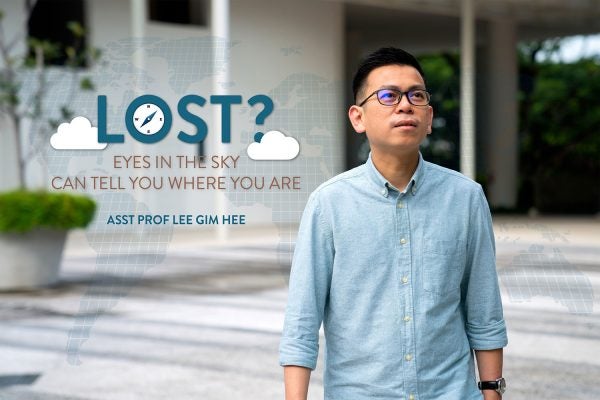
Gim Hee Lee is an Associate Professor at the Department of Computer Science, National University of Singapore (NUS) School of Computing. He heads the Computer Vision and Robotic Perception (CVRP) Laboratory and holds affiliations with the NUS Graduate School for Integrative Sciences and Engineering (NGS) and the NUS Institute of Data Science (IDS). Previously, he was a researcher at Mitsubishi Electric Research Laboratories (MERL) in the USA and worked at DSO National Laboratories in Singapore. Education Dr.sc. in Computer Science from ETH Zurich M.Eng. in Mechanical Engineering from National University of Singapore B.Eng. in Mechanical Engineering (1st Class Honors) from National University of Singapore Research Interests Professor Lee's research focuses on Computer Vision , Robotic Perception , and Machine Learning , with specialization in dynamic 3D scene reconstruction, event camera applications, and cross-view geo-localization. His work bridges theoretical advances with real-world applications in autonomous systems and augmented reality, particularly through neural scene representations and geometric computer vision techniques. Scientific Awards Faculty Teaching Excellence Award (AY 2018/19 and AY 2017/18) CVPR 2014 Doctoral Consortium Travel Award Finalist for IROS 2012 Best Paper Award Finalist for IROS 2012 Best Video Award Advising and Service Professor Lee serves as Associate Editor for IJCV and has held Area Chair positions for major conferences including CVPR, ICCV, ECCV, and NeurIPS. He chaired Program Committees for 3DV 2022 and served as Demo Chair for CVPR 2023. His research on the Cross-View Matching Network (CVM-Net) demonstrated real-time ground-to-aerial geo-localization in moving vehicles, establishing a benchmark for subsequent research in this field. Laboratories He leads the Computer Vision and Robotic Perception (CVRP) Laboratory at NUS, which develops cutting-edge solutions for 3D scene understanding, event-based vision, and robotic navigation. The lab's work includes acquiring high-quality datasets for dynamic scene reconstruction and advancing neural representations for real-world applications.
Dr. Nan Ye is a Senior Lecturer in Statistics and Data Science at the University of Queensland's School of Mathematics and Physics. His research focuses on machine learning, statistics, and optimization, with contributions to sequential decision making, weakly supervised learning, and probabilistic graphical models. He holds a PhD in Computer Science from the National University of Singapore (NUS) and double first-class honors in Computer Science and Applied Mathematics from NUS. Previously, he held postdoctoral positions at QUT, UC Berkeley, and NUS. Dr. Ye teaches advanced courses such as STAT3007/7007 Deep Learning, covering topics from foundational machine learning to state-of-the-art deep learning architectures and applications. His work has been published in top venues like NeurIPS, ICML, and UAI, earning awards including the IJCAI-JAIR Best Paper Prize (2022) and UAI Best Student Paper Award (2014). His research interests span theoretical and applied machine learning, including reinforcement learning, optimization algorithms, and their applications in fields like healthcare and environmental science. He actively supervises students in these areas and collaborates on interdisciplinary projects. Dr. Ye's academic profile includes extensive contributions to open-source tools and educational materials, reflecting his commitment to advancing both research and pedagogy in data science.
Professor Michael Bruenig is the Head of School for the School of Electrical Engineering and Computer Science (EECS) at The University of Queensland (UQ), a position he has held since 2016, with an interim role as Head of UQ’s Business School from 2019–2021. He previously led the CSIRO’s $140m National Research Flagship on Digital Productivity and co-founded Data61. With a PhD from RWTH Aachen University, his career spans automotive R&D in Germany, Silicon Valley, and Australia. He holds a Master’s and PhD in Science from RWTH Aachen University, Germany. His research focuses on strategic innovation, entrepreneurship, and translating research into industry impact through ventures like UQ Cyber, the National Industry 4.0 Energy Testlab, and the QLD Government AI Hub. He pioneered UQ’s Bachelor of Computer Science, Master of Cyber Security (based on US NICE Framework), and online Master of Business Analytics. His work spans robotics, sensor networks, and terahertz technology, with recent articles addressing lidar-based navigation, terahertz imaging, and cybersecurity. He advises startups and sits on boards, driving commercialization and spin-offs. Key initiatives include UQ Innovate and UQ Ventures, fostering student and faculty entrepreneurship. Labs and teams include collaborations on AI, Industry 4.0, and energy systems. His leadership emphasizes cross-disciplinary projects and curriculum innovation in tech and data fields.
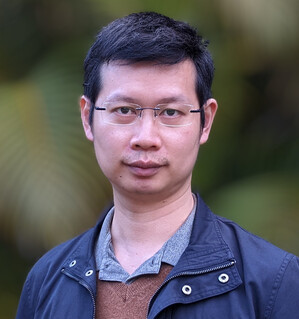
Dr. Kien Nguyen Thanh is a Senior Research Fellow at the School of Electrical Engineering & Robotics, Faculty of Engineering, Queensland University of Technology (QUT). He holds a Doctor of Philosophy from QUT and specializes in Machine Learning, Computer Vision, and Artificial Intelligence with applications in Biometrics, Surveillance, and Remote Sensing. His research focuses on Physics-informed Machine Learning, Semantic Segmentation, and Satellite Imagery analysis. Key research interests include adversarial attacks in surveillance systems, aerial-ground person re-identification, and integrating machine learning with remote sensing for urban sustainability. He has led projects funded by Australian Competitive Grants, such as 'Human-Machine Teaming in a Communications-denied Environment' (DP250103634). Dr. Thanh supervises PhD students on topics like multimodal co-learning in remote sensing, hyperspectral learning, and AI for aerial surveillance. He has authored over 50 publications, including influential papers on physics-informed computer vision and deep learning for iris recognition. Education: PhD in Engineering (QUT) Grants: DP250103634 (CAT 1 - Australian Competitive Grant) Labs/Teams: Involved in robotics and AI initiatives at QUT's Centre for Robotics. His work bridges theoretical AI advancements with practical applications in healthcare, environmental monitoring, and security systems.
Xiatian Zhu is a Senior Lecturer at the University of Surrey's Faculty of Engineering and Physical Sciences, affiliated with the Surrey Institute for People-Centred AI and the Centre for Vision, Speech and Signal Processing (CVSSP). He holds a PhD from London and is a Fellow of the Higher Education Academy (FHEA). His research focuses on scalable machine learning, including self-supervised learning, multimodal GenAI, and computer vision applications for autonomous systems. Dr. Zhu's research interests span machine learning, computer vision, and multimodal generative AI, with emphasis on autonomous driving, 3D object detection, and domain adaptation. His work integrates vision-language models for open-set recognition and leverages novel neural architectures for real-time applications. His publications demonstrate a strong focus on autonomous driving perception, 3D generative modeling, and domain-agnostic AI. Key trends include multi-sensor fusion, self-supervised representation learning, and computationally efficient transformers. Recent works also explore audio-visual synthesis and adversarial robustness. Awards: 2016 Sullivan Doctoral Thesis Prize (Best UK Computer Vision Doctoral Thesis) He leads the X-Up Lab and collaborates extensively on grants related to AI safety, efficient 3D generation, and multimodal systems. His team focuses on real-world applications in intelligent transportation and human-centred AI.
Richard Bowden is a Professor of Computer Vision and Machine Learning at the University of Surrey's School of Computer Science and Electronic Engineering, leading the Cognitive Vision Group within the Centre for Vision, Speech and Signal Processing (CVSSP). He also serves as Associate Dean for postgraduate research. His research focuses on computer vision applications for human interaction analysis, including sign language recognition, gesture detection, lip-reading, and autonomous systems. He has secured over 40 research grants from UK, EU, and industrial sources, with projects spanning cognitive robotics, activity recognition, and fundamental vision algorithms. Educations: BSc (University of London, 1993), MSc (University of Leeds, 1995), PhD (Brunel University, 1999). Research interests include deep learning, computer vision, and AI with applications in human-centric technologies. His work has been recognized through awards including the Sullivan Thesis Prize (2000), Royal Society Leverhulme Fellowship (2013), and IAPR Fellowship (2016). He has authored over 200 publications and serves on editorial boards for top journals like IEEE TPAMI. Notable contributions include the SLRTP Sign Language Translation Challenge, SMILE sign language assessment system, and advancements in monocular depth estimation. Advising: Supervised over 20 PhD students, with current advisees including Jamie Spencer Martin and Cihan Camgoz. His research teams collaborate on projects like the £8.45m SignGPT initiative for Deaf community AI tools and autonomous vehicle navigation systems. He leads the CVSSP lab, actively involved in international conferences like ICCV and BMVC.
Dr. Jean-Yves Guillemaut is a Senior Lecturer in 3D Computer Vision and Postgraduate Research Director at the Centre for Vision, Speech and Signal Processing (CVSSP) within the School of Computer Science and Electronic Engineering at the University of Surrey. His research focuses on 3D reconstruction of complex dynamic scenes, particularly addressing challenges with glossy materials and uncontrolled outdoor environments. He collaborates with industry to apply his work in AR/VR, immersive content production, and free-viewpoint video. Education: He holds an MEng (hons), PhD, and is a member of professional bodies including MIEEE, MBMVA, and FHEA. His technical expertise spans computational photography, lightfield imaging, and artificial intelligence. Current PhD students: Matthew Bailey, Yue Zhang, Gianmarco Addari Laboratory affiliations: CVSSP Research interests include scene modeling from multi-view video, dynamic scene reconstruction, and applications in creative industries. Recent projects involve developing algorithms for illumination estimation, pedestrian tracking, and neural rendering. Grants and collaborations are centered on industry partnerships enhancing creative technology sectors. Future work aims to expand outdoor scene modeling and AI-driven medical imaging applications.
Prof. AF (Frank) van der Stappen is a Professor of Robotics and Automation at Utrecht University's Faculty of Science, Department of Information and Computing Sciences. He also holds a position at University College Roosevelt. His research focuses on robotics (grasping, manipulation, motion), algorithmic automation, simulation, computational geometry, and computer animation. He has been an IEEE Fellow since 2017. His work emphasizes geometric computing and its applications in automation, with contributions to form-closure grasping, path planning, and virtual character animation. Education: PhD in Motion Planning from Utrecht University (1994), MSc in Distributed Data Structures from Eindhoven University of Technology (1988). Research Interests: Robotics (manipulation/grasping), algorithmic automation, geometric algorithms, computer animation, and crowd simulation. His work bridges theoretical foundations with practical applications in manufacturing, virtual environments, and agricultural robotics. Awards: IEEE Fellow (2017). Advisees/Grants: No explicitly listed students, but extensive collaborative work with researchers like Elon Rimon, Ken Goldberg, and Mark Overmars. His research includes grants related to motion planning, caging, and automation. Labs/Teams: Involved in geometric computing and robotics teams at Utrecht University, contributing to Game Research themes and interdisciplinary projects.
Miles Hansard is a Senior Lecturer in the School of Electronic Engineering & Computer Science at Queen Mary, University of London. He is affiliated with the Vision Group and the ARQ Centre for Advanced Robotics. His research focuses on computer vision, robotics, and 3D imaging technologies, including depth cameras, binocular vision, and scene reconstruction. He has contributed to projects like the GRIP Software Framework for robotics integration and Gaussian Process models for UAV localization. His work spans medical imaging applications, such as analyzing eye movements after vision loss, and explores discomfort factors in stereoscopic displays. Hansard has published extensively in journals like IEEE Transactions and the Royal Society Proceedings, and his research often addresses sensor fusion, calibration, and computational photography. He holds a primary email address at miles.hansard@qmul.ac.uk.
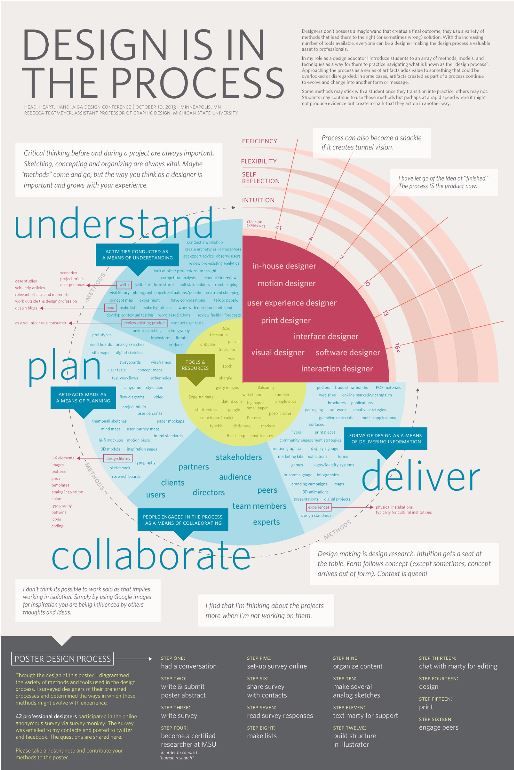
Rebecca Tegtmeyer is an Associate Professor in the Department of Art, Art History, and Design at Michigan State University (MSU), holding tenure since 2018. She previously served as Associate Chair of the department (2020–2023) and has been a faculty member since 2009. Her academic roles include teaching undergraduate and graduate courses in graphic design, typography, motion design, and user experience within both the BFA in Graphic Design and the BA in Experience Architecture programs. Education: BFA in Visual Communication, University of Kansas (1999) Master of Graphic Design (MGD), NC State University College of Design (2009) Research Interests: Her work bridges design practice and education, focusing on collaborative learning, equity in design curricula, and critical making. Notable projects include Sewn Data Visualization addressing labor statistics and reproductive rights, and co-authorship of Collaboration in Design Education (2020). She investigates pedagogical frameworks that prioritize student experience while challenging patriarchal systems in design production. Professional Contributions: Tegtmeyer has presented at leading conferences (UCDA, DRS, AIGA) and contributed to peer-reviewed journals. Her work has been exhibited internationally, including solo shows at the University of Arkansas and group exhibitions at the Eli and Edythe Broad Art Museum. She serves on AIGA’s Design Educators Community Steering Committee and organized the {MODE} Motion Design Education Summit. Awards & Grants: Awards include the CALURI Research Grant (2020), College of Arts and Letters Summer Fellowship (2017), and recognition in the Graphis Design Annual (2014). She secured grants for projects like the Hayti Central School Alumni Community research and digital humanities initiatives. Advising & Service: Supervised over 15 graduate and undergraduate students, mentoring on projects ranging from interactive prototyping to data visualization. Served on MSU’s Faculty Senate, College Undergraduate Committee, and departmental leadership roles. Organized visiting artist lectures, including speakers from isometric studio and MK12. Labs & Initiatives: Co-directed the MATRIX: Center for Digital Humanities’ Visual Interaction Design Projects (2012–2015). Led the ‘Values of Design Education’ workgroup addressing post-pandemic pedagogical strategies. Currently coordinates the Graphic Design Program and contributes to the Experience Architecture curriculum development.
Josef Kittler is a Professor at the University of Surrey, affiliated with the School of Computer Science and Electronic Engineering and the Centre for Vision, Speech and Signal Processing (CVSSP). He holds editorial roles in journals like IEEE Transactions on Pattern Analysis and Machine Intelligence and serves on the IAPR's KS Fu Prize Committee. His research focuses on pattern recognition, computer vision, and applications in system identification, medical diagnosis (ECG), and automatic inspection. He has received prestigious awards, including the Honorary Medal from the Czech Technical University. His work spans theoretical advancements and practical implementations, with notable contributions to multimodal tracking, deep learning, and fusion techniques. Education & Roles: Research Assistant, Engineering Department, University of Cambridge (1973–75) SERC Research Fellow, University of Southampton (1975–77) Royal Society European Research Fellow, Paris (1977–78) IBM Research Fellow, Balliol College, Oxford (1978–80) Principal Research Associate/Scientific Officer, Rutherford Appleton Laboratory (1980–85) Research Interests: Kittler's work emphasizes theoretical and applied aspects of pattern recognition, including computer vision applications in security, healthcare, and robotics. His recent publications address challenges in multimodal tracking, self-supervised learning, and fusion algorithms. Awards: Best Paper Awards from Pattern Recognition Society, British Machine Vision Association, and IEE Honorary Medal (Czech Technical University, 1995) Advising & Grants: While specific student/advisor details aren’t listed, his leadership in CVSSP and editorial roles indicates extensive mentorship and collaborative projects. His research has been supported by grants enabling advancements in AI and computer vision. Labs & Teams: He leads the CVSSP, a world-renowned center for vision, speech, and signal processing research, fostering interdisciplinary projects in AI and multimedia systems.