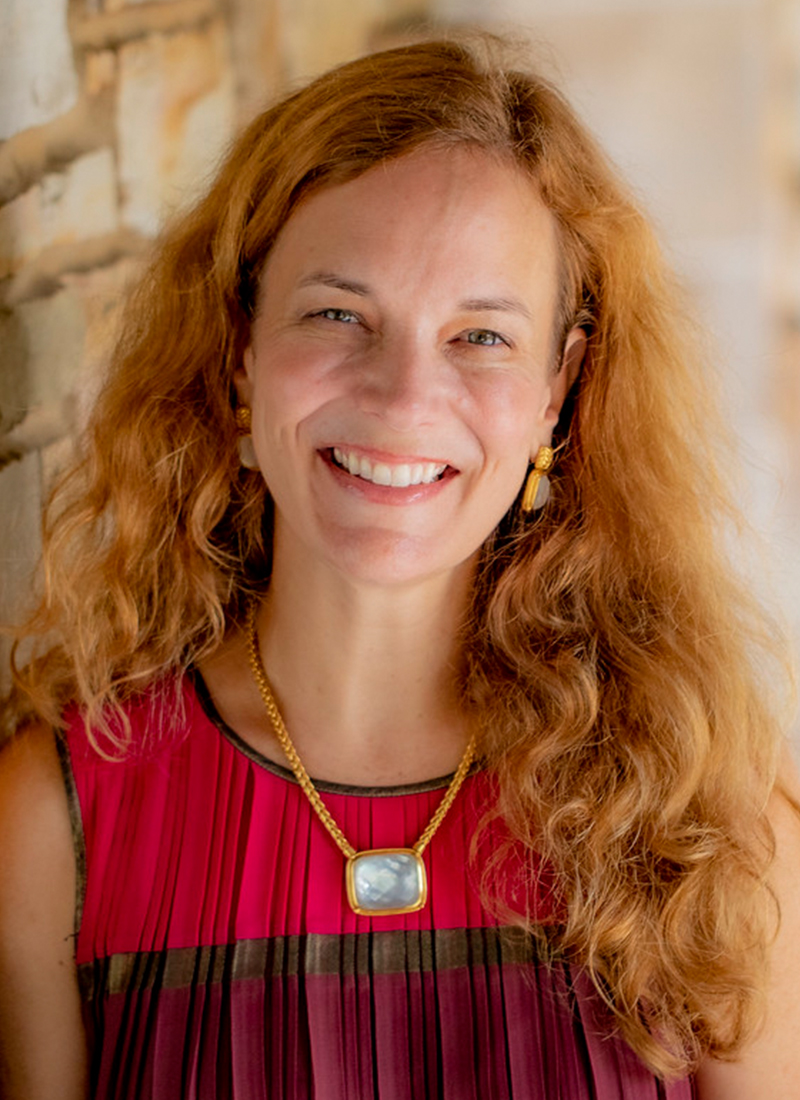
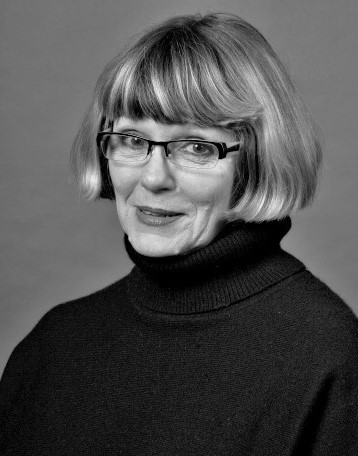
Chris Gallagher is the Chair of the Department of Animation at the Savannah College of Art and Design (SCAD). As a Professor, he plays a pivotal role in shaping the academic and creative direction of one of the top-ranked animation programs in the U.S. He actively participates in faculty recruitment, as evidenced by his involvement in welcoming Kwame Nyong'o and Jaime Castañeda, both emphasizing industry experience and storytelling depth. Gallagher supports innovative projects like Bearly , a student-led animated musical film, and contributes to events such as SCAD AnimationFest, highlighting his commitment to bridging academic training with professional practice. The SCAD Department of Animation, under Gallagher's leadership, provides students with cutting-edge resources including motion capture systems and high-performance digital workstations. His philosophy aligns with educators who prioritize holistic skill development, encouraging students to embrace diverse challenges in animation rather than specialize narrowly. This approach is reflected in the success of recent graduates now employed at major studios like Pixar and Walt Disney Animation Studios.
Betsy Sanders is a Professor of Computer Science at Rhodes College, specializing in computer graphics and virtual environments. She has held this position since Fall 2007 and teaches courses ranging from introductory programming to advanced topics in artificial intelligence and operating systems. Her research focuses on improving human interaction within virtual environments, particularly through immersive technologies like head-mounted displays and gesture-based interfaces. She leads a weekly research seminar and has contributed to projects such as the Guru tutoring system, which integrates animated agents into educational software. Dr. Sanders earned a B.S. in Mathematics and Computer Science from Millsaps College, followed by M.S. and Ph.D. degrees in Computer Science from Vanderbilt University. Her work spans desktop and immersive virtual environments, emphasizing spatial cognition, navigation techniques, and user-centered design. She has published extensively on locomotion methods in VR, including studies on walking-in-place interfaces and gesture-based interaction. Education: B.S. Millsaps College, M.S./Ph.D. Vanderbilt University Research Themes: Virtual Environments, Human-Computer Interaction, Educational Technology Lab: Active projects include Guru tutoring system and VR navigation optimization Outside academia, she resides in Midtown Memphis with her family, balancing hobbies like antique shopping and home renovation with her academic commitments.
Peter Keir McMaster is a Professor in the Department of Kinesiology at McMaster University, specializing in biomechanics and human movement science. His research spans musculoskeletal health, carpal tunnel syndrome, rehabilitation engineering, and workplace ergonomics.
Nathan Cordova is a Lecturer at Stanford University in the Department of Art and Art History, teaching darkroom photography, concepts, and theory. He earned his MFA in Photography, Video and Imaging from the University of Arizona in 2024. Education: MFA (University of Arizona, 2024), Photographic Innovations Workshop (Anderson Ranch, 2022), Core Bookbinding Certification (San Francisco Center for the Book, 2019) His research interests span somatic practices, queer theory, glitch aesthetics, and border discourse, often blending digital media with physical interventions. Current projects like Ghosts and Shadows explore human-border interactions, supported by the Mellon-Fronteridades Fellowship. Nathan's artistic practice includes photographic works, video installations, and self-published zines that interrogate identity fluidity, bodily autonomy, and institutional critique. His Feeling a Future Coming thesis project recontextualizes digital imagery through material transformations and queer somatic engagement. Scientific Awards: 2024: Lenscratch Student Prize Top 25 2023: Mellon-Fronteridades Fellowship 2023: Helen Gross Award 2022: GPSC Travel Grant 2022: Medici Scholar Award 2022: Anderson Ranch Scholarship
Jenna Caravello is an Assistant Professor in the Department of Design Media Arts at UCLA. She holds a BFA from the School of the Art Institute of Chicago and an MFA in Experimental Animation from California Institute of the Arts. Her interdisciplinary practice explores narrative in digital memory through animation, VR, motion capture, and video game platforms, focusing on themes like game logic, science-fantasy world-building, and techno-mysticism. Her work has been exhibited globally at venues like the Melbourne International Animation Festival, National Taiwan Arts Education Center, and Slamdance. Notable projects include CANTO IX (a three-channel video game installation), Amber Row (a grief-themed video game), and lovelike (a motion-capture VR performance). She has collaborated with artists like Celia Hollander on audiovisual performances such as Air Shape Index . Recipient of prestigious awards including the Princess Grace Award and Jules Engel Award, her work has been featured in Noisey, NPR, and The Fader. Supported by grants from the Society of Hellman Fellows and UCLA School of Arts + Architecture, her research interrogates the intersections of computer culture, folklore, and analog experiences.
Dr. Antonio Padilha Lanari Bo is an Honorary Research Fellow at the School of Electrical Engineering and Computer Science, The University of Queensland. Previously, he held a tenured position as an Assistant Professor in Electrical Engineering at the University of Brasília (2011–2019), where he led Project EMA (Empowering Mobility and Autonomy), a team competing in the Cybathlon competition (2016, 2020). His research focuses on healthcare technology, particularly neuroengineering, robotics, control systems, and virtual reality for rehabilitation and assistive devices. His work integrates tools like wearable sensors, electrical stimulation, and closed-loop control strategies to address motor disabilities, such as spinal cord injuries and Parkinson’s Disease. Education: BEng and MSc, University of Brasília, Brazil (2004, 2007) PhD, University of Montpellier, France (2011) His research interests emphasize developing technologies for rehabilitation, including FES-based cycling systems, tremor attenuation, and exoskeletons. He has authored/co-authored over 75 peer-reviewed publications, including awards from IFAC, IFESS, and MICCAI. His work bridges experimental research with clinical collaboration, aiming to improve mobility and autonomy for individuals with motor impairments. Recent publications highlight advancements in VR-based rehabilitation, cybersecurity in healthcare XR applications, and soft robotics for hand function restoration. His contributions span biomechanical modeling, sensor development, and human-robot interaction. Awards: IFAC Awards, IFESS Awards, MICCAI Awards Labs/Teams: Project EMA, collaborations with rehabilitation centers and industry partners
Eduardo A. Coello Perez is a Researcher at Oak Ridge National Laboratory (ORNL), where he has held a JUNIOR position since 2022. Previously, he was a POSTDOC at Lawrence Livermore National Laboratory (LLNL, 2019) and Technische Universität Darmstadt (2016-2019). His research focuses on nuclear physics, quantum computing applications, and effective field theories for nuclear systems. Key areas include collective excitations in atomic nuclei, quantum algorithms for fluid dynamics, and neutrinoless double-beta decay studies. Collaborations include the LZ and XENON collaborations. His work bridges theoretical nuclear physics with computational methods, emphasizing precision calculations and interdisciplinary approaches. Notable contributions include studies on rotational bands in odd-mass nuclei and the integration of quantum computing resources into high-performance computing ecosystems. His publications span journals like Physical Review C , Journal of Physics G , and Future Generation Computer Systems .
Kevin A. Mazurek, Ph.D., is an Adjunct Assistant Professor in the Department of Neuroscience at the University of Rochester School of Medicine and Dentistry. He holds a Ph.D. in Electrical Engineering from Johns Hopkins University (2013) and a B.S. in Electrical Engineering from Brown University (2008). His research focuses on the neural mechanisms controlling voluntary movements and developing rehabilitative solutions for neurologic diseases. He has held postdoctoral fellowships in Marc Schieber's laboratory, studying cortical communication and intracortical stimulation. Mazurek's interdisciplinary work bridges neuroscience, biomedical engineering, and electrical engineering. He has received awards including the NIH NINDS F31 Fellowship and the CTSI KL2 Award. His current research explores how neural activity differs when performing movements under varying sensory and contextual instructions. He is affiliated with the Cognitive Neurophysiology Laboratory and has contributed to over 25 peer-reviewed publications. Mazurek’s long-term goal is to leverage brain-machine interfaces and neural stimulation to restore motor function in impaired individuals. Education: Ph.D., Electrical Engineering, Johns Hopkins University, 2013 M.S., Electrical Engineering, Johns Hopkins University, 2010 B.S., Electrical Engineering, Brown University, 2008 Research Interests: Neural control of voluntary movements Rehabilitation engineering Brain-machine interfaces Intracortical microstimulation Spinal cord injury recovery Sensory-motor integration Key Awards: KL2 Scholar Award, University of Rochester CTSI (2018) NINDS F32 NRSA Fellowship (2014–2018) Outstanding Postdoctoral Researcher Award (2017) Labs & Teams: Cognitive Neurophysiology Laboratory, Schieber Lab (as former postdoc).
Dr. Judith Gentle is a Senior Lecturer in Psychology at the University of Surrey's School of Psychology (Faculty of Health and Medical Sciences). She holds a PhD from Oxford Brookes University and is a Fellow of the Higher Education Academy (FHEA). Her research focuses on Developmental Coordination Disorder (DCD), examining its psychosocial impact, motor coordination challenges, and educational support strategies. She directs the Motor Development and Impact (MoDI) Lab and convenes modules on global challenges in psychology and cognitive research methods. Key achievements include publishing on DCD's effects in higher education, adult maths performance, and sensory-motor integration deficits. Collaborations span institutions like Brunel University and the Open University. Teaching responsibilities include developmental psychology and neurodevelopmental disorders. Education : BSc (Hons) Psychology, Childhood and Ageing (Reading University, 2009) MRes Psychological Research (Oxford Brookes University, 2010) PhD in Psychology (Oxford Brookes University, 2015) Research Projects : Impact of late DCD diagnosis in adults Teaching toolkit for DCD students Stereotypes of coordinated movement Awards : ESRC Research Studentship FHEA Labs/Teams : Director of MoDI Lab.
Professor Lois Weaver is a Professor of Contemporary Performance at Queen Mary University of London, holding a half-time contract. She specializes in live art, solo performance, feminist and lesbian theatre, ageing, and performance's role in public engagement. Her academic roles include teaching modules in performance composition and independent projects, emphasizing collaboration and professional skills. Weaver’s research focuses on creating inclusive public dialogue through methods like Long Tables and Care Cafés, challenging institutional hierarchies. Her awards include the Guggenheim Fellowship and the Queen Mary Hawking Award for public engagement. Education: BA in Theatre Studies from Radford University, Virginia USA. Key research projects include the 'Public Address Systems' initiative, exploring dialogue frameworks, and 'Performance as a Tool for Stroke Recovery,' which combines technology with therapeutic performance. She co-founded Split Britches Company and has collaborated internationally with institutions like the Barbican and the Wellcome Trust. Notable performances include Last Gasp , Unexploded Ordnances , and Ruff , addressing themes of ageing, stroke recovery, and human rights. Her teaching emphasizes practice-based learning and artist livelihood strategies, while her activism includes work with the Live Art Development Agency and the National Trust. Grants include £183k from AHRC/EPSRC for 'Democratising Technology' and Wellcome Trust funding for public engagement projects. Weaver’s legacy spans four decades of groundbreaking performance, activism, and academic innovation.
Ardeshir Hanifi is a Researcher in the Department of Fluid Mechanics at KTH Royal Institute of Technology in Stockholm. His work focuses on fluid dynamics, aerodynamics, and turbulence, particularly in the context of wind turbines, boundary layer stability, and transition mechanisms. He actively contributes to the Swedish Aerospace Research Center (SARC) and coordinates ERCOFTAC's Special Interest Group on Transition Mechanisms (SIG 33). His research interests include computational fluid dynamics (CFD), flow control strategies, and the application of optimal control theory to delay transition in aerodynamic systems. Hanifi teaches courses such as Advanced Compressible Flows, Computational Fluid Dynamics, and Wave Motions and Hydrodynamic Stability. His publications emphasize DNS of turbulent flows, free-stream turbulence effects, and the dynamics of rotating blades. Key research areas span boundary layer receptivity, wind turbine aerodynamics, and the stability of low-pressure turbine systems. His work bridges theoretical analysis, numerical simulations, and experimental validation, addressing challenges in aerospace and renewable energy applications.
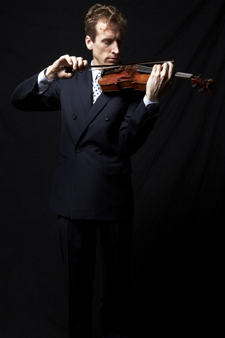
Canadian violinist and educator Guillaume Tardif is a Professor and String Area Coordinator at the Department of Music, University of Alberta . Holding a Doctor of Musical Arts from Eastman School and an MBA in Arts Management, he combines performance excellence with interdisciplinary research. Eastman School of Music (DMA) Conservatoire du Québec (DESM 2) University of Alberta (MBA) His research interests span violin performance, string pedagogy, chamber music, and the intersection of music with biomechanics, business, and cultural studies. Notable projects include the SSHRC-funded Genius of the Violin documentary and Dare to Discover series with the Enterprise Quartet. Recent research trends focus on violin literature analysis, biomechanical studies of performance techniques, and historical performance practices. His collaborations frequently involve accordionist Michael Bridge and clarinetist Kornel Wolak, exploring Central European folk inspirations. Guillaume serves as a grants recipient from agencies like Alberta Foundation for the Arts and Edmonton Community Foundation. As an adjudicator , he contributes to international music competitions.
Dr. Chris Phillips is a Reader in the School of Electronic Engineering and Computer Science at Queen Mary University of London. He holds a BEng in Telecommunications Engineering and a PhD in Telecommunications from Queen Mary. His roles include Director of Recruitment and Admissions for EECS, Programme Director of Computer Systems Engineering, and member of the Networks Research Group. His research focuses on Internet Technologies, Optical Networking, Network Security, and Energy-Efficient systems, with emphasis on resilient communication, wireless sensor networks, and nomadic computing. Education: BEng Telecommunications Engineering (1st Class Honours), Queen Mary University of London (1984–1987); PhD in Telecommunications, Queen Mary University of London (1987–1991). Professional experience includes roles at Bell Northern Research, Siemens–Roke Manor Research, Nortel Networks, and academic leadership at Queen Mary since 2000. He has supervised over 20 PhD students and contributed to multiple research grants, including projects on energy management in wired networks and resilient overlay systems. Research Interests: Internet protocols, optical networking, network security, energy efficiency, wireless sensor networks, and resilient communication systems. His work spans theoretical advancements and practical implementations, with applications in healthcare, agriculture, and vehicular systems. Recent publications explore IoT optimization, cooperative routing in MANETs, and energy-efficient optical networks. Grants and Awards: Secured funding from EPSRC, Royal Society, Nortel, Nokia, and the UK-China Government Office for Science. Notable grants include the EPSRC-funded project on machine learning in optical networks and Royal Society collaborations on intelligent connection management. Teaching: Currently teaches Computer Architecture and Networks (Postgraduate) and Microprocessor Systems Design (Undergraduate). Previously lectured on topics like MPLS networks, G-MPLS, and real-time transport protocols. His teaching integrates practical lab work with theoretical frameworks, emphasizing hands-on experience with microcontrollers and network protocols. Labs/Teams: Active member of the Networks Research Group, collaborating with institutions like Technical University of Denmark and University of Girona. His research team focuses on developing innovative solutions for network resilience, energy efficiency, and distributed systems.
Dr. Sabina Gheduzzi is a Senior Lecturer in the Department of Mechanical Engineering at the University of Bath, with affiliations to the Centre for Bioengineering & Biomedical Technologies and the Centre for Integrated Materials, Processes & Structures (IMPS). Her research focuses on biomechanics and biomaterials, particularly in orthopaedic applications such as hip/knee replacements, fracture healing, and spinal deformities. She holds a degree from the University of Modena, Italy (1995) and a PhD in Mechanical Engineering from the University of Bath (2001), with prior academic experience at the University of Bristol. Her work combines engineering principles with medical challenges, including the design of implants, biomaterials evaluation, and ultrasound applications for tissue stimulation and diagnostics. She collaborates across disciplines, involving orthopaedics, physics, biology, and electrical engineering. Key projects include spinal injury mechanisms in rugby, cervical spine biomechanics under impact, and finite element modeling of vertebral behavior. Dr. Gheduzzi has published extensively on topics like intervertebral disc mechanics, vertebral body failure prediction, and osteochondral tissue regeneration. Her research contributes to UN Sustainable Development Goals related to health and well-being through advancements in medical technologies and injury prevention. Her grants and projects include the RAEng Ingenious Award (2020-2021) and collaborations with industry (e.g., Bray Group Limited). She is also engaged in pedagogical initiatives, such as enhancing group work experiences in engineering education.
Karen Chen is an Associate Professor in the Edward P. Fitts Department of Industrial and Systems Engineering at North Carolina State University, part of the College of Engineering. She holds affiliations with the NC Occupational Safety and Health Education and Research Center (ERC) and collaborates with The Ergonomics Center of North Carolina. Her lab focuses on Virtual and Augmented Reality applications for training, healthcare, and occupational safety. Education: Ph.D., MS, and BS in Biomedical Engineering from University of Wisconsin-Madison (2009-2015). Postdoctoral research at Northeastern University's Healthcare Systems Engineering Institute. Key awards include the Goodnight Early Career Innovators Award and NSF/NIOSH funding. Research interests center on human-technology interactions in VR/MR environments, particularly for training, healthcare, and workplace safety. Recent work explores scale cognition in educational VR, embodiment effects on cognitive performance, and robot-related workplace injuries. Her lab engages in K-12 STEM outreach via media and public events like North Carolina Comicon. Publications emphasize VR's psychological impacts, ergonomic interface design, and workplace safety innovations. Collaborations span academia and industry, with media features on WRAL5 and CW22 highlighting her work's societal impact.