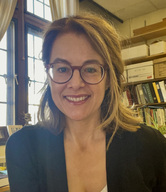
Alissa Mittnik is a Group Leader at the Department of Archaeogenetics, Max Planck Institute for Evolutionary Anthropology in Leipzig, Germany. She leads the 'MySocialBeIng' group, focusing on integrating archaeoscience to reconstruct social systems like kinship, gender roles, and mobility patterns in ancient societies. Her work bridges genetics, archaeology, and cultural studies to understand prehistoric populations. Education: PhD in 2016: University of Tübingen (Investigating Social Dynamics via Ancient DNA) Studies in Biology at Washington University (USA), University of Rostock, and University of Tübingen Research Interests: Genetic correlates of cultural transitions and social hierarchies Mobility in the ancient Mediterranean Archaeogenetic analysis of prehistoric populations Applications of ancient DNA to reconstruct migration and kinship networks Key Projects: Co-led the 'Times of Upheaval' project (2016-2018) on Bronze Age societal changes Published extensively on European, Mediterranean, and African prehistoric populations Lab/Team: Her group combines genomic, isotopic, and archaeological data to address questions about human migration, social organization, and cultural evolution.
Dr. Giovanna Vidoli is a Research Associate Professor of Anthropology and Director of the Forensic Anthropology Center (FAC) at the University of Tennessee, Knoxville. Her primary role involves generating and facilitating research using FAC resources including the Bass Donated Skeletal Collection and Anthropological Research Facility, with focus on novel technological applications in forensic anthropology. Education Ph.D. in Anthropology from Binghamton University, New York (2012) M.S.c in Forensic and Biological Anthropology from Bournemouth University, England (2003) B.A. in Anthropology from College of William and Mary, Williamsburg VA (1998) Research Focus Dr. Vidoli's research spans forensic anthropology, decomposition studies, and trauma analysis. Her work includes: comparative decomposition rates between humans/pigs/rabbits; fracture pattern documentation in aviation disasters; and developing identification methodologies for skeletal remains. She specializes in error rate assessment for craniofacial superimposition and ancestry estimation techniques, with field experience across global mass fatality contexts. Professional Experience Directed mortuary operations for World Trade Center attacks (as Assistant Director of WTC Operations) Managed victim identification during 2004 Thailand Tsunami Forensic Anthropology Foundation of Guatemala (FAFG) field volunteer JPAC-CIL Recovery Team Fellow in Laos International instructor in osteology and archaeology (Bogotá, Colombia) As FAC Director, she oversees one of North America's premier human decomposition research facilities and skeletal collections.
Lars E Fogelin is an Associate Professor at the University of Arizona specializing in the archaeology of Buddhism in South Asia. His research extends to the broader archaeology of religion, architectural studies, and the application of philosophy of science to archaeological reasoning, establishing him as a leading scholar in theoretical and material approaches to religious practice. Dr. Fogelin's work centers on material manifestations of Buddhist practice in early historic South Asia, particularly examining stupa architecture, monastic spatial organization, and ritual landscapes. He investigates how religious communities navigated social contradictions through spatial strategies and how material transformations reflected doctrinal shifts, such as the emergence of Mahayana Buddhism. His theoretical contributions emphasize inference to the best explanation and critical deconstruction of essentialist approaches in religious archaeology. His publication trajectory reveals consistent thematic focus across 20 years, with recurring exploration of Buddhist material culture, ritual practices, and methodological innovation. Early works established foundations in South Asian Buddhist archaeology, while later publications expanded into philosophical frameworks for interpreting religion. Key patterns include integration of ethnographic analogy with archaeological data, persistent attention to architectural evidence, and theoretical rigor in bridging anthropology, religious studies, and archaeological practice.
Eileen Murphy is a Professor in the School of Natural and Built Environment at Queen's University Belfast, where she is a leading figure in bioarchaeology and community archaeology. She is actively involved in research, teaching, and public engagement, with a focus on human remains, burial practices, and the archaeology of childhood and the Irish diaspora. She is Co-Director of the Centre for Community Archaeology and Chair of the University's Scholarships and Awards Group. Education: PhD in Archaeology (specific institution and year not provided in text) Additional degrees inferred through academic rank and research output, though not explicitly stated Her research interests center on bioarchaeology , particularly the biocultural analysis of Irish and Eurasian populations, deviant and minority burial practices, children's burial grounds (cillini), and the archaeology of childhood and the Irish diaspora. She is deeply committed to community archaeology , exemplified by her leadership in the Community Archaeology Programme Northern Ireland (CAPNI). Her work bridges scientific analysis and public engagement, contributing to sustainable development goals related to inclusive heritage and education. The 15 most recent publications reflect a consistent trajectory in osteoarchaeology , palaeopathology , and ethical archaeology , with increasing interdisciplinary work in medical geology and biomechanics. Themes include disability in the past, environmental health impacts, and the social dimensions of burial. Her outputs span scholarly journals, books, and public-facing media, demonstrating a strong commitment to knowledge dissemination. Scientific Awards and Recognitions: QUB Staff Excellence Award for Community Impact (2020) British Archaeological Award for Best Scholarly Book (2008) County Heritage Award (2021) Listowel Writer’s Week Nilsson Local Heritage Writing Award (2023) QUB Students' Union Most Involved Teaching Staff Member (2017) Fellow of the Society of Antiquaries of London Vice-President, Ulster Archaeological Society Chair, EAA Belfast 2023 Scientific Committee Elected Member, Royal Irish Academy (2025) Eileen Murphy has supervised numerous PhD students, both currently and in the past, covering diverse topics from Neolithic mortuary rites to medical geology. She has secured significant research output and public engagement through projects like the Ballyhanna and Ranelagh excavations. Her administrative roles include co-directing research centers and leading university committees, reflecting her leadership in both research and institutional service. She is actively involved in public outreach, including podcasts, media interviews, and science festivals, particularly through CAPNI. Her work with the Belfast Mummy (Takabuti) and the Forgotten Cemetery project highlights her ability to connect academic research with public interest. She leads major collaborative efforts across Ireland and internationally, fostering networks in archaeological research and education.
Hofrat Univ.-Doz. Mag. Dr. Stefan Groh is a Senior Research Fellow at the Austrian Archaeological Institute (ÖAI) of the Austrian Academy of Sciences. He holds the role of Assistant Director since 2009 and has been with the institute since 1996. His research focuses on Roman military infrastructure, transport routes, and urban planning, with special emphasis on the Amber Road and Noricum. Groh has led excavations such as Flavia Solva (1993-1995) and contributed to projects like Ephesos surveys and geophysical studies in Aquileia. Education: Degrees in Classical Archaeology and Ancient History from the University of Graz. Early career included roles at the Landesmuseum Joanneum (1989-1995), directing excavations at Flavia Solva from 1993–1995. Research interests center on military camps, road networks, and urban development. Key projects include studies on Legio II Italica’s fortifications, the Amber Road’s strategic role, and the urban layout of Aquileia. Over 65 journal articles and 16 monographs document his work, including seminal studies on Roman military infrastructure and settlement patterns. Publications highlight interdisciplinary methods like geophysical prospection and GIS analysis. Recent work includes analyses of the Marchfeld as a Roman military zone and the impact of the Antonine Plague on infrastructure. Groh has edited volumes on Celtic-Roman cult practices and contributed to exhibitions like Ephesos Upper City surveys. Grants and funding supported projects like the Legio II Italica studies and the Bruckneudorf villa research. His work bridges field archaeology with theoretical insights, influencing both academic discourse and public engagement through museum collaborations and media outreach. Labs/Teams: Leads ÖAI’s Roman frontier studies team and collaborates with international groups on projects like the Carnuntum-Aquincum comparative study. Active in the Scientific Advisory Board and promotes early career researchers through training programs.
Prof. Dawn Hadley is a leading scholar in medieval archaeology and history, specializing in early medieval England, the Viking Age, and interdisciplinary research. She holds the Chair in Medieval Archaeology at the University of York, Department of Archaeology, and is a Fellow of the Society of Antiquaries of London. Her career includes roles at the University of Sheffield, including Professor of Medieval Archaeology, Head of Department, and Acting Vice President for Arts & Humanities. She leads the Tents to Towns project exploring the Viking Great Army's impact on England and co-authored The Viking Great Army and the Making of a Nation . Her work integrates historical, archaeological, and digital methods, including VR modeling of medieval sites like Sheffield Castle. Education: PhD and post-doctoral fellowship in History at the University of Birmingham; taught medieval history at the University of Leeds. Research interests include Viking settlement patterns, funerary practices, childhood in medieval and 19th-century contexts, and heritage-led urban regeneration. She has pioneered collaborations with computer scientists to digitize archaeological data and engage public audiences through projects like Stories in the Sky (Park Hill Flats) and Viking Virtual Reality . Her awards include the York Open Research Award (2021) and Excellence in Media Arts (2017). She has supervised over 30 PhD students, many now in academic and heritage roles. Key grants include funding from AHRC, UKRI, and the British Academy. Labs/Teams: Collaborates with the Centre for Medieval Studies at York, Dr. Gareth Perry, and Dr. Elizabeth Craig-Atkins. Active in editorial roles for journals like Medieval Archaeology and the Early Medieval Europe series.
Christopher Miller is a Professor of Geoarchaeology at Eberhard Karls University of Tübingen (since 2016) and Director of Undergraduate Studies in the Institute for Archaeological Sciences (since 2013). He previously served as Junior Professor of Geoarchaeology (2010-2016) and Acting Head of the Archaeometry Division (2013-2015). His research focuses on site formation processes, archaeological micromorphology, and the role of fire in human evolution, with a particular emphasis on Paleolithic cave sites. Education: PhD (2010): Eberhard Karls University of Tübingen, Dissertation on Paleolithic cave sites' formation processes and settlement dynamics MSc (2004-2006): University of Maine, Thesis on geoarchaeological settings in the eastern US BA (2000-2004): Boston University, Dual degree in Archaeology and Earth Science Research interests include: Micromorphological analysis of archaeological sediments Geochemical tracing of Paleolithic sites Reconstruction of prehistoric human-environment interactions Development of novel microanalytical techniques for archaeological contexts His recent publications highlight interdisciplinary approaches to site formation processes, paleoenvironmental reconstruction, and the application of clumped isotope thermometry in archaeological contexts. He has conducted fieldwork in South Africa, Italy, Germany, and the Levant, focusing on cave systems and open-air sites. As an academic leader, he oversees the Geoarchaeology research group and collaborates with international teams on projects such as the Neolithic Movila lui Deciov settlement and the Swabian Jura Paleolithic sites. His work bridges geochemistry, archaeology, and environmental science to unravel the complexities of human adaptation in prehistoric environments.
Andrew Scherer is the Pierre and Patricia Bikai Professor of Anthropology and Archaeology at Brown University, where he also serves as Director of the Joukowsky Institute for Archaeology and the Ancient World. His work focuses on Mesoamerican (particularly Maya) archaeology, integrating bioarchaeology, landscape analysis, and political studies to examine Classic Maya polities along the Usumacinta River. Co-directs interdisciplinary projects in Mexico/Guatemala (Lacanja Tzeltal, Piedras Negras, Tikal, El Zotz, Yaxha) Research themes: mortuary archaeology, ritual practice, warfare, political organization, and diet/subsistence Selected Publications : As the Gods Kill: Morality and Social Violence among the Precolonial Maya (2025), Mortuary Landscapes of the Classic Maya (2015), and co-edited volumes including Substance of the Ancient Maya (2024) and Embattled Bodies, Embattled Places (2014). Research Funding : Multiple NSF grants (2003-2015) National Geographic Society support (2009) Wenner-Gren and Heinz Trust grants Academic Affiliations : Society for American Archaeology, Dental Anthropology Association, Dumbarton Oaks (as Pre-Columbian Fellow 2008-2009) Teaching : Courses on human evolution, bioarchaeology, Maya violence studies, and archaeological principles at Brown University.
Erika Blecha is a Researcher and Project Archaeologist at the Center for Big Bend Studies at Sul Ross State University. She has been affiliated with the Center since 2017 while pursuing a PhD in Anthropology at the University of Kansas, focusing on Paleoindigenous subsistence and environmental relationships under Dr. Rolfe Mandel. Her academic background includes an M.A. in Archaeology from the University of Montana and a B.A. in Anthropology from the University of California, Berkeley. Her research interests span biographic rock art, mortuary practices, environmental archaeology, GIS applications, and prehistoric subsistence strategies, particularly in Texas's Big Bend region. She has conducted archaeological work in Texas, California, Nevada, Montana, Wyoming, Belize, Honduras, and Peru. Her field expertise includes roles as a GIS specialist, crew chief, and field technician. Blecha’s publications emphasize regional prehistory, rock art interpretation, and archaeological site analysis. Notable works include studies on boulder glyphs in Southwest Texas, earth oven facilities in Brewster County, and surveys in the Calamity Creek Valley. She collaborates with institutions like Chief Dull Knife College and Lykes Brothers Inc. on cultural resource management projects. Her work integrates landscape archaeology, Indigenous knowledge systems, and technological tools like GIS to understand human-environment interactions over millennia.
Maggie Jones is a Teaching Professor in the Department of English at the University of Pittsburgh’s Kenneth P. Dietrich School of Arts & Sciences. She is a prominent contributing writer for The New York Times Magazine , focusing on social issues including youth culture, immigration, gender dynamics, racial justice, and death rituals. Her reporting spans global locations like Japan, Thailand, South Korea, Myanmar, Guatemala, and across the U.S., emphasizing intersectional narratives. Her research interests revolve around the sociocultural dimensions of mortality, aging, digital identity, and marginalized communities’ struggles. Notable works include explorations of pandemic-era funeral practices, online pornography’s impact on adolescents, and adoptee repatriation movements. Jones holds a 2012 Nieman Fellowship from Harvard University and a 2014 Senior Ochberg Fellowship from Columbia University’s Dart Center, reflecting her expertise in trauma-informed journalism. Her articles critically examine contemporary societal challenges, blending investigative rigor with humanistic storytelling. Awards include National Magazine Award finalist status. While no formal advising roles are listed, her journalism often engages with educational themes through public discourse. Jones maintains active participation in literary and journalistic communities via platforms like The Smithsonian , Smithsonian Magazine , and the Pittsburgh Contemporary Writers Series.
Lesley Harrington, PhD, is an Associate Professor and Director of Graduate Studies in the Anthropology Department at the University of Alberta's Faculty of Arts. Her research focuses on biological anthropology, particularly human skeletal and dental development, bone functional adaptation, and child health in archaeological contexts. She teaches courses such as Human Osteology, Dental Anthropology, and Juvenile Osteology, and supervises graduate students in these areas. Her work integrates bioarchaeological methods with paleodemographic analysis to explore growth patterns, nutritional stress, and activity behaviors in prehistoric populations. Dr. Harrington has directed graduate studies since her appointment, overseeing a program that has produced numerous MA and PhD graduates. Her research has been published in journals like American Journal of Biological Anthropology and PLoS ONE , with a focus on skeletal ontogeny, mortuary practices, and hunter-gatherer adaptations. Current graduate students include Devyn Caldwell (PhD), Christine Hymanyk (MA), and Sadie Tremblay (MA). Former students include Jennifer Nelson (PhD) and Benjamin Osipov (PhD). Her teaching responsibilities include ANTHR 209 (Introduction to Biological Anthropology) and ANTHR 390 (Human Osteology), with upcoming terms in Winter 2026 and Fall 2025. She also mentors directed research projects and honors theses. Dr. Harrington's research extends to international collaborations, including studies on South African Later Stone Age populations and Kenyan Neolithic communities.
Nicola Laneri is a Full Professor of Archaeology and Art History of the Ancient Near East and Eastern Mediterranean at the University of Catania, Department of Humanities. He also serves as Director of the School of Religious Studies at CAMNES in Florence. His academic career includes visiting positions at Columbia University, the University of Chicago, Leiden University, and the Middle East Technical University in Ankara. University: University of Catania School: Department of Humanities Academic Rank: Professor Email: nlaneri@unict.it, nicolalaneri@hotmail.com Office: Palazzo Ingrassia (Via Biblioteca 4), Catania Office Hours: Monday and Thursday, 9:00–12:00 Website: disum.academia.edu/nicolalaneri Education and Academic Appointments: Ph.D., University of Naples L'Orientale (1999) Fulbright Research Scholar, Columbia University (2000) Research Fellow, Italian Academy at Columbia University (2000) Visiting Professor, Middle East Technical University, Ankara (2002–2004) Research Fellow, Oriental Institute, University of Chicago (2005) Erasmus Visiting Professor, Leiden University (2015) Research Interests: Nicola Laneri specializes in the archaeology of religion, funerary practices, and material culture in the Ancient Near East. His work investigates the development of religious systems, ritual transformation, and socioeconomic dynamics across Mesopotamia, Anatolia, and the Eastern Mediterranean. He has conducted extensive fieldwork in Turkey, Iraq, Syria, Iran, and Azerbaijan. Recent Publications and Research Trends: His recent publications reflect a strong focus on the material dimensions of religion, funerary archaeology, and urban development. Key themes include the emergence of polytheism, the social analysis of death rituals, and ceramic production technologies. The 15 most recent works demonstrate a consistent engagement with interdisciplinary approaches, combining archaeology, anthropology, and textual analysis to reconstruct ancient belief systems and socioeconomic structures. Scientific Awards: Laurentum Prize (2024) Advising and Research Grants: Laneri supervises graduate students in topics ranging from Mesopotamian iconography to contemporary museum practices. He has directed or co-directed major archaeological projects including the Hirbemerdon Tepe Archaeological Project (2003–2016), the GaRKAP in Azerbaijan (since 2017), and the Baghdad Urban Archaeological Project at Tell Muhammad (since 2022). He is Principal Investigator of the PRIN 2020 project 'Godscapes: Modeling Second Millennium BCE Polytheisms in the Eastern Mediterranean,' funded by MUR. Labs and Research Teams: He leads international research collaborations involving scholars from Italy, Azerbaijan, the United States, and the Netherlands. His teams integrate archaeological excavation, material analysis, and digital modeling to explore ancient urban and religious landscapes. He is actively involved in training the next generation of archaeologists and fostering cross-institutional academic partnerships.
Nathan Arrington is a Professor of Art and Archaeology and Hellenic Studies at Princeton University, serving as Chair of his department. He is affiliated with the Department of Classics, the Seeger Center for Hellenic Studies, and Mathey College. His research focuses on ancient Greek material culture, particularly the intersection of art history, archaeology, and classics. Key projects include the Molyvoti, Thrace Archaeological Project (MTAP), investigating domestic archaeology in a trading port, and his work on haptics in Greek art. Arrington holds a Ph.D. from the University of California, Berkeley (2010). His teaching emphasizes archaeological methods, cultural heritage, and critical analysis of primary sources, often utilizing museum collections. He has excavated at sites including Corinth, Nemea, and Mycenae, alongside co-directing MTAP. His research explores themes like funerary practices, materiality, and cultural memory. Recent work addresses tactile engagement with art and its implications for perception and power. Awards include grants from the Gates Cambridge Trust and Alexander von Humboldt Foundation. Arrington founded Princeton’s Program in Archaeology and collaborates on initiatives such as the PITHOS program for Greek archaeology. His publications include Ashes, Images, and Memories (2015) and Athens at the Margins (2021), alongside numerous articles on Greek art, archaeology, and cultural exchange.
Angela R. Lieverse is a Professor in the Department of Anthropology at the University of Saskatchewan, where she has served since 2007. She previously held the position of Department Head. Her research focuses on bioarchaeology, paleopathology, and hunter-gatherer adaptations in Siberia and East Asia. Dr. Lieverse’s work emphasizes skeletal analysis, dietary studies, and disease patterns in prehistoric populations, with extensive fieldwork in Lake Baikal regions and the Cis-Baikal area. Education: PhD from Cornell University, MA and BA (with distinction) from the University of Alberta, and a SSHRC Post-Doctoral Fellowship at Memorial University. Her research interests include the bioarchaeology of stress, trauma analysis, and the application of modern medical methodologies to ancient remains. Notable projects involve reconstructing subsistence strategies, tracking infectious diseases like plague in prehistoric populations, and analyzing skeletal evidence of labor and activity patterns among foragers. Her work bridges archaeology, anthropology, and paleopathology to understand human adaptation and cultural change. Recent studies highlight innovative approaches to analyzing fragmented human remains and exploring the intersection of climate change and prehistoric health. Her publications often focus on Siberian populations, with a particular emphasis on the Cis-Baikal region’s Middle Holocene foragers.
Richard Veit is a Professor of Anthropology and Provost and Senior Vice President for Academic Affairs at Monmouth University. His work spans historical archaeology, focusing on North American Indians, gravemarkers, vernacular architecture, and military sites. He holds a Ph.D. from the University of Pennsylvania and has received multiple awards for teaching and service. Education Ph.D., University of Pennsylvania (1997) M.A., William & Mary (1991) B.A., Drew University (1990, summa cum laude) Veit's research emphasizes the Delaware Valley's multicultural heritage, integrating archaeological and historical data to explore identity, gentility, and material culture. His recent publications examine Revolutionary War shipwrecks, cemetery practices, and commemoration in modern suburbs. Scientific Awards Monmouth University’s Distinguished Teaching Award (2007) Donald Warnecke Award for Outstanding Service (2012) Eugene Simko Faculty Leadership Award (2019) New Jersey Historic Preservation Award (2008) New Jersey Studies Academic Alliance Best Non-Fiction Book Award (2008) Veit leads projects like Joseph Bonaparte’s Point Breeze estate and the Philadelphia Lazaretto’s archaeology. His work bridges academic research and public engagement, appearing in media outlets such as NPR and TEDx.