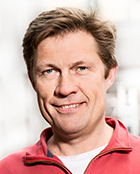
Torben M. Andersen is a Professor at the Department of Economics and Business Economics, Aarhus University. He holds an M.Sc. from the London School of Economics (1981), a Lic. Oecon from Aarhus University (1994), and a PhD from CORE, Université Catholique de Louvain (1986). His research focuses on the Nordic welfare model, public economics, labour economics, and pension economics. He has published over 400 articles in top journals and contributed to policy advisement for Denmark, the EU, OECD, and the World Bank. He currently chairs the DREAM modelling group, the Economic Council for Greenland, and the Danish pension fund ATP. He also serves on boards of Aarhus University Research Foundation, Systemic Risk Council Faroe Islands, and others. Key research areas include welfare state sustainability, public expenditure prioritization, and pension reform impacts. His recent work explores mortality risk hedging and wealth inequality dynamics. He is a fellow at CEPR, IZA, and CESifo.
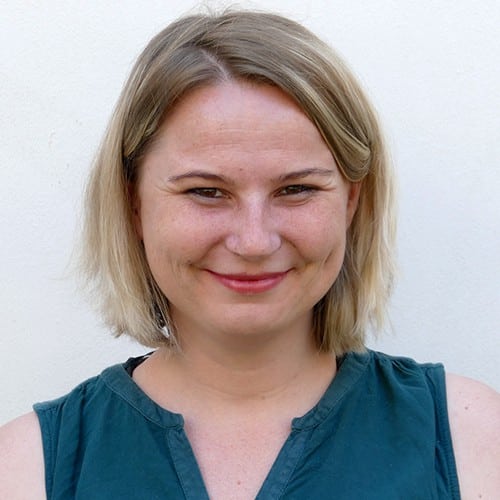
Alessandra Meddis serves as an Assistant Professor in the Section of Biostatistics within the Department of Public Health at the University of Copenhagen's Faculty of Health and Medical Sciences. Her academic work centers on developing and applying advanced statistical methodologies for longitudinal and time-to-event data analysis, with significant contributions to public health research in Denmark and internationally. Her institutional affiliation is clearly established through university contact details and departmental listings. Her primary research interests include correlated survival data analysis, competing risk modeling, informative cluster size methodology, causal inference techniques for observational studies, and environmental epidemiology applications. Dr. Meddis has developed specialized expertise in handling complex survival data structures while maintaining focus on real-world public health problems, particularly in HIV comorbidity patterns, environmental exposure effects, and pandemic-related mortality analyses. Her methodological innovations directly address challenges in clustered and censored data common across medical research domains. Analysis of Dr. Meddis's recent publication record reveals a consistent trajectory of high-impact interdisciplinary research spanning clinical medicine, epidemiology, and statistical methodology. Her work appears in leading journals across biostatistics, infectious diseases, and public health, demonstrating strong collaborative networks with clinical researchers and epidemiologists. Key thematic areas include HIV treatment outcomes, environmental health exposures, and critical care applications during the pandemic, with recent methodological papers advancing survival analysis techniques for complex data structures. Scientific Awards: No scientific awards were specified in the available institutional profile. Advising and Grants: The institutional profile does not provide details regarding graduate student supervision or specific research grant funding. Her collaborative publications suggest involvement in multi-investigator projects including the COCOMO HIV cohort study and pandemic-related research initiatives. Labs and Teams: Dr. Meddis is affiliated with the Section of Biostatistics within the Department of Public Health, though specific laboratory facilities or dedicated research teams are not described in the source material. Her extensive co-authorship patterns indicate active participation in multiple research consortia across medical specialties.
Claus Thustrup Kreiner is a Professor of Economics and Director of the Center for Economic Behavior and Inequality (CEBI) at the University of Copenhagen's Faculty of Social Sciences, Department of Economics. He also serves as Area Director of Public Economics in the CESifo network and was co-editor of the Journal of Public Economics from 2014 to 2020. Kreiner has held various leadership positions including Director of the Economic Policy Research Unit (EPRU) since 2005 and Director of the Center of Excellence WEST from 2011-2013. Education: Ph.D. in Economics, University of Copenhagen, 1998 Visiting Ph.D. student, University of York, 1996 M.Sc. in Economics, University of Copenhagen, 1994 B.Sc. in Economics, University of Copenhagen, 1991 Claus Thustrup Kreiner's research primarily focuses on Public Economics , with secondary specializations in Labor Economics, Household Finance, Applied Microeconometrics, and Experimental Economics. His work examines inequality in income, wealth and health, optimal redistribution policy, and behavioral responses to public policy. Kreiner has conducted significant research using Danish administrative data to analyze tax compliance, labor supply responses, and inequality dynamics. His research often involves collaborations with institutions like Columbia University, London School of Economics, and UC Berkeley. His recent publications reveal a strong focus on inequality across multiple dimensions (income, wealth, health, life expectancy), tax policy design and compliance, labor market responses to policy changes, and the intersection of behavioral economics with public policy. Kreiner frequently employs high-frequency administrative data from Denmark to provide empirical evidence on how individuals and households respond to economic policies and shocks. Scientific Awards and Recognition: Appointed Knight of The Order of Dannebrog by Queen Margrethe II (2018) The Invisible Hand Award from the Society of Social Economics (2006, 2001) Best Teacher Award from the Study Board of Economics at University of Copenhagen (2002) Research Fellow at Centre for Economic Policy Research (CEPR), London (2009-) Kreiner has supervised numerous students primarily in Public Economics and has received multiple research grants including from the Danish Social Science Research Council (2003, 2006, 2009), International Growth Center (2009), and Danish National Research Foundation (1998-2003). He has served on important policy bodies including as co-chair of the Danish Economic Council (2010-2014) and member of the Danish Tax Commission (2008-2009). As Director of CEBI (Center for Economic Behavior and Inequality), Kreiner leads a major research center funded by the Danish National Research Foundation. He also directs the Economic Policy Research Unit (EPRU) and has been instrumental in establishing research collaborations through networks like CESifo. His work bridges academic research and policy application, as evidenced by his practical policy experience with government commissions.
Niels Richard Hansen is a Professor at the Department of Mathematical Sciences , University of Copenhagen, leading research at the intersection of Artificial Intelligence and Statistics . He co-founded the Copenhagen Causality Lab and focuses on automating causal explanation discovery from data using Bayesian networks, stochastic processes, predictive models, and machine learning. His work emphasizes creating interpretable and robust AI systems capable of generalizing across domains. His research has produced over 56 publications spanning causal inference , graphical modeling , stochastic processes , and machine learning . Recent work includes: Predictive and causal learning (2018 keynote) High-dimensional regression solutions (2016 lecture) Interdisciplinary applications in actuarial science , environmental statistics , and neuroscience He actively contributes to scientific communication through media appearances and public explanations of statistical concepts, including analyses of: Gaussian correlation inequality proofs Daylight saving time and blood clots Mathematical approaches to lotteries Climate change vs lunar effects
Søren Lundbye-Christensen is an Associate Professor and Biostatistician affiliated with the Clinical Institute at the Faculty of Health Sciences, Aalborg University, and Aalborg University Hospital in Denmark. He specializes in biostatistical support for medical research, with a strong emphasis on cardiovascular and epidemiological studies. His research interests include biostatistics, survival analysis, cohort studies, clinical epidemiology, and statistical modeling in public health. He has contributed to a wide array of healthcare research, particularly in cardiovascular diseases, cancer, maternal health, and infectious diseases. His methodological expertise spans time-to-event analysis, registry-based research, and interval-censored data modeling. The recent publications highlight a strong trend in applying advanced statistical methods to large-scale clinical and population-based datasets. His work often involves collaboration with medical researchers to derive prognostic models, validate clinical databases, and assess public health outcomes. Key themes include cardiovascular risk, fertility, cancer biomarkers, and implementation of medical training programs. Scientific Contributions and Recognition: Published over 320 research articles and datasets. Active contributor to methodological advancements in biostatistics. Regular peer reviewer, including for journals like the R Journal. Public engagement through media appearances on statistics and health. Academic Advising and Grants: Søren has supervised 31 student theses, formally serving as PhD supervisor for 14 theses and as a biostatistical advisor for 19 others, primarily in mathematics and statistics. He has participated in numerous research projects funded through institutional and national grants, including studies on seasonal disease trends, postoperative complications, and metabolic disease prediction. His work often involves interdisciplinary collaboration across medicine, public health, and data science. Labs and Research Teams: He is embedded in collaborative research networks at Aalborg University Hospital and Aalborg University, contributing statistical expertise to clinical research groups. He is involved in projects utilizing Danish national health registries and has contributed to the development and validation of clinical databases. His work supports both hypothesis-driven medical research and methodological innovation in biostatistics.
Beate Conrady is an Associate Professor in Infectious Disease Epidemiology and Animal Health Economics at the Department of Veterinary and Animal Sciences, Faculty of Health and Medical Sciences, University of Copenhagen, where she joined in April 2021. She has been affiliated with the Centre for Sustainable Health (CSH) since May 2020. Previously, she led the working group on Epidemiology and Animal Health Economics at the University of Veterinary Medicine in Vienna for eight years. Her research focuses on the development and application of mathematical and economic models to assess prevention and intervention strategies for infectious diseases in veterinary and public health contexts. Key areas include zoonoses, cattle disease control, biosecurity, and One Health. She has extensive experience in international consultancy, including with EFSA, the Austrian Government, and European scientific networks. Beate's recent publications (2020–2024) demonstrate a strong emphasis on disease transmission modeling, surveillance systems, and economic evaluation of health interventions. Her work spans Salmonella, foot-and-mouth disease, Cryptosporidium, and vector-borne diseases, often employing advanced modeling techniques and large-scale data analysis. She has received more than 11 scientific awards for her contributions to infectious disease epidemiology and animal health economics. Consultant for European Food Safety Authority (EFSA) Member of international scientific committees (Med-Vet-Net, DISCONTOOLS) Principal investigator and consortium leader with over 7.5 million EUR in research funding, including more than 1 million EUR in third-party funds She is actively involved in editorial and peer-review activities for leading journals and contributes to policy development in animal health and zoonotic disease control.
Zorana Jovanovic Andersen is an Associate Professor at the University of Copenhagen, Department of Public Health, Section of Environmental Health, specializing in Environmental and Occupational Epidemiology. Her research focuses on health impacts of air pollution , noise exposure , and lifestyle factors across large cohorts including the Danish Nurse Cohort and Diet, Health, and Cancer cohort. Primary research areas: Environmental Epidemiology, Breast Cancer Risk, Air Pollution, Noise Studies, Physical Activity Interactions Key projects: Hyperion (road traffic noise), ELAPSE (low-level air pollution), TAPAS (climate-transportation health risks) Research Themes She investigates long-term exposure to air pollution and noise in relation to breast cancer , diabetes , cardiovascular disease , and brain cancer , while exploring how factors like physical activity modify these risks. Recent work includes dementia and COVID-19 mortality analyses. Scientific Contributions Her 15 most recent publications address: 1) Air pollution disparities in Europe 2) Dementia-air pollution links 3) Stroke-noise interactions 4) Airport ultrafine particle exposure 5) Asthma-COPD overlap 6) Breast cancer-mammographic density relationships. Major Grants Danish Working Environment Research Fund (1.79M DKK, 2017) Danish Heart Association (433K DKK, 2016) Danish Council for Independent Research (1.93M DKK, 2015) Teaching & Leadership Course Leader for Data Processing in Health Care and Public Health Informatics at UCPH since 2011. Organized Danish Health Registries seminars and served on scientific committees for environmental conferences.
Henrik Møller is a Professor at the Danish Center for Health Services Research , part of the Faculty of Health Sciences at Aalborg University . His work focuses on cancer epidemiology , clinical quality registries , and health services research , particularly examining prostate cancer , lung cancer , and colorectal cancer through nationwide cohort studies. Key research areas: Cancer care quality, pandemic impacts on diagnosis/treatment, socioeconomic disparities Active collaborations in Denmark and England Contributor to national and international cancer registries Recent publications analyze CT imaging trends in lung cancer detection, chemotherapy disparities in pancreatic cancer, and genetic biomarkers in gliomas. His team has released multiple datasets on figshare platforms. As a leader in health services research, Møller's work informs healthcare policy improvements through evidence-based quality indicators and development targets.
Stefan Oehmcke is an Assistant Professor at the Machine Learning Section of the Department of Computer Science , University of Copenhagen. His research focuses on applying machine learning techniques to environmental and geospatial analysis, particularly in forest ecology, tree monitoring, and climate impact studies. Research Trends: His recent publications emphasize deep learning for LiDAR data processing, multi-modal geospatial representation, and sustainable AI practices. Key Collaborations: Frequently collaborates with researchers in environmental science, remote sensing, and climate change (e.g., Martin Brandt, Christian Igel). Applications: Develops tools for forest biomass estimation, tree mortality mapping, and urban safety analysis using satellite imagery. While no specific educational background or scientific awards are mentioned in the provided texts, Oehmcke's work demonstrates technical innovation in AI explainability and environmental monitoring, with significant contributions to journals like Remote Sensing of Environment and Nature Communications .
Søren Rud Kristensen is a Professor at the Department of Public Health, University of Southern Denmark and holds an Honorary Senior Lecturer position at Imperial College London. His research focuses on healthcare organization and performance, particularly incentive design for quality improvement, with expertise in microeconometric analysis of large administrative datasets. He has held roles including Senior Lecturer (2017-2021) at Imperial College London. Key research areas include payment for performance systems, integrated care models, and clinical guideline implementation. He has published extensively on healthcare quality, patient safety, and health policy with 71+ peer-reviewed articles. His work addresses challenges like hospital competition effects, spillover mechanisms of financial incentives, and the impact of adverse events on patient outcomes. He has received multiple research grants including support for Manchester research stays and funding from Sygekassernes Helsefond. Teaching responsibilities include modules on integrated health care, quality management, and data-driven quality development. His current projects focus on regulating knowledge use in healthcare (PINCH project) and evaluating resource constraints in primary care. Labs/teams involvement includes collaborations through the Danish Centre for Health Economics (DaCHE) and international networks analyzing health systems in England, Brazil, Mozambique, and Zimbabwe. His work bridges economic theory with practical healthcare system improvements.
Sune Damgaard is a Clinical Associate Professor at the University of Copenhagen's Faculty of Health and Medical Sciences within the Department of Clinical Medicine. He specializes in Cardiothoracic Surgery at Rigshospitalet (Copenhagen University Hospital), where he maintains active clinical and research roles. His academic profile is associated with the Department of Clinical Medicine and Rigshospitalet's Heart and Lung Surgery division. Dr. Damgaard's research focuses on expanding traditional cardiac surgery risk assessment models beyond physiological parameters. His work investigates how social, emotional, behavioral, and functional factors impact surgical outcomes. Key areas include validating modified EuroSCORE systems, developing multidimensional risk prediction tools, and studying echocardiographic techniques during cardiac procedures. He has pioneered research on tricuspid annular plane systolic excursion measurement and coronary bypass graft patency assessment. His publication trends reveal consistent emphasis on integrating patient-reported outcomes into surgical risk models. Recent work (2018-2022) demonstrates growing focus on psychosocial predictors of cardiac surgery outcomes, with multiple studies examining how non-physiological factors contribute to postoperative complications. Earlier research (2012-2015) centered on technical aspects of graft patency and intraoperative monitoring. Dr. Damgaard maintains active clinical practice at Rigshospitalet's Cardiothoracic Surgery department while conducting translational research through the University of Copenhagen's medical faculty. His work bridges clinical cardiology, surgical innovation, and health services research with particular relevance to improving risk stratification in cardiac surgery.
Marie Dam Lauridsen is a Clinical Instructor at North Denmark Regional Hospital, affiliated with Aalborg University's Faculty of Medicine, Department of Clinical Medicine. Her research focuses on chronic obstructive pulmonary disease (COPD), cardiogenic shock, and patient outcomes in respiratory medicine. She leads the 2025 project 'SEXA-PRO' investigating gender differences in COPD prognosis. Her work integrates telemedicine innovations and cohort analysis to improve diagnostic accuracy and treatment efficacy. Education : Not explicitly stated in provided text. Key research interests include COPD severity stratification, biomarker identification, and healthcare system optimization through telemedicine. Recent studies examine diuretic use impacts, patient mortality patterns, and treatment intensity as prognostic tools. Her 2024 publications highlight telehealth solutions for COPD and epidemiological cohort studies on blood eosinophil levels. Collaborative projects emphasize clinical trial design, healthcare equity, and multidisciplinary care approaches. She has supervised research projects and contributed to national cohort analyses, with findings published in Respiratory Medicine and European Respiratory Journal . Awards : None explicitly listed in text. Advising and grants involvement includes supervision in the 2025 project and contributions to grant-funded COPD research initiatives. Active in lab teams focusing on respiratory disease mechanisms and clinical decision-making tools. Labs/teams: Engaged in Aalborg University's clinical medicine research groups, particularly those addressing COPD heterogeneity and telehealth integration.
Stig Borbjerg Laursen is a Clinical Professor at the Department of Clinical Research, University of Southern Denmark, and is affiliated with Odense University Hospital (OUH) through the Research Unit of Medical Gastroenterology in Odense. He is actively involved in clinical research, education, and professional development in gastroenterology. His research interests focus on gastrointestinal bleeding, particularly upper gastrointestinal and peptic ulcer bleeding, endoscopic interventions, hemostasis, and risk scoring systems. His work integrates clinical practice with academic research, aiming to improve patient outcomes through evidence-based guidelines and international collaboration. The recent publications reflect a strong emphasis on timing and management of endoscopy in acute bleeding scenarios, pre-endoscopic care, and validation of risk models. His research spans clinical surveys, editorial commentary, and contributions to medical textbooks, demonstrating leadership in the field. Dr. Laursen actively contributes to the academic community through peer review, conference organization, and educational lectures. He has delivered presentations at national and international conferences, including Digestive Disease Week in San Diego (2019), and regularly participates in masterclasses and workshops on upper GI bleeding. He is affiliated with research networks across Europe and has collaborated with clinicians internationally. His laboratory or team is not explicitly named, but his work is conducted under the Research Unit of Medical Gastroenterology at OUH, indicating a structured research group focused on gastrointestinal diseases and endoscopic therapies.
Lennart Jan Friis-Hansen is a visiting researcher affiliated with the Department of Clinical Research at the University of Southern Denmark (SDU) and the Research Unit of Clinical Biochemistry at Odense University Hospital (OUH) . His work spans clinical biochemistry, infectious diseases, and endocrinology, with a focus on biomarker analysis, diagnostic testing, and physiological responses to diseases. Active in Department of Clinical Research at SDU and OUH Research interests include COVID-19 pathogenesis , steroid hormone dynamics , bone density in athletes , and Vitamin K in respiratory disease Recent publications highlight his contributions to ACE2/TMPRSS2 receptor studies in kidney tissue , diagnostic accuracy of PCR assays , and hormonal impacts on athlete health . His work also addresses vitamin deficiencies in chronic disease and cortisol immunoassay standardization . Press contributions in 2024–2025 emphasize gaps in post-vaccine injury treatment and adverse effects of effective therapies . Affiliated with research units at SDU and OUH, he collaborates on interdisciplinary studies in clinical biochemistry and physiology.
Torkell Ellingsen is a Clinical Professor at the Faculty of Health, Southern University of Denmark, and Head of Research at the Department of Clinical Research, Odense University Hospital. His work focuses on early diagnosis, cardiovascular comorbidity, prognosis, and pathogenesis in rheumatoid arthritis, psoriatic arthritis, and spondyloarthropathy, integrating advanced imaging (PET-CT, MRI, ultrasound) immunological and molecular techniques epidemiological cohort studies He leads investigator-initiated trials on microbiome transplantation and comorbidity interventions. Education MD (1992), Aarhus University PhD (2000), Aarhus University Specialist in Rheumatology (2008), Danish National Healthboard Research Trends His publications (143+ journal articles) emphasize microbiome impacts on inflammatory arthritis, cardiovascular risk, and imaging biomarkers. Key subfields include microbiome-based therapies drug utilization patterns MRI-guided treatment strategies neuroimmunology of gut receptors patient-public involvement frameworks comorbidity management Scientific Recognition Best Abstract Award, EULAR 2022 Honored for interdisciplinary rheumatology research Teaching & Supervision He has taught medical students, nurses, and peers since 2008, overseeing exams for the K2 Module (Musculoskeletal & Blood Diseases). Supervised projects include fecal microbiota transplantation in psoriatic arthritis and vitamin D metabolites in rheumatoid arthritis. Collaborative Efforts Active in international networks like ATACC-RA and national committees, including the Danish Society of Rheumatology's guideline panels. Currently co-leads the Microbe-AID research center for gut-autoimmune disease links.