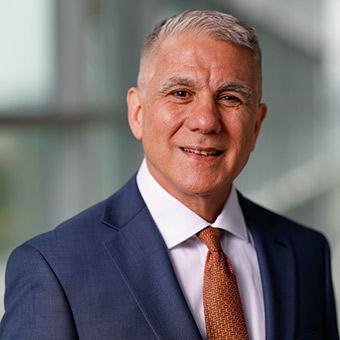
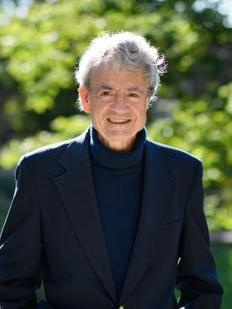
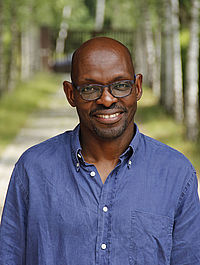
Jeffrey Shoulson is Professor of English at Brandeis University, serving concurrently as Vice Provost for Undergraduate Affairs and Dean of Undergraduate Studies. His academic career spans roles at the University of Connecticut, Middlebury College, and University of Pennsylvania. Ph.D., Yale University M.Phil., University of Cambridge B.A., Princeton University Specializing in early modern literature and culture, Shoulson's research examines Jewish-Christian intellectual encounters (16th-17th centuries), Bible translation history, and religious cultural intersections. His work bridges literary analysis with historical research on cultural intermediaries. Recent publications analyze early modern moral frameworks (2025), Renaissance global networks (2019), and comparative inquisitorial practices (2023). Articles demonstrate expertise spanning religious ritual (2022), diasporic identity (2017), and Hebraic influence on English literature (2015). Doris and Simon Konover Chair of Judaic Studies (2012-2017) Ruth and Lillian Marino Chair (2014) Salo W. Baron Prize (2002) Fulbright Fellowship (1989-1990) Shoulson's administrative leadership includes directing undergraduate studies while maintaining active research. He has held prestigious fellowships at the Katz Center for Judaic Studies and Fulbright programs.
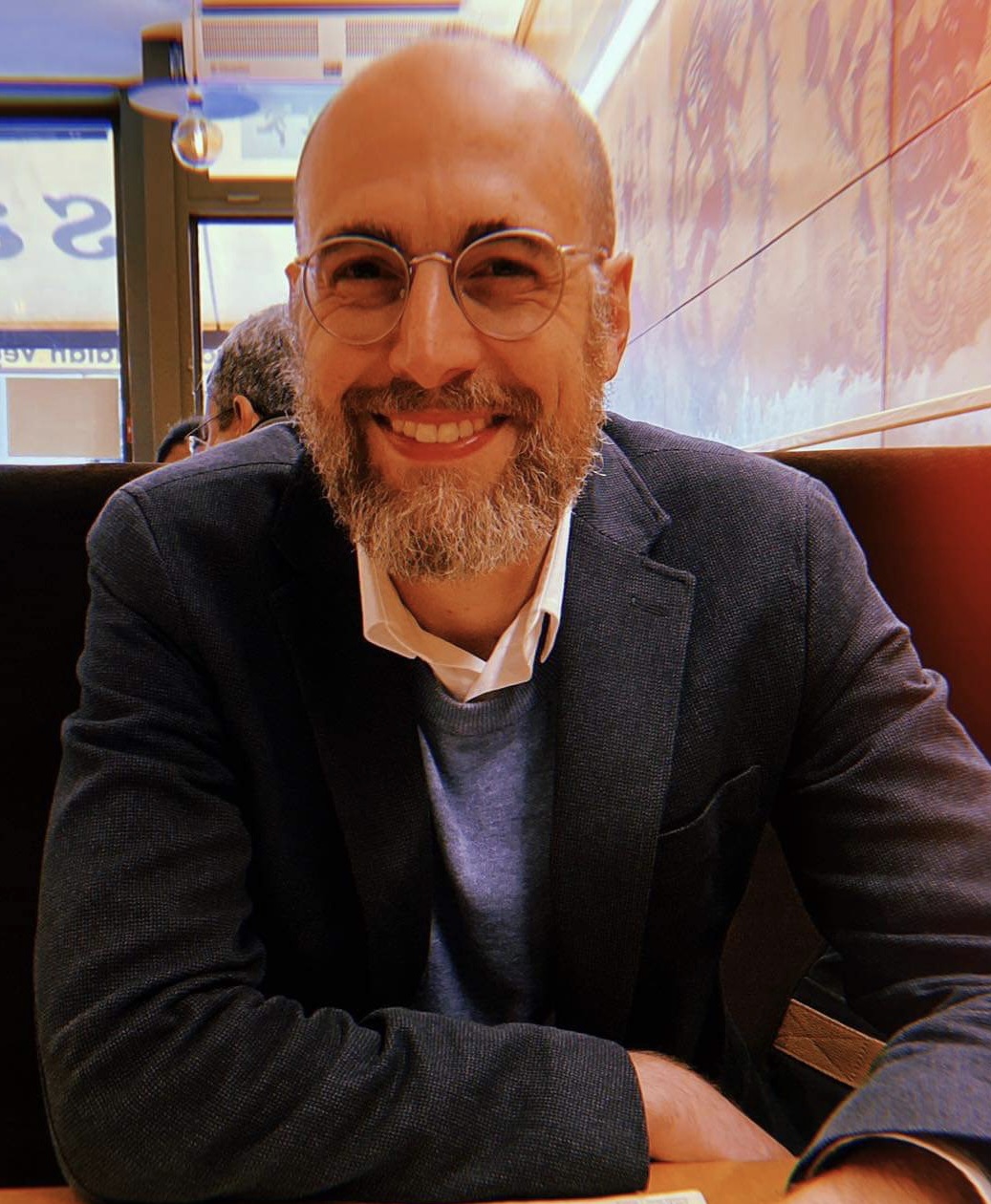
David A. Lambert is an Associate Professor in the Department of Religious Studies at the University of North Carolina at Chapel Hill, specializing in the Hebrew Bible and its history of interpretation. His scholarship bridges historical-critical approaches with attention to how interpretive frameworks shape our reading of ancient texts, particularly focusing on the Hebrew Bible within its Ancient Near Eastern context. Lambert received his academic training at Harvard University, earning his A.B., M.A., and Ph.D. in Near Eastern Languages and Civilizations. His doctoral work culminated in the Harry and Cecile Starr Dissertation Prize in 2004, reflecting the significance of his early scholarly contributions to biblical studies. Professor Lambert's research centers on the Hebrew Bible in its Ancient Near Eastern environment, hermeneutics and the history of biblical interpretation, Late Second Temple Judaism, the history of Jewish thought, the history of the self, and translation studies. His work challenges conventional interpretive frameworks, particularly questioning how modern notions of subjectivity and repentance have shaped biblical interpretation. He argues that many concepts readers project onto ancient texts actually emerged later in religious history, revealing more about contemporary interpretive tendencies than ancient realities. Lambert's publications demonstrate a consistent focus on how interpretive frameworks shape biblical understanding. His work examines the relationship between ancient texts and their reception history, with particular attention to how modern Western notions of the subject have influenced biblical translation and interpretation. He has made significant contributions to understanding the formation of biblical concepts like repentance and honor within their proper historical contexts. Among his notable recognitions are the prestigious AAR Award for Excellence in the Study of Religion (2016), the Schwab Academic Excellence Award (2019), and fellowships at the Israel Institute for Advanced Studies (2017-2018). His scholarly achievements also include: EURIAS Fellowship (2017-2018) Peter Thacher Grauer Fellow at UNC Chapel Hill (2010-2014) Jacob and Hilda Blaustein Post-doctoral Fellowship at Yale University (2004-2007) Harry and Cecile Starr Dissertation Prize from Harvard University (2004) Institute for the Arts and Humanities Faculty Fellow (Spring 2023) Senior Faculty Research and Scholarly Leave (Fall 2022) Professor Lambert mentors graduate students in religious studies and biblical scholarship, guiding research on Hebrew Bible interpretation, ancient Jewish thought, and textual criticism. His current projects include a monograph titled "Is Bible Scripture? Assembling the Biblical in Ancient Judaism and Beyond" for Yale University Press, which explores the formation of the Hebrew Bible as Scripture. He has received multiple research grants supporting his work on the history of biblical interpretation and the concept of the self in antiquity. Through his participation in research groups like "The Subject of Antiquity: Contours and Expressions of the Self in Ancient Mediterranean Culture" at the Israel Institute for Advanced Studies, Lambert collaborates with international scholars to advance understanding of ancient subjectivity. His work bridges traditional biblical scholarship with innovative approaches from history of religions, contributing to broader conversations about how ancient texts continue to shape contemporary religious and cultural frameworks.
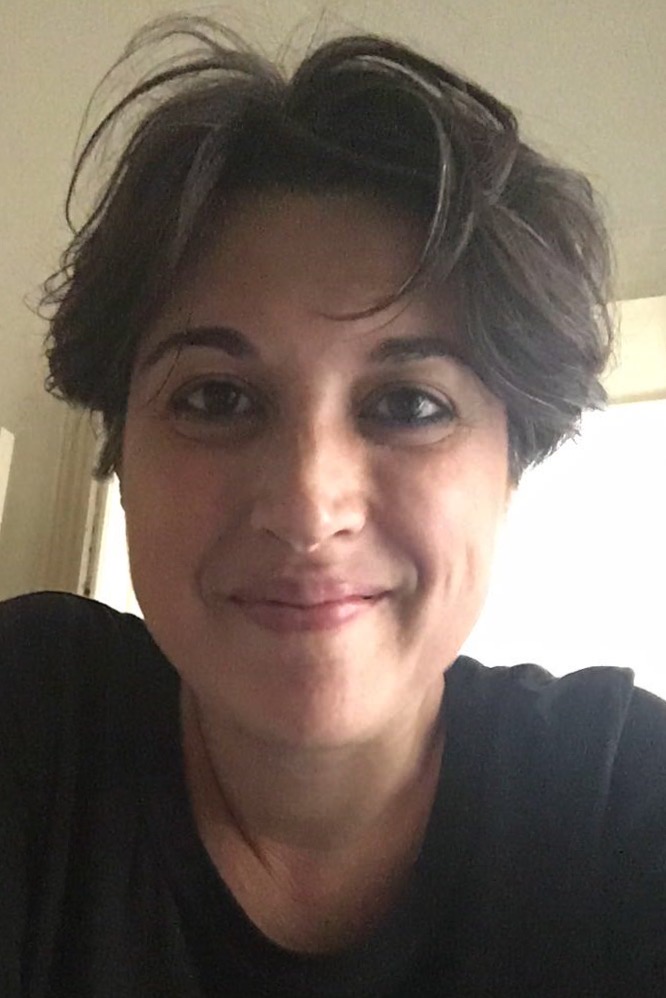
Dr. Boris Paschke serves as a Guest Associate Professor of New Testament at the Evangelische Theologische Faculteit Leuven . Holding a Ph.D. in New Testament Studies from ETF Leuven (2009), he has been actively engaged in theological education since 2001, teaching at ETF Leuven and in public secondary schools in Brussels. Ph.D. in New Testament Studies (ETF Leuven, 2009) Licentiaat in de godgeleerdheid (M.Th., ETF Leuven, 2004) M.A. in Biblical Studies (University of Gloucestershire, 2001) Paschke's research focuses on New Testament theology , apocryphal literature , and early Christian worship practices , particularly prayer to Jesus and the Holy Spirit. His work explores intertextuality (e.g., Song of Songs in Romans 3), historical contexts (Roman censorship, slavery), and theological intersections between Christianity and Islam. Recent publications highlight trends in liturgical theology (2024 analyses of 1 Timothy 1:12 and Peräa), prayer studies (2023 essays on Tertullian and 2 Timothy 1:18), and historical criticism (2016-2022 works on Semler, Acts of John, and Philemon). He participates in multiple academic societies, including the Society of Biblical Literature and the Association pour l’étude de la littérature apocryphe chrétienne , and has co-authored works on ancient speech impediments (2016, 2023).
Dr. Igor Jakobfi serves as an Assistant Professor at the Department of Social Doctrine of the Church within the Catholic Faculty of Theology in Đakovo. His academic career spans theology, social ethics, and Catholic social teaching with a focus on practical church engagement in societal issues. He holds a Doctor of Humanities degree from the Catholic Faculty of Theology in Zagreb (2023), Master of Humanities (2009), and Bachelor of Theology (2002). Doctor of Humanities - Catholic Faculty of Theology in Zagreb (2023) Master of Humanities - Catholic Faculty of Theology in Zagreb (2009) Bachelor of Theology - Theology in Đakovo (2002) Dr. Jakobfi's research centers on the Social Doctrine of the Church, particularly examining Church-state relations, migration challenges, lay participation, and social justice applications. His work bridges theological theory with practical social engagement, analyzing how Catholic social teaching addresses contemporary societal issues including migration crises, demographic challenges, and peacebuilding in post-conflict societies. He explores the dialogical nature of social teaching through diocesan implementation models. His recent publications demonstrate a consistent focus on applying Catholic social thought to current Croatian and European contexts, with particular attention to migration, reconciliation processes, and social pastoral care. The research shows increasing engagement with Pope Francis's social teachings and their practical implementation at diocesan levels, especially through organizations like the Friends of St. Martin association. Dr. Jakobfi actively contributes to academic discourse through conference presentations at international theological symposia and scientific colloquiums, focusing on social doctrine applications. His work appears in journals such as Diacovensia and various diocesan publications. Secretary of the Office for the Promotion of the Social Doctrine of the Church and Social Issues (since 2003) Secretary of the Office for Religious Societies (since 2010) President of the humanitarian association Friends of St. Martin (since 2014) Member of the Archdiocesan Pastoral Council (since 2014) Member of the board of directors of the Center for the Promotion of the Social Doctrine of the Church (since 2019) Dr. Jakobfi teaches courses including Social Doctrine of the Church I & II, Theological Social Ethics, Business Ethics, and Human Rights and the Social Teaching of the Church. His popularization efforts include multiple cycles of social debates organized by the Institute for the New Evangelization and lectures on social doctrine for various community groups across Croatia.
Arianna ROTONDO is an Associate Professor in the Department of Humanities at the University of Catania, specializing in the History of Christianity and Churches (HIST-04/B). She is currently a Visiting Professor at Ghent University, Faculty of Arts and Philosophy – Department of Literary Studies, from November 2024 to April 2025. Her research spans early Christian history, gender in religious contexts, patristics, late antique Christianity, and the reception of biblical texts. She has led and participated in numerous national and international research projects, including PRIN, FIRB, and ANR-DFG collaborations. Her research interests include: History of Christianity Gender and Religion in Antiquity Patristic Literature Religious Authority and Canon Formation Reception of the Septuagint Biblical Interpretation and Hermeneutics Religion and Cultural History Her recent publications and projects reflect a strong interdisciplinary approach, merging theology, history, literature, and cultural studies. Key themes include the semantics of violence and healing in sacred texts, religious responses to emergencies, and the role of women in early Christian communities. Her work often explores the intersection of religion with politics, identity, and narrative. She has supervised numerous theses on topics ranging from feminist theology and queer Christianity to the history of religious movements, saints, and biblical interpretation. Her academic service includes leadership roles in research units and collaboration with institutions across Europe and North America. Her scientific contributions are recognized through active participation in major research consortia such as THEOPOESIE and Jenseits des Kanons. She is also deeply engaged in public scholarship, examining contemporary religious phenomena such as online liturgies during the pandemic and religious coexistence in the Mediterranean. She advises a wide range of students and leads research on: Feminist and queer theologies Christianity in Sicilian culture Patristic and medieval religious thought Religion and media Historiography of Christian movements
Prof. Bruce FUDGE is a Full Professor at the University of Geneva within the Department of Mediterranean, Slavic and Oriental Languages and Literatures . His academic work bridges Qur'anic studies and Arabic literature , with a particular focus on the Arabian Nights tradition. He has made significant contributions to understanding scriptural hermeneutics, Islamic identity formation, and cultural symbolism through works like Qur'anic Hermeneutics: al-Tabrisi and the Craft of Commentary (2011) and A Hundred and One Nights (2016). Research Focus : Qur'anic exegesis, medieval Islamic storytelling, and sociocultural symbolism in Middle Eastern traditions Key Publications : The Turban and the Hat (2022) Non Sola Scriptura: Essays on the Qur'an and Islam (2022) Barbe et barbus (2019) His 2025 BSOAS article critiques Stephen J. Shoemaker's historical-critical approach to Quranic origins, while his 2022 Routledge publication explores mimetic representation theories. FUDGE's analysis of beard symbolism (2019) connects ancient Mesopotamian practices to modern ISIS propaganda. He has extensively reviewed works on Islamic civilization, including Robert Irwin's Ibn Khaldun biography (2018) and Shahab Ahmed's Before Orthodoxy (2017). Recent 2023 MLA publication examines teaching methodologies for the Thousand and One Nights , and his 2018 Die Welt des Islams article compares Qur'anic theocentrism with Western tragic traditions. FUDGE's 2008 Brill publication deconstructs al-Rummānī's taḍmīn concept, influencing modern Arabic literary theory.
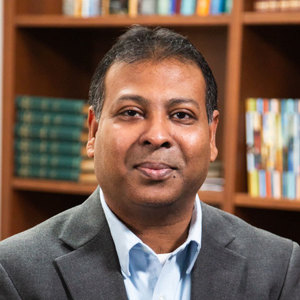
Ashish Naidu is a Professor of Theology at the Talbot School of Theology, Biola University. He specializes in historical theology and patristics, focusing on the theological contributions of figures like John Chrysostom and Cyril of Alexandria. His research bridges early Christian thought with practical theological application, emphasizing Christology, soteriology, and biblical authority in the early church. Naidu holds a Ph.D. from the University of Aberdeen and an M.A. from Oral Roberts University. His publications include Transformed in Christ: Christology and the Christian Life in John Chrysostom and multiple articles on patristic exegesis, early church aesthetics, and intercultural theology. He has served in pastoral roles across Asia, North America, and Europe, advocating for cross-cultural theological engagement. His work explores how patristic insights inform contemporary Christian life, particularly through liturgical practices, moral transformation, and intercultural mission. Naidu is an ordained minister and active in evangelism-discipleship ministries, reflecting his commitment to integrating doctrinal depth with practical Christian living.
Fr. Prof. Stefan Szymik is a theologian and biblical scholar at the Faculty of Theology of the John Paul II Catholic University of Lublin, where he has served since 1995. Specializing in biblical hermeneutics and exegesis, his work focuses on New Testament studies, Christology, and biblical anthropology. He holds the rank of Professor of Theological Sciences since 2017. His research explores themes such as anti-Epicurean polemics in the New Testament, the role of the Bible in Christian life, and the historical context of biblical texts. Education includes theological and philosophical studies at the Major Seminary of the Missionaries of the Holy Family in Kazimierz Biskupi, followed by advanced biblical studies at the Catholic University of Lublin and the Pontificio Istituto Biblico in Rome. His academic roles include editorships of journals like Roczniki Teologiczne and the Biblical Annals , as well as leadership in the Institute of Biblical Studies. Research interests span biblical methodology, theological anthropology, and the application of biblical texts to contemporary Christian practice. He has authored numerous books and articles, including Anti-Epicurean Polemics in the New Testament (2023) and Ziemia Przymierza (2022). His academic contributions are recognized through awards like the Silver Cross of Merit (2001) and the Gold Cross of Merit (2018). Prof. Szymik’s work bridges biblical scholarship with pastoral theology, emphasizing the Bible’s role in liturgy and faith formation. He has been a member of prestigious organizations such as the Lublin Scientific Society and the Polish Biblical Society, contributing to interdisciplinary dialogue on biblical interpretation.
C. Kavin Rowe is the George Washington Ivey Distinguished Professor of New Testament and Vice Dean for Faculty at Duke Divinity School, Duke University. His academic career includes roles as Assistant Professor (2006–2011), Associate Professor (2011–2016), and Professor (2016–present). He holds a B.A. from Wake Forest University, M.Div. from Princeton Theological Seminary, and Ph.D. from Duke University. Rowe’s research focuses on New Testament studies, particularly Luke-Acts, Pauline epistles, and the intersection of Stoic philosophy with early Christian ethics. His notable works include World Upside Down (2009), One True Life (2016), and Christianity's Surprise (2020). Recent volumes Method, Context, and Meaning in New Testament Studies (2024) and Studies in Luke, Acts, and Paul (2024) highlight his ongoing contributions. Awarded the John Templeton Prize for Theological Promise and a Lilly Faculty Fellowship, he has contributed to numerous peer-reviewed journals and serves on editorial boards. His teaching spans New Testament theology, moral philosophy, and the 'Good Life' interdisciplinary course series.
David Justice is a Full-Time Temporary Lecturer in the Baylor Interdisciplinary Core program, which is part of Baylor University's Honors College in Waco, Texas. He teaches interdisciplinary courses combining theology, religious studies, African American studies, Women and Gender studies, and philosophy, including Examined Life I, World of Rhetoric, and Social World. Dr. Justice earned his Ph.D. in Christian Theology from Saint Louis University, with a Graduate Minor in Women's and Gender Studies. He also holds an M.A. in Theological Ethics from Saint Louis University, an M.A. in Philosophy from the University of Missouri—St. Louis, and a B.A. in Philosophy, Cum Laude, from Greenville University. His research focuses on the political theology of Martin Luther King Jr., particularly exploring the fundamental transformation necessary to realize the Beloved Community. Drawing on King's rootedness in the Black church, Dr. Justice places King in conversation with feminist, womanist, and decolonial thought to recover the radical dimensions of King's theology and connect it with contemporary activism. His publications reveal a strong engagement with themes of justice, racial capitalism, prophetic tradition, and the Beloved Community concept. His work spans academic journals, online publications like Sightings and The Bias Magazine, book reviews in Reading Religion, and regular contributions to Conciliar Post from 2019-2022. His writing demonstrates consistent attention to connecting theological concepts with practical social justice concerns. Saint Louis University Dissertation Fellowship Religion and Public Life Graduate Fellowship Culturally Responsive Graduate Fellow SLU College of Arts and Sciences Distinguished Thesis Award Henry Luce Foundation: Religion and Public Life Fellow Thulin Prize for Excellence in the Study of Religion Students' Choice 'Best Classes at GU' Dr. Justice has extensive teaching experience since 2013, with his Major Issues in Philosophy course named one of the Students' Choice 'Best Classes at GU.' He completed a year-long Culturally Responsive Teaching fellowship in 2020. His current work continues to explore how we can theorize a decolonized, holistic understanding of the Beloved Community and begin constructing that community in the present.
Dr. Abdullah Sahin serves as Reader in Islamic Education at the University of Warwick's Department of Education Studies within the Faculty of Social Sciences. He is a core member of the Warwick Religions and Education Research Unit (WRERU) and holds a Visiting Professorship at UIN State Islamic University in Jakarta, Indonesia. Previously, he has held academic positions at the University of Birmingham, University of Aberdeen, Gulf University for Science and Technology (Kuwait), and Markfield Institute of Higher Education where he served as Head of Research and Senior Lecturer. He was also a visiting professor at the Institut d'Etudes de l'Islam et des Sociétés du Monde Musulman at the Ecole des Hautes Etudes en Sciences Sociales in Paris during the 2009/10 academic year. Dr. Sahin's research establishes Islamic Education Studies as an interdisciplinary field of scholarly inquiry with particular focus on traditions of education in Islam and their theological, philosophical, spiritual and pedagogic foundations; Islamic Empirical and Practical Theology; Educational Hermeneutics in Muslim core sources; and Education and Identity formation among British Muslim youth. His work extends to Teacher Training and Faith-based schooling within British Muslim communities, Muslim Seminaries and the training of faith leaders in contemporary Europe, and Modern Islamic pedagogies in intercultural and interreligious education contexts. He has developed the first recognized Masters' level degree programme on Islamic education within the UK higher education system. His extensive publication record reveals a consistent scholarly trajectory examining the intersection of Islamic educational traditions with contemporary challenges. The most recent works demonstrate growing attention to Muslim minority contexts in Europe, critical analysis of Islamic and Western educational values, and practical applications of Islamic educational theory to contemporary social issues including identity formation, intercultural dialogue, and addressing extremism. His research increasingly incorporates empirical methodologies while maintaining strong theoretical grounding in Islamic educational heritage. Dr. Sahin has secured significant research support including the establishment of the Readership in Islamic Education at Warwick University through a generous donation by the Randeree Charitable Trust. This initiative represents a model collaboration between community and university aimed at educational capacity building within Muslim communities in the UK, Europe and globally. He has contributed to national level discussions on educational policy development regarding religious extremism and community cohesion, including commentary in The Guardian. As an active member of the International Seminar on Religious Education and Values (ISREV), Dr. Sahin participates in global scholarly networks advancing religious and intercultural education. His current projects include editing a special issue for the journal Religions entitled 'Islamic Education in Contemporary World: Traditions, Rearticulations & Transformation' and working on two book projects: 'Critical Issues in Islamic Education' (Routledge) and 'Islamic Education: international perspectives' (Brill).
James W. Watts is a Professor of Hebrew Bible and ancient Near Eastern textual traditions in the Department of Religion at Syracuse University's College of Arts and Sciences. He has been at Syracuse since 1999, serving as Chair of the Department of Religion from 2009-2015 and as William P. Tolley Professor in the Humanities from 2011-2013. Watts also served as Visiting Research Fellow at the Käte Hamburger Kolleg, Ruhr Universität Bochum from 2015-2016. His educational background includes: Ph.D. in Hebrew Bible/Old Testament from Yale University (1990) M.Div. and Th.M. in New Testament from Southern Seminary (1985-1986) B.A. in Philosophy from Pomona College (1982) Watts specializes in the literature and religion of the Hebrew Bible, particularly the Pentateuch, sacrifice, law, and narrative genres. His research explores ancient Near Eastern religious rhetoric, ritual theory, comparative scriptures, and iconic books. His work bridges textual analysis with ritual studies, examining how sacred texts function as physical objects within religious communities and how they acquire iconic status across cultures. His recent publications reveal a growing focus on the materiality of scripture, ritual performance, and the social power of sacred texts. Watts has increasingly examined how biblical texts, particularly Leviticus, have been used to construct social boundaries related to race, diet, and purity. His work connects ancient textual traditions with contemporary issues of social justice, censorship, and religious authority in digital contexts. Among his notable achievements: William P. Tolley Professor in the Humanities (2011-2013) Secretary-Treasurer of The Society for Comparative Research on Iconic and Performative Texts (2010-present) Editor of the Equinox book series, Comparative Research on Iconic and Performative Texts (2017-present) Chair of the Pentateuch Section of the Society of Biblical Literature (1998-2003) Watts has directed graduate studies in the Department of Religion (2006-2009, 2023-2025) and undergraduate studies (2000-2004). He has supervised numerous student research projects on iconic books, biblical ritual texts, normative texts, and scripturalization. His academic leadership extends to the Renée Crown Honors Program and the SU Humanities Council. Watts leads the Iconic Books Project, which analyzes the functions of scriptures in cross-cultural and trans-historical perspectives. This project has developed into the Society for Comparative Research on Iconic and Performative Texts (SCRIPT), of which he serves as Secretary-Treasure. His work continues to explore the relationship between textual practices, ritual performance, and the social power of sacred texts.
Michael Cook is the Class of 1943 University Professor of Near Eastern Studies at Princeton University. Previously, he held positions at SOAS (University of London), including Lecturer in Economic History and Reader in the History of the Near and Middle East. His research focuses on Islamic history, theology, and the intersection of religious values with political movements. Cook has been recognized with prestigious awards such as the Balzan Prize (2019) and the Holberg Prize (2014). He has supervised over thirty doctoral students in diverse fields of Islamic and Near Eastern studies. Education: Studied at the University of Cambridge (English and European history) and the School of Oriental and African Studies (SOAS) in London, where he specialized in Ottoman population history. His academic journey includes extensive research on pre-Islamic Arabia, Quranic studies, and medieval Islamic law and ethics. Research Interests: His work spans Umayyad and Abbasid dynasties, Islamic theology, the Prophet Muhammad’s life, Wahhabism, and comparative religious fundamentalism. He explores how religious values shaped Islamic civilization, notably through studies of al-amr bi’l-ma'ruf (enjoining right and forbidding wrong). Awards and Honors: In addition to major prizes, he holds honorary doctorates, fellowship at the British Academy, and membership in the American Philosophical Society and American Academy of Arts and Sciences. His contributions have been acknowledged through awards like the Distinguished Achievement Award from the Mellon Foundation. Teaching and Advising: Cook teaches graduate and undergraduate courses centered on Arabic texts and primary sources. His advising has produced notable scholars across Islamic studies, including work on medieval legal systems, sectarian identities, and cultural histories.
Mark Edwards is a Professor of History and Politics and Chair of the Department at Spring Arbor University in Michigan. He specializes in American religious history, Cold War studies, and the intersection of faith and foreign policy. His research explores evangelical movements, Christian nationalism, and the role of religion in shaping political identities. Edwards holds a Ph.D. in History from Purdue University (2006). Education: Ph.D. in History, Purdue University, 2006 Research Interests: Edwards focuses on the historical dynamics of American Protestantism, Cold War religious diplomacy, and the evolution of Christian nationalism. His work bridges religious studies and political history, examining topics like 20th-century evangelicals' global engagements, anticommunist religious networks, and the cultural impact of figures like Walter Lippmann. Recent projects include analyzing the transnational dimensions of American religious movements and their influence on domestic and international policies. Awards: Fulbright Senior Scholar, Hankuk University of Foreign Studies, Seoul (2018) Teaching Philosophy: Edwards emphasizes whole-life education, integrating classroom learning with extracurricular engagement. He values mentorship through activities like freshmen retreats, cross-cultural trips, and Model Arab League participation, fostering dialogue between students and faculty beyond traditional academic settings.
Abdoulaye Sounaye is a Research Professor at the Leibniz Center for Modern Oriental Studies (ZMO) in Berlin, Germany, and an Associate Professor at Abdou Moumouni University in Niamey, Niger. His career spans over two decades, with roles including research fellowships, editorial contributions, and academic leadership in Islamic studies, African societies, and religiosity. Habilitation in African Studies (2021, University of Vienna) PhD in Religious Studies/Anthropology (2012, Northwestern University) MA in Religious Studies (2005, Arizona State University) Research Interests Dr. Sounaye's work critically engages with Islamic reform in West Africa, focusing on Salafism, state-society relations, and the role of media in reshaping religious practices. His scholarship interrogates how Islamic authority is constructed through audiovisual tools like CDs/DVDs, and how youth movements on university campuses negotiate religious identities within political frameworks. He has extensively analyzed transnational Islamic networks between Niger and Nigeria, particularly the influence of Hausa-language preachers (wa’azi) and their role in spreading Salafi ideologies. Recent Publications His 2023 edited volume Religiosity on University Campuses in Africa synthesizes interdisciplinary perspectives on campus religious dynamics. Earlier works like Salafi Aesthetics (2017) and Islam et Modernité (2016) explore the interplay between Islamic ethics, modernity, and reislamization processes in Niger. His articles in Journal of Religion in Africa and edited collections address topics such as ritual spaces in Berlin's West African diaspora and gendered dimensions of Islamic authority. Scientific Awards Dr. Sounaye has received prestigious fellowships including the Thyssen Foundation (2023), Volkswagen Foundation's Knowledge for Tomorrow (2018-2019), and Fulbright (2003-2005). He was a Presidential Fellow at Northwestern University and a Gwendolen M. Carter fellow, underscoring his expertise in Islamic studies and African societies. Advising and Grants He has led the ZMO research unit 'Contested Religion' since 2020, examining religiosity, morality, and intellectual culture. His projects often bridge academic research with policy analysis, as seen in his work on state-led Islamic deradicalization in the Sahel. Collaborations include Lasdel, the Nordic African Institute, and the West African Research Association. Labs and Collaborations Dr. Sounaye collaborates with institutions like Abdou Moumouni University, Northwestern University, and Arizona State University. His fieldwork in Niamey and cross-border studies in West Africa reflect his commitment to ethnographic approaches in studying Islamic media, youth activism, and transnational religious networks.