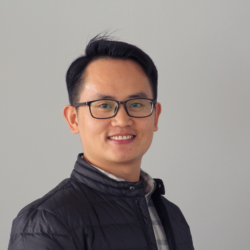
Adam Khan is a researcher affiliated with Yunnan University in China and Kohat University of Science and Technology in Pakistan, working within the Institute of International Rivers and Eco-Security and the Department of Botanical and Environmental Science. His research focuses on dendroclimatology , particularly reconstructing historical precipitation patterns in the Karakoram region using tree-ring chronologies . A landmark study published in International Journal of Climatology (2019) reconstructed 477 years of rainfall data, revealing critical dry and wet episodes and large-scale climate dynamics like ocean-atmosphere-land circulation patterns. The study highlighted increased drought risks in the region under climate warming scenarios. His work intersects with environmental science and hydrology , contributing to understanding glacier melt, water resource management, and climate change impacts on the Hindukush-Karakoram-Western Himalaya region. Collaborations include researchers like Feng Chen and Moinuddin Ahmed, with affiliations across China, Pakistan, and international institutions. No scientific awards or specific student advisement details were mentioned in the provided text.
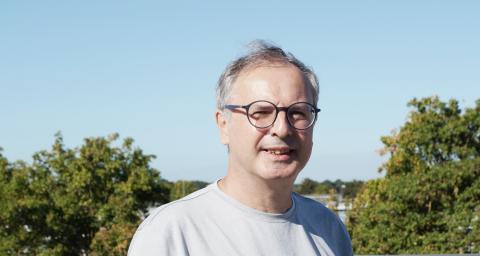
Hans Chen is an Assistant Professor in Geoscience and Remote Sensing at Chalmers University of Technology, Sweden. His research focuses on the interactions between the atmosphere and other components of the climate system, with particular emphasis on climate change and variability, Arctic warming and mid-latitude weather patterns, terrestrial carbon cycle dynamics, and observation-based estimation of greenhouse gas emissions. Dr. Chen's research interests span multiple critical areas of climate science. His work on Arctic warming investigates the connections between declining sea ice and changing weather patterns in mid-latitudes. He also studies terrestrial carbon cycle dynamics, examining how vegetation responds to climate variability and how these responses feed back into the climate system. A significant portion of his research involves developing methods for monitoring human emissions of carbon dioxide using satellite observations, which has important implications for climate policy and emissions verification. Dr. Chen leads several significant research projects including 'Unveiling the impacts of vapor pressure deficit on forest productivity (VAPOR)' (2024-2025), 'Arctic carbon cycle dynamics' (2024-2026), and 'Monitoring anthropogenic carbon dioxide emissions from space' (2023-2025). He is also a key participant in the long-running 'ModElling the Regional and Global Earth system (MERGE)' project that began in 2010. His scientific contributions span interdisciplinary research connecting atmospheric science, climate modeling, remote sensing, and environmental policy. Analysis of his recent publications reveals a strong focus on Arctic climate processes, carbon cycle dynamics, and the development of satellite-based monitoring techniques for greenhouse gases. His work frequently employs advanced statistical methods, machine learning approaches, and data assimilation techniques to extract meaningful insights from complex climate datasets. Dr. Chen collaborates with researchers across Europe and internationally, working with funding from organizations including the European Commission, Hasselblad Foundation, and the Swedish National Space Board. His research has practical applications for climate monitoring, emissions verification, and understanding the complex feedbacks within the Earth's climate system.
Wengui Liang serves as Assistant Professor in the Department of Oceanography & Coastal Sciences at Louisiana State University, operating from the Energy, Coast & Environment Building. His academic foundation includes a B.A. (2014) and M.S. (2017) from Peking University, culminating in a Ph.D. from SUNY Stony Brook (2023). Bachelor of Arts, Peking University (2014) Master of Science, Peking University (2017) Ph.D., State University of New York at Stony Brook (2023) Professor Liang's research centers on extreme precipitation mechanisms within climate dynamics, with emphasis on hydrological cycle responses to global warming. His work dissects atmospheric general circulation patterns driving regional extremes, particularly across North America and East Asia. Through model-observation comparisons, he investigates how radiative forcing and internal variability shape precipitation trends at seasonal scales, addressing critical gaps in climate projection reliability. Analysis of his 2016-2024 publications reveals consistent focus on regional hydroclimatic responses: early work examined paleoclimate oscillations (AO/NAO), while recent studies quantify CO2-driven precipitation changes, eddy moisture convergence shifts, and seasonal contrast mechanisms. Key themes include North American summer precipitation sensitivity, East Asian monsoon scaling with warming, and transient winter precipitation dynamics—all highlighting atmospheric circulation's role in hydrological extremes. No scientific awards are documented in available sources. As an emerging researcher (PhD 2023), Professor Liang is establishing his independent research program with active publications in top journals (Geophysical Research Letters, Communications Earth & Environment). While specific grant details aren't public, his publication trajectory suggests successful early-career funding. He likely seeks motivated graduate students for projects involving climate model diagnostics, extreme event attribution, and regional climate change assessment. Though no formal lab name is specified, his research group operates within LSU's Department of Oceanography & Coastal Sciences, leveraging university resources for climate model analysis and observational data processing. The group focuses on atmospheric dynamics-hydrology interactions, contributing to LSU's coastal and environmental research mission.
Dr. Jiaoyang Ruan is a distinguished Research Professor at Pusan National University and an IBS Young Scientist Fellow. Her academic trajectory includes a Ph.D. in Meteorology, Oceanography & Environmental Physics from Université Paris-Saclay (2017) and a BSc in Geology from China University of Geoscience Wuhan (2009). She has held progressive roles including ICCP Postdoc Research Fellow (2019–2023) and Associate Research Fellow at Sun Yet-sen University (2016–2019). Her research innovatively bridges paleoclimatology , human evolution , and geochemical analysis , with focus areas including: Climate impacts on hominin adaptation and genetic diversity Speleothem-based paleoclimate reconstructions Asian monsoon dynamics and isotope hydrology Model-proxy integration for Quaternary environments Global database development for climate proxies Publications demonstrate consistent output in high-impact journals (Science, Nature, PNAS), emphasizing climate-human interactions and proxy methodologies. Recent works (2022–2025) focus on hominin-climate linkages and monsoon systems, while earlier contributions (2014–2019) established expertise in speleothem geochemistry and isotopic calibration. Awards & Recognition: Young Scientist Fellowship, Institute for Basic Science (IBS) As an active contributor to global collaborations like the SISAL working group, she advances paleoscience infrastructure while mentoring through research networks. Lab resources and grants are unspecified in available data.
Yves Balkanski is a Senior Researcher at the Laboratory of Climate and Environmental Sciences (LSCE) within Université Paris-Saclay, CEA, CNRS, and UVSQ, and serves as Deputy Director of Institut Pascal at Université Paris-Saclay. With over 30 years of research experience, he specializes in atmospheric aerosols and their critical role in climate modeling systems. His work spans from understanding historical climate patterns through dust analysis to developing predictive models for future climate scenarios. Balkanski is part of the team developing one of France's two major "Earth system" climate models. His research focuses on the interactions between atmospheric aerosols and climate, particularly examining how dust particles influence radiation, temperature profiles, and precipitation patterns. He has made significant contributions to understanding desert dust cycles, especially regarding iron oxides in Sahelian dust and their impact on atmospheric warming and precipitation. His work connects historical climate data from ice cores and marine sediments with contemporary climate modeling to improve future climate predictions. Balkanski's publications reveal a strong focus on dust modeling, aerosol-climate interactions, and Earth system science. His recent work shows increasing emphasis on the connection between dust modeling and climate prediction accuracy, particularly regarding monsoon systems. The research spans multiple disciplines including atmospheric science, climate modeling, biogeochemistry, and environmental physics, with strong international collaboration evident across his publications. Highly Cited Scientist (HiCiSci) Balkanski has supervised 10 postdocs and 8 PhD students, including several Marie Skłodowska-Curie Fellowship winners. His leadership extends to major international projects including CLIMDO, CRESCENDO, PoleAsia, RED-DUST, and Imbalance-P. As Deputy Director of Institut Pascal, he plays a significant role in advancing interdisciplinary research across Université Paris-Saclay. His laboratory work centers on atmospheric aerosol modeling within the Earth system framework, with particular expertise in dust cycle modeling and its climate implications. Through his leadership roles and research direction, Balkanski has positioned his team at the forefront of understanding how natural aerosols influence both historical and future climate patterns.
Martin Finné serves as an Associate Professor in the Department of Human Geography at Uppsala University, Sweden. His academic work bridges climate science, archaeology, and human geography with a specific focus on Mediterranean environmental history. Dr. Finné's research interests encompass: Climate change history and paleoclimatology Human-environment dynamics in ancient Mediterranean societies Archaeological applications of climate science Socio-ecological resilience in historical contexts Mediterranean environmental history Interdisciplinary approaches to understanding climate-society interactions His scholarly approach integrates multiple methodologies including pollen analysis, speleothem records, and archaeological survey data to reconstruct past environmental conditions and societal responses. Finné's work spans multiple temporal scales from the Holocene through specific historical periods including the Bronze Age, Iron Age, and Roman era, with geographic focus primarily on Greece and the broader Mediterranean region. Analysis of his publication record reveals a consistent research trajectory examining the complex relationships between climate variability and societal development, adaptation, and transformation. His work frequently addresses questions of societal resilience and vulnerability to environmental change, particularly investigating 'boom-bust' sequences in agricultural landscapes and long-term sustainability of human societies. Dr. Finné has published extensively in high-impact interdisciplinary journals including The Holocene, PLOS ONE, Journal of Anthropological Archaeology, and Quaternary Science Reviews, demonstrating significant contributions to understanding climate-society interactions in the ancient Mediterranean.
Lai-yung Ruby Leung is a Battelle Fellow at Pacific Northwest National Laboratory (PNNL) working in Earth Systems Analysis & Modeling. She serves as Chief Scientist of the Energy Exascale Earth System Model (E3SM) supported by the U.S. Department of Energy, leading major efforts to develop state-of-the-art capabilities for modeling human-Earth system processes on high-performance computers. Dr. Leung's research broadly spans climate and hydrological cycle modeling with expertise in land-atmosphere interactions, orographic processes, monsoon climate, and climate extremes. Dr. Leung earned her educational credentials from prestigious institutions: Ph.D., Atmospheric Science, Texas A&M University M.S., Atmospheric Science, Texas A&M University B.S. (Honors), Physics & Statistics, Chinese University of Hong Kong Her research interests focus on regional and global climate modeling , land-atmosphere interactions , and the regional hydrologic cycle . She investigates orographic precipitation mechanisms, climate extremes, climate variability and change, and aerosol-cloud interactions. Her work integrates advanced modeling techniques with observational data to understand complex Earth system processes, with research featured in Science , Popular Science , Wall Street Journal , and National Public Radio . Dr. Leung has published over 500 peer-reviewed papers and serves as an editor for the American Meteorological Society's Journal of Hydrometeorology . Analysis of Dr. Leung's recent publications reveals her leadership in developing and applying the Energy Exascale Earth System Model (E3SM), with significant contributions to understanding mesoscale convective systems, soil moisture dynamics, urban hydrology, and climate extremes. Her work demonstrates increasing integration of machine learning techniques with traditional climate modeling approaches, particularly in model evaluation frameworks and high-resolution simulations. She maintains strong focus on practical applications of climate science for understanding water resources, extreme weather events, and climate change impacts. Dr. Leung's scientific recognition includes: Election to the National Academy of Engineering (NAE) Election to the Washington State Academy of Sciences (WSAS) Fellow of the American Geophysical Union (AGU) Fellow of the American Meteorological Society (AMS) Fellow of the American Association for the Advancement of Science (AAAS) AMS Hydrologic Sciences Medal (2022) U.S. Department of Energy Office of Science Distinguished Scientist Fellow (2021) Reuter's Hot List of top 1,000 most influential climate scientists (2021) AGU Jacob Bjerknes Lecture (2020) AGU Bert Bolin Global Environmental Change Award (2019) As Chief Scientist of E3SM, Dr. Leung leads major research initiatives funded by the Department of Energy and has organized key workshops sponsored by DOE, NSF, NOAA, and NASA. She has served on numerous advisory panels and National Academies committees that define future priorities in Digital Twin, AI/ML, climate modeling, hydroclimate, and water cycle research. Her professional service includes membership on the Board on Atmospheric Sciences and Climate of the National Academies, council membership with the American Meteorological Society, and editorial roles for prominent journals. Dr. Leung directs research within PNNL's Earth Systems Analysis & Modeling group, collaborating with national and international climate research teams. She leads efforts to advance the Energy Exascale Earth System Model (E3SM), which represents cutting-edge capabilities in modeling human-Earth system processes. Her work connects with multiple PNNL research areas including atmospheric science, global change, and coastal science, contributing to the laboratory's mission of addressing complex environmental challenges through scientific innovation.
John P George is a prominent researcher at the National Centre for Medium Range Weather Forecasting (NCMRWF) specializing in Numerical Weather Prediction, Data Assimilation, and Atmospheric Modeling. His work primarily focuses on improving tropical cyclone forecasting, monsoon systems, and satellite data assimilation techniques for the Indian region. His research interests span Numerical Weather Prediction Data Assimilation techniques Atmospheric Modeling Tropical Cyclone forecasting Monsoon systems Satellite meteorology Analysis of his publication record from 2008-2022 reveals a strong focus on improving numerical weather prediction models, particularly for tropical cyclones over the Bay of Bengal and Indian monsoon systems. His work demonstrates expertise in high-resolution modeling, vortex initialization techniques, and satellite data assimilation. Key trends in his research include the development of 4D-Var data assimilation methods, evaluation of different model versions for cyclone prediction, and simulation of extreme weather events using progressively higher resolution models. His scientific contributions include Development of India's first integrated expert urban flood forecasting system for Chennai Implementation of vortex initialization techniques that reduced track errors by ~58% Assimilation of INSAT-3D imager data that improved humidity and wind field forecasts Validation of soil moisture products over Indian regions Dr. George's research has significantly contributed to improving the accuracy of numerical weather prediction models in India, particularly for high-impact weather events like tropical cyclones and monsoon depressions. His work bridges the gap between theoretical atmospheric modeling and operational weather forecasting needs in the Indian context.
Dr. Dionysios Raitsos is an Assistant Professor and Honorary Fellow at Plymouth Marine Laboratory (PML), where he researches satellite remote sensing applications for marine ecosystems. His career includes post-doctoral positions at the Hellenic Centre for Marine Research (HCMR) in Greece and King Abdullah University of Science and Technology (KAUST) in Saudi Arabia, followed by a Senior Research Scientist role at PML (2013-2019). Educational background: BSc in Marine Biology, Newcastle University MSc in Fisheries Science, University of Aberdeen PhD in Satellite Oceanography, University of Plymouth Research focuses on: Satellite monitoring of ocean colour and phytoplankton dynamics Climate-driven variability in marine ecosystems (Red Sea, Atlantic, Mediterranean) Fisheries science and plankton biogeography Environmental impacts of ocean warming and monsoon oscillations Publications emphasize long-term satellite data analysis, revealing trends in chlorophyll anomalies, phytoplankton blooms, and coral reef connectivity. His work with the Remote Sensing Group employs sensors like MODIS-Aqua to validate ecological models across diverse marine regions.
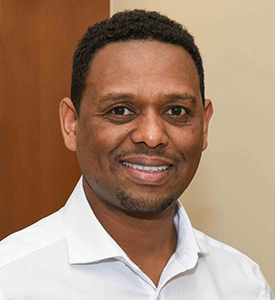
Dr. Zelalem Bedaso is a Full-Time Associate Professor in the Department of Earth and Environmental Geosciences at the University of Dayton's College of Arts and Sciences. His research bridges paleoenvironmental reconstruction and modern hydrological systems, primarily using stable isotope geochemistry. Key affiliations remain centered at the University of Dayton, with extensive fieldwork in Ethiopia's Afar Rift Valley and hydrological studies in Ohio. Research interests span: Paleoclimate & Human Evolution : Isotopic analysis of fossil tooth enamel and paleosols to reconstruct vegetation, animal diets, and aridity patterns in East Africa during the past 5 million years. Modern Hydrology : Precipitation/groundwater isotope studies in Ethiopia and the US Midwest to model climate impacts on water resources and moisture sources. Recent articles (2020-2022) demonstrate a focus on isotope hydrology in Ethiopia and Ohio, while earlier works (2010-2016) emphasize paleodietary reconstruction in human evolution contexts. Trends include high-impact publications in Journal of Hydrology and Science of The Total Environment . Active grants include NSF awards totaling $466K (2021-2025) for climate-water research in Africa. Dr. Bedaso teaches courses across geology and environmental science, including field methods and geochemistry.
Dr. Molly Moynihan serves as Assistant Professor in the Department of Geosciences at Florida Atlantic University, where she leads the Coral Reef Geochemistry & Microbiology Lab (Reef GeM Lab). Her research bridges marine geology, biogeochemistry, and microbial ecology to investigate fundamental processes sustaining coral reef ecosystems. Her academic training includes: Ph.D. in Marine Biogeochemistry from Nanyang Technological University, Singapore (2021) M.S. in Oceanography & Marine Environments from Sorbonne University, France (2014) B.S. in Earth Science from Cornell University (2011) Dr. Moynihan's work centers on the intricate relationships between coral skeletons, endolithic microbes, and biogeochemical cycles. She employs isotope labeling , microsensor technology , and microbiome analysis to unravel how microbial communities within reef frameworks influence skeletal formation, mechanical properties, and nutrient cycling. A significant focus examines green sulfur bacteria in coral microenvironments and their role in sulfur cycling under changing environmental conditions. Her research has particular relevance for understanding coral resilience mechanisms in equatorial reef systems. Analysis of her 11 publications (2012-2025) reveals a strategic evolution from coastal pollution studies toward specialized coral-microbe interactions. Recent work demonstrates sophisticated integration of biomechanical testing with microbial ecology, particularly in high-impact studies on Porites skeletal anisotropy (2022) and coral-associated nitrogen fixation (2022). Her research consistently targets equatorial reef systems, with fieldwork concentrated in the Singapore Strait and Southeast Asian waters. Dr. Moynihan actively mentors graduate students through PhD recruitment in the Reef GeM Lab, emphasizing hands-on training in both field and advanced laboratory techniques. Her lab maintains operational funding through university support and collaborative grants with coral restoration initiatives, enabling participation in regional conservation efforts. Current projects focus on enhancing outplanted coral resilience through microbial community management. The Reef GeM Lab operates as a dynamic research hub where field observations from active reef sites directly inform controlled laboratory experiments . The lab's collaborative framework connects FAU with international research institutions and local restoration practitioners, creating a pipeline from fundamental discovery to applied conservation solutions for threatened coral ecosystems.
Ana Luiza Spadano Albuquerque is a Full Professor at the Geology and Geophysics Department of Fluminense Federal University in Brazil. Her research specializes in Paleoceanography and Paleoclimatology , with a geographic focus on the South Atlantic region and Brazilian sedimentary basins. Her work investigates climate-ocean interactions through geological time, utilizing geochemical proxies in marine sediments to reconstruct past environmental conditions. Key themes include oceanic anoxic events, mercury deposition cycles, deglacial climate feedbacks, and river discharge dynamics. She employs interdisciplinary approaches combining field data, isotopic analysis, and climate modeling. Recent publications (2022) demonstrate a consistent focus on South Atlantic climate archives, particularly concerning glacial-interglacial transitions, carbon cycle perturbations, and anthropogenic impacts on marine systems. Research methodologies emphasize sediment geochemistry, paleothermometry, and multi-proxy validation.
James D. Wright is a Professor and Department Chair in the Department of Earth and Planetary Sciences at Rutgers University's School of Arts and Sciences. His office is located in 233G Wright Geological Laboratory, and he can be reached at (848) 445-3445 or jdwright@eps.rutgers.edu. Ph.D., M.Phil., Columbia University M.S., University of South Carolina B.S., Louisiana Tech University B.S., Ouachita Baptist University Dr. Wright's research centers on understanding how past ocean circulation changes influenced climates across various time scales. His primary research tool is the analysis of stable oxygen and carbon isotopes in marine organisms, which record sea surface temperature variations, ice volume changes, and reorganization of surface and deep-water circulation patterns. He works with pre-Pleistocene sediments to reconstruct deep-water circulation patterns in the North Atlantic for the past 25 million years, finding correlations between changes in circulation and major climate transitions. His work also extends to late Pleistocene and Holocene projects, including surface salinity variations in the North Atlantic and marine climate reconstructions along northwestern Peru. His extensive publication record shows consistent focus on paleoceanography and climate change, with particular emphasis on the Paleocene-Eocene Thermal Maximum, Miocene climate transitions, and monsoon system evolution. The research spans multiple geographic regions including the North Atlantic, Maldives carbonate platform, and East African Rift system, utilizing diverse methodologies from stable isotope analysis to magnetic property measurements and sedimentological studies. As Department Chair, Dr. Wright teaches undergraduate courses including Planet Earth (01:460:100) and Major Events in Earth History (01:460:480), along with graduate courses in Paleoceanography, Stable Isotopes in the Environment, and Marine Geology. His laboratory work includes the operation of a Micromass Optima mass spectrometer with a Multiprep device for automated analysis of δ 18 O and δ 13 C values in carbonate samples.