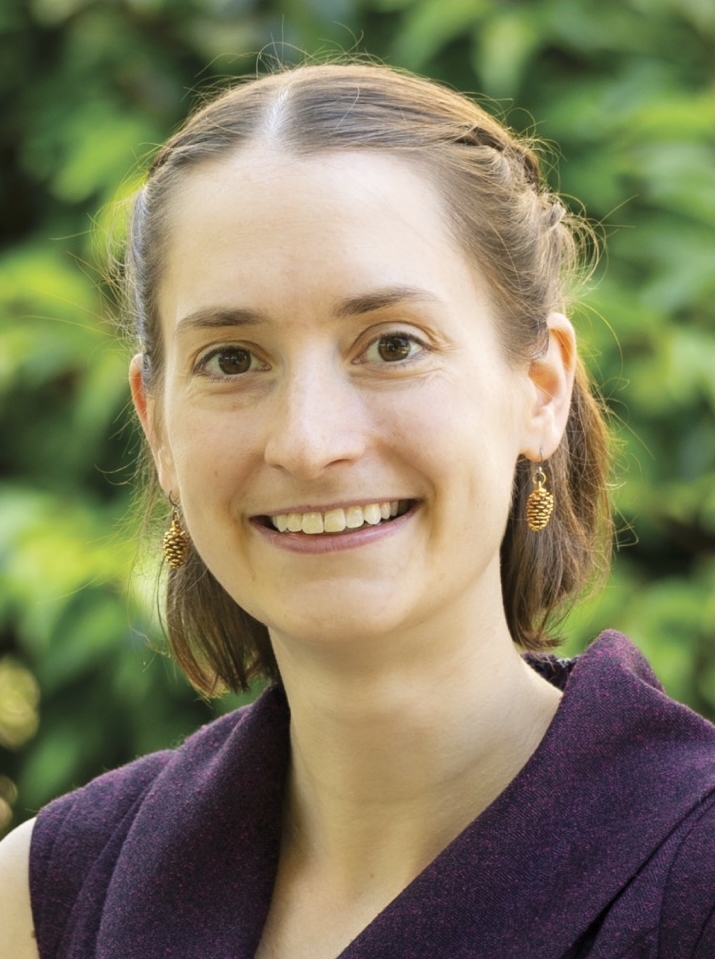
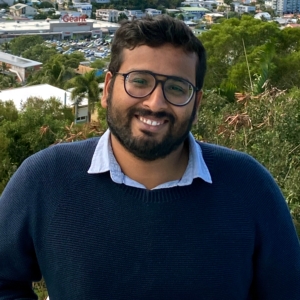
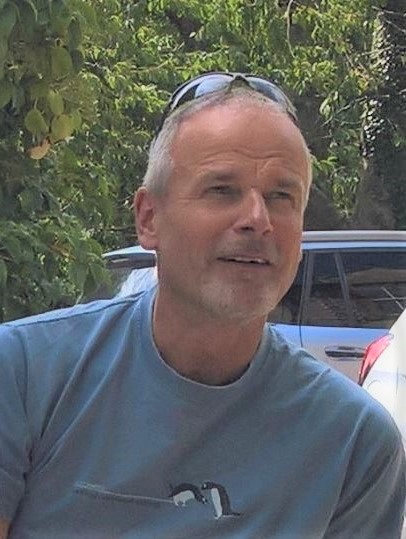
Loretta J. Mickley is a Senior Research Fellow at Harvard University's John A. Paulson School of Engineering and Applied Sciences. Her research focuses on chemistry-climate interactions in the troposphere , with key topics including wildfire smoke impacts, climate change effects on air quality, and aerosol-radiation interactions. Wildfire smoke and health impacts Climate-air quality feedbacks Aerosol trends and climate forcing Paleo atmospheric chemical cycles Recent research trends span wildfire risk modeling, biomass burning exposure, and air quality sensor optimization. Publications emphasize atmospheric transport , chemical feedbacks , and health disparities in regions like California, Australia, and the Amazon. Her work informs climate policy and public health interventions , particularly in environmental justice communities and rapidly urbanizing tropical regions. She co-leads Harvard's Atmospheric Chemistry Modeling Group .
Emma Hill is a Professor at the Asian School of the Environment and Interim Director of the Earth Observatory of Singapore (EOS) at Nanyang Technological University (NTU), Singapore. Her research focuses on space geodesy applications to climate change and natural hazards, particularly earthquake risks in the Sumatran subduction zone and sea-level variations through GRACE satellite data and tide-gauge networks. Research Themes : Tectonic deformation, coastal sea-level monitoring, geodetic data fusion Technologies Used : High-precision GPS, GRACE satellite gravity, GNSS Interferometric Reflectometry Her work emphasizes interdisciplinary approaches to separate geophysical processes in the Earth system. She leads the Geodesy Group , which integrates geodetic observations with broader geoscience research.
Nik Callow is an Associate Professor at the UWA School of Agriculture and Environment and co-Director of the UWA Centre for Water and Spatial Science. His expertise spans hydrology, geomorphology, remote sensing, and GIS. He leads major projects like the Australian Plant Phenomics Network (APPN) and WaterSmart Dams, focusing on water-dependent ecosystems and spatial science innovations. Callow oversees UWA’s drone operations and supports ~60 drone pilots. He teaches courses in geographical sciences and environmental monitoring, and his research integrates drone technology with climate change studies. Education: PhD in Geography (UWA, 2007), GCHEd (UQ, 2011) Affiliations: Member of the Western Australian EPA Expert Scientific Advisory Council, Resilient Landscapes Hub (NESP), and multiple industry collaborations. Research interests include ecohydrology, marginal snowpacks, and palaeoclimate studies. Projects address water management, biodiversity, and climate resilience in Australia and globally. His work has received the EGU Jim Dooge Award (2020) for contributions to wetland salinity research. Active grants include partnerships with Snowy Hydro, Rio Tinto, and the Grains Research and Development Corporation. Teaching focuses on field science, GIS, and climate processes.
Li Li is a Professor in the Department of Civil and Environmental Engineering at Pennsylvania State University. She leads the Li Reactive Water research group, focusing on the Critical Zone and its response to climate change and human activities. Her work examines interactions between water, soils, rocks, roots, and microbes, with implications for water quality and sustainability. Research interests include reactive transport modeling, stream chemistry dynamics, and the impacts of climate extremes on hydrological systems. She has contributed to high-profile studies such as the discovery of ancient carbon release via rivers and the effects of extreme rainfall on nutrient loss in American soils. Recent recognitions include dual awards from the Earth and Space Association (2024) and being named an Institute of Energy and the Environment Fellow. Her lab actively collaborates on projects like the BioRT-HBV model and applications of deep learning in hydrological data analysis. Key projects: Facilitating environmental investigations with single-column models, maximizing CO₂ trapping in geological formations Leadership roles: IEE Fellow, Principal Investigator of NSF-funded research
Eric Kirby is an Adjunct Research Professor in the Department of Earth, Marine, and Environmental Sciences at the University of North Carolina at Chapel Hill, within the College of Arts and Sciences. He is actively engaged in tectonics and geomorphology research, leading the Tectonics and Geomorphology Lab. Education: Ph.D., Massachusetts Institute of Technology (2001) M.S., University of New Mexico (1994) B.A., Hamilton College (1992) Dr. Kirby's research centers on the interplay between tectonics, climate, and erosion in shaping mountainous landscapes. His work spans active mountain belts globally, with a focus on the Tibetan Plateau, convergent margins, and active fault systems. He investigates landscape responses to rock uplift, mantle flow, and hydrological processes, integrating field observations with geochronology and geophysical data. His recent publications reveal a strong trend in Quaternary tectonics, paleoseismology, fluvial geomorphology, and climate-tectonics coupling. Key themes include fault slip rate quantification, paleolake evolution, river terrace formation, and transient landscape responses to base-level changes, primarily in high-elevation and tectonically active regions. Scientific Awards: No awards listed in the provided text. Dr. Kirby actively mentors graduate students and collaborates on funded research projects involving landscape evolution, critical zone dynamics, and tectonic geomorphology. His work is supported by publications in top-tier journals and collaborations with leading institutions. He advises several students, including W.M. Rittase, Q. Su, N. West, and X. Shi, who appear as first authors on joint publications. He leads the Tectonics and Geomorphology Lab , which conducts research on active tectonics, surface processes, and landscape evolution using field mapping, remote sensing, and numerical modeling techniques.
Marysa Laguë is an Assistant Professor in the Department of Geography within the Faculty of Arts at the University of British Columbia. She is a climate scientist specializing in understanding how terrestrial processes impact the atmosphere and surface climate across scales from individual plants to entire planets. Her research focuses on how changes in the land surface modify energy and water fluxes between the land and atmosphere, and how these changes subsequently affect atmospheric dynamics and climate both locally and remotely. Dr. Laguë serves as a member of the Graduate and Postdoctoral Studies program at UBC. Dr. Laguë earned her PhD in Atmospheric Sciences and MSc degrees in both Atmospheric Sciences and Applied Mathematics from the University of Washington. Her educational background provides her with strong theoretical and modeling expertise that informs her comprehensive research approach. Her research can be broadly categorized into three interconnected areas: understanding land-atmosphere interactions in the modern climate system, exploring fundamental physical connections between terrestrial and planetary processes using idealized models, and climate model development. She studies how changes in vegetation impact cloud formation, temperatures, water vapor, and atmospheric circulation in ways that can feed back on surface climate. On the idealized side, she investigates how continental configurations fundamentally alter global-scale climate patterns. Her work often involves developing and using numerical models of varying complexity to quantify land's role in the coupled Earth System. She is particularly interested in understanding where the atmosphere cares about changes in the land surface, and what particular properties of the land surface it is that the atmosphere cares about. Dr. Laguë's recent publications demonstrate a consistent focus on land-atmosphere interactions, with particular emphasis on how terrestrial evaporation, surface albedo, and vegetation properties influence climate dynamics. Her research spans from local-scale processes to planetary-scale phenomena, including studies of exoplanet climates. She frequently employs both complex Earth system models like the Community Earth System Model and idealized modeling frameworks to isolate specific mechanisms. A recurring theme across her work is the development and application of the Simple Land Interface Model (SLIM), which allows researchers to test how individual land-surface properties modify energy and water fluxes to the atmosphere. Dr. Laguë is actively involved in mentoring graduate students and is interested in supervising Master's students, Doctoral students, and Postdoctoral Fellows. She supports interdisciplinary research collaborations and is open to supervising students interested in public scholarship through the Public Scholars Initiative. She also encourages experiential learning opportunities like internships for her graduate students and emphasizes the importance of interdisciplinary research approaches. She is the lead scientific developer of the Simple Land Interface Model (SLIM), an idealized land surface model that couples with the Community Earth System Model. This tool allows researchers to isolate the effects of individual land surface properties on the Earth system. Her work has significant implications for understanding climate change impacts, land management strategies, and even the potential habitability of exoplanets. Her research methodology includes using climate models, Earth system models, numerical Earth system models, Python, Jupyter, the Coupled Model Intercomparison Project (CMIP), and Fortran programming for climate model development.
Vishnu S Nair serves as Assistant Professor (Grade I) in the School of Earth, Environmental and Sustainability Sciences at IISER Thiruvananthapuram since January 2024, following postdoctoral positions at IRD-France (2022-2023) and UC Berkeley (2019-2021). His research bridges tropical meteorology and climate science with practical applications for monsoon forecasting and climate adaptation. Education PhD in Meteorology & Oceanography, ESSO-INCOIS/Andhra University (2011-2017) Dr. Nair's research centers on monsoon low-pressure systems, investigating their historical variability, climate change impacts, and connections to extreme rainfall events. He develops advanced tracking algorithms and dynamical downscaling techniques to improve climate projections for vulnerable regions like South Asia and Pacific Islands. His work integrates observational analysis, climate modeling, and real-time forecasting systems to address critical questions about monsoon dynamics under global warming. His 14 publications (2014-2023) reveal consistent focus on monsoon system behavior, with recent work emphasizing future projections of low-pressure systems and observed increases in extreme rainfall rates. Key methodologies include high-resolution modeling, global dataset creation, and teleconnection analysis between monsoons and phenomena like ENSO and IOD. Scientific Recognition Gold Medal for Best PhD Thesis, Andhra University (2018) Junior Research Fellowship with Lectureship, CSIR-UGC (2011) CLIPSSA Postdoctoral Fellowship at IRD-France (2022-2023) Monsoon Mission Postdoctoral Fellowship at UC Berkeley (2019-2021) Dr. Nair actively recruits PhD candidates (requiring CSIR-JRF/GATE fellowships) and offers winter/summer internships in tropical meteorology. His research is supported by international projects including CLIPSSA for Pacific Island climate adaptation and India's Monsoon Mission for forecasting improvements. He contributes to global monsoon datasets used by meteorologists worldwide and serves as referee for leading journals like Geophysical Research Letters . He leads the Monsoon Dynamics Research Group at IISER-TVM, collaborating with institutions including Météo-France, UC Berkeley, and Indian climate research centers. Current initiatives focus on dynamical downscaling for island-scale climate projections and real-time tracking systems for monsoon low-pressure systems.
Summer Rupper is a Professor at the School of Environment, Society & Sustainability at the University of Utah, where she has held her position since July 2019. Her research focuses on understanding the interactions between climate, glaciers, and water resources, with particular emphasis on high mountain regions including High Mountain Asia, the Himalayas, and polar regions. She leads multiple research projects examining glacier dynamics, hydrological processes, and climate change impacts on water security for downstream populations. BS in Geology from Brigham Young University (2001) MS in Geology from University of Washington (2004) PhD in Earth and Space Sciences from University of Washington (2007) Professor Rupper's research spans physical geography, environmental geoscience, and climate change science, with specific expertise in glaciology, hydrology, and atmospheric sciences. Her work integrates field measurements, remote sensing, and numerical modeling to understand glacier dynamics, snow processes, and water resource availability in mountainous regions. She has particular expertise in High Mountain Asia, where glaciers provide critical water resources for over a billion people. Her research addresses fundamental questions about glacier response to climate change, hydrological partitioning, and the implications for water security in vulnerable regions. Her recent publications demonstrate a consistent focus on understanding glacier dynamics, hydrological processes, and climate interactions in mountainous regions. The work spans multiple methodologies including remote sensing analysis, numerical modeling, statistical approaches, and field-based measurements. Key themes include glacier melt contributions to river systems, precipitation patterns in complex terrain, snow density modeling, and the impacts of climate change on water resources in High Mountain Asia and polar regions. Her research often integrates multiple data sources and approaches to address complex questions about cryospheric processes and their societal implications. Superior Research Award (2024, CSBS, University of Utah) G.K. Gilbert Award for Excellence in Geomorphic Research (2022) Outstanding Utah Higher Education Science Teacher (2021) Top Researcher Award, Celebrate U showcase (2017) Antarctic Service Medal (2010, USAF) Professor Rupper actively mentors graduate students through thesis research courses at both the PhD and Master's levels, as well as individual projects. She has secured significant research funding from multiple federal agencies including NSF, NASA, and USAID, with current projects examining climatic controls on Antarctic ice sheets, glacier dynamics in High Mountain Asia, and historical glacier changes. Her collaborative work extends across international boundaries, working with scientists in Pakistan, Bhutan, and other regions to address shared water security challenges. She also engages in community outreach through workshops with school districts and science teacher associations to communicate climate science to broader audiences. Professor Rupper participates in multiple collaborative research teams including the NASA High Mountain Asia Team (HiMAT), where she contributes expertise in glacier dynamics and hydrology. She serves on several scientific committees including the NSF Ice Core Facility Sample Allocation Committee and the American Geophysical Union Cryosphere Section Fellows Committee. Her research often involves interdisciplinary teams combining expertise in glaciology, hydrology, remote sensing, and climate modeling to address complex questions about mountain water systems under changing climate conditions.
Ulrich Salzmann is a Professor of Palaeoecology & Palaeoclimatology at the Department of Geography & Environmental Sciences, Northumbria University, and Director of the NERC Doctoral Training Partnership ONEPlanet. His research focuses on reconstructing past environments, particularly in tropical and polar regions, with an emphasis on understanding climate-vegetation interactions and human impacts. Prior to his current role, he worked at institutions including the British Antarctic Survey and the Leibniz Centre for Tropical Marine Research. Salzmann holds a PhD in vegetation and climate history from the University of Frankfurt (1998) and an MSc in 1994. He is a Fellow of the Higher Education Academy (2018). His research projects include global climate proxy data synthesis, Antarctic and Arctic climate studies, and the role of early human influence on vegetation. His work integrates palynology with numerical climate models to improve future climate predictions. Key research interests include polar glaciation mechanisms, Eocene-Oligocene transitions, and Pliocene climate analogs. He collaborates internationally on initiatives like the Pliocene Model Intercomparison Project (PlioMIP3) and the NERC ONEPlanet DTP. His publications span over 30 years, addressing topics from Antarctic amber discovery to mangrove resilience in Indonesia. Salzmann’s labs and teams focus on interdisciplinary paleoenvironmental reconstruction, combining fieldwork, proxy data analysis, and model simulations. His work contributes to understanding climate feedbacks and informing sustainable environmental management strategies.
Stephen J. Burns is a Professor in the Department of Geosciences at the University of Massachusetts Amherst, within the College of Natural Sciences. His research centers on paleoclimatology using speleothems as high-resolution archives of continental climate change. He investigates stable isotopes and trace elements to reconstruct past precipitation and monsoon dynamics, with a focus on tropical and subtropical regions such as Mexico, Madagascar, South America, and Southeast Asia. Education: Ph.D., Duke University, 1987 (Dolomite Geochemistry) M.S., University of North Carolina (Carbonate Sedimentology) B.A., Rice University Post-11 years at University of Bern, Switzerland His research focuses on understanding climate variability on orbital to decadal timescales, especially in continental regions where data are sparse. He uses speleothems—cave deposits like stalagmites—as 'underground ice cores' to extract paleoclimate signals from oxygen and carbon isotopes. His work explores climate-culture interactions, including links between climate shifts and the decline of the Mayan civilization and Madagascar's megafauna. He has led major projects in the Yucatan, Peruvian Andes, Oman, Yemen, Brazil, and Vietnam, often in collaboration with anthropologists and international climate scientists. The recent publications reflect a strong trend in tropical paleoclimatology, with emphasis on monsoon systems, interhemispheric climate dynamics, and human-environment interactions during the Holocene and Late Pleistocene. His work frequently appears in top-tier journals such as Science , PNAS , and Geophysical Research Letters , demonstrating both methodological rigor and broad scientific impact. Scientific Awards: No awards explicitly mentioned in the text. Stephen J. Burns actively mentors students and leads interdisciplinary research teams. He has secured sustained funding for field expeditions and laboratory analyses, though specific grants are not listed. His collaborations span departments (e.g., Anthropology at UMass) and institutions (e.g., MIT, Duke, international universities). He is currently engaged in three major speleothem-based projects: (1) climate variability in the Yucatan and its link to Mayan cultural evolution, (2) environmental history of Madagascar and megafaunal extinction, and (3) climate change in Vietnam with David McGee (MIT). These efforts are supported by advanced geochemical facilities and fieldwork logistics. Labs and Research Teams: Geochemistry and Paleoclimate Laboratory at UMass Amherst (implied through research activity) Collaborative network with stable isotope labs (e.g., Cheng/Edwards lab for U-Th dating) Field teams in tropical cave systems across multiple continents Interdisciplinary group including anthropologists and climate modelers
Amanda Maycock is Professor in Climate Dynamics at the University of Leeds' School of Earth and Environment, where she directs the Institute for Climate and Atmospheric Science (ICAS). She holds an MPhys from Manchester (2006), MSc (2008) and PhD (2012) in Atmosphere, Oceans and Climate from Reading. Her research specializes in climate dynamics, atmospheric circulation, stratosphere-troposphere interactions, and radiative transfer, with ongoing projects including ExtAnt, TWISTA, and the Leverhulme Prize-funded climate dynamics initiative. Research interests span: Climate variability and change mechanisms Atmospheric teleconnections and jet stream dynamics Stratospheric impacts on surface climate Chemistry-climate feedbacks including ozone layer interactions Radiative transfer modelling and climate projections Her recent publications (2020-2025) demonstrate strong focus on: Arctic-midlatitude climate linkages and jet stream behavior ENSO teleconnections and hydrological extremes Polar vortex influences on European storminess Climate mitigation impacts on stratospheric temperature Renewable energy-climate interactions Scientific honors include: Philip Leverhulme Prize (2018) Arne Richter Award for Early Career Researchers (2019) STAC Outstanding Early Career Award (2022) water@leeds Water Woman Award (2023) NERC Independent Research Fellowship (2015-2020) She leads 12 PhD students including projects on atmospheric rivers, ENSO dynamics, and jet stream extremes, supported by NERC, EPSRC, and Met Office collaborations. Current grants include £5M+ from Horizon Europe, Wellcome Trust, and UKRI for projects examining Antarctic extremes (ExtAnt), stratospheric aerosols (TWISTA), and sustainable aviation (JetZero). Directs ICAS research group with 4 postdoctoral researchers and coordinates the NERC PANORAMA DTP Atmosphere Theme. Contributes to IPCC assessments and co-chairs WCRP/SPARC initiatives on atmospheric temperature changes.
Professor Geoff Duller has been a faculty member at Aberystwyth University's Department of Geography & Earth Sciences since 1995, holding a Personal Chair since 2005. He studied Geography at St Catherine's College Oxford (BA 1987), completed his PhD in 1992 at Aberystwyth on luminescence dating of Quaternary sediments in New Zealand, and established the Aberystwyth Luminescence Research Laboratory in 2000. His research focuses on luminescence dating method development and application, particularly for Quaternary environmental change studies. Key contributions include creating single-aliquot dating methods and leading the NERC-funded BRITICE-Chrono project for ice sheet deglaciation chronology. He serves as Associate Editor of Radiation Measurements and editor of Journal of Quaternary Science , with editorial board membership at Ancient TL . His article portfolio demonstrates expertise in: Luminescence signal analysis (2025: IRPL/IRSL in feldspars; 2024: opercula thermoluminescence) Quaternary chronology (2025: Thar desert floodouts; 2024: Tibetan glaciofluvial sediments) Methodological innovation (2025: EMCCD crosstalk reduction; 2024: pIRIR protocol optimization) Scientific recognition includes the Bigsby Medal (2012). Current supervision includes PhD students Robyn Pinder, Svenja Riedesel, and Nina Ataee. He co-directs the Aberystwyth Luminescence Research Laboratory and manages specialized equipment including Risø luminescence readers.
Geeta Persad is an Assistant Professor in the Department of Earth and Planetary Sciences at the Jackson School of Geosciences, University of Texas at Austin. She leads the Persad Aero-Climate Lab, focusing on global climate modeling to understand aerosol impacts on climate change and societal systems. Her work examines how aerosol emissions influence regional climate variability, extreme weather events, and water resource management in the U.S. and globally. Research emphasizes aerosol radiative forcing effects on heatwaves, hydroclimate extremes, and land-atmosphere interactions. Key interests include quantifying the spatial distribution of aerosol impacts and developing climate models to support decision-making for water management and policy. Recent publications (2023-2025) highlight studies on aerosol-driven climate responses, shipping emission reductions, and regional climate model downscaling for hazard assessment. The lab collaborates on interdisciplinary projects linking climate physics to human systems, including the Regional Aerosol Model Intercomparison Project (RAMIP). Awards and grants are not explicitly listed in the provided materials. Persad advises the Persad Aero-Climate Lab team, focusing on training early-career scientists in climate modeling and policy analysis.
Dr. Yuko M Okumura is a Research Associate Professor at the Institute for Geophysics within the Jackson School of Geosciences at the University of Texas at Austin. She specializes in climate dynamics, focusing on large-scale ocean-atmosphere interactions, ENSO phenomena, and paleoclimate studies. Her research synthesizes observational data and climate models to understand climate variability and teleconnections. Dr. Okumura has held positions at the University of Hawaii (Ph.D. in Meteorology, 2005), the International Pacific Research Center, and the National Center for Atmospheric Research before joining UTIG in 2011. She has received prestigious awards including the NOAA Climate and Global Change Postdoctoral Fellowship (2006-2009). Dr. Okumura's research areas include climate variability, ENSO dynamics, thermohaline circulation, and teleconnections. Notable contributions span ENSO predictability, Pacific decadal variability, and paleoclimate data assimilation. She has advised multiple Ph.D. students and served on committees for others. Her work emphasizes understanding climate mechanisms through interdisciplinary approaches. Scientific recognition includes the American Meteorological Society's Journal of Climate Editor's Award (2011) and leadership roles in conferences like the 18th Conference on Air-Sea Interaction (2012). Dr. Okumura actively contributes to climate science through editorial roles and committee participation, fostering collaboration across the field.
Till J.J. Hanebuth is a Professor in the Department of Marine Science at Coastal Carolina University's Gupta College of Science. He leads the Coastal Geosystems Research Lab and is actively involved in numerous research projects focusing on coastal and marine geoscience. His work spans both fundamental research on sea level variability, river deltas, and continental shelf processes, as well as applied research addressing silting, erosion, and contamination issues. His educational background includes: Habilitation in Marine Geosciences from University of Bremen, Germany (2010) D.Sc. in Marine Geology from Chr.-Albrechts-University Kiel, Germany (2000) M.Sc. in Geology-Paleontology from Philipps-University Marburg, Germany (1996) B.Sc. in Geology-Paleontology from University of Hamburg, Germany (1993) Hanebuth's research interests span a broad spectrum of marine geoscience topics with a particular focus on coastal systems in the Anthropocene. His work examines how climate-related rising water levels, weather events, rapid urbanization, and land-use practices modify coastal environments. He investigates sea level variability, river delta dynamics, sediment and hydrodynamics on continental shelves, paleoceanography, and the impacts of human activities on coastal systems. His research often involves international collaborations across multiple continents including Germany, Spain, Portugal, Brazil, and Argentina. Analysis of Hanebuth's recent publications reveals a strong focus on continental shelf processes, sediment dynamics, and coastal change across diverse geographical regions including Southeast Asia, the Gulf of Cadiz, the Bengal Shelf, and the southeastern United States. His work frequently integrates geological, oceanographic, and anthropogenic factors to understand coastal evolution. A notable trend is the increasing attention to human impacts on coastal systems and the development of high-resolution records of environmental change using sediment cores and acoustic data. Hanebuth actively mentors students at all levels through the VIP (Vertically Integrated Projects) program. Undergraduate students progress through successive project-integrated courses building technical skills, while graduate students develop thesis research within his Coastal Geosystems Research Lab. He currently supervises one Ph.D., two MS, and one undergraduate student on the Bengal Shelf project examining monsoon, cyclones, tectonics, subsidence, and anthropogenic impacts. His laboratory offers students hands-on experience with advanced techniques including sediment coring, geochemical analysis, seismo-acoustic data processing, scanning electron microscopy, FTIR polymer measurement, Ground-Penetrating Radar surveying, and Real-Time Kinematic GPS elevation surveying. The lab collaborates with universities and institutions across South Carolina, other U.S. states, and internationally in Germany, Spain, Portugal, Brazil, and Argentina.