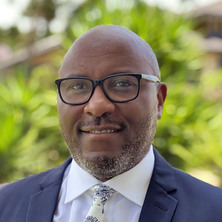
Dr Marten Moore is a Research Fellow at the Division of Plant Sciences, The Australian National University. His research focuses on understanding mRNA dynamics, plant stress responses, and photosynthesis efficiency through molecular and genetic approaches. He investigates how plants adapt to environmental stresses such as light fluctuations and salinity, with a particular emphasis on retrograde signaling pathways linking chloroplasts to nuclear responses. Dr Moore’s work integrates experimental and computational methods, including the development of tools like ConCysFind for analyzing conserved protein sequences across plant species. He collaborates on projects aimed at enhancing crop resilience through improved energy use efficiency and yield stability, leveraging insights from wheat and Arabidopsis models. Key Projects: Using RNA regulation to improve energy use efficiency and boost yield in wheat (2024–2027) Regulators of protein translation reveal new pathways to plant productivity (2022–2025) Smart Plants and Solutions for Enhancing Crop Resilience and Yield (2021–2025) His research interests span mRNA fate during stress recovery, nitric oxide signaling in plant cells, and the role of glutathione peroxidases in symbiotic root nodules. Dr Moore’s contributions bridge fundamental plant biology with applied agricultural challenges, aiming to translate molecular insights into practical solutions for sustainable agriculture.
Sam Abraham is a Professor at Murdoch University, affiliated with the School of Medical, Molecular and Forensic Sciences and leading the Antimicrobial Resistance and Infectious Disease Laboratory under the Centre for Biosecurity and One Health. His research focuses on antimicrobial resistance (AMR), genomics, and robotics in a One Health framework, bridging human, animal, and environmental health. BSc Zoology (2003–2006), Mahatma Gandhi University, India MSc Biotechnology (2006–2007), University of Wollongong, Australia PhD Microbiology (2008–2012), University of Wollongong His research explores AMR dynamics in production animals, zoonotic pathogens, and environmental reservoirs. Recent work includes robotic surveillance systems for AMR tracking, genomic analysis of livestock pathogens, and interventions for infectious disease control. Notable article trends include robotic AMR detection, pathogen genomics in livestock and wildlife, and interdisciplinary approaches combining virology, microbiology, and computational tools. Sam leads teaching and supervisory initiatives in microbiology and One Health, with projects spanning Australia and international collaborations (e.g., Cambodia, Iraq). His lab develops next-generation platforms for AMR surveillance.
Associate Professor Mohammad Katouli is an academic at the University of the Sunshine Coast (UniSC), Queensland, Australia, holding a position in the School of Science, Technology and Engineering and the Department of Microbial Ecology. He earned his PhD from the UK and a BSc from Tehran, Iran. His research spans medical microbiology, infectious disease pathogenesis, and microbial ecology, with a focus on E. coli, antibiotic resistance, and environmental health. He has supervised over 84 students (45 Honours, 39 PhD/Master's) and authored 169 peer-reviewed articles and 87 conference proceedings. Education: PhD in Medical Microbiology, United Kingdom BSc in Microbiology, Tehran, Iran Research Interests: Molecular pathogenesis of bacterial infections (e.g., E. coli sepsis, urinary tract infections) Probiotics' role in gut health and pathogen inhibition Microbial source tracking in surface waters Antibiotic resistance in clinical and environmental settings Host-microbe interactions in inflammatory diseases Notable Contributions: Developed a commercialized biochemical fingerprinting method for microbial epidemiology Established the Microbiology and Biotechnology program at UniSC Recipient of the 1st Prize for Best Original Article in Clinical Nutrition (2005) Advising and Grants: Supervised 45 Honours and 39 postgraduate students. Active in research grants related to microbial source tracking, probiotic efficacy, and hospital wastewater analysis. Labs and Collaborations: Member of the Centre for Bioinnovation at UniSC. Collaborates with national and international institutions on projects like microbial quality of surface waters and gut microbiota dynamics.
Associate Professor Ziggy Marzinelli is a faculty member at the School of Life and Environmental Sciences, University of Sydney, specializing in marine microbiology and ecosystem restoration. His research focuses on host-microbiome interactions, kelp forest ecology, and urban marine ecosystems, with a strong emphasis on applying ecological principles to environmental solutions. He has supervised numerous PhD and Honours students, contributing to projects like Operation Crayweed aimed at restoring Sydney's underwater forests. Marzinelli's research integrates molecular analyses with ecological theory, addressing how microbial communities influence marine holobionts and their resilience to environmental changes. He holds grants including ARC Discovery and Linkage projects, and is affiliated with the Sydney Environment Institute, Frontiers journals, and professional societies like the Ecological Society of America. His awards include the Eureka Prize for Environmental Research (2017 finalist) and the Green Globe Award (2017). He collaborates internationally, including with Singapore's Centre for Environmental Life Sciences Engineering. Recent work explores microbial responses to light pollution, warming impacts on sea urchins, and sewage contamination surveillance using microbial indicators. Supervised 9 PhD and 7 Honours students since 2013 Co-leads projects on microbial diversity in kelp holobionts and urban marine restoration Published over 100 peer-reviewed articles and book chapters
Professor James Cook is a Theme Leader for Plants, Animals and Interactions at the Hawkesbury Institute for the Environment (HIE) at Western Sydney University. He holds the academic rank of Professor and leads research focused on ecology, evolution, and symbiosis, with particular emphasis on pollination systems and insect ecology. Professor Cook received his BA in Zoology from Oxford University and his PhD in Evolutionary Biology from Imperial College London. His previous academic appointments include positions at La Trobe University, Imperial College London, and the University of Reading. Professor Cook's research interests lie at the intersection of ecology, evolution, and symbiosis , with particular emphasis on pollination systems and insect-microbe interactions . His work spans multiple scales from molecular to ecosystem levels, investigating how species interactions shape biological communities. He is particularly renowned for his expertise in fig-pollinator mutualisms and stingless bee biology . His research integrates field studies, laboratory experiments, and molecular approaches to address fundamental questions in evolutionary ecology while also addressing applied challenges in agricultural pollination and conservation biology . Analysis of Professor Cook's recent publications reveals a strong focus on pollination ecology and insect-microbe symbioses . His work spans both fundamental research on evolutionary processes and applied studies addressing agricultural challenges. A significant portion of his recent work examines stingless bees as potential managed pollinators for Australian horticulture, alongside investigations into alternative pollinators beyond honey bees. His research increasingly incorporates molecular methods to understand microbial communities and their impacts on host biology. There's also a growing emphasis on climate change impacts on pollination systems and the development of resilient pollination strategies for future agricultural systems. Natural Environment Research Council (NERC, UK) College Member (2007-2010) Royal Entomological Society Symbiosis Special Interest Group Convenor (2005-2012) Editorial Board Member, Journal of Evolutionary Biology (2005-2008) NERC Advanced Research Fellow (1998-2003) SERC Research Fellow (1993-1995) Royal 1851 Commission Research Fellow (1991-1993) Australian Entomological Society Conservation Committee Member (2017-present) Invited collaboration with Professor Wan-Jin Liao's group at Beijing Normal University Professor Cook currently leads multiple significant research projects focused on pollination services for Australian horticulture. His grant portfolio includes projects on stingless bee husbandry , alternative pollinators including flies, and pollinator health . He collaborates extensively with researchers across Australia and internationally, with projects spanning from basic research on fig-wasp mutualisms to applied studies on crop pollination. Professor Cook has authored over 70 research articles and six book chapters, demonstrating sustained research productivity throughout his career. Professor Cook's research involves extensive field, laboratory, and glasshouse work, with a strong emphasis on molecular methods. His work connects with collaborators across Australia, India, China, France, the UK, and the USA, creating a robust international research network focused on pollination ecology and insect symbioses. His leadership in the Plants, Animals and Interactions research theme at HIE provides a framework for integrating fundamental ecological research with practical applications for sustainable agriculture and conservation.
Professor Femi Akinsanmi is a Professorial Research Fellow at the Queensland Alliance for Agriculture and Food Innovation (QAAFI), a research institute within The University of Queensland. His research focuses on crop protection, specifically studying the biology, epidemiology and ecology of economically significant diseases and insect pests in agricultural systems. Professor Akinsanmi holds a Bachelor of Agricultural Science and a Masters (Research) from Obafemi Awolowo University, and a Doctor of Philosophy in Plant Pathology from The University of Queensland. His educational background has equipped him with expertise spanning agricultural science and plant pathology. His research interests center around Plant Disease Epidemiology and Management, with specific focus on Diagnostics, Ecology, Biology and Management of Plant Diseases, and Host-Pathogen interactions. Professor Akinsanmi's work aims to facilitate innovative and sustainable management of crop pests using disruptive new tools that can be incorporated with less harmful existing control options in diverse farming systems. Professor Akinsanmi's recent publications demonstrate a strong focus on macadamia diseases, particularly flower diseases, husk rot, abnormal vertical growth syndrome, and Phytophthora root rot. His research spans from fundamental studies of pathogen biology to applied field studies aimed at developing practical disease management strategies for growers. He has secured substantial research funding from organizations including Horticulture Innovation Australia Limited, Grains Research & Development Corporation, and Queensland Department of Agriculture and Fisheries. Current projects include 'An Integrated Disease Management program for the Australian almond industry' and 'Macadamia Industry Benchmarking and Industry Sustainability Insights.' Professor Akinsanmi is actively supervising multiple PhD students working on various aspects of crop protection, particularly focusing on macadamia diseases, almond diseases, and walnut diseases. His supervision history shows successful mentorship of numerous PhD candidates who have researched topics ranging from Botryosphaeria branch dieback to husk spot resistance in macadamia breeding families. Professor Akinsanmi leads a research group within QAAFI that focuses on crop protection, with particular emphasis on horticultural crops. His team employs a range of methodologies from traditional plant pathology techniques to molecular approaches and field epidemiology studies to address complex disease problems in agricultural systems.
Professor Rob Capon is the Group Leader at the Institute for Molecular Bioscience (IMB), part of The University of Queensland. His research focuses on molecular biodiscovery, leveraging natural products from marine and terrestrial environments to address challenges in medicine, agriculture, and environmental science. He leads initiatives such as the Cane Toad Challenge and Soils for Science, engaging the public in biodiversity conservation and antibiotic discovery. Research Focus: Natural product discovery, microbial chemistry, antimicrobial resistance, anthelmintic agents, and vaccine development. Key Projects: Includes the Microbes Australia collection, preclinical validation of wollamides (anti-TB agents), and marine bioproducts research through the Marine Bioproducts CRC. His team comprises researchers like Dr. Zeinab Khalil and Dr. Angela Salim, with students including Caitlin Aust and Shengbin Jin. Collaborations span drug discovery, microbial strain analysis, and citizen science programs. Recent work emphasizes high-throughput cultivation profiling (MATRIX) and synthetic approaches to natural product analogs. Publications highlight breakthroughs in anthelmintic compounds, anti-inflammatory meroterpenoids, and vaccine adjuvants. The lab’s interdisciplinary approach integrates organic chemistry, microbiology, and pharmacology to translate natural compounds into clinical and agricultural applications.
Prof Benjamin Schwessinger is a Professor at the Australian National University (ANU), affiliated with the Division of Plant Sciences. His research focuses on plant pathogens, fungal genomics, and the evolutionary dynamics of pathogen adaptation. Key areas include understanding rust fungi biology, host-pathogen interactions, and structural genomic variations in plants like Eucalyptus. He has pioneered methodologies for high-throughput protein secretion optimization in yeast and developed diagnostic tools for invasive pathogens such as Austropuccinia psidii (myrtle rust). Research Interests: Plant-microbe interactions and immunity Fungal genomics and sexual recombination mechanisms Evolving pathogen populations in agricultural systems Genomic tools for disease surveillance and biosecurity His recent work explores the genomic basis of pathogen adaptation, including studies on wheat stripe rust and myrtle rust. Collaborations span fungal pathogenomics, eucalyptus structural genomics, and yeast biotechnology. He leads multiple projects funded by ANU and ARC, including the Plant Biosecurity Training Centre. His lab emphasizes reproducible research practices and early career researcher development. Key projects include: Digital yeast bioprospecting for non-alcoholic beer production Surveillance of airborne pathogens in Australian Botanic Gardens Genome evolution of cereal rust fungi Labs/Teams: Core member of ANU's Plant Biosecurity Group and collaborator in the ARC Training Centre in Plant Biosecurity.
Dr. Joanne Oakes is an Associate Professor in the Faculty of Science and Engineering at Southern Cross University, where she also serves as Deputy Director of the Centre for Coastal Biogeochemistry and Deputy Director of Higher Degree Training and Research. She holds a BSc(Hons) and PhD from Griffith University. With over 20 years of research experience, Dr. Oakes specializes in applying stable isotope techniques to investigate biogeochemical processes across coastal, terrestrial, and freshwater ecosystems. Her research examines carbon and nitrogen cycling under environmental changes including nutrient enrichment, ocean acidification, and warming. Key focus areas include: Tracing element flows using isotope labelling in microphytobenthos, seagrass, and mangrove systems Climate change impacts on sediment biogeochemistry from the Arctic to tropics Coastal carbon dynamics including blue carbon ecosystems and greenhouse gas fluxes Her recent publications demonstrate strong emphasis on coastal biogeochemistry (65% of last 15 articles), climate change interactions (40%), and methodological innovations in stable isotope applications (20%). Research spans fundamental microbial processes to global-scale carbon databases. Awards & Recognition: Southern Cross University Research Award (2023) Academic Leadership: Dr. Oakes has secured over $2.2M in research grants, supervises 5 current PhD students (with 2 completed), and has mentored 5 Honours students. She teaches undergraduate units including Cells and Molecules, Ecology for Natural and Managed Systems, and Biogeochemistry. She leads research teams at the Centre for Coastal Biogeochemistry focusing on isotope-enabled investigations of ecosystem processes. Current projects examine carbon-climate feedbacks in Australian estuaries and tropical blue carbon systems.
Jeremy Brownlie is an Associate Professor of Genetics and Evolution at Griffith University's School of Environment and Science, specializing in symbiotic bacteria like Wolbachia and their impact on insect biology. He leads research initiatives addressing insect-borne disease control, agricultural pest management, and human evolution through genomic studies of ancient Australasian populations. His roles include Director of the Griffith Sciences Partnerships Office and Deputy Head of his school, emphasizing external collaborations and policy advocacy. Brownlie holds a PhD from ANU and has secured significant grants, including ARC Discovery Projects, focusing on Wolbachia's antiviral mechanisms and biosecurity applications. His work bridges molecular biology, applied entomology, and human evolutionary studies, with active involvement in science policy through the National Science and Technology Council. Educations: PhD in Genetics, Australian National University (2003) BSc (Hons) in Biological Sciences, Australian National University (1996) Research Interests: Symbiont biology, pest control strategies, Wolbachia-mediated antiviral protection, and genomic analysis of human migration in Southeast Asia/Australia. Key Collaborations: Australian Research Centre for Human Evolution, Environmental Futures Research Institute, and international agricultural agencies. Grants: Over $1.5M in funding from ARC, Griffith University, and industry partners for projects on Wolbachia, biofilm diagnostics, and pest control technologies. Professional Roles: President of Science & Technology Australia (2019–2021), Board Member of the National Science Council, and leader in STEM policy advocacy. Advisory Work: Supervised over 20 PhD/MSc students on topics ranging from Wolbachia genetics to antimicrobial resistance and bioinformatics. His laboratories focus on innovative solutions for global challenges in food security, disease control, and sustainable biotechnology, with interdisciplinary approaches combining genomics, entomology, and clinical microbiology.
John Dearnaley is Associate Professor and Head of the School of Agriculture and Environmental Science at the University of Southern Queensland. His research specializes in plant-microbe interactions, particularly mycorrhizal symbioses in Australian orchids and medicinal plants, fungal taxonomy, and antimicrobial properties of endophytes. Research investigates fungal diversity in dry rainforest ecosystems, bioactive compounds from endophytic fungi, and conservation applications. Current projects include fungicide resistance in crop pathogens and ecological restoration using native fungi. Teaches courses in Australian biota, plant-microbe interactions, and medical microbiology. Supervises doctoral candidates studying symbiotic fungi, disease resistance, and rainforest ecology.
Professor Edward D Burton is a Professor (Research Scholar) in the Faculty of Science and Engineering at Southern Cross University, where he leads the Environmental Geochemistry & Mineralogy research group. His work integrates laboratory experiments, field studies, and synchrotron-based X-ray techniques to investigate metal(loid)-mineral-microbe interactions across diverse environments including acid sulfate soils, contaminated lands, and mine sites. His educational background includes a BSc(Hons) and PhD from Griffith University, establishing his foundation in earth sciences and geochemistry. Research focuses on Environmental Geochemistry and Mineralogy with emphasis on arsenic/antimony speciation , iron mineral transformations , and heavy metal dynamics in contaminated systems. His group pioneers synchrotron-based approaches to decipher contaminant retention mechanisms, particularly in acid sulfate soils and mine drainage environments, directly informing remediation strategies for water quality protection. Recent publications reveal intensifying research on climate-hydrological interactions affecting contaminant mobility, with dominant themes in antimony-arsenic co-behavior in iron mineral systems and advanced applications of X-ray spectroscopy. This reflects his strategic shift toward interdisciplinary solutions for complex environmental contamination scenarios. Key scientific awards include: Future Fellowship (Professorial Level) from Australian Research Council (2020-2024) Vice-Chancellors' Excellence in Research Award from Southern Cross University (2015) 5 Year Australian Research Fellowship from Australian Research Council (2011-2015) 3 Year Post-Doctoral Fellowship from Australian Research Council (2007-2010) Professor Burton has supervised 14 PhD students and 11 postdocs to completion, currently mentoring 5 PhD candidates, 1 MSc student, and 2 postdocs. His research is funded by 5 ARC Discovery Projects ($1.51 million), 7 ARC Linkage Projects ($2.72 million as Chief Investigator), and $2.66 million in-kind from ANSTO for synchrotron projects over the past five years. The Environmental Geochemistry & Mineralogy group operates as a multidisciplinary hub specializing in cutting-edge synchrotron techniques, with active collaborations across government agencies, mining industries, and international research institutions to address critical environmental contamination challenges.
Dr. Amaranta Focardi is a Research Fellow at the Climate Change Cluster (C3) within the Faculty of Science at the University of Technology Sydney (UTS). Her work focuses on microbial ecology, particularly in marine environments, with an emphasis on understanding microbial interactions and their roles in biogeochemical cycling, climate change impacts, and environmental pollution. She holds a PhD in Marine Microbiology from Macquarie University (Sydney) and earlier degrees in Molecular and Cellular Biology and Biology from the University of Florence, Italy. Research Interests: Dr. Focardi investigates microbial communities in extreme and changing environments, including anchialine caves, subterranean estuaries, and polar regions. Her studies explore tripartite microbial interactions, plastic pollution effects on marine microbiomes, and the genetic linkages between modern and ancient marine ecosystems. She also develops innovative methods for microscale DNA analysis in challenging environmental samples. Key Contributions: Her recent work highlights overlooked microbial interactions driving ocean chemical cycles, the impacts of plastic leachates on antibiotic resistance, and the discovery of novel microbial taxa in unique systems like Australia’s Bundera Sinkhole. Her interdisciplinary approach integrates fieldwork, lab-based experiments, and genomic techniques to unravel microbial adaptations and ecosystem dynamics. Collaborations & Supervision: Dr. Focardi collaborates internationally on projects like the Totten Glacier survey in East Antarctica and leads collaborative research on microbial responses to environmental stressors. She is available to supervise Masters and PhD students in marine microbiology, microbial ecology, and climate change studies. Labs & Affiliations: Her primary affiliation is with the Climate Change Cluster (C3) at UTS, a multidisciplinary research hub addressing climate challenges through innovation. She actively participates in global initiatives studying marine ecosystems under anthropogenic pressures.
Dr Satomi Hayashi is a Researcher and Research Associate in Genomics at Queensland University of Technology (QUT), affiliated with the Faculty of Science and the School of Biology & Environmental Science. She holds a PhD in Plant Science from The University of Queensland (UQ), alongside a Bachelor of Science with Honours and a Bachelor of Science, both from UQ. Her research focuses on plant genomics, gene editing, and plant-microbe interactions, with projects encompassing RNA-dependent RNA polymerase roles in plant defense and development. Key interests include disease resistance, gene regulation, and plant development. She collaborates with national and international teams on next-generation sequencing and genomic projects. Her publications highlight contributions to plant genomics, including studies on soybean nodulation, wheat genome mapping, and viral resistance mechanisms. Notable work includes the development of a multi-omic resource for Nicotiana benthamiana and analyses of genome editing efficiency in plants. Her research bridges fundamental science and agricultural biotechnology, addressing challenges in crop improvement and disease management. Dr Hayashi’s work is part of the Centre for Agriculture and the Bioeconomy (CAB) and Peter Waterhouse’s team at QUT. She has contributed to projects on plant-microbe interactions, hormone regulation in nodulation, and genomic tools for complex plant genomes.
Dr. Garima Bhatia is a Research Fellow at the Australian National University's Research School of Biology within the Division of Plant Sciences. She is an active member of the Pogson Group focusing on chloroplast-to-nuclear signaling mechanisms related to light, drought, and carotenoid pathways. Her office is located in Room 1.028, Level 1 of the Linnaeus Building. Her research centers on molecular plant-pathogen interactions, with specialization in grapevine ( Vitis vinifera ) defense mechanisms against powdery mildew ( Erysiphe necator ) and downy mildew ( Plasmopara viticola ). She employs genome-wide approaches to study NBS-LRR gene families and long non-coding RNAs (lncRNAs) in disease resistance and abiotic stress responses. Her work extends to Brassica juncea (Indian mustard) for heat and drought tolerance mechanisms. Analysis of her 9 publications (2017-2021) reveals consistent focus on plant molecular genetics, with 60% of output addressing fungal pathogen resistance through genomic and transcriptomic approaches. Key trends include lncRNA-mediated regulatory networks (44% of publications) and genome-wide characterization of defense gene families (33%). Dr. Bhatia is registered to supervise research students but no specific advisees are listed in available records. She maintains an active research profile with 333 Scopus citations and an h-index of 9. Her laboratory work within the Pogson Group integrates chloroplast signaling pathways with nuclear gene expression during environmental stresses, utilizing advanced genomic techniques to dissect plant immune responses.