Ray Luo is a Professor at the Samueli School of Engineering, University of California, Irvine, affiliated with the Department of Molecular Biology and Biochemistry. He holds joint appointments in Biomedical Engineering, Chemical and Biomolecular Engineering, and Materials Science and Engineering. His research interests span molecular biology, biochemistry, and interdisciplinary applications in biomolecular engineering, biomedical technologies, and materials science.
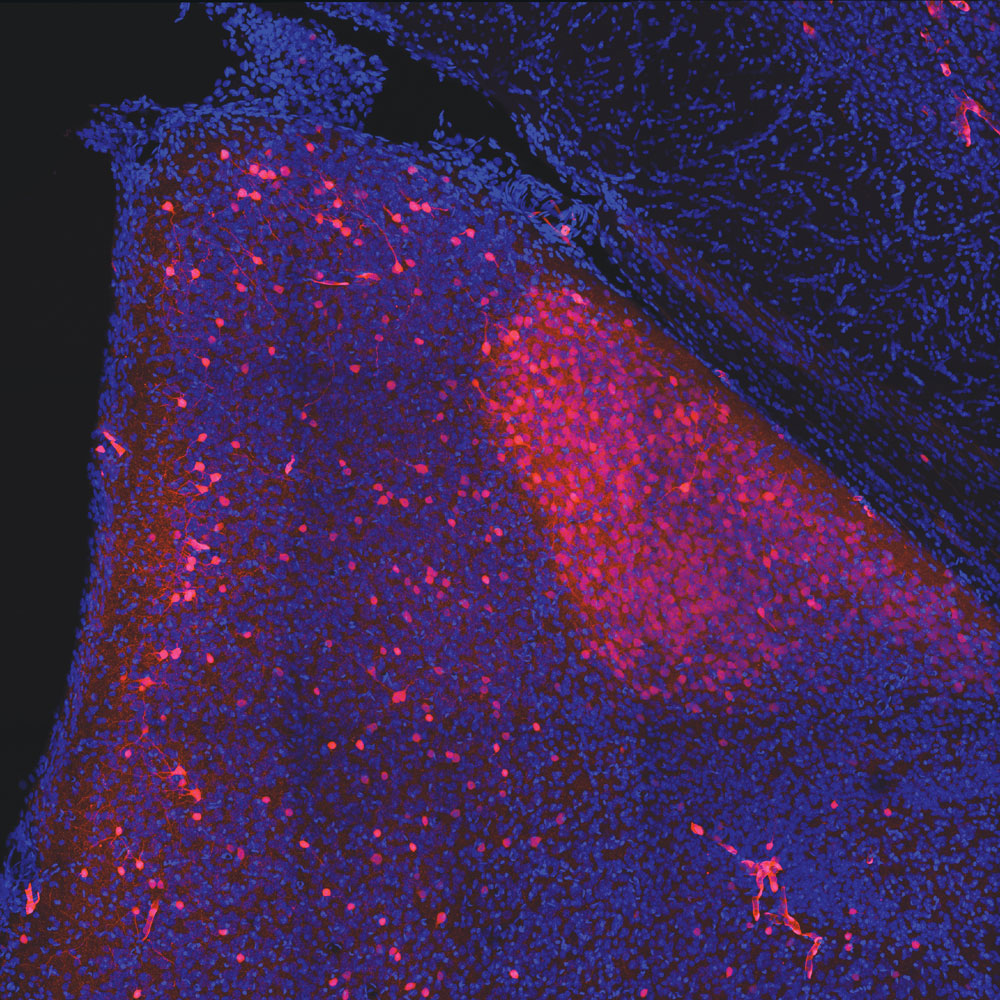
Richard Axel is a University Professor at Columbia University, holding appointments in the Vagelos College of Physicians and Surgeons as Professor of Neuroscience, Professor of Biochemistry and Molecular Biophysics, and Professor of Pathology and Cellular Biology. He serves as Codirector of Columbia's Mortimer B. Zuckerman Mind Brain Behavior Institute and is an Investigator at the Howard Hughes Medical Institute since 1984. Dr. Axel earned his AB from Columbia College and MD from Johns Hopkins Medical School. His Nobel Prize-winning research identified over 1,000 odorant receptors in the nose that transmit olfactory information to the brain, revolutionizing our understanding of the sense of smell. His early work with colleagues developed groundbreaking gene transfer techniques that enabled the introduction of virtually any gene into any cell, leading to novel approaches for gene isolation and analysis of gene function. Dr. Axel's research focuses on understanding how olfactory information is processed in the brain to create internal representations of the external world. His work spans molecular neuroscience, neural circuitry, and the relationship between sensory input and behavioral output. He has pioneered techniques that have advanced our understanding of neural function and sensory processing mechanisms. Analysis of Dr. Axel's recent publications reveals a continued focus on olfactory processing systems, with increasing integration of computational approaches and machine learning to understand neural representations. His work spans from molecular mechanisms to circuit-level analyses, with particular emphasis on how odor information is encoded and transformed in the brain to produce meaningful perceptions and behaviors across multiple model systems. Nobel Prize in Physiology or Medicine (2004) Howard Hughes Medical Institute Investigator (1984-Present) The Royal Society Foreign Member (2014) Gairdner Foundation International Award (2003) American Philosophical Society Member (2003) National Academy of Sciences Member (1983) Richard Lounsbery Award (1989) American Association for the Advancement of Science Fellow (2018) American Academy of Arts and Sciences Fellow As Codirector of the Zuckerman Institute, Dr. Axel oversees one of the world's leading neuroscience research centers, fostering interdisciplinary collaboration across multiple departments. His lab continues to train the next generation of neuroscientists, investigating how sensory information is transformed into meaningful perceptions and behaviors. Dr. Axel's early work on gene transfer techniques laid the foundation for numerous advances in molecular biology and neuroscience, including the isolation and analysis of the CD4 gene, the cellular receptor for HIV. Dr. Axel leads the Axel Lab at Columbia University, which is part of the Zuckerman Institute. His research team investigates how organisms recognize olfactory information in the environment and transmit it to the brain, where it is processed to create internal representations of the external world. The lab employs multidisciplinary approaches combining molecular, cellular, and systems neuroscience to unravel the neural circuits underlying sensory processing and behavior, with particular focus on understanding how these representations translate stimulus features into appropriate innate and learned behaviors.
Monica Olvera de la Cruz is the Lawyer Taylor Professor of Materials Science and Engineering, Chemistry, and Chemical & Biological Engineering at Northwestern University, with a courtesy appointment in Physics and Astronomy. She directs the Center for Computation & Theory of Soft Materials and serves as Deputy Director of the Center for Bio-Inspired Energy Science. Her research focuses on designing responsive materials, including polymers, electrolytes, and complex fluids, with applications in biotechnology and energy. She holds a Ph.D. from Cambridge University (1985) and a B.A. from UNAM (Mexico). Her research interests include self-assembly of heterogeneous molecules, ionic-driven assembly mechanisms, and functional materials design. Recent work highlights include modeling electrostatic effects in biomimetic systems and exploring superionic conductors. Awards include National Academy of Sciences membership (2012), APS Polymer Prize (2017), and American Philosophical Society membership (2020). Professional service roles: Gordon Research Conferences Board, DOE Basic Energy Sciences, Max Planck Institute advisory board Led over 150 publications since 2020, emphasizing soft matter physics and materials innovation Her group's innovations bridge theoretical physics and applied materials science, with notable achievements in bio-inspired materials and electrochemical systems.
Professor Paul Webley is the Woodside Monash Energy Partnership Director and Professor of Chemical Engineering at Monash University's Department of Chemical and Biological Engineering. His research focuses on sustainable energy technologies including carbon capture, hydrogen production/storage, and adsorption engineering. His work spans thermodynamics, gas separation processes, and clean fuel development, with applications in energy efficiency and environmental sustainability. Recent publications demonstrate significant contributions to CO2 utilization, hydrogen liquefaction/storage, and advanced separation technologies. Professor Webley leads multiple projects on carbon dioxide conversion, hydrogen technologies, and adsorption process optimization. He mentors PhD students in areas including carbon capture, hydrogen liquefaction, and adsorption engineering.
Guillaume Chanfreau is a Professor in the Department of Chemistry and Biochemistry within the College of Letters and Science at the University of California Los Angeles (UCLA). His research focuses on fundamental mechanisms of RNA metabolism, with particular emphasis on RNA splicing, decay pathways, and ribonuclease functions. His work spans molecular biology, biochemistry, and genetics, utilizing yeast as a primary model organism to investigate conserved RNA processing mechanisms. Professor Chanfreau's research interests center on understanding how RNA processing pathways regulate gene expression. His work examines transcription termination, RNA splicing fidelity, RNA decay mechanisms, and the role of ribonucleases in cellular RNA homeostasis. He investigates how these processes are interconnected and how they respond to cellular stress conditions. His laboratory has made significant contributions to understanding how RNA quality control mechanisms prevent the accumulation of aberrant transcripts and maintain cellular health. Analysis of Chanfreau's recent publications (2020-2025) reveals a strong focus on RNA splicing mechanisms, RNA decay pathways, and ribonuclease functions. His work frequently employs yeast genetics combined with advanced RNA sequencing techniques. A notable trend is the increasing use of long-read sequencing technologies to analyze RNA isoforms and decay intermediates. His research consistently bridges fundamental molecular mechanisms with potential implications for understanding human diseases related to RNA processing defects. Professor Chanfreau has been continuously funded by the National Institutes of Health, with his current grant R35GM130370 (2019-2023) titled 'The Control of Gene Expression by Eukaryotic Ribonucleases' and previous long-term funding through R01GM061518 (2000-2019). His research program has supported numerous graduate students and postdoctoral researchers who have contributed to his extensive publication record spanning over two decades.
Professor Paul Luckham is a leading academic in the Department of Chemical Engineering at Imperial College London , holding the title of Professor in Particle Technology . He is affiliated with the Centre for Doctoral Training (CDT) in Chemical Biology and the Institute of Chemical Biology Materials Laboratory , where he contributes as a supervisor. Education : PhD in Physical Chemistry (University of Bristol, 1980), BSc in Chemistry (University of Bristol, 1978). Research Interests focus on controlling suspension properties through particle interactions using atomic force microscopy (AFM) and molecular dynamics simulations. His work spans rheology , polymer adsorption , and cell/protein adhesion to surfaces, with applications in oil & gas, environmental science, and materials engineering. Recent Publications highlight studies on shake gels , polymer-calcite systems , viscoplastic fluid mixing , and environmental impact modeling . These works emphasize nanoindentation , scattering techniques , and multiscale characterization . Professional Experience includes roles as Professor (1996–present), Reader (1992–1996), and Lecturer (1983–1992) at Imperial College London, and a Research Associate at the Cavendish Laboratory, Cambridge University (1981–1983). Labs & Teams : Associated with the Materials Laboratory at Imperial College, focusing on AFM-based particle interaction measurements and polymer retention mechanisms.
Dr. Yongjie Jessica Zhang is a Professor at Carnegie Mellon University, holding appointments in both the Department of Mechanical Engineering and the Department of Biomedical Engineering . She received her B.S. and M.S. in Engineering Mechanics from Tsinghua University, followed by an M.S. in Aerospace Engineering and a Ph.D. in Computational Engineering and Sciences from the University of Texas at Austin. After a postdoctoral fellowship at ICES, she joined CMU in 2007, advancing from assistant to full professor by 2016. Research Interests : Image-based geometric modeling, mesh generation, finite element analysis (FEA), isogeometric analysis, and applications in computational biomedicine, materials science, and computer-assisted surgery. Leadership Roles : Chair of Solid Modeling Association (2019-2020), USACM Executive Committee Member-at-Large (2017-2021), and ELATE Fellow (2017-2018). Her work addresses the critical challenge of automating high-fidelity geometric modeling and mesh generation for complex domains (e.g., human anatomy), which traditionally consumes ~80% of FEA time. Her group develops AI-driven methods for multiscale modeling (molecular to organ), with applications in neuroscience , biomechanics , and 4D printing . Notable awards include the Presidential Early Career Award (PECASE) , NSF CAREER Award , and ASME Van C. Mow Medal (2025) . Dr. Zhang’s publications span over 170 peer-reviewed articles, focusing on truncated hierarchical B-splines , polycube meshing , and neurite transport modeling . She has advised more than 40 students, including PhD candidates and postdoctoral fellows. Her editorial roles include Associate Editor of Computer Aided Geometric Design and editorial board memberships in Computer-Aided Design and Engineering with Computers .
Matthias Ihme is a Professor in the Department of Mechanical Engineering and Photon Science Directorate at Stanford University. His research focuses on large-eddy simulation (LES) of turbulent reacting flows, aeroacoustics, combustion-generated noise, numerical methods, and high-order schemes. He holds a Ph.D. from Stanford University (2008), an M.Sc. in Computational Engineering from the University of Erlangen (Germany, 2002), and a Dipl.-Ing. in Mechanical Engineering from Munich University of Applied Sciences (Germany, 2000). His work bridges computational fluid dynamics, combustion science, and photon science, with notable contributions to supercritical fluid dynamics, machine learning integration in fluid simulations, and high-fidelity atmospheric transport modeling. Recent research emphasizes ultrafast cluster dynamics, shock-induced interface behavior, and stochastic ignition mechanisms in advanced fuel systems. Publications highlight interdisciplinary advancements, including physics-informed ML frameworks for reacting flows and experimental studies using X-ray photon correlation spectroscopy. His projects often involve high-performance computing and collaboration with national labs like SLAC.
Dr. Brian Y. Chen is an Associate Professor and Doctoral Program Director in the Department of Computer Science & Engineering at Lehigh University. His research focuses on bioinformatics, structural biology, and machine learning applications in computational biology. He holds a Ph.D. in Computer Science from Rice University and B.A. degrees in Mathematics and Computer Science from Rutgers University. Dr. Chen's work emphasizes developing algorithms to analyze protein structures, protein-protein interactions, and ligand binding mechanisms. He has contributed to tools like DeepVASP-S and MechPPI, which explain molecular interactions and predict binding specificity. His recent projects include Alzheimer’s disease diagnosis using multimodal data and containerization frameworks for bioinformatics software. He previously served as a postdoctoral researcher in Barry Honig's Lab at Columbia University, where he contributed to the Center for Computational Biology and Bioinformatics. His research spans structural bioinformatics, computational methods for protein function prediction, and interdisciplinary applications in medicine and materials science. Key achievements include a nomination for Outstanding Mentorship (2017) and collaborative projects funded by the Army Research Lab and Lehigh University. His lab explores cutting-edge AI techniques for biomedical problems, including interpretable machine learning models and scalable bioinformatics pipelines.
Professor Matthew Jonathan Rosseinsky holds the Chair of Inorganic Chemistry at the University of Liverpool, a position he has occupied since October 1999. His career includes significant appointments at the University of Oxford (1992-1999) and Bell Laboratories in New Jersey (1990-1992), following his DPhil at Merton College, Oxford. As a Fellow of the Royal Society and recipient of numerous prestigious awards, Professor Rosseinsky maintains an active research program and leadership roles in the international chemistry community. Professor Rosseinsky's educational background includes a First Class Honours degree in Chemistry with Quantum Chemistry from the University of Oxford (1987) and a DPhil in "Physical Properties of Superconducting Oxides and Radical Cation Salts" completed in 1990 under Professor P. Day FRS. His research focuses on the synthesis of new materials with applications in energy storage and generation, communications, separation, and catalysis. The Rosseinsky Group employs a broad range of synthesis and characterization techniques, including neutron and synchrotron X-ray diffraction, combined with computational methods in collaboration with Dr. George Darling. Current research areas include Dynapore, CO2 fuels, SOLBAT, and CATMAT projects that target specific material challenges. Professor Rosseinsky's publication record is exceptional, with 304 papers including 11 in Nature, 6 in Science, and 3 in Nature Materials, accumulating over 15,000 citations and an h-index of 56 as of 2012. His work demonstrates consistent excellence across materials chemistry, with particular emphasis on porous frameworks, electronic materials, and solid-state chemistry. Among his numerous accolades are the Harrison Memorial Prize (1991), Corday-Morgan Medal (2000), Royal Society Wolfson Research Merit Award (2002), De Gennes Prize (2009), and the prestigious Hughes Medal from the Royal Society (2011). He also holds an ERC Advanced Investigator Grant and has delivered distinguished lectures worldwide. Professor Rosseinsky has served in numerous editorial and advisory capacities, including as Associate Editor for Chemical Sciences, membership on the Royal Society Conference and Travel Grant Committee since 2007, and as a member of the International Advisory Board for the Max Planck Institut for Solid State Research since 2011. His professional activities extend to international review committees for research institutions in France, South Korea, and Saudi Arabia. The Rosseinsky Group operates within the Department of Chemistry at the University of Liverpool, collaborating extensively with researchers including Dr. John Claridge, Professor Andrew Cooper, and Professor Paul Chalker. The group maintains strong international partnerships and utilizes advanced facilities for materials synthesis and characterization to drive innovation in functional materials development.
Jie Xu is a Scientist at Argonne National Laboratory and a CASE Affiliated Scientist at the University of Chicago, Pritzker School of Molecular Engineering . Her research focuses on engineering durable, scalable, and sustainable polymer semiconductors for skin-like electronics and autonomous material discovery. Education : PhD in Chemistry (Nanjing University), Postdoctoral Fellow (Stanford University) Her research bridges polymer physics , self-driving laboratories , and AI-guided material synthesis to address challenges in stretchable electronics, recyclable polymers, and energy-efficient manufacturing. She pioneered polymer circuits that remain conductive under extreme deformation and developed the first roll-to-roll mass-production method for stretchable semiconductors. Her 15 most recent articles highlight advancements in AI-driven polymer discovery , biodegradable electronics , and multi-modal energy dissipation . Key themes include autonomous experimentation , hydrogen-bonded polymer systems , and machine learning for conjugated polymers , with applications in wearable medical sensors , soft robotics , and human-computer interfaces . Scientific accolades include the Materials Research Society Postdoctoral Award , MIT Technology Review’s Innovators Under 35 , and recognition as a Scialog Fellow . She serves on editorial boards for APL Machine Learning and Flexible Electronics , and her team at Argonne includes postdocs and students working on self-driving labs and degradable polymers .
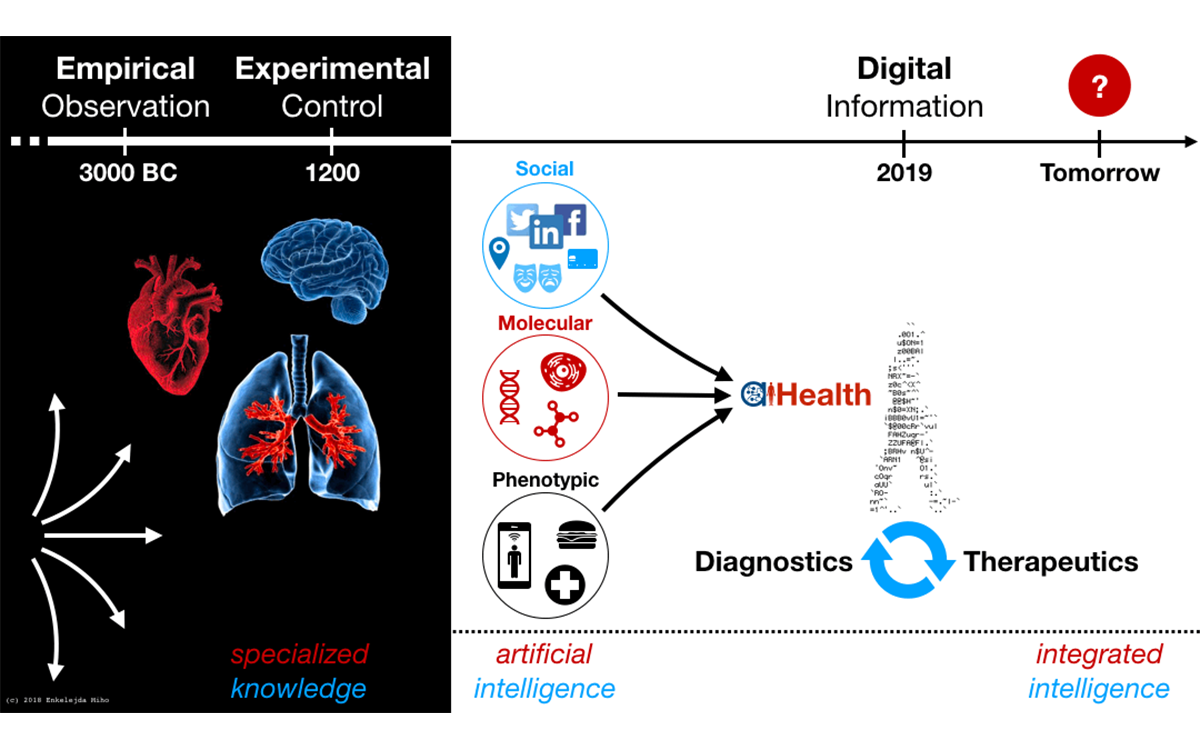
Prof. Enkelejda Miho is a Professor of Digital Life Sciences at the School of Life Sciences, FHNW, leading the aiHealthLab. Her work bridges computer science/AI with life sciences, focusing on drug discovery, personalized medicine, and immunology. She holds roles as Team Leader at aiHealthLab and Group Leader at the Swiss Bioinformatics Institute. Research Interests : She applies machine learning to analyze immune repertoires, antibody engineering, and autoimmunity diagnostics. Her lab develops computational tools like the RWD-Cockpit for real-world data analysis and synthetic antibody-antigen models (Absolut!) to advance biotherapeutics. Her work on dengue immunity and monoclonal gammopathies highlights translational applications. Key Projects : The aiHealthLab focuses on AI-driven diagnostics and therapeutics. Her contributions include AI frameworks for antibody specificity prediction, age-related immune repertoire changes, and large-scale network analysis of antibody repertoires. Labs/Teams : Leads aiHealthLab and collaborates with the Swiss Bioinformatics Institute, integrating computational and experimental immunology.
Kevin Pipe is a Professor of Mechanical Engineering, Applied Physics, and Electrical Engineering at the University of Michigan’s College of Engineering, where he also serves as Associate Dean for Undergraduate Education. He holds a Ph.D. (2004) and dual bachelor's/master's degrees (1999) in Electrical Engineering from MIT. His research focuses on microscale heat transfer in electronic/optoelectronic devices, thermoelectric energy conversion, and medical thermal applications. Key projects include molecularly engineered high-conductivity polymers, phase-change materials for thermal management, and cryoanesthesia devices. His work has been featured in Wired and Phys.org , and he received the DARPA Young Faculty Award (2009) and ME Achievement Award (2008). Research collaborations include work with MSE Professor Jinsang Kim’s group on polymer thermal conductivity and computational sprinting projects with computer science partners. His lab explores thermal interfaces in high-power diode lasers, spinal cool-sensing circuits, and ultra-rapid cooling anesthesia systems. Over 60 peer-reviewed articles and patents document his contributions to thermal sciences and materials engineering. Current efforts emphasize translating lab innovations into clinical and industrial applications. Education: Ph.D. in EE, MIT (2004) M.Eng. in EECS, MIT (1999) S.B. in EECS, MIT (1999) Key Awards: Defense Advanced Research Projects Agency Young Faculty Award (2009) ME Achievement Award (2008) Lab Focus Areas: Thermal management of microelectronics Thermoelectric materials Medical thermal devices Grant activities include DARPA-funded projects and industry partnerships. His interdisciplinary approach bridges mechanical, electrical, and biomedical engineering to address thermal challenges in computing and healthcare.
Naim U. Rashid, PhD, is an Associate Professor with tenure in the Department of Biostatistics at the UNC Gillings School of Global Public Health and holds a joint appointment as Research Associate Professor at the Lineberger Comprehensive Cancer Center. He serves as Associate Director of the Lineberger Biostatistics Shared Resource and co-directs the Biostatistics Cores of the UNC Pancreatic and Breast Cancer SPOREs. His work bridges statistical methodology development with collaborative cancer research, focusing on translating genomic discoveries into clinical applications. Dr. Rashid's research spans precision medicine, genomics, statistical computing, and machine learning with specific applications to pancreatic and breast cancers. His lab develops novel statistical methods for high-throughput genomic data analysis, cancer subtyping, missing data problems in deep learning, and clinical trial design. Recent work includes developing an AI tool that recommends optimal clinical trials to pancreatic cancer patients, funded by a $311,000 Department of Defense grant in 2024. His methodological contributions focus on improving replicability in gene signature selection and clinical prediction, with emphasis on addressing racial disparities in cancer outcomes. His publication record shows consistent output in top statistical and medical journals, with recent work focusing on high-dimensional statistics, missing data methods, and cancer genomics. His research demonstrates a clear trajectory from methodological innovation to clinical implementation, particularly in pancreatic cancer where his PurIST classifier has gained recognition. The work increasingly incorporates machine learning approaches while maintaining strong statistical foundations. Delta Omega Faculty Award (2021, UNC Chapel Hill) IBM and R.J. Reynolds Junior Faculty Development Award (2017, UNC Chapel Hill) Barry H. Margolin Dissertation Award (2013, UNC Chapel Hill) Training Grant recipient (2006-2011, Genomics and Cancer) Dr. Rashid actively mentors graduate students and serves as trial statistician on multiple cancer clinical trials. He teaches BIOS 735, a doctoral-level course on statistical computing, and is involved with the Translational Breast Cancer Research Consortium Statistical Working Group. His lab collaborates extensively with clinicians at UNC Lineberger and beyond, with recent work including the PROCLAIM Study examining mHealth apps to improve diverse recruitment in pancreatic cancer trials. The Rashid Lab focuses on developing computational tools that directly impact clinical decision-making while addressing methodological challenges in genomic data analysis.
Prof. Valentina Boeva is an Assistant Professor at the Department of Computer Science, ETH Zürich, specializing in biomedical informatics. Her research focuses on integrating machine learning and computational methods to address challenges in genomics, oncology, and precision medicine. She holds a position in the Professur für Biomedizininformatik (Biomedical Informatics) and is based at CAB G32.2, Universitätstrasse 6, Zürich, Switzerland. Her work emphasizes applications such as cancer biomarker discovery, tumor heterogeneity analysis, and epigenetic profiling. She teaches courses including Machine Learning Seminar, Data Science Lab, and Machine Learning for Genomics. Her research group develops computational tools like CDState and UniversalEPI to decode complex biological systems. She actively publishes in top-tier journals, with recent work on exosome-driven diagnostics and chromatin interaction modeling. Her scientific contributions span methodologies for single-cell data analysis, survival modeling, and drug response prediction. She collaborates across disciplines to bridge computational science with clinical applications in cancer research.