Jianqi Liu is a Hans Rademacher Research Fellow in the Department of Mathematics at the University of Pennsylvania, affiliated with the School of Arts and Sciences. His research focuses on vertex operator algebras (VOAs) and 2D conformal field theory (CFT), with an emphasis on algebraic structures such as fusion rules, Zhu’s algebras, Borel-type subalgebras, and connections to the classical Yang-Baxter equation. He also explores geometric aspects of VOAs and their physical interpretations. He earned his Ph.D. in Mathematics from the University of California, Santa Cruz (2018–2023), under the supervision of Chongying Dong. Prior to his current role, he held teaching roles at both UPenn and UCSC, instructing courses ranging from advanced linear algebra to complex analysis and number theory. His research publications address topics such as twisted conformal blocks, Rota-Baxter operators, and the interplay between algebraic structures and integrable systems. Liu collaborates with researchers like Angela Gibney and Daniel Krashen, focusing on advancing theoretical frameworks in mathematical physics and algebraic geometry.
Nathan Reading is a Professor in the Department of Mathematics at North Carolina State University (NCSU). He holds a Ph.D. in Mathematics from the University of Minnesota (2002) and a B.S. in Physics from Stanford University (1995). His research focuses on algebraic and geometric combinatorics, particularly in Coxeter groups, cluster algebras, and lattice-theoretic approaches. He has been actively involved in organizing the Triangle Lectures in Combinatorics, a biannual research conference. His research interests include noncrossing partitions, cluster scattering diagrams, and the lattice theory of torsion classes. Recent work explores connections between Coxeter groups and combinatorial structures on surfaces. Reading has authored numerous papers on topics such as semidistributive lattices, scattering diagrams, and Cambrian frameworks. He teaches advanced combinatorics courses (e.g., MA 724: Combinatorics II) and has advised graduate students. His work has been supported by grants from the National Science Foundation (NSF), including DMS-1500949. Reading maintains an active presence in the mathematics community through publications, conference organization, and pedagogical contributions.
Dima Arinkin is a Professor in the Department of Mathematics at the University of Wisconsin–Madison, specializing in algebraic geometry with significant contributions to geometric representation theory and mathematical physics. His research focuses on: Geometric Langlands Program: Developing frameworks connecting automorphic forms and Galois representations through geometric methods Moduli Spaces: Analyzing spaces of algebraic connections, Higgs bundles, and their compactifications D-modules: Studying systems of linear differential equations via algebraic geometry Integrable Systems: Investigating geometric structures in soliton theory and Painlevé equations Irregular Singularities: Exploring connections with irregular behavior on algebraic curves Analysis of his publications (2008-2016) reveals consistent advancement in geometric Langlands through derived algebraic geometry techniques, particularly in relating singular support of sheaves to automorphic forms and establishing oper structures for connections. No scientific awards are documented in the provided materials. No information regarding student advisement or research grants appears in the source texts.
Georgios Dimitroglou Rizell is a Senior Lecturer in the Department of Mathematics at Uppsala University, Sweden, where he also serves as Head of the Department since 2020. His academic work is centered at the Ångström Laboratory, where he conducts research in symplectic and contact topology. He maintains dual affiliations with both the Department of Mathematics and the Center for Geometry and Physics at Uppsala University. Dr. Dimitroglou Rizell earned his PhD from Uppsala University in 2012 under the supervision of Tobias Ekholm. Following his doctoral studies, he held postdoctoral positions at the Université Libre de Bruxelles (2012-2013), Université Paris-Sud (2013-2014), and the University of Cambridge (2014-2015), all supported by prestigious fellowships from the Knut & Alice Wallenberg Foundation. He returned to Uppsala University as a researcher (2015-2017) and Assistant Lecturer (2017-2021) before being promoted to Senior Lecturer in 2021. His research primarily focuses on symplectic and contact topology, with special emphasis on understanding and classifying Lagrangian and Legendrian submanifolds. His work employs advanced mathematical techniques including pseudoholomorphic curves, pseudoholomorphic foliations, Symplectic Field Theory, and Floer homology. His investigations span a broad range of topics within geometric topology, from the classification of Lagrangians near the Whitney immersion to the study of Legendrian submanifolds and their invariants. His research has significant implications for understanding the geometric structures underlying classical mechanics and quantum physics. His recent publications (2020-2025) demonstrate a consistent focus on Lagrangian and Legendrian submanifolds, with particular attention to their classification, invariants, and interactions with symplectic structures. A notable trend is the development of new techniques for studying C^0-limits of Legendrians, exact Lagrangians in various settings, and the geometric generation of Fukaya categories. His collaborative work with researchers like Michael Sullivan, Roman Golovko, and others has produced significant advances in Floer theory and symplectic field theory. Scientific Awards Wallenberg Scholar (2023-2028, KAW 2023.0294) Wallenberg Academy Fellow (extension 2022-2027, KAW 2021.0191) Wallenberg Scholar (2022-2023, KAW 2021.0300) Wallenberg Academy Fellow (2017-2021, KAW 2016.0198) As Head of the Department of Mathematics, Dr. Dimitroglou Rizell oversees academic programs and research initiatives. His leadership is supported by significant funding from the Knut & Alice Wallenberg Foundation, which has awarded him multiple prestigious fellowships throughout his career. These grants have enabled his research in symplectic geometry and supported collaborative projects with international mathematicians. Dr. Dimitroglou Rizell is actively involved in the Center for Geometry and Physics at Uppsala University, where he collaborates with researchers across mathematical disciplines. His work intersects with theoretical physics, particularly in areas related to geometric quantization and the mathematical foundations of quantum mechanics. He participates in seminar series and reading groups focused on symplectic topology and its applications.
Pavel Etingof is Professor of Mathematics at the Massachusetts Institute of Technology (MIT), Department of Mathematics, where he has been a distinguished faculty member for many years. He serves as the Chief Research Adviser of MIT-PRIMES, an all-year high school math research program that provides exceptional research opportunities for talented high school students. Additionally, he holds the prestigious position of Editor-in-Chief of Selecta Mathematica. Professor Etingof's research spans multiple advanced areas of pure mathematics with a particular focus on representation theory, tensor categories, Lie algebras, Hecke algebras, and algebraic structures. His work consistently bridges algebra, geometry, and mathematical physics, revealing deep connections between abstract algebraic structures and physical phenomena. His research has evolved to increasingly explore tensor categories in positive characteristic, connections between representation theory and fractal structures, and applications to quantum field theory. His recent publications (2021-2025) demonstrate continued productivity and innovation, with numerous papers on tensor categories in various characteristics, representation theory of Lie groups, and connections to mathematical physics. These works show sophisticated exploration of representation theory in prime characteristic, novel applications to quantum field theory, and deep investigations into the structure of tensor categories. Editor-in-Chief of Selecta Mathematica Chief Research Adviser of MIT-PRIMES Professor Etingof has mentored numerous Ph.D. students at MIT and other institutions, establishing a significant mathematical genealogy in representation theory. His teaching includes advanced courses on algebraic groups, Lie theory, representation theory, and specialized topics. He has also co-organized many student seminars on cutting-edge mathematical topics including Deligne categories, symplectic reflection algebras, quantum cohomology, and double affine Hecke algebras, fostering collaborative research environments for students and colleagues.
Maxim Kontsevich is a permanent professor at the Institut des Hautes Études Scientifiques (IHÉS), holding the AXA Chair for Mathematics since 1995 and a visiting chair at Rutgers University (one month annually since 1997). Born in 1964 in Khimki, USSR, he earned his PhD from Bonn University in 1992. His career includes visiting positions at Harvard, the Institute for Advanced Study, and Berkeley, where he was a professor from 1993 to 1995. His research spans mathematical physics, algebraic geometry, and non-commutative geometry. Notable contributions include deformation quantization, mirror symmetry, and motivic integration. His work bridges algebraic structures with geometric and physical concepts, influencing areas like topological field theories, string theory, and integrable systems. Awardees of Fields Medal (1998), Crafoord Prize (2008), and Breakthrough Prize (2014), he also holds editorial roles at Compositio Mathematica and Publications Mathématiques IHÉS. His over 50 publications explore advanced topics such as quantum cohomology, Hodge theory, and categorical structures in geometry.
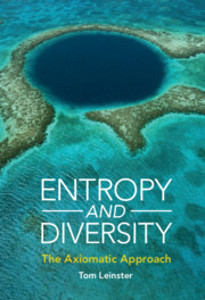
Tom Leinster is a mathematician at the University of Edinburgh, specializing in category theory, metric geometry, and their applications to areas such as algebra, topology, and mathematical biology. His research focuses on the concept of magnitude, a measure for metric spaces and enriched categories, as well as entropy and diversity. He has authored influential books including *Basic Category Theory* and *Entropy and Diversity: The Axiomatic Approach*. Leinster's work bridges foundational mathematics with interdisciplinary applications, emphasizing the interplay between abstract structures and concrete problems. His research interests span category theory, metric geometry, algebraic topology, and mathematical biology. Key contributions include foundational work on magnitude and its connections to geometric measure theory, entropy characterization, and categorical frameworks for diversity measurement. Leinster also engages in mathematical education and ethics, advocating for responsible research practices. Notable publications include recent advancements in magnitude homology of Euclidean sets, extremal magnitude in metric spaces, and entropy modulo primes. His work often highlights interdisciplinary applications, such as biodiversity quantification and information-theoretic foundations.
Dr. Sander Los is an Associate Professor at the Faculty of Behavioural and Movement Sciences (Department of Cognitive Psychology), Vrije Universiteit Amsterdam. He earned his PhD in 1994 with a thesis on 'On the origin of mixing costs: Exploring information processing in pure and mixed blocks of trials' under Prof. Andries Sanders. His research focuses on temporal dynamics of preparatory processes, co-developing the formalized Multiple Trace Theory (fMTP) to explain temporal preparation across time scales (seconds to days). His work integrates cognitive psychology, neuroscience, and computational modeling to explore attentional mechanisms, statistical learning, and spatiotemporal dynamics. Education: PhD in Cognitive Psychology (VU Amsterdam, 1994), postdoctoral research at VU Amsterdam, progressing to Assistant Professor before his current role. Key research areas include visual attention, response inhibition, and long-term memory. He has published over 40 peer-reviewed articles and serves on editorial boards for journals like Attention, Perception, and Psychophysics and Acta Psychologica . Research Interests: His studies investigate how humans prepare for upcoming events temporally and spatially, with recent work on statistical learning guiding visual attention and computational frameworks for temporal preparation. Collaborations emphasize interdisciplinary approaches to understanding attention allocation and neural underpinnings of timing. Grants & Advising: No explicit grants listed, but active in training students (1 supervised PhD thesis). His courses include Methodology, Research Methods, and Practical Skills for Researchers at VU Amsterdam. Labs/Teams: Works closely with colleagues on the fMTP model and statistical learning projects, emphasizing team-based computational and experimental psychology.
Laurens Lootens is a Researcher in the Department of Applied Mathematics and Theoretical Physics (DAMTP) at the University of Cambridge. His work focuses on theoretical physics, particularly in quantum lattice models, topological phases of matter, and mathematical structures underlying quantum systems. He is affiliated with the High Energy Physics research group within DAMTP. His research interests include dualities in quantum systems, matrix product operator symmetries, conformal field theories, and tensor network methods. Lootens explores topics such as entanglement in many-body systems, symmetry-protected topological phases, and the interplay between algebraic structures and physical phenomena. Publications highlight his contributions to understanding lattice representations of dualities, topological sectors in quantum models, and critical lattice models for conformal field theories. His work bridges theoretical frameworks with computational methods, advancing both fundamental physics and quantum information science.
Jon Brennan is an Assistant Professor in the Department of Linguistics at the University of Michigan, affiliated with the College of Literature, Science, and the Arts (LSA). His research focuses on neurolinguistics, computational linguistics, and psycholinguistics, particularly investigating how the brain processes language structure and meaning. He leads the Computational Neurolinguistics Lab, which develops neurocomputational models to study language comprehension mechanisms. Brennan received an NSF Grant for collaborative research with Christophe Pallier (Paris) on neurocomputational models of natural language processing. His work integrates EEG, fMRI, and MEG techniques to decode linguistic features in neural signals. Key research areas include syntax-semantics interfaces, multilingual processing, and developmental disorders like dyslexia. Notable contributions include studies on hierarchical syntactic structure, minimal pairs in language models, and neural correlates of theory of mind in children. Brennan collaborates internationally, exemplified by the US-French NSF-CRCNS grant. He has published extensively on topics like neural decoding of grammatical features, LLM internal representations, and bilingual processing mechanisms. Scientific awards include the NSF Collaborative Research in Computational Neuroscience (CRCNS) Grant (2016). His research bridges computational modeling and experimental neuroscience, aiming to reveal how language mechanisms are implemented in neural systems.
Benjamin Steinberg is a Professor in the Mathematics Department at the City College of New York (CCNY) and the CUNY Graduate Center. He holds a Ph.D. from the University of California, Berkeley (1998) under John Rhodes and has held positions at the University of Porto (Portugal) and Carleton University (Canada). His research focuses on algebra, including semigroups, geometric group theory, algebraic combinatorics, representation theory, and automata theory, with notable work on etale groupoids, inverse semigroups, and ring theory. He is the author of several books, including *The q-theory of Finite Semigroups* and *Representation Theory of Finite Monoids*. Steinberg serves as Managing Editor of the *International Journal of Algebra and Computation* and has organized conferences such as the International Conference on Semigroups and Groups in Honor of John Rhodes. Research interests include the interplay between algebraic structures and their applications, such as in automata theory and Markov chains. His work bridges pure mathematics with combinatorial and geometric approaches, often involving categorical and topological methods. Recent articles explore topics like Nekrashevych algebras, twisted Steinberg algebras, and Lyndon's identity theorem for monoids. He has contributed to the study of profinite groups and their connections to symbolic dynamics. Steinberg’s editorial roles and conference organization reflect his leadership in the mathematical community. Despite his defunct blog, his academic contributions remain prolific, with ongoing editorial work and research in algebraic combinatorics and representation theory.
David E Speyer is a Professor in the Department of Mathematics at the University of Michigan . His research focuses on algebraic problems with combinatorial flavors , particularly in tropical geometry , cluster algebras , and geometry of Lie groups . He has supervised multiple PhD students, including Shelby Cox, Will Dana, and John Wiltshire-Gordon, and collaborated on projects with undergraduates like Grant Barkley and Benjamin Branman. Education: PhD in Mathematics from UC Berkeley under Bernd Sturmfels; undergraduate at Harvard. Research: Key areas include tropical geometry , cluster algebras , and flag manifolds . His work often bridges combinatorics, algebraic geometry, and representation theory. Publications: Over 40 papers, including breakthroughs in cluster algebras , affine weak order , and braid variety cluster structures . Awards: Clay Research Fellow (2005-2010). Teaching: Coordinates courses like Math 593 (graduate algebra) and Math 214 , with a focus on inquiry-based learning .
Prof. Dr. Peter Schneider is a faculty member at the University of Münster, affiliated with the Faculty of Mathematics and Computer Science and the Department of Mathematics and Computer Science . He is a principal investigator in the CRC 1442 Geometry: Deformations and Rigidity and contributes to the Mathematics Münster cluster. University: University of Münster School: Faculty of Mathematics and Computer Science Department: Department of Mathematics and Computer Science Academic Rank: Professor His research focuses on arithmetic geometry and representation theory , particularly the p-adic Langlands program , cohomology theories in mixed characteristics, and noncommutative algebraic structures. He investigates derived categories of p-adic representations, moduli spaces of Galois representations, and geometric approaches to automorphic forms. He has supervised numerous students, including Torsten Schoeneberg (2009), Marten Bornmann (2009), and Marius Kley (2016, 2019). His collaborative works with Rachel Ollivier, Otmar Venjakob, and Marie-France Vigneras explore modular Hecke algebras, Iwasawa theory, and (phi, Gamma)-modules. Emails: pschnei@wwu.de pschnei@uni-muenster.de Workshops Organized: Noncommutative Algebras (2006) Instructional workshop on noncommutative main conjectures (2011) International workshop on K-types for p-adic groups (2003)
Frank E. Garcea, Ph.D., is a Research Assistant Professor in the Department of Neurosurgery and Neuroscience at the University of Rochester School of Medicine and Dentistry. His research focuses on the cognitive and neural mechanisms underlying tool use, apraxia, and stroke recovery. He employs neuropsychological testing, fMRI, and lesion-symptom mapping to study brain injury effects on functional connectivity and action knowledge. Education: Bachelor of Science in Psychology, St. John Fisher College (2006–2010) PhD in Brain and Cognitive Sciences, University of Rochester (2012–2017) Research Interests: Dr. Garcea investigates how brain regions like the parietal cortex and dorsal/ventral streams mediate object manipulation and tool use. His work explores stroke-related disconnection syndromes, motor speech coordination networks, and translational brain mapping to preserve neural function during surgery. He collaborates on projects involving epilepsy patients undergoing electrocorticography to study action-related neural pathways. Labs & Affiliations: Principal Investigator of the Garcea Lab at URMC, focusing on tool use deficits in brain tumor/stroke survivors. Affiliated with the Del Monte Institute for Neuroscience and the Neurobiology & Anatomy Program. His lab integrates neuroimaging, lesion analysis, and clinical care to advance personalized brain mapping strategies.
Dr Alex Sherman is a Lecturer at UNSW Sydney in the School of Mathematics & Statistics . He previously held postdoctoral positions at the University of Sydney with Kevin Coulembier and at Ben-Gurion University of the Negev with Inna Entova-Aizenbud. His research focuses on representation theory and supergeometry , with applications to Lie superalgebras , modular representation theory , and tensor categories . He has published extensively on topics such as ghost distributions, Duflo-Serganova functors, and the geometry of spherical supervarieties. Email: alex.sherman@unsw.edu.au Location: Room 4111, The Red Centre, UNSW Sydney, NSW 2052 In 2025 , he will lecture the Linear Algebra stream of MATH1241. He organizes the UNSW Pure Maths Seminar and Algebra Seminar , and has co-organized courses on Kazhdan-Lusztig equivalences and tensor categories.




.jpg)