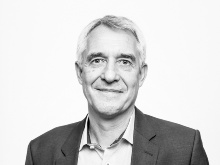
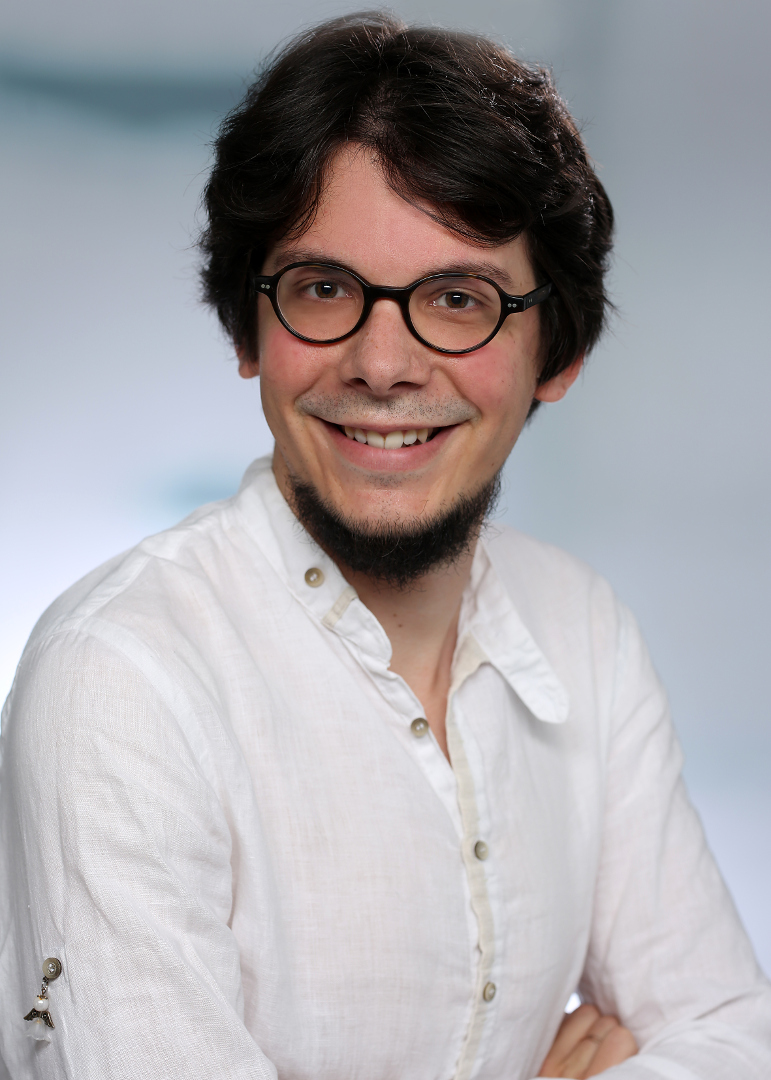
Mario Baldi is a researcher affiliated with the Polytechnic University of Turin, Italy , with significant contributions to computer networking , distributed systems , and software-defined networking . Key research themes: network function virtualization , programmable dataplanes , time-driven scheduling , and traffic analysis . Recent work focuses on RDMA-enabled compute offloading (2023) and DNN inference in network data planes (2023). Longstanding expertise in multicast routing , voice/data packet efficiency , and XML-based protocol parsing (2000–2006). Collaboration network includes Yoram Ofek , Fulvio Risso , and Han Hee Song , with 99+ publications spanning 1994–2023.
Wenguang Chen is a researcher affiliated with Tsinghua University and Pengcheng Laboratory , specializing in computer science and high-performance computing . His work bridges theoretical advancements with practical applications in domain-specific languages , parallel programming , and machine learning . Research Interests include: Development of modular DSLs for numerical methods (e.g., Mat2Stencil) Performance optimization in distributed and parallel systems Compiler frameworks for privacy-preserving AI (e.g., FHE-based neural network inference) Graph algorithms scaling to trillion-edge datasets Applications of Rust in memory-safe pointer analysis Recent Publications span 2014–2025, focusing on: Parallelization strategies for supercomputing Compiler automation tools Extreme-scale data processing Performance variance diagnosis in production environments
Ruben Taelman is a postdoctoral researcher at IDLab , Ghent University – imec, specializing in decentralization, Linked Data publishing, and querying. He develops open-source JavaScript libraries like the Comunica engine for decentralized data access and focuses on intelligent infrastructure for data publication and retrieval. His research bridges academic and industrial perspectives, addressing challenges in decentralized knowledge graphs, policy negotiation, and data governance. Key projects include Triple Storage for versioned RDF querying and contributions to the Solid ecosystem for user-centric data control.
Rüdiger Lunde is a Professor at Technische Hochschule Ulm , currently serving as Dean of Studies for Information Systems since September 2019. He previously chaired the Examination Board for programs including INF, CTS, TI, ICS, DSM, MD, and IS from 2014 to 2019. His primary research areas include Software Engineering , Intelligent Systems , and Model-Based Systems Engineering , with a focus on automated safety analysis and technical system simulation. Current Role: Dean of Studies for Information Systems Prior Role: Chair of Examination Board (2014–2019) His research leverages the smartIflow framework for safety tasks such as Failure Mode and Effects Analysis (FMEA) and Fault Tree Analysis (FTA). He has contributed to formal verification methods using Computation Tree Logic (CTL) and explored temporal reasoning across varying time scales. Recent trends in his work include: Automated safety analysis in technical systems Integration of SysML for artifact generation Model decomposition techniques for complex systems Scientific awards: Best Paper Award at International Workshop on Applications in Information Technology (IWAIT-2015) Contact: Ruediger.Lunde@thu.de | Room: A306a | Consultation hours: By appointment via email.
Mirela Alistar is an Assistant Professor at the ATLAS Institute and the Department of Computer Science at the University of Colorado Boulder. She leads the Living Matter Lab , focusing on cyber-physical systems based on biochips to revolutionize healthcare diagnostics. Her interdisciplinary work bridges computer science, engineering, biotechnology, and bioart. Education : PhD in Embedded Systems Engineering (2010-2014, Technical University of Denmark), Postdoc in Human-Computer Interaction (2015-2018, Hasso Plattner Institute). Her research advances digital microfluidics and fault-tolerant biochips , enabling at-home diagnostic tools like OpenDrop . She also explores bioart through installations such as Semina Aeternitatis and Perfume Distillation Machine . She co-founded >top , a Berlin-based art & science project space, and advises startups digi.bio and bold.health . Her UIST'16 Honorable Mention Award highlights her innovative contributions. The Living Matter Lab under her leadership investigates interactive biodesign , combining technical precision with creative exploration of living systems.
Dr. Sandra Diaz Pier is a Scientific Lead at the Jülich Supercomputing Centre (JSC) within the Jülich Research Centre , Germany. Specializing in computational neuroscience , high performance computing (HPC) , and machine learning , she bridges neuroscience and advanced computational methods through her research. Education: B.Sc. in Electronic Systems Engineering, Mexico M.Sc. in Computer Science (focus: machine learning, quantum computing), Mexico Second M.Sc. in Electrical Engineering, Ontario, Canada Ph.D. in Computer Science, Germany (2021) Her research focuses on modeling and simulating brain dynamics and plasticity at multiple scales, leveraging HPC to accelerate large-scale neural network simulations. She actively contributes to EU projects like the Human Brain Project (HBP) , Virtual Brain Cloud , and EBRAINS 2.0 , emphasizing infrastructure development and educational training. Her work includes open-source tools such as the NEST simulator , The Virtual Brain , and L2L , enabling efficient parameter exploration and multiscale co-simulation frameworks. The 15 most recent publications highlight her interdisciplinary approach, spanning topics from quantum computing in biomolecular simulations to neural plasticity algorithms and cloud-based brain modeling . These articles reflect her expertise in integrating machine learning , multi-scale simulation , and HPC infrastructure for neuroscience challenges, including seizure propagation, Parkinson’s disease progression, and swarm intelligence in spiking networks. She leads technical coordination in projects like EBRAINS and serves as a task leader in the HBP infrastructure work package , while also organizing workshops and hackathons for open-source tools. Her role involves supporting domain scientists through methodological research and workflow optimization for brain simulations.
Sarah Neuwirth is a tenured Professor for Computer Science at Johannes Gutenberg University Mainz (JGU) and a Visiting Researcher at the Jülich Supercomputing Centre. She manages JGU's High Performance Computing (HPC) division, coordinates regional/national HPC activities, and represents JGU in NHR, Gauss-Allianz, and HPC committees. Education : PhD (Dr. rer. nat.) in Computer Science (2018), Heidelberg University Diplom in Computer Science (2012), University of Mannheim Bachelor of Science in Computer Science (2010), University of Mannheim Research Interests : Parallel File and Storage Systems Modular Supercomputing (resource disaggregation/virtualization) Performance Engineering High Performance Computing Networking Reproducible Benchmarking Parallel I/O Publications Trends : Her work focuses on HPC performance modeling, parallel I/O optimization, modular supercomputing, network characterization, and reproducible benchmarks. Key themes include resource disaggregation, automated workflows, and data-intensive distributed applications. Scientific Awards : 2023 PRACE Ada Lovelace Award for HPC ZONTA Science Award 2019 Grants & Leadership : She leads the High Performance Computing division at JGU, participated in European DEEP projects, and serves on SC conference committees.
Prof. Dr. Hermann Winner is a full Professor and Head of the Institute of Automotive Engineering (FZD) at Technische Universität Darmstadt since 2002. He previously held leadership roles in predevelopment and series development at Robert Bosch GmbH (1987–2001) and served on international standards committees like ISO/TC204/WG14. Education : Diplomphysicist (1981), Westfälische Wilhelms-Universität Münster Doctorate (1987), Westfälische Wilhelms-Universität Münster (Topic: Dynamics of domain walls in metal ferromagnetic materials) Research Interests : His work focuses on automated driving systems , automotive sensor modeling , and safety validation methodologies . Key contributions include modular safety frameworks (S2I2), behavior-semantic scenery descriptions for autonomous vehicle development, and advanced driver assistance systems (PRORETA 5). He has pioneered research on lidar sensor simulation, brake wear particle emissions, and motorcycle dynamics safety. Article Trends : Recent publications (2022–2024) emphasize automated urban driving safety , semantic scenario modeling , and sensor-based localization . Earlier works (2012–2021) established foundational concepts in fail-operational architectures , collision criticality metrics , and automotive system decomposition . Scientific Awards : IEEE-ITS Institutional Award (2012) for leadership in automated driving research Labs & Projects : He leads the Institute of Automotive Engineering (FZD) at TU Darmstadt and has been integral to projects like UNICARagil (disruptive vehicle architectures), PRORETA series (collision avoidance systems), and collaborations with institutions such as the Daimler und Benz Stiftung and the Bundesanstalt für Straßenwesen.
Prof. Frank T. Piller ist Chair of Technology and Innovation Management an der RWTH Aachen University und Mitbegründer der RWTH Business School . Er forscht seit 2007 zu Disruptiver Geschäftsmodellinnovation , Industrie 4.0 und Kundenco-creation . Als Träger des ERC Synergy Grants SAFEr Grid (2025-2031) entwickelt er modulare Energienetze für die Zukunft. Lehrstuhlinhaber für Technologie- und Innovationsmanagement Gründungsdekan der RWTH Business School Internationaler Forschungskoordinator Seine Forschungsschwerpunkte umfassen: Business Model Innovation in etablierten Unternehmen AI-gestützte Wertschöpfung und digitale Plattformen Ökosystem-Governance für dezentrale Industrienetze Circular Economy Integration in massgeschneiderte Produktion Er erhielt: Co-Creation Award der PDMA Nominierung für HBR/McKinsey Innovation Award Mehrfachauszeichnung für "Flipped Classroom"-Lehre Google Scholar H-Index 73 mit >25.000 Zitierungen Als Keynote-Speaker und Executive-Education-Dozent an führenden Business Schools (MIT, IE, Vlerick) unterstützt er globalen Wandel. Sein Forschungsteam ( >30 Doktoranden ) arbeitet mit Industriepartnern wie Siemens , Vodafone und 3M .
Prof. Dr. August-Wilhelm Scheer is a Professor of Business Informatics at Saarland University and founder of the Scheer Group, a leading IT enterprise. He pioneered the ARIS method for integrated information systems and established the School of Digital Sciences at Saarland University. His work bridges academic research and industry application through ventures like IDS Scheer Holding and IMC AG. Educations: Founded Institute of Business Informatics at Saarland University Doctoral supervision of 76 theses (over 3/year average) Research collaborations with German Research Center for Artificial Intelligence (DFKI) Research Interests: Focuses on business process management, digital transformation, and AI-driven enterprise solutions. His ARIS method revolutionized IT-business alignment through process modeling. Current work explores composable enterprise architectures and AI agent systems in business contexts. Awards: German Research Hall of Fame Inductee (2017) Lifetime Achievement Award (Global University Alliance) Advising & Innovation: Supervised 76 doctoral students and spun-off 1,300+ client companies through Scheer Group solutions. Spearheaded digital learning platforms via IMC AG. Labs/Teams: Leads August-Wilhelm Scheer Institute for Digital Products and Processes, fostering research-practice partnerships in digital innovation.
Bertrand Meyer is a renowned academic and software engineering expert affiliated with Constructor University in Switzerland. He previously held positions at ETH Zurich (2001-2016), the University of Toulouse (2015-2016), and Monash University. His research focuses on object-oriented programming, software engineering, formal methods, and programming languages. He is best known for developing the Eiffel programming language and pioneering the 'Design by Contract' paradigm. Meyer earned his PhD from the University of Nancy, France. His contributions include seminal textbooks like *Object-Oriented Software Construction* (1988, 1997), *Touch of Class* (2009), and *Agile!* (2014). He has received the ACM Software System Award (2006) for his work on Eiffel. His research emphasizes rigorous software design principles, formal verification, and practical software engineering practices. Key innovations include: Design by Contract methodology Advancements in object-oriented design patterns Contributions to component-based development Work on software testing and validation techniques Meyer has authored over 374 publications spanning journals, conferences, and books. His work bridges theoretical foundations and practical software development methodologies.
Jennifer D'Souza is a Research Fellow in the Open Research Knowledge Graph (ORKG) project at the Data Science and Digital Libraries research group within the Technische Informationsbibliothek (TIB) . Her current work focuses on natural language machine learning, including knowledge graph construction, ontology alignment, and AI-assisted scientific discovery. Prior to TIB, she held postdoctoral positions at the University of California, Davis (focusing on software engineering and NLP applications) and completed her PhD at the University of Texas at Dallas, specializing in relation mining. She has also contributed to industrial software solutions in concept generation. Education : PhD in Computer Science, University of Texas at Dallas Postdoctoral Researcher, University of California, Davis Research Interests : Information Extraction and Question Answering Scientometrics and Knowledge Organization Natural Language Processing (NLP) for Ontology Learning Large Language Models (LLMs) in Scientific Workflows Awards & Grants : Not explicitly listed, but her contributions to projects like ORKG and participation in hackathons highlight collaborative achievements in AI-driven research. Labs/Teams : Active member of the Data Science and Digital Libraries group at TIB, contributing to projects such as ORKG and the Large Language Models for Ontology Learning Challenge .
Götz Gresser is a Professor at the Institute for Textile and Fiber Technologies (ITFT) , affiliated with the University of Stuttgart . He serves as Principal Investigator in the Integrative Computational Design and Construction for Architecture (IntCDC) cluster and Director of the German Institutes for Textile and Fiber Research Denkendorf (DITF) . His work spans technical textiles, fiber-reinforced composites, and adaptive architectural systems. Experience in textile value chain research Focus on coreless filament winding and bio-inspired compliant mechanisms Developed adaptive façades with integrated photovoltaics (FlectoSol, Flexafold) Contributed to planetary sunshade concepts for climate mitigation Research Trends : His recent publications emphasize coreless filament winding for lightweight structures pneumatically actuated adaptive systems integration of sensors and feedback in composite manufacturing space-based applications of fiber composites digital fabrication workflows sustainable material systems
Alexander Steen is an Assistant Professor (Juniorprofessor) at the University of Greifswald within the Institute of Mathematics and Computer Science. His research focuses on computational logic, automated reasoning, and theoretical computer science, with significant contributions to higher-order logic (HOL) and non-classical reasoning systems. He leads the development of the Leo-III automated theorem prover, a versatile system supporting classical HOL with choice, polymorphic logics, and higher-order modal/deontic logics. Steen's academic journey includes a Dr. rer. nat. (summa cum laude) from Freie Universität Berlin (2018), followed by post-doctoral work at the University of Luxembourg (2018-2021) as a principal investigator for the AuReLeE project on legal reasoning automation. He holds a 2024 nomination for the University of Greifswald Teaching Award and was elected Fellow of the Academy of Sciences and Humanities in Hamburg (2022). Key Research Areas: Higher-Order Logic, Automated Reasoning, Non-Classical Logics, Legal Tech, Formal Methods in AI, Computational Ethics. Major Projects: Leo-III (DFG-funded automated prover), AuReLeE (FNR-funded legal reasoning), MET (modal logic embedding tool). His recent publications (2025-2022) explore diverse applications of HOL in non-classical reasoning, legal formalization, argumentation frameworks, and TPTP infrastructure extensions. Steen actively contributes to AI governance as co-speaker of the GI AI section and deputy member of Greifswald's Senate. He also engages in science communication through works like the 2024 science comic book Was wissen wir schon (What Do We Know?), featuring his automated reasoning research. Scientific Honors: CLAR 2023 Best Paper Award, IRIS 2020 LexisNexis Best Paper Award, CASC-27 LTB Division Winner, Woody Bledsoe Travel Awards (CADE 2018, 2016), GI Junior Fellowship (2018). Advising: Supervises ongoing PhD/MSc/BSc theses in logic-based AI, modal reasoning, and legal tech at University of Greifswald and Freie Universität Berlin.
Ben Hermann is a Professor for Secure Software Engineering at Technische Universität Dortmund, Germany, with research focusing on the intersection of programming languages and security. His work primarily centers on vulnerability detection using static analysis, risk assessment of software libraries, security guarantees in type systems, and language-based security. His academic journey includes a doctoral degree from Technische Universität Darmstadt in 2016, followed by postdoctoral work in Eric Bodden's Secure Software Engineering Group at the Heinz Nixdorf Institute. Since 2020, he has held a tenure-track professorship at TU Dortmund, after serving as an interim Professor for IT Security at Paderborn University from October 2019 to September 2020. Hermann's research portfolio demonstrates consistent output in static program analysis frameworks, particularly with contributions to Soot and PhASAR. His work spans vulnerability detection, analysis reusability, and research quality in computer science, with emphasis on artifact evaluation. His recent publications show progression from framework development toward security applications and research methodology. Hermann has been actively involved in numerous conferences including ASE, ICSE, ECOOP, and SPLASH, often serving in program committees and as session chair. His research group at TU Dortmund includes students like Maximilian Krebs who presented work on energy consumption prediction of programs. He maintains an active presence in the academic community, advocating for research quality and reproducibility, and serves in various organizational roles including Doctoral Symposium Chair and Diversity & Inclusion Chair for conferences.