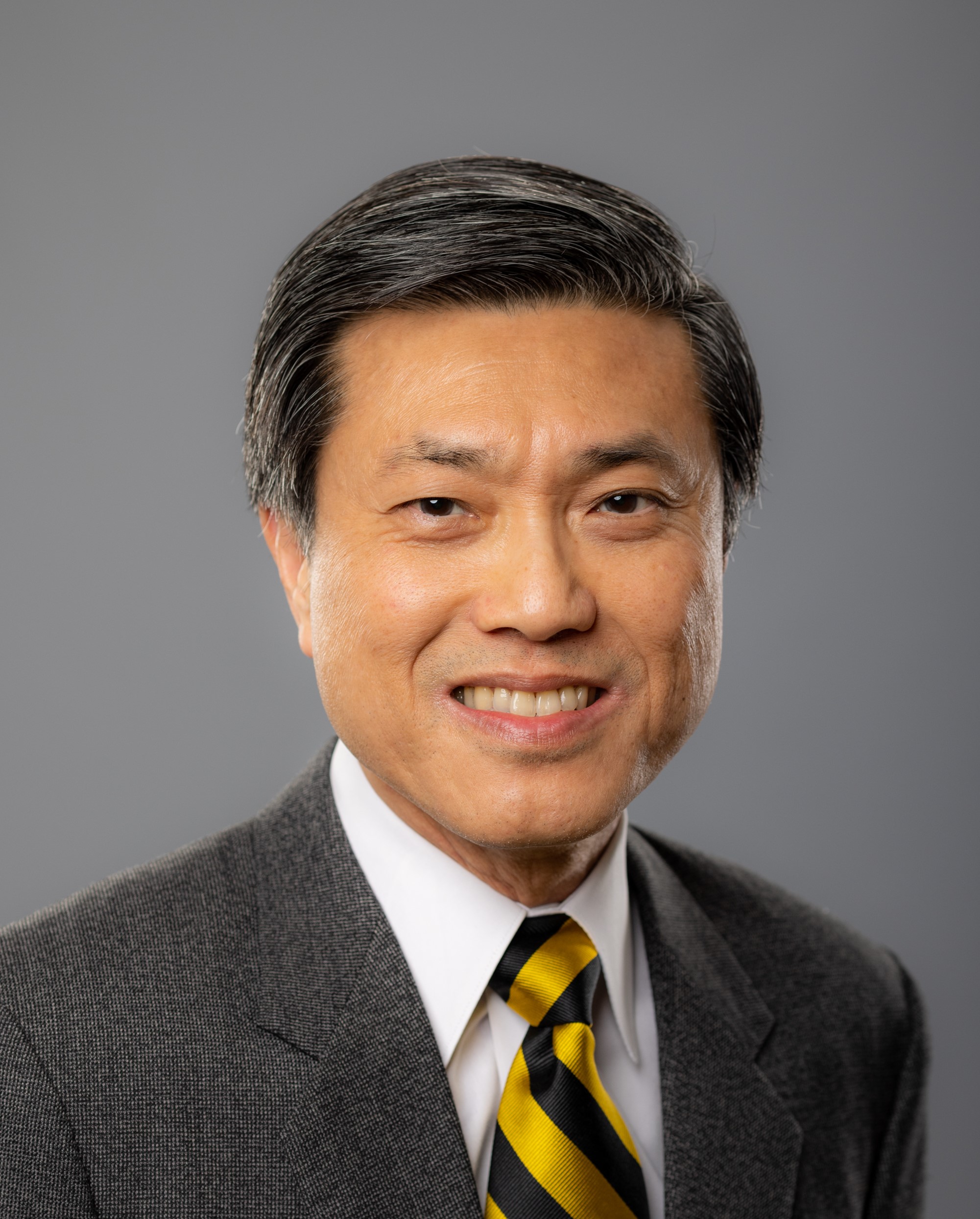
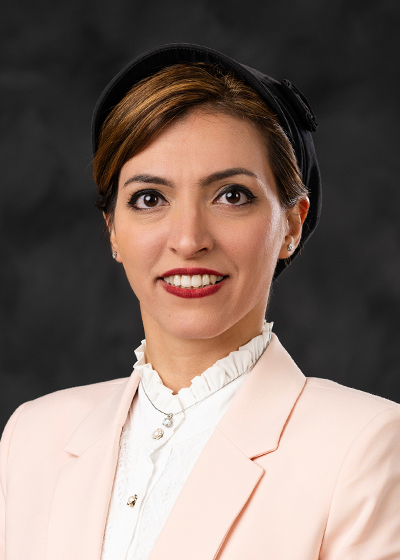
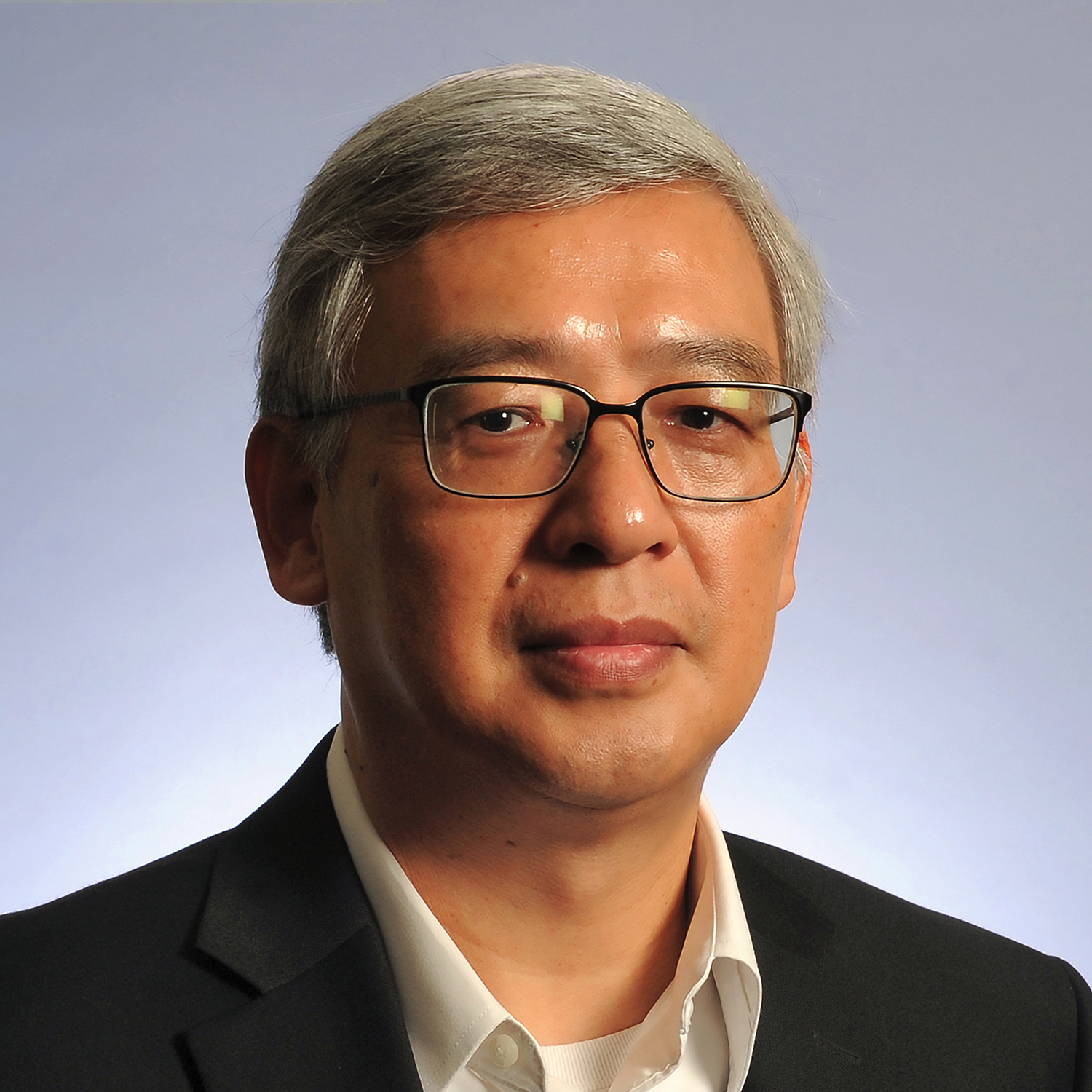
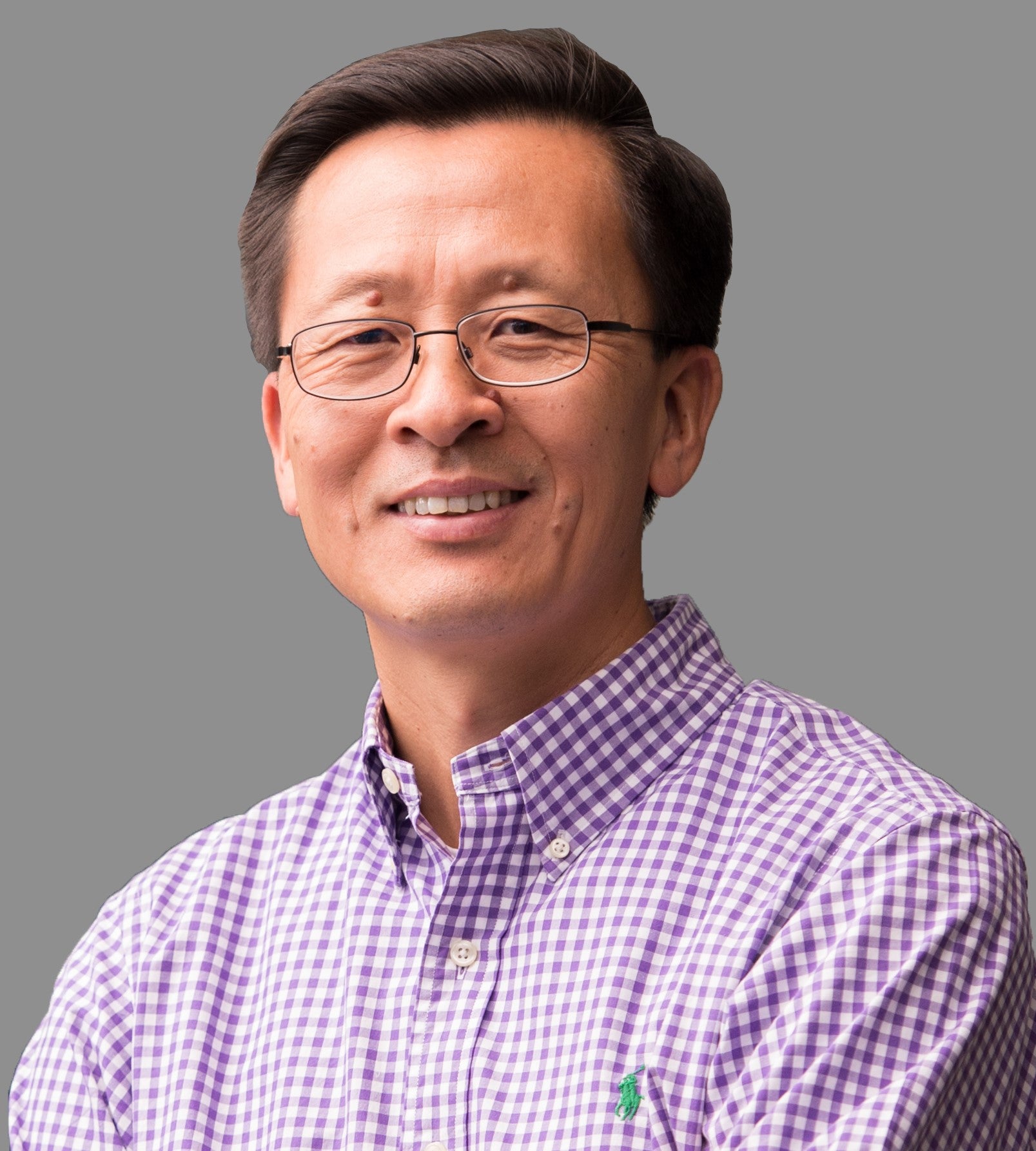
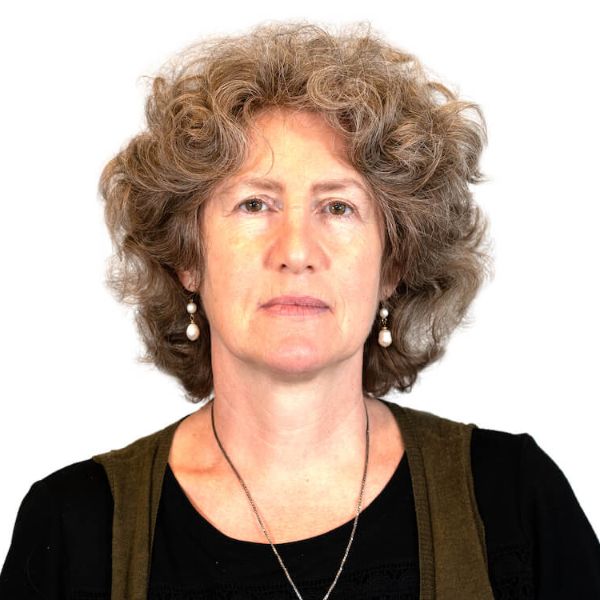
Dr. Bill Diong is a Professor in the Department of Electrical Engineering at Kennesaw State University's College of Engineering. He transitioned from industry (UTC Aerospace Systems) to academia in 2007, focusing on power/energy systems and biomedical engineering. PhD, MS, BS in Electrical Engineering from University of Illinois (Urbana-Champaign) Research Interests include: Power electronics for electric vehicles and renewable energy integration Multilevel inverters and soft-switched DC-DC converters Arc fault detection in hybrid/electric vehicles (funded by U.S. Air Force) Dynamic modeling of respiratory impedance for asthma/COPD diagnosis Scientific Achievements : $1.25M+ in grants from Georgia DOT, NSF, EPA, Ford, and others Co-advisor for KSU Electric Vehicle team (2x International EV Grand Prix winner) 2018 KSU Outstanding Research and Creative Activity Award recipient Teaching : Courses in circuit analysis, electric machines, power conversion, and electric drives.
Drazen Dujic is an Associate Professor and Head of the Power Electronics Laboratory at École Polytechnique Fédérale de Lausanne (EPFL). He holds a PhD from Liverpool John Moores University (2008) and prior industry experience at ABB Switzerland Ltd (2009–2014). His research focuses on high-power electronic systems and medium-voltage applications, including energy conversion, storage, and renewable integration. He has authored over 200 publications and 22 patents. Education: PhD in Electrical Engineering (Liverpool John Moores University, 2006–2008), MSc and Dipl.Ing. in Power Electronics (University of Novi Sad, Serbia, 1996–2005). Awards: Istvan Nagy Award (2021), EPE Outstanding Service Award (2018), Isao Takahashi Power Electronics Award (2014). Teaching: Courses include Power Electronics, Industrial Electronics, and Renewable Energy Applications. PhD Supervision: Current advisees include Amin Darvishzadeh, Max Dupont, and others; past students include Miodrag Basic and Daniel Biner. His research emphasizes medium-voltage systems, resonant converters, and grid integration technologies. Key projects include advanced DC power distribution networks and high-efficiency MVDC converters. He actively contributes to IEEE PELS committees and serves as Director of the Doctoral Program in Energy at EPFL.
Peter Van Duijsen serves as a Prof. of Practice at The Hague University of Applied Sciences, with nearly 30 years of experience in computer simulation and power electronics. He heads the DC Lab in The Hague, Netherlands, and maintains a close cooperation with the Technical University of Delft regarding DC grids and storage. Since 2008, he has also been a guest lecturer at the Korean University of Technology. His educational background includes a Masters in Electrical Engineering followed by a PhD in 2003 in the field of Modeling and Simulation of Power Electronic Systems from the Technical University of Delft. After completing his studies, he founded Simulation Research where he developed the simulation program CASPOC. Dr. Van Duijsen's research spans power electronics, renewable energy technologies, and electrical drive systems, with a growing focus on DC grid applications. His expertise extends to power converters, inverters, transformers, and electrical power engineering with emphasis on modeling and simulation techniques. His recent work demonstrates an increasing emphasis on practical educational applications and real-world implementations of power electronics in sustainable energy systems. Analysis of his recent publications reveals a strong trend toward DC grid technology, educational tools for power electronics, and renewable energy integration. His work bridges theoretical concepts with practical implementations, particularly in nano-grids for tiny houses, electric vehicle charging, and rural electrification projects. The publications show consistent development of hardware trainers and educational setups that combine theoretical knowledge with hands-on experience. Dr. Van Duijsen has co-authored several textbooks in the fields of Power Electronics, Drives, Solar, Wind and eVehicles. His research has accumulated 442 citations and 23,620 reads across his 73 publications, demonstrating significant impact in his field. His work with students focuses on practical implementation of theoretical concepts, as evidenced by numerous publications on educational laboratory setups and course development. He has been involved in bachelor course development on electrical energy transition and eVehicle motor control, emphasizing the direct application of theory to improve student understanding and progress. As head of the DC Lab at The Hague University of Applied Sciences, Dr. Van Duijsen leads research in DC grid technology, power electronics education, and renewable energy integration. His lab develops practical hardware solutions like the universal power electronics hardware trainer and educational droop control laboratory setups, focusing on making complex power electronics concepts accessible through hands-on learning experiences.
Leon Tolbert is a Chancellor’s Professor and Min H. Kao Professor of Electrical Engineering and Computer Science at the University of Tennessee, Knoxville (UT). He holds a PhD (1999), MS (1991), and BS (1989) in Electrical Engineering from Georgia Tech. He joined UT in 1999 after working at Oak Ridge National Laboratory (ORNL) and is a Fellow of the IEEE. Tolbert serves as a deputy editor-in-chief for IEEE Power Electronics Magazine and has held leadership roles in IEEE societies. His research focuses on power electronics, microgrids, wide bandgap devices, and renewable energy integration. He is a founding member and thrust leader of CURENT, an NSF/DOE Engineering Research Center for future electric grid technologies, and part of the Bredesen Center for Interdisciplinary Research. He has received numerous awards, including the NSF CAREER Award and multiple IEEE prizes. Tolbert is also a registered professional engineer in Tennessee and leads the Min H. Kao Department as a former department head (2013–2018). His research spans power electronics applications, multilevel converters, electric vehicles, and grid stability. Key projects include cryogenically-cooled inverters for aircraft, SiC/GaN device characterization, and resilient microgrid control systems. Tolbert collaborates with ORNL and industry partners, emphasizing hands-on education in wide bandgap devices. Education : PhD in Electrical Engineering, Georgia Tech (1999) MS in Electrical Engineering, Georgia Tech (1991) BS in Electrical Engineering, Georgia Tech (1989, with highest honors) Research Interests : Tolbert’s work centers on advancing power electronics for grid modernization, with emphasis on wide bandgap semiconductors (SiC, GaN), microgrid control, high-power converters, and renewable energy integration. His teams develop technologies for efficient power conversion, grid resilience, and sustainable energy systems. Recent projects include cryogenic inverter systems for aerospace and modular multilevel converters for medium-voltage grids. Grants & Awards : Over 20 years, he has secured NSF/DOE funding through CURENT and individual grants. His awards include UT’s Charles Ferris Faculty Award (2019), Moses Brooks Distinguished Professorship (2010), and multiple Chancellor’s Citations for research excellence. Labs & Teams : Leads CURENT and collaborates with the PEEMRC at ORNL. His lab focuses on high-power converter design, cryogenic testing, and microgrid emulation platforms. Active in OpenFMB initiatives for grid communication standards.
Lie Xu is a Professor in the Department of Electronic and Electrical Engineering at the University of Strathclyde, Faculty of Engineering. He joined the university in 2013 and has since been actively contributing to research and teaching in power electronics, HVDC systems, and renewable energy integration. His work plays a key role in advancing the stability and control of modern power networks with high converter penetration. PhD in Electrical Engineering, University of Sheffield (2000) His research focuses on power electronics for renewable integration , HVDC transmission systems , and the stability of converter-dominated power networks . He is particularly known for his work on grid-forming and grid-following converter interactions, DC microgrids, and offshore wind integration. His expertise spans modeling, control design, and stability assessment of complex power systems. The most recent publications (2024–2025) show a strong trend toward impedance-based stability analysis , DC fault ride-through , and advanced control strategies for multi-terminal HVDC systems . His work often involves modular multilevel converters (MMCs), DC grid topologies, and real-time diagnostic methods, indicating a deep engagement with both theoretical and applied aspects of modern power engineering. His notable scientific achievement includes: 2013 IET Renewable Power Generation Premium Award for the paper on DC voltage control in multi-terminal HVDC systems for offshore wind farms Lie Xu is actively involved in research grants and collaborative projects with industry partners such as SSE and Shell. He frequently serves as a co-investigator in projects related to grid protection, renewable integration, and advanced converter technologies. While specific advisees are not listed, his active research output and project leadership suggest a strong mentoring role. He is associated with research groups and labs focused on power systems and electronic engineering at Strathclyde, contributing to the university's leadership in sustainable energy technologies.
Zahra Saadatizadeh is an Assistant Professor in the Department of Electrical & Computer Engineering at Mississippi State University. Her primary affiliation is with the Bagley College of Engineering, where she focuses on advanced power electronics research. She holds a Ph.D. and M.S. in Electrical Engineering from the University of Tabriz (Iran), followed by a postdoctoral fellowship at the National Center for Reliable Electric Power Transmission (NCREPT) at the University of Arkansas (USA) and a visiting scholar position at Aalborg University (Denmark). Her research interests center on high power-density magnetic component design, wide bandgap semiconductor utilization, and automation optimization of DC-DC converters. Key areas include multiport converters for renewable energy systems, electric vehicle applications, and high-frequency power conversion with enhanced efficiency. Her work emphasizes practical implementation through innovative topologies and layout automation techniques. Dr. Saadatizadeh's publications (2020–2024) consistently address challenges in high-voltage conversion ratio converters, bidirectional energy flow, and zero-voltage/current switching techniques. She has developed expandable architectures and modular designs to improve scalability in power systems. Her research often bridges theoretical analysis with real-world applications in EV charging, photovoltaic integration, and smart grid technologies. No scientific awards are explicitly listed in the provided materials. Her advising and grant activities are not detailed here, but her extensive publication record indicates active research collaborations. She is affiliated with the Mississippi State University ECE department, located in Simrall Hall, and can be reached via zahra@ece.msstate.edu.
Dr. Liwei Zhou is Assistant Professor in Electrical Engineering at UT Arlington's College of Engineering. His research advances power conversion technologies for renewable energy and electric vehicle systems. Research focuses on high-efficiency power converters (90%), model predictive control for grid interfaces (75%), and optimization of EV charging infrastructure (60%). Recent patents cover soft-switching techniques and reconfigurable converter architectures. Awards: IEEE Industry Applications Society PhD Thesis First Prize (2023) MIT A+B Best Paper Award (2022) Chinese Government Outstanding Student Award (2023) Leads NSF-funded project APLUS developing power electronics training modules. Teaches power quality, renewable energy systems, and power electronics.
Dr. Issa Batarseh is a Professor in the Department of Electrical and Computer Engineering at the University of Central Florida. He received his Ph.D. in Electrical Engineering from the University of Illinois at Chicago and has extensive experience in power electronics research focusing on solar energy conversion systems. Dr. Batarseh is the Director of the Florida Power Electronics Center and has served as President of Princess Sumaya University for Technology. He has co-founded two start-up companies in solar energy conversion and has supervised 34 PhD dissertations and 43 MS theses. His research focuses on: High-frequency dc-ac inverters and resonant converter topologies Low-voltage dc-dc converters and small-signal modeling Power factor correction techniques and solar energy conversion systems His work emphasizes improving cost, power density, efficiency, and performance in renewable energy systems. Dr. Batarseh's scientific contributions include: 36 patents and authorship of over 300 articles and 2 books Approximately 7,000 citations to his published work He has received numerous honors including: Fellow of IEEE Fellow of National Academy of Inventors Fellow of AAAS Fellow of IEE Registered Professional Engineer in Florida Dr. Batarseh leads the ARGIS Research group and has served as associate editor for several IEEE Transactions journals.
Zhihua Qu is the Thomas J. Riordan and Herbert C. Towle Chair & Pegasus Professor in the Department of Electrical Engineering and Computer Science at the University of Central Florida (UCF). He earned his Ph.D. in Electrical Engineering from Georgia Tech in 1990 and has held leadership roles including Chair of the Electrical and Computer Engineering Department (2010-2021). His research focuses on energy systems, networked control, and distributed optimization with applications to smart grids, autonomous systems, and medical robotics. Dr. Qu leads major initiatives like RISES (Research Initiative for Sustainable Energy Systems) and the DOE-funded FEEDER Center, fostering interdisciplinary collaboration across institutions and industries. Education: Ph.D. Electrical Engineering (Georgia Tech, 1990). Research interests include control theory, resilient cyber-physical systems, and renewable energy integration. He has pioneered modular data-driven control designs, self-organizing microgrids, and distributed energy resource management. His work emphasizes security-resilient grid operations and advanced inverter controls. Professional Activities: Serves on IEEE Smart Grid committees, NSF Engineering Research Visioning Alliance, and editorial boards of Automatica and IEEE Access . Awards include IEEE/AAAS Fellowships, NASA’s Janowiak Leadership Award, and Lockheed Martin’s Technology Transfer Award. Key Projects: DOE-funded autonomous inverter controls for grid resilience, scalable distribution system technologies enabling 100% renewable penetration, and cyberattack-resilient distributed control frameworks. His lab develops real-time grid platforms for large-scale network simulations and tests cost-effective energy management strategies. Labs/Teams: Directs RISES with 16 faculty and 7 labs, and oversees FEEDER Center’s 12-university consortium. Active in industry partnerships with Siemens, Lockheed Martin, and utility companies for applied research in grid security, energy storage, and autonomous systems.
Jian Sun is a Professor and Director of the Center for Future Energy Systems (CFES) at Rensselaer Polytechnic Institute. He holds a Dr.-Ing. from the University of Paderborn, Germany, and has extensive industry experience at Rockwell Collins and Georgia Tech. Education: Dr.-Ing., University of Paderborn, Germany (1995) M.S., Beijing University of Aeronautics and Astronautics (1989) B.S., Nanjing Institute of Aeronautics (1984) Research Focus: Power electronics, renewable energy integration, HVDC transmission stability, and data center power systems. His work on small-signal sequence impedance theory has influenced industry standards and grid codes. Awards: IEEE Fellow (2017) R. David Middlebrook Achievement Award (2017) Modeling and Control Technical Achievements Award (2013) CFES Leadership: Directs research, education, and industry partnerships in energy systems, including advanced materials, renewable energy, and smart grids. Manages 6+ staff and collaborates across Rensselaer departments. Professional Contributions: Editor-in-Chief of IEEE Power Electronics Letters (2008-2014), current Treasurer and Distinguished Lecturer of IEEE PELS. Holds 11 US patents and 1 European patent.
Adria Junyent-Ferre is an Associate Professor in Power Electronics at Imperial College London's Department of Electrical and Electronic Engineering, part of the Faculty of Engineering. He holds a PhD from Universitat Politècnica de Catalunya (UPC) and has extensive experience in power electronics, HVDC transmission, and renewable energy integration. His research focuses on grid-forming inverter control, HVDC grids, and low-voltage distribution systems. He leads the RENGA project, addressing mini-grid expansion in developing regions. He is a Senior Member of IEEE and serves as an Associate Editor for IEEE Transactions on Power Delivery and Sustainable Energy. He teaches control of power electronic converters and real-time signal processing, and directs the Electrical and Electronic Engineering undergraduate program. Education: PhD (2011), MEng (2007) in Electrical Engineering from UPC. Affiliations: Control and Power Research Group, Energy Futures Lab, IEEE PES/CSS. Grants: RENGA project (Global Challenges Research Fund), multiple industry collaborations. Research interests span HVDC systems, modular multilevel converters, and grid resilience. He has authored over 100 publications, focusing on power electronics control, DC microgrids, and renewable integration. His work emphasizes practical applications in smart grids and sustainable energy distribution.
Dr. Alexandra Duel-Hallen is a Professor at North Carolina State University's Department of Electrical and Computer Engineering within the College of Engineering. Her research focuses on wireless communications, optimization, power systems, and machine learning applications. She has held significant grants, including a $600,000 NSF award for power system controller design. She is an IEEE Fellow (2011) and AAIA Fellow (2022), with notable accolades such as the 2006 ISI Highly Cited Researcher distinction. Education: PhD (Electrical Engineering, Cornell University, 1987), MS (CICE, University of Michigan, 1983), BS (Math & Computer Science, Case Western Reserve University, 1982). Research interests include game theory for cyber-physical systems, machine learning-driven wireless channel prediction, and voltage stability in power grids. Recent work emphasizes security investments in networked control systems and mmWave communication challenges. Her articles span 1980s to present, reflecting deep engagement with adaptive modulation, multiuser detection, and MIMO systems. Awards highlight her contributions to equalization, channel prediction, and 6G technologies. She leads interdisciplinary projects, including 6GNC's multi-technology initiatives and resilient microgrid energy cooperation frameworks. Her work bridges theoretical advancements with practical implementations in power systems and communications.
Gilbert Joseph Bergna Diaz is an Associate Professor at the Department of Electric Energy, Norwegian University of Science and Technology (NTNU). His research focuses on advanced control strategies for power electronics in HVDC systems, microgrids, and renewable energy integration. Key areas include distributed optimization, stability analysis, and dynamic modeling of modular multilevel converters. Selected trends from his recent publications include: 2024 : Distributed reactive power sharing under voltage constraints 2023 : Nonlinear voltage containment in DC networks 2022 : Port-Hamiltonian approaches for DC microgrid control 2021 : Stability enhancements in weak AC grids with resonant controllers
János Hamar is an Associate Professor at the Department of Automation and Applied Informatics , Budapest University of Technology and Economics. His work bridges power electronics and control systems with a focus on energy efficiency and renewable energy integration. Specializes in resonant DC-DC converter topologies Developed multi-agent control systems for parallel converters Contributed to E-learning tools in power electronics Explores electromagnetic interference (EMI) mitigation Investigates microgrid power distribution His research spans symmetrical and asymmetrical converter operations, virtual laboratories, and smart energy systems like "Energymon." Publications highlight innovations in multilevel converters, common-mode noise suppression, and discrete-time modeling tools. Awards and student supervision details remain unspecified in available sources.
Daniel Siemaszko is an Associate Professor at the School of Engineering and Management of the Canton of Vaud . His work focuses on Power Electronics and Modular Converters , particularly in the context of Medium-Voltage DC (MVDC) grids and Multi-Terminal DC (MTDC) networks . Power Electronics AC/DC Microgrids Modular Converters Intermediate Energy Storage Research Interests : Daniel specializes in the design and control of Modular Multilevel Converters (MMC) for DC transmission networks. His work addresses system-level control strategies, energy buffering solutions, and simulation techniques for modern power grid technologies. Publication Trends : His recent research (2015–2024) centers on MVDC distribution grids , MMC-based active front ends , and experimental validation of converter systems. Key themes include digital control architectures , scalable converter design , and low harmonic content for grid stability. Contact : daniel.siemaszko@heig-vd.ch