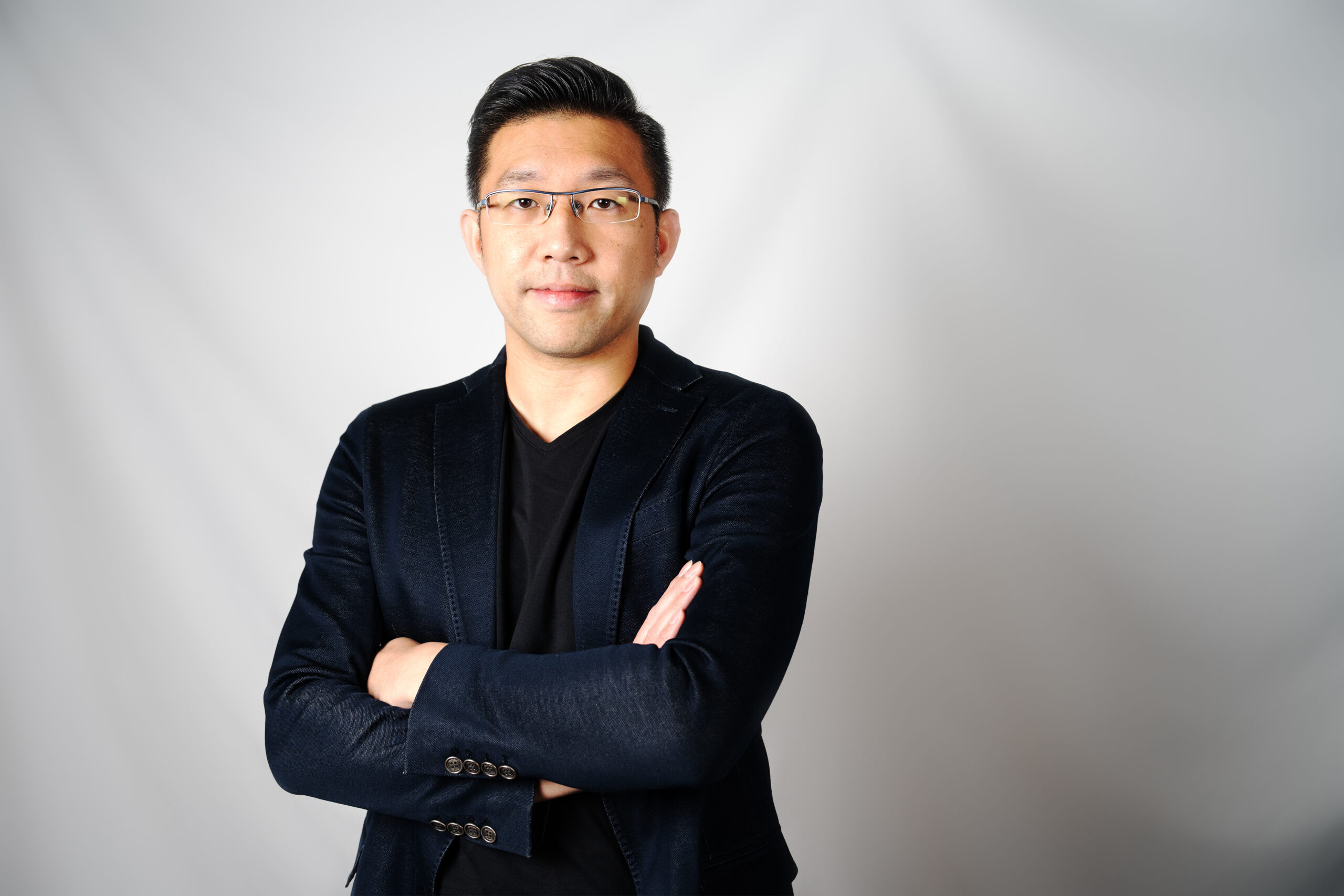
Sohail Umer is a University Lecturer in the Department of Electrical Technology at UiT The Arctic University of Norway, specializing in power electronics and energy systems. His work focuses on improving power quality, control techniques, and energy efficiency in standalone and grid-connected systems. Research group: Electromechanical Systems Project: DeHigh His research explores advanced control strategies for power electronic converters, particularly Current Source Converters and Modular Multilevel Converters, with applications in renewable energy integration, microgrids, and smart grid technologies. Recent publications highlight innovations in adaptive modulation techniques, overlap-time mitigation, and hybrid PV-battery systems. Key themes include energy storage optimization, distributed generation, and converter design for standalone applications. Collaborations span institutions like UiT and include co-authors such as Trond Østrem, Bjarte Hoff, and Andrei Blinov. His work addresses challenges in renewable energy systems, including grid stability, harmonic reduction, and multi-port converter efficiency.
Dr. Xiu Yao is an Associate Professor in the Department of Electrical Engineering at the University at Buffalo (UB), School of Engineering and Applied Sciences. She joined UB in 2015 and has held positions such as a research engineer at the University of Dayton Research Institute and a research intern at ABB Corporate Research Center. Her research focuses on power electronics, microgrid control, high-voltage DC transmission, and DC arc fault detection. Dr. Yao has received the 2016 US Air Force Summer Faculty Fellowship award for her work at Wright-Patterson Air Force Base. Education includes a PhD in Electrical Engineering from The Ohio State University (2015), an MS from Xi'an Jiaotong University (2010), and a BS from the same institution (2007). Her work emphasizes practical applications like modular multilevel converters and fusion power plant systems. Recent publications highlight advancements in DC microgrid security, wide-bandgap semiconductor devices (e.g., Ga2O3), and fault detection algorithms. Her research trends reflect a strong focus on integrating cybersecurity into power systems, optimizing HVDC systems, and enhancing fault detection through machine learning and observers. Awards and honors underscore her contributions to defense-related power systems. While no grants are explicitly listed, her work aligns with high-impact areas like renewable energy integration and high-voltage engineering.
Amin Hajizadeh is an Associate Professor at Aalborg University (AAU), affiliated with the Esbjerg Energy Section in the Faculty of Engineering and Science . His research focuses on renewable energy systems, DC microgrids, offshore renewable energy integration, and AI-driven energy solutions. He holds a PhD in Electrical Power Engineering (2010). Research Highlights: Developing control strategies for modular multiport DC-DC converters and offshore wind-hydrogen systems Advancing energy management in net-zero buildings and smart city frameworks Pioneering work in AI-based wake steering for wind farm optimization Projects & Awards: Lead investigator in BlueBARGE (€5M EU project on renewable bunkering for anchored ships) Recipient of the 2024 Best Paper Award for work on neural network-based wake steering Key Contributions: Published 140+ papers in journals like IEEE Transactions and Renewable Energy Supervised 6 PhD students and contributed to 19 funded research projects Active in editorial roles (e.g., IET Renewable Power Generation)
Dr. Meghdad Fazeli is a Senior Lecturer in the Department of Electronic and Electrical Engineering at Swansea University, Faculty of Science and Engineering. His research focuses on renewable energy integration, smart grids, and microgrid technologies, with a particular emphasis on virtual synchronous machines (VSM) and energy management strategies. He leads projects addressing climate change mitigation through decarbonized energy systems, aligning with UN Sustainable Development Goals 7, 11, and 13. Dr. Fazeli collaborates with National Grid ESO and colleagues across disciplines including Computer Science and Business School via the CARI initiative. He founded Innoverters-Ltd, a Swansea spin-out consultancy for future power systems innovation. His teaching uses blended learning, including MATLAB-SIMULINK integration and recorded lectures, coordinating modules like Power Systems (EG-342) and Advanced Power Systems (EGLM05). Research interests span renewable energy control, grid-forming inverters, and energy communities. Recent articles address VSM applications, peer-to-peer trading, and buffered microgrid designs. He advises PhD projects on topics like solar forecasting and grid-less power system architectures. His work emphasizes sustainable energy transitions, long-term resilience, and interdisciplinary solutions for net-zero systems.
Ramteen Sioshansi is a Professor in the Department of Engineering and Public Policy, the Department of Electrical and Computer Engineering, and Heinz College at Carnegie Mellon University, where he also serves as Associate Department Head for Graduate Affairs and Director of the Carnegie Mellon Electricity Industry Center. He is additionally an Adjunct Professor at The Ohio State University’s Department of Integrated Systems Engineering. His work bridges engineering, economics, and policy with a focus on energy systems and market design. His research interests include energy storage, electricity market design, renewable integration, decarbonization, grid resilience, and energy justice. He employs advanced optimization and modeling techniques to analyze how energy systems can be operated and regulated more efficiently and equitably. His work often addresses the economic and policy challenges of integrating low-carbon technologies and distributed energy resources. Ramteen's recent publications highlight a strong trend in analyzing the role of energy storage in providing multiple grid services, reforming market designs to accommodate long-duration storage, and ensuring equitable access to resilient energy. His work spans technical modeling, economic analysis, and policy implications, frequently appearing in high-impact journals such as Current Sustainable/Renewable Energy Reports and The Energy Journal . Energy Justice Through Energy Storage Long-Duration Energy Storage (LDES) Policy Electric Vehicle Integration Demand Flexibility and Aggregators Hydrogen and Carbon Removal Economics Small Modular Reactors and Nuclear Policy Ramteen has received recognition as a top researcher in energy and energy storage domains. He actively contributes to the academic community through INFORMS, particularly in the Energy, Natural Resources, and the Environment (ENRE) section, and encourages nominations for prestigious awards like the Harold Hotelling Medal. He advises graduate students, including recent PhD graduate Dr. Hyeong Jun Kim and former student Joe Duggan. His research is supported by collaborations across academia, national labs (e.g., Argonne), and industry. He frequently engages with media on topics such as natural gas supply risks, EV integration, and the future of nuclear energy. Ramteen leads the Carnegie Mellon Electricity Industry Center, a hub for interdisciplinary research on electricity markets and policy. He is also a Faculty Affiliate at the Wilton E. Scott Institute for Energy Innovation, where he contributes to CMU’s broader energy innovation ecosystem.
John C. W. Lam is an Associate Professor in the Department of Electrical Engineering & Computer Science at York University's Lassonde School of Engineering. He serves as the Graduate Program Director for MASc and PhD programs and is a Professional Engineer (P.Eng). His research focuses on power electronics, high-frequency converter topologies, renewable energy systems, and energy storage technologies. Lam directs the Advanced Power Electronics Laboratory for Sustainable Energy Research (PELSER). He is an IEEE Senior Member and an Associate Editor for multiple IEEE journals, including Transactions on Power Electronics and Transactions on Industry Applications. Education: B.Sc. (Hons.) in Electrical Engineering and BA in Economics from Queen’s University (2003), M.Sc. and Ph.D. in Electrical Engineering from Queen’s University (2006, 2010). He completed a Postdoctoral Fellowship at Queen’s ePOWER from 2010–2014 before joining York University in 2014. Research emphasizes high-frequency power converters for renewable energy integration, medium-voltage DC grids, and electric vehicle charging systems. Key contributions include modular resonant converter designs, soft-switching techniques, and fault-tolerant power electronics architectures. His publications (15 most recent listed) explore topics like MVDC distributed PV systems, high-voltage EV chargers, and grid-connected inverter control. He has developed novel topologies for electrolytic capacitor-less converters and modular power balancing techniques. Lam’s lab (PELSER) focuses on sustainable energy research, advancing efficient power conversion solutions for grid, renewable, and transportation applications. He has edited special issues in IEEE/IET journals and holds leadership roles in professional organizations.
Dr. Michael Merlin is a Senior Lecturer in the School of Engineering at the University of Edinburgh, specializing in power electronics and grid technologies. His research focuses on advanced converter topologies, energy storage integration, and smart grid solutions to enhance grid flexibility and resilience. He leads projects such as the Grid Forming Hybrid Transformer (EPSRC-funded) and Wind2DC (EPSRC and industry collaboration), addressing challenges in offshore wind energy and hybrid AC/DC systems. His work emphasizes modular multilevel converters (MMCs), DC microgrid integration, and high-voltage direct current (HVDC) grids. Recent contributions include innovative approaches to energy balancing in hybrid networks, fault-tolerant converter designs, and SiC MOSFET-enabled high-frequency inverters. Dr. Merlin’s research bridges theoretical advancements with practical applications, supported by experimental validation and industry partnerships. Key projects include: Grid Forming Hybrid Transformer (GIFhT-4-eGrids) : EPSRC-funded initiative to develop next-gen transformers for future grids (2023–2026). Wind2DC : Engineering novel HVDC power take-off systems for floating offshore wind turbines (2023–2026). ELEGANT : Innovate UK-funded project advancing gallium nitride (GaN) technologies in power electronics (2023–2024). His publications highlight trends in MMC-based converters, energy storage optimization, and fault management in low-voltage and HVDC systems. Collaborative efforts with industry and academia ensure his work addresses real-world grid challenges, from offshore wind integration to decentralized energy distribution.
Professor Shujun Zhang is a faculty member at the Department of Computer Science, Electrical Engineering and Mathematical Sciences, Western Norway University of Applied Sciences (HVL). He specializes in power electronics, electric drives, and microgrid systems with applications in maritime engineering, renewable energy, and battery technology. His work bridges academia and industry through collaborative projects and technical consultancy. Power Electronics Electric Drives Microgrid for Maritime Systems Renewable Energy Integration Digital Real-Time Control Systems His research focuses on developing state-of-the-art power conversion systems, including modular multilevel converters and hybrid propulsion systems. He leads projects with industry partners like Siemens Bergen and Norwegian Electric Systems AS, emphasizing hardware-in-the-loop testing and embedded programming. Recent publications highlight applications of power electronics in electric ferry charging systems, DC/AC converter design, and stability analysis of hybrid microgrids. His lab features advanced equipment: Modular Multilevel Converter Prototypes Typhoon HIL 604 DSP/FPGA Boards Permanent Magnet and Induction Motors Basic Line HIL Machines
Professor Milijana Odavic is affiliated with the University of Sheffield as a member of the School of Electrical and Electronic Engineering . Her research focuses on power electronics systems, particularly modular multilevel converters, fault-tolerant designs for aerospace and electric vehicles, and stability analysis of power electronics-dominated distribution systems. Recent publications highlight her work on: Modular multilevel converter topologies (boost/buck modes) Wide-bandgap semiconductors for ultra-efficient converters Robust stability theory for systems with parametric uncertainties She leads MEng/MSc teaching modules and contributes to the EPSRC Prosperity Partnership: New Partnership in Offshore Wind. Professional roles include Erasmus coordination and Athena SWAN team membership.
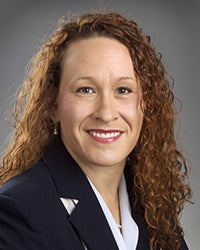
Sondra Miller is an Associate Professor in the Department of Civil Engineering at Boise State University, where she focuses on environmental engineering and contaminant transport. Her research examines the fate of organic pollutants in natural systems and engineered solutions, with active projects funded by the FAA, Hewlett-Packard, and Boise State's Office of Sponsored Projects. She holds a Ph.D. in Environmental Engineering from the University of Iowa and a professional engineering license in Idaho. Ph.D. in Environmental Engineering (University of Iowa) M.S. in Environmental Engineering (SUNY Buffalo) B.S. in Civil Engineering (SUNY Buffalo) Dr. Miller's research spans three core areas: Contaminant Transport: Investigating organic pollutants in aquatic systems like Lake Michigan Environmental Modeling: Leading projects on particulate matter and aviation emissions Sustainable Infrastructure: Developing water reuse monitoring systems and educational modeling initiatives Her recent publications show increasing emphasis on educational innovation, including: STEM communication pedagogy Low-cost educational interventions First-year design curriculum development Professional activities include: $73,000 FAA grant for air quality modeling $68,000 HP-sponsored educational initiative $5,000 university-funded water reuse project Co-investigator in multiple interdisciplinary studies
Associate Professor Wei-Yu Chiu is an academic at Deakin University, affiliated with the Faculty of Science, Engineering and Built Environment/School of Information Technology. His research spans system optimization, multi-objective optimization, evolutionary computation, machine learning, and control theory, with applications in smart energy systems, control systems (bilinear matrix inequality), and robotics (warehouse automation). His work focuses on smart energy systems (demand response), control systems (bilinear matrix inequality), and robotics (warehouse automation). He actively supervises Masters and PhD students and seeks postdoctoral collaborators through the Deakin Fellowship. Recent publications (2023–2026) emphasize multiagent reinforcement learning for microgrid resilience, energy-efficient textile manufacturing with deep transfer learning, and bilinear matrix inequality optimization for control systems. Topics include blockchain-enabled energy trading, path planning in robotics, and risk-constrained battery utilization. Education: PhD in Mathematics, National Tsing Hua University, Hsinchu, Taiwan Collaborations are centered on multirobot systems, transactive energy, and synthetic data generation for energy networks.
Héctor Chinchero Villacis is an Assistant Professor in the Department of Electronics at the University of Alcalá. His research focuses on smart lighting systems, IoT integration in buildings, and energy management solutions. He is a member of the GEINTRA research group, which specializes in Electronic Engineering applications for intelligent spaces and transport. Chinchero holds a PhD from the University of Oviedo (2021), where his thesis addressed LED driver development for smart buildings using controllable reactive elements. Education: PhD in Electronics Engineering, Universidad de Oviedo (2021) Research Interests: His work combines power electronics innovation with IoT technologies to enhance energy efficiency in smart infrastructure. Key areas include: Magnetic control of DC-DC converters for LED applications Energy management systems for public lighting and microgrids IoT-based precision agriculture and home energy monitoring Human-centered lighting parameters for wellbeing optimization Recent Contributions: Recent publications highlight advancements in low-cost emergency lighting solutions, magnetic control techniques for power electronics, and distributed energy systems for Amazonian regions in Ecuador. His work bridges theoretical power electronics with practical smart infrastructure implementations. Labs/Teams: Active contributor to the GEINTRA research group, focusing on applied electronic engineering innovations for smart environments.
James L. Kirtley Jr. is a Professor of Electrical Engineering at MIT, affiliated with the Department of Electrical Engineering and Computer Science (EECS) and the Research Laboratory for Electronics. He holds dual roles as a Director at Satcon Technology Corporation and has held visiting positions at institutions such as the Swiss Federal Institute of Technology (ETH Zurich) and Chongqing University. His academic journey includes a BS and PhD from MIT (1971). Research focuses on electromechanics, electric machinery, and power systems, including advanced motor/generator design, electric ship propulsion, microgrid optimization, and energy storage. Notable contributions include work on high-conductivity rotor materials and electric vehicle drive systems. Awards: IEEE Fellow (1990), IEEE Third Millennium Medal (2000), Nikola Tesla Prize (2002), National Academy of Engineering (2007). Professional Roles: Editor-in-Chief of IEEE Transactions on Energy Conversion (1998–2006), Editorial Board member of Electric Power Components and Systems. His industry experience includes roles at General Electric (steam turbine generators), Raytheon (microwave tube research), and Satcon (Vice President and Chief Scientist). He leads research initiatives in electric distribution systems, vehicle electrification, and modular ship propulsion architectures. Current projects explore 'self-healing' grids and advanced energy storage integration.
Mengqi Wang is an Associate Professor in the Department of Electrical and Computer Engineering at the University of Michigan-Dearborn . With a PhD from North Carolina State University and a BS from Xi'an Jiaotong University, her research focuses on power electronics , electric vehicles , and renewable energy systems . Advisor: Dr. Alex Q. Huang (IEEE Fellow) Current role: Director, Academic Program Research themes: high-efficiency power supplies , converter reliability , wide-bandgap devices Grants: 2025-2030 State of Michigan energy storage project, multiple DOE and NSF grants Publication trends emphasize power converter design for automotive applications , thermal management innovations, and microgrid stability analysis. Her recent 2025 Energies paper addresses battery energy storage optimization , while APEC 2025 contributions focus on magnetic-less converter architectures and high-density PCB designs . Teaching portfolio includes Advanced Electric Drive Transportation (ECE 646), Advanced Power Electronics (ECE 615), and foundational courses like Power Electronics (ECE 415) and Renewable Electric Power Systems (ECE 4432).
Farzad Farajizadeh is a Research Fellow in Power Engineering at the School of Engineering, The University of Western Australia (UWA). He holds a PhD in Electrical Engineering from Queensland University of Technology (2021), specializing in wireless power transfer systems for dynamic chargers. Previously, he served as a post-doctoral researcher at the University of Queensland, focusing on electromagnetic interference modeling in power electronic systems. His research interests encompass power electronic converters, renewable energy systems, wireless power transfer (WPT), and FACTS technologies. He leads projects on stackable multi-level power electronic modules and has contributed to advancements in dynamic WPT for applications like electric vehicle charging. His work aligns with UN Sustainable Development Goals, particularly in sustainable energy and innovation. Farajizadeh has authored over 20 peer-reviewed publications, including studies on grid-side current oscillations, EMI mitigation in IPT systems, and control strategies for cascaded multilevel inverters. He is a co-investigator on the ARC-funded Renewable Microgrid Pilot for Gravitational Wave Facilities project, addressing energy resilience in remote infrastructure. His research bridges theoretical analysis and experimental validation, with applications in smart grids, renewable integration, and high-efficiency power systems. Key contributions include novel converter designs for dynamic WPT and harmonic mitigation techniques in parallel grid-tied inverters.