Valentin Nyzam is a Researcher at the University of Tours , affiliated with the Polytechnic School and Department of Networks and Telecommunications (RT) . He works at the Fundamental and Applied Computer Science Laboratory of Tours (LIFAT, UR 6300) and is associated with the University Institute of Technology of Blois (IUT Blois) . Research Focus: Specializes in Natural Language Processing with emphasis on automatic summarization and comparative summarization Develops modular open-source tools (MOTS) for multi-document summarization Active in deep learning applications for text analysis and word embeddings Conducts cross-lingual research and short text language identification Focus on French language processing and implementation of NLP tools Contact: valentin.nyzam@univ-tours.fr
Florence Müller is a Postdoctoral Scholar and SNSF Postdoctoral Fellow in the Department of Chemical Engineering at the California Institute of Technology (Caltech), where she conducts research in the Kornfield Lab on biolistic ocular drug delivery systems. Her work focuses on designing multilayered particles capable of penetrating the corneal epithelium while enabling sustained release of therapeutic agents. Her academic background includes: PhD in Materials Science from ETH Zurich under Prof. Jan Vermant, investigating colloidal surface roughness effects on gel dynamics and rheology under shear, including development of a modular thermoreversible colloidal gel system using click-like chemistry. Master's and Bachelor's degrees in Mechanical Engineering, with her Master's thesis conducted at MIT in Prof. Robert Langer's laboratory (collaborating with Prof. Owen Fenton) on 3D bioprinting of two-component hydrogels. Müller's research integrates advanced materials design with biomedical applications, specializing in particle-based ocular drug delivery systems that balance penetration density and drug-loading porosity. Her expertise spans colloidal science, complex fluid rheology, biomaterial synthesis, and additive manufacturing techniques for therapeutic delivery. Her scientific recognition includes: SNSF Postdoctoral Fellowship Funded by the Swiss National Science Foundation fellowship, Müller operates within Caltech's Kornfield Lab without formal advisees. Her current research targets innovative solutions for overcoming ocular delivery barriers through engineered particulate systems, contributing to the lab's mission of developing advanced materials for biomedical challenges.
Ayush Pandey is an Assistant Teaching Professor in the Department of Electrical Engineering at the University of California Merced. His work bridges synthetic biology, cyber-physical systems, and robotics, with a focus on modeling, formal verification, and education. Academic Rank: Assistant Teaching Professor Department: Electrical Engineering Email: ayushpandey@ucmerced.edu His research spans three primary domains: Synthetic Biology: Developing modeling frameworks (e.g., BioCRNpyler) for modular biological circuit design, analyzing gene circuits subject to context effects, and characterizing biomolecular components in cell-free systems. Cyber-Physical Systems: Advancing assume-guarantee contracts (Pacti) for scalable system verification and robustness guarantees in model reduction of dynamical systems. Autonomous Robotics: Designing autonomous two-wheeler locomotion models, three-wheeled mobile robots, and low-cost bicycle navigation systems. Recent trends in his publications highlight interdisciplinary integration of AI/ML with biological systems, including tools for high school students to engage with neural networks and methods for classifying large language model hallucinations.
Christopher A. Alabi is an Associate Professor in the School of Chemical and Biomolecular Engineering at Cornell University . His research spans synthetic chemistry , drug delivery , and antimicrobial design , with a focus on sequence-defined macromolecules for therapeutic and material applications. He leads the Alabi Lab, a multidisciplinary team of over 12 researchers. B.S. in Chemistry (New York University) and Chemical Engineering (Stevens Institute of Technology) Ph.D. in Chemistry (California Institute of Technology) NIH Postdoctoral Fellow (MIT) His research interests include: Sequence-defined polymers for stimuli-responsive materials Bioconjugate chemistry in antibody-drug systems Antiviral lipopeptides against SARS-CoV-2, measles, and Nipah virus Protein delivery via ionizable lipid nanoparticles Recent scientific awards include: 2025 Nat Commun publication on bacterial glycosylation platforms 2024 ACS Cent Sci breakthrough in anionic cloaking 2023 Viruses review on antiviral assays 2022 Anal Chem biophysical characterization of antimicrobials 2018 PMSE Young Investigator Award 2016 NSF CAREER Award The Alabi Lab's collaborative network extends to Columbia University, MIT, Erasmus Medical Center, and the Center for Genetically Encoded Materials , with funding from NIH, NSF, and Sharon Golub Fund.
Kyle Gabriel Daniels is an Assistant Professor in the Department of Genetics and Neurosurgery at Stanford University . He is also a member of interdisciplinary research institutes including Bio-X , Maternal & Child Health Research Institute (MCHRI) , and Stanford Cancer Institute . His research focuses on applying synthetic biology, machine learning, and high-throughput screening to engineer receptors and gene circuits that control cell functions in cancer therapy and autoimmune disease. Education BS in Biochemistry, University of Maryland College Park (2010) PhD in Biochemistry with certificate in Structural Biology and Biophysics Postdoctoral training at UCSF with Wendell A. Lim Research interests include: Engineering immune cells for cancer therapy Coordinating multi-cell type systems in disease treatment Controlling stem cell differentiation via synthetic circuits Decoding modular signaling motifs in receptors Publication trends highlight integration of machine learning with synthetic biology to optimize cell therapies, particularly CAR T cells, through systematic design rules and predictive modeling. His work addresses challenges in DNA synthesis, high-throughput screening, and combinatorial signaling motif analysis. Advising roles include Doctoral Dissertation Advisor, Co-Advisor, and Reader for students working on advanced genetics, synthetic biology, and biomedical engineering projects. Labs and teams are affiliated with Stanford's interdisciplinary institutes like Bio-X , MCHRI , and Stanford Cancer Institute , emphasizing cross-departmental collaboration.
Zhiru Zhang is a Professor at Cornell University in the School of Electrical and Computer Engineering , leading research at the Computer Systems Laboratory . His work focuses on algorithms, methodologies, and design automation tools for heterogeneous computing systems. Recent publications emphasize high-level synthesis (HLS), hardware specialization for machine learning, and programming models for software-defined FPGAs. Education: Ph.D. in Computer Science, UCLA B.S. in Computer Science, Peking University M.S. in Computer Science, UCLA Research Interests: Heterogeneous computing systems High-level synthesis (HLS) optimization FPGA-based hardware acceleration Sparse data format compilers Machine learning for electronic design automation Scientific Awards: IEEE Fellow Intel Outstanding Researcher Award NSF CAREER Award DARPA Young Faculty Award Multiple Best Paper Awards at ASPLOS, ISPD, FPGA, AutoML, FCCM Research Group: Mentors 12 current students including Jordan Dotzel, Jie Liu, and Grace Dinh, with 14 alumni now at institutions like AWS AI, NVIDIA, Google DeepMind, and Microsoft. His lab develops tools like UniSparse for sparse format customization, presented at OOPSLA'24 and IEEE CAL.
Dr. Alexander Spokoyny is a Professor in the Department of Chemistry and Biochemistry at the University of California, Los Angeles (UCLA), specializing in Inorganic Chemistry, Nanoscience, and Bioconjugation. His research bridges organometallic chemistry, materials science, and systems biology through innovative boron cluster chemistry and molecular design. Fields of Interest: Organometallic Chemistry, Inorganic Chemistry, Nanoscience, Materials Science, Bioconjugation, Boron Cluster Chemistry Spokoyny’s work focuses on synthesizing atomically precise hybrid nanomaterials and developing organometallic reagents for bioconjugation. His recent studies explore charge transport in doped polymers, polaron dynamics in graphene nanoribbons, and boron cluster-based ionophores for ion sensing and medical applications. His 15 most recent publications highlight interdisciplinary trends in materials design, including semiconductor doping, bioconjugation strategies, and boron cluster functionalization. These works span computational modeling, electrochemical synthesis, and experimental validation of novel nanomaterials and reagents. Scientific Recognition: NSF CAREER Award (2019) for phosphorescent OLED materials using carborane ligands While no direct student list is provided, Spokoyny actively mentors through undergraduate research programs and contributes to teaching initiatives. His collaborations with nanotechnology and biochemistry groups underscore his role in advancing synthetic methods for biomedical and electronic applications.
Prof. Dr. rer. nat. Sven Ingebrandt is Full Professor and Chair of Micro- and Nanosystems as well as Chair of Materials for Electrical Engineering I at RWTH Aachen University, Germany. He simultaneously directs the Institute of Materials for Electrical Engineering I (IWE-1) and holds a rectorate mandate for university co-operation with Japan. His affiliations further include the Profile Area Molecular Science & Engineering (MSE) steering committee. Research interests cover micro- and nanoelectronics, bioelectronics, neural interfaces, organic electrochemical transistors, 2-D materials, metal-organic frameworks, lab-on-a-chip systems, plasmonic biosensors and thermal characterisation of thin films. The group develops wearable textile sensors, high-density microelectrode arrays, impedance-based cellular assays, ion-selective organic sensors and point-of-care diagnostic platforms. Recent publications (2022-2025) emphasise multi-modal biosensors, graphene and MOF thin films, organic transistor arrays for neurotransmitter and ion monitoring, thermal metrology of conductive polymers, plasmonic enhancement for viral protein detection, and machine-learning assisted discovery of high-performance polymers. The work is highly interdisciplinary, merging microsystems engineering, surface chemistry, semiconductor nanotechnology and biomedical sciences.
Prof. Dr. Helge Ritter is a distinguished Professor at the University of Bielefeld, holding multiple key positions across several departments and research centers. He is primarily affiliated with the Faculty of Engineering as part of the Neuroinformatics Group, and also serves as a CITEC Coordinator at the Center for Cognitive Interaction Technology. His work spans the Faculty of Psychology and Sport Science in the Department of Psychology (Unit 01 - Neurocognitive Psychology), and he contributes to the Joint Research Center on Cooperative and Cognition-enabled AI. His academic journey has positioned him at the forefront of interdisciplinary research that bridges engineering, cognitive science, and robotics. As a member of the Habilitation Committee and serving as Personal Deputy for Prof. Dr.-Ing. Ulrich Rückert on the Examination Boards for Biomechatronics (Master), he plays a significant role in academic governance and curriculum development. Research Interests Prof. Ritter's research spans the cutting-edge intersection of neuroinformatics, robotics, and artificial intelligence. His work focuses on cognitive robotics , tactile sensing systems , and human-robot interaction , with particular emphasis on how machines can perceive and interact with the physical world through touch and movement. His investigations into modular neural architectures and biologically inspired learning systems have significant implications for both theoretical neuroscience and practical robotics applications. His current research trajectory demonstrates a strong focus on transfer learning between simulation and reality , multi-fingered manipulation , and adaptive kinematic modeling . These efforts contribute to the broader Socio-Technical World research area at Bielefeld University, which 'researches capabilities and mechanisms that enable agents such as humans, robots and AI to act, communicate and learn in complex environments.' Academic Contributions Coordinator at the Center for Cognitive Interaction Technology (CITEC) Member of the Habilitation Committee in the Faculty of Engineering Personal Deputy for Examination Boards in Biomechatronics (Master) Contributor to the Joint Research Center on Cooperative and Cognition-enabled AI Prof. Ritter's work exemplifies Bielefeld University's commitment to 'Transcending Boundaries' between disciplines, people, and science and society. His research bridges theoretical neuroscience with practical robotics applications, creating innovative solutions for human-robot collaboration and cognitive systems.
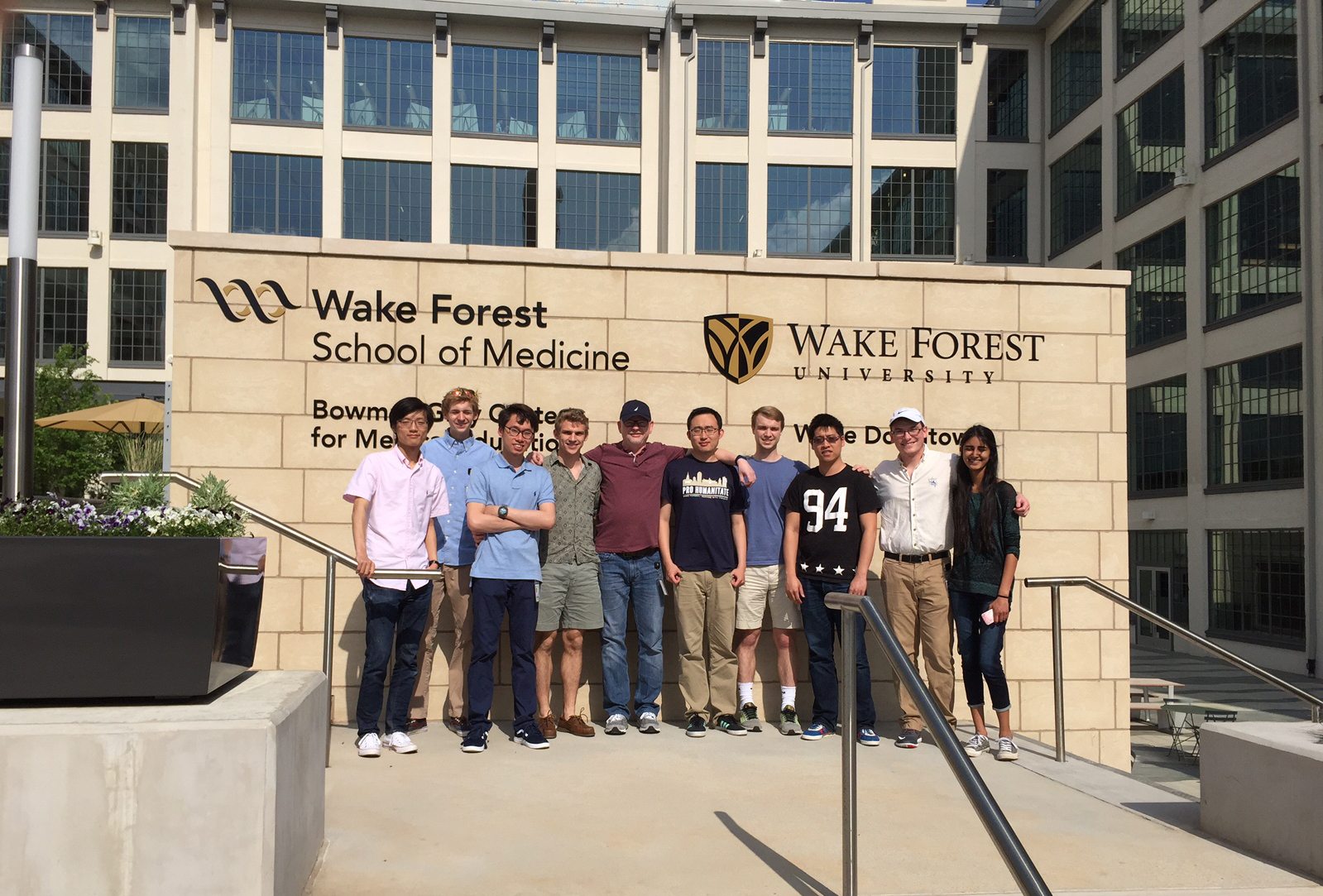
Ulrich Bierbach is a Professor in the Department of Chemistry at Wake Forest University. His research focuses on developing platinum-acridine hybrid agents (PAHAs) for cancer therapy, exploring their unique DNA-binding mechanisms and tumor-targeted delivery systems. He has received multiple accolades including the Wake Forest Award for Excellence in Research (2005), Levison Family Faculty Fellowship (2016-2019), and URECA Award (2023). Education: Diplom in Chemistry (1989), University of Oldenburg, Germany Ph.D. in Chemistry (1992), University of Oldenburg (Advisor: S. Pohl) Postdoctoral Fellow (DFG, 1992-1993), Leiden University DFG Research Fellow (1994-1996), Virginia Commonwealth University (Advisor: Nicholas Farrell) Research Associate (1996-1998), Virginia Commonwealth University Postdoctoral Research Associate (1998-1999), University of Minnesota (Advisor: Lawrence Que, Jr.) Research Interests center on: Design of mixed organic-inorganic anticancer drugs Mechanistic studies of DNA-metal interactions Computational tools for pharmacophore optimization Bioconjugate platforms for targeted delivery Structure-activity relationships in platinum agents Molecular modeling of drug-DNA complexes Publication Trends show expertise in: Platinum-acridine hybrid compounds (1996-present) Development of DNA adduct detection methods (2014-2021) Novel formulations (liposomes, nanoparticles) (2016-2021) Mechanistic studies of cellular uptake and repair (2015-2023) Patent filings for drug design (3 issued patents) Scientific Awards: Wake Forest Award for Excellence in Research (2005) Levison Family Faculty Fellowship (2016-2019) URECA Award for Excellence in Mentored Scholarship (2023) Mentoring includes: Ph.D. graduates in platinum drug development MS students in DNA damage analysis Undergraduate researchers in inorganic-organic conjugate synthesis Postdoctoral fellows in drug delivery systems Laboratory maintains: Interdisciplinary collaborations in pharmacology and bioinformatics Active research in drug-DNA interactions and formulation chemistry Commercialization partnerships for PAHA compounds
Song Jin is the Francis J. DiSalvo Professor of Physical Science in the Department of Chemistry at the University of Wisconsin–Madison. He leads the Jin Group, focusing on nanomaterials, electrocatalysis, perovskite optoelectronics, and energy storage solutions. His research bridges renewable energy, quantum materials, and biomedical nanotechnology. Education: B.S. (1997) from Peking University Ph.D. (2002) from Cornell University Research Interests: Jin pioneers screw-dislocation-driven nanomaterial growth, designs earth-abundant electrocatalysts for hydrogen peroxide and hydrogen production, develops perovskite heterostructures for optoelectronics, and engineers solar flow batteries for integrated energy conversion/storage. His proteomics work uses nanotechnology to advance cardiac biomarker analysis. Publication Trends: Recent articles (2023–2025) emphasize perovskite engineering (bandgap tuning, ferroelectricity), electrocatalytic H₂O₂ synthesis, twistronics in quantum materials, and environmental applications like wastewater valorization. Cross-disciplinary themes include sustainability, quantum phenomena, and nanotechnology-driven biomedicine. Laboratory: The Jin Group explores fundamental material properties to address energy intermittency and biomedical challenges through nanoscale innovation.
Dawei Feng is a Professor in the Department of Materials Science & Engineering at the University of Wisconsin-Madison, focusing on inorganic-organic hybrid materials for energy conversion/storage and electronic devices. His work includes developing metal-organic frameworks (MOFs) and solid-state ion conductors for rechargeable batteries. Education: PhD (2015, Texas A&M University), BS (2009, Peking University) Research interests center on metal-organic frameworks (MOFs), covalent organic frameworks (COFs), ion conductors, and their applications in redox flow batteries, lithium/sodium-ion batteries, and neuromorphic computing. Recent work explores fluorine-free membranes, zwitterionic additives, and sustainable synthesis methods. His 15 most recent publications (2022-2025) address topics including ion transport mechanisms, battery electrolytes, and bio-inspired materials. These studies employ advanced synthesis techniques like hydrothermal methods and modular dimerization to enhance stability, conductivity, and energy density. 2021 NSF CAREER Award 2019 Y. Austin Chang Professorship 2016 ACS DIC Young Investigator Award Feng teaches courses in nanomaterials, independent study, and advanced research. His work bridges coordination chemistry, electrochemistry, and sustainability assessments for energy systems.
John C. Wright is the Andreas C. Albrecht Professor of Chemistry at the University of Wisconsin-Madison , where he conducts groundbreaking research in Coherent Multidimensional Spectroscopy (CMDS) . His work bridges quantum mechanics and materials science, developing optical analogues of multidimensional NMR to study molecular and material dynamics. Education : B.S. (1965) from Union College, Ph.D. (1970) from Johns Hopkins University Research Focus : Dr. Wright's group pioneers mixed frequency/time domain CMDS using sub-femtosecond lasers to probe quantum superposition states in molecules and materials. Their innovations include nonlinear methods like MENS, MEPS, SIVE, DOVE, and TRIVE four-wave mixing, with applications spanning protein interactions, quantum dot dynamics, and perovskite material characterization. Scientific Contributions : Recent publications highlight advancements in 2D perovskite characterization, Floquet state spectroscopy, and open-source tools like WrightTools and WrightSim . His work enables precise measurement of strain, defects, and electronic properties in advanced materials. Laboratory & Outreach : The Wright Group actively develops open-source software solutions and investigates quantum interference phenomena in transition metal dichalcogenides. Their research provides foundational insights for coherent control of electron transfer and structural analysis of complex materials.
Dr. Filipa Sousa serves as Assistant Professor in the Department of Functional and Evolutionary Ecology at the University of Vienna's Faculty of Life Sciences, leading the Filipa Sousa Lab within the Archaea Biology and Ecogenomics Unit. Her research program integrates genomic, phylogenetic, and experimental approaches to investigate microbial evolution with emphasis on archaeal physiology, metabolic innovation, and bioenergetic transitions across Earth's history. The lab operates from room 3.042 at Djerassiplatz 1 in Vienna. Her primary research interests focus on the evolution of microbial metabolic strategies, particularly energy conservation mechanisms in Archaea. She investigates how carbon and energy metabolic systems evolved through protein complex modularity, gene fusions, and large-scale comparative genomics. Current work emphasizes automatic metabolic classification from genomic data, pan-metabolic profiling of Archaea, and reconstructing evolutionary pathways for sulfur and electron transport systems. Her group combines phylogenomics with experimental validation to bridge geological records and microbial physiology. Analysis of her recent publications reveals dominant trends in archaeal metabolism evolution, particularly dissimilatory sulfur reduction pathways and respiratory complex assembly. Her work increasingly integrates metagenomic data with phylogenetic modeling to reconstruct ancestral metabolic states, while developing computational tools for metabolic classification. Key themes include electron bifurcation mechanisms, horizontal gene transfer in metabolic innovation, and geochemical constraints on early bioenergetic systems. Major scientific recognition includes: ERC Starting Grant (2019-2025) for "Evolution of Physiology: The link between Earth and Life" WWTF Vienna Research Group Grant (2016-2025) for "Pan-metabolic profiling of Archaea: The Ecology of Genomics" Dr. Sousa actively supervises five graduate students across PhD and Master's programs while leading a 12-member research team. Her Vienna Doctoral School project "Microbial biotransformations in biogeochemical cycles" examines metal-based energy conservation in environmental microbes. She maintains significant collaborations with William F. Martin (Heinrich-Heine-Universität Düsseldorf) and Christa Schleper (University of Vienna), with funding supporting experimental work, computational analyses, and field studies in extreme environments. The Filipa Sousa Lab comprises Anwar Hiralal (PhD), Jordi Zamarreno Beas (PhD), Val Karavaeva (M.Sc.), Anastasiia Padalko (M.Sc.), Constantin Leitgeb (B.Sc.), and Marta Medic (B.Sc.). The team operates within the Archaea Biology and Ecogenomics Unit under Christa Schleper's departmental leadership, utilizing advanced genomic and bioinformatic infrastructure. Current projects integrate metagenomic data from diverse environments with phylogenetic modeling to reconstruct metabolic evolution, with particular focus on uncultivated archaeal lineages and their ecological roles.
Manuel Bailo Esteve is a Professor of Architecture at the University of Virginia School of Architecture and Director of its Barcelona Program. With a PhD from Escola Tècnica Superior d'Arquitectura de Barcelona, he teaches urban design and has 14 years of experience at ETSAB. His firm BAILORULL ADD+ (co-founded with Rosa Rull) merges practice, teaching, and research. Specializes in public space activation via his PhD research Urban Catalyst Projects span urban design to interiors, emphasizing environmental integration and human behavior Recipient of international awards: Contracworld (2010), Commercial Space Award (2011), and FAD Awards Research Themes : Architecture as a 'constellation system' balancing landscape analysis, human-scale design, and climate-responsive solutions. Advocates for 'non-muscular architecture' creating atmospheres that subtly transform urban environments through materiality, texture, and healthy spatial configurations. Scientific Contributions focus on urban catalysts, environmental integration, and contextual design principles. Publications include Urban Catalyst (2014) and Contra la indiferència (2012), reflecting his philosophy of architecture as a synthesis between social/historical/environmental factors. Awards : Contracworld Award (2010) Commercial Space Award (2011) FAD Award (twice)