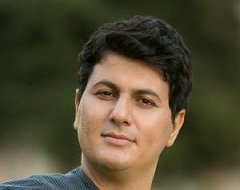
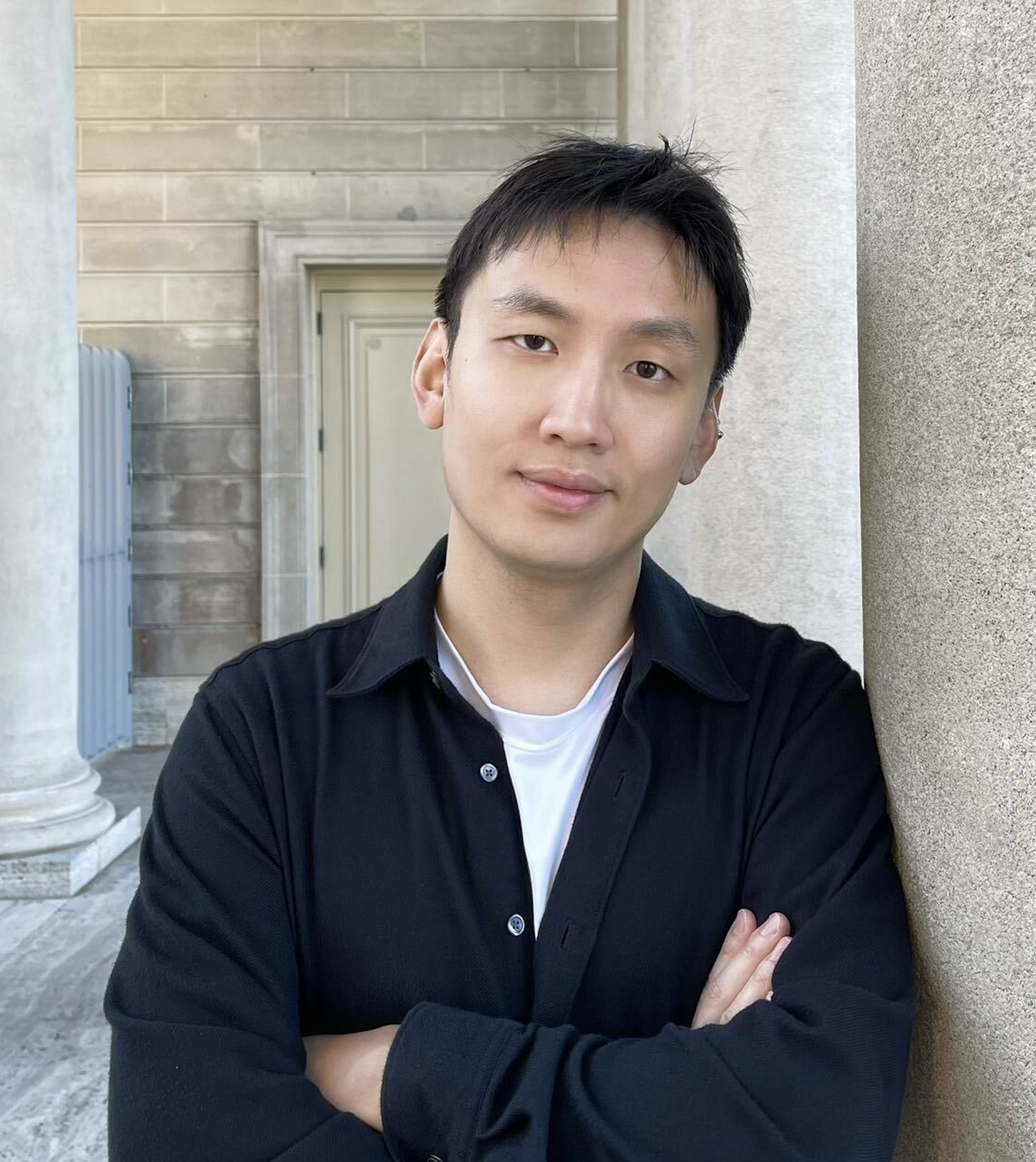
Bin Zhao is a Postdoctoral Researcher at Aalto University's Department of Applied Physics and affiliated with the Molecular Materials research group. His work focuses on advanced lignin-based materials, nanocellulose technologies, and sustainable carbon constructs for environmental applications. Academic rank: Researcher Research Interests : Bin Zhao's research spans the development of lignin-based porous materials for carbon capture, nanocellulose composites for industrial applications, and biomass-derived carbon technologies for environmental and photonic applications. His work integrates materials science, chemical engineering, and sustainable chemistry. Scientific Awards : 3 months research grant Encouragement grant, Department of Bioproducts and Biosystems, May 2022 Best poster, Department of Bioproducts and Biosystems, Jun 2022 Publications : Bin Zhao's publications emphasize wood-based carbon materials for CO2 capture, single-atom catalysts , and bioproducts engineering , reflecting his commitment to sustainable materials and environmental solutions. Research Groups : He contributes to the Molecular Materials group, advancing nanotechnology and bioproducts research.
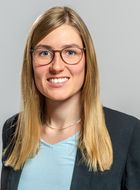
Tuuli Jylhä serves as an Assistant Professor in the Department of Built Environment at Aalto University, Finland. Her academic work focuses on optimizing facility management and corporate real estate practices through lean principles and circular economy frameworks, with particular emphasis on workplace design impacts on human wellbeing and sustainable built environment solutions. She maintains active research collaborations across European institutions and contributes to major industry symposia including the EuroFM Research Symposium. Her research spans facility management innovation, corporate real estate strategy, workplace design science, lean methodology application, circular economy implementation in construction, and employee wellbeing optimization. Current investigations examine adaptive reuse of buildings, transformation of outsourcing models, startup ecosystem support through facilities, and interior design strategies for health promotion. Her methodology combines empirical case studies, literature reviews, and cross-sectoral analyses to bridge theoretical frameworks with practical facility management applications. Analysis of her recent publications (2022-2025) reveals three dominant research trajectories: circular building adaptability frameworks (35% of output), workplace wellbeing optimization (30%), and corporate real estate management transformation (25%). Her work increasingly integrates circular economy principles with lean management approaches while expanding into educational facility safety and university-startup ecosystem interfaces. The Netherlands and Finland serve as primary case study contexts with growing international comparative research. Scientific recognition includes: Highly Commended Paper award (2014) from Facilities journal for 'Learning from lean management – going beyond input-output thinking' (2013) Dr. Jylhä actively supervises master's students and early-career researchers through Aalto University's Department of Built Environment, with recent projects examining modular facility solutions and workplace noise impacts. Her grant portfolio includes Finnish Strategic Research Council funding for circular economy initiatives and European Commission Horizon 2020 collaborations focused on sustainable facility management. She contributes to Aalto's Real Estate Economics research group and participates in the EuroFM network, where she serves on symposium program committees. Current projects investigate the role of facility management in university startup ecosystems and the transformation of outsourcing practices in corporate real estate, with fieldwork conducted across Nordic and Western European institutional contexts.
Lou Charkoudian serves as Professor and Chair of Chemistry at Haverford College, where she maintains an active research program and teaches undergraduate courses. Her dual expertise bridges chemical biology and STEM education research, with significant contributions to both academic domains. Her research focuses on Streptomyces bacteria and the biosynthesis of therapeutically relevant molecules, particularly through type II polyketide synthase pathways. She integrates original research opportunities into classroom settings and investigates intrapersonal factors affecting STEM student success. Her work emphasizes undergraduate collaboration , with all publications featuring student co-authors. National Institutes of Health (R15) National Science Foundation (CAREER, RUI, RCN) Camille & Henry Dreyfus Foundation Research Corporation for Science Advancement (Cottrell Scholars Award) Publication trends reveal deep specialization in acyl carrier protein interactions and polyketide engineering , with recent work expanding into STEM education psychology . Over 75% of her publications since 2013 involve undergraduate co-authors, demonstrating commitment to research-based learning. Cottrell Scholars Award Cottrell College Science Award Article highlighted in C&EN News (2014) Charkoudian has mentored over 100 undergraduate researchers through classroom-integrated projects and independent labs. Her grants consistently support student stipends and equipment for hands-on research. She develops symbiotic outreach programs connecting campus work with local community initiatives, creating reciprocal learning environments. Current projects focus on engineering polyketide pathways and measuring coping mechanisms in STEM failure scenarios.
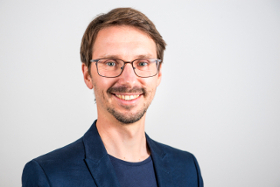
Thomas Vogel is a postdoctoral researcher at the Software Engineering Group within the Institute of Computer Science at Humboldt-Universität zu Berlin . From October 2021 to September 2022, he served as a stand-in professor for Empirical Software Engineering at Paderborn University. He earned his Ph.D. summa cum laude in 2018 from the University of Potsdam under the Hasso Plattner Institute, specializing in model-driven engineering of self-adaptive systems. He graduated with distinction in Information Systems from the University of Bamberg .
Alperen Kaymakci is a Professor at the Department of Forest Industry Engineering , Kastamonu University , Turkey. With over 15 years of academic experience, he specializes in wood mechanics, nanocomposite materials, and sustainable forestry technologies. PhD in Wood Mechanics and Technology (Istanbul University, 2015) MSc in Forest Industrial Engineering (Kahramanmaraş Sütçü İmam University, 2010) BSc in Forest Industry Engineering (Kahramanmaraş Sütçü İmam University, 2008) His research interests include: Wood-plastic and nanocomposite materials Thermal modification of wood Utilization of agricultural/forestry waste Mechanical and physical property optimization Eco-friendly composite manufacturing Surface engineering of wood products Recent article trends demonstrate expertise in modifying wood composites with nanomaterials (TiO2, sepiolite), enhancing durability through heat treatment, and repurposing rice husks, tire rubber, and sunflower stalks into structural materials. Supervision : Advised 5 graduate students in wood nanocomposites, heat-treated panels, and particleboard innovation. Projects include TUBITAK-funded initiatives on: Disaster-resilient modular housing Wood-plastic composite standardization Nano-enhanced adhesive systems Labs/Teams : Collaborates with Istanbul University-Cerrahpaşa, Artvin Çoruh University, and international researchers on composite development.
Mingjun Xuan is a researcher at the Institute of Technical and Macromolecular Chemistry , RWTH Aachen University, and affiliated with the DWI – Leibniz Institute for Interactive Materials . His work focuses on mechanochemical synthesis and activation of carbon-rich π-conjugated materials , particularly in polymer mechanochemistry and trituration mechanochemistry. This research enables novel reaction pathways for functional materials with applications in optoelectronics, sensing, and energy storage. His research interests include: Mechanochemical bond transformations Optical force probes (OFPs) Synthesis of conjugated polymers Mechanochemical generation of polyacetylene Bottom-up synthesis of carbon allotropes Tribochemistry and polymer mechanochemistry Key article trends reveal expertise in: Mechanochemical methods for polymer and nanomaterial synthesis Force-induced bond scission and formation Applications in organic electronics and photovoltaics Interdisciplinary work spanning materials science and organic chemistry
Mohsen Lesani is an Associate Professor at the Computer Science and Engineering Department of University of California, Santa Cruz . He obtained his PhD from UCLA , MS in Artificial Intelligence from Sharif University of Technology , and BS in Software Engineering from University of Tehran . His research focuses on reliability and security of software systems , particularly concurrent and distributed systems , with recent work on secure replicated systems and distributed machine learning . NSF CAREER Award (2020) DARPA Young Faculty Award (2022) SIGPLAN Research Highlight (2019) Distinguished Paper Award at OOPSLA 2018 Best Paper Award at ISSRE 2015 His recent publications tackle challenges in automated synthesis of distributed protocols , heterogeneous replication , secure blockchain transactions , and verified RDMA-based data types . He advises PhD students Xiao Li , Eric Chan , Javad Saber-Latibari , and Tejas Mane in the Safe and Secure Software (S3) lab . He has taught courses on Distributed Systems , Parallel Programming , and Compiler Design .
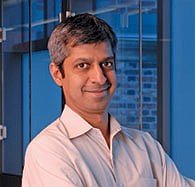
Overview Rajeev Alur is the Zisman Family Professor and Director of the ASSET Center for Trustworthy AI at the University of Pennsylvania . His career spans groundbreaking work in formal methods, cyber-physical systems, and programming languages. PhD from Stanford University (1991) Bachelor's degree from IIT Kanpur (1987) Research Interests His research focuses on ensuring safety and trustworthiness in AI systems, particularly autonomous systems like self-driving cars and medical devices. Key areas include: Neurosymbolic integration Temporal logic in reinforcement learning Verification of neural network controllers Trustworthy machine learning Extending formal methods to modern AI Recent Publications Rajeev's recent work (2023-2025) emphasizes compositional verification, neurosymbolic learning, and secure microservice architectures. Notable trends include: Combining formal specifications with deep learning Scalable verification techniques for neural networks Relational query synthesis Application to autonomous systems with neural perception Chordal sparsity models for efficient analysis Scientific Recognition Alonzo Church Award (2016) Knuth Prize (2024) EATCS Award (2025) ACM/IEEE Fellow Advising & Grants He has advised 30+ PhD students now in academia (Georgia Tech, UCSD, etc.) and industry. As lead PI of the NSF Expeditions project ExCAPE , he drove program synthesis research. Currently serves as General Chair for FLoC 2026 . Labs & Teams Directs the ASSET Center and collaborates with Penn's PRECISE Center and PL Club . His work integrates with industry verification tools at Amazon, Microsoft, and Google.
Professor Rudolf Allemann serves as Pro Vice-Chancellor, International at Cardiff University, with responsibility for the institution's international activities, partnerships, and student recruitment. He also provides overall leadership and management for the College of Physical Sciences and Engineering, setting strategic direction and overseeing academic performance and resource allocation. Professor Allemann's research focuses on enzyme catalysis mechanisms, particularly in terpene synthases and dihydrofolate reductase systems. His work integrates protein engineering, biocatalysis, and molecular dynamics to understand and manipulate enzyme function. Recent research explores water capture mechanisms in sesquiterpene synthases, photocontrol of protein function, and chemoenzymatic approaches to natural product synthesis. Analysis of his recent publications (2020-2025) reveals a strong emphasis on enzyme engineering for biocatalytic applications, with particular focus on terpene synthases and their catalytic mechanisms. His work combines computational modeling, protein engineering, and advanced kinetic analysis to unravel the molecular choreography of enzyme catalysis. The research has significant implications for synthetic biology, natural product synthesis, and understanding fundamental principles of enzyme function. Professor Allemann has made substantial contributions to understanding dynamic effects in enzyme catalysis, particularly in dihydrofolate reductase systems, and has pioneered approaches to enzyme engineering for biocatalytic production of terpenes and other natural products. His work spans multiple disciplines including biochemistry, chemical biology, and synthetic biology. As Pro Vice-Chancellor, International, Professor Allemann leads Cardiff University's global engagement strategy while maintaining an active research program. His leadership extends to strategic direction of the College of Physical Sciences and Engineering, where he oversees academic performance and resource allocation across multiple departments.
Mykola Slobodyanik is a Professor and Head of the Inorganic Chemistry Department at the Faculty of Chemistry, Taras Shevchenko National University of Kyiv, Ukraine. He has served continuously at the university since 1971, progressing from Research Fellow to Professor in 1990, and has led the department since 1997 while also directing a research laboratory. His research centers on solid state chemistry with emphasis on complex oxide materials, investigating correlations between composition/structure and properties including non-linear optical response, luminescence intensity, bioactivity, and catalytic performance. He employs molten salts media for crystallization and functionalization of materials across single crystals, ceramics, nanopowders, and composites, with strong interdisciplinary collaboration in medical applications. Analysis of his 15 most recent publications reveals dominant themes in crystallography and materials design, particularly tungsten bronzes, phosphates, and molybdates. His work consistently utilizes advanced characterization techniques like electron microscopy and diffraction methods to establish structure-property relationships, with growing focus on bioactive materials and energy applications since 2014. Professor Slobodyanik has supervised 4 Doctors of Sciences and 18 PhD students in Chemistry. His laboratory conducts fundamental research on crystallization mechanisms and solid-state reactivity, maintaining strong output in high-impact materials chemistry journals. Current laboratory efforts target modular design of oxide materials for non-linear optics, high-efficiency luminescence systems (including physician collaborations), bioactive coatings, and advanced catalytic platforms, with particular attention to structure-driven functionalization.
Martin Kruliš is an associate professor in the Department of Distributed and Dependable Systems at the Faculty of Mathematics and Physics, Charles University , Prague, Czech Republic. His primary roles include research, teaching, advising, and leading projects that bridge high-performance computing, GPU programming, and self-adaptive systems. Education: While exact details of his own degrees are not provided, Dr. Kruliš’s extensive publication record and faculty position at Charles University indicate advanced training in computer science with specialization in parallel and distributed computing. Research Interests: High-Performance GPU Computing: Deep investigation into CUDA kernel optimization, memory bandwidth utilization, and workload dispatching for massively parallel accelerators. Self-Adaptive & Self-Optimizing Systems: Designing ensemble-based abstractions that integrate machine-learning estimators to enable runtime adaptation in component architectures. Parallel Algorithms & Data Structures: Development of cache-friendly, SIMD-aware, and GPU-accelerated algorithms for clustering, dimensionality reduction, and similarity search. Software Engineering for Parallelism: Creation of C++ libraries, DSLs (e.g., Bobolang), and educational tools (ReCodEx) that simplify parallel programming and automated evaluation. Publication Trends: Across 2011–2025, Kruliš’s articles reveal a clear trajectory from foundational GPU-accelerated indexing and multimedia retrieval toward sophisticated self-adaptive systems that leverage machine learning. Recent works (2023–2025) increasingly focus on integrating LLMs and neural networks into compiler and runtime optimization loops, reflecting a convergence of AI and systems research. Scientific Awards & Recognition: No specific awards or fellowships are mentioned in the provided text; however, sustained publication in top-tier venues (JPDC, IPDPS, Euro-Par, SEAMS) and active involvement in program committees and tool development indicate strong peer recognition. Teaching & Student Supervision: Teaches Programming in Parallel Environment (NPRG042) , Advanced Programming in Parallel Environment (NPRG058) , Computer Systems (NSWI170) , and Software Projects . Supervises numerous bachelor’s and master’s theses; exact student names are not listed in the text. Labs, Projects & Tools: ReCodEx: A widely used platform for semi-automated evaluation of programming assignments at Charles University. Simdex: A modular simulator of the ReCodEx backend that enables realistic experimentation with self-adaptive job dispatching and machine-learning controllers. Active contributor to open-source repositories on GitHub, focusing on GPU kernels, benchmarking frameworks, and educational tooling.
Ruohan Zhang is a postdoctoral researcher at Stanford Vision and Learning Lab , Stanford Institute for Human-Centered Artificial Intelligence , and Wu Tsai Human Performance Alliance . They will join Northwestern University , Department of Computer Science in Fall 2026. Research Focus: Human-centered artificial intelligence Robotic manipulation and learning Human-robot interaction Brain-machine interfaces Neuroscience-inspired AI Key Contributions: Developed BEHAVIOR Robot Suite for whole-body manipulation tasks Created UAD framework for unsupervised affordance distillation Advanced Chain-of-Modality approach for multimodal robotic learning Recent Scientific Awards: Wu Tsai Human Performance Alliance Fellowship (2022-24) AAAI/SIGAI Doctoral Consortium Scholarship (2019) Google AR/VR Research Award (2017-18) College Continuing Fellowship (2014-17) Teaching & Service: Organizer of ICCV, ECCV, NeurIPS workshops Instructor for CS231n: Deep Learning for Computer Vision at Stanford (2023) Teaching Assistant experience in Computational Brain , Machine Learning , and Discrete Mathematics at Stanford and UT Austin
Dr. Romy Lena Ettlinger is a TUM Junior Fellow and junior research group leader at the Technical University of Munich, affiliated with the TUM School of Natural Sciences and Department of Chemistry. Her work focuses on the development of porous composite materials for resource recovery and water treatment, particularly metal-organic frameworks (MOFs). Education: Ph.D. from University of Augsburg (research on MOF nanoparticles and iron oxide MOF core-shell systems for drug delivery) Postdoctoral: University of St. Andrews (functionalized MOF composites for medical/environmental uses) Research emphasizes MOF-based filter systems using modular inorganic-organic building blocks, enabling customizable environmental and medical applications. Recent work explores MOFs for nitric oxide delivery, green synthesis methods, and toxicity assessments. Scientific Recognition: Invited to Nobel Symposium NS193 (2023) Presentation Award at Gordon Research Seminar (2023) Lindau Nobel Laureate Meeting invitations (2022, 2021) Professor Erich Krautz Prize (2021) She teaches in the TUM chemistry program and contributes to doctoral reviews.
Dr. Lars Krecklau is a researcher at the Department of Computer Science , RWTH Aachen University . He specializes in procedural modeling, real-time rendering, and urban reconstruction. His work includes algorithms for efficient 3D visualization of cityscapes and interactive modeling tools for non-programmers. Research Focus : Procedural modeling, real-time rendering, urban visualization Key Contributions : Procedural facade rendering, historical city interpolation, interconnected structure modeling His publications focus on GPU-accelerated procedural graphics, temporal interpolation of historical data, and intuitive 3D modeling interfaces. He has contributed to frameworks like Houdini and developed techniques for memory-efficient rendering. Email : krecklau@informatik.rwth-aachen.de
Tian Qin is an Assistant Professor at UT Southwestern Medical Center, focusing on modular and efficient synthetic methods. His work bridges organic chemistry, transition metal catalysis, and pharmaceutical synthesis. BSc in Chemistry, University of Science and Technology of China PhD in Chemistry, Boston University (2009-2015) Postdoc with Phil Baran, Scripps Research (2015-2018) His research interests include radical cross-coupling reactions , decarboxylative chemistry , and synthesis of bioactive natural products . He has pioneered methods for nickel-catalyzed cross-coupling and developed practical reagents like CITU. Tian's 15 most recent publications (2014-2018) highlight his contributions to organic synthesis, with recurring themes in transition metal catalysis , redox-active esters , and alkyl-alkyl bond formation . Key subfields include radical reactions, asymmetric synthesis, and pharmaceutical applications. He leads the Qin Lab , focusing on innovative synthetic strategies for complex molecules.