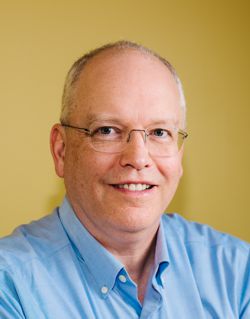
Philipp Schlatter is a Professor in the Department of Mechanics at KTH Royal Institute of Technology. His research focuses on fluid mechanics, turbulence, and computational fluid dynamics (CFD), with expertise in high-performance computing and direct numerical simulations (DNS). He leads projects involving scalable CFD frameworks like Neko and Nek5000, and investigates turbulent boundary layers, flow control, and coherent flow structures. His work includes experimental and numerical studies of wing profiles, rotating systems, and transition dynamics. Schlatter teaches courses on computational fluid dynamics and turbulence, emphasizing both theoretical and practical aspects of fluid mechanics. Key research interests include developing numerical methods for high-fidelity simulations, understanding turbulence mechanisms, and optimizing flow control strategies. His contributions span aerodynamics, heat transfer, and the application of machine learning to fluid dynamics problems. Schlatter collaborates extensively on interdisciplinary projects, leveraging advanced computing resources to address complex fluid flow phenomena. Publications highlight advancements in DNS frameworks, Bayesian optimization for flow control, and analysis of turbulent structures in pipe and boundary layer flows. His research also addresses challenges in measurement techniques and uncertainty quantification in CFD simulations.
Prof. Dr. Estela Suarez is a Professor of High Performance Computing at the Institute for Computer Science, University of Bonn (W2 in the Jülich Model) and Joint Lead of the Division "Novel System Architecture Design" at the Jülich Supercomputing Centre (JSC), Forschungszentrum Jülich GmbH. She also leads the Research Group "Next Generation Architectures and Prototypes" at JSC and serves as Spokesperson of Helmholtz Information Program 1, Topic 2. Currently on sabbatical during the 2024/2025 and 2025 academic years, she remains active in research leadership roles. 2010: PhD in Physics from University of Geneva, Switzerland 2004: Master in Physics, Specialization in Astrophysics, University Complutense of Madrid, Spain Professor Suarez specializes in high performance computing with particular expertise in heterogeneous HPC system architectures and modular supercomputing architecture (MSA). Her research spans hardware prototyping and evaluation, system software development, operational data analysis, and co-design methodologies. She has pioneered approaches to address hardware heterogeneity through system-wide orchestration of diverse computing resources, enabling more efficient scientific computing across multiple domains. Her work bridges theoretical computer architecture with practical implementation challenges in exascale computing environments, focusing on real-world applications that require specialized hardware configurations. Professor Suarez's publication record shows a clear evolution from foundational work on the DEEP project (2016) through the development of modular supercomputing concepts (2019-2021) to current applications across diverse scientific domains (2022-2024). Her recent publications demonstrate how modular architectures can be effectively applied to climate modeling, neuroscience simulations, quantum chemistry calculations, and other computationally intensive fields. This trend highlights her focus on practical implementation challenges and the growing importance of adaptable computing architectures in modern scientific research. 2023/2024 Lehrpreis der Universität Bonn: UniBonn teaching award Professor Suarez has secured significant research funding through major projects including NUMERIQS (Projects A05, B02, and Z02), European Processor Initiative (EPI), DEEP-SEA (Software for Exascale Architectures), IFCES2 (optimization of simulation algorithms for exascale supercomputers), and AIDAS (virtual laboratory between Forschungszentrum Jülich and CEA on AI and data analytics). While currently not accepting new students due to sabbatical, she has previously mentored graduate students in high performance computing techniques and has delivered numerous invited lectures at international conferences. Professor Suarez leads the "Next Generation Architectures and Prototypes" research group at JSC and serves as Joint Lead of the "Novel System Architecture Design" division. She chairs the Research and Innovation Advisory Group (RIAG) from EuroHPC Joint Undertaking since 2024. Her work involves close collaboration with international research teams on advancing supercomputing architectures, including contributions to the University of Bonn's new HPC system "Marvin" which ranks on both the TOP500 and GREEN500 lists.
Stefano Markidis is a Professor of Computer Science at KTH Royal Institute of Technology, affiliated with the School of Electrical Engineering and Computer Science and the Digital Futures Faculty. He holds a Ph.D. from the University of Illinois at Urbana-Champaign and an MS from Politecnico di Torino. His research focuses on high-performance computing systems, including supercomputers and quantum computers, with expertise in plasma simulations, quantum algorithms, and scalable computational frameworks. Markidis leads the development of the Neko framework for high-fidelity computational fluid dynamics and the iPIC3D particle-in-cell code for plasma physics. He teaches courses such as Quantum Computing for Computer Scientists, High-Performance Computing, and Applied GPU Programming. His work addresses exascale computing challenges, including optimizing algorithms for GPUs, quantum systems, and distributed architectures. Key research interests include: Parallel Programming Models and HPC Frameworks Quantum Computing Applications in Scientific Simulations Physics-Informed Machine Learning Exascale System Optimization Turbulence Modeling and Plasma Dynamics His publications span over 100 articles in journals like Journal of Computational Physics and Scientific Reports , focusing on topics such as scalable CFD, quantum neural networks, and plasma simulation techniques. He has advised numerous students in these areas. Markidis collaborates with institutions like Los Alamos National Laboratory and RISE Research Institutes of Sweden through the Digital Futures initiative, aiming to solve societal challenges via digital technologies.
Dr. Sandra Diaz Pier is a Scientific Lead at the Jülich Supercomputing Centre (JSC) within the Jülich Research Centre , Germany. Specializing in computational neuroscience , high performance computing (HPC) , and machine learning , she bridges neuroscience and advanced computational methods through her research. Education: B.Sc. in Electronic Systems Engineering, Mexico M.Sc. in Computer Science (focus: machine learning, quantum computing), Mexico Second M.Sc. in Electrical Engineering, Ontario, Canada Ph.D. in Computer Science, Germany (2021) Her research focuses on modeling and simulating brain dynamics and plasticity at multiple scales, leveraging HPC to accelerate large-scale neural network simulations. She actively contributes to EU projects like the Human Brain Project (HBP) , Virtual Brain Cloud , and EBRAINS 2.0 , emphasizing infrastructure development and educational training. Her work includes open-source tools such as the NEST simulator , The Virtual Brain , and L2L , enabling efficient parameter exploration and multiscale co-simulation frameworks. The 15 most recent publications highlight her interdisciplinary approach, spanning topics from quantum computing in biomolecular simulations to neural plasticity algorithms and cloud-based brain modeling . These articles reflect her expertise in integrating machine learning , multi-scale simulation , and HPC infrastructure for neuroscience challenges, including seizure propagation, Parkinson’s disease progression, and swarm intelligence in spiking networks. She leads technical coordination in projects like EBRAINS and serves as a task leader in the HBP infrastructure work package , while also organizing workshops and hackathons for open-source tools. Her role involves supporting domain scientists through methodological research and workflow optimization for brain simulations.
Sarah Neuwirth is a tenured Professor for Computer Science at Johannes Gutenberg University Mainz (JGU) and a Visiting Researcher at the Jülich Supercomputing Centre. She manages JGU's High Performance Computing (HPC) division, coordinates regional/national HPC activities, and represents JGU in NHR, Gauss-Allianz, and HPC committees. Education : PhD (Dr. rer. nat.) in Computer Science (2018), Heidelberg University Diplom in Computer Science (2012), University of Mannheim Bachelor of Science in Computer Science (2010), University of Mannheim Research Interests : Parallel File and Storage Systems Modular Supercomputing (resource disaggregation/virtualization) Performance Engineering High Performance Computing Networking Reproducible Benchmarking Parallel I/O Publications Trends : Her work focuses on HPC performance modeling, parallel I/O optimization, modular supercomputing, network characterization, and reproducible benchmarks. Key themes include resource disaggregation, automated workflows, and data-intensive distributed applications. Scientific Awards : 2023 PRACE Ada Lovelace Award for HPC ZONTA Science Award 2019 Grants & Leadership : She leads the High Performance Computing division at JGU, participated in European DEEP projects, and serves on SC conference committees.
Niclas Jansson is a researcher at the PDC Center for High Performance Computing at KTH Royal Institute of Technology. He holds an M.S. in Computer Science (2008) and a Ph.D. in Numerical Analysis (2013) from KTH. His career spans roles such as postdoctoral researcher at RIKEN Advanced Institute for Computational Science (2013-2016) and visiting scientist at RIKEN (2018-2021), where he contributed to the Japanese exascale program Flagship 2020. A core focus of his research involves extreme-scale computing and numerical method development. He is a key developer of RIKEN's multiphysics framework CUBE , the HPC branch of FEniCS , and the spectral element flow solver Neko . His work is currently supported by a Swedish Research Council Starting Grant aimed at enhancing high-order spectral element methods for exascale fluid simulations. Niclas has published extensively on topics such as GPU acceleration , adaptive finite element methods , in situ visualization , and extreme-scale turbulence modeling . He also teaches Computational Fluid Dynamics (SG2212) at KTH.
Hans Ekkehard Plesser is a Professor at the Department of Data Science, Norwegian University of Life Sciences (NMBU). His work focuses on computational neuroscience, large-scale neural network simulations, and advancing reproducibility in computational research. He is a key contributor to the NEST simulator, a widely used open-source tool for modeling spiking neural networks. His research spans theoretical and applied aspects of neuroscience, including neuron-astrocyte interactions, connectivity patterns in neural networks, and high-performance computing strategies for brain-scale simulations. He emphasizes reproducible computational practices through initiatives like the ReScience project, promoting transparency and validation in scientific software. His publications highlight advancements in simulation methodologies, algorithm optimization, and the integration of supercomputing resources for neuroscience. He has contributed to foundational work on spiking neuron dynamics, firing-rate models, and the theoretical underpinnings of neural network behavior.
Stefano Markidis is a leading researcher in High-Performance Computing (HPC) and quantum computing. His work focuses on developing advanced simulation frameworks, such as the Neko framework for computational fluid dynamics, and optimizing algorithms for heterogeneous architectures. He collaborates extensively with institutions and researchers globally, contributing to fields like plasma physics, quantum systems, and machine learning applications. His research emphasizes scalability, performance optimization, and the integration of cutting-edge technologies like GPU acceleration and quantum computing. Key research interests include extreme-scale simulations, quantum algorithms, and in-situ data analysis techniques. He has published over 200 articles, with recent work addressing challenges in NISQ systems, tensor network simulations, and CUDA-based performance enhancements. His contributions span theoretical and applied domains, bridging computational methods with real-world applications in fusion energy, materials science, and space exploration. Notable collaborations include projects with Philipp Schlatter, Niclas Jansson, and the NISQ application development community. Markidis also explores hybrid frameworks combining classical and quantum computing, aiming to leverage emerging hardware for scientific breakthroughs.
Professor Diomidis Spinellis is a renowned academic in Software Technology at Athens University of Economics and Business (AUEB). He specializes in software engineering practices, code quality, AI ethics, and system architecture. His work bridges theoretical advancements with practical applications in industry, emphasizing reproducibility and empirical methods. Recipient of the IEEE Computer Society's prestigious 'Distinguished Contributor Recognition,' Spinellis is the sole Greek scientist to achieve this honor. His research spans software evolution, security, and open-source ecosystems, with a focus on methodologies like refactoring, static analysis, and debugging strategies. Key research interests include AI-generated content detection, modular data analytics, and incident management systems. His studies often leverage large-scale datasets (e.g., Unix evolution, Linux supercomputing analysis) to uncover patterns in software behavior and development practices. Publications frequently address emerging technologies' societal impacts, such as energy-efficient computing and ethical AI deployment. He advocates for reproducible research through tools like the Alexandria3k framework and contributes to open-source initiatives.
Prof. Dr. Kristel Michielsen is a Professor of Quantum Information Processing at RWTH Aachen University and holds leadership roles at Forschungszentrum Jülich. She leads the division HPC for Quantum Systems and heads the Jülich UNified Infrastructure for Quantum computing (JUNIQ). As Group Leader of the Research Group Quantum Information Processing, her work focuses on quantum annealing, quantum simulation, and modular hybrid HPC-quantum computing. She is also Spokesperson of the Helmholtz Information Program 1 and a Principal Investigator in Topics 1 and 2. Affiliations: RWTH Aachen University, Forschungszentrum Jülich (IAS/JSC), JUNIQ Key Roles: Head of HPC for Quantum Systems, JUNIQ Director, Quantum Information Processing Group Leader Her research emphasizes quantum computing applications in optimization, benchmarking, and hybrid supercomputing-quantum systems. She pioneers quantum-annealing solutions for real-world problems like power grid partitioning and transportation logistics. Recent work explores error mitigation, noise modeling in D-Wave systems, and quantum-classical workflows.
Martin Karp is a Research Fellow and postdoctoral researcher at KTH Royal Institute of Technology's Department of Engineering Mechanics, working under Dan Henningson. His research focuses on high-fidelity numerical simulations of turbulence and transition, with a specialization in high-performance computing (HPC) and supercomputing architectures. He holds a PhD in computer science from KTH and an MSc in Engineering Physics from Lund University, complemented by studies at ETH Zürich's computer science department. His research interests explore computational limits in nonlinear chaotic systems and future computational advancements. He leads the development of the Neko framework, a scalable simulation tool for extreme-scale CFD with extensive accelerator support. Karp's work emphasizes GPU and FPGA acceleration, parallel computing, and optimizing algorithms for heterogeneous architectures. Key contributions include large-scale turbulence simulations using GPUs, reducing communication in conjugate gradient methods, and evaluating FPGA-based flow solvers. His publications span journals like Concurrency and Computation and Scientific Reports , with conference presentations at IEEE Cluster, PASC, and HPCAsia. Karp's research bridges theoretical computational limits and practical HPC implementation, addressing challenges in precision, scalability, and hardware utilization. His educational background combines engineering physics with computer science, enabling interdisciplinary approaches to fluid dynamics and high-performance simulation. Current projects aim to push the boundaries of computational fluid dynamics through novel algorithm design and leveraging emerging hardware capabilities.
Anders Lansner is a Professor of Computer Science at Stockholm University and holds an affiliated professorship at KTH Royal Institute of Technology. He leads the Lansner Lab (Computational Biology and Neurocomputing) at the Department of Computational Science and Technology (CST) within the School of Computer Science and Communication (CSC) at KTH. His research focuses on computational neuroscience and brain-like computing, emphasizing mathematical and computational models of neuronal networks in the neocortex and basal ganglia. Key projects include developing neuromorphic algorithms for supercomputers and FPGA-based hardware implementations. Lansner manages the computational neuroscience platform for the Stockholm Brain Institute (SBI) and the neuroinformatics platform for StratNeuro (Karolinska Institutet). His lab contributes to EU projects such as FACETS and NEUROChem, and collaborates with KTH’s Electronics Department on modular brain-inspired FPGA designs. Research interests span synaptic plasticity mechanisms, memory systems (episodic, semantic, and working memory), and applications in neuromorphic computing. He supervises graduate students and teaches courses in computational neuroscience. Lansner’s work bridges theoretical neuroscience with engineering, aiming to advance brain-inspired AI and hardware systems. His lab’s StreamBrain framework supports heterogeneous computing architectures for brain-like neural networks. Notable collaborations include cross-disciplinary efforts in neuromorphic hardware development (e.g., memristor-based learning engines) and olfactory system modeling. Lansner’s research addresses both fundamental brain mechanisms and technical applications in data analysis and neurorobotics.
Dr. rer. nat. Stefan Lankes is an academic researcher at the Chair of Automation of Complex Power Systems, RWTH Aachen University's Faculty of Electrical Engineering and Information Technology. His work focuses on operating systems, high-performance computing (HPC), cloud computing, and lightweight virtualization techniques for embedded and real-time systems. Stefan holds a PhD in Electrical Engineering (2003) for his dissertation on real-time distributed platforms. His career spans roles from Scientific Assistant (1998-2004) to Academic Director (since 2019), with key contributions to HPC infrastructure and simulation environments. Research highlights include Rust-based OS development ( HermitCore unikernel ), GPU virtualization in distributed systems, and energy-efficient embedded computing paradigms. He pioneered the FlippedOS digital teaching platform using virtual workstations for operating systems education. Scientific awards include the 2016 Digital Teaching Fellowship and the 2021 RWTH Lecturer distinction. His publications cover topics from NUMA memory management to real-time CORBA protocols, with recent works addressing unikernel security and CUDA virtualization. Stefan leads simulation infrastructure and HPC virtualization projects, with affiliations to the E.ON Energy Research Center and involvement in European workshops like Euro-Par. His work bridges system software innovation with practical applications in energy systems and supercomputing.
Dr. Jan Meinke is a Researcher at the Jülich Supercomputing Centre (JSC) within Forschungszentrum Jülich, Germany. His work focuses on high-performance computing, GPU programming, and performance portability across different hardware platforms. He contributes to the development of exascale computing applications and benchmarks, particularly through the JUPITER benchmark suite. Based in Building 14.14, Room 4012 at the Jülich research campus, he maintains active research collaborations across computational science domains. Dr. Meinke's research spans two major domains: high-performance computing and computational epidemiology. In HPC, he investigates GPU programming models, performance portability across vendors, and scalable computational fluid dynamics. His work on the JUPITER benchmark suite aims to address challenges in application-driven exascale computing. In computational epidemiology, he has developed forecasting models for COVID-19 spread across European nations, focusing on ensemble approaches and short-term prediction. His earlier work includes protein folding simulations and Monte Carlo methods, demonstrating a long-standing interest in computational methods across scientific domains. Analysis of Dr. Meinke's publication history reveals a strategic evolution from computational biophysics to high-performance computing infrastructure. His recent work (2023-2025) shows a strong emphasis on performance portability across GPU architectures, particularly for scientific computing applications like the N-body problem and computational fluid dynamics. The JUPITER benchmark suite represents a significant contribution to exascale computing evaluation, bridging theoretical computer science with practical applications. His dual focus on HPC infrastructure and epidemiological modeling demonstrates versatility in applying computational methods to diverse scientific challenges. Dr. Meinke has been actively involved in both teaching and research aspects of high-performance computing, authoring educational materials on GPU programming with CUDA and advanced GPU techniques. His work demonstrates a commitment to advancing both the theoretical foundations and practical applications of high-performance computing, with implications for scientific discovery across multiple domains including physics, engineering, and public health.
Philip Koopman is an Associate Professor in the Department of Electrical and Computer Engineering at Carnegie Mellon University, specializing in autonomous vehicle safety and dependable embedded systems. His work focuses on ensuring safety in self-driving technologies, including standards development (e.g., ANSI/UL 4600), risk assessment, and fault-tolerant software design. Education & Affiliations: Carnegie Mellon University: Faculty in ECE since [year not explicitly listed, but content suggests 20+ years] Principal author of UL 4600 safety standard for autonomous products Former advisor to graduate students (no longer accepting new advisees) Research Interests: Autonomous vehicle safety validation and assurance Reliability of embedded systems software Cyclic redundancy check (CRC) algorithms and error detection Ethical and legal frameworks for automated systems Standards for vehicle automation (e.g., SAE J3016) Key Contributions: Authored influential books on safety in autonomous systems, CRCs, and embedded software Developed safety case methodologies for autonomous vehicles Testified before U.S. Congress on self-driving car safety Labs/Teams: Leads research initiatives on safety-critical systems, including collaboration with industry and government agencies. Maintains active engagement through blogs (Safe Autonomy, Better Embedded Software) and standards bodies.