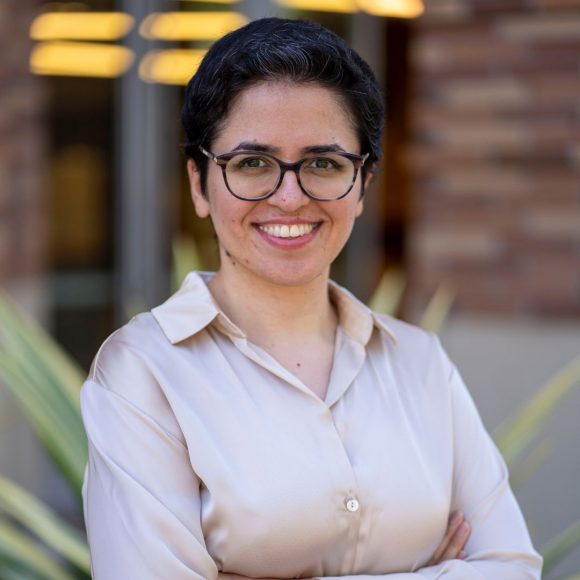
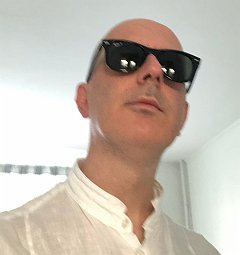
Dr. Nooshin Estakhri is a Professor at the Fowler School of Engineering at Chapman University. Her research focuses on quantum technologies, semiconductor physics, and quantum information processing, with a recent emphasis on advancing quantum dot spin systems for scalable quantum computing. Scientific Recognition: Editors’ Suggestion by Physical Review Research (2024) Research Interests: Dr. Estakhri’s work addresses challenges in modular quantum architectures, combining analytical techniques and numerical modeling to achieve high-fidelity entangling interactions in semiconductor spin qubits. Her findings contribute to optimizing quantum processors for future quantum computing applications. Contributions: Her research enables engineers to tackle problems beyond classical supercomputers in computation, metrology, and communication. The Fowler School of Engineering highlights her dual role in both classroom teaching and cutting-edge research.
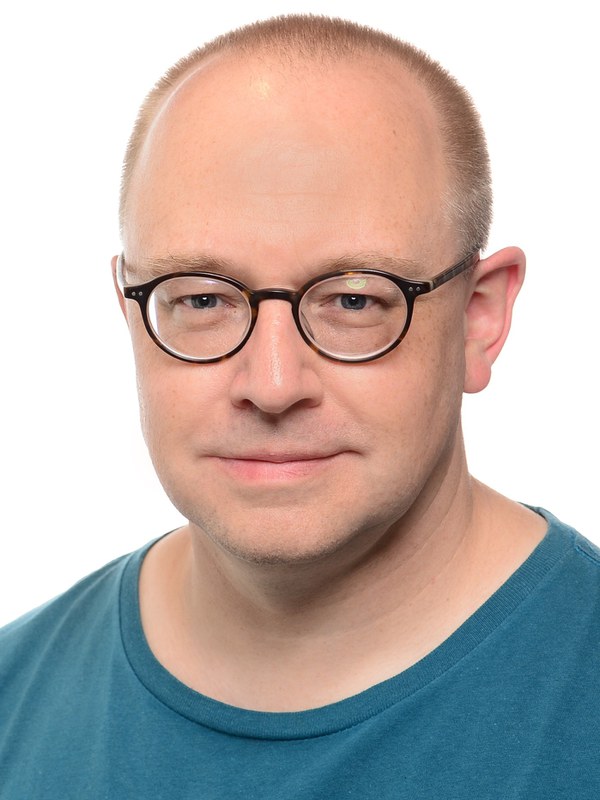
Norbert Eicker serves as Professor at Bergische University of Wuppertal and Head of the Research Group "Software for Modular Supercomputers" at the Jülich Supercomputing Centre (JSC), Forschungszentrum Jülich. His research specializes in advanced computing infrastructure with core competencies in: Modular Supercomputer Architecture HPC Middlewares development and optimization High-performance System Architecture design As a Principal Investigator in Helmholtz Information Program 1, Topic 2, he contributes to Germany's national strategy for computational science advancement through the Helmholtz Association framework. His work addresses critical challenges in creating flexible, scalable supercomputing environments that can adapt to diverse scientific workloads while maintaining performance efficiency. Based at Forschungszentrum Jülich's facilities in Building 16.3, Room 203, he operates within one of Europe's premier supercomputing environments that supports multidisciplinary research across the continent.
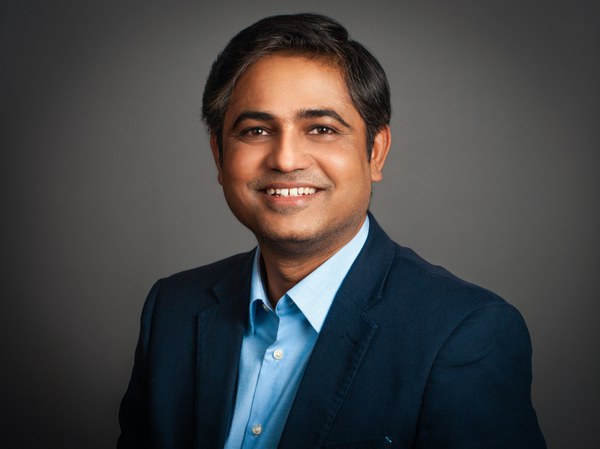
Dr. Ujjwal Sinha is a researcher at the Jülich Supercomputing Center (JSC) , part of Forschungszentrum Jülich GmbH. His work focuses on cutting-edge computational technologies and systems. His areas of expertise include: High Performance Computing Performance Optimization Modular Supercomputing Architectures GPU Programming Contact details: Phone: +49 2461/61-8930 Address: Wilhelm-Johnen-Straße 52428 Jülich, Germany
Marc Snir is a Professor at the University of Illinois’s Siebel School of Computing and Data Science. He has led significant research contributions in high-performance parallel computing, including work on the Message Passing Interface (MPI) and IBM’s SP scalable parallel system. As Department Head from 2001–2007, he oversaw the transition to the Siebel Center and expanded the department’s capabilities. He later served as the first director of the Illinois Informatics Institute, chief software architect for the Blue Waters supercomputer, and co-director of the Universal Parallel Computing Research Center (UPCRC). His research focuses on parallel computing systems, fault resilience, and I/O optimizations. He has been recognized with the 2014 Distinguished Alumni Service Award. His work spans exascale computing, distributed systems, and machine learning applications in HPC. He has contributed to projects like Argo (an exascale OS/runtime), Aluminum (a GPU-aware communication library), and LCI (Lightweight Communication Interface). His research emphasizes improving scalability, energy efficiency, and reliability in high-performance systems. He has advised numerous students (names not listed here) and led teams in advancing HPC tools and methodologies. His involvement in initiatives like UPCRC and the Blue Waters project underscores his commitment to bridging theoretical research and practical applications in computing.
Gokul Ravi is a Professor in the Department of Computer Science and Engineering at the University of Michigan. His research focuses on quantum computing, quantum algorithms, compiler optimization for quantum systems, and computer architecture. He leads a research group emphasizing impactful research in quantum domains, with weekly one-on-one and group meetings fostering collaboration and community. Students benefit from lab lunches where they discuss projects, papers, and potential collaborations. He prioritizes clear communication, with expectations including 5-6 years of PhD tenure and 3+ top-tier publications. Research interests span variational quantum algorithms, error mitigation, quantum cloud computing, and hardware-software co-design. His work addresses challenges in fault-tolerant quantum computing, compiler passes for NISQ applications, and quantum-centric supercomputing for materials science. Recent publications highlight innovations in quantum algorithm design, error correction, and hybrid systems. Students receive weekly progress updates and yearly feedback. He supports internships (up to 2) aligned with research and facilitates conference attendance via travel grants. Vacation planning is flexible but avoids deadlines. His mentoring style adapts to individual student needs, balancing independence with mentorship, particularly in early PhD stages.
Fred Chong is the Seymour Goodman Professor of Computer Science at the University of Chicago and Chief Scientist for Quantum Software at Infleqtion. He leads the NSF-funded EPiQC Project, aiming to bridge theoretical quantum algorithms with practical hardware. His research spans quantum computing, computer architecture, security, and sustainable computing. Chong holds a PhD from MIT (1996) and previously served at UC Davis and UCSB. He has been awarded the NSF CAREER Award, IEEE Fellow distinction, and over a dozen best paper awards. His work includes co-founding Super.tech (acquired by ColdQuanta) and advising on the National Quantum Initiative. Education: PhD in Computer Science from MIT (1996). Past roles include Chancellor’s Fellow at UC Davis (1997-2005) and Professor/Director at UCSB (2005-2015). Research focuses on quantum software/hardware co-design, quantum algorithms, and practical quantum systems. His team develops tools like WESTPA for weighted ensemble simulations and collaborates on projects like the Greenscale Center for Energy-Efficient Computing. Awards include the Quantrell Award (teaching) and University of Chicago’s Graduate Teaching and Mentoring Award. Key grants total over $80M led/co-led. Labs/groups include the EPiQC Consortium, Systems Group, and CERES Center for Unstoppable Computing. Recent work includes scaling quantum networks, improving qubit reliability, and applying quantum computing to drug discovery and oncology.
Stefano Markidis is a Professor of Computer Science specializing in high-performance computing systems at KTH Royal Institute of Technology in Sweden. He works in the Division of Computational Science and Technology, focusing on supercomputers, quantum computers, and computational methods for scientific simulations. His research spans multiple domains including plasma physics, computational fluid dynamics, and quantum computing. Markidis holds an MS degree from Politecnico di Torino and a PhD in Nuclear Engineering from the University of Illinois at Urbana-Champaign. Prior to joining KTH, he was a graduate research assistant at Los Alamos National Laboratory and Lawrence Berkeley National Laboratory, followed by a postdoc at KU Leuven. His academic journey reflects a strong foundation in both engineering and computational science. His primary research interests include High-Performance Computing , Heterogeneous Systems , and Quantum Computing . Markidis develops computational methods for plasma physics, particle-in-cell simulations, and fluid dynamics. His work bridges theoretical physics and practical computing, with applications in space physics, fusion energy, and materials science. He is particularly known for contributions to parallel computing, GPU acceleration, and the development of scalable simulation frameworks like Neko for computational fluid dynamics. His research increasingly integrates machine learning techniques with traditional numerical methods. Analysis of Markidis' recent publications reveals a strong focus on quantum-classical hybrid computing, advanced particle-in-cell methods, and high-fidelity computational fluid dynamics. His work demonstrates expertise in programming models for heterogeneous architectures including GPUs and quantum processors, with growing emphasis on AI-enhanced scientific computing. R&D100 award (2005) for the CartaBlanca project R&D100 award (2017) for the SHIELDS project Markidis teaches multiple courses at KTH including Applied GPU Programming, Quantum Computing for Computer Scientists, and High-performance Computing for Computational Scientists. He has supervised numerous degree projects across various specializations in computer science and electrical engineering. His research has been supported by various grants related to high-performance computing and quantum technologies, with applications spanning from space physics to medical treatments. Markidis leads research in computational science with a focus on developing frameworks like Neko for extreme-scale computational fluid dynamics. His team works on integrating traditional HPC methods with emerging technologies including quantum computing and AI, contributing to advancements in scientific simulation across multiple disciplines.