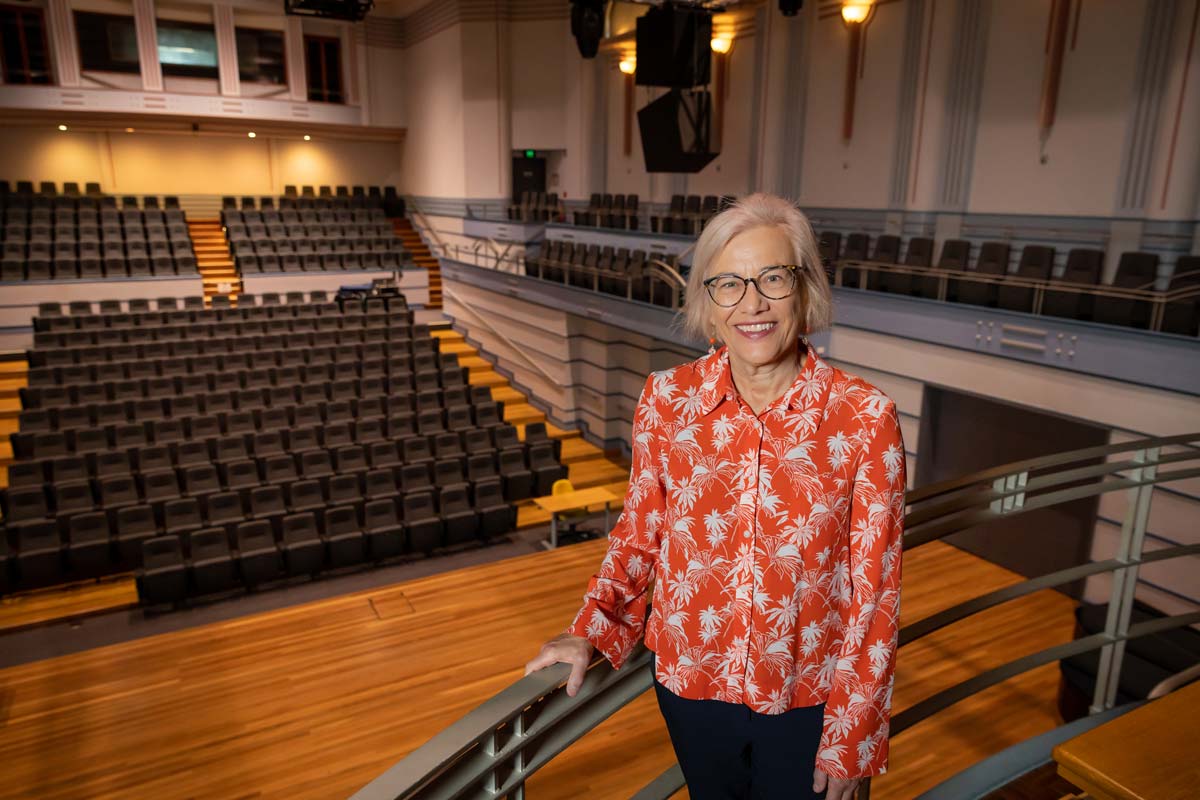
Professor Hong Hao is a John Curtin Distinguished Professor at Curtin University, affiliated with the School of Civil and Mechanical Engineering and the Curtin Research Centre for Infrastructural Monitoring & Protection. His expertise spans Structural Dynamics, Earthquake Engineering, Blast and Impact Engineering, and Structural Health Monitoring. He holds prestigious roles like Fellow of ATSE, ISEAM, and ASCE, and has led organizations such as the International Association of Protective Structures and the Australian Earthquake Engineering Society. Education: BE (Tianjin University, 1982), MSc (UC Berkeley, 1985), PhD (UC Berkeley, 1989). Awards include the Tan Chin Tuan Fellowship and multiple Ko Medals. He has authored over 200 journal articles, with recent work focusing on blast-resistant materials, seismic fragility, and AI-driven structural health monitoring. His research emphasizes resilient infrastructure, including metaconcrete structures, corrosion-resistant materials, and sensor-based damage detection. Ongoing projects involve smart tunnel safety under BLEVE explosions and modular building systems.
Kevin Coulembier is a Professor in the Algebra Research Group at the University of Sydney . He has held a continuing position since 2017 and received prestigious awards including the Christopher Heyde Medal (2021), G. de B. Robinson Award (2022), and the Frontiers of Science Award (2024). Research Focus: Representation theory of algebraic groups, Lie (super)algebras, quantum groups, and monoidal categories; tensor ideals; and homological algebra. Grants: ARC Future Fellowship (2023), ARC Discovery Projects (2021, 2018), and DECRA Fellowship (2017). Students: Supervised postdocs and PhD students including Nick Bridger, Joseph Newton, Bregje Pauwels, Alexander Sherman, and Willow Stewart. Editorial Roles: Editor for Annals of Representation Theory and Mathematische Zeitschrift .
Associate Professor Bambang Trigunarsyah holds a position at RMIT University since 2018, affiliated with the School of Property, Construction and Project Management (PCPM). He earned his BSc in Civil Engineering from Colorado School of Mines, a Master's in Civil Engineering (Construction Management) from the University of Indonesia, and a PhD in Engineering Project Management from the University of Melbourne. His career spans industry roles, including project engineering in Indonesia's oil and gas sector, academic leadership at the University of Indonesia, and international teaching/research appointments at Queensland University of Technology (QUT) and King Fahd University of Petroleum and Minerals in Saudi Arabia. Research interests focus on post-disaster reconstruction, infrastructure project governance, constructability of infrastructure, and project management in developing countries. Notable projects include risk management frameworks using blockchain, circular economy in Saudi construction, and BIPV energy solutions. He actively supervises HDR students in areas like public-sector project success determinants and thermal environment studies. Bambang serves as Higher Degree Research Delegate Authority (HDR DA) for the School of PCPM and teaches postgraduate project management programs. Professional memberships include AIPM, PMI, and ASCE. His industry advisory roles include Indonesia's National Construction Service Development Board (2002-2007) and Australia-Indonesia Centre's Infrastructure Cluster (2016-2018). Recent research emphasizes BIM applications in infrastructure preservation, risk assessment methodologies, and climate-resilient construction. His work bridges theory and practice, addressing challenges in emerging economies and complex project environments.
Matthew Dunbabin is a Professor at Queensland University of Technology (QUT) and Chief Investigator at the Australian Centre for Robotic Vision (ACRV). His expertise spans environmental robotics, with a focus on vision-based autonomous systems for marine conservation, water quality monitoring, and greenhouse gas management. He holds a PhD from QUT and a BEng (Aerospace) from RMIT. Dunbabin has led projects at CSIRO and QUT, developing robots like COTSBot and RangerBot to combat marine pests and promote reef restoration. His work has earned national and international awards, including the 2019 Australian Water Association Award and 2016 Google Impact Challenge. Education: PhD in Engineering, Queensland University of Technology (Queensland, Australia) BEng (Hons) in Aerospace Engineering, Royal Melbourne Institute of Technology (Melbourne, Australia) Research Interests: Environmental robotics and autonomous systems Vision-based perception and classification Marine habitat restoration and pest control Greenhouse gas monitoring via autonomous vehicles Cooperative robotics and sensor networks Awards & Recognition: 2019 Australian Water Association Award (SAMMI Project) 2019 Good Design Award - Sustainability (RangerBot) 2016 Google Impact Challenge People’s Choice Award (RangerBot AUV) 2010 Australian ICT Industry Association National iAward (iSnet) 2006 Queensland Engineering Excellence Innovation Award (Starbug Project) Grants & Projects: ARC Centre of Excellence for Robotic Vision (ACRV): Leading robotic vision research (2014–present) Revolutionising Protection Against Air Pollution: Air quality monitoring networks (2015–present) Establishing Advanced Networks for Air Quality Sensing: Sensor development for urban environments (2017–present) Labs & Collaborations: ACRV at QUT Institute for Future Environments (QUT) CSIRO Autonomous Systems Laboratory (2001–2013)
Dr. Farhad Aslani is an Associate Professor in the Department of Civil, Environmental and Mining Engineering at the University of Western Australia (UWA), serving as Director of the Materials and Structures Innovation Group. He leads the $250M Australian Composites Manufacturing CRC and co-leads UWA's Engineering Materials Research Cluster. His research focuses on innovative construction materials, including self-sensing concrete, 3D-printed composites, and fire-resistant materials. He has secured over $20M in CRC funding and holds leadership roles in national/international conferences. Key awards include the 2024 Concrete Institute WA Rising Star Award and multiple citation milestones. His work aligns with sustainable development goals, emphasizing eco-friendly materials and infrastructure resilience. Education: PhD in Structural Engineering, University of Technology Sydney (2014) Certificates in Leadership, Research Commercialization, Public Policy, and Project Management from Curtin University, Queensland University of Technology, RMIT, and UTS. Research Interests: Smart materials, sustainable concrete technologies, additive manufacturing, blast/fire resistance, and composites for infrastructure. His lab develops self-sensing concretes, lightweight engineered composites, and electromagnetic shielding materials. Grants & Projects: $4.3M ACM CRC project on composite repairs ARC grants for nanocomposite coatings and fire facilities Main Roads WA funding for timber bridge strengthening Expertise: Structural design, composite materials, and industrial collaborations (e.g., Woodside, Holcim). He advises on major projects like the Morley Ellenbrook Rail Line and Forrestfield Airport Link. Awards: 2024 Concrete Institute WA Rising Star Highly Cited Scholar (ScholarGPS, 2024) Most Cited Paper Awards (2018–2020)
Professor George Siemens is a leading academic in the field of learning analytics and AI-driven education, serving as Professor and Director of the Centre for Change and Complexity in Learning at UniSA Education Futures, University of South Australia. His work focuses on advancing educational practices through data analytics, artificial intelligence, and understanding online learning dynamics. His research spans MOOCs, social and emotional learning analytics, and the ethical integration of AI in education. Notable contributions include the development of frameworks like the MOOC Replication Framework (MORF) and the DAIR infrastructure for educational AI research. Key publications include studies on student agency in AI environments, practicum effectiveness in teacher education, and synthetic data fairness in learning analytics. He collaborates internationally, with affiliations previously including the University of Texas Arlington. As a Research Degree Supervisor, he guides students in transformative educational technology research. His work emphasizes actionable intelligence for educators and scalable solutions for lifelong learning in the digital age.
Professor Fernando Calamante is a Professor of Biomedical Engineering at The University of Sydney and Director of Sydney Imaging Core Research Facility. He leads the National Imaging Facility node and focuses on advanced MRI methodologies, particularly Diffusion and Perfusion MRI, to study brain connectivity and neurological disorders. His work includes developing the MRtrix software, widely used in diffusion MRI analysis. He holds extensive funding (~$50M) and has been recognized with awards like ISMRM Fellowship and NHMRC grants. His research spans super-resolution imaging, brain connectomics, and clinical applications in stroke and tumors. Education: BSc (Physics, Argentina), PhD (Magnetic Resonance Imaging, University College London). Career highlights include leadership roles at The Florey Institute and ISMRM presidency (2021-2022). Research interests include: Novel MRI methods for brain connectivity and super-resolution imaging Applications of Diffusion and Perfusion MRI in neurology Integration of structural and functional connectomics Key achievements: Over 200 publications, software innovations, and leadership in global MRI societies.
Associate Professor Paola Leardini holds dual roles as Director (Research) and Associate Professor at the University of Queensland's School of Architecture, Design and Planning, within the Faculty of Engineering, Architecture and Information Technology. Her work bridges design and performance in built environments, focusing on net-zero targets, urban resilience, and circular economy strategies in construction. She is a key researcher in the Centre for Future Building Structures and advises on Queensland’s social/affordable housing through the Design Excellence Panel. Leardini earned a PhD in building energy efficiency and environmental quality from Politecnico di Milano, supervised by Prof. P. Ole Fanger. Her educational journey includes studies in Milan, Berlin, Leicester, and Copenhagen. Research highlights include eco-retrofitting of historical districts (e.g., Milan’s Quartiere Mazzini), Passive House adaptations for subtropical climates, and timber construction innovations with the ARC Advance Timber Hub. She co-founded Passive House Institute New Zealand (PHINZ) and collaborates globally on projects like water-sensitive cities and flood-resilient urban design. Her recent publications emphasize timber’s role in sustainable construction, circular economy frameworks, and climate-responsive building systems. Advising includes leading an ARC Linkage project on adaptable housing while fostering industry partnerships through projects like Norman Creek Catchment flood resilience studies. She actively contributes to labs/teams advancing timber use and urban resilience, aligning with UQ's mission for future-ready built environments.
Dr Alex Sherman is a Lecturer at UNSW Sydney in the School of Mathematics & Statistics . He previously held postdoctoral positions at the University of Sydney with Kevin Coulembier and at Ben-Gurion University of the Negev with Inna Entova-Aizenbud. His research focuses on representation theory and supergeometry , with applications to Lie superalgebras , modular representation theory , and tensor categories . He has published extensively on topics such as ghost distributions, Duflo-Serganova functors, and the geometry of spherical supervarieties. Email: alex.sherman@unsw.edu.au Location: Room 4111, The Red Centre, UNSW Sydney, NSW 2052 In 2025 , he will lecture the Linear Algebra stream of MATH1241. He organizes the UNSW Pure Maths Seminar and Algebra Seminar , and has co-organized courses on Kazhdan-Lusztig equivalences and tensor categories.
Dr. Johnson Xuesong Shen is an Associate Professor at the School of Civil and Environmental Engineering , University of New South Wales . His work integrates Digital Twins , Building Information Modeling (BIM) , and Construction Automation with a focus on robotics, AI, and LiDAR/UAS technologies. Research Interests: Digital Twins, BIM, Construction Robotics, Emissions Modeling, LiDAR/UAS, Structural Health Monitoring Education: Ph.D. in Construction Engineering and Management, The Hong Kong Polytechnic University His publications span 2025–2005, emphasizing construction automation , environmental impact reduction , and innovative tunneling solutions . Recent work includes IoT-Bayes fusion for real-time safety monitoring and life cycle analysis of construction waste. Scientific Awards: Vice Chancellor's Award for Teaching Excellence, UNSW, 2014 Best PhD Student Paper Award, CONVR, UK, 2013 Postdoctoral Fellowship, University of Alberta, 2011-2013 Best Paper Award, ASCE Construction Research Congress, 2010 Dr. Shen mentors 9 PhD candidates in areas like 3D object detection , fuel consumption modeling , and UAV-based LiDAR . His grants include $5.98M from the Australian Research Council (2022–2027) for resilient infrastructure systems and projects on modular construction and intelligent tunneling .
David Henderson is the Director of the Cyclone Testing Station (CTS) in the School of Engineering and Physical Sciences at James Cook University, Australia. He has over two decades of experience as a research engineer specializing in the performance of low-rise buildings under extreme wind conditions. He previously served as the CTS Research Fellow and Manager, and was seconded as a Postdoctoral Researcher at the University of Western Ontario, Canada, working on full-scale house testing under simulated wind loads. His work bridges engineering research, disaster assessment, and policy development. David's research focuses on wind engineering, structural resilience, and disaster mitigation. His key interests include cyclonic wind loading, internal and external pressure dynamics in buildings, fatigue failure of structural connections, and the vulnerability of housing to severe wind events. He has conducted post-disaster surveys across Australia and Canada, assessing damage from cyclones, tornadoes, and earthquakes. His research has direct applications in building codes, retrofitting strategies, and community risk reduction. The recent publications highlight a strong trend in understanding and mitigating wind-induced damage to residential structures, particularly through full-scale testing, modeling of pressure dynamics, and fragility assessment of roofing systems. His work spans experimental, theoretical, and policy-oriented domains, with a growing emphasis on climate change adaptation and community resilience. Topics such as internal pressure design, load sharing in roof frames, and retrofitting for wind resistance are central to his contributions. 14 research awards (specific names not listed) Active member of Standards Australia code committees Invited speaker at national and international conferences Media contributor on storm damage and building safety David has led multiple research projects funded by councils and agencies focused on extreme wind mitigation, data systems (SWIRLnet), and community risk reduction. While formal student supervision is not explicitly listed, he collaborates extensively with researchers such as John Ginger, Korah Parackal, and Daniel Smith. He has contributed to major studies involving wind load testing, housing vulnerability modeling, and climate adaptation planning. David is a key figure in the Cyclone Testing Station, leading its full-scale testing program and contributing to the development of software for controlled load and measurement systems. His team conducts wind risk assessments for communities and large installations, incorporating terrain analysis and retrofitting evaluations. The CTS serves as a national resource for wind engineering research and disaster resilience innovation.
Dr. Farshid Rahmani is a Lecturer at the School of Property, Construction and Project Management (PCPM), RMIT University, Australia. His research and teaching focus on Construction Procurement , Relational Contracting , and Agile Project Management . He supervises Masters and PhD students in areas including Early Contractor Involvement (ECI) Alliances Public-Private Partnerships (PPP) Collaborative Delivery Systems . His recent publications explore agile frameworks for building adaptation, sustainable materials like recycled concrete, and team dynamics in large infrastructure projects. Key themes include modular construction , project lifecycle management , and innovative material usage . He actively applies Grounded Theory and Abductive Reasoning in construction management research.
Summary Associate Professor Mehrdad Arashpour is an internationally recognized researcher and educator in construction and civil infrastructure, focusing on automation and information technologies. He leads the ASCII Lab at Monash University's Department of Civil and Environmental Engineering. His academic roles include Head of Construction Engineering and membership in the CIB's Working Commission on Off-site Construction (W121) and Infrastructure Task Group (TG91). Education: Ph.D., RMIT University, Australia M.Sc., Grenoble University, France B.Sc., IU University, Iran Research Interests: Digital twins, computer vision, robotics, BIM integration, sustainable construction, and automation in construction processes. His work contributes to UN Sustainable Development Goals, particularly in sustainable cities and communities. Grants & Awards: Over $6M in grants from ARC, Austroads, and industry partnerships. Recognitions include Editor's Choice Paper (ASCE, 2019) and Outstanding Reviewer (Elsevier, 2016). Teaching: Courses like Risk Management in Engineering Projects and Infrastructure Research Project. Advises on PhD topics in computer vision, robotics, and BIM. Labs & Collaborations: ASCII Lab focuses on smart, sustainable solutions for construction. Collaborates with global researchers and organizations like SPARC Hub and Building 4.0 CRC.
Dr. Andrew Lacey is a Lecturer at the School of Civil and Mechanical Engineering, Curtin University (Perth campus), within the Faculty of Science and Engineering. He holds a BE(Hons) from the University of Western Australia and a PhD from Curtin University. He is a Chartered Professional Engineer (CPEng) and a Member of Engineers Australia (MIEAust). His research focuses on affordable, resilient, and environmentally friendly structural systems, particularly in modular steel construction, sustainable materials, and structural response to dynamic loads. Key areas include prefabricated modular structures, inter-module connections, CO2 mineralization concrete, and lightweight wall panels. His work bridges experimental testing, numerical modeling, and practical applications in sustainable infrastructure development. Dr. Lacey’s publications emphasize modular building systems’ structural performance under wind, earthquake, and other dynamic loads. Notable 2025 contributions include reviews on volumetric mining structures and CO2-mixing concrete optimization. His research also addresses challenges in delignification detection in timber components and GFRP connector performance in composite panels. He teaches engineering mechanics, structural analysis, and structural dynamics. His professional networks include ORCID (0000-0003-1171-5282), Google Scholar, and LinkedIn profiles.
Associate Professor Helen English is a music sociologist and academic at the University of Newcastle , affiliated with the School of Humanities, Creative Industries and Social Sciences . Her work bridges musicology, creative ageing, and equity in music education. PhD in Musicology (University of Newcastle, 2016) Diploma in Music (Guildhall School of Music and Drama) Master of Arts (Music) (University of Newcastle) Helen's research focuses on music's transformative potential for ageing populations and marginalized communities. She leads the creative ageing research program and investigates: Music sociology and world-building frameworks Music's impact on cognitive and social wellbeing Equity in access to music education Gender dynamics in music technology education Her 15 most recent publications explore: Community music-making for older adults (2025) Modular composition techniques (2025) Gender barriers in tertiary music programs (2024) Historical music practices in colonial Australia (2019) Scientific contributions include: National Council of Women Musicology Award (PhD) ARC DECRA Fellowship (2022-2024) for 'Creative Ageing through Transformative Engagement with Music' Dementia Australia Project Grant (2022-2024) for creative arts programs She supervises 12 postgraduate researchers and collaborates with: Prof Frini Karayanidis (University of Newcastle, Psychology) Prof Jane Davidson & Prof Felicity Baker (University of Melbourne, Music Therapy) International partners at Universities of Leeds, Queensland, and Griffith Key partnerships include: Aged-care providers: NovaCare, Uniting Care, Maroba, Whiddon Care Lake Macquarie Museum of Art and Culture Arts in Care Homes movement (UK partnership)