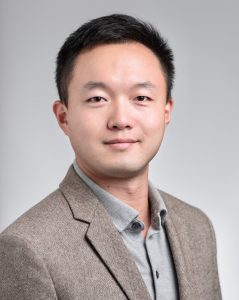
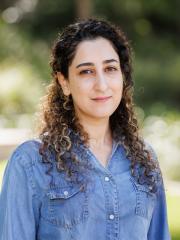
Ivan Kurtev is an Associate Professor in Mathematics and Computer Science at Eindhoven University of Technology, specializing in software engineering and model-driven technologies. His research develops formal methods for software interface specification, component-based systems, and domain-specific languages. Recent work (2022-2024) focuses on adaptable runtime monitoring and robotics controller synthesis. Earlier contributions established foundations for model transformation languages (ATL/QVT) and requirements change management. He leads research on the INTERSECT project integrating formal methods for IoT systems.
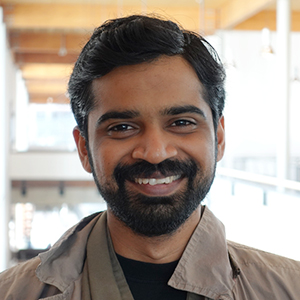
Luuk Poort is a doctoral researcher at the Faculty of Mechanical Engineering , Eindhoven University of Technology , specializing in model reduction for interconnected industrial systems. His work focuses on simplifying complex systems while preserving accuracy, modularity, and stability, particularly in collaboration with ASML. Education : Bachelor's and Master's in Mechanical Engineering (cum laude), both from TU/e. Research Interests : Model reduction, structural dynamics, interconnected systems, computational efficiency. Recent Publications emphasize industrial-scale applications of modular model reduction, passivity preservation, and accuracy optimization in dynamical systems. He has received scientific awards for his presentations in 2023 and 2024.
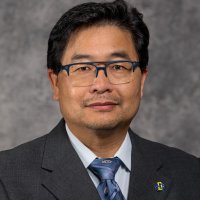
Thomas Baier is a Researcher at the Faculty of Social Sciences and Humanities, specializing in Communication Science at Vrije Universiteit Amsterdam. His work focuses on conversational agents, multimodal interaction systems, and affective computing. Ancillary activities include roles at Flashtalking GmbH since 2021. He collaborates extensively in projects like ROBOT-BOND (human-robot bonding research) and the EMISSOR platform for multimodal interaction analysis. Research interests span formalization of emotional processes, AI ethics, and scalable agent architectures. His recent work emphasizes evaluation methodologies for conversational systems and cross-modal data integration. Projects involve creating open-source tools and frameworks to advance human-AI collaboration in healthcare and social robotics. Key contributions include modular agent design, affective decision modeling in robots, and episodic knowledge graph applications. Current efforts focus on bridging theoretical AI frameworks with practical implementations in real-world scenarios.
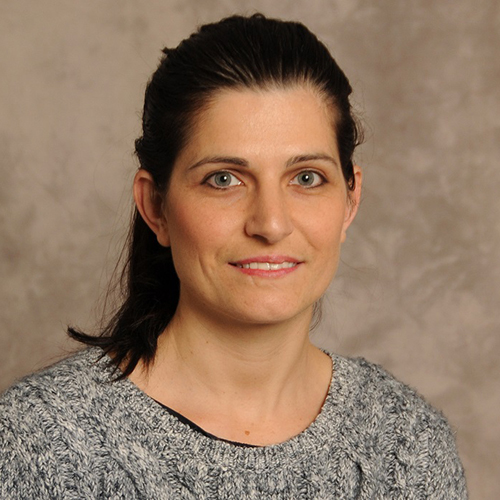
Jan Broenink is an Associate Professor at the University of Twente, affiliated with the Robotics and Mechatronics group within the Faculty of Electrical Engineering, Mathematics and Computer Science (EEMCS). He serves as Programme Director of the MSc Robotics programme since July 2021 and previously chaired the Robotics and Mechatronics group (2017–2021). He holds a PhD and MSc in Electrical Engineering (EE) and biomedical degrees from the University of Twente. His research focuses on Cyber-Physical Systems, Systems Engineering, Robot Software Architectures, and Tools Development. Key interests include model-driven design, meta-modelling, simulation, co-simulation, and concurrent engineering. He develops software tools for robotics, emphasizing real-time computing and embedded control systems. Teaching encompasses Robot Software Design using Model-Driven approaches, Systems Engineering, and project supervision for MSc/BSc students. His work contributes to UN SDGs related to Industry and Future of Work, and Social and Daily Life. Broenink has supervised 9 student works and is active in conferences, presenting on topics like co-design methodologies and bond graph frameworks. His 162+ research outputs span embedded systems, robotics, and simulation tools.
Gijs van Oort is a Research Professor at the University of Twente's TechMed Centre, Department of Robotics and Mechatronics. His work focuses on advanced robotic systems, particularly exoskeletons for mobility enhancement and rehabilitation. He holds a PhD (dr.ir.) in Engineering. Key research areas include human-robot interaction, neuromuscular control systems, and assistive technologies for spinal cord injuries. Education: Dr.ing. (PhD) in Robotics and Mechatronics, MSc in Mechanical Engineering (inferred from academic title dr.ir.). Research emphasizes exoskeleton design, gait assistance, and modular robotics. Notable contributions include the Symbitron exoskeleton project, aiming to improve mobility for paraplegics. His work bridges biomechanics and control engineering, with applications in clinical rehabilitation and wearable robotics. Publications highlight interdisciplinary collaboration, such as integrating bio-inspired reflexive control systems with trajectory-based approaches. His research aligns with UN Sustainable Development Goals, particularly improving health and well-being (SDG 3) and advancing technology (SDG 9). No scientific awards explicitly listed, but his h-index of 341 and 200+ citations reflect significant academic impact. Active in international conferences (e.g., WeRob2018) and collaborative projects involving institutions like École Polytechnique Fédérale de Lausanne (EPFL).
Uriel Martinez Hernandez is a Senior Lecturer in the Department of Electronic & Electrical Engineering at the University of Bath. He is affiliated with multiple research centers including the UKRI CDT in Accountable, Responsible and Transparent AI, The Foundry, Bath Institute for the Augmented Human, and the Centre for Bioengineering & Biomedical Technologies (CBio). His expertise spans robotics, autonomous systems, and machine learning, with a focus on tactile and vision perception, wearable assistive robotics, and human-robot interaction. Dr. Hernandez holds a PhD in Robotics and Machine Learning from the University of Sheffield (2015), an MSc in Computer Science from CINVESTAV (2008), and a BEng in Communications and Electronics Engineering from the National Polytechnic Institute (IPN) (2005). He has been a Visiting Researcher at Sheffield Robotics Laboratory since 2016. His research addresses challenges in multimodal sensor integration, robot learning, and assistive technologies for healthcare and manufacturing. His work contributes to UN Sustainable Development Goals related to Industry, Innovation & Infrastructure and Good Health & Well-being. Current research projects include multimodal human-robot collaboration systems, wearable robotics for telepresence, and AI-driven quality control in manufacturing. He has supervised over a dozen doctoral students and actively engages in interdisciplinary collaborations across engineering and biomedical fields.
Dr. Yihai Fang is a Senior Lecturer in Construction Engineering and Management at the Department of Civil and Environmental Engineering, Monash University. He holds a Ph.D. from Georgia Institute of Technology (2016) and a B.Sc. from Tongji University (2011). Previously, he served as a Postdoctoral Associate at the University of Florida (2016–2017). His research focuses on Construction Automation and Informatics, Construction Robotics, Digital Twin applications in built environments, and Construction Safety and Human Factors. Qualifications include advanced expertise in machine learning, sensing technologies, and Virtual/Augmented Reality (VR/AR). Key research projects include enhancing road work zone safety through smart sensing, collaborative robotics for structural assembly, and BIM-based cyber-physical systems for crane operations. He has led and contributed to multiple grants, including ARC-funded initiatives and industry partnerships. Dr. Fang’s recent work emphasizes predictive analytics, digital twin frameworks, and automation in construction. His publications span safety technologies, crane operation optimization, and remote inspection methods. He supervises a dynamic team of PhD candidates addressing topics like crane hazard exposure, modular assembly automation, and road roughness monitoring. Grants include leadership in the ARC Research Hub for Smart Transport Pavements and Building 4.0 CRC projects. His work aligns with UN Sustainable Development Goals related to infrastructure and sustainable cities.
Jin Ouk Choi is Associate Professor at UNLV's Howard R. Hughes College of Engineering, directing the Project Management and Construction Engineering Lab (PMCEL). His research encompasses modular construction, facility standardization, and workforce diversity, supported by $3.8M in funding from NSF, DOE, and Tesla. As lead editor for ASCE special collections, he advances scholarship in construction industrialization and inclusive practices. Research areas include industrial/building modularization, robotic applications, and ESG assessment frameworks. Current projects examine volumetric module transportation, 3D point cloud modeling, and steel-concrete structural connections. Teaching includes graduate courses on modular construction and engineering economics. 2023 Modular Building Fellow Award 2022 Graduate Academic Advisor Award 2021 GPSA Outstanding Mentor
Yushu An is Lecturer at ETH Zurich's Institute of Construction & Infrastructure Management. Researches optimization of rail maintenance processes using extended reality and digital twin technologies. Work develops hybrid programming methods for robotic systems and knowledge-based engineering approaches for manufacturing. Combines virtual simulation with physical systems to improve maintenance efficiency and system design. Contributes to robotic welding automation and generative design of production systems. Background includes mechatronic engineering with expertise in manufacturing system architecture and configuration design. Collaborates on industrial applications of digital twins in infrastructure management.
Dr. Ajay Shankar is a Post-Doc Research Fellow in the Department of Computer Science and Technology at the University of Cambridge. His primary research focuses on control, planning, and automation for robotic systems and teams, with a strong emphasis on multi-robot systems, autonomous control, and machine learning applications in robotics. He is affiliated with the Mobile Systems, Robotics and Automation research theme within the department. His work integrates robotics, machine learning, and systems engineering to address challenges in multi-agent coordination, trajectory optimization, and real-time control. Key projects include the development of the Cambridge RoboMaster platform and studies on dynamics-aware trajectory planning using diffusion models. He also explores downwash modeling for multirotor flight in dense environments and heterogeneous multi-robot reinforcement learning frameworks. Dr. Shankar's contributions span academic conferences and journals, with recent publications focusing on aerial robotics, autonomous systems, and multi-agent learning. His research has practical applications in environmental monitoring (e.g., UAS profiling during LAPSE-RATE campaigns) and agile robotics systems design. Department: Computer Science and Technology University: University of Cambridge Affiliations: Cambridge Ring Initiative, Accelerate Programme for Scientific Discovery
Young Chang is an Assistant Professor in the Department of Agricultural and Biosystems Engineering at South Dakota State University. He holds a Ph.D. in Agricultural Biotechnology from Seoul National University. His academic journey includes postdoctoral research at UC Davis, North Dakota State University, and Nova Scotia Agricultural College, alongside roles at Samsung Electronics' Living System Laboratory. He founded the Bio-systems Automation and Robotics Lab at Dalhousie University, Canada. His research focuses on precision agriculture automation, cost-effective sensor systems, and agricultural robotics. He actively collaborates on projects like cybersecurity in smart agriculture (Cyber-Ag-Law, $249k) and edge computing for agroecosystems (SDAES, $125k). Education: Ph.D./M.S./B.S. in Food Engineering (Seoul National University) Key Labs: Bio-systems Automation and Robotics Lab (Dalhousie), Raven Precision Ag Center (SDSU) Grants: Over $1M in funded projects including USDA grants and industry partnerships Research interests span precision agriculture automation, drone/UAV systems, and IoT-driven livestock management. His work integrates machine learning (e.g., YOLOv4 for strawberry counting) and FPGA-based real-time image processing. Recent articles emphasize cybersecurity for agricultural data and phenotypic trait analysis in soybeans. Awards include NSERC Discovery Grants and Mitacs Accelerate funding. Patents: Variable rate sprayer systems and kimchi ripening control Teaching: Courses on precision agriculture tech (AST-426) and farm machinery diagnostics (PRAG-304)
Dr. Giulia Franchi is an Associate Professor of Computer Science at Salisbury University, where she leads research in robotics, artificial intelligence, and computer vision. Her work spans applications in environmental monitoring, precision agriculture, and assistive technology. She co-founded and directs the Real Robotics Lab, fostering innovation through interdisciplinary projects like the SU Robotics Team’s VEX World Championship qualification in 2023. Education: PhD in Robotics Engineering, University of Rome (2016) MS in Robotics Engineering, University of Rome (2011) BS in Control and Automation Engineering, University of Rome (2008) Research Interests: Dr. Franchi specializes in robotic design, grasping systems, and unmanned aerial vehicles (UAVs). Her lab explores cutting-edge technologies such as 3D-printed robotic components and drone-based environmental surveillance. Recent projects include coral reef restoration using 3D-printed molds and agricultural robotics for precision farming. Awards & Recognition: Her contributions have been recognized through publications in top-tier journals and professional accolades, though specific award names are not detailed in the provided texts. Labs & Teams: The Real Robotics Lab serves as a hub for student innovation, hosting projects like the RoboPoppet (a modular robotic platform) and drone systems for ecological monitoring. Dr. Franchi actively mentors students through competitions and collaborative research initiatives.
Heinrich Jaeger is the William J. Friedman and Alicia Townsend Professor of Physics at the University of Chicago, affiliated with the James Franck Institute. He holds a PhD from the University of Minnesota and has held academic positions in the Netherlands and Chicago since 1991. His research focuses on soft condensed matter, granular materials, and robotics, with notable contributions to jamming transitions and self-assembly. Education: PhD in Physics, University of Minnesota, 1987 Undergraduate studies, University of Kiel, Germany Research Interests: Far-from-equilibrium phenomena in granular matter and dense suspensions Design of smart materials via particle shape and acoustic levitation Robotics leveraging jamming transitions (e.g., JAMoEBA, universal grippers) Nanoparticle self-assembly for ultrathin membranes Awards: David and Lucille Packard Fellowship (Science & Engineering) Alfred P. Sloan Fellowship Quantrell Award for Excellence in Teaching Labs/Teams: Jaeger Lab at the James Franck Institute Collaborations with IIT (Spenko/Srivastava groups), Argonne National Lab (Lin), and PME (Rowan/de Pablo)
Mahnaz Bahremandi Tolou is a Higher Degree by Research Scholar pursuing a PhD in Architecture at the University of Queensland's School of Architecture, Design and Planning. Her research focuses on self-shaping material systems for large-scale curved shell assemblies, an interdisciplinary project blending architecture, civil engineering, and material computation. She holds a Master’s degree from Tabriz Art University, Iran (2018). Education: PhD Candidate in Architecture, University of Queensland (current) Master’s Degree in Architecture, Tabriz Art University, Iran (2018) Research Interests: Computational Design, Digital Fabrication, Lightweight Modular Structures, Material Programming, and Robotic Construction. Her work emphasizes innovative manufacturing techniques and sustainable architectural solutions. Research Trends in Publications: Her publications highlight advancements in self-shaping materials, parametric design, and structural innovation, with a focus on integrating historical patterns with modern fabrication methods. Recent work explores kinetic mechanisms and deployable structures. Advising & Supervision: Principal supervisor is Dr. Dan Luo. No advisees listed. Professional Background: Over five years of professional experience as an architect, including roles as senior designer and facade designer. Co-founded a technological academy in architecture, and contributed to cutting-edge architectural research.
Patrick Currier is a Professor and Chair of Mechanical Engineering at the College of Engineering, Embry-Riddle Aeronautical University. His research focuses on robotics & automation, unmanned systems, advanced vehicle systems, and hybrid-electric propulsion. He has led projects such as the QinetiQ Raider II GUSS and Caterpillar Autonomous Mining, and advises the Robotics Association at Embry-Riddle (RAER) and the EcoEagles team in EcoCAR2. His work bridges theoretical and applied engineering, with recent contributions to hybrid propulsion systems, autonomous navigation, and aerospace technology. Notable achievements include the 2011 Best Paper Award from the ISTVS conference and leading the development of the ERAU Maritime RobotX Challenge platform. His research trends emphasize innovation in hybrid systems, autonomous robotics, and aerospace applications, reflected in over 50 publications. He has secured grants, including the Robotic Tool Kit (RTK) Logistics Automation grant (2019), and actively engages in interdisciplinary projects like solar sail CubeSat development and battery failure analysis.