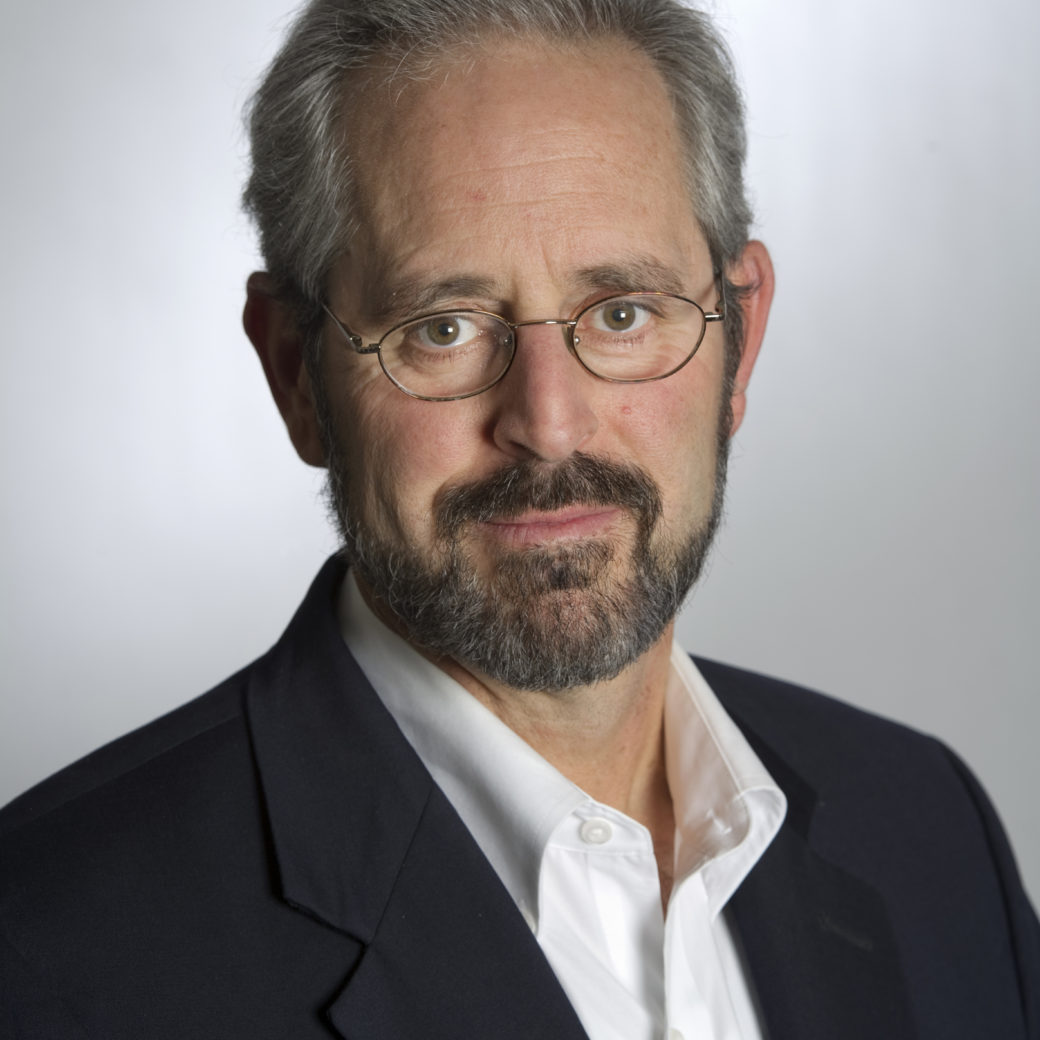
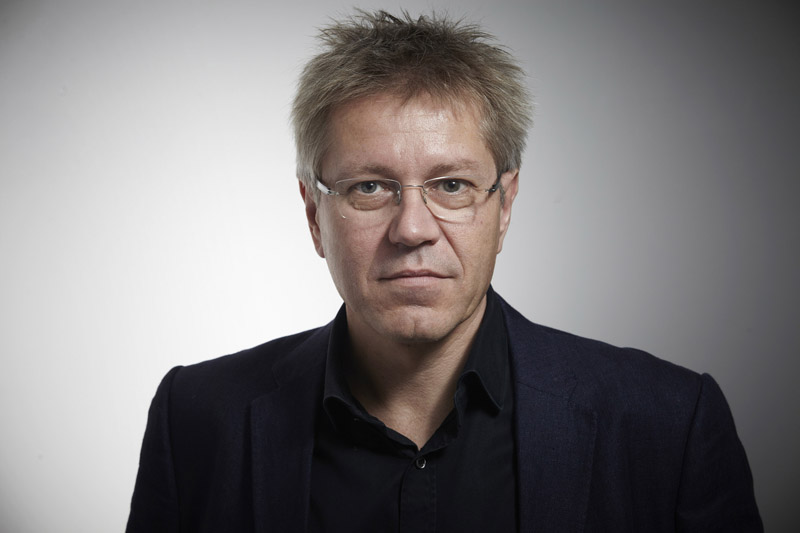
Prof. Maria Christakis is a full professor at TU Wien's Faculty of Informatics, leading the Rigorous Software Engineering Group and the Software Engineering Research Unit. Her research focuses on developing reliable software tools and improving developer productivity through formal methods, automatic test generation, and program analysis. She holds a PhD from ETH Zurich and a diploma from the National Technical University of Athens. Her work bridges verification and systematic testing, with notable contributions to fuzzing, static analysis, and neural network certification. Key projects include tools like Harvey (smart contract fuzzer), DeepSearch (neural network attack framework), and Nomos (specification language for machine learning models). Her research has received awards including the Best Presentation Award at FSE'20 and a Distinguished Paper Award at ICSE'16. She advises multiple PhD and master's students and teaches courses in advanced software engineering and formal methods. Current projects explore green fuzzer benchmarking, compositional smart contract verification, and testing code translation models. Grants: Austrian Science Fund (FWF) doctoral school on Automated Reasoning Labs/Teams: Rigorous Software Engineering Group, Software Engineering Research Unit
Nader Asnafi is a Professor of Mechanical Engineering at Örebro University since 2016, with a dual career in academia and industry. He holds a PhD from Luleå University of Technology (1997) and a Docent title (2002). His expertise spans additive manufacturing, material science, and automotive production, focusing on lightweight materials, 3D printing for tooling, and digitalization-driven innovation. Research areas include: - 3D printing of production tools and dies - Laser-based material treatments for crash-resistant automotive components - Modular design and manufacturing flexibility - Sustainable production systems and circular economy principles - High-strength steel processing and hydropiercing techniques Industrial experience includes leadership roles at Esselte Dymo, Volvo Cars, and Uddeholm. He has pioneered cost-effective tooling methods reducing material use by 20% and production time by a third via additive manufacturing. Notable projects include a concept car with aluminum side beams, cutting weight and costs by 50%. He has advised on over 30 industry-academia projects and contributed to international conferences such as the International Tooling Conference. His work bridges material innovation with digital transformation, emphasizing eco-friendly manufacturing solutions.
Thomas Bever is a Professor of Linguistics at the University of Arizona. His work bridges linguistics, cognitive science, and psycholinguistics, with a focus on syntax, language universals, and cognitive development. He is affiliated with the Department of Linguistics and maintains an active laboratory. Research interests include the biological foundations of language, neural network limitations in modeling language, comparative cognition between humans and animals, and the psychological reality of syntactic structures. Bever has explored how language processing interacts with motor systems and social perception. His recent articles analyze neural network deficiencies in language modeling, the evolutionary basis of human language capacity, and the cognitive mechanisms underlying syntactic processing. Key themes include language universals irreducible to processing constraints and the role of regression in developmental learning. Notable contributions include theories on visuomotor development stages, the role of event structure in comprehension, and the biolinguistic perspective on syntax. Bever's interdisciplinary work integrates experimental psycholinguistics with computational modeling and evolutionary theory.
Tucker Marion is an Associate Professor jointly appointed in the Entrepreneurship and Innovation Group and the Department of Mechanical and Industrial Engineering at Northeastern University. He holds a PhD from Pennsylvania State University (2007). His research focuses on new product development processes, lean innovation methodologies, AI-driven design tools, and cost engineering strategies. His work bridges digital technologies with human-centered innovation, emphasizing the integration of generative AI, collaborative platforms, and modular product architectures. Key research contributions include advancing generative adversarial networks (GANs) for design concept generation, evaluating AI's role in trust and innovation governance, and analyzing the impact of synchronous collaboration tools on CAD outcomes. Marion has led interdisciplinary projects like the Dialogue of Civilizations in Milan, exploring heritage, design, and innovation linkages, and co-hosted the Siemens podcast series Pioneers: Startups From Dreams to Reality . Education: PhD in Mechanical Engineering, Pennsylvania State University, 2007. Awards: FY13 TIER 1 Interdisciplinary Research Seed Grant. Grants: Collaborative IT tool research funded via Northeastern's Center for Research Innovation. Marion's work emphasizes transforming organizational innovation practices through digital tools and collaborative cultures. He has published widely on topics such as modular architectures, lean processes, and AI's role in product lifecycle management. His research often intersects technology, human factors, and business strategy to address global innovation challenges.
Magda Barecka is an Assistant Professor in Chemical Engineering at Northeastern University, with a joint appointment in Chemistry and Chemical Biology. She leads the Barecka Lab, focusing on electrochemical methods to transform CO2 into sustainable chemical building blocks. Her research aims to enable a carbon-neutral economy through innovations in CO2 electrolysis, supported by grants from DOE and ARPA-E. She holds a PhD from TU Dortmund University (2017), MSc and BSc from Lodz University of Technology (2013, 2012). Education: PhD, Chemical Engineering, TU Dortmund University, Germany (2017) MSc, Chemical and Process Engineering, Lodz University of Technology, Poland (2013) BSc, Environmental Engineering, Lodz University of Technology, Poland (2012) Research Interests: Electrochemical CO2 conversion, sustainable chemical production, process intensification, and carbon capture technologies. Her lab develops novel electrochemical systems and modeling tools to scale CO2-to-chemical technologies for industrial applications. Grants & Projects: $986,200 DOE grant for Modular Electrochemical Ethanol Production (2024) $500,000 ARPA-E grant for High-Throughput Electrochemical Modeling (2023) Lab & Team: The Barecka Lab includes PhD students Erin, Daniel Sekyere, Max Moran, Nich Nearyrat Phalkun, William Cannon, and Emilly Dorneles. The lab collaborates on interdisciplinary projects at the intersection of electrochemistry, materials science, and sustainability.
Marc H. Meyer is the Robert J. Shillman Professor of Entrepreneurship and Matthews Distinguished Professor at Northeastern University's D'Amore-McKim College of Business. He leads the Entrepreneurship and Innovation Group, founded the Center for Entrepreneurship Education, and oversees Northeastern's NSF I-Corps Site program. His work focuses on product platforms, innovation ecosystems, and experiential learning systems. Education: BA in Government & Economics from Harvard, MS in Management from MIT, and PhD in Management of Technology from MIT. His research bridges academic theory and industry practice, emphasizing scalable innovation frameworks and corporate growth strategies. Research interests include product architecture, business model design, and entrepreneurship education. He has co-founded multiple tech startups and advised firms like IBM and P&G on innovation strategy. Over 100 ventures from his IDEA incubator have raised $750M in VC funding. Awards include the Academy of Management's Practice Impact Award (2019) and NSF I-Corps funding. His teaching innovations earned recognition from Northeastern's Graduate Teaching Award (2017). He also directs the Mayo Clinic partnership for a Digital Healthcare Transformation program. Key contributions span academic leadership, entrepreneurship pedagogy, and bridging university-industry innovation gaps through platforms like the Deshpande Foundation-recognized Entrepreneurial University initiative.
Jens Carsten Jantzen is a Professor of Mathematics at Aarhus Universitet , Denmark. Born in Störtewerkerkoog, Germany on October 18, 1948, he has held academic positions at prestigious institutions including the University of Oregon, Universität Hamburg, and Universität Bonn. His career spans over four decades with significant contributions to algebraic groups, Lie algebras, and representation theory. Current: Professor at Aarhus Universitet (1995–present) Previous: University of Oregon (1988–1995), Universität Hamburg (1985–1988), Universität Bonn (1978–1985) Jantzen’s research focuses on Algebraic Groups , Lie Algebras , and Representation Theory , with particular emphasis on modular representations, cohomology, and nilpotent orbits. His publications demonstrate a deep exploration of quantum groups, highest weight modules, and geometric methods in representation theory. He has served on editorial boards for leading journals such as Representation Theory and Acta mathematica . Notable awards include the Felix-Hausdorff-Gedächtnispreis (1975) , Fellow of the American Mathematical Society (2011) , and Member of the Academia Europaea (2012) .
Ole Kiehn is a distinguished Professor in Integrative Neuroscience at the Department of Neuroscience, University of Copenhagen, and Professor in Neuroscience at Karolinska Institutet, Sweden. His career spans over three decades with significant contributions to understanding the neural basis of movement. He leads the Kiehn Lab which focuses on the molecular, cellular, and network organization of locomotor circuits in mammals. Education: 2002: Docent, Karolinska Institutet, Sweden 1990: Doctor of Science from University of Copenhagen, Denmark 1985: M.D. from University of Copenhagen, Denmark Kiehn's research centers on cellular and systems neurophysiology applied to the motor system, with particular focus on elucidating the networks underlying locomotion in rodents. His work bridges the gap between neuronal circuit organization and behavior, investigating how spinal locomotor circuits are activated and controlled by descending command signals. Recent work has focused on the functional organization of key neuronal elements for limbed locomotion in mammals: rhythm generation, coordination of flexors and extensors, and left/right coordination. His research has strong translational potential for developing therapies for movement disorders caused by trauma or disease. Analysis of Kiehn's recent publications reveals consistent focus on the neural circuitry controlling locomotion. His work spans multiple levels of analysis from molecular and cellular mechanisms to systems-level organization of motor circuits. A significant theme is the modular organization of locomotor networks, with studies examining specific neuronal populations that control different aspects of movement. His research increasingly integrates advanced techniques like optogenetics, chemogenetics, and transcriptomics to dissect the complex neural circuits underlying movement. Scientific Awards: 2024: Novo Nordic Foundation's Laureate program award 2022: The Brain Prize 2021: Kirsten and Freddy Johansen's preclinical prize 2019: Lundbeck Foundation's Professorship award 2017: Novo Nordic Foundation's Laureate program award 2015: European Research Council Advanced Grant 2014: Member of the European Molecular Biology Organization (EMBO) 2012: Member of The Royal Swedish Academy of Sciences Kiehn has supervised over 10 PhD students and more than 25 postdocs throughout his career. His research has been supported by numerous prestigious grants including multiple European Research Council Advanced Grants, Novo Nordisk Foundation Laureate grants, and Lundbeck Foundation Professorship grants. He has served in leadership roles including as Vice Chair of Research at the Department of Neuroscience, UCPH, and as President Elect for the Federation of European Neuroscience Societies (FENS). The Kiehn Lab, located at the University of Copenhagen, is a leading center for research on locomotor circuitry. The lab employs a broad experimental repertoire including production of transgenic mouse lines, genetically driven tracing, mRNA sequencing, in vitro and in vivo electrophysiology, optogenetics, and advanced behavioral analyses. Current research focuses on understanding the molecular, cellular, and network diversification of locomotor circuitries in mammals, with applications to movement disorders and spinal cord injury.
Professor Iestyn Pierce is a faculty member at Bangor University's School of Computer Science and Engineering, specializing in electronic engineering. His academic qualifications include a PhD in Wavelet Theory of Optical Pulse Propagation (1998) and an MEng in Electronic Engineering from the University College of North Wales (1994). He holds Chartered Physicist status from the Institute of Physics. His research encompasses numerical modeling of engineering systems, with current focus areas including: Design and implementation of distributed wireless sensor networks for environmental monitoring LoRaWAN deployments in remote ecosystems Hardware-in-the-loop simulation for low-carbon energy control systems Optical communications and nuclear power systems cybersecurity Publication analysis reveals consistent focus on optical communications (OFDM systems, laser dynamics), control systems (battery monitoring, grid management), and interdisciplinary applications (marine robotics, nuclear cybersecurity). Recent work shows increased emphasis on environmental monitoring technologies and industrial control security. Professor Pierce leads significant initiatives including the EU-funded SEEC nuclear power project (£4.6m) and the Global Wales Mekong Delta monitoring collaboration. He co-supervises international engineering student projects with institutions in Mexico, Switzerland, Hong Kong, and Vietnam, focusing on sustainable solutions. He chairs the Engineering Centre for North and Mid Wales, delivering engineering outreach programs, and co-chairs the Science panel for the Coleg Cymraeg Cenedlaethol, promoting Welsh-medium education. His team projects often explore sustainable product development through cross-border academic collaboration.
Teuvo Heikkinen is a Doctoral Researcher in the Doctoral Programme in Engineering Sciences. His research focuses on low-volume, high-variety manufacturing systems, emphasizing configurable products, lean design methodologies, and module systems. He explores practitioner information needs in project delivery contexts through design studies. Key research areas include: Configurable product development strategies Lean design implementation in modular systems High-variety production challenges His recent work analyzes typologies of configurable products and their applications in complex manufacturing scenarios. No scientific awards have been documented. Collaborations involve undisclosed international partners as per network data.
Marcus Vinicius Pereira Pessoa is an Associate Professor specializing in Systems Engineering & Multidisciplinary Design. His work bridges advanced systems design methodologies with innovative approaches to engineering education. He is actively involved in research and academic events related to systems engineering, model-based design, and pedagogical transformation. Academic Rank: Associate Professor Department: Systems Engineering & Multidisciplinary Design His research interests center on systems engineering, model-based systems engineering (MBSE), product and systems design, and the application of gamification and real-world problem-solving in engineering education. He explores how structured methodologies like MBSE can support decision-making in complex domains such as mission configuration and technology adoption in small and medium enterprises (SMEs). The recent publications highlight a dual focus: advancing technical frameworks in systems engineering—such as tradespace exploration and STEP standard extensions—and innovating in educational practices through game-based learning and redesigned project management curricula. These works reflect interdisciplinary engagement across computer science, engineering, and education. Marcus has contributed to major conferences such as the INCOSE International Symposium and the SEFI Annual Conference, demonstrating active participation in the global engineering education and systems engineering communities. His collaborative efforts with researchers from various institutions emphasize practical applications in industry settings. Participated in SEFI 2023 Conference Contributed to oral presentations on SME technology adoption Served as examiner in academic defenses While no specific grants or advising roles are detailed, his publication record and conference involvement suggest ongoing supervision and project leadership. His work with SMEs and educational tools indicates potential funding from innovation or educational reform programs. Marcus is also engaged in developing software applications for learning, evolving from card games to digital platforms, showcasing a commitment to accessible and interactive education. Though no formal lab or research group is named, his network includes collaborators in systems engineering and engineering education, suggesting participation in a broader research team focused on practical and pedagogical advancements in engineering disciplines.
Gonzalez Nieto, Juanma is a researcher at Queensland University of Technology specializing in Cryptography and Network Security . His work focuses on Denial-of-Service protection , Predicate Encryption , RFID Authentication , and Cloud Computing Security . He has co-authored numerous publications addressing these areas, often collaborating with academics like Colin Boyd and Mark Manulis. Research Interests : Designing secure protocols for wireless sensor networks and cloud environments Developing automated proof systems for cryptographic indistinguishability Enhancing RFID privacy and mitigating phishing vulnerabilities Constructing verifiable ciphertexts and forward-secure encryption Publication Trends : His articles span Cryptography , Network Security , and Cloud Computing , with subfields including client puzzles, predicate encryption, and geographic proofs. Many works address practical implementations of security mechanisms in real-world systems.
Dr. Venkat Allada is a Professor in the Department of Engineering Management and Systems Engineering at Missouri University of Science and Technology (Missouri S&T). He served as Vice Provost for Graduate Studies from 2007 to 2018, leading initiatives to enhance graduate education, increase enrollment, and improve graduate program outcomes. Previously, he was an Assistant Professor (1994–2000) and Associate Professor (2000–2006) at Missouri S&T. He holds a Ph.D. in Industrial Engineering from the University of Cincinnati (1994). His research focuses on lean management systems, product design and development, STEM education, and sustainable design. He has authored over 100 publications and received awards such as the ASEE Dow Outstanding New Faculty Award (1998) and the MIT Lean Aerospace Initiative’s Outstanding Contributions Award (2005). Recent research trends include modular product strategy optimization, space vehicle design inspired by ISS systems, and green technology integration in supply chains. His work emphasizes practical applications of systems thinking and industrial engineering principles in both academic and industrial contexts. Awards: 1998 ASEE Dow Outstanding New Faculty Award 2005 Outstanding Contributions Award (MIT Lean Aerospace Initiative) Multiple Faculty Excellence Awards from Missouri S&T Advising & Grants: Guided numerous graduate students through interdisciplinary projects, with notable contributions to graduate program development at Missouri S&T. Labs/Teams: Investigator at the Intelligent Systems Center, collaborating on projects blending systems engineering and advanced manufacturing.
Kaustuv Chaudhuri is a Research Scientist at Inria (Saclay) in the project-team PARTOUT. His work focuses on proof theory and automated theorem proving, particularly in linear logic and formal verification. PhD from Carnegie Mellon University (2006) Active in program committees for conferences like TABLEAUX, FroCoS, LFMTP His research explores foundational aspects of logical frameworks, including focused proof systems, hybrid linear logic, and distributed proof verification. Recent work emphasizes heterogeneous verification platforms and distributed assertions. Key publication trends include: proof certification, substructural logics, and computational interpretations of logic. His technical reports and conference papers often bridge theoretical proof systems with practical verification tools like Abella. Chaudhuri contributes to the meta-theory of sequent calculi and develops systematic approaches to canonicity in classical logic. He organizes workshops and participates in international collaborations.
Francesco Ranocchi di Cesare is a Lecturer in the Department of History and Art History at the University of Girona, Spain. He holds a PhD in Humanities and Culture from the same institution, awarded in 2015 with distinction Excellent cum laude , and a Master’s in Architecture from Sapienza University of Rome. His academic role is listed as 'Substitute Professor,' indicating a temporary teaching position within the Faculty of Arts and Humanities. Academic Background: PhD in Humanities and Culture, University of Girona (2015) Master in Humanities Research, University of Girona (2012) Master in Architecture, Sapienza University of Rome (1995) His research focuses on architectural history and theory, particularly the evolution of modernity, design innovation, and the cultural dimensions of architecture. He has published extensively on figures such as Frank Lloyd Wright, Charles Eames, Arne Jacobsen, and Frank Gehry, analyzing themes like ornamentation, industrial design, media representation, and urban transformation. His work appears in journals indexed in the Avery Index, a leading database in architectural literature. The 15 most recent articles reveal a consistent engagement with the intersection of architecture, design, and cultural theory. Key trends include the analysis of modernist legacies, the role of media in architectural self-promotion, and the philosophical underpinnings of design practices. His publications span architectural history, critical theory, and contemporary design discourse, with a strong emphasis on transatlantic influences and the socio-cultural contexts of built environments. Scientific Awards: Master Thesis' Award of the Fondazione Almagià Mention in the international competition Paesaggistica e Linguaggio Grado 0 dell'Architettura Ranocchi has contributed to the editorial boards of prominent architectural journals such as AR , L'Architettura. Cronache e Storia , and L'Architetto Italiano . He has presented at international seminars and conferences in Italy and Spain, including the Incontro Ischitano di Architettura Mediterranea and events on sustainable construction in Girona. He was a member of the scientific and organizing committee for the 1995 Los Angeles Temporary Eternity congress in Rome. He also conducted research at the Università Federico II di Napoli in multimedia design. There is no information available about student advising or research grants. His professional email is francesco.ranocchi@udg.edu.