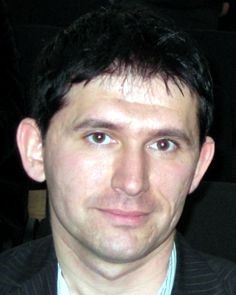
Julian Kalinowski is a researcher at the University of Hamburg's Department of Computer Science within the Faculty of Mathematics, Informatics, and Natural Sciences (MIN). His work focuses on distributed systems, blockchain technology, and middleware integration for mobile environments. Key projects include Jadex BDI Agent System and the cadeia initiative for distributed code execution in information markets. PhD candidate in Computer Science Email: kalinowski@informatik.uni-hamburg.de Room F510, Office hours by appointment Research interests span decentralized information markets, blockchain compliance (e.g., GDPR), and mobile middleware optimization. His 2015 best paper award at MATES conference highlights contributions to agent platform customization. Publications from 2012-2020 reveal trends in blockchain applications, smart grid optimization, and IoT security. Supervised 9 student theses covering decentralized billing, smart home systems, and localization technologies. Key awards: Best Paper Award (MATES-2015).
Tomek Rygalik serves as an Associate Professor in the Department of Architecture at Aalto University, Finland, with research deeply rooted in sustainable material innovation and functional design solutions. His work bridges academic rigor with real-world applications through industry collaborations and international exhibitions. His research focuses on Industrial Design , Product Design , and Sustainable Design , emphasizing circular economy principles in furniture, acoustic systems, and artistic installations. Key projects include the Circula series using recycled materials, acoustic solutions for office environments, and collaborations with Electrolux on sustainable kitchen ecosystems. Analysis of his 2023-2024 publications reveals a pronounced trend toward material innovation for climate resilience, spanning from water-conserving conference rooms to biodegradable furniture components. His work consistently demonstrates how design can address environmental challenges through practical yet conceptually rich solutions. Scientific recognition includes: must have quality mark at Łódź Design Festival (2023) for the MOA table Rygalik actively exhibits at major international venues including ICFF + WantedDesign in New York and the Łódź Design Festival, with collaborative projects often co-created with Gosia Rygalik. His practice integrates academic research with tangible design outcomes for industry partners like MARO Office Furniture and Electrolux. His work demonstrates how architectural design principles can be applied to product-scale interventions, creating meaningful connections between environmental responsibility, cultural context, and user experience through both functional products and conceptual installations.
Kaustubh Bhalerao is an Adjunct Associate Professor in the Department of Agricultural and Biological Engineering at the University of Illinois at Urbana-Champaign. His work bridges engineering, biology, and computation with applications in agricultural systems and microbiome analysis. Current Position: Adjunct Associate Professor, Agricultural and Biological Engineering, University of Illinois (since 2011) Prior Position: Assistant Professor, Agricultural and Biological Engineering, University of Illinois (2005-2011) Education: Postdoctoral Associate, Ohio State University (2004-2005) Research Interests: Biosensors , Synthetic Biology , and Nanotechnology applied to agricultural challenges. He develops computational models for microbial systems and explores virus-based biocontrol strategies. Recent publications highlight his work in Environmental Biotechnology (antibiotic impacts on biogas systems), Biomedical Engineering (mastitis diagnostics), and Synthetic Biology (gene circuit amplifiers). His lab employs machine learning and flow cytometry for microbiome analysis. Teaching includes courses on biological nanoengineering (ABE 446) and agricultural principles (ABE 141).
Ozan Oğuz is an Assistant Professor in the Department of Mathematics at Galatasaray University's College of Sciences, specializing in advanced algebraic structures. His academic journey includes a PhD from the University of Southern California under Prof. Aaron Lauda, followed by postdoctoral work with Susumu Tanabe, Meral Tosun, and Zafeirakis Zafeirakopoulos at Galatasaray University (2018-2022). PhD: University of Southern California (2018) MA: Université de Bordeaux 1 - University of Padova (ALGANT program) Bachelor's: Galatasaray University His research focuses on categorification and representation theory, particularly through diagrammatic algebra approaches to quantum algebras and Heisenberg categories. Recent publications demonstrate consistent innovation in algebraic combinatorics and category theory, with multiple papers exploring the structural properties of twisted Heisenberg categories and their connections to Schur functions. Oğuz actively mentors undergraduate researchers, supervising projects spanning formal theorem verification (Lean), group theory curriculum development, category theory applications in genetics, and quantum knot invariants. His outreach leadership includes founding the İstanbul Mathematics Festival and USC Mathematics Festival, demonstrating strong commitment to mathematical community building. Teaching responsibilities include advanced courses such as Rings and Modules, Representation Theory, and Abstract Algebra, alongside developing innovative materials for Math History courses that examine conceptual evolution in geometry, algebra, and analysis across historical periods.
Florian Bachinger is a researcher at the Research Center Hagenberg, University of Applied Sciences Upper Austria, affiliated with the Center of Excellence for Smart Production Digital Transformation and HEAL research group. His work focuses on bridging machine learning with industrial applications, particularly in smart manufacturing contexts. Active researcher with h-index of 26 Involved in the Josef Ressel Center for Symbolic Regression project (2018-2022) Regular participant in international conferences including EUROCAST and Industry 4.0 events His research interests center on Machine Learning systems for industrial applications, with specializations in symbolic regression, constraint evaluation methods, and composable evolutionary computation. His work addresses practical challenges in implementing AI solutions within manufacturing environments, focusing on domain knowledge integration and constraint handling. Analysis of his recent publications reveals a strong trend toward developing practical machine learning frameworks that incorporate physical constraints and domain knowledge for industrial settings. His 2024-2025 work shows increasing focus on modular, composable systems that can be adapted to specific manufacturing contexts while maintaining scientific rigor. Florian actively collaborates with researchers including Haider, Zenisek, and Affenzeller across multiple projects focused on smart production systems. His work demonstrates strong industry-academia connections through applied research in manufacturing contexts.
Prof. Dr. Mirko Karakašić is a Full Professor and Chair Head at the Faculty of Mechanical Engineering in Slavonski Brod, University of Slavonski Brod. A graduate of Production Engineering and holder of a Ph.D. in Product Design and Development, he has taught courses such as Computer-Aided Design , Industrial Design , and Optimization of Structures . His research focuses on mechanical design, ecological product evaluation, and additive manufacturing. Doctor of Technical Sciences (2004-2010), Faculty of Mechanical Engineering in Slavonski Brod, JJ Strossmayer University of Osijek Mechanical Engineering graduate (1999-2004), Faculty of Mechanical Engineering in Slavonski Brod, JJ Strossmayer University of Osijek His research spans product development , finite element analysis , and sustainable design . Recent publications highlight applications in 3D printing , LCA for battery-powered tools , and structural optimization across industrial and biomechanical contexts. The 15 most recent articles reveal a focus on: Modular design and functional modeling Additive manufacturing mechanics (PLA/ABS testing) Life Cycle Assessment for sustainable products Structural analysis of steel and composite systems Thermal management and sensor modeling Bio-inspired medical device prototyping As project leader of the EU-funded Center of Competence for Advanced Engineering Nova Gradiška (CEKOM NI NG) , he bridges academia and industry through collaborations with firms like Same Deutz-Fahr Žetelice d.o.o. . He serves on the editorial board of Organization and Maintenance Technology and as a reviewer for MDPI Applied Science . His technical expertise includes: Computer-Aided Modeling and Simulation Rapid Prototyping Eco-Design Methodologies Finite Element Analysis Biomechanical Device Development Industrial Project Leadership
James Herbsleb is a Professor in the Software and Societal Systems Department at Carnegie Mellon University's School of Computer Science, where he also serves as Director of the PhD program in Societal Computing. He holds a PhD in psychology and an MS in computer science. His research explores the intersection of software engineering, computer-supported cooperative work, and socio-technical systems. Primary focus areas include: Architecting socio-technical ecosystems (e.g., open source platforms like Eclipse and Mozilla) Coordination challenges in modular software development Scientific software sharing and co-creation Hackathons and community code engagements His recent publications (2011-2014) demonstrate strong emphasis on collaborative development platforms like GitHub and Wikipedia, examining social dynamics, contribution evaluation, and governance in distributed teams. Research consistently bridges technical systems and human collaboration patterns. Scientific Awards: ACM Outstanding Research Award (2016) Alan Newell Award for Research Excellence (2014) Best Paper Awards at ICSE, CSCW, and Academy of Management conferences His research is funded by NSF, Sloan Foundation, Google, IBM, Siemens, and Bosch. He leads projects on coordination systems and online deliberation, and has supervised research on open source ecosystems through the Breaking APIs project.
Don Batory is a Professor in the Department of Computer Science at the University of Texas at Austin, where he has held the David Bruton Centennial Professorship since 1983. He previously served as faculty at the University of Florida (1981) and has been a pivotal figure in advancing Feature-Oriented Software Development (FOSD). Education: B.S. (1975), M.Sc. (1977) from Case Institute of Technology; Ph.D. (1980) from the University of Toronto. His research focuses on Automated Software Design , Model Driven Engineering , and Feature-Based Product Lines , with applications to software refactoring and formal methods. His recent publications span topics like category theory in software engineering (2023), refactoring-aware testing (2018), and graph grammars in design automation (2013). Key trends: Integration of mathematical abstractions into software design, optimization of software maintenance practices, and formalization of product line engineering. He has received the Automated Software Engineering 2013 Most Influential Paper Award (with Lance Tokuda) and co-authored a textbook on FOSD. Since 1993, he and his students have produced 11 award-winning papers in automated program development. Leadership roles: Program Co-Chair (2002 GPCE), Associate Editor (IEEE Transactions on Software Engineering, ACM Transactions on Database Systems), and committee member across major conferences (PEPM, MODELS, SPLASH, GPCE).
Toni Mattis is a Ph.D. researcher and teaching assistant at the Software Architecture Group of the Hasso Plattner Institute (University of Potsdam, Germany). His work integrates artificial intelligence into software engineering practices, focusing on live programming environments , code repositories mining , and test prioritization . His research interests center around: Software modularity and architectural knowledge reification Exploratory programming and live programming environments Machine learning applications on code repositories Test prioritization techniques using AI and lexical analysis Recent publications analyze: AI-generated dynamic context for program comprehension (2024) Parallel version control for exploratory programming (2025) Game-based contexts for example-driven development (2024) Task complexity modeling in software maintenance (2022-2023) Scientific recognition includes: 2018 3rd Prize ACM Student Research Competition 2017 2nd Prize ACM Student Research Competition German Academic Scholarship Foundation (2010-2014) Multiple national computer science contest awards (2009) As educator, he has designed and supervised: Master's seminars on AI for Programming (2024) Code repository mining courses (2017-2020) Software testing modules covering TDD, BDD, and mutation testing
Alejandro Aguirre is a Research Fellow at the Department of Computer Science, Aarhus University , where he works with Lars Birkedal. Previously, he was a PhD student at the Imdea Software Institute in Madrid under Gilles Barthe. His research focuses on formal verification , probabilistic programming , and programming language semantics . Recent work includes: Modular Reasoning about Error Bounds (2025) for concurrent probabilistic programs Applying Guarded Type Theory to model recursion and probabilistic choice Developing Error Credits for resourceful error bound analysis Asynchronous Probabilistic Couplings in higher-order separation logic He received the Distinguished Paper Award at ICFP '24. His publications span journals and conferences like POPL, ICFP, ESOP, and ICALP, with a focus on theoretical foundations and practical verification tools.
Céline Abecassis-Coins serves as Associate Professor with Tenure and Pro-Rector for Innovation and Entrepreneurship at CATÓLICA-LISBON School of Business and Economics, Catholic University of Portugal. She directs the Executive Longevity Leadership Program and previously led Executive Training (2019-2024), while also holding non-executive director roles at Vista Alegre Atlantis and Lectra. Her academic credentials include: PhD in Business Strategy from École Polytechnique, Paris Master's in Management from Université Paris Dauphine Bachelor's in Economics and Management from École Normale Supérieure de Cachan and La Sorbonne Her research centers on design-driven innovation within creative industries, examining how design integrates with manufacturing, marketing, and leadership to drive enterprise success. She investigates founder imprinting effects , cross-functional collaboration patterns , and knowledge absorption in innovation ecosystems, with significant contributions to understanding creative leadership in arts-based organizations and omnishoring strategies in global production. Over two decades of publications reveal consistent focus on design-innovation interfaces, evolving from early IT coordination studies in fashion (2000) to contemporary work on design-manufacturing integration (2022). Her research bridges academic theory and industry practice, predominantly appearing in innovation management journals with strong emphasis on creative sectors and entrepreneurial contexts. Her professional recognition includes: International Faculty Fellow at MIT Sloan School of Management She leverages extensive industry experience—including strategy consulting at AT Kearney and product management at Lectra—to inform executive education programs and corporate governance roles. Her leadership in academic administration directly shapes Portugal's innovation ecosystem through university-industry partnerships. As Pro-Rector, she spearheads institutional initiatives connecting academic research with entrepreneurial ventures, particularly through executive education programs targeting longevity leadership and creative industry innovation.
Dr. Kasun Hewage is a Full Professor in the School of Engineering at the University of British Columbia’s Okanagan campus, where he holds the FortisBC Smart Energy Chair and serves as Associate Director of the UBC Clean Energy Research Centre. He directs the Life Cycle Management Laboratory, Canada’s only dedicated facility in this field. With a PhD in Project Management from the University of Calgary and a BScEng from the University of Moratuwa, his multidisciplinary expertise spans infrastructure sustainability, energy systems, and construction optimization. His research integrates lifecycle thinking across four key domains: Building Performance Enhancement : Energy efficiency retrofits and emissions reduction Clean Technology : Renewable energy integration and waste-to-energy solutions Policy Implementation : BC Energy STEP Code adoption frameworks Smart Grids : Electric vehicles for demand-side management Current projects include micro carbon capture systems, urban resilience planning, and sustainable transportation. His scholarly work emphasizes practical applications, with recent publications exploring blockchain-enabled supply chains, machine learning for energy retrofits, hydrogen infrastructure, and flood-resilient urban design. Research consistently addresses decarbonization, circular economy principles, and climate adaptation in built environments. Honors include fellowships with the Engineering Institute of Canada (FEIC) and Canadian Society for Civil Engineering (FCSCE). As graduate supervisor, he mentors emerging researchers in sustainable infrastructure development. His industry collaborations with FortisBC, municipalities, and energy firms have yielded decision-support tools for low-carbon transitions.
Jakub Flotyński serves as a Professor in the Department of Information Technology within the Institute of Informatics and Quantitative Economics at Poznan University of Economics and Business. His research spans computer science with a strong focus on virtual reality, 3D web technologies, and semantic modeling, combining 75% information and communication technology with 25% management and quality studies. His research interests center on Virtual Reality , Extended Reality (XR) , and Semantic Web technologies , specializing in explorable environments, knowledge-based adaptation of interfaces, and ontology-driven 3D content modeling. His work bridges technical innovation with practical applications in industrial training, data visualization, and immersive experiences. Analysis of his 15 most recent publications (2020-2025) reveals a consistent focus on E-XR (Explorable Extended Reality) development frameworks, semantic annotation systems, and knowledge-based adaptation techniques. His research demonstrates strong interdisciplinary connections between computer science, semantic technologies, and practical business applications, with particular emphasis on industrial training scenarios and data visualization systems. Jakub Flotyński maintains an active research profile with 51 documented publications and a ministerial score of 1,270. His work is supported by two documented research projects and eight professional activities. He utilizes semantic technologies and knowledge representation systems to advance XR interface design and 3D content behavior modeling.
Thomas Heinrich is a Professor and Chair of the Department of History at Baruch College, City University of New York, where he has served since at least 2001. He is affiliated with the Weissman School of Arts and Sciences and specializes in business and naval history. Heinrich teaches courses on World War II, naval battles, American business history, and modern American history, with recent offerings including HIS 3430 World War II: A Global History and HIS 3390 Naval Battles and Society. Education: Ph.D., History, University of Pennsylvania M.A., History, SUNY Buffalo B.A., History, University of Bielefeld, Germany Professor Heinrich's research focuses on the intersection of industrial development, technological innovation, and military history, with particular emphasis on naval shipbuilding and business history. His work explores how industrial practices evolved during critical periods like World War II and the Cold War, examining the relationship between government, military needs, and private industry. He investigates how naval technology development influenced broader economic patterns and how business practices adapted to meet military demands during times of conflict. His research also delves into the social dimensions of industrial history, including labor relations, company towns, and racial dynamics in shipyard communities. Heinrich's recent publications demonstrate a consistent focus on naval history and industrial development, particularly examining American naval shipbuilding across different historical periods. His work shows a progression from studies of 19th century shipbuilding to comprehensive analyses of World War II production and Cold War naval development. The research reveals patterns of government-industry collaboration, technological innovation under pressure, and the evolving political economy of defense production. His scholarship bridges business history, technological history, and military history, creating a multidisciplinary approach to understanding America's industrial and naval development. Scientific Awards: John Lyman Book Award (2021) from North American Society for Oceanic History Andrew W. Mellon Dissertation Fellowship (1993) Roy F. Nichols Dissertation Fellowship (1992) Philadelphia Center for Early American Studies Research Grant (1988) SUNY Buffalo Graduate Research Fellowship Professor Heinrich has received multiple research grants from PSC-CUNY to support his work on naval history and industrial development. His recent funded projects include "Cold war naval procurement in the United States and Britain, 19450-1967" (2020-2022), "West German Naval Rearmament, 1950-1960" (2022-2023), and multiple Department Chair Research Accounts. As department chair, he oversees faculty development and curriculum planning while maintaining an active research agenda. His current research includes collaborative work on American and British armor production between the wars and a planned book-length study of cold-war naval shipbuilding and missile production. While the text doesn't explicitly mention specific research labs or teams, Professor Heinrich collaborates with scholars internationally, including Professor Chris Miller of Glasgow University. His work connects with maritime history institutions like the National Museum of the Royal Navy and the International Maritime Economic History Association, suggesting participation in broader scholarly networks focused on naval and maritime history.
Andrea Urbinati is an Associate Professor at Università Carlo Cattaneo - LIUC, specializing in Industrial Engineering and Information Engineering. His research centers on the practical implementation of circular economy principles, with emphases on circular business models, digital circular economy, and innovation processes. He actively investigates how open innovation, Industry 4.0 technologies, and lean production synergize to enable sustainable transitions in manufacturing and construction sectors. Urbinati's work explores: Collaborative frameworks for circular product design in resource-intensive industries like construction Policy intermediation in green public procurement Stakeholder engagement strategies for circular ecosystems Theoretical advancements in circular economy modeling and implementation roadmaps His recent publications (2024-2025) predominantly analyze the intersection of circular economy with digital transformation, open innovation, and operational methodologies. Themes include Industry 4.0 integration, metaverse leadership capabilities, bioeconomy applications, and performance management systems for circular businesses. No awards, student advisements, or lab affiliations are documented in the provided materials.