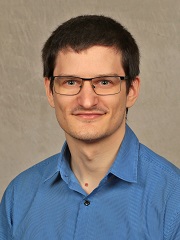
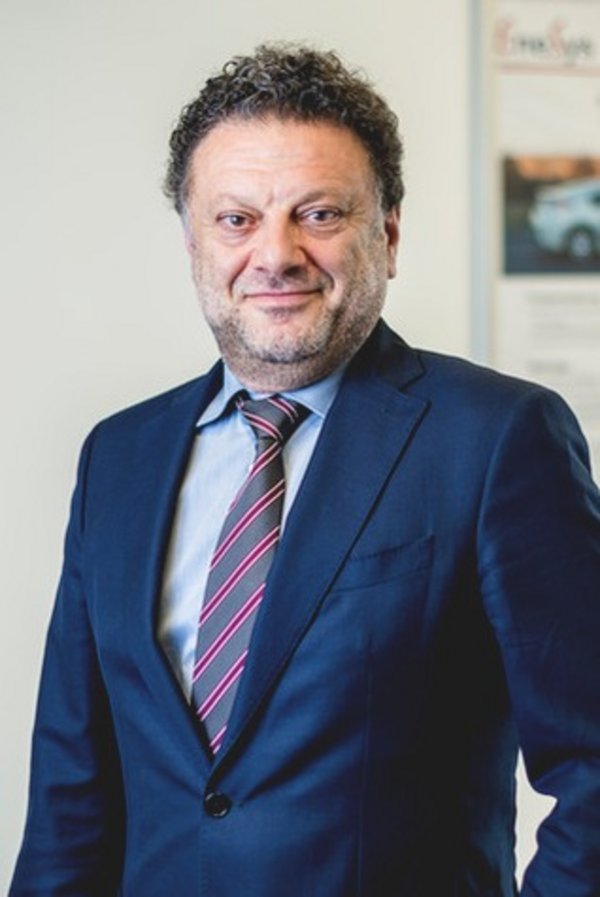
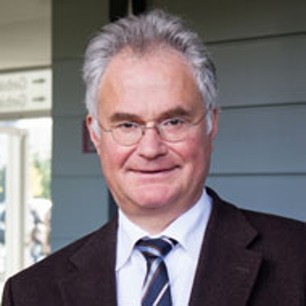
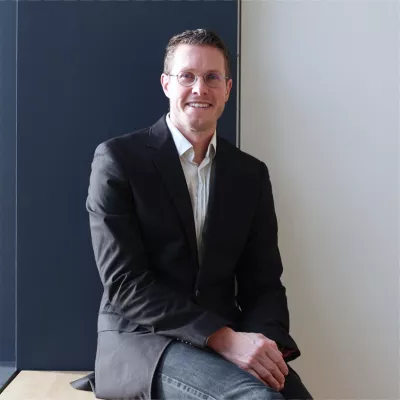
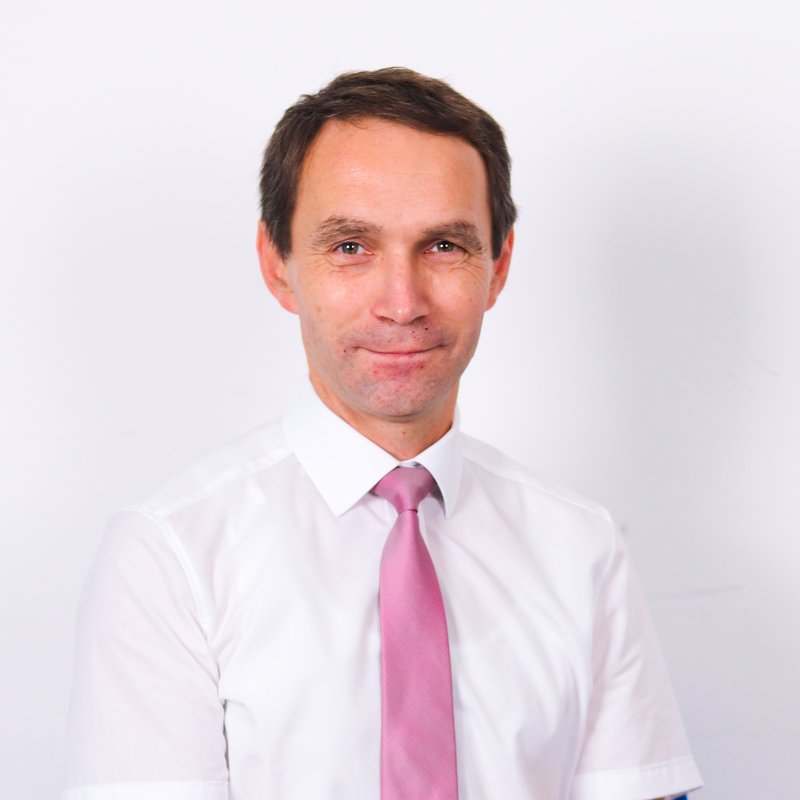
Prof. Dr. Markus Zimmermann leads the Chair of Product Development and Lightweight Design at the Technical University of Munich (TUM). With a background in mechanical engineering from TU Berlin and the University of Michigan, and a doctorate from MIT on solid-state singularities, he bridges academic rigor with industrial application. His career spans 12 years at BMW focusing on vehicle development before transitioning to academia. Specializes in solution space engineering for robust design Expert in additive manufacturing and systems engineering Develops methodologies for managing design complexity and uncertainty His research focuses on multidisciplinary design optimization and lightweight structures , particularly in robotics and automotive systems . His team applies digital twin frameworks and attribute dependency graphs to enhance design processes. Recent publications emphasize topology optimization in robotic systems and thermal management for medical X-ray sources. Key trends in his 2024-2025 publications include: Topological optimization for additive manufacturing and robotics Application of solution spaces to manage design uncertainty Development of compact X-ray systems for medical therapy Integration of digital twin technologies in industrial contexts
Dr. Philipp Allgeuer is a Postdoctoral Research Associate at the Knowledge Technology Research Group within the Department of Informatics at the University of Hamburg. His work focuses on humanoid robotics, bipedal locomotion, and sensor fusion. He holds a PhD from the Autonomous Intelligent Systems Group at the University of Bonn, alongside dual bachelor's degrees in Mechatronic Engineering and Mathematical/Computer Sciences (both with First-Class Honors). His research contributions include the development of the igus Humanoid Open Platform and the NimbRo-OP series of humanoid robots, recognized with awards like the RoboCup HARTING Open Source Award (2016) and the Best Humanoid Award (2018). He has authored influential papers on fused angles for robot balance, tilt phase space representations, and neuro-inspired control architectures. Allgeuer's teams have dominated RoboCup competitions, winning titles in AdultSize and TeenSize leagues multiple times. His open-source software frameworks (e.g., rot_conv_lib , attitude_estimator ) and hardware designs are widely used in robotics research. Recent work explores multimodal human-robot interaction and AI-driven robotic task coordination. He is affiliated with the Knowledge Technology Research Group and contributes to projects like the NICOL humanoid robot, bridging social interaction and reliable manipulation. His research spans from low-level control algorithms to high-level behavior planning systems.
Prof. Constantinos Sourkounis holds the Chair of Energy Systems Engineering and Power Mechatronics at Ruhr University Bochum since 2003. His affiliation includes the Faculty of Electrical Engineering and Information Technology with a focus on power systems and mechatronics. He earned his Diplom-Ingenieur (Master’s) in Mechanical Engineering with specialization in Electrical Engineering from Clausthal University of Technology (1989) and completed his habilitation there in 1996 on stochastic load-driven drive systems. His research spans energy systems flexibility, wind energy optimization, and modular energy solutions. Key roles: Chair of Energy Systems Engineering, SFB 180 Project Lead (AMOEVES), BMWi Energy System Flexibility Group Leader Committee memberships: Fraunhofer IWES Board, Ruhr University Senate, German Federal Ministry for Transport’s Electromobility Infrastructure Platform Research emphasizes renewable integration, grid stability, and industrial energy efficiency. He leads projects like KI-ROJAL (AI in energy systems) and contributes to EU energy initiatives. His work addresses challenges in distributed energy systems and smart grid technologies.
Julius Ambros is a researcher at the Chair of Microtechnology and Medical Device Technology at the Technical University of Munich (TUM). He holds advanced degrees in Mechatronics and Robotics, Medical Engineering and Assistive Systems, and Engineering from TUM. His work focuses on medical robotics, surgical devices, and additive manufacturing technologies, with current projects including iMEDCAP (intelligent military capabilities for medical monitoring) and the development of robotic systems for disaster scenarios. Supervised Courses: Automation Technology in Medicine (AIM), Approval of Medical Devices (ZUL), Seminar - Development of Mechatronic Devices (SMG) Current Student Projects: Bachelor's: Modular Rail Systems for Robotic Arms, Novel Mechanisms for Hospital Beds, Robotic End Effectors for Hemorrhage Control Master's: 3D Sensor Systems for Patient Detection Research Focus: Julius Ambros specializes in medical robotics, with expertise in surgical automation, real-time imaging, and wearable technologies. His team explores additive manufacturing for customized medical devices and mechanisms, particularly in disaster response and patient care contexts. Contact: Room 1110, Phone: +49 89 289 15171
Prof. Dr. Matthias Althoff is an Associate Professor of Cyber-Physical Systems at the Technical University of Munich (TUM), leading the Chair of Cyber-Physical Systems within the TUM School of Computation, Information and Technology. His research focuses on formal safety verification, model-based design, and reachability analysis for systems such as autonomous vehicles, robotics, and power grids. Education: He earned his diploma in Mechatronics and Information Technology (2005) and PhD (2010, summa cum laude) from TUM. He held postdoctoral positions at Carnegie Mellon University (2010–2012) and served as a junior professor at TU Ilmenau (2012–2013) before joining TUM as a full professor in 2013, becoming an associate professor in 2019. Research Interests: His work spans cyber-physical systems, formal methods for safety assurance, autonomous vehicles, modular robotics, and smart grid control. He develops tools like CommonRoad and CORA for scenario-based testing and reachability analysis. Awards: He has received the IEEE/ACM William J. McCalla ICCAD Best Paper Award (2012) and the Best Poster Award at the IEEE Intelligent Vehicles Symposium (2009). Labs/Projects: Leads the Cyber-Physical Systems group, collaborating on projects such as the Scenario Factory for automated vehicle testing and CommonPower for safe smart grid control. He also co-founded startups RobCo and aiina .
Prof. Dr. Marco Chiado Caponet is a Professor of Power Electronics at Berlin University of Technology . His research focuses span power electronics, electromagnetic compatibility (EMC) , and wide bandgap (WBG) semiconductors for applications in electric vehicles , photovoltaic systems , and high-efficiency inverters . Education: Master's (1995) and Ph.D. (2000) in Electrical/Electronic Engineering from Polytechnic of Turin. Professional History: Developed power electronics at Prima Electronics (1996–1997), research assistant at Polytechnic of Turin (1997–1999), and visiting researcher at RWTH Aachen (1998–1999). Later served as Ministerial Official (2004–2008), Director of the Don Bosco Institute (2008–2014), and held professorships at RheinMain University of Applied Sciences (2014–2016), Ravensburg-Weingarten University (2015), Wismar University (2016–2020), and Berlin University of Technology (since 2020). Research Trends: Specializes in EMC-optimized inverter design , WBG semiconductor characterization (GaN/SiC), and thermal performance for industrial and traction applications. Publications highlight advancements in low-cost power factor correction , noise suppression , and high-efficiency photovoltaic inverters . Scientific Awards: IEEE Senior Member (2021) Advising: Offers thesis topics in DC/DC converters , WBG semiconductors , and renewable energy systems . No explicit student list provided.
Prof. Dr.-Ing. Jürgen Bechtloff serves as Professor of Measurement, Control and Regulation Technology at the South Westphalia University of Applied Sciences since 1998. He has held significant administrative roles including Founding Dean of Mechanical and Industrial Economics (2002-2004), Dean of Engineering and Economics (2004-2012), and Head of Scientific Center for Dual Studies and Continuing Education (2012-2019). His academic career spans industrial experience at Klöckner-Moeller GmbH (1992-1998) and academic research at TU Braunschweig (1987-1992). Education: Diplom from TU Braunschweig (1987), Dr.-Ing. from TU Braunschweig (1992) Laboratory: Operates the TransferFactory Industry 4.0 demonstrator since 2013 Research Focus: Industrial automation systems, particularly in Industry 4.0 implementation, Digital Production methodologies, and Mechatronic Systems simulation. His work emphasizes practical solutions for real-world challenges in: IoT gateway and platform integration Feasibility studies and implementation support Control engineering and measurement technology Electronics cam systems for motion control Robotic programming and interpolation methods Publication Trends: 15 most recent publications (2000-2020) demonstrate consistent focus on Industry 4.0 implementation, Mechatronics , and Digital Production technologies. His work bridges theoretical concepts with practical applications through case studies and demonstrator projects like the TransferFactory system. Teaching Contributions: Coordinates courses in Mechatronic Systems and Simulation and Digital Production for both bachelor and master programs, with emphasis on project-oriented learning and practical implementation of automation concepts using modern tools like MATLAB/Simulink. Technology Transfer: Provides services in measurement technology (data processing/visualization), control engineering (simulation and implementation), and mechatronics (3D motion design, kinematic analysis). Operates with state-of-the-art equipment including Beckhoff TwinCAT, Siemens S7/TIA systems, ABB/Kuka robots, and MES platforms.
Prof. Dr.-Ing. Annika Raatz serves as the Dean of the Faculty of Mechanical Engineering at Leibniz University Hannover and Executive Director of the Institute for Assembly Technology and Robotics. She leads task groups in advanced manufacturing and contributes to collaborative research centers CRC 1368 Oxygen-free Production CRC 871 Regeneration of Complex Capital Goods Her work bridges academia and industry through roles in the Leibniz School of Optics and Photonics , PhoenixD Cluster , and the German Research Foundation .
Prof. Dr.-Ing. Guido Kramann is a faculty member at Brandenburg University of Technology in the Department of Technology. His academic work bridges mechatronics and computational music, emphasizing innovative intersections between engineering and artistic practice. Affiliation: Brandenburg University of Technology Department: Technology Location: Engineering Science Center (IWZ), Room 403, Brandenburg an der Havel, Germany Guido's research spans mechatronics, algorithmic music generation, and human-computer interaction. He explores arithmetic-based grammars and evolutionary processes for real-time musical composition, focusing on accessibility for laypeople and phenomenological efficacy in technical systems. His publications reflect a recurring interest in: Ubiquitous music and interactive soundscapes Phenomenological approaches to user interfaces Evolutionary algorithms for creative applications Harmonic unification in computational counterpoint He has contributed to conferences like CMMR, UbiMus, and EvoMUSART, though no scientific awards are documented here.
Prof. Dr.-Ing. Andreas Haag serves as Professor and Dean of Automotive Engineering within the Faculty of Mechanical Engineering at Ravensburg-Weingarten University of Applied Sciences (RWU). His academic leadership spans both educational administration and active research in automotive systems engineering. His research program centers on Electrical Drive Technology , Control Engineering , and Mechatronics , with specialized expertise in Hybrid Powertrains and Automotive Engineering . Current investigations focus on energy management optimization, dynamic programming for state variable discretization, and topological analysis of hybrid drivetrain architectures. His methodological approach integrates nonlinear interpolation techniques with practical powertrain design constraints. Analysis of his 2014-2022 publications reveals consistent contributions to automotive symposium proceedings and handbooks, demonstrating technical leadership in hybrid vehicle systems. Key thematic trends include powertrain efficiency optimization (2015-2017), advanced control methodologies (2016, 2020), and foundational topology classification (2014, 2022), with strong industry relevance through the Automotive Handbook publications. Haag maintains active teaching responsibilities across multiple electrical and control engineering domains, supervising project work while delivering courses in Electrical Engineering and Electronics, Measurement and Control Engineering, Control Engineering in Mechatronics, and Electrical Drive Technology through RWU's e-learning platform.
Prof. Dr. Michael Wendland is a faculty member in the Department of Mechanical Engineering at the Westphalian University of Applied Sciences since March 2020. His research focuses on methodical product development, AI-based CAD design, additive manufacturing, and dependability engineering. Education: Research in digital teaching methods, modern collaboration forms, and AI applications in product development. His teaching areas include Computer-Aided Design , Product Development , Reliability of Technical Products , and Technical Project Management . He has led research on structural optimization for mechanical components, rapid prototyping, and sustainable product development. Recent publications highlight trends in AI-driven CAD design, blended learning assessment methods, and gamification in engineering education. His work also explores inverse functional modeling for reliability and heterogeneous modeling for product concepts. Prof. Wendland serves as PAV deputy, responsible for recognition and university transfers, emphasizing digital workflows via PDF submissions.
Jiawei Guo is a researcher at National Central University's Department of Electrical Engineering. His work spans multiple disciplines including machine learning, computer vision, and computational physics. Key affiliations: National Central University, Taoyuan, Taiwan Research focus: Neural network applications in energy systems, underwater depth estimation, and mobile app security His research integrates physics-informed neural networks for solving complex engineering problems and adversarial transformers for pattern detection in acoustic signals. Recent publications demonstrate expertise in 3D modeling , multimodal reasoning , and privacy-compliant software analysis . Article trends show strong emphasis on diffusion models for medical imaging, spatial-temporal analysis for Gaussian processes, and data pruning techniques for efficient computation. While no formal awards are listed, his collaborative work appears in top venues including ACL , ICML , and IEEE Access .
Prof. Mohammad Ali Nasseri is a Professor of Surgical Robotics at the Technical University of Munich (TUM) and Founding Director of the Medical Autonomy and Precision Surgery (MAPS) research group within the TUM School of Medicine and Health. He holds an adjunct professorship in the Department of Medical Engineering at the University of Alberta. His research focuses on surgical robotics, surgical intelligence, and medical AI, with key contributions in surgical mechatronics, medical imaging, and visualization. Nasseri leads the MAPS group, which develops advanced technologies for precision surgery and robotic systems. Notable achievements include coordinating the ForNeRo project (~EUR 2M) and receiving awards such as the Best Medical Robotics Paper Award (ICRA 2024 finalist), Best Short Paper (Medical Visualization VCBM 2019), and the Robot Dalen Innovation Award (2015). His work on robot-assisted microsurgery and real-time surgical monitoring systems has advanced medical robotics safety and precision. Education: Ph.D. in Engineering (details not specified). Affiliations: TUM School of Medicine and Health, MAPS Research Group, University of Alberta (adjunct). Research emphasizes interdisciplinary innovations at the intersection of robotics, AI, and healthcare, with a focus on translating technical advancements into clinical applications. Recent projects include Envibroscope for environmental motion monitoring and Colibri5 for vitreoretinal surgery tracking. Grants & Projects: Bavarian Research Foundation (ForNeRo), TUM excellence programs. Nasseri’s labs and teams collaborate internationally on surgical autonomy, precision surgery tools, and medical AI integration. His work bridges fundamental engineering research with clinical practice in minimally invasive procedures.
Prof. Dr.-Ing. Gernot Schullerus is a W2-Professor for Electrical Drives at the Faculty of Engineering, Reutlingen University, where he has been employed since September 2010. He currently serves as the Collegial Head of the Electronics & Drives Research and Teaching Center since March 2023 and will assume the scientific leadership of the Reutlingen Research Institute starting September 2024. His office is located in Building 2, Room 018, and his office hours are Tuesdays from 8:00 to 9:00 AM. Professor Schullerus completed his doctorate at the University of Karlsruhe (TH) in 2004. His academic and professional journey includes: 2004: PhD (Dr.-Ing.) at University of Karlsruhe (TH) January 2004 - August 2010: Development Engineer, Electronics Development, SEW-EURODRIVE, Bruchsal September 2010 - present: W2-Professor for Electrical Drives, Faculty of Engineering, Reutlingen University March 2023 - present: Collegial Head of the Electronics & Drives Research and Teaching Center September 2024 - present: Collegial Scientific Head of the Reutlingen Research Institute Professor Schullerus specializes in electrical drive technology and power electronics. His research focuses on new motor concepts, particularly harmonically excited synchronous machines, power electronic components for drive applications, and inverters using gallium nitride power switches. He investigates sensorless operation of switched reluctance machines and energy-efficient control of rotating field machines. His work extends to condition monitoring and predictive maintenance in drive systems, with recent emphasis on green hydrogen production and flexible hydrogen logistics. The Reutlingen Research Institute under his leadership explores decentralized energy systems and energy efficiency. His recent publications demonstrate a strong focus on power electronics innovations, particularly with gallium nitride technology, and applications in energy systems. Key trends include advanced modulation techniques for power converters, optimization of PCB layouts for high-power applications, and the integration of renewable energy with hydrogen production systems. His work bridges theoretical control concepts with practical industrial applications, particularly in drive systems and energy conversion. Professor Schullerus leads the Electronics & Drives research group at Reutlingen University, which is actively involved in multiple research projects. Current projects include CleMoSy (Clean Motor Supply), Trusted Handling (Predictive Maintenance for roller chains), H2FLEX (Flexible Interoperable Hydrogen Logistics), and the Model Region Green Hydrogen: Lighthouse H2-Grid (Networking decentralized hydrogen production and consumption). Previously, he has led projects on modular scalable power electronics based on gallium nitride components, dynamically energy-efficient operation of induction machines, and model-based hierarchical condition monitoring. His laboratory facilities include the Electrical Drives Laboratory and the Laboratory for Control and Drive Technology, where his team focuses on optimal control/regulation and diagnosis of drive and grid converters. The research environment supports both fundamental investigations and applied industrial projects, with strong connections to industry partners in the drive technology sector.
Dr. Mathias Hüsing is an Adjunct Professor at the Institute of Mechanism Technology, Machine Dynamics and Robotics within the Faculty of Mechanical Engineering at RWTH Aachen University. His research focuses on robotics, compliant mechanism design, and energy-efficient mechanical systems, with applications in surgical manipulation, additive manufacturing, and human-robot interaction. Research Interests: Robotics (specifically compliant grippers, parallel kinematics, and hybrid robots) Energy-efficient mechanism design (cam systems, dynamic balancing) Smart manufacturing (digital tool chains, multidirectional additive manufacturing) Human-robot collaboration (inclusive workplaces, task adaptation) Sensor integration (calibration methods, non-contact safety systems) Algorithm development (motion planning, optimization techniques) Trends in Publications show a focus on surgical robotics, human-robot collaboration, and additive manufacturing. His work combines mechanism theory with practical implementation, emphasizing industrial applications and energy efficiency. Institute Affiliation includes leadership roles at the Institute of Mechanism Technology, Machine Dynamics and Robotics. He actively develops educational tools like the Software Mechanism Developer and integrates robotics into Industry 4.0 frameworks.