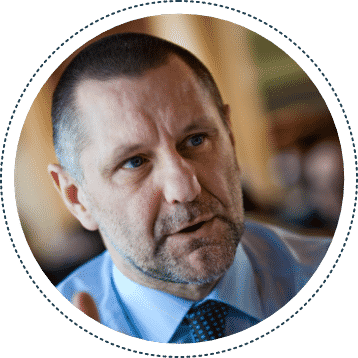
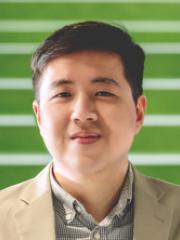
Wenguang Chen is a researcher affiliated with Tsinghua University and Pengcheng Laboratory , specializing in computer science and high-performance computing . His work bridges theoretical advancements with practical applications in domain-specific languages , parallel programming , and machine learning . Research Interests include: Development of modular DSLs for numerical methods (e.g., Mat2Stencil) Performance optimization in distributed and parallel systems Compiler frameworks for privacy-preserving AI (e.g., FHE-based neural network inference) Graph algorithms scaling to trillion-edge datasets Applications of Rust in memory-safe pointer analysis Recent Publications span 2014–2025, focusing on: Parallelization strategies for supercomputing Compiler automation tools Extreme-scale data processing Performance variance diagnosis in production environments
Yasmina Abdeddaïm is an Associate Professor at Université Gustave Eiffel and affiliated with ESIEE Paris. She works within the Laboratoire d'Informatique Gaspard-Monge (Softwares, Networks and Real-time team) and serves as Head of the Master in Artificial Intelligence and Cybersecurity (AIC) program. Her research focuses on real-time systems, critical systems, and scheduling algorithms. University: Université Gustave Eiffel Role: Head of Master AIC program Laboratory: Laboratoire d'Informatique Gaspard-Monge Team: Softwares, Networks and Real-time Her research spans real-time systems , mixed-criticality scheduling , energy-harvesting systems , and probabilistic schedulability . Recent publications analyze compilation optimization impacts on timing variability and propose new models for real-time deep neural networks over GPUs. She employs formal methods like timed automata for scheduling verification. Her teaching includes courses on Real-time Systems , Model Checking , Critical Application Development , and Artificial Intelligence . She is based at Cité Descartes, Champs-sur-Marne, France, with office contact details provided.
Univ.-Prof. Dr.-Ing. Peter Matthias Klotz is a full professor at the Department of Architectural Engineering (BIW), HafenCity University Hamburg. His research focuses on building construction, structural engineering, and statics, with emphasis on serial/modular systems, barrier-free design, and sustainable construction practices. He teaches courses in structural engineering, technical mechanics, statics, and strength of materials. Research Interests Serial and modular construction Barrier-free construction Building and project management Climate-neutral retrofitting of post-war buildings Publications : Co-authored a 2023 study on rooftop extensions for Hamburg's post-war housing cooperatives.
Jeffrey O. Snyder is the Director of Electronic Music and Director of PLOrk (Princeton Laptop Orchestra) at Princeton University's Department of Music within the School of Arts and Sciences. He teaches courses in computer and electronic music, composition, and the intersection of engineering and the arts. His educational background includes a B.A. in Music Composition from University of Wisconsin-Madison and a Doctor of Musical Arts (with distinction) in Music Composition from Columbia University (2011). Snyder's research focuses on new instrument design , alternate tunings , composition , robotics , and networked performance practices . As founder of Snyderphonics, he designs and builds innovative electronic musical instruments including the Manta (used by over 150 musicians worldwide), the JD-1 Keyboard/Sequencer, and custom analog modular synthesizers. His work explores the intersection of arts and engineering, creating new perspectives in music creation and experience. Snyder has received numerous awards and grants including multiple Princeton University Barr Ferree Publication Grants, David A Gardner Magic Project Grants, and New Jersey State Council for the Arts Fellowships. He co-founded Carrier Records in 2009, an experimental music label, and performs in multiple ensembles including exclusiveOr, The Federico Ughi Quartet, The Mizries, and Sideband. He also fronts Owen Lake and the Tragic Loves as his electro-country alter-ego. New Jersey State Council for the Arts Individual Artist Fellowship Finalist (2023) New Jersey Transit Temporary Art Program Commission (2019) Multiple Princeton University research and publication grants (2015-2018) Vermont Studio Center Fellowship for Kinetic and Sound Art (2015) Computer Music Magazine Innovation and Performance Award (2009) Beyond his academic work, Snyder is an active performer and composer who creates alternate-reality Early Music for ensembles of his invented instruments. He also has interests in playing pedal steel guitar, singing electro-country music, building things, and robotics. His courses include Computer and Electronic Music through Programming, Performance, and Composition (MUS 314), Contexts of Composition: Idiosyncratic Instruments (MUS 545), and Transformations in Engineering and the Arts (MUS/STC 209).
Rüdiger Lunde is a Professor at Technische Hochschule Ulm , currently serving as Dean of Studies for Information Systems since September 2019. He previously chaired the Examination Board for programs including INF, CTS, TI, ICS, DSM, MD, and IS from 2014 to 2019. His primary research areas include Software Engineering , Intelligent Systems , and Model-Based Systems Engineering , with a focus on automated safety analysis and technical system simulation. Current Role: Dean of Studies for Information Systems Prior Role: Chair of Examination Board (2014–2019) His research leverages the smartIflow framework for safety tasks such as Failure Mode and Effects Analysis (FMEA) and Fault Tree Analysis (FTA). He has contributed to formal verification methods using Computation Tree Logic (CTL) and explored temporal reasoning across varying time scales. Recent trends in his work include: Automated safety analysis in technical systems Integration of SysML for artifact generation Model decomposition techniques for complex systems Scientific awards: Best Paper Award at International Workshop on Applications in Information Technology (IWAIT-2015) Contact: Ruediger.Lunde@thu.de | Room: A306a | Consultation hours: By appointment via email.
John C.-G. Zhao is a Professor in the Department of Chemistry at the University of Texas at San Antonio (UTSA) . His research focuses on synthetic organic chemistry with applications in asymmetric synthesis , organocatalysis , photochemistry , and medicinal chemistry . He develops green and sustainable synthetic methods for biologically significant molecules and explores visible-light-driven radical reactions using electron-donor-acceptor (EDA) complexes. He also investigates drug conjugates for tumor-selective targeting via click chemistry . Education: Ph.D. in Organic Chemistry, University of Würzburg M.S. in Organic Chemistry, Chinese Academy of Sciences B.S. in Applied Chemistry, Tongji University Research Interests: Zhao’s lab specializes in asymmetric organocatalysis , particularly using proline- and cinchona-based catalysts to synthesize chiral molecules. They pioneered modularly designed organocatalysts (MDOs) , which self-assemble from precatalyst modules for enhanced reactivity and stereoselectivity. Their work includes diastereodivergent catalysis to produce multiple stereoisomers from identical substrates and visible-light-driven EDA complex reactions for sustainable chemistry. Publications Trends: Recent articles (2024–2020) emphasize photochemical ring-opening , C-H functionalization , heterocyclic synthesis , and multicomponent reactions . These studies often integrate green reagents (e.g., N-halosuccinimides, triphenylphosphine) and highlight modular catalyst systems for efficiency. Key subfields include radical chemistry , stereoselective transformations , and sustainable oxidation methods . Advising: Zhao mentors doctoral students like Dhiraj Jha , Sandhya Acharya , and Roshan Baral , alongside numerous former advisees now in academia or industry. His lab emphasizes interdisciplinary collaboration, particularly in medicinal chemistry and green catalysis . Labs & Funding: The Zhao Research Group operates in BSE 4.224 and has received support from the UTSA College of Sciences and external grants (not detailed in text).
John Paul MacDuffie is a Professor of Management at the Wharton School of the University of Pennsylvania. His research spans innovative mobility systems, lean production, interorganizational trust, global automotive dynamics, and the intersection of technology and work organization. He has held leadership roles such as President of the Industry Studies Association and Co-curator of the Automotive Transformation Map at the World Economic Forum. Research Interests: Vehicle and Mobility Innovations Flexible/Lean Production Systems Collaborative Problem-Solving Diffusion of Management Practices Organizational Learning Scientific Awards: President of Industry Studies Association (2019) Excellence in Teaching Awards (University of Pennsylvania, multiple years) Outstanding Young Scholar Award (IRRA, 1997) International Professional Practice Research Award (ASTD, 1989) Teaching Activities: He teaches courses on technology and work, including MGMT2430, MGMT7430, and advanced courses on enterprise management (MGMT6110, MGMT6120, MGMT6130). His work has been featured in major media outlets like the New York Times , Wall Street Journal , and Harvard Business Review .
Marie Johansson is a Professor in Timber Engineering at the Department of Building Technology, Faculty of Technology, Linnaeus University. Her career spans teaching structural engineering in bachelor’s and master’s programs and leading research projects on wood quality, strength grading, and timber mechanics. Acting supervisor in two PhD projects Expert Team Leader for "Construction & Design" in BioInnovation SIO-programme Research Interests : Wood material properties (shape stability, stiffness, strength) Connection technology in timber structures Climate change adaptation in agriculture (Öland, Sweden) Modular multi-storey timber buildings Fiber orientation modeling for strength prediction Publication Trends : Recent work focuses on wind-induced vibrations in tall timber structures, 3D fiber orientation models, genetic selection for timber traits, and non-destructive evaluation of wood properties. Collaborations with international conferences (WCTE, ICEM) and institutions highlight her contributions to wood science and sustainable construction. Research Groups : Leads the Wood Building Technology group, emphasizing applied mechanics and industrialized timber construction.
Dr. Matthias Jäger is a Researcher in the Department of Fiber Photonics at the Leibniz Institute for Photonic Technology (IPHT) . His work focuses on advanced optical fiber development, particularly in doped materials and nonlinear laser dynamics. Core technologies: Thulium/Yb/Ho-doped fibers, periodic shadowing for stray light suppression, nonlinear loss management Instrumentation: High peak power laser systems, fluorescence lifetime analysis, multicore emission profiling Research interests span laser physics, materials science, and optical engineering. Recent publications highlight breakthroughs in: Directional stability control for fiber ring lasers (2021-2024) Hybrid Tm:YAG crystal-derived fiber fabrication (2022) Nanoparticle-doped optical fibers (2024) 2 µm eye-safe laser systems (2024) Pr3+-doped nanocrystal fiber integration (2024) Thulium concentration optimization for laser efficiency (2025) His work demonstrates expertise in fiber fabrication methods including: Modified Chemical Vapor Deposition (MCVD) Powder-sinter technology Molten-core processing REPUSIL fiber drawing
Mirela Alistar is an Assistant Professor at the ATLAS Institute and the Department of Computer Science at the University of Colorado Boulder. She leads the Living Matter Lab , focusing on cyber-physical systems based on biochips to revolutionize healthcare diagnostics. Her interdisciplinary work bridges computer science, engineering, biotechnology, and bioart. Education : PhD in Embedded Systems Engineering (2010-2014, Technical University of Denmark), Postdoc in Human-Computer Interaction (2015-2018, Hasso Plattner Institute). Her research advances digital microfluidics and fault-tolerant biochips , enabling at-home diagnostic tools like OpenDrop . She also explores bioart through installations such as Semina Aeternitatis and Perfume Distillation Machine . She co-founded >top , a Berlin-based art & science project space, and advises startups digi.bio and bold.health . Her UIST'16 Honorable Mention Award highlights her innovative contributions. The Living Matter Lab under her leadership investigates interactive biodesign , combining technical precision with creative exploration of living systems.
Dr. Sandra Diaz Pier is a Scientific Lead at the Jülich Supercomputing Centre (JSC) within the Jülich Research Centre , Germany. Specializing in computational neuroscience , high performance computing (HPC) , and machine learning , she bridges neuroscience and advanced computational methods through her research. Education: B.Sc. in Electronic Systems Engineering, Mexico M.Sc. in Computer Science (focus: machine learning, quantum computing), Mexico Second M.Sc. in Electrical Engineering, Ontario, Canada Ph.D. in Computer Science, Germany (2021) Her research focuses on modeling and simulating brain dynamics and plasticity at multiple scales, leveraging HPC to accelerate large-scale neural network simulations. She actively contributes to EU projects like the Human Brain Project (HBP) , Virtual Brain Cloud , and EBRAINS 2.0 , emphasizing infrastructure development and educational training. Her work includes open-source tools such as the NEST simulator , The Virtual Brain , and L2L , enabling efficient parameter exploration and multiscale co-simulation frameworks. The 15 most recent publications highlight her interdisciplinary approach, spanning topics from quantum computing in biomolecular simulations to neural plasticity algorithms and cloud-based brain modeling . These articles reflect her expertise in integrating machine learning , multi-scale simulation , and HPC infrastructure for neuroscience challenges, including seizure propagation, Parkinson’s disease progression, and swarm intelligence in spiking networks. She leads technical coordination in projects like EBRAINS and serves as a task leader in the HBP infrastructure work package , while also organizing workshops and hackathons for open-source tools. Her role involves supporting domain scientists through methodological research and workflow optimization for brain simulations.
Eunsuk Kang is an Assistant Professor at Carnegie Mellon University's Software and Societal Systems Department within the School of Computer Science. His research focuses on enhancing software system safety, security, and reliability through formal methods and rigorous modeling. Ph.D. in Computer Science, MIT Software Engineering, University of Waterloo Research spans cyber-physical systems , software security , formal verification , and ML resilience . Key areas include robust system design against evolving environments, specification engineering, and scalable automated reasoning. Recent publications highlight advancements in CPS safety , formal verification , and ML-based error mitigation . Collaborative projects span conferences like ICSE , CAV , and FMCAD . Scientific Awards CyLab 2025 Seed Funding CyLab 2023 Seed Funding Carnegie Bosch Institute Grant Advises doctoral students in software engineering and formal methods, with affiliations to the Software Design and Analysis (SoDA) Group and CyLab Security and Privacy Institute.
Professor Steve Evans, Director of Research in Industrial Sustainability at the Centre for Industrial Sustainability, Institute for Manufacturing, Department of Engineering, University of Cambridge, brings 40 years of experience in improving industrial performance. He transitioned from 12 years in industry (including Engineering Systems Manager at Martin-Baker Engineering) to academic leadership, with a chair at Cranfield University (1998) and strategic research at Cambridge. 40 years industrial/academic experience Secured $20M+ funding for industry-academia partnerships Collaborated with Toyota Europe, Nissan Europe, Airbus, Unilever, and 300+ companies Elected Member of Academia Europaea (2019), now Treasurer and Board Member Advisor to UK House of Lords and UN industrial policy initiatives His research focuses on sustainable business model innovation , system transformation , industrial ecology , and sustainable policy making , with publications spanning product-service systems, sustainability KPIs, and industrial symbiosis strategies. Key projects include COGENT, LIFEcar, THERM, and the UK National Centre for Innovative Manufacturing in Industrial Sustainability. Steve’s scientific awards include: Member of Academia Europaea (2019) Sustainability Champion for Minister for Skills He leads funding from EPSRC and TSB, with industry partnerships spanning automotive (Jaguar/Land Rover), aerospace (Airbus), consumer goods (Marks & Spencer), and global manufacturing ecosystems. His collaborative networks include governments, startups (RiverSimple), and academic institutions like Clark University.
Sarah Neuwirth is a tenured Professor for Computer Science at Johannes Gutenberg University Mainz (JGU) and a Visiting Researcher at the Jülich Supercomputing Centre. She manages JGU's High Performance Computing (HPC) division, coordinates regional/national HPC activities, and represents JGU in NHR, Gauss-Allianz, and HPC committees. Education : PhD (Dr. rer. nat.) in Computer Science (2018), Heidelberg University Diplom in Computer Science (2012), University of Mannheim Bachelor of Science in Computer Science (2010), University of Mannheim Research Interests : Parallel File and Storage Systems Modular Supercomputing (resource disaggregation/virtualization) Performance Engineering High Performance Computing Networking Reproducible Benchmarking Parallel I/O Publications Trends : Her work focuses on HPC performance modeling, parallel I/O optimization, modular supercomputing, network characterization, and reproducible benchmarks. Key themes include resource disaggregation, automated workflows, and data-intensive distributed applications. Scientific Awards : 2023 PRACE Ada Lovelace Award for HPC ZONTA Science Award 2019 Grants & Leadership : She leads the High Performance Computing division at JGU, participated in European DEEP projects, and serves on SC conference committees.
Dr Kai Li Lim is the St Baker Fellow in E-Mobility at the Dow Centre for Sustainable Engineering Innovation , part of the Faculty of Engineering, Architecture and Information Technology at The University of Queensland (UQ) . Specializing in data engineering , telematics , and autonomous vehicle systems , his research examines electric vehicle (EV) usage patterns , charging reliability , and spatiotemporal data analysis to inform policy and sustainable transport strategies. Education : BEng (Hons) in Electronic and Computer Engineering (University of Nottingham), MSc in Computer Science (Lancaster University), PhD in Artificial Intelligence and Robotics (The University of Western Australia, funded by Australian Government Research Training Programme). Research Interests include: Electric vehicle telematics and data analytics Computer vision and deep learning for autonomous navigation Policy development for sustainable transport Infrastructure planning for EV and hydrogen systems Integration of cloud computing and IoT in mobility solutions Publication Trends reveal a focus on EV charging behaviors , data platform architectures , and autonomous driving frameworks , with recent work addressing regional emission disparities , modular safety systems , and online assessment integrity . Scientific Awards : St Baker Fellow in E-Mobility, Visiting Fellowship at UC Davis Electric Vehicle Research Center, Australian Government Research Training Programme (PhD funding). Supervision and Grants : Available for supervision, Dr Lim has secured funding from Energy Consumers Australia , iMove CRC , and Australian Urban Research Infrastructure Network (AURIN) for projects on EV charging incentives, freight emissions modeling, and longitudinal vehicle data databases. Labs and Collaborations : Collaborates with UC Davis Electric Vehicle Research Center , UQ School of Civil Engineering , and UQ School of Electrical Engineering and Computer Science . Leads the UQ Teslascope Project and contributes to the Green Australian Vehicle Ownership (GreenAVO) Capability for AURIN .