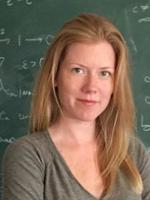
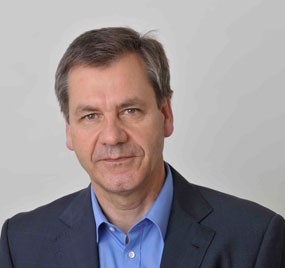
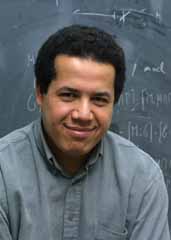
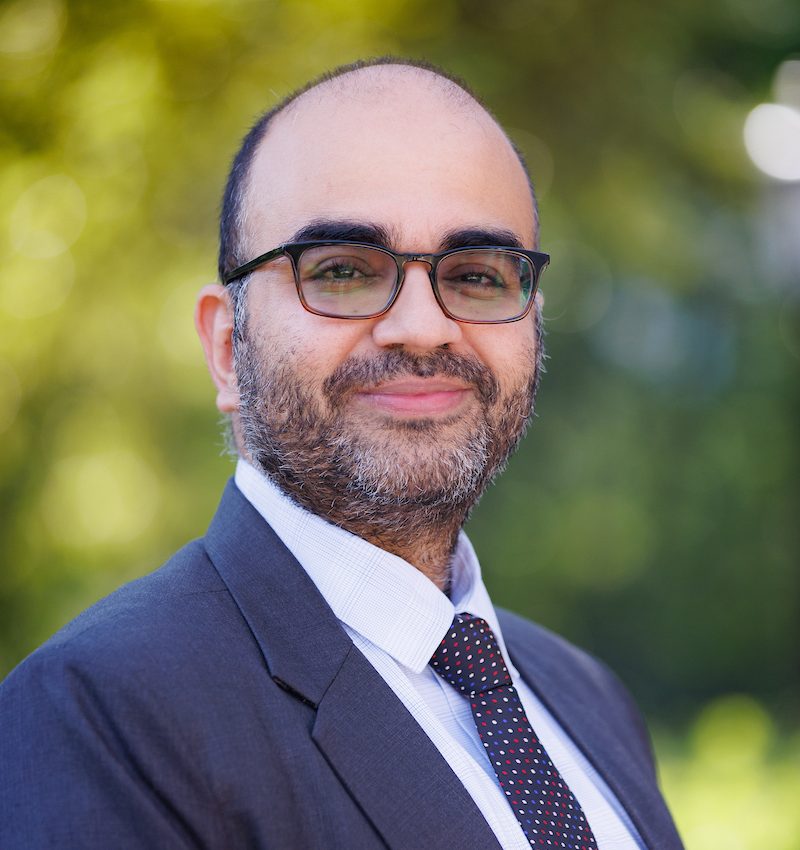
Professor Holly Krieger is a faculty member at the University of Cambridge , affiliated with the Faculty of Mathematics and the Department of Pure Mathematics and Mathematical Statistics . Her research focuses on Arithmetic Dynamics , Complex Dynamics , and Algebraic Geometry , with recent work on rational periodic points and Manin-Mumford conjectures. Role : Professor Email : hkrieger@dpmms.cam.ac.uk Her research spans dynamical systems with applications to number theory and algebraic geometry. Key contributions include studies on birational maps, preperiodic points, and cohomological properties of endomorphisms. Recent publications (2024–2012) highlight her expertise in arithmetic and complex dynamics, with a focus on rational maps, Galois representations, and equidistribution problems. Email : hkrieger@dpmms.cam.ac.uk Room : E1.19 Phone : 01223 337970 Homepage : Personal Page
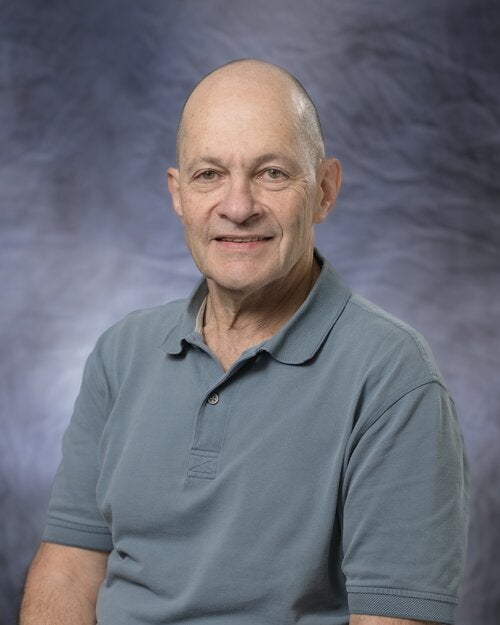
Don Blasius is a Professor of Mathematics at the University of California, Los Angeles (UCLA), serving as Managing Editor of the Pacific Journal of Mathematics and chair of the Mathematics-Economics Interdisciplinary Program (IDP). His research focuses on number theory, arithmetic geometry, and automorphic forms within the Department of Mathematics. His work centers on the deep connections between modular forms, elliptic curves, and fundamental conjectures in arithmetic geometry. Key investigations include generalizations of the Shimura-Taniyama conjecture, applications of Hilbert modular forms to Diophantine problems, and the role of Hodge theory in understanding algebraic cycles. His research frequently bridges automorphic representations with Galois cohomology to explore L-functions and arithmetic structures. Blasius's publication record reveals consistent thematic development since the 1990s, with increasing focus on modular forms and their geometric implications. His work demonstrates strong collaborative patterns, particularly with J. Rogawski on Shimura varieties and M. Borovoi on period torsors, while maintaining independent contributions to conjectural frameworks in number theory. No scientific awards were mentioned in the provided text. No information regarding student advising or research grants was provided in the text. He is an active member of the UCLA Number Theory Group, which drives collaborative research in modular forms, Diophantine equations, and related areas of pure mathematics through seminars and joint projects within the Department of Mathematics.
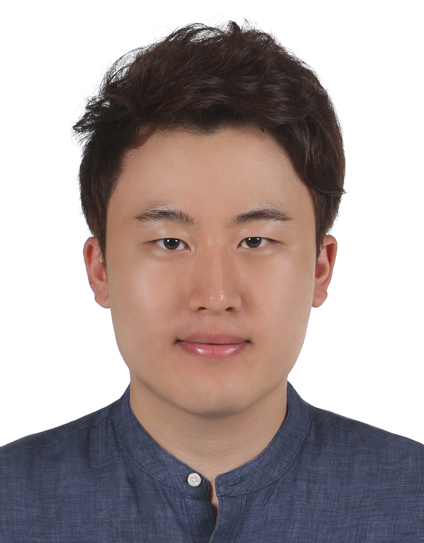
Gyujin Oh is a Ritt Assistant Professor in the Department of Mathematics at Columbia University's Faculty of Arts and Sciences. He received his PhD in mathematics from Princeton University in 2022 under the supervision of Christopher Skinner and Akshay Venkatesh. Prior to joining Columbia, he was a postdoctoral member of the SLMath/MSRI program Algebraic Cycles, L-Values, and Euler Systems in Spring 2023. Dr. Oh's research spans multiple areas of number theory and arithmetic geometry. His primary interests include Algebraic Number Theory, the Langlands Program, Modular Forms, Galois Representations, and Arithmetic Geometry. His work often bridges classical number theory with modern geometric approaches, exploring connections between automorphic forms, cohomology theories, and arithmetic structures. He has made contributions to understanding rigid local systems, the Néron-Ogg-Shafarevich criterion, and various aspects of the Langlands correspondence. His recent publications demonstrate a strong focus on advanced topics in number theory, particularly exploring the intersection of modular forms, Shimura varieties, and Galois representations. His work on generalized Whittaker models, moduli stacks of crystals, and arithmetic quantum local systems reflects his interest in both classical and cutting-edge approaches to number-theoretic problems. The pattern in his research shows a consistent theme of connecting geometric structures with arithmetic phenomena. Dr. Oh is an active educator who has developed comprehensive lecture notes for both undergraduate and graduate courses in Algebraic Number Theory. In Spring 2025, he is teaching Graduate Algebraic Number Theory (MATH GR6657) at Columbia University, covering local and global class field theory, Langlands program connections, and related advanced topics. He has also been involved in organizing and participating in numerous learning seminars including the Moduli of Langlands Parameters seminar, Theta learning seminar, and Deformation theory learning seminar.
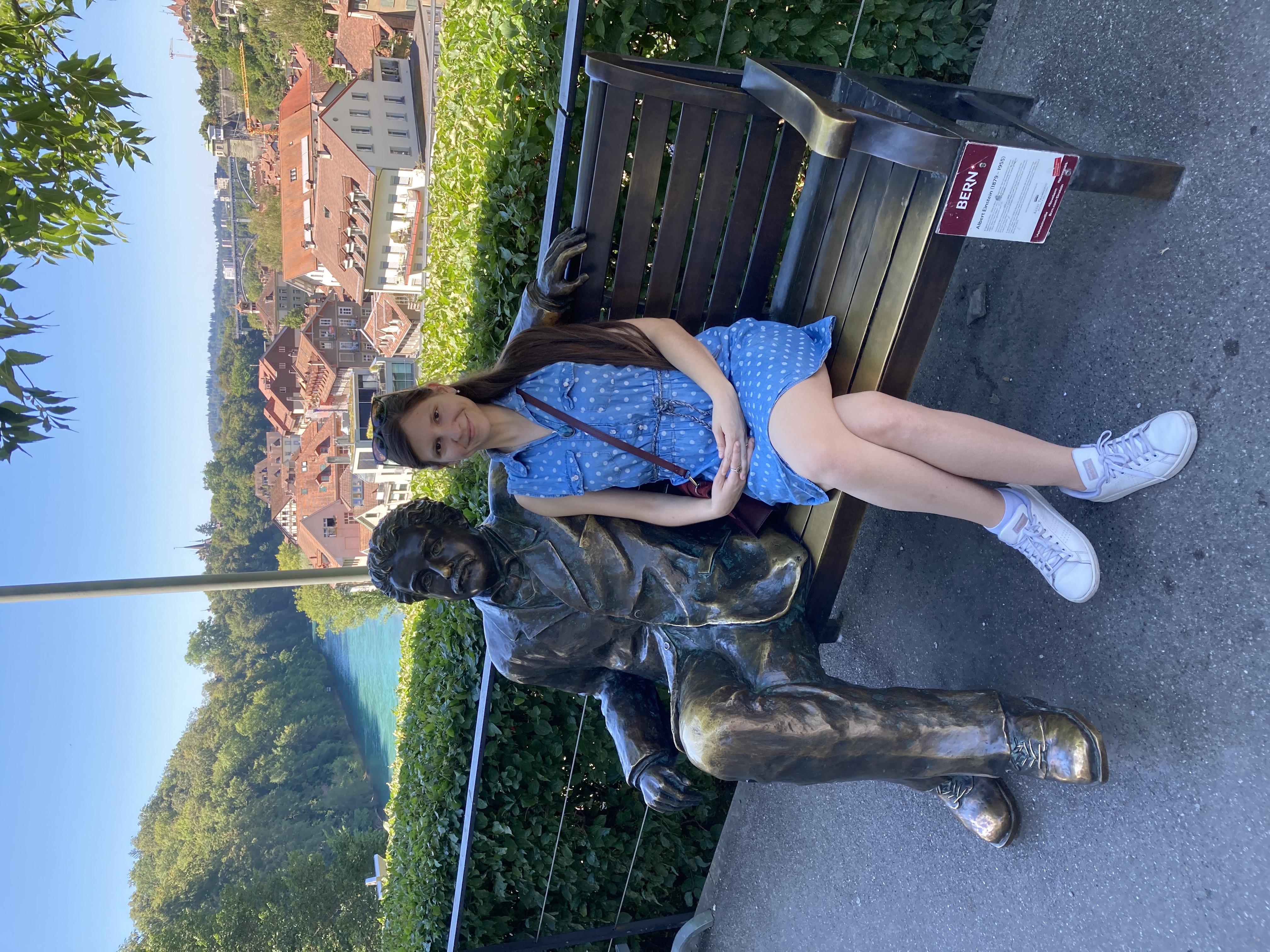
Myrto Mavraki is an Assistant Professor in the Department of Mathematics at the University of Toronto, with affiliations to both the St. George and Mississauga campuses. She specializes in arithmetic geometry and dynamical systems, particularly the theory of unlikely intersections and canonical heights in families of rational maps. Institution: University of Toronto School: Faculty of Arts and Science Department: Department of Mathematics Rank: Assistant Professor Her research focuses on deep connections between arithmetic geometry and dynamical systems. Key areas include equidistribution, variation of canonical heights, preperiodic points, and unlikely intersections in families of maps, especially on the projective line and in elliptic surfaces. These topics lie at the heart of modern arithmetic dynamics and have strong ties to Diophantine geometry and number theory. The most recent publications show a sustained focus on canonical height variation, equidistribution, and the geometry of post-critically finite and preperiodic loci in parameter spaces. Collaborations with leading mathematicians such as Laura DeMarco, Harry Schmidt, and Hexi Ye reflect her central role in current developments in arithmetic dynamics. Her work combines algebraic, analytic, and arithmetic techniques to solve deep conjectures and establish foundational results. Her research is supported by an NSERC Discovery Grant and an Early Career Supplement (2024–2029), and previously by an NSF grant (DMS-2200981). She has mentored or collaborated with several prominent researchers and is likely supervising graduate students, though none are explicitly named. She does not list formal awards, but her publication record in top journals and prestigious fellowships indicate high recognition in the mathematical community. Mavraki held the Benjamin Peirce Fellowship at Harvard (2020–2023), a highly competitive postdoctoral position, and prior positions at the University of Basel and Northwestern University. She earned her PhD from the University of British Columbia under Dragos Ghioca.
Steven Bradlow is a Professor in the Department of Mathematics at the University of Illinois at Urbana-Champaign (UIUC), affiliated with the College of Liberal Arts & Sciences. His research focuses on differential geometry, gauge theory, algebraic geometry, and topology, with particular emphasis on Higgs bundles, moduli spaces, and geometric structures. He holds a PhD from the University of Chicago (1988) and has held additional campus roles as a Professor of Mathematics. Research Interests: Bradlow’s work explores advanced topics such as holomorphic vector bundles, stability conditions, and geometric invariant theory. His studies of Higgs bundles integrate techniques from algebraic geometry, differential geometry, and mathematical physics, addressing questions related to moduli spaces, spectral curves, and representation varieties. He investigates exotic components of surface group representations and their connections to Teichmüller theory, contributing to the broader understanding of geometric structures and their topological properties. Recent Work Trends: Recent publications highlight his focus on Cayley correspondences, higher rank Teichmüller spaces, and uniformization techniques for branched surfaces. His collaborative projects often bridge algebraic and differential geometry, with applications to gauge theories and geometric analysis. He has also contributed to editorial work honoring peers like Karen Uhlenbeck and Oscar García-Prada. Grants & Advising: While specific grant details are not listed, Bradlow has been involved in NSF-funded initiatives (e.g., EMSW21-MCTP, RNMS: Geometric Structures). His advising contributions are reflected in co-authored works with students/postdocs such as Brian Collier and Oscar García-Prada. He is associated with research networks exploring geometric representation theory and mathematical collaborations. Labs/Teams: Active within UIUC’s Department of Mathematics, Bradlow collaborates with researchers in geometry and topology. His work often intersects with interdisciplinary groups studying geometric structures, though specific lab affiliations are not detailed here.
Matt Kerr is a Professor of Mathematics at Washington University in St. Louis, where he has been a faculty member since 2010. He earned his Ph.D. in Mathematics from Princeton University in 2003 and held previous positions at UCLA, the Max Planck Institut, the University of Chicago, and Durham University. Professor Kerr's research centers on Algebraic Geometry and Hodge Theory, with particular expertise in Algebraic Cycles, Moduli Spaces, Normal Functions, and Arithmetic Geometry. His work explores the deep connections between topological invariants of algebraic varieties and their finer analytic and arithmetic properties, contributing to fundamental questions like the Hodge conjecture. An analysis of Kerr's recent publications (2020-2025) reveals a sustained focus on degenerations of Hodge structures, compactifications of moduli spaces, and arithmetic aspects of algebraic cycles. His research trajectory shows increasing sophistication in applying Hodge-theoretic methods to problems in mirror symmetry, Calabi-Yau varieties, and quantum curves, while maintaining connections to classical problems in algebraic geometry. Professor Kerr has secured significant research funding through multiple NSF grants, including 'Algebraic cycles, Hodge theory, and arithmetic' (2011-14), 'FRG: Hodge theory, moduli, and representation theory' (2014-19), 'Asymptotic Hodge theory, fibered motives, and algebraic cycles' (2021-24), and 'Algebraic cycles and normal functions' (2025-27). He has mentored numerous postdoctoral researchers and PhD students, including current advisees Devin Akman and Rachel Wu, and has graduated PhD students such as Ryan Keast, Genival da Silva Jr., and Xiaojiang Cheng. Active in the mathematical community, Kerr organizes major conferences including the Western Algebraic Geometry Symposium (2023), a special session on 'Hodge Theory, Algebraic Cycles, and Arithmetic' for the AMS Central Sectional Meeting (2025), and 'Hodge-theoretical and Combinatorial Aspects of Mirror Symmetry' (2026). His teaching includes undergraduate honors mathematics courses and graduate-level algebraic geometry.
Prof. Jürg Kramer is a Professor of Mathematics at Humboldt University of Berlin, affiliated with the Faculty of Mathematics and Natural Sciences and the Institute of Mathematics. His research focuses on Arakelov geometry, automorphic forms (particularly modular forms), and their intersections. Notable contributions include advancements in arithmetic intersection theory with logarithmic singularities and sup-norm bounds for modular forms. He is also deeply engaged in mathematics education, leading initiatives for teacher training and promoting mathematical talent through networks like the Berlin School Mathematics Network. Active in academic service, he served as EMS Education Committee Chair (2017–2022) and President of the German Mathematical Society (2013/14). His work bridges pure mathematics with pedagogical innovation, emphasizing public understanding through popular science publications. Research: Arakelov geometry, modular forms, L-functions, hyperbolic geometry methods Education: Teacher training programs, math talent promotion, textbook authorship Affiliations: Leibniz Institute for Science and Mathematics Education (IPN), EMS, Deutsche Akademie der Technikwissenschaften Key educational contributions include Felix-Klein teacher training programs and co-authoring standards for mathematics teacher education. His publications span advanced mathematical research and accessible expositions on topics like Fermat’s Last Theorem and Riemann Hypothesis.
Dr. Arno Berger is a Professor in the Department of Mathematical and Statistical Sciences at the University of Alberta. He holds a Dipl.Ing. (ME) and Dipl.Ing. (MSc) in Mechanical Engineering and Applied Mathematics from TU Wien (Vienna University of Technology), followed by a Dr. techn (PhD) and Habilitation in Applied Mathematics from the same institution. His research focuses on dynamical systems, ergodic theory, Benford's Law, nonautonomous dynamics, bifurcation theory, applied probability, and dimensional analysis. He has held visiting positions at prestigious institutions including Georgia Tech, University of Warwick, Goethe University Frankfurt, and University of Canterbury. His recent work includes studies on Saint-Venant-Polya inequalities, planar curves with position-dependent curvature, and distributions of logarithmic functions. He co-authored the seminal book An Introduction to Benford's Law (2015), and maintains the Benford Online Bibliography. His teaching spans courses like Differential Equations and Real Variables. Dr. Berger’s research has explored Benford’s Law in diverse contexts, from stochastic processes to finite-time dynamics. His articles often bridge theoretical insights with practical applications, emphasizing the ubiquity of Benford’s Law in mathematical systems.
Professor Jörn Steuding holds the Professorship for Number Theory at the University of Würzburg since 2006, where he is affiliated with the Institute of Mathematics within the Faculty of Mathematics and Computer Science. His academic career includes a Ramon y Cajal research position at Universidad Autónoma de Madrid (2004-2006), postdoctoral work at the University of Frankfurt under Professors W. Schwarz and J. Wolfart (1999-2004), and completion of his habilitation at Frankfurt in 2004. His educational background includes a PhD from the University of Hannover in 1999 under Prof. G.J. Rieger, where he also served as an assistant from 1996-1999, and undergraduate studies in mathematics at Hannover from 1991-1995. Professor Steuding's research spans multiple areas of number theory, with particular focus on Zeta and L-functions (including zero distribution, universality properties, and connections to Random Matrix Theory), Diophantine analysis (covering approximation theory, equations, and the abc conjecture), elliptic curves and modular forms , algebraic number theory (including arithmetically equivalent fields), and elementary number theory with applications to primality testing and factorization. His work often bridges theoretical foundations with historical perspectives, as evidenced by his research on the Hurwitz brothers' contributions to complex continued fractions. His publication record demonstrates consistent contributions to leading journals in number theory, with research trends showing evolution from foundational work on Riemann zeta function zeros to broader investigations of L-functions in the Selberg class, Diophantine problems over quadratic fields, and historical aspects of number theory. His publications appear in prestigious journals including Mathematische Annalen, Acta Arithmetica, and the Bulletin of the American Mathematical Society. Professor Steuding has authored significant monographs including Diophantine Analysis (CRC Press/Chapman-Hall, 2005), Value distribution of L-functions (Springer Lecture Notes in Mathematics 1877, 2007), and Elementary Number Theory: A Gentle Introduction to Higher Mathematics (Springer Spektrum, 2015, co-authored with N. Oswald). He serves as the Erasmus Coordinator for his department alongside Dr. Jens Jordan, facilitating international academic exchanges. His research collaborations span multiple institutions, with notable co-authors including N. Oswald, M. Technau, H. Nagoshi, and L. Pankowski. Professor Steuding leads the Number Theory team at the University of Würzburg, maintaining an active research group focused on contemporary problems in analytic and algebraic number theory. His work continues to explore connections between classical number theory and modern mathematical physics through Random Matrix Theory applications.
Abdellah Sebbar is a Full Professor in the Department of Mathematics and Statistics at the University of Ottawa. He holds a PhD from Stony Brook University (1993-1997) and prior degrees from Rabat and Strasbourg. His research focuses on number theory, algebraic geometry, and modular forms, with specialties in elliptic curves, moonshine theory, and quantum groups. He has authored over 40 publications, including works on Schwarzian equations and equivariant functions. His career includes roles as CRM-ISM Postdoctoral Fellow (1997-1999), CMS Instructor (1999-2001), and Associate Professor (2004-2013) before attaining his current rank. He advises graduate students and collaborates on projects involving modular subgroups and automorphic forms. Education: 1992: BSc in Pure Mathematics, Rabat 1992-1993: DEA (Master's), Strasbourg 1993-1997: PhD in Mathematics, Stony Brook (Fulbright Scholar) Research Interests: Modular forms and functions Elliptic curves and surfaces Discrete groups and moonshine Quantum groups and mathematical physics Schwarzian differential equations Professional Timeline: 2013–Present: Full Professor, UOttawa 2004–2013: Associate Professor, UOttawa 2001–2004: Assistant Professor, UOttawa His recent work emphasizes applications of Schwarzian equations to modular forms and automorphic differential equations. Collaborative efforts with Hicham Saber and others explore equivariant functions and vector-valued modular forms. He has supervised multiple PhD/MSc students, including co-supervision with Damien Roy.
Professor Yizhou Sun is affiliated with the University of California Los Angeles (UCLA) and the Henry Samueli School of Engineering and Applied Science . Her academic work focuses on Machine Learning , Artificial Intelligence , and Graph Neural Networks within the Computer Science department. Her research spans High-Level Synthesis , Causal Inference , and Computational Biology , with recent publications addressing neural network compression, language model safety, and dynamical system modeling. The trends in her recent 2025 and 2024 publications emphasize Deep Learning , Graph Theory , and Language Model Optimization , reflecting interdisciplinary applications in Biomedical Data , Hardware Design , and Physical Simulation .
Jonathan Pila is a Reader in Mathematical Logic at the University of Oxford's Mathematical Institute, with a focus on model theory and number theory. He is affiliated with the Mathematical Logic and Number Theory research groups. BScHons (University of Melbourne, 1984) PhD (Stanford University, 1988) His research explores intersections of mathematical logic with number theory, particularly via o-minimality, addressing problems like the Andre-Oort conjecture, Zilber-Pink conjecture, and Ax-Schanuel theorems in algebraic and Diophantine geometry. Recent work includes advancements on functional transcendence, canonical heights in Shimura varieties, and uniform parameterization techniques with applications to Diophantine problems. Leverhulme Trust Research Fellowship (2008-2010) Clay Research Award (2011) LMS Senior Whitehead Prize (2011) ASL Karp Prize (2013) Elected FRS (2015) Rolf Schock Prize (2022) Frontiers of Science Award (2023)
Vishesh Vikas is an Associate Professor in the Department of Mechanical Engineering at the University of Alabama, College of Engineering. He is based in the South Engineering Research Center (SERC) and leads the Agile Robotics Laboratory (ARL@UA), which focuses on bio-inspired, soft, and tensegrity robotics, as well as inertial sensing and estimation. Education: PhD, Mechanical Engineering, University of Florida, 2011 MS, Mechanical Engineering, 2008 B.Tech., IIT Guwahati, 2005 His research spans autonomous systems, wearable technologies, biomedical devices, guidance and control, intelligent systems, space robotics, and engineering education . The lab’s work integrates mechanical design, sensing, and advanced control to create agile, adaptive robotic systems for unstructured environments. The recent publications highlight a strong trend in soft and tensegrity robotics , with focus on gait synthesis, locomotion planning, shape and joint estimation, and dexterous manipulation. These works combine modeling, data-driven control, and sensor fusion, often using accelerometers, IMUs, and vision for real-time feedback. The research is published in top robotics venues such as IEEE TRO, RA-L, and ASME journals. Scientific Awards: No awards explicitly mentioned in the text. Vishesh Vikas actively advises graduate students, including PhD and Master’s candidates, and has successfully guided several to thesis and dissertation completion. His lab is affiliated with multiple research centers including the Alabama Center for the Advancement of AI, Center for Advanced Manufacturing, and Center for Advanced Public Safety. He is involved in outreach and education, including mechatronics workshops and seminar hosting. Current projects include exosuits for spine support and robotic systems for mobility in extreme environments. Laboratory and Team: The Agile Robotics Lab (ARL@UA) fosters interdisciplinary research in nature-inspired robotics, combining principles from biology, mechanics, and control. The team has hosted eminent scholars and is featured in university and college news for its innovative work on wearable robotics and soft manipulators.
Patrick Ingram is an Associate Professor at the Department of Mathematics and Statistics , Faculty of Science , York University . His research focuses on number theory and diophantine geometry , particularly the arithmetic of elliptic curves and surfaces , and dynamical systems over global fields . His scholarly work includes significant contributions to the study of canonical heights , post-critically finite maps , and primitive divisors in arithmetic dynamics . His research often bridges complex dynamics with number theory, exploring the interplay between Galois representations , Drinfeld modules , and polynomial iterations . Patrick has received the Top Cited Article 2007 - 2011 award from the Journal of Number Theory . He collaborates with leading mathematicians in arithmetic dynamics, including Joseph H. Silverman , and has published extensively in top-tier journals such as the Duke Mathematical Journal , Proceedings of the London Mathematical Society , and Transactions of the American Mathematical Society . His work spans both theoretical advancements and computational techniques in algebraic divisibility sequences and rigidity theorems .
John Rognes is a Professor at the Department of Mathematics , University of Oslo, specializing in Algebraic Topology, Algebraic K-Theory, and Geometric Topology. His research bridges number theory and homotopy theory, with a focus on structured ring spectra and topological modular forms. Education : International Baccalaureate (1984), Cand. Mag. in Mathematics (1985), Princeton MA (1987), and PhD (1990) under Gunnar Carlsson. Positions : Professor at UiO since 1998, Visiting roles at Stanford (1996), Chicago (1996), and Bonn (2005-2006). His research areas include Algebraic K-Theory , Stable Homotopy Theory , Topological Cyclic Homology , and Motivic Homotopy . Articles highlight work on Adams spectral sequences, redshift phenomena, Segal conjectures, and topological Hochschild homology of modular forms. Scientific awards include the 1999 Professor Ingerid Dal and Ulrikke Greve Dals prize, Fulbright-Hays Fellowship, and multiple grants from the Research Council of Norway (YFF, SUPREMA). He supervised 18 Master’s and 9 PhD students, including Paul Arne Østvær, Vigleik Angeltveit, and Alice Hedenlund. Leadership : Chairman of the Abel Committee (2014-2018), Program Leader for Master programs in Mathematics (2021-2024), and organizer of international symposia. Grants : YFF program 'Brave new rings' (7.1 MNOK), RCN projects on topology and motivic homotopy (total >30 MNOK).