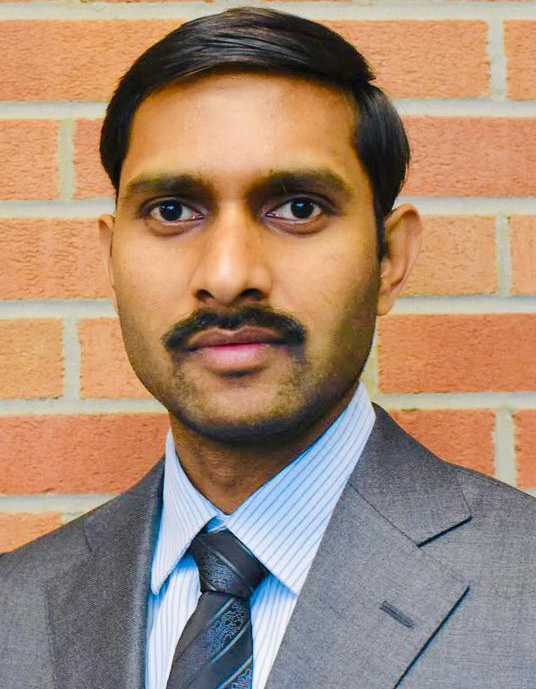
Dr. Apparao Dekka is an Assistant Professor in the Department of Electrical Engineering at Lakehead University, Canada. He holds a B.Tech. from Jawaharlal Nehru Technological University, an M.Tech. from IIT Bombay, and a Ph.D. from Ryerson University. His research focuses on high-power converters, medium-voltage drives, renewable energy systems, and electrified transportation. He has published over 75 peer-reviewed papers and authored/co-authored a Wiley-IEEE book on Modular Multilevel Converters. Dr. Dekka has held roles as a Research Engineer at Khalifa University (2010–2012), Post-Doctoral Research Fellow at Ryerson University (2017–2019), and Research Associate at McMaster University (2017–2019). His awards include the IEEE Transactions on Power Electronics Outstanding Reviewer Award (2022, 2015), the IET Electric Power Applications Premium Award (2019), and the 2023 Lakehead University Teaching Award. Research Team: Leads projects on converter design, renewable energy integration, and advanced digital control methods. Labs/Teams: Collaborates with labs focused on electric drive applications and power electronics infrastructure. Grants: Secured funding through the Ontario Research Fund - Research Infrastructure Program.
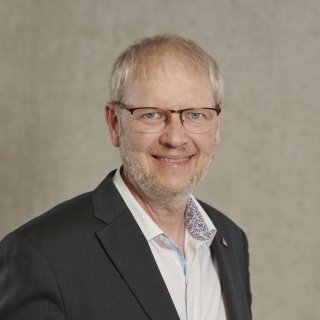
Euzeli Dos Santos is an Associate Professor in the Elmore Family School of Electrical and Computer Engineering at Purdue University, Indianapolis. His expertise spans power electronics, electric vehicle technologies, and advanced energy systems. He holds a courtesy appointment in the same department and leads research initiatives focused on capacitorless resonant converters, high-torque electric machines, and nanotechnology-enhanced power devices. Research interests include optimizing power converter topologies, developing efficient wireless charging solutions for electric vehicles, and integrating graphene-based materials into semiconductor devices. His work emphasizes practical applications in renewable energy systems, microgrids, and grid stability. Dos Santos has contributed extensively to multilevel converter design, control strategies for power electronics, and transformerless power supply architectures. Publications highlight innovations in capacitorless DC-DC converters, HIL simulation frameworks for distributed energy resources, and thermal optimization of IGBTs using nanomaterials. His research bridges theoretical advancements with real-world challenges in energy conversion and transportation electrification.
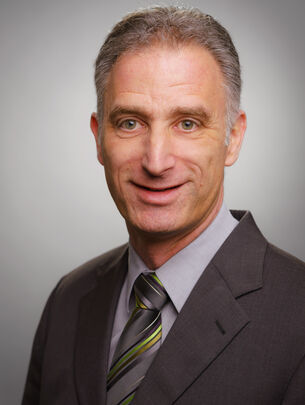
Nicola Delmonte is an Associate Professor in the Department of Engineering and Architecture at the University of Parma, Italy. His academic and research career has been centered on power electronics, renewable energy systems, smart grids, and the reliability of electronic components, with applications in energy conversion and IoT technologies. PhD in Electronic Engineering, University of Parma (2003–2005) Master Degree in Electronic Engineering, University of Parma (1995–2002) His research interests focus on the design, modeling, and reliability of power electronic systems for renewable energy integration. He has led and contributed to numerous research projects including the EU-funded H2020 Sharc25, MARINET’s MORE project on ocean energy, and regional initiatives like FIL 2014 on DC Nano-Smart-Grids. His work bridges theoretical modeling with practical innovation, including the development of energy-harvesting piers and wireless monitoring systems for agriculture. The recent publications reflect a strong trend in energy systems modeling, thermal management of power electronics, and advanced instrumentation. Key themes include FEM-based thermal design, adaptive control for battery charging, laboratory-scale geophysical imaging, and integrated building energy models. These works span disciplines such as power electronics, renewable energy, and applied physics. Best Poster Award at GE 2012 for thermal modeling of converters 2nd place in the 2011 International Competition on Renewable Energy for Smaller Islands with the 'e-piers' concept Delmonte has supervised research teams and served as principal investigator on multiple grants, including projects funded by the European Commission, Regione Emilia Romagna, and national research programs (PRIN, COFIN). He teaches a range of courses in electronics and energy conversion across undergraduate and graduate programs in Computer, Electronic, and Communications Engineering, as well as Mechanical Engineering. He is a member of IEEE and the Order of Engineers of Parma, and has acted as a reviewer for journals such as Microelectronics Reliability and Transactions on Device and Materials Reliability. He is involved in experimental and applied research labs focusing on power electronics, smart grids, and renewable energy systems. His team has developed platforms for high-frequency characterization of semiconductor modules and testing of ocean energy harvesting devices. Current efforts include the development of 3D-printed cooling solutions and intelligent control systems for modular power converters.
Frank Hinrichsen is a Professor in Electrical Power Engineering at Flensburg University of Applied Sciences since March 2014. His work focuses on power electronics , medium-voltage converters , and grid integration of renewable energies . He has industry experience in hardware development for renewable energy converters. PhD in resonant inverters from Technical University of Braunschweig Former head of hardware development at a Flensburg-based renewable energy company Research interests include: Power electronics for renewable energy systems Drive engineering and control circuits High-voltage converter technologies His publications emphasize modular multilevel converters , SiC semiconductor applications , and resonant inverter designs for renewable energy systems. Key themes include grid stability, industrial power conversion, and scalable energy technologies. He leads the E³Lab (Embedded Systems) and advises students in sustainable energy systems. No scientific awards were explicitly mentioned in the texts.
Alessio Carullo is a Full Professor at the Polytechnic University of Turin , affiliated with the Department of Electronics and Telecommunications (DET) and the PolitoBIOMed Lab (Biomedical Engineering Lab). He specializes in electrical metrology, sensor systems, and biomedical device development. Expertise : Calibration, impedance metrology, quantum Hall effect, smart sensors, wearable systems, measurement uncertainty SDG Contributions : Health & Well-being, Clean Energy, Sustainable Cities His research focuses on biomedical sensor networks, industrial monitoring systems, and energy communities. He leads projects like VIA (voice monitoring for MS patients) and BRIC-2024 (noise impact analysis). His work bridges electrical engineering with healthcare and sustainability. Recent publications address voice quality analysis in neurological disorders, wireless sensor networks for industrial plants, and energy system monitoring. He supervises PhD students in biomedical and industrial sensor applications while teaching metrology and data acquisition systems.
Holger Borcherding is a Professor of Power Electronics, Electrical Drive Technology, and EMC at the Ostwestfalen-Lippe University of Applied Sciences (TH-OWL) . As a board member of the Institute for Energy Research (iFE) and the Open Direct Current Alliance (ODCA) , he leads research on intelligent energy systems and industrial DC networks. His Power Electronics and Electrical Drive Technology working group focuses on energy-efficient solutions for industrial applications, including the DC-INDUSTRIE projects. Education: Studied Electrical Engineering at the University of Hanover (1985-1991) PhD in Power Electronics from the University of Hanover (1999) Research interests span industrial DC grids, fast-switching power semiconductors, highly integrated converters for electromobility, ultra-fast electronics prototyping, EMC optimization, and 3D electronics. His work bridges theoretical advancements with practical implementation, particularly in manufacturing and sustainable energy systems. Publication trends show expertise in DC microgrid stability, capacitor lifespan modeling, converter design, and energy efficiency improvements. Key subfields include resonant oscillations, power quality, industrial automation, and semiconductor reliability. Scientific awards: 2013 Research Prize, TH Ostwestfalen-Lippe 2014 Transfer Prize OWL (IHK Lippe zu Detmold and IHK Bielefeld) 2019 IEEE ICDCM Best Paper Award 2024 Transfer Prize, TH Ostwestfalen-Lippe Supervision and grants include PhD mentorship and leadership in projects like DC-INDUSTRIE 2 , IDE3AL , and UmSiCht . He has secured funding for innovations in DC-powered busbars, 3D circuit board construction, and self-optimizing drilling systems. Labs and teams include the iFE Institute at TH-OWL, where he collaborates with research associates such as Benjamin Jerwan, Simon Cepin, and Tim Stuckmann. He also works with industry partners like Lenze SE and academic alliances including the Mechatronics Center Hannover and the National Platform for Electromobility.
Dirk Brakensiek is a Professor at the Georg Agricola University of Applied Sciences since 2018, specializing in electrical engineering, information technology, and industrial engineering. His office is located at G7 R110 with contact email Dirk.Brakensiek@thga.de and phone +49 234 968-3339. He earned his electrical engineering degree with distinction at RWTH Aachen University, receiving the Springorum Medal for diploma excellence, Otto Junker Prize for academic achievements, ABB Prize for an outstanding energy technology thesis, and a scholarship from the Professor Dr. Koepchen Study Foundation of RWE. His research spans electrical energy converters and drives, electrical machines, decentralized energy technology, power electronics, magnetic levitation technology, and control systems. This work bridges theoretical electrical engineering with industrial applications in textile machinery and transportation systems, emphasizing practical implementation of high-speed drives and magnetic levitation solutions. His publication record from 2000-2004 reveals a concentrated focus on linear drive systems for magnetically levitated transportation, featuring simulation models, controller design, and optimization of permanent-magnet machines. These works demonstrate consistent application of electrical machine theory to solve complex industrial automation challenges. His scientific recognition includes: Springorum Medal for diploma distinction Otto Junker Prize for academic excellence ABB Prize for energy technology thesis Professor Dr. Koepchen Study Foundation scholarship While no academic advisees are listed at THGA, he previously trained IT specialist trainees at Saurer.Schlafhorst in application development under IHK Aachen certification. His industry experience includes developing high-speed BLDC drives (200,000 rpm) and embedded systems for textile machinery, though specific research grants aren't documented. His research operates at the intersection of academia and industry, notably through Saurer.Schlafhorst collaborations where he led Autocoro product line development. Current work continues this applied approach in energy technology, particularly in decentralized systems and power electronics for industrial applications.
Dr. Alfredo Núñez Vicencio is an Associate Professor at Delft University of Technology's Civil Engineering & Geosciences faculty, specializing in Railway Engineering. His work bridges intelligent transportation systems with computational intelligence, focusing on railway infrastructure health monitoring through advanced sensor technologies and machine learning. Key affiliations: 4TU Built Environment, IEEE Society (Senior Member), CiTG Faculty ED&I team Research themes: Physics-informed neural networks, vibration-based diagnostics, sustainable railway electrification His research output spans over 150 publications, with recent work exploring spiking neural networks for rail defect detection and wavelet-based approaches for vibration analysis. He leads EU-funded projects like IAM4RAIL and In2Track3, combining AI with railway engineering to address critical challenges in track monitoring and maintenance optimization. Scientific recognition includes multiple best paper awards at international railway conferences and editorial roles at journals like IEEE Transactions on Intelligent Transportation Systems and Intelligent Transportation Infrastructure . He has mentored students receiving prestigious awards, including European Rail Research Advisory Council honors.
Professor Ahmet Mete Vural is a faculty member at Gaziantep University, Faculty of Engineering , specializing in Electrical and Electronics Engineering . He holds a PhD in Electrical Engineering from Çukurova University (2012) and has taught courses like Power System Dynamics, Advanced Power Conversion, and High Voltage Techniques since 2004. Education: PhD (2012), MSc (2001), BSc (1999) from Gaziantep University His research focuses on power electronics , modular multilevel converters , renewable energy integration , and smart grid technologies . He has developed innovative control schemes for battery storage systems and STATCOM devices, with a strong emphasis on power quality improvement and oscillation damping . Recent publications analyze advanced control strategies for modular multilevel converters and renewable energy systems . His work combines theoretical modeling with experimental validation, particularly in STATCOM design and high voltage techniques . Professor Vural supervises 28 master's and 7 doctoral theses , including topics on wind energy conversion systems, battery storage, and power flow control. He serves as an editor for Turkish Journal of Electrical Engineering and International Transactions on Electrical Energy Systems .
Professor Ahmet Masum Hava serves as a full-time Lecturer in the Department of Electrical and Electronics Engineering at Işık University's Faculty of Engineering and Natural Sciences. His academic foundation includes: B.Sc. in Electrical Engineering from Istanbul Technical University (1983-1987) M.Sc. in Electrical and Computer Engineering from University of Wisconsin-Madison (1988-1991) Ph.D. in Electrical and Computer Engineering from University of Wisconsin-Madison (1991-1998) His research spans Power Electronics, Electrical Machines, and Power Systems, with concentrated expertise in grid-connected converters, active harmonic filters, PWM techniques, and power quality enhancement. Current projects address critical energy challenges including SiC MOSFET-based modular active filters for grid stability, 22kW EV fast-charging systems, and renewable-energy-integrated smart inverters. Professor Hava has mentored 26 graduate students whose theses cover advanced topics from ultracapacitor test systems to modular multilevel converter controls. His funded projects demonstrate strong industry alignment, including FPGA-controlled harmonic filters, photovoltaic inverter design, and mechatronic radar steering solutions. He teaches core courses including Power Electronics, Electrical Circuits, Electromechanical Energy Conversion, and Power Distribution Systems at both undergraduate and graduate levels.
João Luiz Afonso is a Full Professor at the Department of Industrial Electronics, Engineering School, University of Minho, Portugal. He received his B.Sc. and M.Sc. degrees in Electrical Engineering from the Federal University of Rio de Janeiro, Brazil, in 1986 and 1991, respectively, and his Ph.D. in Industrial Electronics from the University of Minho in 2000. He obtained his Habilitation degree in Electronics and Computers Engineering in 2016. His academic and professional journey includes: Member of the IE R&D Group at Centro ALGORITMI Director of the Department of Industrial Electronics (2017-2021) Coordinator of the Group of Energy and Power Electronics (GEPE) Steering committee member of the thematic line "Smart Cities and People" at ALGORITMI Vice-president of TMOB-HUB - Transportation and Mobility Research Hub Professor Afonso teaches several courses including Electrical Machines, Power Quality and Active Power Filters, Renewable Energies and Electric Mobility, Power Electronics for Smart Grids, and Environmental, Social and Economic Sustainability. His extensive research portfolio spans Power Electronics technologies applied to Power Quality, Active Power Filters, Renewable Energy, Electric Vehicles, Energy Efficiency, Energy Storage Systems, Innovative Railway Systems, Smart Grids, Smart Cities, and Aerospace. His publication record is impressive with over 300 publications including 55 papers in international journals with referee, 240 papers in international conferences with referee, and 9 book chapters. His research impact is evidenced by 4047 citations, an h-index of 30, and 71 papers in Q1/Q2 journals. He has supervised 17 Ph.D. theses and 74 M.Sc. theses, demonstrating his commitment to academic mentorship. Professor Afonso has participated in 32 research projects, coordinating 21 of them. His editorial contributions include being a member of the Editorial Board for MDPI Energies and MDPI Electronics, and serving as Guest Editor for 13 Special Issues of Journals. He has organized several international conferences including GreeNets 2018 and SESC 2019-2023. Among his notable recognitions: IEEE Senior Member since 2016 Listed among the "World's Top 2% Scientists" for 2021 and 2022 Active participation in editorial boards of multiple journals His research group, GEPE, focuses on advancing Power Electronics technologies for sustainable energy systems. Professor Afonso's work bridges theoretical research with practical applications, particularly in the integration of renewable energy sources, electric mobility solutions, and smart grid technologies. His leadership in transportation and mobility research through TMOB-HUB demonstrates his commitment to addressing real-world challenges in sustainable transportation.
Professor Richard Bucknall is the Head of the Department of Mechanical Engineering at University College London (UCL), holding the Kennedy Chair of Mechanical Engineering. His career spans academic and industry roles in marine systems, electrical propulsion, and sustainable technologies. PhD in Marine Electrical Engineering (Royal Naval Engineering College, 1995) BEng (University of Plymouth, 1988) HNC (City of London Polytechnic, 1980) His research focuses on applied marine engineering , low-carbon ship propulsion , autonomous maritime systems , and hydrogen/fuel cell technologies . Recent work includes energy management frameworks for hybrid ships, path planning algorithms for USVs, and thermal design of superconducting marine systems. Key trends in his publications involve AI-driven control systems , hybrid propulsion optimization , and ocean current-adaptive robotics , reflecting interdisciplinary approaches to maritime sustainability. Co-Editor for IMarEST (2010-present) BSI Office Holder (2010) Member of IEEE and IET He led the MSc Marine Engineering program (1995-2023) and served as Vice Dean for Research at UCL Engineering Faculty (2020-23). His work bridges academia and industry through consultancy and collaborative projects.
Dr. Robert Smyk is an Assistant Professor in the Department of Automation at Gdańsk University of Technology's Faculty of Electrical and Automation Engineering. His office is located on floor 112 of the faculty building, and he can be contacted via email at robert.smyk@pg.edu.pl or by phone at +48 58 347 1332. Dr. Smyk's research spans several interconnected domains: Hardware-focused computing : FPGA implementations, residue arithmetic systems, and high-speed digital converters Algorithm development : Novel approaches to residue number system operations and signal processing optimizations Engineering applications : Computer vision for infrastructure inspection, cryptographic systems, and sensor data processing His publications demonstrate consistent focus on improving computational efficiency through mathematical optimizations and hardware-aware designs. With 67 publications documented in institutional repositories, his recent works explore: algorithmic improvements for residue arithmetic (2023-2025), thresholding/edge detection for industrial vision systems (2018-2022), and hardware architectures for specialized converters. Teaching activities include extensive involvement with 163 documented educational engagements.
Dr. Roland Ryndzionek is an Associate Professor at Gdańsk University of Technology with dual affiliations in the Department of Power Electronics and Electrical Machines and the Department of Mechanics of Materials and Structures. His research bridges electromechanical systems and renewable energy, specializing in: Piezoelectric ultrasonic motors with multi-rotor designs Fault-tolerant multiphase doubly-fed induction generators (DFIGs) for wind turbines Power Hardware-in-the-Loop (PHIL) emulation of synchronous generators He leads the BLDFIG project (2023–present), developing gearless wind turbines using multiphase DFIGs, and co-leads the EU-funded DigiWind initiative for wind energy digitalization. His publications emphasize real-time control systems, harmonic reduction in power converters, and mechatronic integration, with recent work in IEEE Transactions and COMPEL journals. No awards or student advising roles are documented in available sources.
Prof. Dr. Ertugrul Sönmez serves as Professor in the Faculty of Engineering at Reutlingen University, leading the Semiconductor Circuit Technology Lab. His research focuses on power electronics innovation through semiconductor circuit design, analog systems, and advanced converter topologies. Contact details include email ertugrul.soenmez@reutlingen-university.de and office location in Building 4, Room 213. His work centers on power conversion systems with emphasis on GaN-based technologies , wireless power transfer , and active damping techniques . Key interests include delta-sigma modulation for multilevel converters, dV/dt filter design for motor drives, and high-frequency operation using wide-bandgap semiconductors. Research addresses critical industry challenges in electric vehicle charging, renewable energy integration, and industrial motor control systems. Recent publications (2022-2024) reveal strong focus on modular converter architectures and stability enhancement techniques. His work bridges theoretical control concepts with practical implementation, frequently appearing in top industry conferences like PCIM Europe. Collaborative projects with colleagues such as Gernot Schullerus demonstrate cross-disciplinary approaches to power electronics challenges. Through the Semiconductor Circuit Technology Lab, Prof. Sönmez provides hands-on research opportunities in semiconductor characterization and circuit synthesis. The lab supports student projects including bachelor's/master's theses and industry-collaborative initiatives like ArduSmartPilot. His consistent publication output indicates active supervision of graduate research in power electronics design and implementation.