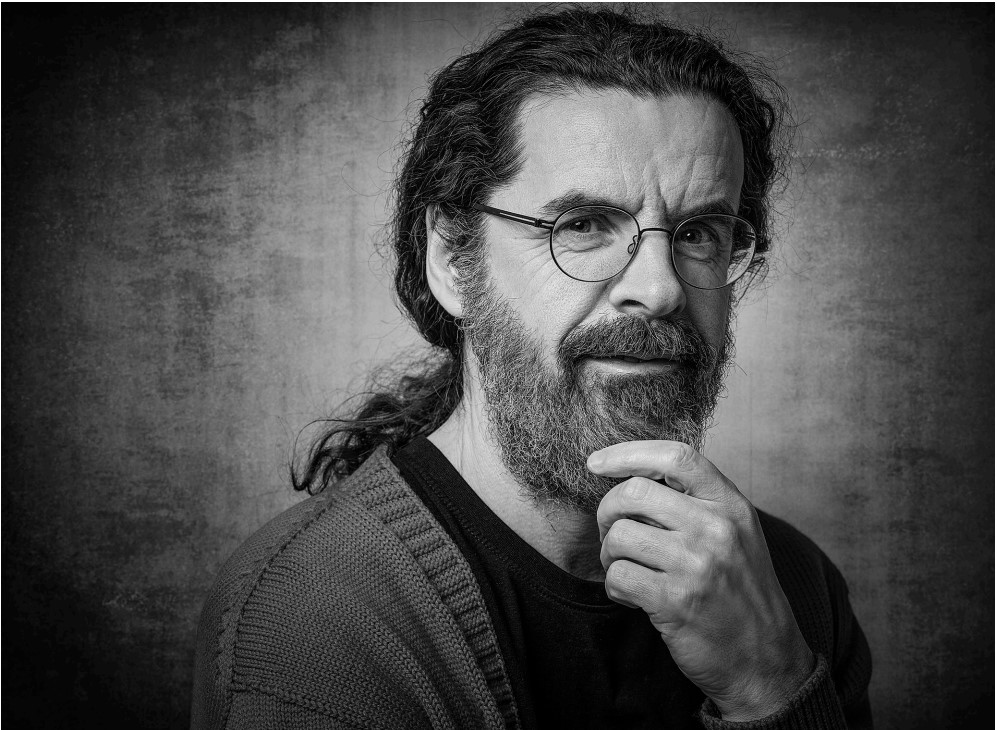
Benjamin Harrop-Griffiths is an Assistant Professor in the Department of Mathematics and Statistics at Georgetown University. His research focuses on partial differential equations (PDEs) and analysis, particularly nonlinear waves and fluid dynamics. He investigates topics such as integrable PDEs, vortex filaments, wave turbulence, and degenerate dispersive equations. His work has been supported by grants like the NSF DMS-2406816 and the Simons Foundation Junior Fellowship. He has taught courses including Differential Geometry, Real Analysis, and Complex Variables at Georgetown. Previously, he held positions at UCLA and NYU’s Courant Institute. He earned his PhD from UC Berkeley under Daniel Tataru and his undergraduate degree from Magdalen College, Oxford. Key research contributions include studies on the derivative nonlinear Schrödinger equation, Navier-Stokes vortex filaments, and compactons. His awards include the Simons Society of Fellows Junior Fellowship. He currently resides in Washington, D.C., with his family.
Prof. Victor Gorbenko, born in Saint Petersburg (1989), is a leading theoretical physicist at École Polytechnique Fédérale de Lausanne (EPFL) since 2022 as head of the Laboratory for Theoretical Fundamental Physics. He obtained his PhD from New York University (2015) for research on confining flux tubes and two-dimensional gravity, following his degree at Saint-Petersburg State University (2010). His career includes postdoctoral research at Stanford University and the Institute for Advanced Study in Princeton. Education: Saint-Petersburg State University (BS), New York University (PhD) Prof. Gorbenko's research spans quantum gravity , string theory , and cosmology , with a focus on flux tubes, de Sitter space holography, and gravitational correlators. His recent work explores T\bar T deformations, bra-ket wormholes, and cosmological observables via effective field theory. The Laboratory for Theoretical Fundamental Physics at EPFL, under his leadership, investigates foundational problems in theoretical physics, including applications of integrability and conformal field theory to gravitational phenomena.
Dr. Justin Conroy is a Professor at the State University of New York at Fredonia. His research focuses on theoretical physics, statistical mechanics, and mathematical physics, with emphasis on entropy techniques, transport phenomena, and nonextensive thermostatics. He has contributed to topics like Tsallis statistics, quantum Hamiltonians, and grand unified theories. Dr. Conroy holds a Ph.D. from the College of William & Mary. His academic work includes presentations such as "What is Entropy?" at Georgia Southern University (2022) and publications in journals like Physica A and Springer. He administers scholarships such as the Computer Science, Mathematics, and Physics Scholarships (CSMAPS) since 2017. His research trends span from entropy-based modeling in environmental systems to high-energy physics applications of nonextensive statistics. Over 20 years, his work explores both foundational theories (e.g., transport equations) and applied problems (e.g., plume dispersion models). Dr. Conroy has no listed academic awards but maintains active grants related to STEM scholarships. His advising record and lab affiliations are not detailed in the provided texts.
Sladana Radinovic is a Doctoral Research Fellow at the Institute of Theoretical Astrophysics , University of Oslo. Her work focuses on cosmology, particularly large-scale structure analysis, void-galaxy cross-correlation, and modified gravity theories. MSc Astrophysics, University of Padova, Italy (2016–2018) BSc Physics, University of Novi Sad, Serbia (2011–2016) Her research integrates numerical cosmology, computational astrophysics, and advanced statistical methods to study cosmic voids and their implications for cosmological models. Recent projects include applications to the Euclid mission and Sloan Digital Sky Survey (SDSS) data analysis. Publications highlight expertise in void-finding algorithms, cosmic expansion measurements, and Sunyaev-Zeldovich effect analysis. Collaborations span institutions like the University of Portsmouth and University of Waterloo. Scientific Awards Summa cum laude Master's degree in Astrophysics AstroMundus Consortium Scholarship City of Prijedor Scholarship for Undergraduates She contributes to cosmological simulations and observational studies, with implications for understanding dark energy and gravitational physics through void statistics.
Mark Mirmelstein is a PhD candidate and School Tutor in Mathematics, Physics, and Astronomy at the University of Sussex. Their research focuses on cosmology, particularly cosmic microwave background (CMB) analysis, including lensing reconstruction for the Simons Observatory and detection of Rayleigh scattering in Planck data. They hold an MSc and BSc in Physics from Tel Aviv University and are an Associate Fellow of the Higher Education Academy. Research Interests: Mirmelstein specializes in CMB cosmology, dark energy, modified gravity, galaxy clusters, and theoretical cosmology. Their work bridges observational data analysis and simulations to advance understanding of the universe's large-scale structure. Scientific Awards: ERC/University of Sussex Studentship Award (2017-2020) Israel-Anglo Lindsay Trust Grant (2016-2018) Teaching & Advising: As a Doctoral Tutor, they instruct modules including Early Universe, Foundation Mathematics, and Electricity and Magnetism. They also mentor students in physics laboratories and mathematics. Collaborations: Mirmelstein is a member of the Simons Observatory collaboration and organizes the South Coast Cosmology meetings, fostering interdisciplinary research in cosmology.
Ivan Avramidi is a Professor of Mathematics at New Mexico Tech, where he has served since 2005. He holds a PhD in Theoretical and Mathematical Physics from Lomonosov Moscow State University (1987) and has held prestigious fellowships, including the Alexander von Humboldt Fellowship (1993–1996 and 2016) and DAAD Fellowship (1989–1990). His research focuses on mathematical physics, quantum gravity, differential geometry, and partial differential equations on manifolds. He has over 60 publications, including two books and numerous refereed papers, cited over 1,439 times in Google Scholar. Education: Senior Research Scientist in Theoretical and Mathematical Physics, Southern Federal University (1993) PhD, Lomonosov Moscow State University (1987) MSc with Highest Distinction, Southern Federal University (1979) His research interests include heat kernel methods, spectral geometry, quantum field theory, and their applications to finance and cosmology. He has organized special sessions of the American Mathematical Society and served as a keynote speaker at international conferences. Notable contributions include pioneering work on heat kernel asymptotics and non-commutative corrections in general relativity. Avramidi's awards include the Distinguished Research Award from New Mexico Tech (2018). His work spans theoretical physics and applied mathematics, with a focus on bridging geometric analysis and quantum phenomena.
Vitor Cardoso is a Professor at the Niels Bohr Institute , University of Copenhagen, leading the Strong team under the Niels Bohr International Academy. His research focuses on strong-field gravity , black hole physics , and fundamental interactions , with significant contributions to gravitational wave astronomy and dark matter studies. PhD from Técnico Lisbon (2003) Previously affiliated with CERN, Perimeter Institute, and Waseda University Co-author of over 200 peer-reviewed publications and 1 book Recent research trends reveal expertise in gravitational wave analysis , Kerr spacetime modeling , and dark matter-black hole interactions . Key themes include: Probing fifth forces at the Galactic Center Testing General Relativity's foundational principles Gravitational lensing tomography Quantum field dynamics in black hole environments Black hole formation mechanisms Scientific honors include: Three ERC Grants (Advanced and standard) Villum Investigator and DNRF Chair awards Ordem de Sant'Iago da Espada (2015) from Portugal
Kurt Hinterbichler is an Associate Professor in the Department of Physics at Case Western Reserve University, part of the College of Arts and Sciences. His research focuses on theoretical physics, particularly in gravity, cosmology, and field theory. He is actively engaged in foundational theoretical work with implications for early universe models and quantum gravity. Research Interests: His work centers on effective field theories as tools to explore physical systems where underlying theories are incomplete. He investigates massive gravity and higher-spin fields, probing the boundaries of consistent field theories. A major focus is early universe cosmology, including inflation and alternative models, with attention to non-linearly realized symmetries and their observable consequences. He also explores extra dimensions, brane worlds, and screening mechanisms as possible solutions to fundamental problems like the cosmological constant naturalness issue. Education: Ph.D., Columbia University Scientific Awards: No awards mentioned in the provided text. Advising and Grants: While no specific students or grants are listed, as a theoretical physicist and faculty member, he likely mentors graduate students and participates in federally funded research projects typical in theoretical physics. His publication record indicates active research engagement. Labs and Research Groups: No specific lab or research team is named, but he is affiliated with the broader physics research community at CWRU, particularly in cosmology and theoretical physics.
Alexandra Amon is an Assistant Professor of Astrophysical Sciences at Princeton University, specializing in cosmology, dark matter, and large-scale structure. She leads the LSST Dark Energy Science Collaboration team analyzing data from the Rubin Observatory's Legacy Survey of Space and Time (LSST), aiming to map 1 billion galaxies to study dark energy and dark matter. Previously, she was a Kavli Fellow at Stanford University and a Senior Kavli Fellow at the Institute of Astronomy, Cambridge. Her research focuses on weak lensing cosmology, galaxy surveys (DES, KiDS, DESI), and baryonic feedback modeling. She earned a First Class undergraduate degree from the University of Edinburgh and a PhD from the same institution under Prof. Heymans, winning the Royal Astronomical Society Thesis Prize. She is passionate about STEM outreach, particularly through her initiative Trinis - We STEM , advocating for Caribbean representation in science. Education: BSc (First Class Honors) from University of Edinburgh; PhD in Astrophysics from University of Edinburgh Key Collaborations: Rubin Observatory LSST, Dark Energy Survey (DES), Kilo-Degree Survey (KiDS), Dark Energy Spectroscopic Instrument (DESI) Labs/Teams: Amon DarkLab, Princeton Astrophysical Sciences Group Awards: Tollestrup Award, Royal Astronomical Society Early Career Award, RAS Thesis Prize Her work addresses cosmic tensions in dark energy parameters and explores innovative methods to reconcile observational data with theoretical models. She advises graduate and undergraduate students on topics ranging from galaxy formation to axion dark matter探测.
Luca Amendola is a Professor of Physics at the Department of Theoretical Physics at Heidelberg University. His research focuses on Cosmology and Astrophysics, particularly in areas such as Dark Energy, Large Scale Structure, Cosmic Microwave Background, and statistical methods. He is actively involved with the Euclid satellite mission, contributing to observational strategies and data analysis. His work includes model-independent tests of gravity, studies of galaxy clusters, and analyses of cosmic surveys. Amendola has authored books on cosmology, such as *L’altra faccia dell’Universo*, and frequently publishes on theoretical frameworks for dark energy and modified gravity. His recent articles emphasize Euclid’s contributions to cosmology, gravitational lensing analyses, and tests of fundamental physics principles. Key Research Themes : Dark Energy dynamics, gravitational theories, large-scale structure formation, and cosmic surveys. Euclid Collaboration : Leading roles in mock catalogues, data-driven covariance matrices, and strong-lensing cluster identification. Teaching : Advanced cosmology lectures and foundational materials for graduate studies.
Prof. Tolga Birkandan is a faculty member at Istanbul Technical University's Department of Physics Engineering, College of Engineering. He specializes in theoretical physics, focusing on exact solutions in general relativity, wave equations, and mathematical physics. His research integrates computational methods with theoretical models, addressing topics like scalar fields, black holes, and noncommutative geometries. Role: Professor, Department of Physics Engineering Affiliation: Istanbul Technical University Research Interests: General Relativity and Exact Solutions Wave Equation Analysis in Curved Spacetimes Mathematical Physics (Differential Equations, Heun Functions) Quantum Gravity and Extended Uncertainty Principle Computational Methods in Theoretical Physics Notable Contributions: His work includes studies on scalar fields in electromagnetic environments, symbolic analysis of differential equations, and numerical computations of Heun functions. Projects like the 'Series Convolution Approach to Wave Equation Solutions' (2024-2025) highlight his methodological innovation. Received ITU Distinguished Educator Award (2012) PI of project 'Seri Evrişimi Yöntemiyle Dalga Denklemi Çözümleri' funded by BAP (2024-2025)
Emre Onur Kahya is a Professor at the Department of Physics Engineering, Istanbul Technical University. His primary research focuses on theoretical cosmology, quantum gravity, and inflationary physics. He has been the Principal Investigator (PI) on multiple projects funded by TÜBİTAK and BAP, including studies on adiabatic modes, conformally coupled scalars during inflation, and optimization methods in artificial learning. His work addresses fundamental questions in cosmology such as observational tensions in cosmic models, quantum effects on scalar fields, and gravitational wave physics. He has received notable awards including the Young Scientist Award (2016), Mustafa Parlar Research Encouragement Award (2017), and the GEBİP Outstanding Young Scientist Award (2015). His publications span topics like Horndeski gravity, Carrollian fermion quantization, and constraints on gravitational wave delays using IceCube data. Kahya’s research also involves collaborations on testing modified gravity models, dark energy survey results, and pulsar timing experiments. Key projects include studies on adiabatic solutions on limited manifolds, constraint equations in quantum gravity, and inflationary attractors. His work bridges theoretical frameworks with observational data, contributing to advancements in cosmological models and quantum field theory in curved spacetime.
Özgür Akarsu is a Professor at the Department of Physics Engineering, Istanbul Technical University. His research focuses on cosmological models, dark energy, modified gravity theories, and resolving cosmological tensions like the Hubble constant discrepancy. He leads multiple projects funded by TÜBİTAK and BAP, including studies on ΛsCDM cosmology and dark energy dynamics. Key contributions include exploring sign-switching cosmological constants, mapping modified gravity scenarios, and analyzing neutrino properties in cosmological frameworks. His work integrates observational data from Planck and galaxy surveys, addressing fundamental questions in late-universe expansion and structure growth. Education: Not explicitly stated in text. Research Interests: Cosmological Models, Dark Energy, Modified Gravity, General Relativity, Neutrino Physics. Recent projects include 'Bridgingcosmology' (2025–2027) and 'LsCDM model effects on cosmic structures' (2023–2024). Collaborations span international institutions, focusing on CDM extensions and dark energy parametrization. Over 65 publications since 2010, with notable contributions to Physical Review D and Monthly Notices of the Royal Astronomical Society.
Abdurrahman Savaş Arapoğlu is a Professor at the Department of Physics Engineering, Istanbul Technical University. His research focuses on cosmology, general relativity, scalar field theories, and neutron star physics. He is actively involved in projects investigating cosmological phase transitions and gravitational wave dynamics. He has led TÜBİTAK-funded projects on cosmological phase transitions and gravitational waves (2021-2024) and currently directs a BAP project on O(D,D)-symmetric cosmological dynamics (2024-2025). His work bridges theoretical frameworks with observational cosmology, contributing to our understanding of dark energy and modified gravity. Key research areas include: Scalar-tensor theories and their cosmological implications Phase transitions in anisotropic universes Gravitational wave signatures from early universe processes His recent publications (2020-2024) address topics like neutron star mass-radius relations, stability analysis in stringy gravity, and numerical solutions to modified gravity scenarios.
Peter Schupp is a full Professor of Physics in the School of Science at Constructor University in Bremen, Germany, a position he has held since 2002. He previously served as visiting fellow and lecturer at Princeton University (1997-1999) and as assistant professor at the University of Munich (1994-1997, 1999-2002). His office is located in Research III, Room 65 on the Constructor campus. Education: PhD (Physics), University of California at Berkeley, 1990–1993 MSc (Physics), California Institute of Technology, 1989–1990 Vordiplom (Physics), University of Heidelberg, 1986–1989 Habilitation, University of Munich, 2001 Research Interests span a broad range of topics in mathematical and theoretical physics, including: Classical and quantum gravity Quantum field theory and string theory Generalized, graded and non-commutative geometry Coherent states, entropy and quantum information Non-geometric fluxes and nonassociative structures Cosmological data analysis (CMB anisotropy & non-Gaussianity) His publications reveal a steady focus on non-commutative and nonassociative extensions of geometry and gravity, as well as their implications for quantum field theory and cosmology. Recent work couples sophisticated algebraic techniques (graded Poisson algebras, Hopf algebras) to concrete physical problems such as CMB entropy measures and axion-gravity interactions. Scientific Awards & Fellowships : Heisenberg Fellowship, Deutsche Forschungsgemeinschaft (DFG), 2002 Studienstiftung des deutschen Volkes, 1986–1992 Max-Kade-Foundation Fellow, 1997–1998 Theodore S. Brown & Edith N. Brown Fellowship / Ephraim Weiss Scholarship, 1991–1992 Dora Garibaldi Scholarship, 1990–1991 Earl C. Anthony Fellowship, Caltech, 1989–1990 University Fellow, Renker GmbH & Co. KG, 1989–1991 International Physics Olympiad Silver Medal (Portorož 1985, 7th overall) International Physics Olympiad Bronze Medal (London 1986) Contact & Collaboration : Prof. Schupp welcomes inquiries at pschupp@constructor.university or by phone at +49 421 200-3224. While the text does not list specific PhD advisees, his long tenure and extensive publication record indicate active supervision of graduate researchers in theoretical and mathematical physics.