Simon Birrer is an Assistant Professor in Physics and Astronomy at Stony Brook University, specializing in cosmology and gravitational lensing. He holds a PhD from ETH Zurich (2016) and previously served as Kavli Fellow at Stanford University. Birrer leads research probing dark matter and dark energy using gravitational lensing phenomena. His group develops computational tools for analyzing strong gravitational lensing data to study cosmic expansion and dark matter distribution. Research areas include time-delay cosmography, Hubble constant measurements, and machine learning applications in astrophysics. Recent publications focus on multi-messenger gravitational lensing (2025), LSST survey applications (2025), and AI-powered lens modeling pipelines (2025). His work consistently addresses fundamental cosmological tensions like the Hubble constant discrepancy. Awards: Kavli Postdoctoral Fellowship (2019-2022) Kugelpyramide Lifetime Achievement Award Experimental Innovation Award (ETH Zurich) Research Group: Leads the SBU Strong Lensing group with 9+ graduate students and postdocs. The group participates in major collaborations including LSST Strong Lensing Science Collaboration (co-chair), LSST Dark Energy Science Collaboration, and TDCOSMO.
Harvey Reall is a Professor of Theoretical Physics at the University of Cambridge , affiliated with the Department of Applied Mathematics and Theoretical Physics (DAMTP) and a Fellow of Trinity College . His research focuses on General Relativity and Effective Field Theory , particularly in the context of black hole mechanics , higher-dimensional gravity , and cosmic censorship . He has held prestigious positions including a Royal Society University Research Fellowship from 2005 to 2013. Education: PhD from DAMTP, University of Cambridge. Previous Appointments: Lecturer at the University of Nottingham (2005-2007); Postdoctoral positions at the Kavli Institute (2003-2005), Queen Mary University of London (2000-2003), and University of California, Santa Barbara (2003-2005). Reall's work explores the uniqueness and stability of black holes , causality in gravitational theories , and effective field theory approaches to gravity . His recent publications address nonperturbative second law formulations , event horizon dynamics , and axisymmetry theorems in extended theories of gravity. He has supervised numerous researchers including Aidan McSharry (2025-) , Maxime Gadioux (2022-) , and Iain Davies (2020-24) , contributing to the training of the next generation of physicists. Scientific Awards: Royal Society University Research Fellow (2005-2013)
Laur Järv is an Associate Professor in Theoretical Physics at the University of Tartu, Faculty of Science and Technology, Institute of Physics. He has been serving as Associate Professor since 2021 and is currently the Head of the Laboratory of Theoretical Physics (since 2019). His academic career at the University of Tartu spans over 20 years, with progressive roles from Post-Doc to his current position. Dr. Järv received his education at the University of Tartu (B.Sc. in Fundamental Physics, 1996; M.Sc. in Theoretical Physics, 1998) and completed his Ph.D. in Mathematical Sciences at the University of Durham in 2002. His doctoral research focused on "The enhancon mechanism in string theory" under the supervision of Clifford V Johnson. Dr. Järv's primary research interests lie in gravitational physics and cosmology, with particular focus on modified theories of gravity including teleparallel gravity, scalar-tensor theories, and nonmetricity-based approaches. His work explores the cosmological implications of these theories, including inflationary models, black hole solutions, and gravitational wave propagation. His research bridges theoretical physics with observational cosmology, addressing fundamental questions about the nature of gravity and the evolution of the universe. His publication record demonstrates a strong focus on geometric foundations of gravity, with numerous high-impact papers in leading journals like Physical Review D and Classical and Quantum Gravity. Recent work shows increasing emphasis on alternative formulations of gravity (teleparallel, symmetric teleparallel) and their cosmological applications, often collaborating with international researchers in the field. Estonian National Research Award in exact sciences (2020) for the cycle of works "Extended geometric theories of gravity" with Manuel Hohmann and Margus Saal University of Tartu Badge of Distinction (2021) Best teaching staff in the UT Institute of Physics, recognized by students (2024) Letter of recognition for supervision of Joosep Lember's award-winning student work (2022) Dr. Järv has been actively involved in academic mentoring, serving as a supervisor for student research projects and as an opponent for PhD defenses internationally. He has organized multiple international conferences on gravitational physics in Tartu, establishing the university as a hub for research in modified gravity theories. As Head of the Laboratory of Theoretical Physics, he leads a research group focused on geometric foundations of gravity and cosmological applications. Dr. Järv's laboratory has become a recognized center for research on alternative gravity theories, particularly through the organization of the biennial "Geometric Foundations of Gravity" conference series since 2017, which has attracted leading researchers from around the world to Tartu.
Marilyn J Smith is the David S. Lewis Professor and Director of the Vertical Lift Research Center of Excellence (VLRCOE) at the Georgia Institute of Technology's Daniel Guggenheim School of Aerospace Engineering. She leads a seven-university consortium conducting vertical lift research for the U.S. Army, Navy, and NASA, and has secured over $200 million in collaborative research funding. Computational Nonlinear Computational Aeroelasticity Lab Director NASA FUN3D development team contributor Aerospace Systems Design Lab (ASDL) affiliate Her research spans unsteady aerodynamics, computational aeroelasticity, and sustainable energy applications across rotary-wing, fixed-wing, and launch vehicles. She serves on the Vertical Lift Consortium (VLC) Board of Directors and Vertical Flight Society (VFS) Board, while acting as VFS Deputy Technical Director for Aeromechanics and leading international NATO AVT panels on UAV aerodynamics. Recent publications focus on galaxy cluster cosmology, ship-helicopter dynamic interface modeling, and Type Ia supernova analysis. She has won prestigious awards including the AIAA Aerodynamics Award and multiple American Helicopter Society honors for research, mentoring, and service. 2022 AIAA Aerodynamics Award 2015 Best Paper Awards at AHS Forum 2014 & 2012 AHS Agusta-Westland International Fellowships Her laboratory work integrates high-performance computing with aerospace design and develops advanced turbulence models through partnerships with Georgia Tech Research Institute (GTRI). She contributes to public science communication with appearances on National Geographic, PBS, NPR, and local media.
Mark Trodden is the Dean of the School of Arts & Sciences and Thomas S. Gates Jr. Professor of Physics and Astronomy at the University of Pennsylvania. He previously served as the Fay R. and Eugene L. Langberg Professor of Physics, Department Chair, and Co-Director of the Center for Particle Cosmology. His career includes faculty roles at Syracuse University (2000–2009) and visiting positions at Case Western Reserve University and Cornell University. Ph.D. and M.Sc. in Physics, Brown University (1992–1995) Advanced Study in Mathematics, University of Cambridge (1990–1991) M.A. in Mathematics, University of Cambridge (1987–1990) Trodden’s research focuses on the intersection of cosmology and particle physics, addressing fundamental questions such as the nature of dark energy, dark matter, the baryon asymmetry of the universe, inflation, and modified gravity theories. His work explores how cosmological data can constrain physics beyond the Standard Model and general relativity. His publications span topics like dark energy models , inflationary spacetimes , topological defects , and BPS states in supersymmetric theories , reflecting his expertise in connecting high-energy physics to cosmological observations. At Penn, Trodden has held editorial roles for journals like Physics Letters B and Journal of Cosmology and Astroparticle Physics , and has contributed to collaborative workshops advancing cosmology and particle physics.
Professor Kellogg Stelle is a distinguished academic in the Department of Physics at Imperial College London, affiliated with the Faculty of Natural Sciences. He holds the title of Professor of Physics and is part of research groups including the Physics of Universe and Theoretical Physics. His academic career includes a PhD from Brandeis University (1972–1977) and an AB in History and Science from Harvard University (1966–1970). His research focuses on Atomic, Molecular, Nuclear, Particle and Plasma Physics; Mathematical Physics; Quantum Physics; Astronomical and Space Sciences; Pure and Applied Mathematics. He has made significant contributions to supergravity, string theory, and cosmology, exploring topics like higher-order gravity, braneworld models, and quantum gravity phenomena. His work often bridges theoretical frameworks and cosmological implications, emphasizing unification theories and symmetry principles. Professor Stelle’s publications reflect a deep engagement with advanced topics such as compactification on Calabi-Yau manifolds, localized gravity in braneworld scenarios, and the ultraviolet problem in supergravity. His research often intersects with cutting-edge areas like quantum geometry and holography, contributing to foundational debates in theoretical physics. Affiliations include the Physics of Universe and Theoretical Physics groups at Imperial College, reflecting his interdisciplinary approach to fundamental physics. He is fluent in French, Russian, Italian, and German, enhancing his international collaborations.
Dr. Eleonora Di Valentino is a Senior Research Fellow at the University of Sheffield's School of Mathematical and Physical Sciences, specializing in cosmology and fundamental physics. Her research focuses on resolving cosmological tensions, particularly the Hubble constant discrepancy, by exploring dynamical dark energy models, dark matter interactions, and cosmic microwave background (CMB) anomalies. She leads analyses combining cutting-edge datasets like DESI BAO and gravitational wave observations to probe the universe's evolution. Key research interests include: Interacting dark energy models and their observational signatures CMB anisotropies and their implications for early universe physics Neutrino mass constraints and dark matter thermodynamics Modified gravity approaches to cosmological tensions Multimessenger cosmology using BAO and gravitational wave data Her work highlights trends in addressing the Hubble tension via late-time dark sector interactions and non-standard dark matter behavior. She actively contributes to collaborative projects like the CosmoVerse initiative and the Dark Energy Survey (DES). Dr. Di Valentino's research group affiliation is the Cosmology, Relativity, and Gravitation (CRAG) group, where she develops novel methodologies for cosmological parameter estimation and model testing.
Mark Hertzberg is an Associate Professor in the Department of Physics and Astronomy at Tufts University, located within the School of Arts and Sciences. He holds a PhD from MIT (2010), following degrees from the University of Sydney. His research focuses on theoretical physics at the intersection of cosmology, particle physics, and astrophysics, with a particular emphasis on dark matter (e.g., axions), cosmological inflation, gravitation theory, and quantum phenomena. He has been Director of the Institute of Cosmology at Tufts since 2023. Education: PhD Physics, MIT, 2010 MSc Physics, University of Sydney, 2004 BSc Physics & Mathematics, University of Sydney, 2002 Research Interests: Dark matter structure and axion physics Cosmological inflation and post-inflationary dynamics Gravitational theory and quantum gravity constraints Large-scale structure and cosmic microwave background analysis Grants: Multiple NSF awards including 'Cosmology and Fundamental Physics' (2024-2026) and 'Constraining Physics Beyond the Standard Model with Cosmological Observations' (2023-2026). Teaching: Courses include General Relativity, Cosmology, Quantum Field Theory, and graduate research supervision.
Dr. Jonathan Gair is a Group Leader in the Astrophysical and Cosmological Relativity Division at the Max Planck Institute for Gravitational Physics (Albert Einstein Institute) in Potsdam, Germany. Previously, he served as Professor of Astrostatistics at the University of Edinburgh (2018-2019) and as Reader (Associate Professor) in Statistics at the same institution (2015-2018). Dr. Gair's research focuses on gravitational wave data analysis and its applications to cosmology and fundamental physics. His work spans multiple areas of gravitational wave astronomy, with particular emphasis on: Developing and applying new methodologies for gravitational wave data analysis Using gravitational wave observations to derive cosmological parameters, particularly the Hubble constant Developing data analysis tools for the LISA space-based gravitational wave detector Exploring the scientific potential of gravitational wave observations for testing general relativity Creating computationally efficient techniques for parameter inference in gravitational wave astronomy Dr. Gair plays a leading role within the LIGO/Virgo collaboration in deriving cosmological constraints from gravitational wave observations. He currently chairs the LISA Science Group, overseeing the development of data analysis tools for the planned ESA-led LISA mission. His research has significantly contributed to our understanding of how gravitational wave observations can serve as "standard sirens" for measuring cosmic distances and probing the expansion history of the universe. Dr. Gair's work involves both theoretical development and practical application of data analysis techniques. He has developed methods for handling selection effects in rate estimation of gravitational wave events, techniques for mapping gravitational wave backgrounds using methods adapted from cosmic microwave background analysis, and approaches for incorporating model uncertainties into gravitational wave parameter estimation.
Kent Yagi is an Associate Professor in the Physics Department at the University of Virginia, specializing in theoretical astrophysics, gravity, and cosmology. His research focuses on using gravitational waves from compact objects like black holes and neutron stars to probe fundamental physics, including testing General Relativity in strong-field regimes and determining the equation of state of nuclear matter. Position: Associate Professor (2023-present), previously Assistant Professor (2017-2023) Education: Ph.D. in Physics from Kyoto University (2012) Prior positions: Postdoctoral Research Scholar at Princeton University (2015-2017), Postdoctoral Research Associate at Montana State University (2012-2015) Yagi's research centers on theoretical modeling of neutron stars and gravitational wave physics. He is particularly known for discovering the 'I-Love-Q' universal relations among neutron star observables that are insensitive to the equation of state. His work enables testing strong-field gravity and probing nuclear physics through gravitational wave observations. He also investigates binary pulsar systems as precision laboratories for testing gravitational theories beyond General Relativity. His research has significant implications for multi-messenger astronomy, connecting gravitational wave observations with electromagnetic counterparts to extract fundamental physics. The field has evolved rapidly since the first gravitational wave detection in 2015, and Yagi's theoretical predictions have helped shape how we interpret these observations to test gravity and nuclear physics in extreme conditions. NSF CAREER Award (2023) Sloan Research Fellowship (2019) IUPAP Young Scientist Prize (2019) Mead Honored Faculty (2018-2019) Yagi leads an active research group at UVA with multiple graduate and undergraduate students. His group collaborates with researchers across departments, including high energy physicists, nuclear physicists, astronomers, and researchers at the National Radio Astronomy Observatory. Current research directions include multi-band gravitational wave tests of general relativity, constraining nuclear matter parameters with GW170817, and developing parameterized post-Einsteinian gravitational waveform models for various modified gravity theories. The group has received multiple student research fellowships and awards, demonstrating strong mentorship and training of the next generation of physicists.
K.S. Babu, Ph.D. , is a Regents Professor in the Department of Physics at Oklahoma State University . His research focuses on theoretical physics beyond the Standard Model, particularly in neutrino mass models, grand unification, and baryon/lepton number violation. Email: kaladi.babu@okstate.edu Contact: 405-744-5810 | 232 Physical Sciences, OSU Dr. Babu's work spans several key areas: Grand Unified Theories (GUTs): Studies of SO(10), SU(5), and E6 unification frameworks. Neutrino Physics: Development of models like the Zee-Babu mechanism for neutrino masses and research on oscillations. Dark Matter & Cosmology: Proposals for dark matter candidates and connections to inflation and baryogenesis. CP Violation & Leptogenesis: Mechanisms for generating matter-antimatter asymmetry. His recent publications highlight advancements in: Spontaneous CP violation in SO(10) (2025) Left-right symmetric models for leptogenesis (2025) Ultraviolet-completed two-loop neutrino mass models (2025) Probing baryon number violation at IceCube and LHC (2024) Accidental Peccei-Quinn symmetry for axion models (2024) Dr. Babu actively collaborates on international initiatives such as the Center for Theoretical Underground Physics (CETUP) and contributed to the Snowmass 2013 Community Planning Study. His lab has mentored numerous graduate and postdoctoral researchers, including Kirtiman Ghosh, Sudip Jana, and Shaikh Saad.
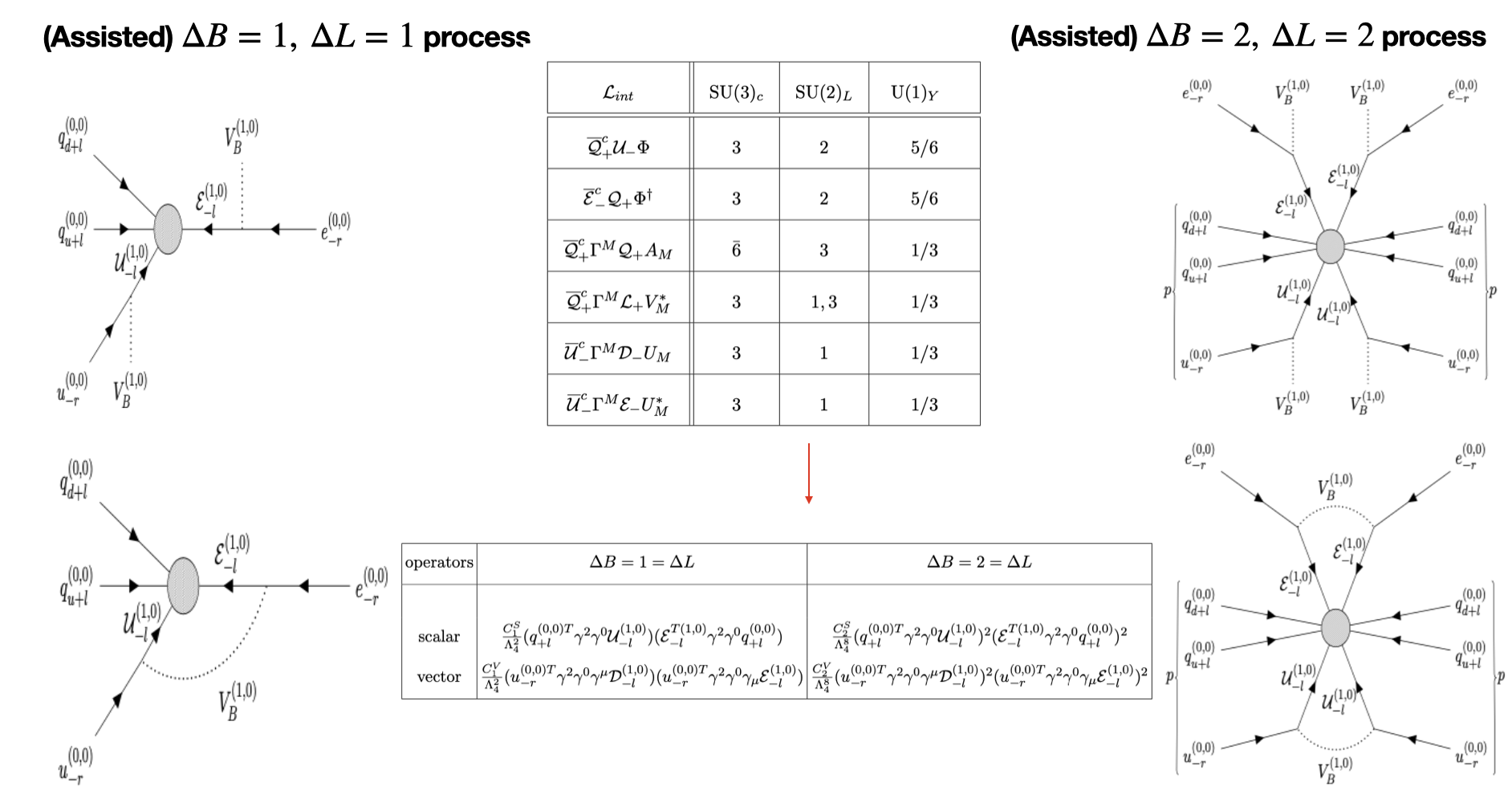
Dr. Mathew Arun Thomas is an Assistant Professor at the Indian Institute of Science Education and Research Thiruvananthapuram (IISER-TVM), specializing in Theoretical Particle Physics. His research focuses on phenomena beyond the Standard Model, including Baryon Number Violation, Extra Dimensions, Effective Field Theory, and Flavour Physics. Education: BSc (Hons) from St. Stephen's College, University of Delhi; MSc and PhD in Physics and Astrophysics from the University of Delhi (supervised by Prof. Debajyoti Choudhury). Postdoctoral work at the Indian Institute of Science (supervised by Prof. Sudhir K Vempati). His recent work explores Dark Matter-assisted Baryon Number Violation processes, such as Hydrogen-antihydrogen oscillation and Proton decay suppression, using six-dimensional orbifolded torus models. He also investigates constraints on Randall-Sundrum models from charge lepton flavour violations and phenomenology of low-energy Flavour Physics. The 15 most recent publications span neutrino oscillations, dark matter phenomenology, warped geometry models, and collider signatures, reflecting his expertise in connecting high-energy theory with experimental observables. Scientific Awards: INSPIRE Faculty Fellowship. He has mentored students like Akshay Anilkumar and Krishnanand N, contributing to projects on Flavour Violations and Cosmological Bounce models. He teaches courses including Quantum Field Theory and Scientific Computation, with a 2023 Mechanics course for 330 students.
Professor Jean Alexandre is a Professor of Physics at King's College London, affiliated with the Department of Physics within the Faculty of Natural, Mathematical & Engineering Sciences. His research focuses on non-perturbative quantum field theory, tunnelling phenomena, exact renormalization methods, and Lorentz symmetry violation. He has held positions including a Leverhulme Trust postdoc and temporary lectureship before his current role. Education: Doctor of Science in Theoretical Physics from University Louis Pasteur, Strasbourg (1998) Master of Physics in Theoretical Physics from École Normale Supérieure de Lyon (1994) Research Interests: Non-perturbative effects in QFT (dynamical mass generation, exact functional methods) Lorentz symmetry violation in particle physics and modified gravity Tunnelling mechanisms, cosmic bounce models, and null energy condition studies Non-Hermitian extensions of the Standard Model and PT-symmetric field theories Key contributions include work on magnetic monopole searches with the MoEDAL experiment at the LHC, finite volume effects in quantum field theory, and dynamical mass generation mechanisms. His recent articles explore topics like scalar high-electric-charge objects, vacuum decay rates, and cosmic bounce scenarios. He has supervised PhD theses on topics such as Lifshitz-type theories and gravitino condensation. Grants and Collaborations: Principal Investigator on Leverhulme Trust project 'Saving the Universe with finite volume effects in Quantum Field Theory' Co-Investigator on EPSRC and STFC-funded projects in particle physics and cosmology Labs/Teams: Active collaborator in the MoEDAL experiment and the Theoretical Particle Physics & Cosmology group at King's College London.
Laura Mersini-Houghton is a Professor of Theoretical Physics and Cosmology at the University of North Carolina at Chapel Hill. She is affiliated with the Gravity, Cosmology, and HEP (GCHEP) theory group and the Institute of Field Physics , supported by the Bahnson Fund. Her research spans three main areas: origins of the universe, dark energy, and quantum black hole physics. Her work includes proposing a quantum landscape multiverse theory to explain the universe's origin, with predictions tested by PLANCK and LHC experiments. She has also demonstrated that Hawking radiation back-reaction prevents singularity formation in collapsing stars. Education : PhD in Physics (University of Wisconsin-Milwaukee, 2000), MSc (University of Maryland-College Park, 1997), Fulbright Scholar (University of Maryland, 1994). Key trends in her recent publications include cosmological tensions, quantum multiverse implications, and time crystal-based dark energy models. She co-authored works on inflationary cosmology and cosmic probes of fundamental physics. Scientific Awards : UWM Distinguished Alumni She has been featured in media coverage and public talks, exploring topics like the arrow of time and cosmic puzzles. Her research integrates theoretical physics, string theory, and observational cosmology, supported by the Bahnson Fund.
Prof. G. Scott Watson is a Professor in the Department of Physics at Syracuse University, affiliated with the College of Arts & Sciences. His research focuses on the interplay between fundamental particle physics and cosmology, particularly early universe cosmology, inflationary models, dark matter/energy, and string theory applications. He holds a Ph.D. in Physics from Brown University (2005) and B.S. degrees in Mathematics and Physics from the University of North Carolina at Wilmington (2000). Key research interests include string phenomenology as a quantum gravity framework, probing inflationary scenarios through cosmic microwave background (CMB) studies, and exploring dark matter origins. He leads major projects like CMB-S4 and contributes to the CMBPol mission concept. Watson has received the American Physical Society Outstanding Referee Award (2021) and serves on high-profile collaborations such as the Inflation Probe Study Analysis Group (IPSAG). Teaching responsibilities include advanced courses like Quantum Field Theory, Relativity and Cosmology, and Quantum Mechanics II. He actively mentors students through independent studies and advises on graduate admissions. Watson has secured significant grants, including a Department of Energy-funded project on theoretical particle physics and cosmology (2013–2025) and NSF support for cosmic acceleration research (2018–2023).