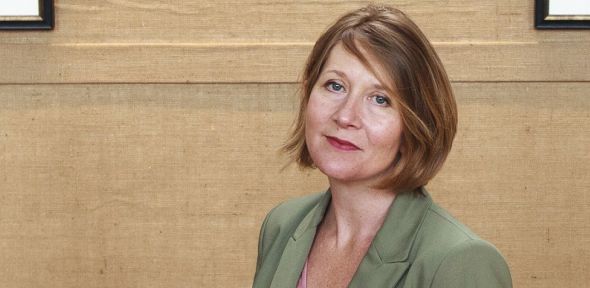
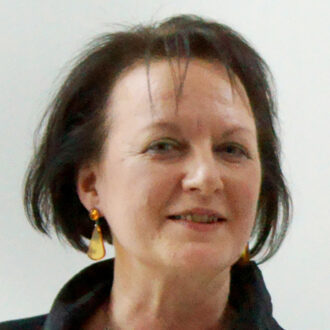
Professor Emma Widdis is a leading scholar at the Faculty of Modern and Medieval Languages and Linguistics at the University of Cambridge, specializing in the intersection of Soviet cinema, ideology, and cultural geography. Her work explores the reeducation of sensory perception through film, early Soviet urban spaces, and the construction of subjectivity via cinematic techniques. Teaches 20th-century Russian/Soviet literature, cinema, and film theory Focuses on sensory engagement, political avant-garde, and urban spatial representation Supervisor for MPhil and PhD students in Slavonic Studies Her recent book Socialist Senses (2017) examines how cinema shaped Soviet perceptions of reality. Her publications span topics like silence in sound film, set design materiality, and costume symbolism in early Soviet cinema. While no formal scientific awards are listed, her research has been supported through institutional grants and collaborations with centers like CRASSH and Cambridge Language Sciences.
Rhenish Friedrich Wilhelm University of BonnGermany
Gül Şen is a Senior Lecturer and Privatdozentin at the Institute of Oriental and Asian Studies, University of Bonn, and also serves as a Lecturer at the University of Heidelberg. Her academic work focuses on premodern Ottoman history, historiography, and the dynamics of dependency, particularly in maritime contexts such as galley slavery and war captivity. She is actively involved in major research programs including the DFG-Priority Program 'Transottomanica' and the Bonn Center for Dependency and Slavery Studies. Her research areas include: Premodern Ottoman historiography and narrative strategies Legitimacy of rule and political transitions Maritime unfree labor and galley slavery War captivity and captivity narratives in the 18th century Dependency and asymmetrical power relations in the early modern Mediterranean Her recent publications reveal a strong thematic trend centered on the interplay between narrative construction and social power, particularly in contexts of slavery and captivity. She investigates how historical actors used storytelling to assert legitimacy, cope with crises, and negotiate identity. Her work bridges literary analysis with social history, offering nuanced understandings of agency within systems of dependency. She frequently collaborates with leading scholars like Stephan Conermann and contributes to major edited volumes and series in Ottoman studies. Her scientific awards include: DAAD Award for outstanding academic achievements (2012) Postdoctoral Scholarship from the Fritz Thyssen Foundation (2012–2013) Postdoctoral Fellowships at the Annemarie Schimmel Kolleg (2015–2016, 2018–2019) Postdoctoral Scholarship from the University of Bonn (2019–2020) She has supervised numerous B.A. and M.A. theses at the University of Bonn and Heidelberg and has secured third-party funding, including a DFG project (€192,000) from 2016–2018 and Fritz Thyssen Foundation grants. She is co-editor of the 'Ottoman Studies' and 'Otto Spies Memorial Series' book series, and holds leadership roles in the Society for Turkic, Ottoman and Turkish Studies (GTOT) and the International Association for Ottoman Social and Economic History (IAOSEH). Her academic activities are deeply embedded in collaborative and interdisciplinary research environments. She is affiliated with the Bonn Center for Dependency and Slavery Studies and contributes to the DFG-Priority Program 'Transottomanica,' where she examines mobility dynamics and captivity narratives. Her work is supported by a strong network of international collaborations and editorial engagements.
Alaina Lemon is a Professor of Anthropology at the University of Michigan, affiliated with the College of Literature, Science, and the Arts (LSA). She serves as Director of Undergraduate Studies in Anthropology and holds affiliations with the Center for Russian, East European, and Eurasian Studies (CREES), the Weiser Center for Europe and Eurasia, and the Interdepartmental Program in Anthropology and History. Her research focuses on socio-cultural anthropology, performance studies, and visual culture, with expertise in Russia, the Romani diaspora, and post-Socialist states. Education: BA in Anthropology (University of Wisconsin, 1987), MA (University of Chicago, 1988), and PhD (University of Chicago, 1996). Notable awards include the Wayne S. Vucinich Book Prize (2001), Heldt Book Prize (2001), and a 2023 visiting scholar position at the École des Hautes Études en Sciences Sociales (Paris). Her work bridges historical and contemporary issues, exploring themes like phatic labor, media infrastructures, and affective politics. Recent projects include editing the documentary Tremors (2023) and researching Soviet-era moral projects through studies of Moscow’s Metro and canine-human interactions. Lemon’s interdisciplinary approach integrates performance studies, linguistic anthropology, and critical race theory to analyze cultural dynamics in transitional societies. Grants include a 2019-2024 University of Michigan Office of Research grant for film collaboration and a 2002-2003 International Research and Exchanges Board fellowship. She has authored influential books such as Between Two Fires (2000) and Technologies for Intuition (2017), and her films document Romani experiences and urban cultural phenomena.
Svetlana Evdokimova is a Professor of Slavic Studies and Comparative Literature at Brown University, where she has been a faculty member since 1991. She previously taught at Yale University and holds a PhD in Slavic Languages and Literatures from Yale University and an MA in French Language and Literature from St. Petersburg University. She is a leading scholar in Russian literature of the 19th and 20th centuries, with a focus on Pushkin, Dostoevsky, Tolstoy, and especially Chekhov. Her research explores the intersections between literature, philosophy, history, and aesthetics. She has published extensively on Russian Romanticism, the Russian intelligentsia, and the cultural significance of St. Petersburg. Her major works include Pushkin's Historical Imagination (1999) and Staging Existence: Chekhov's Tetralogy (2023), with a forthcoming monograph A Genius of Culture: The Chekhov Phenomenon . The recent publications reflect a deep engagement with Chekhov’s aesthetics, corporeality, and cultural philosophy, as well as Dostoevsky’s dialogues with Nietzsche and postmodern thought. Her work frequently examines the ethical dimensions of literature and the interplay between fiction and historical consciousness. Choice Outstanding Academic Title (2004) for Alexander Pushkin's Little Tragedies: The Poetics of Brevity NEH Research Fellowship (1995–1996) IREX Research Fellowship (1995) The Bogliasco Foundation Residency Fellowship (2018) Paul C. Gignilliat Fellowship, Yale University (1988–1989) Council on Russian and East European Studies Summer Fellowship, Yale University (1985) She has advised numerous graduate students and has secured competitive research grants from the National Endowment for the Humanities, IREX, and Brown University. She is actively involved in scholarly communities, including the Modern Language Association, AATSEEL, and author-specific societies such as the North American Chekhov Society and the North American Dostoevsky Society. She teaches courses on Russian Romanticism, major novelists, theater, and cultural history.
Michaela Bürger-Koftis serves as Associate Professor in the Department of Modern Languages and Cultures at the University of Genoa's School of Humanities. Her teaching portfolio includes advanced courses such as German Literature and Culture III , German Linguistics (LM) , and Cultures of German-speaking Countries across undergraduate and master's programs focused on teaching, publishing, and intercultural communication. Her research investigates polyphonic structures in multilingual literature, with emphasis on German-Russian linguistic intersections and autobiographical narratives. Key projects explore lyrical diary forms and creative writing through the lens of polyphony, examining how multilingual expression shapes narrative identity and literary innovation in contemporary works. Recent publications demonstrate consistent focus on the Polyphony research initiative, revealing evolving methodologies in multilingual creativity and writing. This work establishes frameworks for analyzing cross-linguistic literary production while documenting the project's development from 2018-2023. No scientific awards are documented in available sources. While specific student advisees remain unlisted, Bürger-Koftis contributes to academic governance as a member of the School of Humanities Library Board. Her collaborative research with institutions like Catania University demonstrates institutional partnership development within multilingual literary studies. The Polyphony project functions as an interdisciplinary research hub with dedicated web infrastructure, facilitating scholarly exchange on multilingual writing practices and serving as a model for digital humanities collaboration in literary studies.
Sho Konishi serves as Director of the Nissan Institute of Japanese Studies and Associate Professor in Modern Japanese History at the University of Oxford, holding dual appointments in the Faculty of History and the Oxford School of Global and Area Studies. His interdisciplinary work bridges Japanese studies with transnational intellectual history, focusing on non-imperial connections between Japan, Russia, and global networks. Undergraduate studies completed as a U.S. military school cadet after extensive coursework in Russia Georgetown University: Philosophy and International Affairs University of Chicago: Ph.D. in History (Theology and History) Postdoctoral fellowship at Harvard University Konishi's research centers on intellectual and cultural history with emphases on transnational encounters, anarchist thought, and the history of science. He investigates non-imperial knowledge production across 19th-20th century Japan, Russia, and Eastern Europe, with particular focus on symbiosis theory, linguistic democracy, and the role of nonverbal communication in epistemology. His work challenges Western-centric modernity narratives through examinations of anarchist natural science and transnational emotional histories. His publications reveal consistent engagement with alternative epistemologies and cross-cultural exchanges, spanning transnational history, the history of science, and cultural studies. Key themes include Japan-Russia intellectual networks, anarchist cooperative movements, and non-imperial frameworks that reposition Japan within global knowledge systems rather than colonial paradigms. ICAS Book Prize 2023 – Humanities for Japan’s Russia: Challenging the East-West Paradigm Konishi contributes to international academic governance as Advisory Board Member for the Esperantic Studies Foundation, External Faculty at the University of Chicago Stevanovich Institute on the Formation of Knowledge, and International Advisory Board Member for Manchester University Press's Anarchist Studies Series. His cultural impact extends to architectural projects like the Venice Biennale's Philippine Pavilion through 'Symbiogenesis: The Art of Bayanihan Architecture'.
Elizabeth Blake is an Associate Professor of Russian and Division Coordinator in the Department of Languages, Literatures and Cultures at Saint Louis University's College of Arts and Sciences. Her research focuses on 19th-century Russian literature, particularly Dostoevsky and Tolstoy, with emphases on empire studies, exile cultures, and religious dialogues between Russian Orthodoxy and Polish/French Catholicism. She has published two major books: *Dostoevsky and the Catholic Underground* (2014) and *Travels from Dostoevsky’s Siberia* (2019). Her work bridges literary analysis with historical context, examining themes like human rights, cultural mobility, and gender roles. Blake teaches courses ranging from language proficiency to advanced topics in Russian literature and cinema, including *Russian and Soviet Cinema* and *Dostoevsky Through the Centuries*. She has received numerous grants including Mellon and Fulbright-Hays awards for research in Russia and Poland. Her academic career includes extensive reviews for journals like *Slavic Review* and *Canadian Slavonic Papers*, alongside professional involvement with organizations such as the North American Dostoevsky Society. Blake’s teaching excellence is recognized through awards like the Spirit of the Billiken Award (2016), reflecting her impact on both scholarship and student mentorship.
Ksana Blank is a Senior Lecturer at Princeton University’s Department of Slavic Languages and Literatures. She coordinates the Russian Language Program and directs the Princeton-in-Petersburg Program, fostering academic exchange and interdisciplinary research. With a PhD in Russian Literature (Columbia University, 1997) and a BA in French Philology (St. Petersburg State University, 1979), her academic career spans over two decades at Princeton, preceded by teaching roles at Hunter College and Middlebury College Russian Summer School. Education: PhD, Russian Literature, Columbia University (1997) BA, French Philology, St. Petersburg State University (1979) Her research centers on Russian literature, emphasizing stylistic analysis and interdisciplinary connections with music, visual arts, folklore, and religious philosophy. Notable works include studies on Dostoevsky’s dialectics, Gogol’s The Nose , and the interplay between Russian modernism and Western art movements. She has authored multiple books and articles, many translated into Russian, and has published in academic journals across Russia, Europe, and China. Recent publications explore Dostoevsky’s paradoxes, Gogol’s linguistic innovation, and the intersection of Russian literature with music (Shostakovich), art (Malevich), and philosophy. Her 2023 book Парадоксы классики expands traditional interpretations of classic works through interdisciplinary lenses, while her 2021 The Nose guide deciphers Gogol’s wordplay and its narrative function. Earlier works address Tolstoy’s spiritual crisis and Bakhtinian dialogism in Russian literary theory. While no scientific awards are listed, her contributions to pedagogy include advanced Russian language courses and graduate-level Tolstoy studies. She currently works on Leo Tolstoy’s The Prisoner of the Caucasus and teaches courses on Russian literature, spirituality, and translation.
Rachel Applebaum is Associate Professor of History at Tufts University specializing in Soviet and Eastern European history, the global Cold War, and transnational studies. Her award-winning book 'Empire of Friends' examines Soviet-Czechoslovak relations through the lens of socialist internationalism. Current research investigates Russian language politics during and after the Cold War, tracing Soviet efforts to establish Russian as a global language and its legacy in Putin's 'Russian World' concept. The project has received a National Endowment for the Humanities Fellowship. Teaching covers Russian history surveys, Eastern Europe, global communism, Stalinism, and Cold War politics. Awards include the Radomír Luža Prize for Austrian/Czechoslovak history and ASEEES First Book Subvention Award.
Jeffrey Rossman is an Associate Professor at the University of Virginia , affiliated with the Department of History and serving as Director of the Center for Russian, East European, and Eurasian Studies . His work bridges historical analysis with cultural and literary studies, focusing on Russia/USSR, Modern Europe, Communism, Genocide, Espionage, and Jewish Cultural Studies. Education: Ph.D., University of California, Berkeley, 1997 A.B., Harvard University, 1989 His research explores worker resistance under Stalin, the intersection of Jewish identity and German literature, and the role of translation in cultural exchange. He has authored key works on Soviet labor movements and Holocaust memory, blending historical narratives with literary theory. Jeffrey’s recent publications and Google Scholar contributions highlight trends in 20th-century European history , Yiddish-German literary dynamics , and translation as a tool for identity formation . His work spans comparative literature, cultural memory, and diaspora studies, emphasizing interdisciplinary approaches. Scientific Awards: ACLS Collaborative Research Fellowship (2013-15) Harry Frank Guggenheim Foundation Research Grant (2013-15) Multiple grants from the University of Virginia’s College of Arts & Sciences and Faculty Summer Research Grant program Fulbright-Hays and IREX fellowships for international research As an educator, Rossman has taught courses such as Genocide: A Global History and Stalinism , mentoring students in historical and literary analysis. His lab, the Center for Russian, East European, and Eurasian Studies, fosters research on Soviet history, Jewish cultural studies, and transnational literary exchange.
Dr. Anna A. Berman serves as Associate Professor of Nineteenth-Century Russian Literature and Culture within the Slavonic Studies section of the Faculty of Modern and Medieval Languages and Linguistics at the University of Cambridge, where she is also a Fellow of Clare College. Previously, she held an Associate Professorship at McGill University's Department of Languages, Literatures, and Cultures in Montreal, Canada. Her academic credentials include: B.A. from Brown University M.Phil. from the University of Cambridge Ph.D. from Princeton University Dr. Berman's research centers on nineteenth-century Russian and English novels, with specialized focus on family structures, kinship dynamics, love, and marriage. She extensively examines the intersection of scientific thought (particularly Darwinism and Mechnikov's phagocyte theory) with literary production, alongside operatic adaptations of Russian classics. Her current scholarly mission prioritizes recovering the legacy of marginalized nineteenth-century Russian women novelists, especially Nadezhda Khvoshchinskaya and Evgenia Tur. Her publication trajectory reveals sustained investigation into familial relationships within nineteenth-century literature, with sibling dynamics constituting a dominant theme across both Russian and English novels. She has pioneered critical analysis of science-literature dialogues in Russian contexts while recently shifting toward feminist recovery projects that challenge canonical exclusions in Russian literary history. Dr. Berman actively supervises postgraduate research, welcoming MPhil and PhD candidates pursuing topics aligned with her expertise in nineteenth-century Russian literature, comparative family narratives, and science-literature intersections. Within Cambridge's academic ecosystem, she contributes to the Slavonic Studies research community and participates in the Cambridge Centre for Central and East European Studies (CamCCEEES), advancing collaborative scholarship on Eastern European cultural production.
Zaur Gasimov is a Lecturer at Johannes Gutenberg University Mainz and currently serves as DAAD Departmental Coordinator and Co-Head at the Faculty of Economics and Administrative Sciences, Turkish-German University. He holds a habilitation in Modern History and Eastern European History, with a focus on Eastern European History, political science, and sociology. Education : B.A. in International Relations from Baku State University; M.A. from Catholic University of Eichstätt-Ingolstadt; Doctorate in Eastern European history Research : Concentrates on Russian-Turkish relations, nationalism in Eastern Europe, cultural transfer processes, and historical narratives. His habilitation thesis analyzed Polish-Turkish anti-Soviet alliances. Publications : Authored monographs on Prometheism, Azerbaijani historiography, and Russification policies. Collaborated on comparative studies of cultural transfer and Ottoman-Russian entanglements.
Odd Arne Westad is the Elihu Professor of History at Yale University, specializing in modern international and global history with a focus on East Asia since the 18th century. He previously held positions at Harvard University and the London School of Economics. His research bridges Cold War studies, empire/colonialism, and China's economic reforms. Education: BA in History, Philosophy, and Modern Languages (University of Oslo) Graduate Degree in US/International History (University of North Carolina at Chapel Hill) Research Interests: Global Cold War dynamics and post-colonial transformations China’s international history and imperial trajectories Economic reforms in late 20th century China and their global impact Key Publications: The Cold War: A World History (2017) Restless Empire: China and the World Since 1750 (2012) The Global Cold War (2007) Awards: Fellow of the British Academy Fellow of multiple national academies Professional Activities: Active in global history networks, advising doctoral students on Cold War and Asian history. Teaches courses on empire, decolonization, and modern East Asia.
The Courtauld Institute of Art, University of LondonUnited Kingdom
Sarah Wilson is Professor of Modern and Contemporary Art at The Courtauld Institute of Art, University of London. She has been a faculty member since 1982 and has held leadership roles including Head of the Modern and Contemporary Section (2005-2008) and Head of Diploma programmes (2014-2015). She is internationally recognized as the English-language expert on Post-War European art and has held visiting positions at Paris-IV Sorbonne and the University of Versailles-Saint Quentin. Wilson was educated at the University of Oxford (BA English Literature) and at the Courtauld Institute of Art (MA and PhD). She was awarded the title Chevalier des Arts et des Lettres in 1997 for services to French art and culture, and received the International Association of Art Critics' Award for Distinguished Contribution to Art Criticism in 2015. She has held visiting professorships at Paris-IV Sorbonne (2002-2004), École Nationale Supérieure des Beaux-Arts (2006-2007), and University of Versailles-Saint Quentin (2012-2013). Sarah Wilson's research spans post-war and Cold War European art, contemporary global art practices, and the intersections between conceptual art, political theory, and visual culture. Her work extends from European avant-gardes to contemporary art across the former Soviet Union and Asia. She is particularly known for her expertise in French Stalinism, neo-Marxism and the arts, and conceptual art practices beyond the 'first world.' Wilson has initiated important academic programs such as the 'Global Conceptualism' MA course with Boris Groys, which connects Anglo-American conceptual art with practices from Moscow and beyond. She has also expanded her research to include modern and contemporary Asian art since 2013. Her extensive publication record shows a consistent focus on European art history with increasing engagement with global perspectives, particularly Asian contemporary art since 2013. Wilson's scholarship bridges art historical analysis with philosophical inquiry, especially regarding French theory and its visual manifestations. Her major publications include 'Paris, Capital of the Arts, 1900-1968' (2002) and 'The Visual World of French Theory: Figurations' (2010), with a second volume 'The Visual World of French Theory II: Interventions' in preparation. Chevalier des Arts et des Lettres (1997) International Association of Art Critics' Award for Distinguished Contribution to Art Criticism (2015) Marie Curie Actions – RBUCE-UP, Chaire d'excellence, Université de Versailles-Saint Quentin (2012-2013) Professor Wilson has supervised 36 PhD students to completion and over 230 MA dissertations, creating what she describes as 'a unique English-language archive in the field of post-1945 European and global art history.' Her former students now hold prominent positions in major institutions worldwide including Tate, the British Museum, Design Museum, Scottish National Gallery of Modern Art, British Council, Centre Georges Pompidou, Kunsthalle Bremen, and universities across Europe and North America. She has received significant research funding including a Marie Curie Actions grant for her project 'Globalisation before globalisation: avant-gardes, academies, revolutions.' Wilson is actively involved with the Courtauld alumni's former East Wing Collection (now VS1, Vernon Square) and has contributed to the Research Forum's programmes. She has curated numerous exhibitions including the 'Global Conceptualism'-related projects and served on the curatorial team of the 1st Asian Biennale (China-Guangzhou) in 2014. Her commitment to women artists has led to early exhibitions of artists like Zofia Kulik and Alina Szapocznikow before their international prominence. She is involved with CCRAC (Cambridge-Courtauld Russian Art Centre), Calvert 22, and Pushkin House in London, reaching out to Russia and Eastern Europe.
Dr. Sarah Young is an Associate Professor at the School of Slavonic and East European Studies (SSEES), University College London. Her academic journey includes a BA (Honours) in Russian and French from Trinity College, Cambridge, followed by an MA in European Languages and Culture at the University of Manchester and a PhD in Russian Literature from the University of Nottingham. Her research focuses on Russian literature, particularly Dostoevsky’s narrative structures, prison narratives, and the history of penal systems in Russia. She has held a Leverhulme Fellowship and previously taught at the University of Leeds and the University of Toronto. Her work explores themes like Siberian exile, political imprisonment, and revolutionary memoirs, as seen in her book Writing Resistance: Revolutionary Memoirs of Shlissel’burg Prison, 1884-1906 . She also investigates Gulag literature, societal impacts of quantum technologies, and inclusive STEM education for neurodivergent students. Her blogs ( www.sarahjyoung.com ) and websites ( Mapping Petersburg , Shlisselburg ) further her interdisciplinary research. Her scholarly contributions span literary criticism, historical analysis, and policy studies. Awards include the Leverhulme Special Research Fellowship (2001-2003). She actively engages in academic mentoring and has published on research practices across disciplines like environmental engineering and marine conservation.