University of Illinois Urbana-ChampaignUnited States
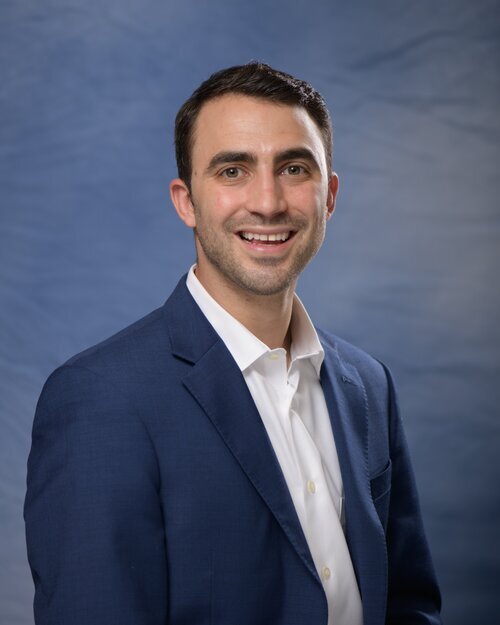
Salvatore Callesano is an Assistant Professor of Hispanic Linguistics at the University of Illinois Urbana-Champaign (UIUC), affiliated with the Department of Spanish and Portuguese and the College of Liberal Arts & Sciences. His research focuses on sociolinguistics, particularly bilingual communities in the U.S., language perception, and digital media representations of bilingualism. He employs both quantitative and qualitative methods to investigate how language variation interacts with identity, media, and social structures. Dr. Callesano collaborates on Project 16 of the Asociación de Lingüística y Filología de América Latina, addressing linguistic aspects of Latin American diaspora communities. His work bridges traditional sociolinguistic inquiry with modern digital practices, analyzing how social media shapes perceptions of language use among Latinx populations. Recent research highlights include studies on code-switching in Miami's linguistic landscape, dialect perception, and the role of media in mediating language attitudes. His publications span peer-reviewed articles and book reviews, emphasizing empirical rigor and interdisciplinary connections between language, culture, and society.
Rutgers, The State University of New JerseyUnited States
Jason Cortés is an Associate Professor and Program Director in American Studies at Rutgers University-Newark, with affiliations in the Department of Classical and Modern Languages and Literatures, Africana Studies, Spanish and Portuguese Studies, and the Program in Women's and Gender Studies. His research focuses on Caribbean, US Latina/o, and Spanish American literatures through the lenses of cultural studies and critical theory. Education: Ph.D., Spanish American Literature, Pennsylvania State University M.A., Comparative Literature, PSU B.A., Comparative Literature, University of Puerto Rico (Mayaguez, PR) His scholarship explores intersections of masculinity, authorship, and cultural identity in Latino-Caribbean narrative. Current projects include Loving Death: The Necrophilic Imagination in Latin/o America and Tales of Disposability: Puerto Rico in the Post-911 Era .
Arthur Weststeijn is an Assistant Professor in Political History at Utrecht University, specializing in the history of the Dutch Republic and its colonial empire, the history and contemporary politics of Italy, and the history of Spain and Latin America. He is affiliated with the Department of History and Art History within the Humanities faculty and is part of the Research Institute for History and Art History, focusing on International and Political History. Dr. Weststeijn's educational background includes: PhD in History, European University Institute, Florence (2010) RMA in History, European University Institute, Florence (2006) MA in Philosophy, University of Amsterdam (2005) MA in History, University of Amsterdam (2004) Erasmus Exchange, Universidad de Sevilla (2000-2001) His research focuses on the intellectual history of power, particularly examining ideas that express and contest political authority through two main themes: colonialism (how ideas have shaped European colonialism and resistance against it) and republicanism (how resistance to autocratic rule has given rise to ideas of liberty, citizenship, and democracy). His work spans early-modern Dutch colonialism, anticolonial thought, the history of democracy, and connections between ancient and modern forms of settler colonialism. He has published extensively on early modern republicanism, the political uses of classical heritage, and the making of modern Italy. Weststeijn's scholarly output demonstrates a consistent focus on the intersections between political thought, colonial history, and republican theory. His work often examines how historical ideas continue to shape contemporary political discourse, particularly regarding democracy, citizenship, and colonial legacies. He frequently engages with both European and transatlantic intellectual traditions, showing particular expertise in Dutch and Italian political thought. His notable awards and fellowships include: Fellow, Huntington Library, San Marino, California (Summer 2022) Fellow, John Carter Brown Library, Providence, Rhode Island (Spring 2019) Director of Historical Studies, Royal Netherlands Institute in Rome (2011-2017) Dr. Weststeijn has served as a visiting researcher at prestigious institutions including the Cambridge Centre for Political Thought, University of Southern California, University of Wisconsin at Madison, and University of Padua. He frequently appears as an expert commentator on Italian culture and politics in Dutch media and maintains an active public intellectual presence. He is involved in multiple research initiatives including the IOS research themes on Contesting Governance, Futures of Democracy, and Longtermism and Institutional Change. His work often involves interdisciplinary collaboration with archaeologists, classicists, and scholars from various humanities disciplines.
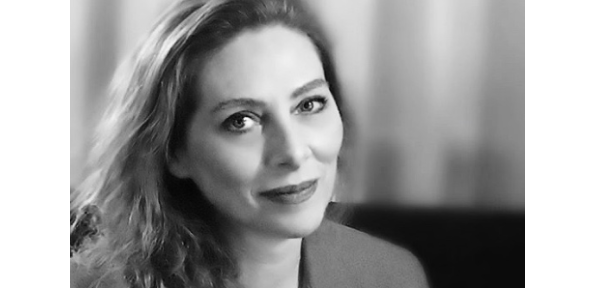
Dr. Julia Costa López is an Assistant Professor (tenured) in History and Theory of International Relations at the Department of International Relations and International Organisation, Faculty of Arts, University of Groningen. Her work bridges international relations, history, and political thought, focusing on how historical frameworks shape modern disciplinary concepts. PhD from University of Oxford Lecturer at St Hilda's College Fulbright scholar at University of Denver's Josef Korbel School Graduate studies at University of Cambridge Research spans medieval political authority, sovereignty emergence, racialized medievalisms in extremism, and translation politics in global scholarship. Key projects include Routledge Handbook of Historical International Relations (2021) and the Oxford Handbook of History and International Relations (2023). Publications address Eurocentrism, conspiratorial ideology, and ritual's role in authority production. Scientific contributions appear in Cambridge Review of International Affairs , International Organization , and European Journal of International Law . Awards include the Fulbright scholarship. Recent work explores terraqueous relations and premodern world conceptualizations, challenging simplistic land-sea dichotomies in IR.
Rhenish Friedrich Wilhelm University of BonnGermany
Karoline Noack is a full Professor of Ancient American Studies and Ethnology at the Institute of Archaeology and Cultural Anthropology , University of Bonn, where she also directs the BASA Museum (Bonn Collection of the Americas). She has held this position since 2009 and is a leading scholar in Andean studies, museum ethnology, and colonial Latin American history. Her research interests are deeply interdisciplinary, focusing on: The Inca state and early colonial Andes, particularly in Peru, Bolivia, and Mexico Transculturation and gender in colonial contexts The history of ethnological knowledge, especially in the GDR Museum studies, collection ethics, and the decolonization of ethnographic museums Material culture and provenance research Her recent scholarly output centers on dependency and mobilization in the Inca Empire, the global history of resources (like cotton and coca), and the role of museums in knowledge production. She has led major projects such as 'Balancing the Center and the Local' in Cochabamba and the KOSMOS collaborative project on object-based knowledge. Her publications span museum ethics, colonial legal history, and transcultural exchange. Karoline Noack has received significant recognition, including: Membership in the German Archaeological Institute Fellowships from the Volkswagen and Gerda Henkel Foundations Membership in the DFG Review Board Leadership roles as Spokesperson for the Transdisciplinary Research Area 'Present Pasts' and Chair of BASS e.V. She advises and mentors students in ethnology and archaeology, and her work involves extensive collaboration with international scholars and institutions. Her research is supported by major German funding bodies and is published in leading academic venues. She is also deeply involved in public engagement through museum curation and exhibitions.
Professor Helena Sanson is a Full Professor of Italian, History of Linguistics, and Women's Studies at the University of Cambridge , where she is also a Fellow of Clare College and serves as Postgraduate Teaching and Examining Officer for the Italian Section. She joined Cambridge in 2005 after teaching at University College London (1998-2003) following her British Academy Postdoctoral Fellowship. PhD from University of Reading (2002) Her interdisciplinary research focuses on the intersection of Italian linguistic history , literary culture , and gender studies from the Renaissance to post-Unification period. Particular emphasis includes women's contributions to linguistic thought , conduct literature analysis , and female roles in translation networks . Her work examines how women navigated language standardization, educational access, and literary production across social strata. Recent projects include Leverhulme-funded research on women's linguistic experiences in 18th-19th century Italy and co-edited volumes on transnational travelers' accounts and early modern female education . She founded the Women and Gender in Italy (1500-1900) book series and the journal Women Language Literature in Italy . Scientific awards include: British Academy Postdoctoral Fellowship Leverhulme Research Fellowship Philip Leverhulme Prize CRASSH Early Career Fellowship Isaac Newton Trust grant Senior Visiting Fellowship at University of Bologna She supervises graduate research in topics spanning women's writing , linguistic thought , translation history , and cultural marginalization in 16th-20th century Italy. Her work bridges philology, literary criticism, and social history through rigorous textual analysis.
Wendy W Wolford is the Robert A. and Ruth E. Polson Professor of Global Development at Cornell University, affiliated with the College of Agriculture and Life Sciences. She also serves as Vice Provost for International Affairs, overseeing global partnerships including the Global Hubs and Grand Challenges initiatives. Her research focuses on land governance, social movements, and agrarian societies, with extensive fieldwork in Brazil, Ecuador, and Mozambique. Key projects include analyses of the Brazilian MST landless movement and colonial legacies in Mozambican agriculture. Wolford earned her PhD from UC Berkeley (2001) and has authored/co-edited seminal works like This Land is Ours Now (2010) and The Social Lives of Land (2024). She has held prestigious fellowships, including a Fulbright (2016–17), and her work addresses critical issues like global land grabbing, participatory democracy, and environmental justice. Teaching spans undergraduate and graduate levels, emphasizing critical analysis in development theory and political ecology. Recognition includes awards for internationalizing curricula and advancing global development research. Her outreach includes curricula development on Brazilian rural development and multimedia case studies on sustainable food systems. Current research explores the Plantationocene framework and Mozambique’s agrarian histories.
Barbara Zanchetta is a Senior Lecturer in the Department of War Studies at King’s College London, affiliated with the Faculty of Social Science & Public Policy. She specializes in Cold War history, American foreign policy, and transatlantic relations. Her work examines US-Soviet détente, nuclear arms control, and the strategic implications of post-Cold War policies. She is the author of The Transformation of American International Power in the 1970's and co-author of Transatlantic Relations since 1945 . Currently, she is researching US policies toward the Persian Gulf and their role in the collapse of the Soviet Union. Her teaching includes courses on international history, US national security, and the War on Terror. She is affiliated with the Sir Michael Howard Centre for the History of War, the Latin American Security Research Group, and the Centre for Grand Strategy. Her research explores the intersections of diplomacy, conflict, and security policy, with a focus on Cold War legacies and modern geopolitical challenges. Zanchetta has organized international conferences, including a hybrid event in Paris on the consequences of the Cold War’s end. Her commentary on contemporary issues, such as NATO’s expansion and Russia’s aggression in Ukraine, reflects her expertise in historical and strategic analysis.
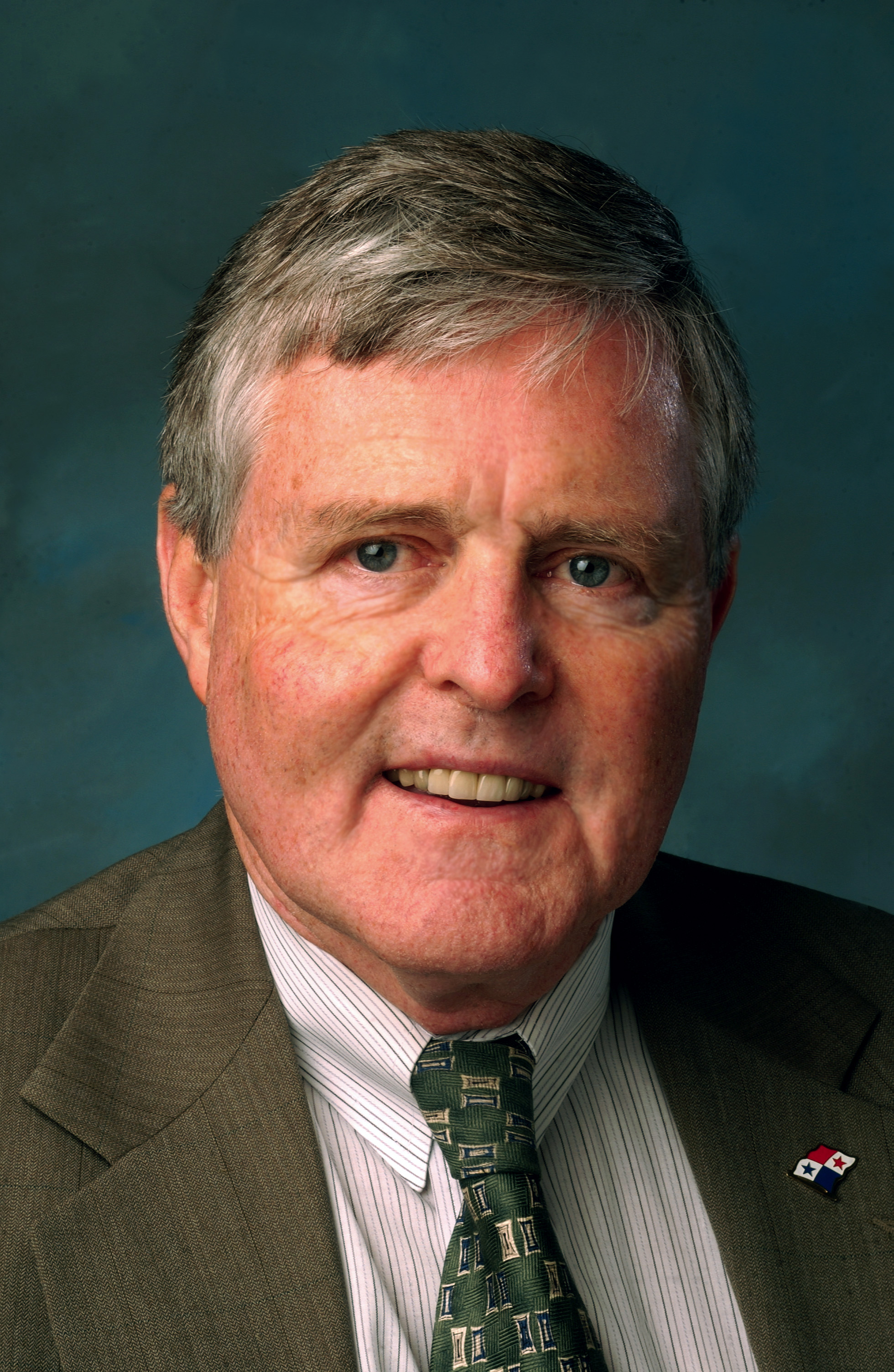
Michael L. Conniff is Professor of History at San José State University, where he previously directed the Global Studies Initiative. He holds a Ph.D. from Stanford University and specializes in modern Latin American history, with particular expertise in Panama-US relations and the African diaspora in the Americas. His research examines transnational relationships, historical development patterns, and sociopolitical dynamics in Latin America. Dr. Conniff has authored or co-authored several influential books including A History of Modern Latin America , Africans in the Americas , and Panama and the United States . With extensive international experience including multiple Fulbright fellowships and Peace Corps service, Dr. Conniff brings global perspective to his teaching and research on inter-American relations.
Martin Volk is a Full Professor of Computational Linguistics at the University of Zurich, with a dual affiliation to the Department of Informatics since 2019. He holds a PhD from the University of Koblenz and has held academic positions at institutions including Stockholm University (part-time from 2008-2011), Zurich University of Applied Sciences, and the University of Georgia. His research focuses on grammar engineering, machine translation evaluation, multilingual text analysis, and cross-language information retrieval. Education : Born in Cochem, Germany Studied Computer Science and Computational Linguistics at EWH University, Koblenz Master's in Artificial Intelligence at the University of Georgia (Fulbright Scholar) PhD in Computational Linguistics from the University of Koblenz Research Interests : His work emphasizes data-driven NLP methods, including corpus-based approaches, parsing technologies, and the application of machine learning to historical and multilingual texts. Key focuses include: Machine translation systems and evaluation frameworks Grammar testing environments (e.g., GTU) OCR and digitization of historical documents (e.g., Gothic script) Development of parallel corpora for linguistic research Projects : SMULTRON: Multilingual parallel treebank project Bullinger Digital: Historical document digitization initiative Text+Berg: Digital Humanities project for alpine textual heritage EU-funded MuchMore (cross-language medical IR) Grants & Collaborations : Recipient of grants from the Swiss National Science Foundation, EU projects, and industry partnerships (e.g., Siemens, Xerox). His work integrates academic and industrial perspectives in NLP tool development. Labs & Teams : Leads research teams in the Institute of Computational Linguistics at UZH, focusing on projects like the Zurich Parallel Corpus Collection and MODERN (modeling discourse for MT).
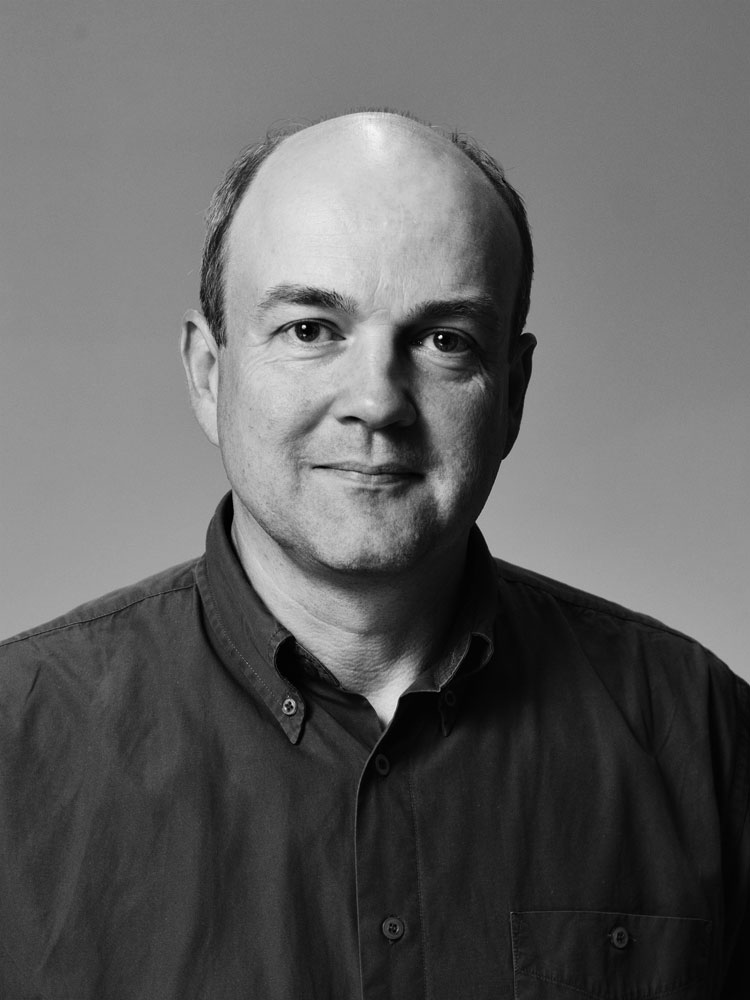
Pablo Meninato is an Associate Professor at the Temple University Tyler School of Art and Architecture , specializing in the intersections of architecture, urbanism, and social change in Latin America. Doctor of Philosophy, Architecture (Universidade Federal do Rio Grande do Sul, 2015) Master of Architecture (University of Pennsylvania, 1988) Diploma of Architect (Universidad de Belgrano, 1985) His research explores how architectural practices and urban planning can catalyze social transformation, particularly in Latin American contexts. Key themes include informal settlements , placemaking , and critical architectural theory . Meninato’s recent publications include On Streets (2025), Urban Labyrinths (2024), and Informality and the City (2022), reflecting his focus on urban design, social equity, and architectural history. Keywords across his work span Architecture , Urban Studies , and Social Impact . Scientific Awards Fulbright US Scholar Award (2024-2025) Presidential Humanities and Arts Research Program (2019) Faculty Dean’s Grant (2019) Summer Research Grant (2018) X BIAU Madrid Biennale Doctoral Dissertation Award (2016) Meninato has practiced and taught in Philadelphia, Buenos Aires, and Monterrey, Mexico, and serves on the Philadelphia Chapter of the Society of Architectural Historians. His essays appear in architectural magazines and journals, addressing urban informality and design theory.
Kirsten Weld is a Professor of History at Harvard University, affiliated with the Faculty of Arts and Sciences. Her work focuses on modern Latin America, particularly struggles over inequality, justice, historical memory, and social inclusion. She holds a BA from McGill University and a PhD from Yale University. Her research has been recognized with prestigious awards, including the WOLA-Duke Human Rights Book Award (2015) and the Latin American Studies Association’s Best Book Award (2016). Her first book, *Paper Cadavers: The Archives of Dictatorship in Guatemala* (2014), examines the role of archives in shaping historical narratives during Guatemala’s civil war. Her current project, *Ruins and Glory: The Long Spanish Civil War in Latin America*, explores the war’s legacies in the Americas. She teaches courses on Latin American history, U.S.-Latin American relations, archival theory, and historical methods. Weld’s publications span journals like *Hispanic American Historical Review* and *Dissent Magazine*, addressing topics such as Cold War dynamics, memory politics, and surveillance. Her work bridges historical scholarship with activism, emphasizing archives as tools for justice and accountability. Her awards reflect her contributions to human rights scholarship and historical methodology. Weld’s research often intersects with contemporary issues, including post-conflict justice and the ethical use of archival materials.
Rebecca Herman is an Associate Professor in the History Department at the University of California, Berkeley. As a historian of the Americas, her research spans environmental politics, US military basing in Latin America during World War II, and transnational environmental organizing in decolonizing contexts. Current research: Antarctic governance and sovereignty in international borderless zones Secondary research: Latin American engagement with sustainable development and global environmentalism in the 1980s-90s Her work examines tensions between national sovereignty and global governance, particularly through case studies involving Argentina, Chile, and Panama. She is writing a book analyzing competing visions for Antarctica's future resource management in the context of decolonization. 50% of her recent publications focus on Latin American environmental politics, including a 2024 Environmental History article on Greenpeace's Buenos Aires office and a 2024 chapter exploring colonial legacies in Antarctic governance. Other works analyze US-Latin America relations during World War II and Cold War-era global governance frameworks. National Endowment for the Humanities Fellowship American Society for Environmental History Fellowship Hellman Fellows Program Fellowship Society for Historians of American Foreign Relations Bernath Scholarly Article Prize Honorable Mention Benenson Award in the Arts Lewis Hine Documentary Fellowship She received her PhD in History (2014) and MA in History (2010) from UC Berkeley, following a BA in Literature & History and Spanish from Duke University (2008). Prior to academia, she worked in Argentina, Bolivia, Brazil, and Boston on documentary and translation projects. Her research has been supported by fellowships from Social Science Research Council, Smithsonian Institution, and Council on Library and Information Resources.
University of Illinois Urbana-ChampaignUnited States
McKenzie F. Johnson is an Assistant Professor at the University of Illinois Urbana-Champaign's Department of Natural Resources and Environmental Sciences (NRES), part of the College of Agricultural, Consumer and Environmental Sciences. She is also affiliated with the Institute for Sustainability, Energy, and Environment (ISEE). Her research focuses on global environmental politics, environmental justice, and human security, with a particular interest in how environmental governance initiatives impact marginalized communities. Education: Began with fisheries governance studies, earned a Master of Arts in Conservation Biology from Columbia University (2007), and a PhD in Environmental Policy from Duke University. Her Fulbright scholarship in West Africa (2010s) focused on extractive industries and social justice linkages. Research Interests: Explores intersections between environment, institutions, and justice through projects in South Asia, Africa, and South America. Current U.S.-focused work examines environmental impact assessments and pipeline development's effects on communities. The (in)Secure Landscapes Lab she leads investigates environmental governance's role in creating human security and justice. Key Themes in Publications: Energy infrastructure conflicts (e.g., Dakota Access Pipeline), environmental peacebuilding in post-conflict regions (Colombia, Afghanistan), carbon market equity, and invasive species governance. Her work critiques neoliberal environmental governance models and advocates for inclusive decision-making processes. Lab Activities: The IL Lab analyzes environmental governance's societal impacts, emphasizing participatory approaches. Current projects include studying soil carbon markets' equity implications and climate change adaptation strategies in conflict zones.
Diego Armus is a Professor of Latin American History at Swarthmore College, specializing in the history of disease, public health, and medicalization in Latin America, particularly Argentina. His work explores the intersection of cultural, social, and medical history. Research Interests: Armus focuses on the social and cultural dimensions of diseases like tuberculosis, the evolution of public health policies, and the role of medical practices in shaping modern Latin American societies. His contributions include editing key collections that have institutionalized the study of health and medicine in the region. Recent Publications: His scholarship spans topics from tuberculosis activism in Buenos Aires to the historiography of disease, reflecting a blend of Latin American case studies with global health discourse. Academic Engagement: Armus collaborates with institutions across Latin America and has taught at regional universities, bridging local and international academic perspectives on health history.