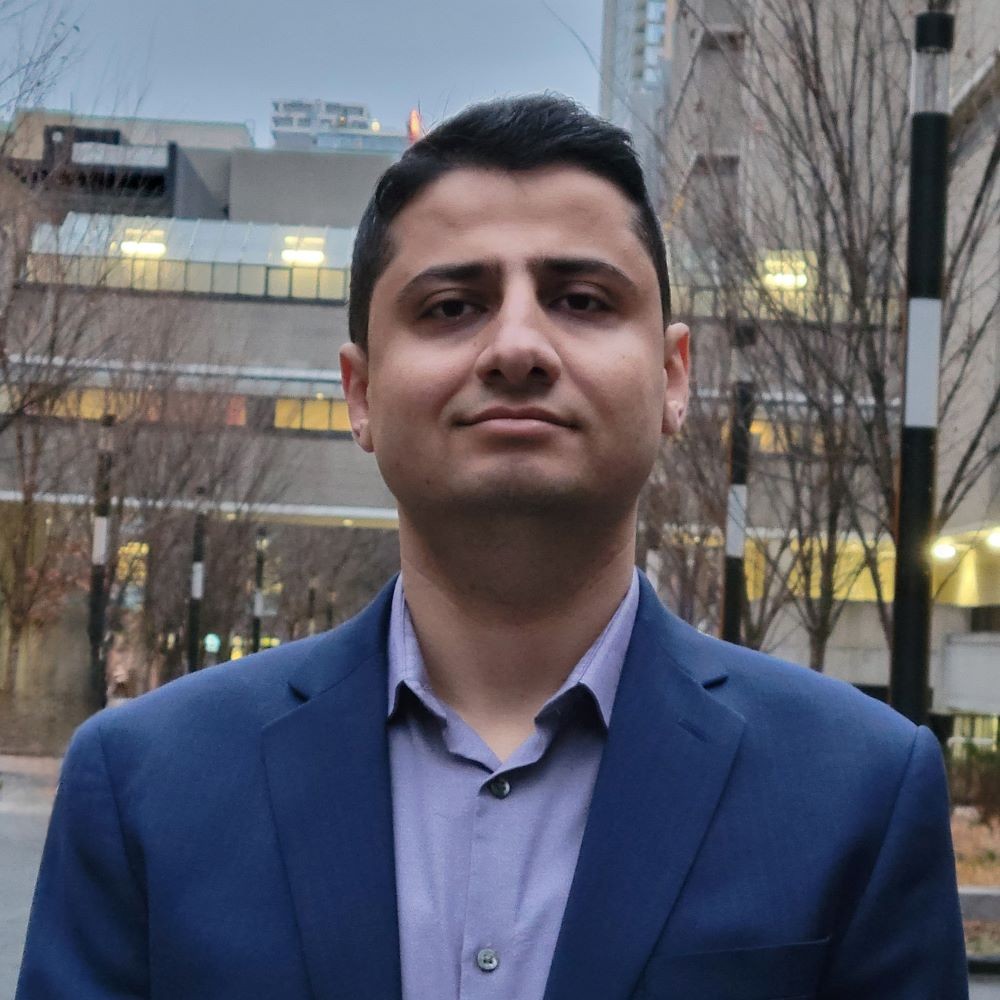
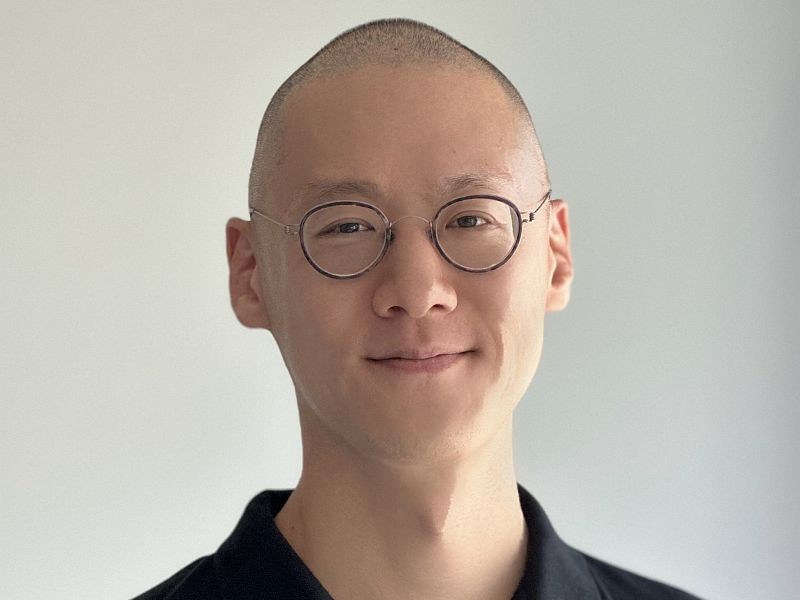
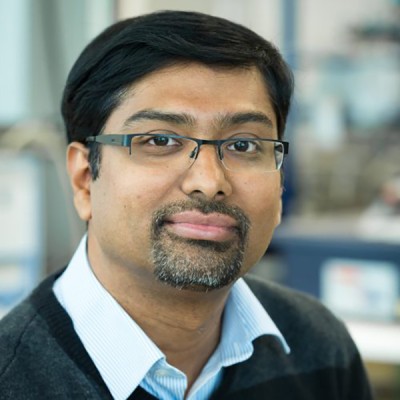
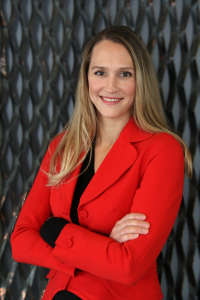
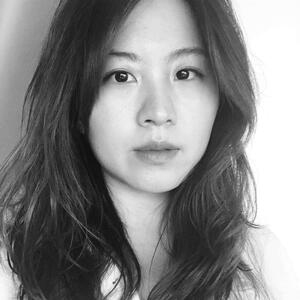
Dr. S. Madeh Piryonesi is an Assistant Professor in the Department of Civil Engineering at Toronto Metropolitan University. Her research focuses on data analytics, infrastructure asset management, construction management, and climate-resilient infrastructure. She holds a PhD from the University of Toronto (2019), an MEng from the University of Tehran (2014), and a BSc from the University of Tehran (2012). Education PhD, University of Toronto, 2019 MEng, University of Tehran, 2014 BSc, University of Tehran, 2012 Her research interests include leveraging machine learning for infrastructure resilience, optimizing construction processes, and predictive modeling of pavement conditions. She has received notable awards such as the CSCE/CRC Best Paper Award (2019) and First Place in the LTPP Data Analysis Contest (2018). Awards CSCE/CRC Best Paper Award, 2019 First Place in LTPP Data Analysis, 2018 CNAM Best Presentation Award (3rd Place), 2019 CNAM Best Presentation Award (3rd Place), 2018 She teaches courses such as CVL742 (Project Management) and CVL320 (Strength of Materials). Her work combines data-driven methodologies with practical engineering challenges to enhance infrastructure sustainability and decision-making.
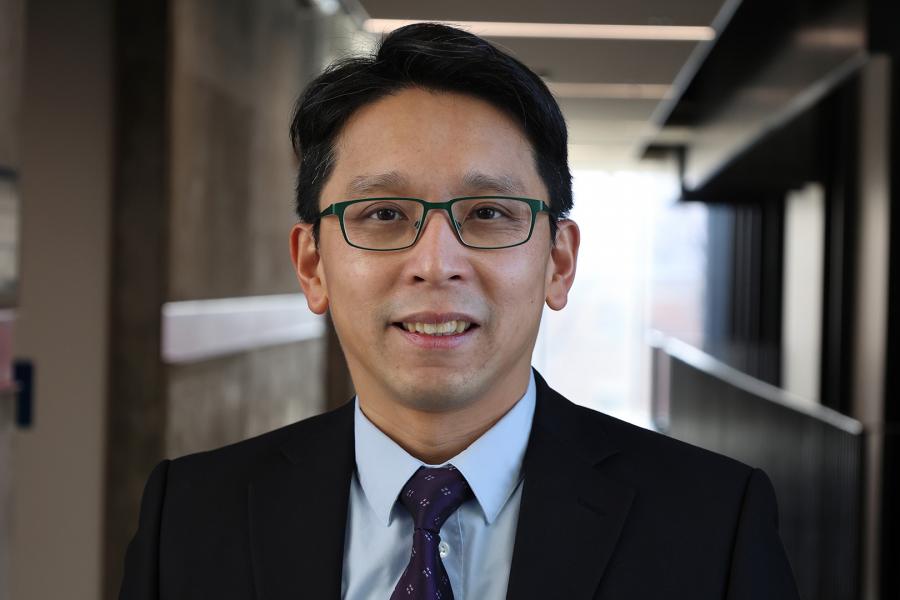
Dr. Carl Ho (Ngai Man) is a Full Professor and Canada Research Chair in Efficient Utilization of Electric Power at the University of Manitoba's Price Faculty of Engineering, Department of Electrical and Computer Engineering. Appointed Associate Head (Electrical Engineering) in July 2021, he leads the Renewable-energy Interface and Grid Automation (RIGA) Lab established with CFI funding in 2014. His educational background includes: PhD in Electronic Engineering (2007), City University of Hong Kong MEng in Electronic Engineering (2002), City University of Hong Kong BEng in Electronic Engineering (2002), City University of Hong Kong Dr. Ho's research focuses on power electronics applications for sustainable energy systems, with particular expertise in power conversion technologies for electric vehicles, renewable integration, and smart grid infrastructure. His work bridges industrial application and academic innovation, evidenced by over 40 IEEE journal publications, 80 conference papers, and 20+ patents. Current research emphasizes wide-bandgap semiconductor applications, power hardware-in-loop validation, and DC microgrid architectures for remote communities. Analysis of his recent publications reveals a strong trend toward practical implementation of power electronics solutions, with increasing focus on GaN/SiC devices, grid-forming converters, and modular architectures for microgrids. His work consistently addresses real-world challenges in efficiency, reliability, and cost-effectiveness across renewable integration, electric transportation, and power quality domains. Notable awards include: Second Place Winner for 2018 IEEE Transactions on Power Electronics Prize Paper Multiple IEEE JESTPE Star Associate Editor Awards (2022-2023) IEEE TPEL AE Excellence Award (2023) Best Student Team Regional Award in IEEE Empower a Billion Lives 2019 As an active mentor, Dr. Ho supervises numerous graduate students across multiple cohorts and leads significant research initiatives including NSERC Discovery Grants, MITACS collaborations with Power Integrations Inc., Research Manitoba Innovation Proof-of-Concept Grants, and Natural Resources Canada projects on zero-emission heavy vehicles. His RIGA Lab serves as a hub for industry-academic collaboration with Manitoba Hydro and transportation sector partners. The RIGA Lab, completed in 2016 and renovated in 2019, houses specialized equipment for power electronics prototyping, real-time simulation, and hardware-in-loop testing. Current projects include advanced wireless EV charging, GaN-based controller development, and DC microgrid solutions for remote communities, with recent recognition including a visit from Prime Minister Justin Trudeau in April 2023.
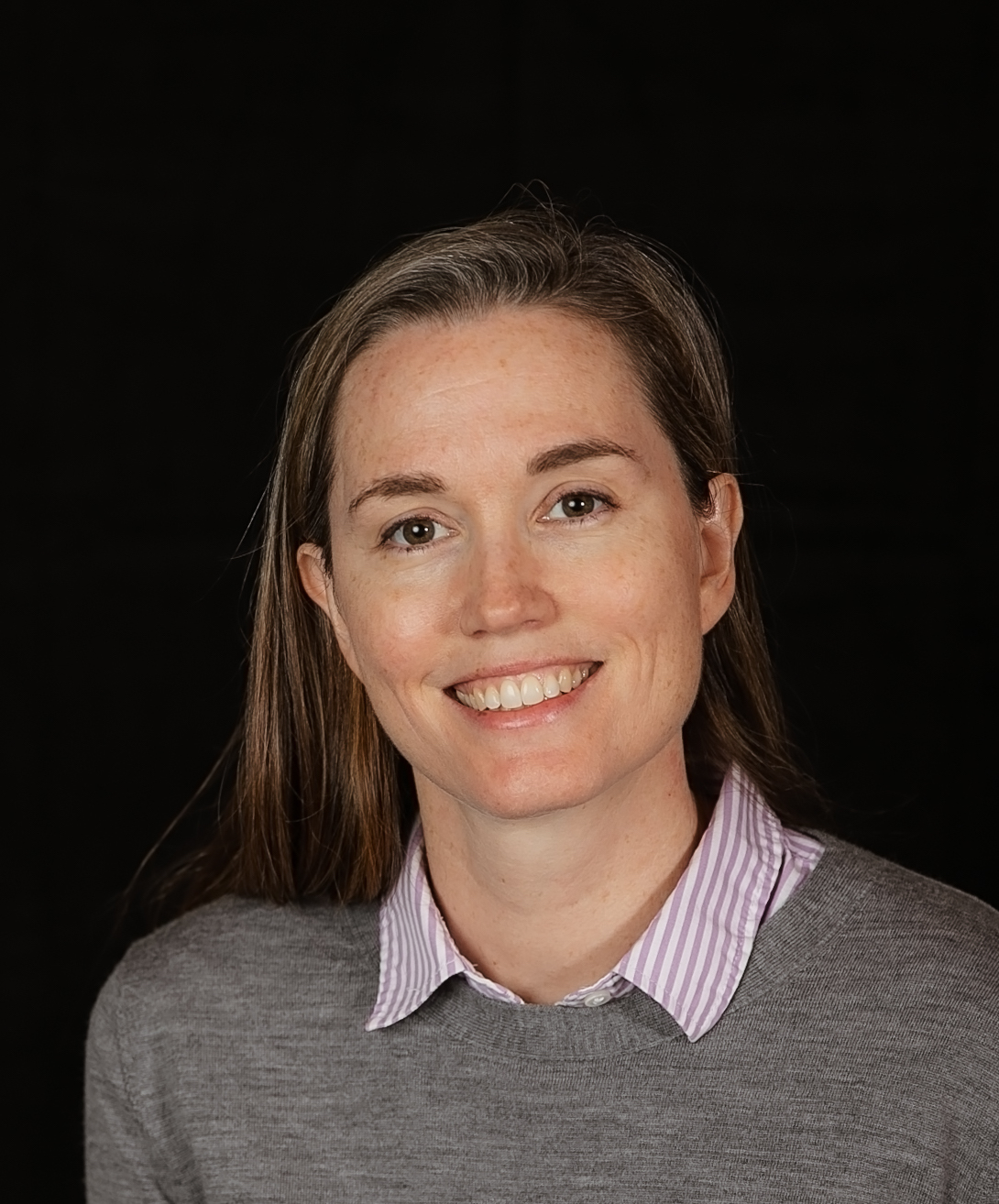
Dr. Kelly Burkett is an Associate Professor in the Department of Mathematics and Statistics at the University of Ottawa, within the Faculty of Science. She specializes in Statistical Genetics and Genetic Epidemiology, focusing on genealogical relationships, population substructure, and family-based study designs. Her work includes software development for genetic data analysis, such as SMLE and GENLIB. Dr. Burkett holds an MSc and PhD from Simon Fraser University. Research Interests: Dr. Burkett’s research addresses challenges in genetic epidemiology, including maternal effects, gene-environment interactions, and the impact of population substructure on study design. Her methodologies often integrate computational tools to analyze large-scale genetic datasets. She actively collaborates with biomedical researchers, inspiring new questions in statistical genetics and genomics. Publications & Software: Her recent work includes studies on orofacial clefting etiology, software for high-dimensional feature screening, and genealogical simulations in French Canadian populations. Her articles span topics from computational genetics to molecular biology, emphasizing interdisciplinary approaches. Advising & Collaborations: Dr. Burkett has mentored over 20 students and trainees across MSc, PhD, and postdoctoral programs. Current advisees include Yuewen Pan (MSc) and Yuhao Feng (PhD). Past students hold roles in academia, healthcare, and industry. She collaborates on biomedical projects, leveraging statistical methods to address genetic and environmental interactions. Labs & Teams: While no formal lab is explicitly mentioned, her software contributions (e.g., hapassoc, sampletrees) and collaborative projects suggest involvement in computational biology and genetics research networks at the University of Ottawa and beyond.
Arturo Macchi is a Professor in the Department of Chemical and Biological Engineering at the University of Ottawa, Faculty of Engineering. He holds a Ph.D. from the University of British Columbia, and MASc and B.Eng. degrees from the École Polytechnique de Montréal. His research focuses on multiphase reactor engineering, particularly fluidized bed systems, gas hydrates, microreactors, and CO₂ capture technologies. Collaborations include institutions like CanmetEnergy-Ottawa, NRC-ICPCE, and industry partners such as Syncrude Canada Ltd. and Lonza Inc. Key research areas include high-pressure multiphase reactors, CO₂ capture via dual fluidized beds, and microreactor design for pharmaceutical applications. His work integrates computational fluid dynamics (CFD) modeling with experimental validation to address challenges in energy efficiency, process intensification, and sustainable energy storage. Recent projects explore calcium looping processes for thermochemical storage and oxy-fuel combustion technologies. Publications highlight advancements in fluidization dynamics, bubble column hydrodynamics, and scale-up methodologies for industrial hydroprocessors. His contributions span both fundamental and applied research, bridging academic insights with industrial applications in petrochemical, environmental, and pharmaceutical sectors.
Dr. Bon Woo Koo is an Assistant Professor at the School of Urban and Regional Planning , Toronto Metropolitan University. His expertise lies in geospatial urban analytics, walkability, and GIS applications, focusing on urban design for public health equity and innovative data science tools. He holds a PhD in City & Regional Planning from Georgia Institute of Technology, a Master’s in Landscape Architecture from Seoul National University, and a Bachelor’s in Interior Design from Kookmin University. Education: PhD in City and Regional Planning, Georgia Institute of Technology Master of Landscape Architecture, Seoul National University Bachelor of Interior Design, Kookmin University Research Interests: Dr. Koo investigates urban environments’ impact on health and well-being, equity in environmental amenities (e.g., tree canopies), and advanced GIS techniques. He develops automated audit methods for walkability and explores spatial modeling for urban sustainability. His work bridges data science with policy, contributing to CDC health surveillance and smart city initiatives. Publications: His research appears in journals like Landscape and Urban Planning , Environment and Behavior , and Health and Place , with a focus on walkability audits, urban tree equity, and audio-based pedestrian sensing. Recent work addresses post-pandemic mental health and broadband equity strategies. Professional Engagement: He has advised the CDC’s technical panel on leveraging big data for health policy, presented at conferences like the Association of Collegiate Schools of Planning, and collaborated with institutions like Universitas Gadjah Mada and the Atlanta Regional Commission.
Ehud Sharlin is a Professor in the Department of Computer Science at the University of Calgary, Faculty of Science. His research focuses on Human-Computer Interaction (HCI) with specializations in human-robot interaction, tangible interfaces, virtual/augmented reality, and autonomous vehicle interactions. He holds a Ph.D. in Computing Science from the University of Alberta (2003), and M.Sc. and B.Sc. degrees in Electrical and Computer Engineering from Ben-Gurion University of the Negev (1997 and 1990). Teaches CPSC 481: Human-Computer Interaction I Recipient of the NSERC Discovery Accelerator Award (2019), ACM Creativity & Cognition Honourable Mention (2018), and multiple academic excellence awards Active in industry collaborations, particularly in medical simulation (e.g., VRSpineSim) and geosciences (e.g., PLANWELL) Research explores: Embodied interaction through robotics and wearables Autonomous vehicle-pedestrian communication systems Immersive tools for creative and professional domains Accessibility in human-technology interfaces Publications span over 100 peer-reviewed works, emphasizing design methodologies, user experience in XR systems, and ethical considerations in sociotechnical systems. His work bridges technical innovation with human-centered design principles.
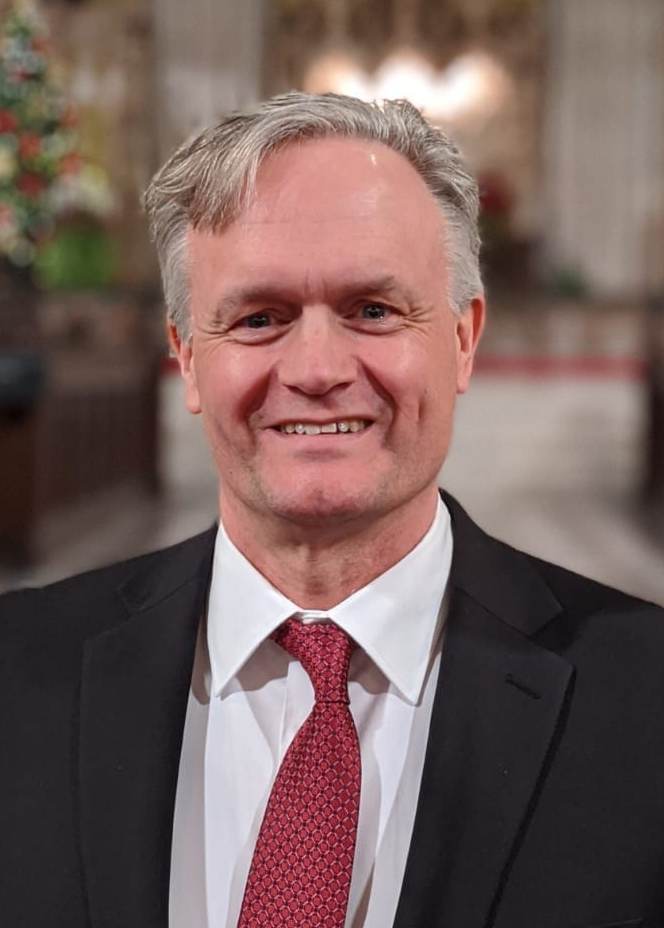
William R. Cluett is a Professor at the University of Toronto's Department of Chemical Engineering & Applied Chemistry within the Faculty of Applied Science and Engineering. He holds a B.Sc. from Queen’s University and a Ph.D. from the University of Alberta, and is a licensed Professional Engineer (P.Eng). Currently serving as Dean’s Advisor on Innovations in Undergraduate Education, Cluett bridges engineering principles with systems biology in his research. B.Sc., Queen’s University Ph.D., University of Alberta Cluett's research spans traditional process control and design, extending into systems biology where he collaborates with Professor Krishna Mahadevan. His work focuses on integrating engineering methodologies with biological systems, including multiscale modeling, dynamic metabolic engineering, and computational toxicology. His publications highlight trends in applying control theory to metabolic networks, developing algorithms for genome-scale modeling, and designing bistable cell factories. These contributions reflect interdisciplinary efforts between chemical engineering and computational biology. Scientific Awards & Recognitions: Fellow of Engineers Canada (2021) Medal for Distinction in Engineering Education (2021) OCUFA Teaching Award (2020) President’s Teaching Award (2018) Sustained Excellence in Teaching Award (2016) Bill Burgess Teacher of the Year Award (2014) Fellow, AAAS (2009) Fellow, Chemical Institute of Canada (1998) Syncrude Canada Innovation Award (1997) Cluett has contributed to major grants and collaborative projects in systems biology and metabolic engineering. He actively advises on undergraduate education innovations and maintains strong affiliations with the Department of Chemical Engineering & Applied Chemistry.
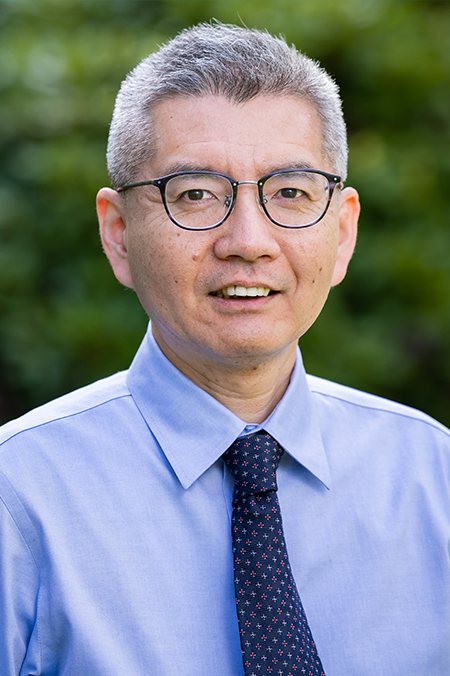
Ryozo Nagamune is a Professor in the Department of Mechanical Engineering within the Faculty of Applied Science at the University of British Columbia (UBC). His research focuses on control engineering with specific expertise in floating offshore wind turbines, integrated solar thermal systems, and metal additive manufacturing processes. He maintains active collaborations with NSERC, MITACS, and industry partners including Ascent Systems Technologies. Dr. Nagamune received his B.Sc. and M.Sc. degrees from Osaka University, followed by a Ph.D. from the Royal Institute of Technology in Stockholm, Sweden. His educational background laid the foundation for his expertise in control systems theory and applications. His primary research interests center on control engineering, with particular emphasis on the control of floating offshore wind turbines and wind farms, integrated solar thermal systems, directed energy deposition metal additive manufacturing processes, engine aftertreatment systems, and data-driven modeling and control of dynamical systems. His work addresses critical challenges in renewable energy, manufacturing, and automotive applications, focusing on optimization, robustness, and efficiency improvements. The research spans theoretical developments in control algorithms to practical implementation in real-world systems. Analysis of Dr. Nagamune's recent publications reveals a strong focus on floating offshore wind turbine control, which constitutes approximately 40% of his recent work. Another significant portion (30%) addresses automotive control systems, particularly selective catalytic reduction for emissions control. The remaining publications cover diverse applications including haptic interfaces, spacecraft control, and precision manufacturing systems. His research demonstrates a consistent pattern of applying advanced control methodologies to solve practical engineering problems across multiple domains. Dr. Nagamune leads the Control Engineering Laboratory at UBC (located in KAIS 3104) and actively seeks collaborations with industry partners, research clusters, and interdisciplinary teams. His research is supported by major funding agencies including NSERC and MITACS, as well as industry partnerships. He is available for supervision of graduate students and expresses interest in working with undergraduate students on research projects. Dr. Nagamune welcomes interdisciplinary research opportunities and is particularly interested in collaborations that bridge multiple engineering domains.
Bhushan Gopaluni is a Professor in the Department of Chemical and Biological Engineering at the University of British Columbia, where he also serves as Associate Dean for Education and Professional Development in the Faculty of Applied Science. He holds associate faculty positions in multiple interdisciplinary institutes including the Institute of Applied Mathematics, Institute for Computing, Information and Cognitive Systems, Pulp and Paper Center, and Clean Energy Research Center. He previously held the Elizabeth and Leslie Gould Teaching Professorship from 2014 to 2017. Education: Ph.D. in Chemical Engineering, University of Alberta (2003) Bachelor of Technology in Chemical Engineering, Indian Institute of Technology, Madras (1997) Research Interests: Professor Gopaluni's research spans several critical areas at the intersection of chemical engineering, machine learning, and process control. His primary focus includes the development of advanced process control strategies using reinforcement learning and machine learning techniques. He has made significant contributions to battery technology research, particularly in capacity estimation and remaining useful life prediction for lithium-ion batteries. His work also encompasses sustainable energy systems, industrial process monitoring, fault diagnosis, and the application of digital twin technology in chemical processes. His research methodology emphasizes the integration of data-driven approaches with fundamental process understanding, leading to practical solutions for complex industrial challenges. This includes the development of interpretable machine learning models for industrial applications, real-time optimization strategies, and advanced monitoring systems for process industries. Publications and Research Impact: Professor Gopaluni's recent publications demonstrate a strong focus on cutting-edge applications of machine learning in chemical engineering. His work prominently features battery technology and energy systems, with multiple papers addressing lithium-ion battery capacity estimation and management. He has also contributed significantly to process control applications, including drilling process monitoring, greenhouse gas reduction in marine transport, and renewable carbon tracking in biofuel processing. His research extends to advanced computational methods including deep learning, reinforcement learning, and causal discovery in industrial processes. Awards and Recognition: Killam Teaching Prize (University of British Columbia) Dean's Service Medal (University of British Columbia) D.G. Fisher Award in Process Control (Canadian Society for Chemical Engineers) Elizabeth and Leslie Gould Teaching Professor (2014-2017) Professional Service and Editorial Roles: Professor Gopaluni currently serves as Associate Editor for three prestigious journals: Journal of Process Control, The Journal of Franklin Institute, and Results in Control and Optimization. His service to the academic community extends through his role as Associate Dean for Education and Professional Development, where he oversees educational initiatives across the Faculty of Applied Science. Industry Experience: From 2003 to 2005, Professor Gopaluni worked as an engineering consultant at Matrikon Inc. (now Honeywell Process Solutions), where he designed and commissioned multivariable controllers for British Columbia's pulp and paper industry and implemented controller performance monitoring projects across oil & gas and chemical industries.
Steven Shechter is a Professor of Business Administration and holds the WJ VanDusen Chair in the Operations and Logistics Division at the University of British Columbia's Sauder School of Business. He holds a BS in Mathematics from Loyola University Chicago, an MS in Operations Research from Georgia Tech, and a PhD in Industrial Engineering from the University of Pittsburgh. His research focuses on stochastic optimization, simulation methodologies, and healthcare operations, with particular emphasis on medical decision-making and healthcare system efficiency. His academic contributions include groundbreaking work in multi-objective optimization (e.g., electoral apportionment models), patient monitoring systems, and surgical capacity allocation. He teaches advanced decision modeling courses to MBA and MBAN students, including Simulation Modeling and Optimal Decision Making modules. Key research trends in his work include applying stochastic processes to healthcare challenges (e.g., alarm fatigue management in patient monitoring systems), optimizing surgical workflows, and developing adaptive treatment protocols using Bayesian methods. His recent studies address pressing issues like kidney transplantation decision models and pediatrician scheduling in healthcare facilities. While no formal awards are listed, his extensive publication record reflects sustained impact in operations research and healthcare analytics. His work often bridges theoretical models with practical healthcare applications, emphasizing system efficiency and patient-centered outcomes.
Julian Lowman is a Professor at the University of Toronto Scarborough (UTSC), specializing in planetary interiors, mantle convection, and computational fluid dynamics. His research focuses on understanding the thermal and structural evolution of planetary mantles, core-mantle interactions, and high-performance numerical modeling techniques. He holds a Ph.D. from York University (1996) and contributes to advancing geodynamic simulations for terrestrial planets and moons. Key research interests include the mechanics of mantle convection, the role of viscosity and compositional variations, and the application of high-performance computing to model planetary processes. He has explored topics such as stagnant-lid convection, plate tectonic dynamics, and the thermal evolution of planetary cores and mantles. His work bridges computational methods with geophysical observations to address questions in Earth science and planetary science. Lowman’s publications span over three decades, addressing topics from Mercury’s mantle dynamics to exoplanet tectonics. His methodologies include advanced numerical models that simulate 2D and 3D convection patterns, fluid dynamics under Arrhenius viscosity regimes, and the influence of curvature on planetary interiors. He collaborates on projects involving mantle plumes, supercontinent cycles, and the interplay between surface tectonics and deep mantle structure. Despite his extensive contributions, no specific scientific awards or grants are explicitly listed in the provided texts. He advises no named students in the available data but likely contributes to graduate training at UTSC. His research aligns with interdisciplinary themes in computational geosciences and planetary evolution.
Judith Andersen is an Associate Professor at the University of Toronto Mississauga, specializing in health psychology with a focus on the psychophysiology of stress and its impact on mental and physical health in high-stress occupations. Her research emphasizes evidence-based training programs for police and special forces, resilience development for first responders, and mental health disparities among LGBTQ+ communities. She holds a PhD from the University of California, Irvine. Her work includes designing stress-regulation interventions to enhance police decision-making during critical incidents and developing competency frameworks for incident commanders. Recent projects involve applying biofeedback technology (e.g., HRV monitoring) to improve officer performance and wellness. She collaborates internationally with law enforcement agencies in Canada, the U.S., and Europe. Key research domains include: Psychophysiological stress responses and their modulation Resilience training for first responders Mental health disparities in marginalized groups Evidence-based policing strategies Her publications from 2024–2025 explore topics like stress physiology in policing, competency development for crisis leaders, and the role of social support in reducing LGBTQ+ mental health disparities. Ongoing projects focus on reducing racial bias in policing and optimizing training through big data analytics. While no formal advisees are listed, her research teams engage in translational studies impacting policy and practice. She advocates for applied psychological research to bridge academic and real-world challenges in public safety and health.
Liqun Wang is a Professor of Statistics at the University of Manitoba, within the Faculty of Science. His research focuses on statistical inference in complex models, measurement error correction, boundary crossing problems in stochastic processes, and Monte Carlo simulation methods. He holds a prominent role in advancing methodologies for nonlinear time series analysis and Bayesian inference. His work integrates theoretical rigor with practical applications, addressing challenges in econometrics, environmental science, and public health. Notable contributions include advancements in instrumental variable estimation, second-order least squares methods, and high-dimensional covariance estimation. He actively mentors graduate students in these areas and has published extensively in top-tier statistical journals. Recent research highlights include Bayesian bias correction techniques, sparse covariance matrix estimation, and modeling SARS-CoV-2 dynamics via wastewater data. His methodologies often bridge computational efficiency with statistical accuracy, making them applicable to diverse fields such as finance, biostatistics, and environmental monitoring. Despite prolific output (over 70 publications since 1990), Dr. Wang has yet to be explicitly noted for formal scientific awards. His academic profile emphasizes methodological innovation, with a strong focus on real-world data challenges and interdisciplinary collaboration.
Sojung Bahng is an Assistant Professor in the Department of Film and Media at Queen’s University, with a cross-appointment to the DAN School of Drama and Music. Her work bridges multidisciplinary art, practice-based research, and digital media innovation. She holds a PhD from Monash University’s SensiLab (Australia), recognized with the 2020 Mollie Holman Medal for her thesis on cinematic VR. Her research focuses on digital storytelling, VR aesthetics, and the intersection of technology with cultural narratives. Education: PhD in Information Technology (SensiLab, Monash University) Masters in Culture Technology (KAIST, South Korea) BFA in TV/Film Production & Art Theory (Korea National University of Arts) Research explores VR’s potential for reflexive storytelling beyond immersion, emphasizing ethical engagement and cross-cultural narratives. Notable projects include Sleeping Eyes (narcolepsy simulation), Anonymous (VR identity exploration), and Floating Walk (autobiographical documentary). She curates Somplexity , a posthumanist art project funded by Seoul Foundation for Arts and Culture. Awards include the Mollie Holman Medal (2020) and Excellence in Experience Design (Sleeping Eyes). Current SSHRC-funded project Meta-Metaverse investigates digital art approaches to the metaverse. Her work is exhibited globally at venues like Heide Museum (Melbourne), ISEA (Dubai/Montreal), and festivals such as BIAF and TSFM. Grants and collaborations include SSHRC funding and leadership in Research-Practice , a framework exploring research/practice intersections. Her academic contributions span peer-reviewed journals (SIGCHI, ACM Interactions) and conferences (ISEA, ICIDS).
Prof. Lionel C. Briand is a leading academic in software engineering and trustworthy AI, holding appointments at the University of Ottawa (EECS Department, Nanda Laboratory) and the University of Limerick (Lero - National Software Research Centre). He serves as Director of Lero and Scientific Director of the SnT software verification lab in Luxembourg. His research focuses on software testing, model-driven engineering, AI-driven quality assurance, and regulatory compliance. He has held the Canada Research Chair (Tier 1) since 2003 and led major institutions like Simula Research Laboratory (Norway) and Fraunhofer Institute (Germany). Education & Career: Full Professor at Carleton University (2008–2012) Head of Software Quality Engineering at Fraunhofer IESE (2000–2008) Research Scientist at NASA Software Engineering Lab (1990s) Research Interests: His work spans secure AI systems, automated legal compliance (e.g., GDPR), metamorphic testing, search-based software engineering, and safety-critical systems. He emphasizes practical applications, collaborating with industry partners globally. Awards & Recognition: IEEE Fellow (2010), ACM Fellow (2020) Harlan Mills Award (2012), ERC Advanced Grant (2016) Fellowships from Royal Society of Canada (2023) and Academia Europaea (2025) Grants & Labs: PEARL grant from Luxembourg FNR for SnT lab ERC Advanced Grant for software testing research Leadership roles in Lero and Nanda Lab Publications: Over 500+ papers on testing methodologies, AI ethics, and regulatory compliance. Notable tools include CompAI (GDPR compliance) and Teasma (DNN test adequacy).