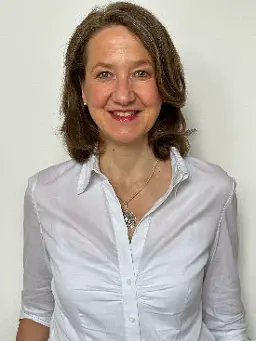
Prof. Dr.-Ing. Tobias Kuhnimhof is a Professor at the Chair of Urban and Transport Planning within RWTH Aachen University. His research focuses on Travel Surveys , Modelling Travel Behaviour , Electric Mobility , and Allocation of Urban Space . He leads the Institute for Urban and Transport Planning since 2019, following leadership roles at the German Aerospace Center (DLR) and BMW Group's Institute for Mobility Research. Doctoral Degree (2002-2007): Institute of Transport Studies, Karlsruhe University MSc in Civil Engineering & Applied Cultural Science (Karlsruhe University/University of Connecticut, 1994-2001) His recent work examines bicycle parking economics , EV charging infrastructure , and autonomous transit systems , with publications in journals like Transportation Research Part A . Collaborators include David Kohlrautz (E-Bike studies) and Fabian Kühnel (public transport accessibility). He teaches courses on Transport Planning Methodology , Financing Transport Infrastructure , and Mobility Research . Key contributions include developing the German national PKT-Model and co-authoring studies on on-demand transit simulations in Aachen. His research emphasizes data fusion techniques to enhance survey accuracy and logsum analysis for infrastructure prioritization. Tobias Kuhnimhof's work bridges academic analysis with real-world urban mobility challenges.
Dr. Parichehr Shamsrizi is an associated researcher in the Health Communication working group at the Bernhard Nocht Institute for Tropical Medicine (BNITM) and a postdoctoral researcher at the Institute for Planetary Health Behaviour (IPB) under the University of Erfurt. Her career bridges clinical infectious disease research , vaccine development , and planetary health communication , with current projects focusing on climate and health communication and public readiness for climate action . MD and PhD in infectious diseases (University of Tübingen) Postdoctoral work at LSHTM (2021–2023) Former clinician scientist at UKE Hamburg-Eppendorf (2020–2022) Her research explores intersections between climate change and health , vaccination behavior , and trust in health communication . Recent studies include the PACE project on planetary health action readiness and the CliMed initiative examining healthcare professionals' role in climate communication. Publications span infectious disease epidemiology , vaccine trial analysis , and climate crisis health impacts . She contributes to the HEATCOM project and is a ThinkTank30 Fellow with the Club of Rome Germany. Key affiliations include the German Society for Tropical Medicine (DTG) and the European Society of Clinical Microbiology (ESCMID). Volunteer roles include Amnesty International and Women’s Health Team in Hamburg.
Prof. Dr. Maike Andresen holds the Chair of Human Resource Management and Organisational Behaviour at the University of Bamberg since 2009. She leads the European Human Resource Management Programme and serves as Vice-president for Research at the university. Her research focuses on international employee mobility, strategic HRM, work hour flexibilization, and cross-cultural organizational behavior. Habilitation (2008) - Helmut-Schmidt-University PhD (2003) - University of the Federal Armed Forces Hamburg summa cum laude Master in European HRM (1999) - Consortium of 6 European universities Key research contributions include: Global mobility of employees Self-initiated expatriation dynamics Work-time flexibilization effects Overemployment measurement International remote work analysis Diversity in workforce personality Recent article trends show emphasis on expatriate retention, cultural intelligence development, and the paradoxes of international work experiences. Her 2020-2023 publications explore digital nomadism (e-Wanderlust project), dual career couples, and global career capital transfer mechanisms. Scientific recognition includes: 2024 Journal of Global Mobility Best Paper Award 2023 VHB Best Paper Award 2020-2023 GLOBE 2020 Excellence Certificates Multiple AOM and EURAM award nominations 2005 Ludwig-Schunk Preis for summa cum laude dissertation She supervises six Horizon 2020 researchers and serves on numerous academic committees. The chair's ORCiD profile provides full publication records.
Mareike Altgassen is an Assistant Professor at the Donders Institute for Brain, Cognition and Behaviour, Radboud University Nijmegen, and previously held roles at the Technical University of Dresden, including leading labs in Developmental Neuroscience and Intention Memory. She specializes in prospective memory, developmental psychology, and neuropsychological disorders like Parkinson’s and autism spectrum conditions. Education: PhD in Psychology (2007, University of Zürich), Diplom in Psychology (2004, University of Heidelberg). Research focuses on memory processes across the lifespan, particularly in clinical populations and adolescents. She co-founded the Wissenschaftliche Gesellschaft Autismus Spektrum (Society for Research in Autism Spectrum Conditions) in 2008. Her work bridges cognitive neuroscience and clinical applications, with publications in journals like Neuropsychologia and Developmental Psychology . Awards include a 2007 Poster Award for autism research and multiple travel grants. Labs: Formerly led the Developmental Neuroscience Lab (2007–2012) and currently heads the Intention Memory and Volitional Control Development Lab. Research interests include emotional influences on memory, cue focality effects, and cognitive impairments in neurodegenerative diseases.
Leibniz Institute of Freshwater Ecology and Inland FisheriesGermany
David Bierbach is a Guest Scientist in the Department of Fish Biology, Fisheries and Aquaculture at Humboldt University of Berlin. He specializes in behavioral ecology with a focus on collective behavior in fish, social responsiveness, and the use of biomimetic robotics in animal behavior studies. His research explores behavioral individuality, anti-predator responses, and eco-evolutionary dynamics using primarily fish models including guppies and other clonal species. PhD from Goethe University Frankfurt (2013) with dissertation awarded as best in life sciences Postdoctoral work at IGB Berlin since 2013 Extensive field experience in Mexico, USA, Trinidad, Germany, Benin, and Malaysia Dr. Bierbach's research interests center on understanding the mechanisms and functions of group-living behavior in fish. His work investigates how social responsiveness affects leadership, how collective behaviors emerge in fish shoals, and how environmental factors shape behavioral development. He has pioneered the use of biomimetic robotic fish to study social interactions in natural settings, with particular focus on how group dynamics affect decision-making, predator avoidance, and reproductive success. His research spans behavioral ecology, evolutionary biology, and animal welfare, with applications to conservation and aquaculture. His publication record shows strong focus on collective behavior dynamics, particularly fish shoaling and escape responses. Recent work has examined fish waves as anti-predator mechanisms, behavioral individuality in clonal fish systems, and the impact of environmental factors on social behavior. His research often combines field studies with laboratory experiments, increasingly incorporating big data approaches to understand eco-evolutionary patterns. DFG research grant 'Eigene Stelle' for robotic fish leadership project (2016) Gesellschaft für Ichthyologie research grant (2015) Goethe University award for best dissertation in life sciences (2014) DAAD travel grant for field research in Borneo (2008) Dr. Bierbach leads research on collective anti-predator responses and Mexican waves of the Sulphur molly (2019-2021), and previously led the BTypes project on consequences of animal behavioral types. His work has been supported by multiple competitive grants including DFG funding for his 'Eigene Stelle' project exploring social responsiveness using biomimetic robotics. He collaborates extensively with researchers across Germany and internationally, particularly with Prof. Jens Krause and Dr. Max Wolf at IGB Berlin. His research group focuses on Mechanisms and Functions of Group-Living Behavioural Biology, conducting both laboratory and field studies on fish behavior. The group employs innovative approaches including biomimetic robotics to study social interactions in natural contexts, with particular emphasis on collective decision-making, leadership dynamics, and anti-predator strategies in fish shoals.