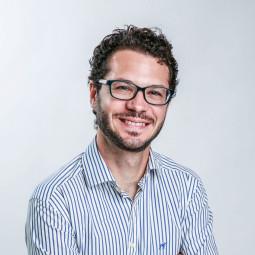
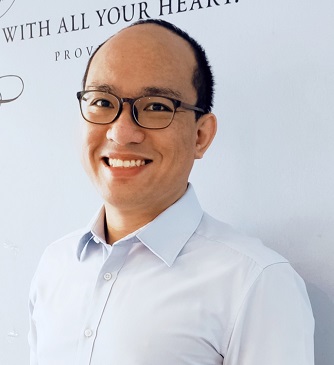
Sharafali MOOSA is an Adjunct Lecturer at the Lee Kong Chian School of Business, Singapore Management University, where he contributes to the academic and professional development of students through specialized courses in decision-making frameworks. Institution: Singapore Management University (SMU) School: Lee Kong Chian School of Business (LKCSB) Academic Rank: Adjunct Lecturer His primary teaching areas include Decision Analysis and Multi-Criteria Decision Making, indicating a strong foundation in quantitative and analytical methods for business decisions. The courses he teaches suggest a focused expertise in structured decision processes, particularly in complex environments requiring trade-off analysis and strategic prioritization. These areas are central to modern business analytics and operations management. While no recent publications are listed, his teaching focus indicates active engagement in applied decision science education, likely drawing from real-world business challenges and analytical modeling techniques. No scientific awards or honors are mentioned in the available profile. As an adjunct faculty member, Sharafali MOOSA likely brings industry or practical experience into the classroom. There is no information available regarding graduate student supervision, research grants, or formal research projects. There is no mention of lab affiliations, research teams, or collaborative research centers associated with his profile.
David Lallemant is an Associate Professor at the Asian School of the Environment, Nanyang Technological University (NTU), Singapore, and Principal Investigator of the Disaster Analytics for Society Lab. His research spans hazard and risk modeling for natural disasters, with a focus on urban resilience and post-disaster assessment using innovative technologies. He collaborates with global entities including the World Bank and Google to translate science into policy for resilient societies. His primary research areas include: Natural hazard risk modeling and uncertainty communication Quantitative resilience metrics and urban/regional risk analysis Post-disaster assessment via remote sensing, crowd-sourcing, and geostatistics Disaster impacts beyond fatalities and economic losses He integrates structural engineering, probabilistic methods, and policy to develop novel solutions for disaster risk reduction. Recent publications demonstrate a focus on probabilistic frameworks for disaster risk management, including counterfactual analysis to quantify avoided disasters and nature-based solutions for flood risk. His work bridges environmental science, engineering, and policy, emphasizing scalable methods for urban resilience and equitable recovery. Dr. Lallemant leads the Disaster Analytics for Society Lab and collaborates with international organizations including the World Bank, the Red Cross, Google, and USGS. His research is policy-oriented, aiming to translate scientific insights into practical risk management strategies.
Lai Changquan is an Assistant Professor at Nanyang Technological University (NTU), holding positions in both the School of Mechanical & Aerospace Engineering and the School of Materials Science & Engineering. He is the Principal Investigator for the Advanced Materials Design and Synthesis (AMDS) Lab, which he established in November 2017, and received the prestigious Nanyang Assistant Professorship in 2022. Education: B.Eng in Mechanical Engineering, National University of Singapore (2009) M.Eng in Materials Science and Engineering, Massachusetts Institute of Technology (2010) Ph.D. in Advanced Materials for Micro- and Nano- Systems, National University of Singapore (2014) Dr. Lai's research spans multiple interdisciplinary fields with a focus on functional structural materials and waste valorization for circular economy applications. His work integrates design, materials science, and manufacturing innovation to engineer novel structures and surfaces. Key research areas include additive manufacturing, nanomaterials, metamaterials, structural batteries, sustainable materials, and machine learning applications in materials science. His lab has made significant contributions to the development of architected materials with exceptional mechanical properties and sustainable manufacturing processes, including turning wastepaper into battery anodes which was featured by the World Economic Forum. Analysis of Dr. Lai's recent publications reveals a strong focus on advanced materials design, particularly in structural metamaterials, additive manufacturing of metals and composites, and sustainable energy applications. His research increasingly incorporates machine learning techniques for materials prediction and optimization while maintaining experimental validation. There's a clear progression toward practical applications in renewable energy, particularly in battery technologies and sustainable manufacturing processes that align with circular economy principles. Scientific Awards: Nanyang Assistant Professorship (2022) Temasek Labs - Best Research Award (Bronze) (2021, 2022, 2023, 2024) Singapore Teaching and Academic Research Talent Scholarship (2021) Temasek Research Fellowship (2016) SMART Postdoctoral Fellowship (2015) Dr. Lai actively mentors a diverse group of graduate students and postdoctoral researchers in the AMDS Lab, including Po-Ju Chiang who became the lab's first PhD graduate in 2024. His research is supported by multiple grants through the HP-NTU Digital Manufacturing Joint Lab and other industry partnerships. He has successfully guided several PhD students through their research on topics including site-specific control of alloy properties through binder jet 3D printing and structural battery development. The Advanced Materials Design and Synthesis Lab maintains strong industry collaborations and has received significant media attention for its innovative work. The lab's research on sustainable materials has been featured in numerous international outlets including The Straits Times, Science Daily, and The Engineer (UK), demonstrating the real-world impact of their work on waste valorization and sustainable manufacturing technologies.